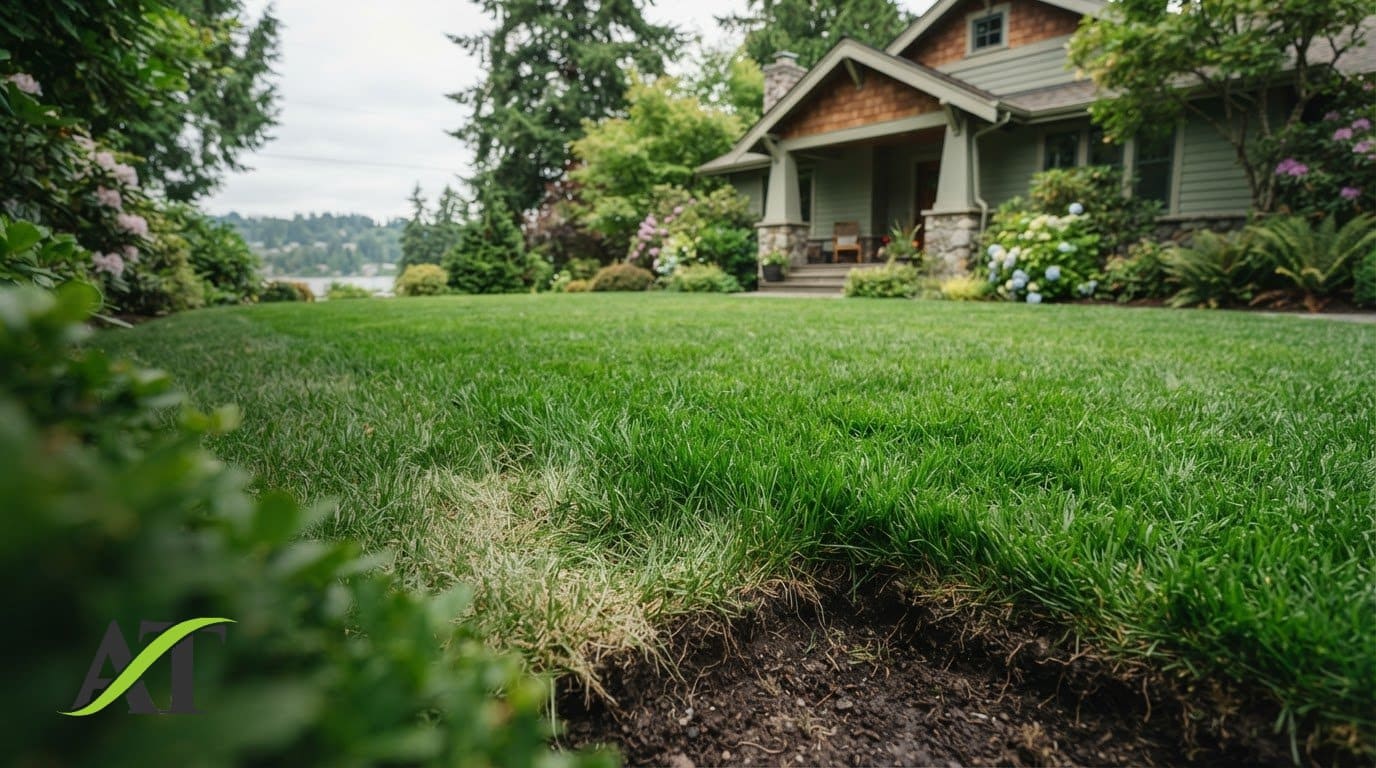
Your neighbor’s vibrant green grass isn’t a result of luck or expensive chemicals. It’s the product of precise timing and professional overseeding lawn Edmonds techniques. Most homeowners in the PNW struggle with moss crowding out their turf or dealing with thin, patchy areas that never seem to fill in. You might feel confused about when to plant or why your previous efforts haven’t yielded a thick lawn. We understand that frustration. Our team has seen every soil issue in the area and knows exactly how to fix it.
Professional restoration can transform your yard into a resilient, lush landscape. In this guide, we’ll explain how our Lawn Tune-Up, consisting of Core Aeration, Overseeding, and Fertilizing, provides the foundation for growth. For mossy yards, we’ll discuss the Full Meal Deal, which includes Power Raking (Dethatching), Core Aeration, Overseeding, and Fertilizing. You’ll learn why we prioritize soil temperatures between 55°F–75°F (13°C–24°C) to achieve the most consistent results. We’ll also provide a clear plan to help you achieve a thick, green lawn that stands up to local conditions.
Key Takeaways
- Learn how professional Overseeding lawn Edmonds techniques address the specific soil compaction and moss issues caused by our local maritime climate.
- Discover why soil temperature, specifically the 55°F to 75°F range, is the critical factor for successful grass seed germination in the Pacific Northwest.
- Compare the Lawn Tune-Up to the Full Meal Deal, which includes Power Raking (Dethatching) to handle heavy moss and thatch buildup.
- Get expert advice on essential post-service care to help your new turf establish, as results depend on moisture, soil conditions, and weather.
Why Your Edmonds Lawn Needs Professional Overseeding
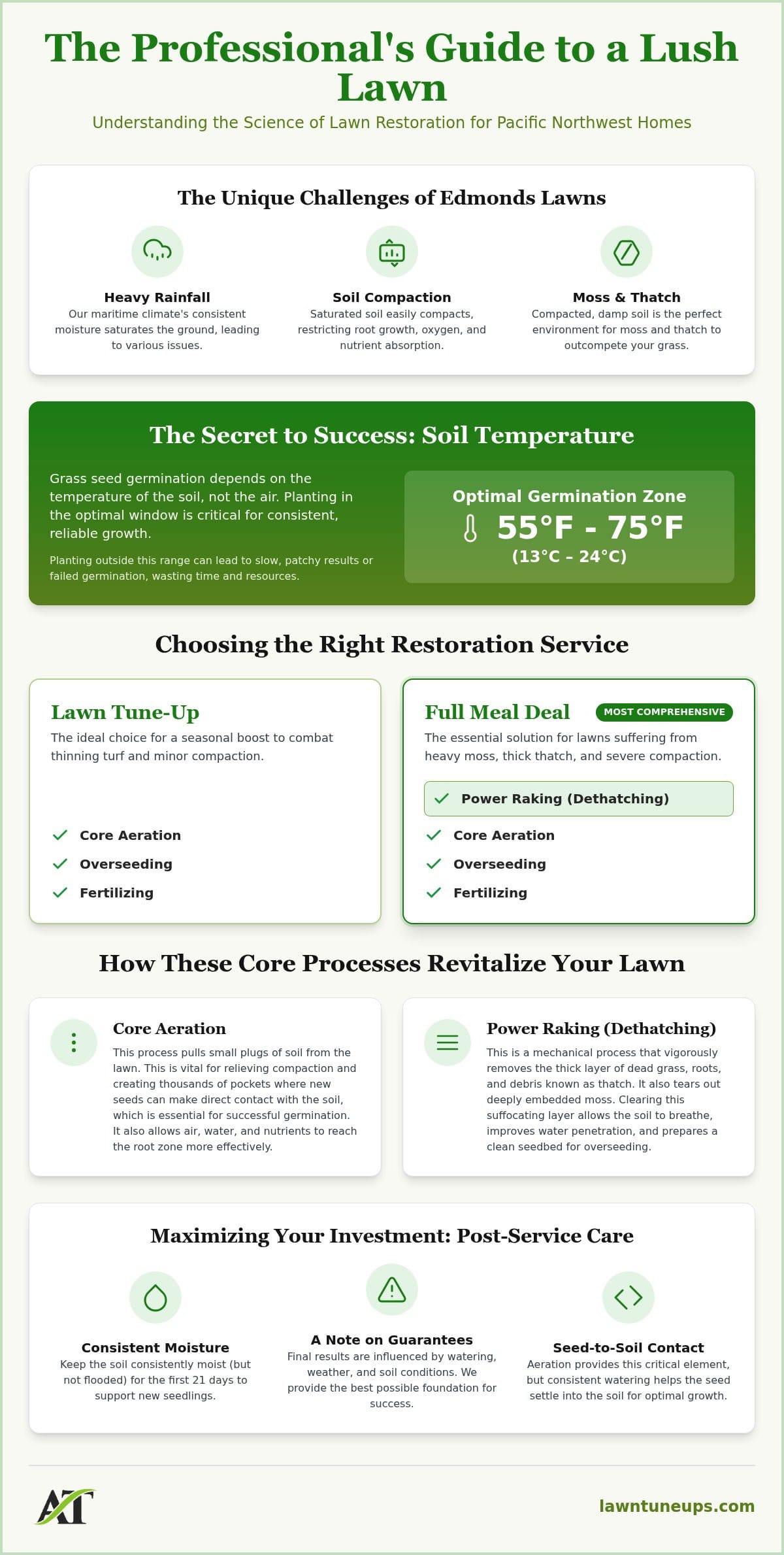
Edmonds homeowners face a specific set of challenges. Our maritime climate brings heavy rain and consistent moisture, which often leads to soil compaction. When soil packs down, grass roots struggle to breathe. This creates an opening for moss to move in and dominate. Professional overseeding lawn Edmonds is the most effective way to reverse this decline. By introducing modern, resilient grass varieties, we help your yard outcompete opportunistic weeds and moss.
Many people try “hand-seeding” by simply tossing seed over the top of existing grass. This usually fails. Without professional Core Aeration, the new seeds just sit on the surface. They need direct contact with the soil to stand a chance. The basics of lawn seeding show that success depends on more than just spreading seed; it requires a prepared environment. Our Lawn Tune-Up addresses this by combining Core Aeration, Overseeding, and Fertilizing. We use Organic Fertilizing to provide the nutrients these new seedlings need to establish themselves in our local soil. You can view our full list of restoration services to see how we handle these local issues.
Combating Moss and Thinning Turf
The shade and moisture levels in Edmonds are perfect for moss but difficult for thinning turf. As your grass density drops, moss fills the gaps. To stop this cycle, you’ve got to increase the density of the grass plants. A thicker lawn creates a natural canopy that blocks sunlight from reaching moss spores. This prevents seasonal encroachment before it starts.
The Benefits of Core Aeration for Seed Success
Successful germination requires more than just water. It needs seed-to-soil contact. Core Aeration pulls small plugs of soil from the ground. This relieves compaction and creates perfect pockets for the seed. This process also improves oxygen and water flow to the root zone. While results depend on moisture and weather, this mechanical preparation significantly improves the environment for new growth.
The Science of Grass Seed Germination in the Pacific Northwest
Grass doesn’t care about the weather report on your phone. It cares about the heat in the dirt. For overseeding lawn Edmonds projects, this is the single most important factor. The optimal soil temperature range for cool-season grass seed germination is 55°F–75°F (13°C–24°C). Germination can occur outside this range. However, it will be slower, less consistent, and produce less reliable establishment. Timing your Overseeding with local weather patterns is essential to avoid wasted seed.
Measuring Soil Temperature vs. Air Temperature
A warm 70-degree day in early spring is deceiving. Soil retains winter’s chill long after the air warms up. Following PNW lawn care best practices means checking the ground, not the sky. If you plant too early, the seed stays dormant. If you plant too late in the summer, the heat may kill young shoots. We look for that specific window where the ground stays within the target range. Professional overseeding lawn Edmonds relies on these technical details to turn a thin yard into a thick landscape.
Factors Influencing Seed Establishment
Seed-to-soil contact is the #1 predictor of germination success. This is why we use Core Aeration to create hundreds of small growth pockets. Once the seed is in the ground, you must maintain consistent moisture for the first 21 days. We don’t offer absolute guarantees on growth. Results depend on moisture, seed-to-soil contact, local soil conditions, and unpredictable weather. The 55°F–75°F soil temperature rule remains the most reliable benchmark for cool-season grass establishment. If you want to ensure your timing is right, you can request a quote for a professional assessment. We’ll help you navigate the local climate for the best possible outcome.
Choosing the Right Restoration: Lawn Tune-Up vs. Full Meal Deal
The Lawn Tune-Up is our signature restoration bundle. It consists of Core Aeration, Overseeding, and Fertilizing. This is the best choice for lawns that are thinning but still have manageable thatch. If your grass is relatively healthy but looks a bit sparse, this treatment provides the necessary seed-to-soil contact and nutrients to thicken the turf. You can learn more about this process in our Lawn Tune Up Service Seattle guide.
The Full Meal Deal for Heavy Restoration
Many Edmonds properties struggle with a thick blanket of moss and old organic matter. If you can’t see the soil when you look down at your grass, you likely need the Full Meal Deal. This comprehensive package includes Power Raking (Dethatching), Core Aeration, Overseeding, and Fertilizing. The Power Raking (Dethatching) step is critical here. It physically removes the barrier of thatch and moss, clearing the way for new seed to actually touch the dirt. Without this step, your Overseeding efforts will likely fail because the seeds will get stuck in the debris. We’ve seen this fix even the most stubborn, moss-choked yards in the area.
Maximizing Your Overseeding Investment: Post-Service Care
Professional restoration is only half the battle. Once the heavy machinery leaves, the success of your overseeding lawn Edmonds project depends on consistent follow-through. You’ve got to protect those new seedlings during their most vulnerable stage. This means strictly managing your watering and staying off the mower until the roots take hold. It’s also the right time to consider how your soil chemistry affects long-term growth. Because Edmonds soil is naturally acidic, a Professional Lime Application in Edmonds is often necessary to balance the pH and make nutrients available to the grass.
The First 30 Days: A Critical Window
New seedlings are fragile. You must keep the seed bed moist without flooding the area. For the first 21 days, water lightly twice a day for about 10 to 15 minutes. If the seed dries out after it starts to sprout, it won’t survive. We don’t offer absolute guarantees on germination because results are influenced by moisture, seed-to-soil contact, and unpredictable weather. Once the grass reaches about three inches, you can perform your first mow. Set your blade high to avoid pulling up the young plants.
Long-Term Soil Health in Edmonds
Our Organic Fertilizing provides the steady nutrition needed to sustain the lawn after the initial sprout. As the grass thickens, it naturally crowds out moss and weeds. To maintain this density, plan for a Lawn Tune-Up every year to relieve compaction through Core Aeration. This consistent maintenance prevents the soil from returning to its previous hardened state. If you’re ready to transform your property, you can Request a Quote for your Edmonds Lawn Tune-Up today. We’ll help you build a restoration plan that lasts.
Start Your Edmonds Lawn Restoration Today
Achieving a thick, resilient lawn in the Pacific Northwest requires moving beyond basic maintenance. Professional overseeding lawn Edmonds succeeds because it respects the 55°F–75°F soil temperature window and uses Core Aeration to create a viable seed bed. Whether you need a standard Lawn Tune-Up or the total transformation of our signature Full Meal Deal, we focus on the mechanical restoration steps that actually work in our local soil. We’ve been owner-operated since 2004, specializing in the specific needs of PNW landscapes.
Our team understands how to handle moss, compaction, and acidic soil to give your turf the best possible start. While results depend on your commitment to watering and local weather, our expertise provides the foundation for a lush, green environment. You don’t have to settle for a patchy yard. With the right restoration plan and professional expertise, your lawn can become the thick, healthy landscape you’ve been looking for. To see examples of high-quality professional work, you can check out INEX Landscaping.
Frequently Asked Questions
What is the best time of year for Overseeding in Edmonds?
The best time for overseeding lawn Edmonds properties is when soil temperatures are between 55°F and 75°F (13°C–24°C). This usually happens during the fall renovation season in September and October. While you can plant outside this window, the grass will grow slower and less consistently. Timing your service with the returning PNW rains helps maintain the moisture needed for the new seedlings to establish a strong root system before winter.
Do I need to Power Raking (Dethatching) before I Overseed?
You only need Power Raking (Dethatching) if you have a thick layer of organic debris or moss blocking the soil. Our Full Meal Deal includes this step to ensure the seed actually touches the dirt. If your thatch is manageable, a standard Lawn Tune-Up with Core Aeration is usually enough. Without clearing heavy buildup, the new seeds will get stuck in the debris and fail to germinate properly.
How much does a professional Lawn Tune-Up cost in Edmonds?
Professional restoration pricing depends on the size of your yard and the specific treatments needed. A Lawn Tune-Up bundles Core Aeration, Overseeding, and Fertilizing into one efficient package. If your lawn requires heavy restoration, the Full Meal Deal includes Power Raking (Dethatching) as well. We provide clear, straightforward estimates based on your property’s square footage and soil condition. This ensures you get a fair price for the expert restoration your lawn deserves.
Will Overseeding kill the moss in my lawn?
Overseeding doesn’t kill moss directly, but it helps your grass outcompete it by increasing turf density. If moss is already dominant, you should choose the Full Meal Deal to physically remove it through Power Raking (Dethatching). For successful overseeding lawn Edmonds projects, clearing the moss first is essential. Once new grass is established, a thick lawn creates a natural canopy that makes it much harder for moss spores to take hold.
How soon can I walk on my lawn after Overseeding?
You should avoid walking on your lawn for at least 21 days after Overseeding. This critical window allows the new seeds to germinate and develop fragile roots without being crushed. You can perform your first mow once the new grass reaches about three inches in height. Keeping foot traffic to a minimum during the first month protects your investment and gives the young plants the best chance to survive and thicken.
Is there a guarantee that all the grass seed will germinate?
We don’t offer absolute guarantees on germination because growth depends on several factors outside our control. Results are influenced by consistent moisture, seed-to-soil contact, your specific soil conditions, and the unpredictable Edmonds weather. While we use professional techniques and high-quality seed, your follow-up care is essential. Following our watering protocols and keeping soil temperatures between 55°F and 75°F (13°C–24°C) will significantly improve your chances of a successful restoration.
Article by
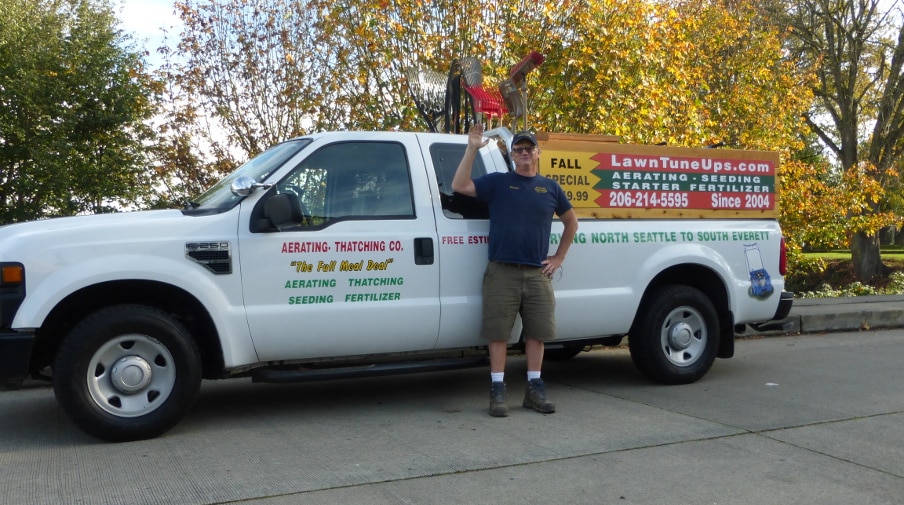
Stewart Armour
Stewart Armour is an independent lawn restoration expert, educator, and owner of Aerating Thatching Co., serving the greater Seattle area since 2004. With more than two decades of professional experience restoring Western Washington lawns, Stewart specializes in diagnosing lawn problems, improving soil health, and developing long-term lawn renovation strategies. His education includes turf management studies, advanced golf course turf training, and continuing education through Wilbur-Ellis University, State Turf Facilities, Soil First Academy, and Golf Course Applied Turf Physiology. Every article published on LawnTuneUps.com is grounded in practical field experience, current turf science, and a commitment to helping homeowners understand the why behind every recommendation—not just what to do.
Stewart has personally evaluated thousands of residential lawns throughout the Seattle area and remains committed to helping homeowners understand the science behind growing healthier, more resilient lawns.