What if the secret to a moss-free yard isn’t found in a bottle of chemicals, but in the health of the soil beneath your feet? In Mill Creek, our heavy clay and dampness make lawn maintenance a unique challenge. You’ve likely spent weekends mowing, yet the moss still wins every winter. With Washington’s ban on phosphorus fertilizers, the solution lies in professional organic fertilizing Mill Creek services that fix the soil itself rather than just treating symptoms.
We agree that a beautiful lawn shouldn’t come at the cost of safety for your family. This guide teaches you how to rebuild a thick, green, and resilient landscape. We’ll explain how a Lawn Tune-Up, consisting of Core Aeration, Overseeding, and Fertilizing, addresses soil compaction. You’ll also learn why the Full Meal Deal, which includes Power Raking (Dethatching), Core Aeration, Overseeding, and Fertilizing, is the gold standard for mossy yards. Finally, we’ll explain why monitoring soil temperatures between 55°F and 75°F is the key to successful Overseeding.
Key Takeaways
- Learn how organic fertilizing Mill Creek techniques and mechanical restoration address the specific challenges of PNW clay soil and moss.
- Identify the core components of a Lawn Tune-Up, featuring Core Aeration, Overseeding, and Fertilizing to strengthen your turf.
- Determine if your property requires the Full Meal Deal, which includes Power Raking (Dethatching) to remove heavy moss and thatch buildup.
- Find out how to prepare your yard for service and why soil temperatures between 55°F and 75°F are critical for successful Overseeding.
The Challenge of Mill Creek Lawns: Why Organic Restoration Matters
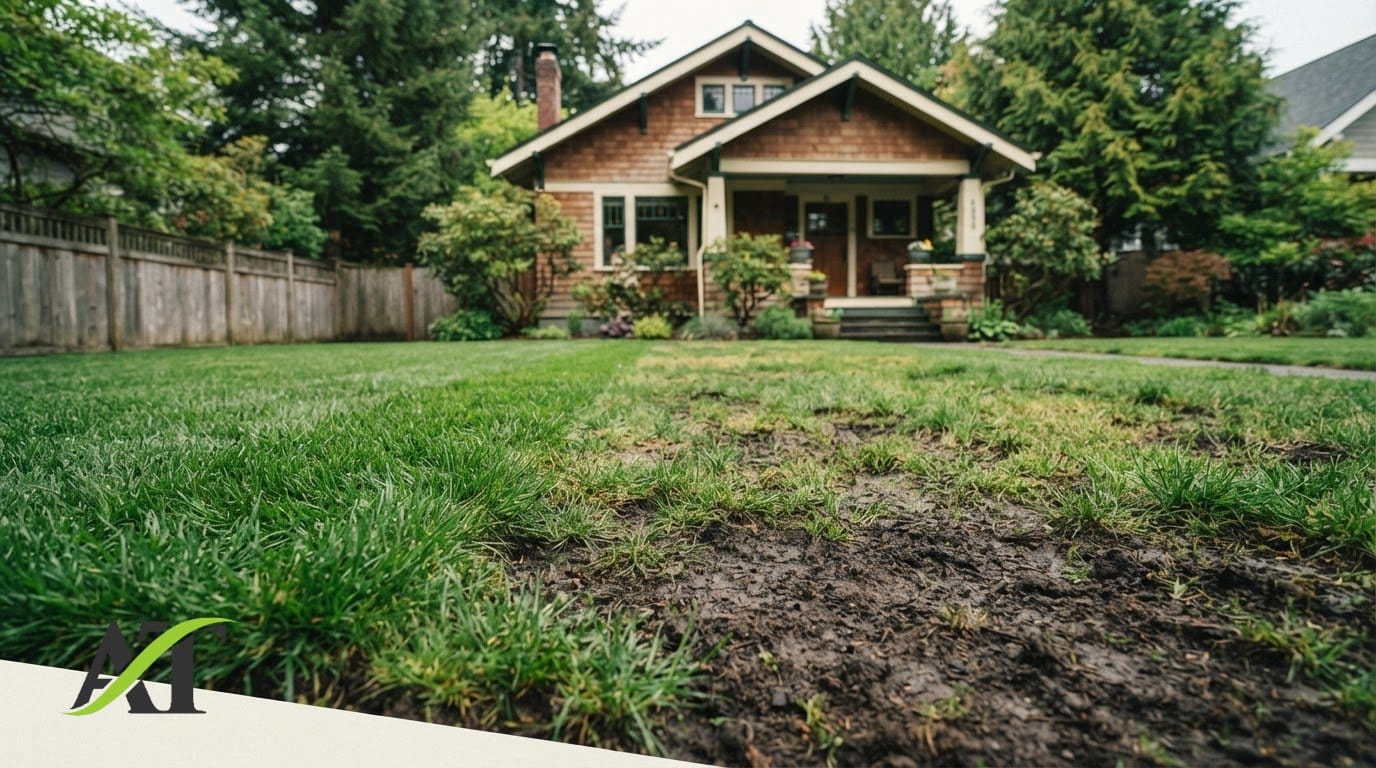
Mill Creek lawns face a constant battle against heavy clay soil and Pacific Northwest dampness. This combination leads to rapid soil compaction. When soil is packed tight, air and water can’t reach the roots. Moss quickly moves into these weak spots. Many homeowners rely on basic mowing, but that’s just maintenance. Real restoration requires a mechanical approach. A professional Lawn Tune-Up focuses on the biological foundation. This service consists of Core Aeration, Overseeding, and Fertilizing. It’s designed to rebuild turf density from the ground up rather than just masking symptoms with temporary green-up chemicals. For lawns with significant moss or thatch, the Full Meal Deal adds Power Raking (Dethatching) to the restoration process.
Fighting Moss with Lime Application
Our local soil is naturally acidic. High acidity is a primary driver for moss growth and prevents grass from absorbing nutrients effectively. A professional Lime Application balances these pH levels. When combined with organic fertilizing Mill Creek programs, it creates an environment where grass can thrive and outcompete moss. This process works in tandem with our restoration services to ensure your lawn stays resilient throughout the rainy season.
The Role of Organic Fertilizing
Switching to organic fertilizing Mill Creek strategies protects our local environment. Slow-release organic nutrients provide steady growth without nitrogen runoff into local watersheds. This follows the principles of Organic lawn management by feeding soil microbes. These organisms break down organic matter to improve soil structure naturally. It’s a pragmatic solution that makes your yard safer for pets while building a thick lawn that resists weeds.
The Science of Restoration: Core Aeration and Soil Temperature
Mechanical restoration is the backbone of any successful organic lawn plan. In Mill Creek, soil compaction is the primary obstacle to a healthy yard. Core Aeration addresses this by removing small soil plugs from the ground. This process opens up pathways for air, water, and nutrients to reach the root zone. Without this step, organic fertilizing Mill Creek treatments often sit on the surface without reaching the roots. We focus on these principles of organic lawn care to ensure your soil can actually breathe.
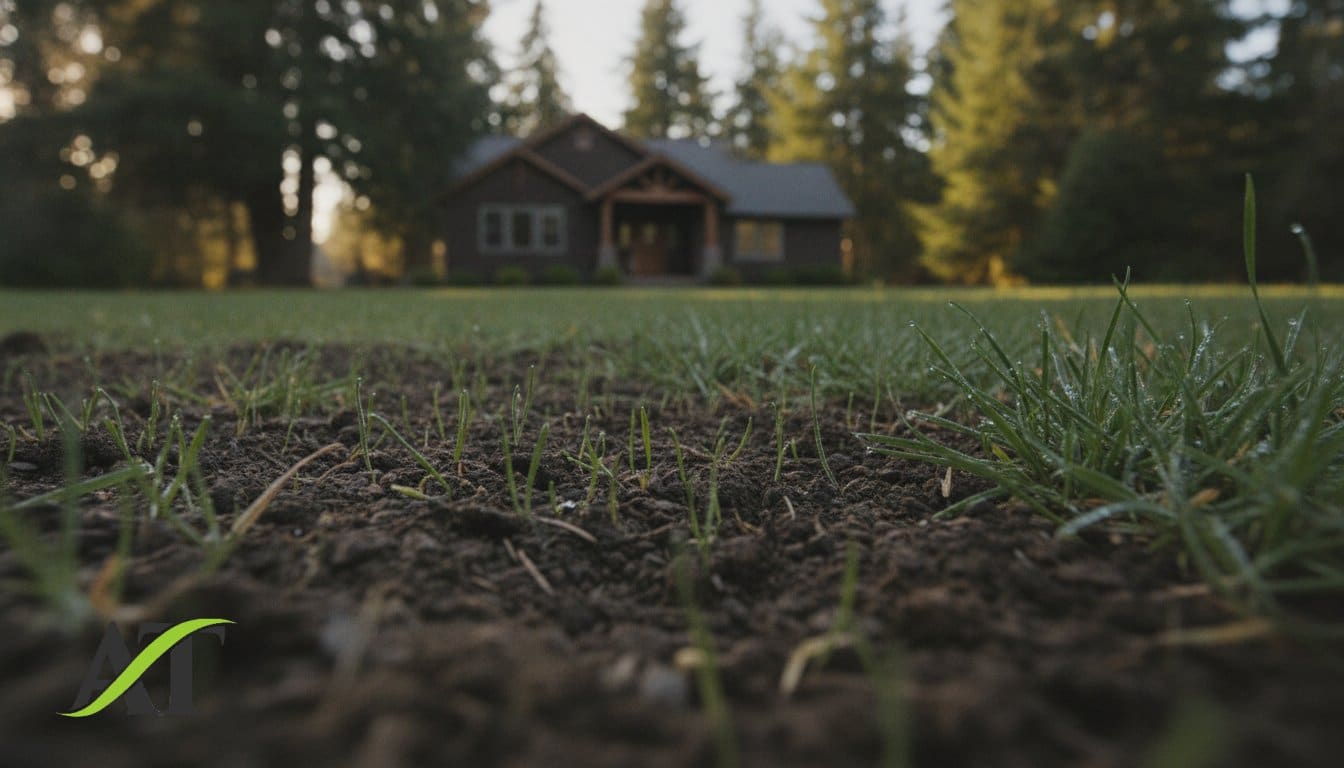
Overseeding works best when paired with Core Aeration. By dropping seed directly into fresh aeration holes, we ensure maximum seed-to-soil contact. This is vastly superior to simple over-the-top seeding, where birds or wind often take the seed before it can sprout. Proper mechanical restoration sets the stage for a thick, resilient lawn. If you’re ready to fix your soil foundation, you can get a professional assessment for your property.
The 55°F-75°F Soil Temperature Rule
Success in Overseeding depends on soil temperature, not air temperature. For cool-season grasses, the optimal soil temperature range is 55°F-75°F (13°C-24°C). If the soil is too cold, the seed stays dormant. If it’s too hot, the young sprouts dry out quickly. While germination can occur outside this range, it’s often slower and produces less reliable establishment. We time our services to hit this window for the best possible results.
Managing Germination Expectations
We use high-quality seed blends, but nature still plays a major role. Results are influenced by moisture, weather patterns, and consistent seed-to-soil contact. Because of the unpredictable PNW climate, we don’t offer absolute guarantees on germination. Instead, we provide the mechanical restoration needed to give your new grass the best possible head start. Healthy turf takes time and the right conditions to thrive.
Choosing Your Service: The Lawn Tune-Up vs. The Full Meal Deal
Most Mill Creek properties fall into two categories: those needing a baseline boost and those needing an overhaul. Identifying which service fits your lawn depends on the current thatch thickness and moss levels. We offer two clear paths for restoration. The Lawn Tune-Up is our essential three-step process. It includes Core Aeration, Overseeding, and Fertilizing. This service is the standard for yards that are generally healthy but need to improve density. It’s especially effective for local properties dealing with the early stages of clay compaction. For properties struggling with years of neglect or thick moss, we recommend the Full Meal Deal. This comprehensive four-step restoration adds Power Raking (Dethatching) to the Core Aeration, Overseeding, and Fertilizing sequence. It ensures your organic fertilizing Mill Creek program actually has a chance to work.
Understanding Power Raking (Dethatching)
Power Raking (Dethatching) is the aggressive mechanical removal of surface debris. In our damp climate, thatch and moss create a waterproof barrier. This layer prevents nutrients from reaching the root zone. By using professional Power Raking (Dethatching), we pull up the dead organic matter that chokes your grass. This isn’t a light raking; it’s a deep cleaning that clears the way for new seed to touch the soil.
Why We Specialized in Restoration Only
Our team doesn’t provide weekly mowing or edging. We focus entirely on mechanical restoration and organic fertilizing Mill Creek strategies. By specializing, we can invest in the heavy equipment needed for professional-grade results. This work complements your existing routine. You keep the grass cut, and we handle the heavy lifting of rebuilding the turf foundation. This clear division ensures your property gets expert attention without overlapping services.

Preparing for Your Mill Creek Lawn Restoration
Restoration success depends on proper timing and preparation. In Mill Creek, Spring and Fall are the ideal windows for a Lawn Tune-Up. These seasons align with the 55°F-75°F soil temperature range required for successful Overseeding. When the soil is within this window, the new grass has the best chance to establish before the weather turns too cold or too dry.
Before our crew arrives for your scheduled service, please complete these three steps:
- Mow your lawn short: Drop your mower deck to approximately 2 inches. Short grass allows our Core Aeration equipment to pull cleaner, deeper soil plugs and ensures seed reaches the soil surface.
- Mark your irrigation: Use flags to identify all sprinkler heads, hidden valve boxes, and shallow utility lines. This prevents accidental damage from the heavy mechanical equipment.
- Clear the area: Remove pet waste, toys, and lawn furniture. A clear yard allows our team to work efficiently and cover every square inch of your property.
Post-Service Care and Watering
The first 14 days after service are the most important for your new seed. You must keep the soil consistently moist to support germination. In the Mill Creek climate, new seeds typically require light watering two to three times daily to prevent the soil surface from drying out. Once the grass is established, transition to deep, infrequent watering. This shift encourages roots to grow deeper into the pathways created by Core Aeration, making your lawn more drought-resistant.
Long-Term Organic Maintenance
Building a resilient lawn is a multi-year commitment to soil health. Consistent organic fertilizing Mill Creek programs improve the soil structure by feeding beneficial microbes. We recommend annual Core Aeration to prevent the return of heavy clay compaction and moss. As your soil foundation strengthens, your yard won’t need as many inputs to stay thick and green. This pragmatic approach saves you time and money while keeping your property looking its best, and you can discover Landscape By Design Of Palmetto for further advice on managing property and garden challenges.
Rebuilding a lawn in our damp climate requires more than just water and seed. It takes a mechanical focus on soil health to overcome the heavy clay and persistent moss common in our area. Whether you choose a Lawn Tune-Up for essential maintenance or the Full Meal Deal to remove years of buildup, the goal is the same: a resilient, thick turf that naturally resists weeds. We’ve specialized in expert restoration since 2004, using specialized mechanical equipment designed for the unique challenges of PNW soil.
By combining these physical treatments with organic fertilizing Mill Creek strategies and lime applications, we fix the underlying issues causing compaction. This approach creates a safe play area for your family and pets; it’s a solution that works without relying on harsh chemicals. Remember to time your restoration when soil temperatures are between 55°F and 75°F for the most reliable germination results. We’re proud to be your local partner in property maintenance and look forward to helping you achieve a yard you can truly enjoy.
Frequently Asked Questions
Is organic lawn care really as effective as chemical treatments in Mill Creek?
Organic care is effective because it targets the soil foundation rather than just the grass blade. Using organic fertilizing Mill Creek programs builds microbial activity and improves soil structure over time. Chemical treatments often provide a quick green-up but fail to address the heavy clay compaction common in our area. A healthy, dense lawn naturally resists weeds and moss without the need for harsh synthetic inputs or toxic runoff.
When is the best time of year to schedule a Lawn Tune-Up in Mill Creek?
The best times are Spring and Fall when soil temperatures consistently stay between 55°F and 75°F (13°C-24°C). This range is critical for cool-season grass seed germination. If you schedule a Lawn Tune-Up outside this window, establishment will be slower and less reliable. We monitor local conditions to ensure our mechanical restoration services align with these natural cycles, giving your new seed the best possible start in the Mill Creek climate.
What is the difference between a Lawn Tune-Up and the Full Meal Deal?
A Lawn Tune-Up is a three-step service consisting of Core Aeration, Overseeding, and Fertilizing. It’s ideal for maintaining healthy turf. The Full Meal Deal is a more intensive four-step restoration that includes Power Raking (Dethatching), Core Aeration, Overseeding, and Fertilizing. Choose the Full Meal Deal if your yard has significant moss or thick thatch that needs aggressive mechanical removal before we start the seeding process.
How often should I water my lawn after Overseeding?
You should water lightly two to three times daily for the first 14 days to keep the soil surface moist. Consistent moisture is vital for Overseeding success. While we use high-quality seed, germination depends on factors like weather, moisture, and seed-to-soil contact. We don’t offer absolute guarantees on germination because these environmental variables are outside our control. Once sprouts appear, you can transition to deeper, less frequent watering.
Does Core Aeration help with the moss problems common in Mill Creek?
Yes, Core Aeration is essential for moss control because it relieves soil compaction. Moss thrives in the tight, wet clay soil found throughout Mill Creek. By removing soil plugs, we allow oxygen and nutrients to reach the roots, helping grass outcompete the moss. When paired with organic fertilizing Mill Creek and Lime Application to balance pH levels, your lawn becomes a much less hospitable environment for moss to grow.

Article by
Stewart Armour
Stewart Armour is an independent lawn restoration expert, educator, and owner of Aerating Thatching Co., serving the greater Seattle area since 2004. With more than two decades of professional experience restoring Western Washington lawns, Stewart specializes in diagnosing lawn problems, improving soil health, and developing long-term lawn renovation strategies. His education includes turf management studies, advanced golf course turf training, and continuing education through Wilbur-Ellis University, State Turf Facilities, Soil First Academy, and Golf Course Applied Turf Physiology. Every article published on LawnTuneUps.com is grounded in practical field experience, current turf science, and a commitment to helping homeowners understand the why behind every recommendation—not just what to do.
Stewart has personally evaluated thousands of residential lawns throughout the Seattle area and remains committed to helping homeowners understand the science behind growing healthier, more resilient lawns.