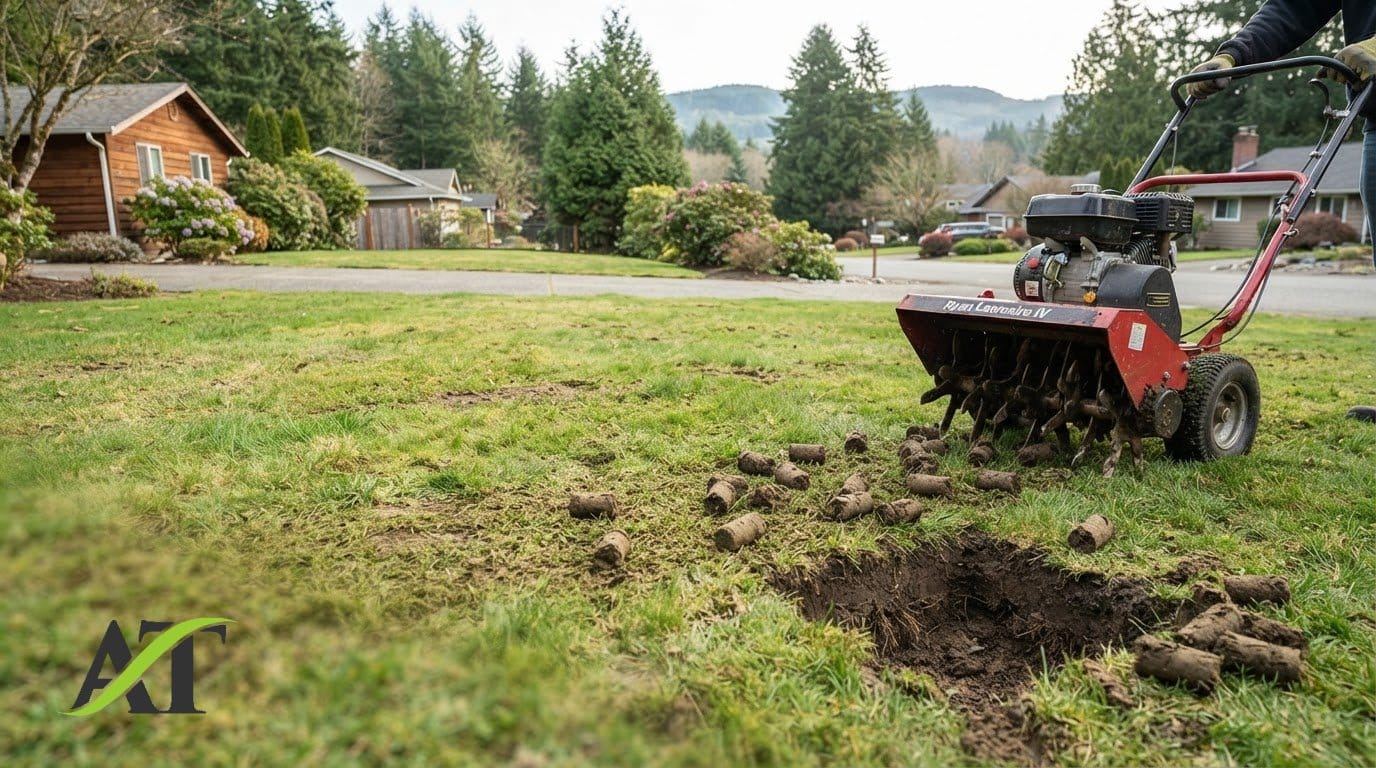
Moss Keeps Coming Back in Your Mill Creek Lawn?
Removing what you see is only part of the solution. Moss often points to conditions that are making it difficult for grass to compete. Learn what may be causing it, what can actually be improved, and when your lawn may need more than basic moss removal.
Why Does Moss Keep Returning?
In Mill Creek, recurring lawn moss is commonly associated with some combination of shade, prolonged moisture, poor drainage, compacted soil, weak lawn density, or growing conditions that favor moss more than grass.
Removing moss can open the surface, but long-term improvement depends on helping the grass grow better where the site realistically allows it.
Why Moss Is So Common in Mill Creek Lawns
Mill Creek's wet season, established neighborhoods, mature trees, shaded fence lines, and areas that dry slowly can create difficult conditions for lawn grass. Moss can take advantage when grass becomes thin or stressed.
The important question is not simply, "How do I remove the moss?" It is, "Why is the grass losing ground here?"
Shade
Trees, fences, buildings, and north-facing areas can reduce sunlight and slow drying after rainfall or irrigation.
Persistent Moisture
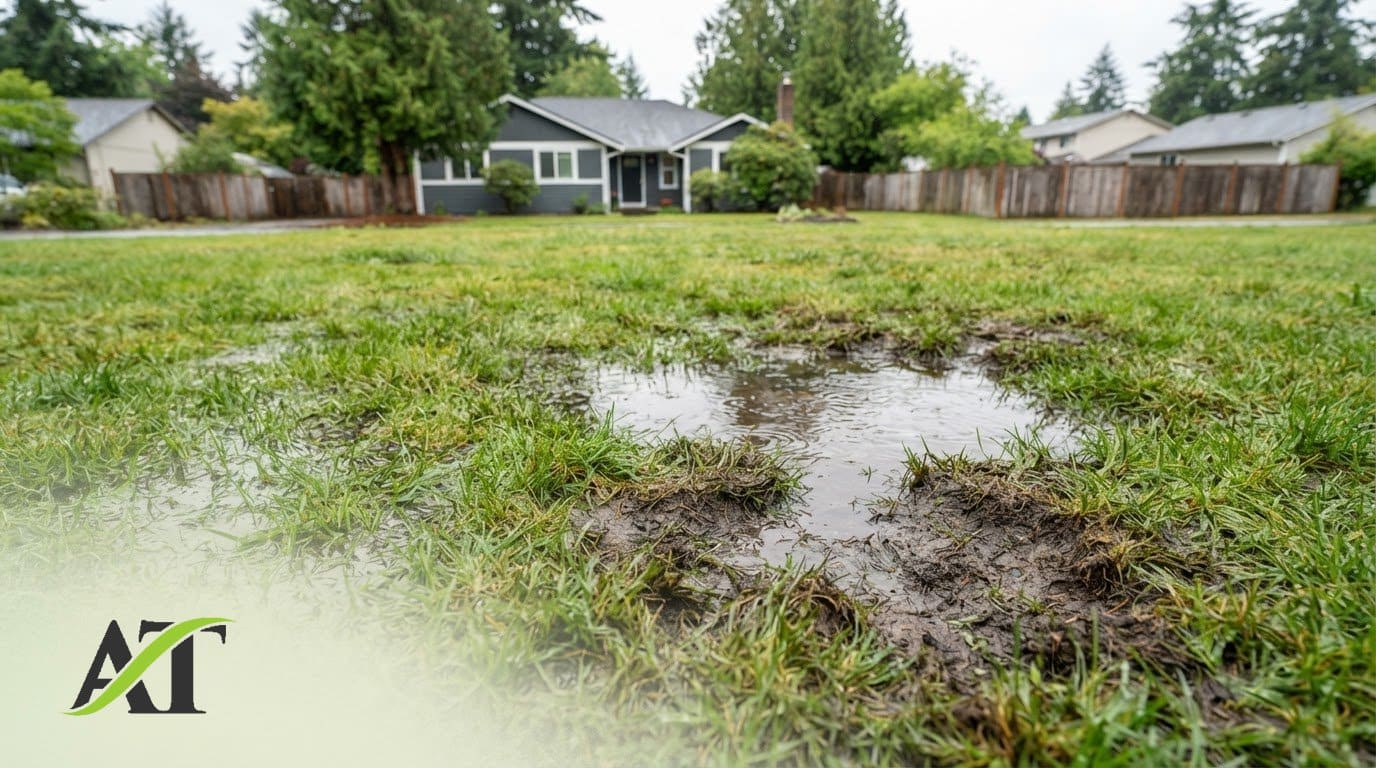
Lawns that remain wet for long periods can become difficult environments for strong grass growth while remaining favorable to moss.
Compaction
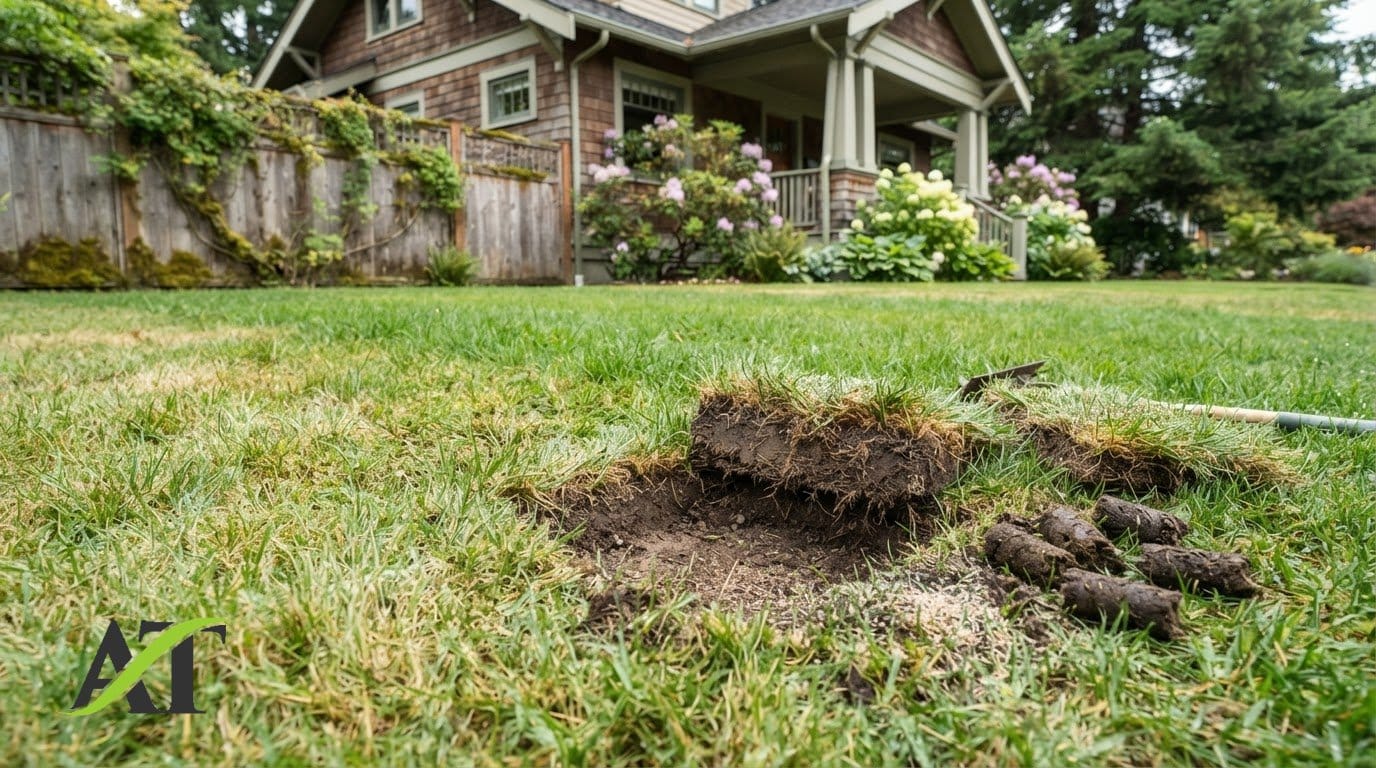
Compacted soil can restrict rooting and affect how air and water move through the lawn's root zone.
Thin Grass
When grass density declines, open areas give moss more room to establish and spread.
Moss Is a Symptom, Not the Whole Problem
Moss often succeeds where lawn grass is already having trouble. Removing the moss may improve the surface, but the lawn can return to the same condition if shade, drainage, moisture, compaction, or poor grass density remains unchanged.
What You See
- Moss spreading between grass plants
- Thin or weak grass
- Matted surface material
- Bare areas after moss is removed
- Areas that remain damp longer than the rest of the lawn
What May Be Behind It
- Too little sunlight for strong grass growth
- Persistent moisture or drainage limitations
- Soil compaction
- Weak lawn density
- Fertility or soil-condition issues
Moss Removal vs Lawn Repair
Aerating Thatching Co. does not approach recurring moss as a simple "remove it and walk away" problem.
When physical moss and accumulated surface material need to be removed as part of a lawn renovation, Dethatching (Power Raking) can help open the lawn. The next question is what the lawn needs afterward so grass has a better opportunity to recover.
Moss Removal Alone
- Addresses visible material
- Can leave thin or bare lawn behind
- Does not automatically relieve soil compaction
- Does not add new grass plants
- Does not change shade or drainage limitations
Moss-Damaged Lawn Repair
- Removes surface buildup when necessary
- Can address compaction with Core Aeration
- Uses overseeding to rebuild lawn density
- Supports establishment with fertilizer
- Considers soil and site limitations
Does Every Mossy Lawn Need Dethatching (Power Raking)?
No. The presence of some moss does not automatically mean the lawn needs Dethatching (Power Raking).
The more useful question is whether enough moss, thatch, or accumulated surface material is present that it should be physically opened and removed before the lawn is aerated and overseeded.
Thin + Compacted
If the lawn is thin and compacted but does not have significant surface buildup, a Lawn Tune-Up may provide the appropriate level of improvement.
Mossy + Matted
If moss, thatch, and dead surface material are preventing good seed-to-soil contact, Dethatching (Power Raking) may make sense before Core Aeration and overseeding.
Deep Shade or Drainage
If the main limitation is inadequate sunlight or a serious drainage problem, mechanical lawn services cannot remove the underlying site condition.
How a Moss-Damaged Mill Creek Lawn Can Be Rebuilt
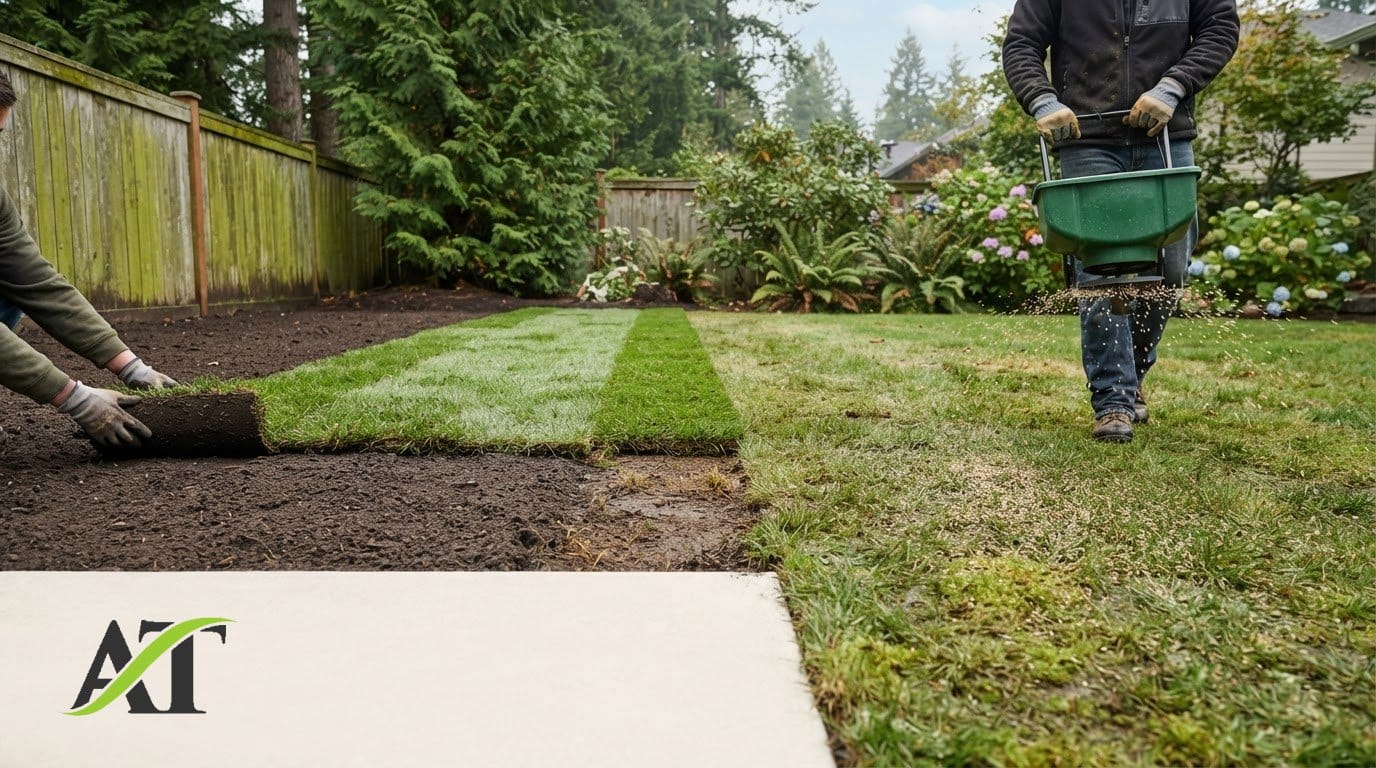
There is no universal recipe for every mossy lawn. When a renovation is appropriate, the work generally focuses on opening the surface, improving the root zone, rebuilding grass density, and supporting establishment.
Dethatching (Power Raking), When Needed
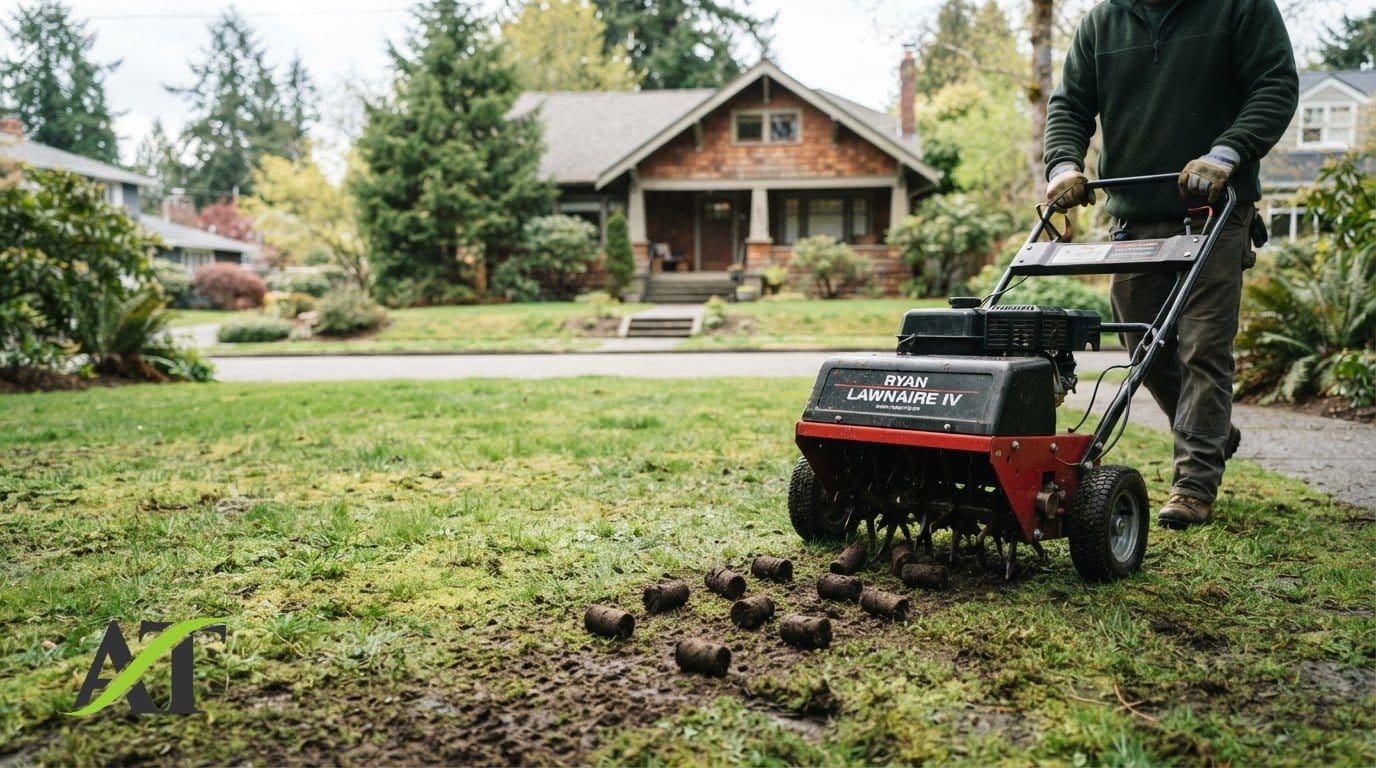
Dethatching (Power Raking) mechanically lifts moss, thatch, and accumulated surface material when that buildup needs to be removed before renovation.
Core Aeration
Core Aeration removes small soil plugs to help relieve compaction and create openings in the root zone.
Premium Overseeding
Overseeding adds new grass plants to thin areas. Increasing grass density is important because moss has more opportunity to spread when the lawn becomes sparse.
Starter Fertilizer
Starter Fertilizer accompanies overseeding to support new seedlings during establishment.
Lawn Tune-Up or Full Meal Deal for a Mossy Lawn?
Both services can help rebuild grass density. The key difference is whether Dethatching (Power Raking) is needed before Core Aeration, overseeding, and fertilizing.
Lawn Tune-Up
Includes:
- Core Aeration
- Premium Overseeding
- Starter Fertilizer
Best fit: A thin or compacted lawn that needs more density but does not require significant moss, thatch, or surface material to be removed first.
Full Meal Deal Lawn Renovation
Includes:
- Dethatching (Power Raking)
- Core Aeration
- Premium Overseeding
- Starter Fertilizer
Best fit: A lawn with enough moss, thatch, or matted surface buildup that physical removal should be part of the renovation.
Will Lime Get Rid of Lawn Moss?
Moss can be associated with shade, prolonged moisture, poor drainage, compaction, thin grass, and other conditions. Soil acidity can be part of the picture in some lawns, but lime is not a universal moss cure.
Lime is better considered as a soil-management tool when lawn and soil conditions indicate that correcting acidity would be useful.
If the real issue is deep shade or excessive moisture, lime will not remove that underlying limitation.
What Lawn Services Cannot Fix
Lawn renovation can improve many thin, compacted, or moss-damaged lawns, but there are physical site conditions that a lawn service cannot make disappear.
Deep Shade
Grass still needs adequate light. If an area receives too little sunlight for sustained grass growth, repeatedly adding seed does not remove the light limitation.
Major Drainage Problems
Core Aeration can help with compaction and movement through the soil, but it is not a substitute for drainage construction where standing water is caused by a larger site or grading problem.
Constant Excess Moisture
Irrigation habits, runoff, downspout discharge, low areas, or persistent moisture may need to be addressed separately if they continually keep the lawn wet.
When Is the Best Time to Repair a Mossy Mill Creek Lawn?
Spring and fall are important lawn-improvement periods in the Puget Sound region, but the right timing depends on the specific work being performed, current soil moisture, weather, and whether new seed will need to establish.
Recover From the Wet Season
Spring can be useful for assessing winter moss pressure, opening accumulated surface material where appropriate, relieving compaction, and rebuilding weak grass.
Strong Renovation Window
Fall can be an excellent time for coordinated Dethatching (Power Raking), Core Aeration, overseeding, and lawn-density rebuilding when conditions are suitable.
How to Reduce the Chance of Moss Taking Over Again
Long-term moss management is largely about creating better conditions for grass wherever the site allows it.
Improve the Growing Environment
- Increase useful sunlight where practical
- Correct irrigation that keeps shaded areas unnecessarily wet
- Investigate persistent standing-water or drainage problems
- Reduce soil compaction when it is limiting the lawn
Build Stronger Lawn Density
- Overseed genuinely thin areas when conditions are suitable
- Use appropriate fertilization to support grass growth
- Follow watering instructions carefully after overseeding
- Avoid allowing small weak areas to decline season after season
A thicker lawn cannot overcome every shade or drainage problem, but stronger grass generally has a better chance to compete than a chronically thin lawn.
Local Experience Matters
“Stewart is amazing! He is so hard working, courteous and we really have grown to trust him over the years...”
Julie & Craig Sewald
Mill Creek, WA
Review excerpt. Read this and additional customer feedback on the Aerating Thatching Co. Testimonials page .
When You Ask About Your Lawn, You Are Talking With Stewart
Aerating Thatching Co. is owner-operated, and Stewart personally performs the lawn service. The person discussing what your lawn needs is also the person doing the work.
That matters on a moss problem because the right answer is not automatically "dethatch everything." The recommendation can stay focused on the condition Stewart actually sees.
Aerating Thatching Co. has served Seattle-area homeowners since 2004.
Mill Creek Moss Removal & Lawn Repair FAQ
These are the questions that matter most when deciding whether a mossy lawn needs simple improvement, physical surface removal, or a more complete renovation.
Why does moss keep coming back in my Mill Creek lawn?
Moss often returns because the conditions that helped it become established are still present. Shade, prolonged moisture, poor drainage, compaction, weak grass density, and other lawn or soil conditions can all contribute. Removing visible moss does not automatically change those conditions.
Does Dethatching (Power Raking) remove moss?
Dethatching (Power Raking) can mechanically lift moss, thatch, and accumulated surface material. When that buildup is part of the lawn problem, opening the surface can prepare the lawn for the next repair steps.
Does every mossy lawn need Dethatching (Power Raking)?
No. If the lawn is mainly thin or compacted and does not have significant moss or surface buildup that needs physical removal, a Lawn Tune-Up may be the more appropriate service. The recommendation should be based on the lawn's actual condition.
Will lime get rid of lawn moss?
Lime is not a universal moss treatment and does not directly solve problems such as shade, excessive moisture, drainage limitations, or compaction. Lime may be useful when soil conditions indicate that acidity should be corrected, but moss alone is not enough reason to assume that lime is needed.
Can moss be permanently prevented in a heavily shaded lawn?
Not always. Grass has light requirements, and areas with severe shade can remain difficult places to maintain a dense lawn. Improving available light may be more important than repeatedly treating or reseeding the same area.
Should I overseed after moss is removed?
Often, yes, when moss removal leaves the lawn thin and the site can realistically support grass. Overseeding adds new grass plants to rebuild density. It works best when soil contact, moisture, temperature, sunlight, and after-care support seed establishment.
Should I choose a Lawn Tune-Up or Full Meal Deal for a mossy lawn?
A Lawn Tune-Up combines Core Aeration, Premium Overseeding, and Starter Fertilizer. It may fit a thin or compacted lawn that does not require significant surface removal first.
The Full Meal Deal Lawn Renovation adds Dethatching (Power Raking), making it the stronger option when enough moss, thatch, or matted surface material needs to be physically opened and removed as part of the renovation.
What is the best time to repair a mossy lawn in Mill Creek?
Spring and fall are important lawn-repair periods in the Puget Sound area. The exact timing depends on soil moisture, weather, the condition of the lawn, the work being performed, and whether overseeding is part of the service.
What if drainage or heavy shade is causing the moss?
Lawn services can improve compaction, lawn density, and surface conditions, but they cannot eliminate major drainage problems or create sunlight where the site does not receive enough. Those underlying conditions may need separate correction for lasting improvement.
Do you offer a standalone moss-killing treatment?
This page focuses on physical moss removal and lawn repair rather than presenting moss as a problem solved by a standalone moss-killing application. When significant moss and surface buildup need physical removal, Dethatching (Power Raking) may be used as part of a broader lawn-renovation plan.
Ask Stewart About Your Mill Creek Lawn
You do not need to diagnose the lawn yourself. Describe the moss, shade, thinning, moisture, or other problems you are seeing. Stewart can help determine whether the lawn is better suited to a Lawn Tune-Up, Full Meal Deal Lawn Renovation, or a more limited approach.