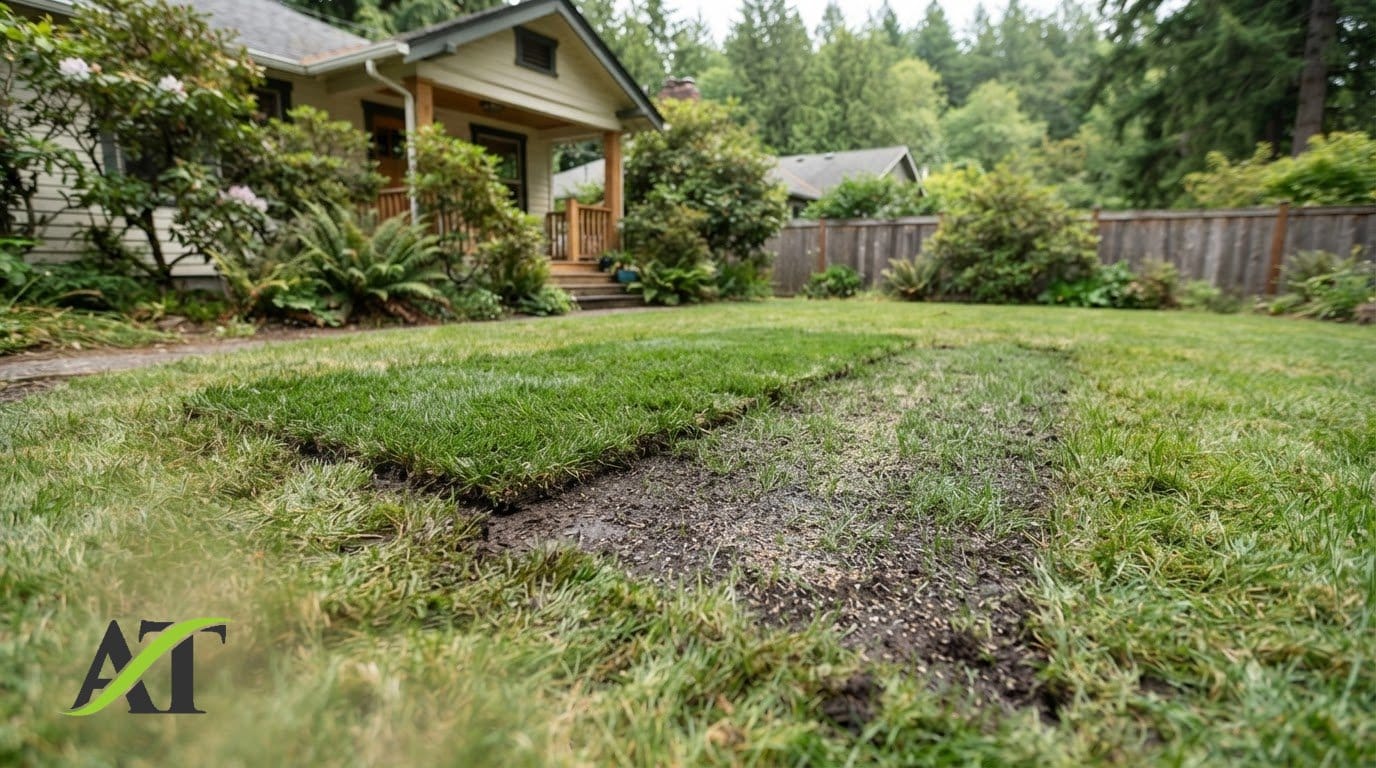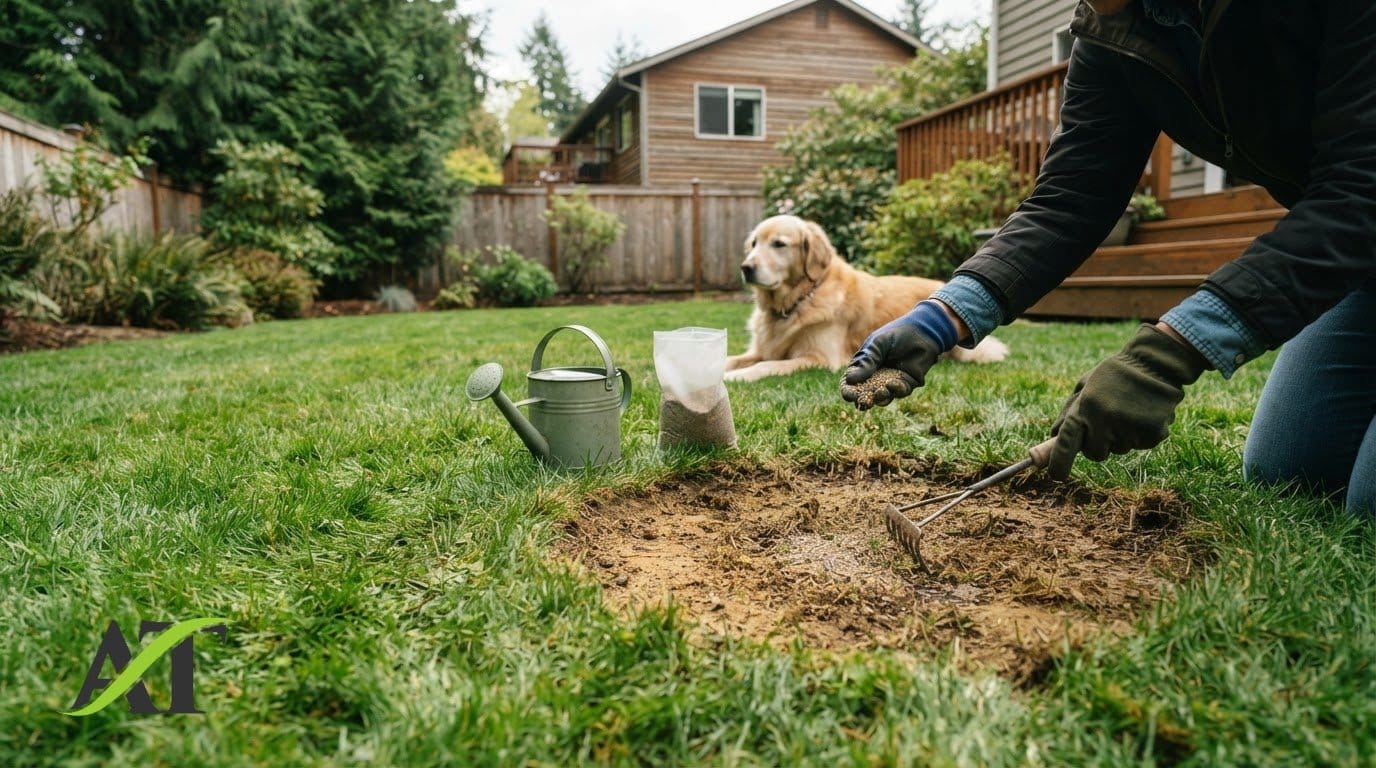
A dog-spot repair mix can help fill a bare patch, but it won’t prevent fresh urine from damaging the grass again. For homeowners fixing dog spots in a North Seattle lawn, the practical approach is to dilute fresh urine with water, remove dead grass, prepare the soil, and keep new seed moist. Dog urine contains nitrogen and salts that can leave yellow or brown patches.
It’s frustrating to reseed a spot only to see it fade again, so address both the bare ground and repeated urine exposure. This guide explains when a repair mix may help, how to reseed a damaged patch, and what affects recovery. New growth may appear in one to three weeks, depending on the seed and weather. Changes to your dog’s routine can also help protect the repaired area.
Key Takeaways
- Use a repair mix to help restore bare grass, but address repeated urine exposure so the same patch doesn’t keep returning.
- Prepare the damaged ground before reseeding; seed needs good contact with loosened soil to establish.
- Set realistic recovery expectations by considering seed type, soil moisture, and weather.
- If damage extends beyond isolated spots, identify whether compaction, shade, or another lawn condition is also affecting growth.
How do I fix pee spots on grass caused by dog urine?
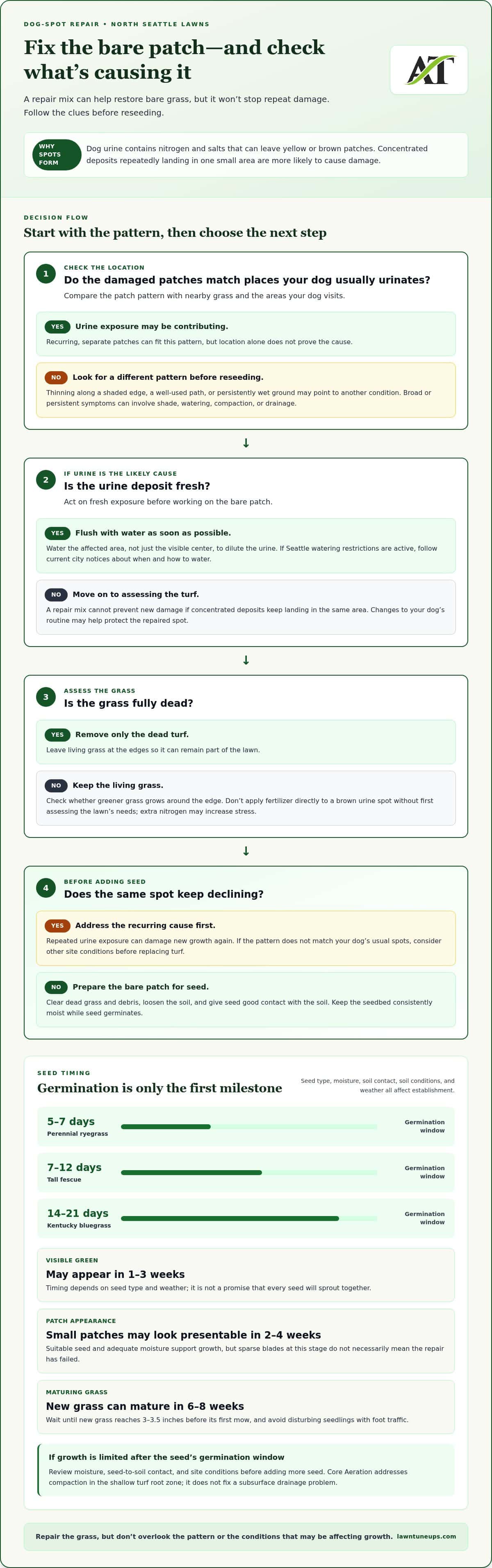
When fixing dog spots in a North Seattle lawn, dilute fresh urine first, then assess the turf. A repair mix won’t prevent damage if concentrated deposits keep landing in the same area.
-
Dilute Fresh Urine with Water
Flush a fresh spot with water as soon as possible to dilute urine and reduce further stress to the grass. Water the affected area, not just the visible center. If Seattle watering restrictions are active, follow current city notices about when and how to water.
For fixing dog spots in a North Seattle lawn, also consider where your dog urinates during walks. Seattle Parks and Recreation lists Golden Gardens Off-Leash Area at 8498 Seaview Pl NW in Seattle, Washington; Magnuson Park Off-Leash Area at 7400 Sand Point Way NE in Seattle, Washington; and Northacres Park Off-Leash Area at 12718 1st Ave NE in Seattle, Washington.
-
Assess Green Spots and Fertilization
Check whether greener grass grows around the edge of a damaged spot. Nitrogen can support growth at lower concentrations, while concentrated urine can injure grass. Don’t apply fertilizer directly to a brown urine spot without first assessing the lawn’s needs. Extra nitrogen may increase stress rather than replace dead turf.
-
Consider Nitrogen and Salt Effects
Dog urine contains nitrogen and salts that can leave yellow or brown patches. Larger dogs may produce more urine, and dogs that squat may leave a larger deposit in one place. Male dogs often mark several locations with smaller amounts. Ask a veterinarian before changing your dog’s diet or using supplements intended to alter urine concentration.
For Overseeding in North Seattle, our practical preference is soil temperatures around 55-75°F (13-24°C). Seed choice, moisture, seed-to-soil contact, soil conditions, weather, and aftercare also affect establishment. Cool-season options include perennial ryegrass, tall fescue, and Kentucky bluegrass, which have different germination times.
Why dog urine damages grass
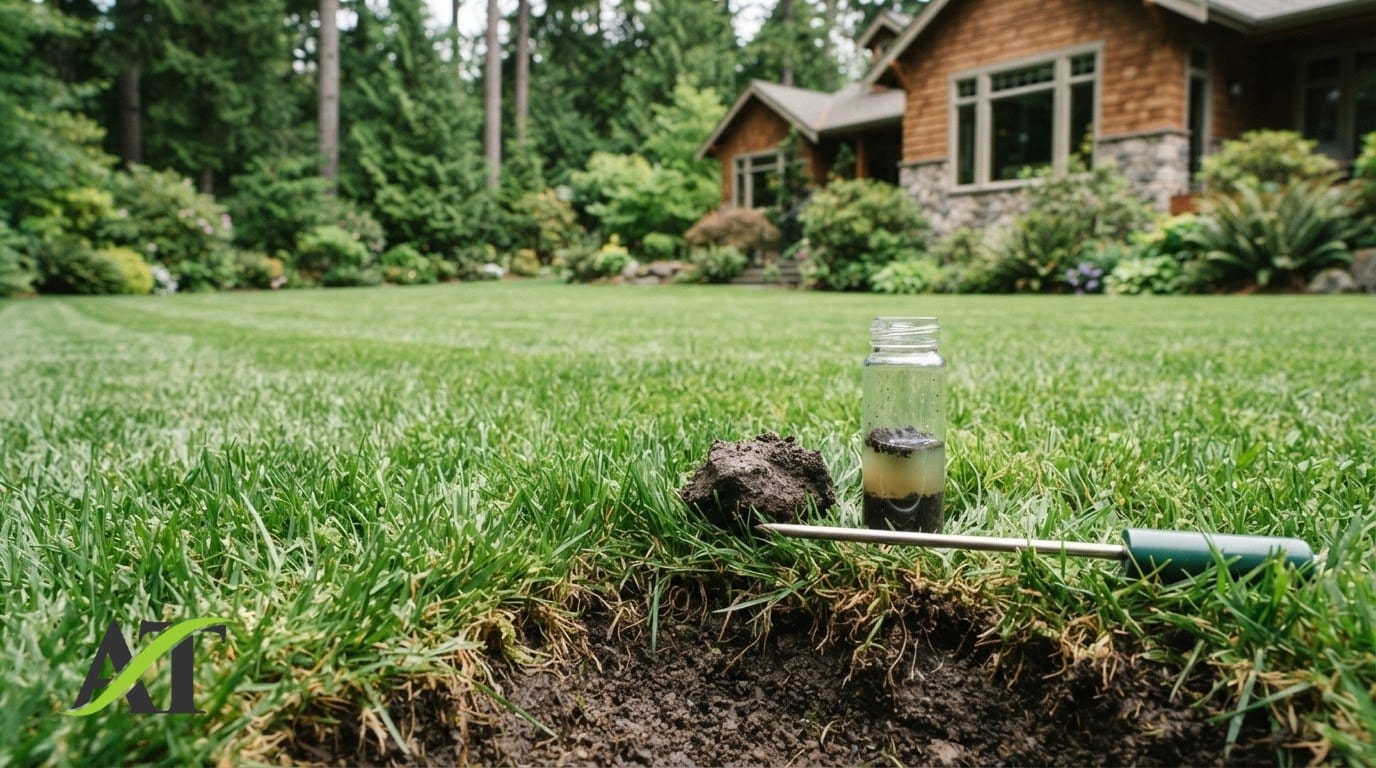
Urine damage is more likely when concentrated deposits repeatedly land in one small area. Check the patch pattern and surrounding lawn before deciding whether urine explains the damage or another condition needs attention.
-
Identify Urine Spot Causes
Note where your dog usually urinates and whether the damaged areas match those locations. Separate, recurring patches may suggest urine exposure, while thinning along a shaded edge, a well-used path, or persistently wet ground points to a different pattern. Compare nearby grass rather than judging one patch alone.
Look beyond the usual bathroom spots. A broad area with similar symptoms may point to shade, uneven watering, compaction, or drainage rather than isolated pet exposure. Core Aeration relieves soil compaction in the turf’s root zone; it does not correct a subsurface drainage problem. Widespread or persistent symptoms need closer diagnosis.
-
Understand Brown Spots and Salt Damage
Focus on where the damage appears and whether it returns, rather than treating color as a diagnosis. Grass can look stressed for several reasons, and one visual clue does not establish the cause. Record where a patch appears, whether it grows, and whether similar damage occurs away from your dog’s usual route.
Check nearby conditions too. Turf under a tree may receive less light, while grass beside a path may be worn by foot traffic. If symptoms follow low ground or persist after the visible patch changes, consider drainage or irrigation patterns before assuming urine is responsible.
- When preparing a confirmed repair, remove only turf that is fully dead. Leave living grass at the edges so it can remain part of the lawn. If the same area keeps declining, address the recurring cause before investing effort in replacement seed.
When the pattern doesn’t match your dog’s usual spots, avoid treating the whole lawn as urine-damaged. Ask Stewart About Your Lawn if you need help deciding what the damage suggests.
Expected germination and recovery times
Seed type sets an initial milestone, but moisture and weather influence what happens next. Track germination separately from the time it takes for a patch to grow thick enough to blend into the lawn.
- Identify the grass seed before estimating when shoots should appear. Perennial ryegrass can germinate in 5 to 7 days, while tall fescue often emerges in 7 to 12 days. Kentucky bluegrass takes 14 to 21 days. These are different starting points, not a promise that every seed in a patch will sprout together.
- Keep the seedbed consistently moist while the seed germinates. Letting it dry between waterings can interrupt establishment, while heavy watering can move seed out of place. Check the repair area rather than relying only on a schedule. Moisture, soil contact, soil conditions, and weather all affect whether germination leads to visible growth.
- Judge early progress by new blades, not by a fully filled-in lawn. Dog-spot repairs may show visible green in one to three weeks, depending on seed type and weather. Small patches can look presentable in 2 to 4 weeks when suitable seed and moisture support growth. Sparse blades during this stage don’t necessarily mean the repair has failed.
- Give new grass time to mature before treating the patch as established. Newly repaired areas can mature in 6 to 8 weeks with steady care. Wait until new grass reaches 3 to 3.5 inches before its first mow, and avoid disturbing seedlings with foot traffic. If a patch shows little growth after its seed’s germination window, review moisture, seed-to-soil contact, and site conditions before adding more seed.
Overseeding and covering bare patches
For Overseeding in Seattle, Aerating Thatching Co. prefers soil temperatures around 55-75°F (13-24°C) as a practical window for its seed and local work. This is a preference, not a strict cutoff, a universal optimum, or a germination guarantee. Other seed types may prefer different temperatures; moisture, seed-to-soil contact, soil conditions, weather, and aftercare also affect establishment.
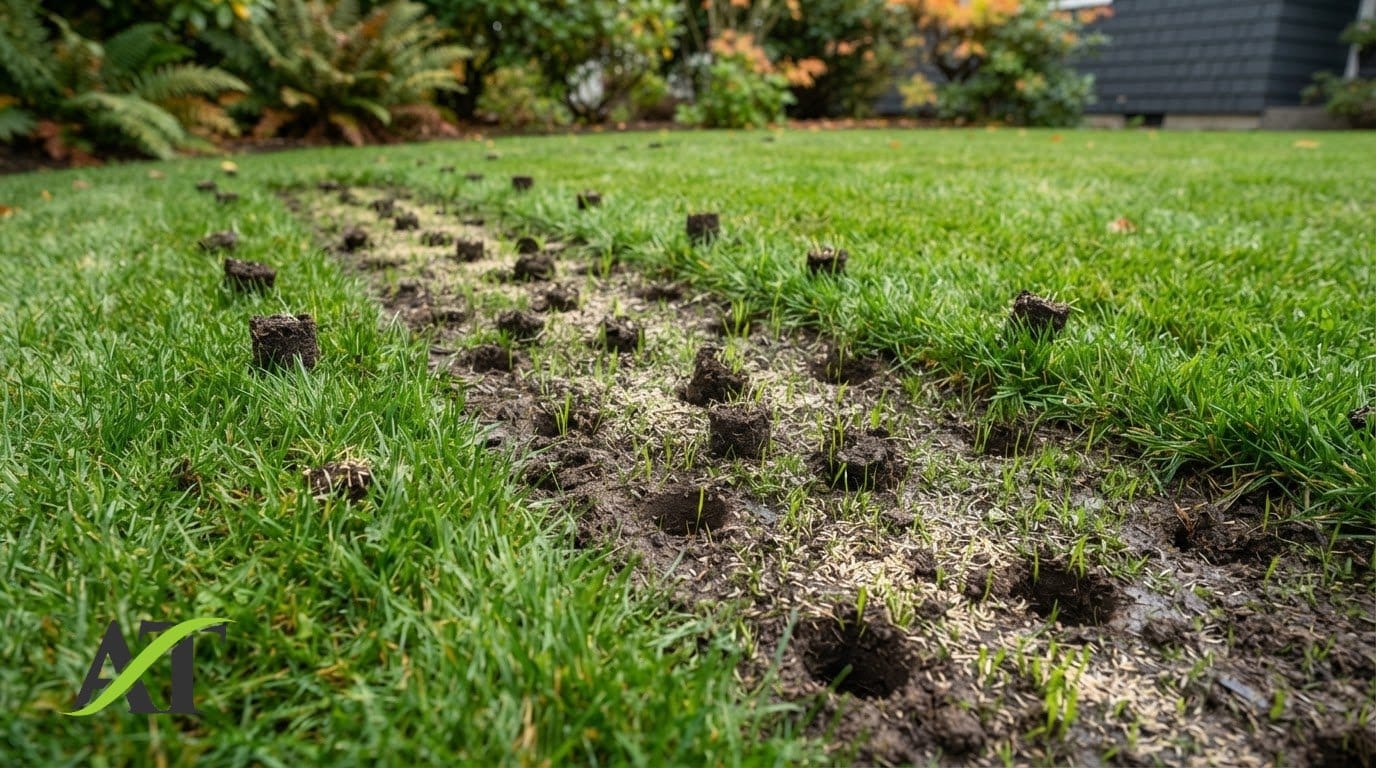
- Clear dead grass and debris, then loosen the soil about 1 to 2 inches deep. Break up the surface gently so seed can reach soil. Fill shallow holes with topsoil and level the patch, taking care not to cover healthy grass around its edges.
- Spread seed over the prepared area and press it into place, aiming for coverage around a quarter inch deep. A light layer of compost or topsoil can cover the repair. Keep the covering light, since a heavy layer can make it harder for new shoots to emerge.
- Keep the seeded patch consistently moist during germination. Water two to three times daily during the first 7 to 10 days, adjusting for rain and how quickly the soil dries. After seedlings emerge, continue checking moisture and avoid washing seed out of place.
- Keep paws and digging away from new growth while seedlings establish. If you choose sod, water the repaired area daily for two weeks. For a seed repair, consider the patch’s exposure and how easily you can keep it moist. Shaded ground may dry at a different rate from sunny ground, so check the soil itself.
Aerating Thatching Co.: Lawn Tune Up
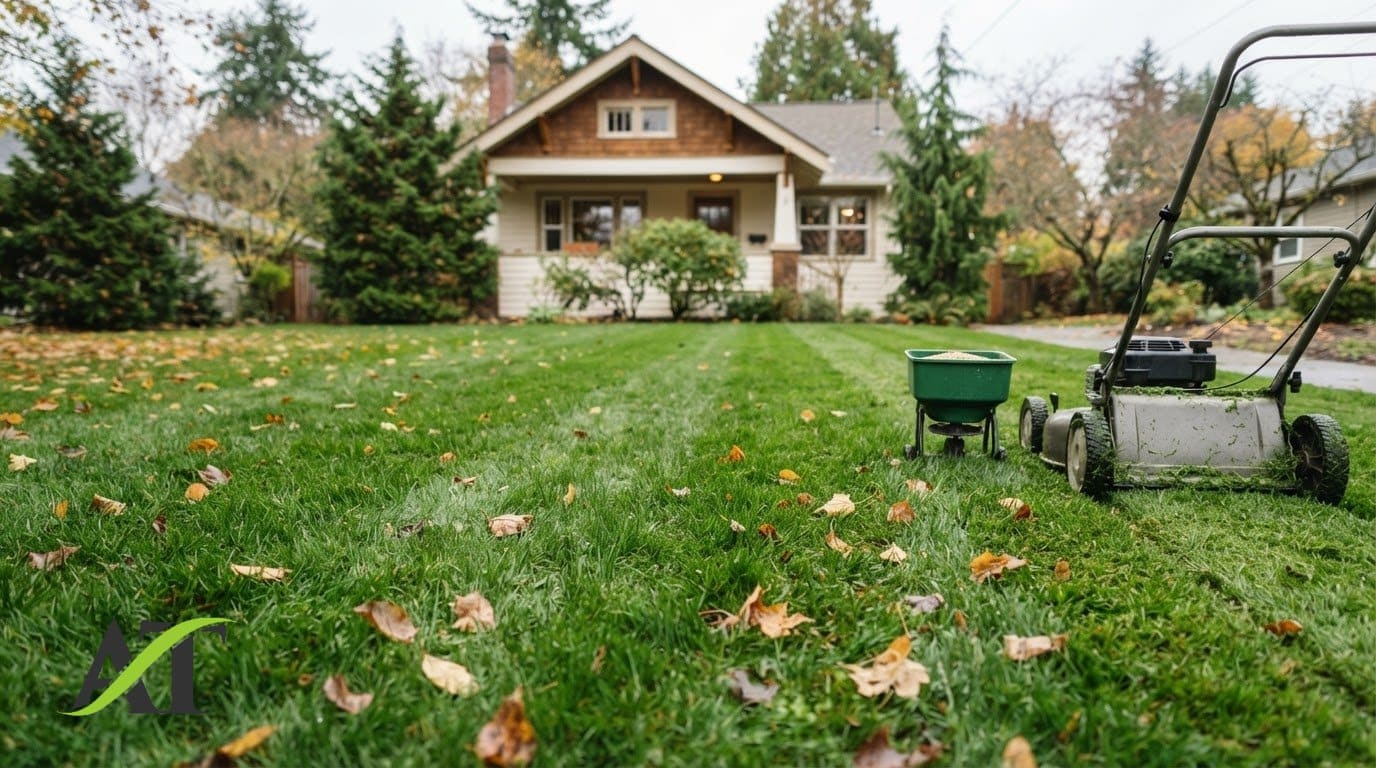
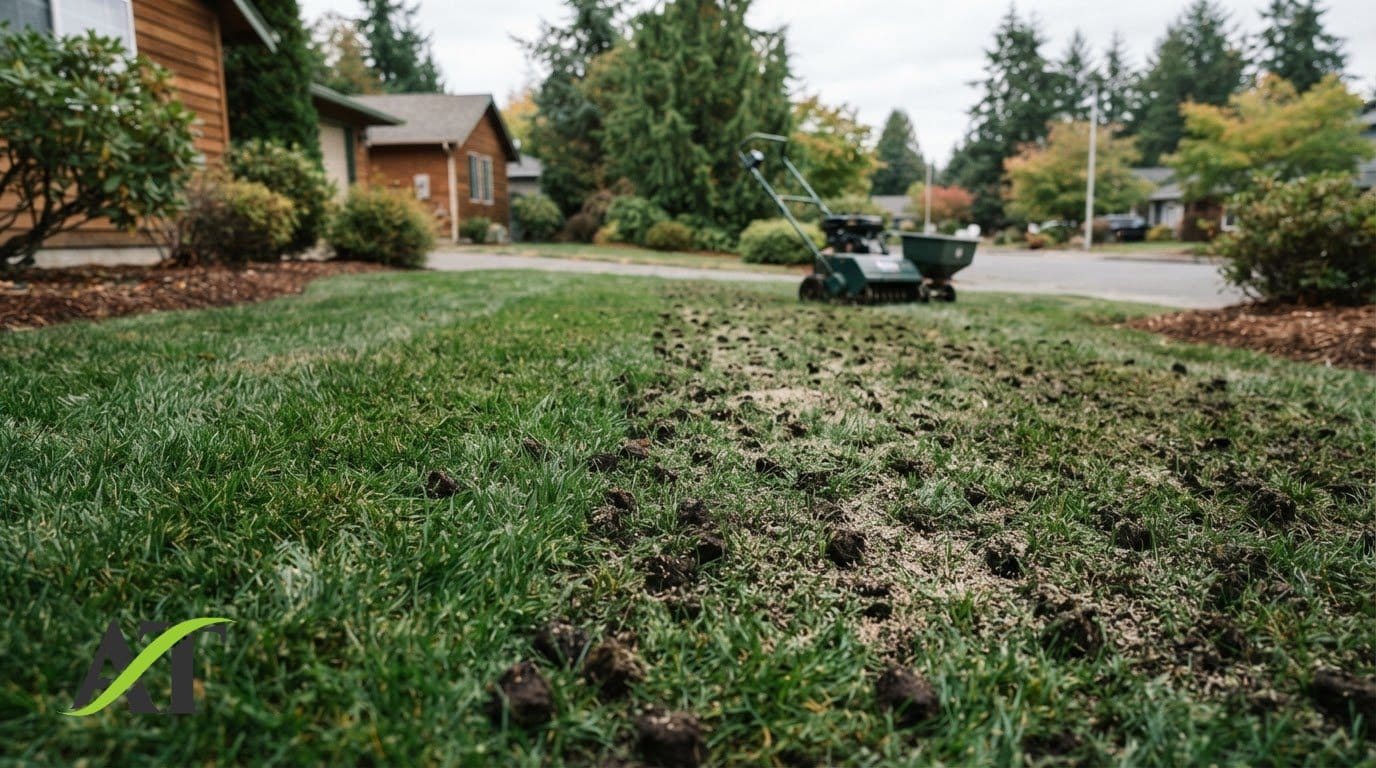
Aerating Thatching Co.’s Lawn Tune-Up can suit a lawn with dog spots as well as thin or compacted turf. It combines Core Aeration, Premium Overseeding, and Starter Fertilizer. Core Aeration relieves soil compaction; it does not repair urine burn, deep hardpan, or subsurface drainage problems.
For isolated spots, first address repeated urine exposure and repair the bare ground. If thin growth extends beyond those patches, Premium Overseeding can help add grass, while Core Aeration relieves compaction in the root zone. Organic Lawn Fertilizer is also available, but fertilizer alone won’t replace dead grass or correct the cause of recurring damage.
Choose work that fits the lawn’s actual condition, not simply the largest package. Ask Stewart about your lawn and discuss the damage you’re seeing.
Choose the right next step for your lawn
For homeowners fixing dog spots in a North Seattle lawn, a useful next step is to note where the damage returns. Recurring locations can help distinguish isolated urine spots from broader thinning that needs a wider repair plan. Restoring turf is often part of getting a home ready for market or settling in after a move; for property owners coordinating residential moves or decluttering during a relocation, storage and logistics services like chooseandmoves.com provide convenient self-storage and moving solutions.
Aerating Thatching Co. offers a Lawn Tune-Up with Core Aeration, Premium Overseeding, and Starter Fertilizer. It may suit a lawn that needs more than a few spot repairs. If damage is limited to a few patches, focus first on repairing them and reducing repeated urine exposure.
Ask Stewart About Your Lawn
Once you understand the damage, you can choose a practical repair and give the lawn a fresh start. For homeowners managing broader property upgrades alongside garden maintenance, interior specialists like Finest Furniture Studio offer inspiration for bespoke fitted furniture and custom storage solutions.
Frequently Asked Questions
Are dog spot repair mixes worth it?
Repair mixes can be convenient for a small, isolated bare patch, but they don’t prevent repeat damage. Match the contents to the repair: seed for missing grass, and covering material only if it helps hold seed in place. Check the product label for grass type and directions. For several recurring patches, identify the cause before buying multiple bags.
How can I prevent dog pee from damaging my lawn?
Reduce repeated deposits in the same area. Train your dog to use a designated spot in the yard, or adjust walks so bathroom stops happen away from the lawn. If your dog returns to one patch, redirect that pattern while the grass recovers. Ask a veterinarian before changing food or using supplements marketed to alter urine; diet changes should reflect your dog’s health needs.
Is it safe for pets to be on newly seeded areas?
Keep pets off the repair while they might disturb loose seed or emerging grass. Paw traffic can shift seed, compact the surface, and lead to uneven growth; digging can undo the repair. Reopen the area when the grass is established enough to resist normal use. If you applied a lawn product, follow its label’s pet-access directions rather than assuming the seed is the only concern.
Is there a fertilizer for dog pee spots?
Fertilizer alone won’t reverse urine damage. It can support turf growth when the lawn needs nutrients, but extra fertilizer on a stressed spot may provide more nitrogen than the grass can use. First decide whether living grass remains or the area needs reseeding. If you fertilized recently, follow that product’s directions instead of adding another application.
Should I use lime or gypsum on urine burns?
Don’t apply lime or gypsum automatically to treat urine damage. Lime changes soil pH, so use it when a soil test indicates a pH need, not simply because grass has browned. Gypsum also does not replace removing dead turf and restoring bare ground. Applying either without a soil-based reason can miss the actual problem.
What is dog urine grass repair and how does it work?
Dog-spot lawn repair means restoring turf damaged by repeated urine exposure, not treating urine as a lawn disease. The right approach depends on whether grass remains or the ground is bare. For scattered, persistent damage, note where and when it returns. That pattern can help distinguish repeated pet exposure from a wider lawn issue that needs diagnosis.
Article by
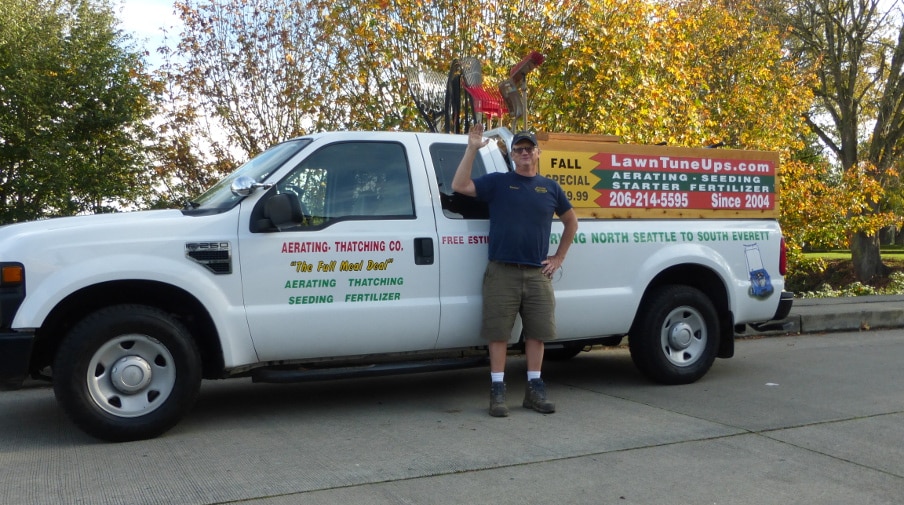
Stewart Armour
Stewart Armour is the owner of Aerating Thatching Co., an owner-operated Seattle-area lawn restoration business established in 2004. He helps homeowners understand Core Aeration, Power Raking (Dethatching), Overseeding, soil conditions, and the aftercare needed for stronger lawns. His background includes turf management study, advanced golf course turf training, and continuing education through Wilbur-Ellis University, State Turf Facilities, Soil First Academy, and Golf Course Applied Turf Physiology. Stewart has personally evaluated thousands of residential lawns throughout the Seattle area and focuses on recommending the work that fits each lawn’s condition.