Last spring, a homeowner in Snohomish watched their expensive fertilizer wash straight into the storm drain. The ground was simply too hard to absorb a single drop. You’ve likely felt that same frustration when your lawn feels like concrete. It’s exhausting to dump time and money into a yard that stays thin and patchy. This guide explains exactly how to fix compacted soil in lawn spaces across North Seattle and the Snohomish area.
You’ll discover the professional mechanical methods used to reverse compaction and restore a thick, healthy lawn that lasts. We will explore how Core Aeration solves the problem. We also explain when to choose a Lawn Tune-Up or the Full Meal Deal for a total restoration. You’ll learn why soil temperature, specifically the 55°F-75°F (13°C-24°C) range, is the real secret to successful Overseeding in our region. This is the practical, no-nonsense path to a lawn that finally breathes.
Key Takeaways
- Identify compaction in your yard using the Screwdriver Test or by observing water runoff during typical North Seattle rainstorms.
- Learn how to fix compacted soil in lawn spaces using Core Aeration to mechanically remove soil plugs and improve airflow.
- Choose the Lawn Tune-Up for essential restoration or the Full Meal Deal if your lawn also requires Power Raking (Dethatching).
- Focus on timing your restoration when soil temperatures are between 55°F and 75°F to ensure the best possible results for your grass.
Why Soil Compaction is a Major Problem for PNW Lawns
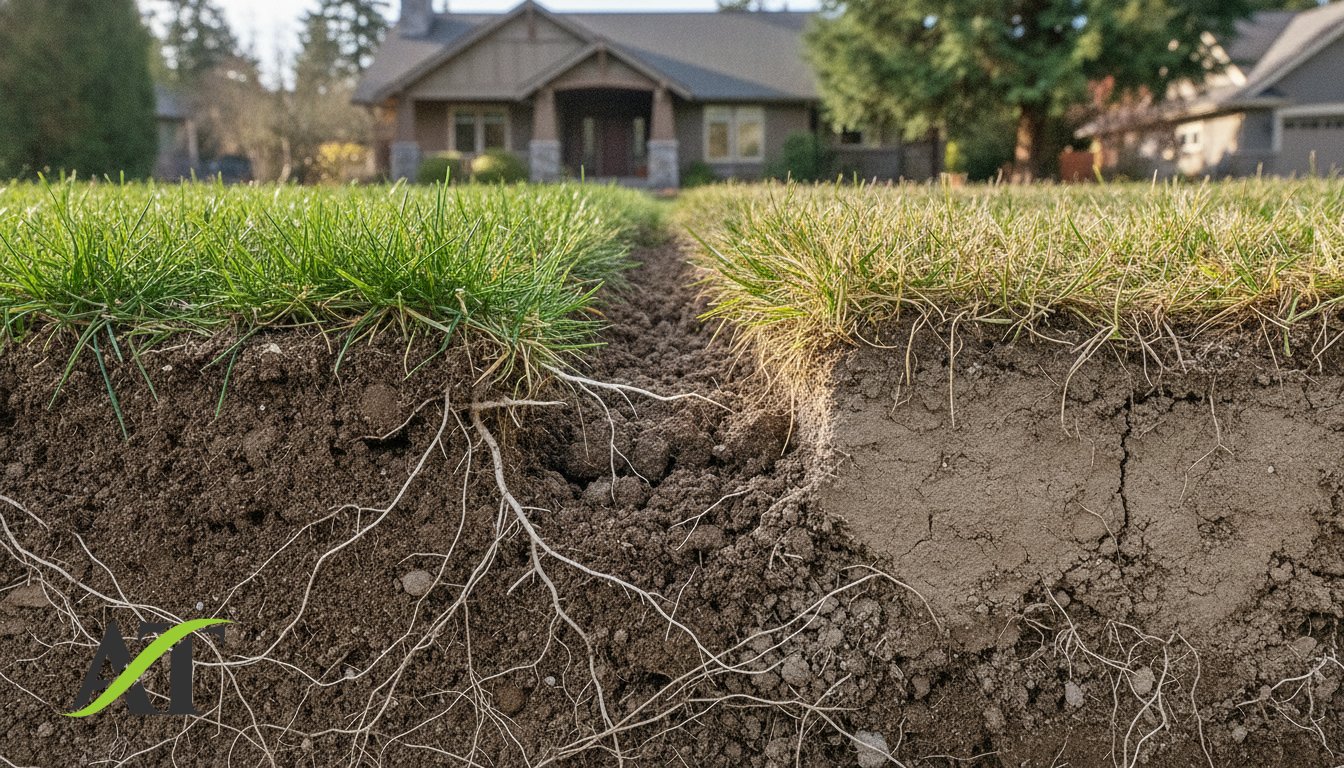
Soil compaction happens when the particles under your grass are pressed together too tightly. This eliminates the pore space needed for air and water to circulate. In a healthy lawn, about 50% of the soil should be open space. When this space vanishes, your yard turns into a “brick.” Understanding this physical change is the first step in learning how to fix compacted soil in lawn spaces.
In areas like North Seattle and Snohomish, we deal with the “North Seattle Factor.” Our heavy rainfall and glacial till create a perfect storm for turf problems. When wet soil is walked on or mowed, it settles into a dense mass. If you’re wondering how to fix compacted soil in lawn areas, you have to realize our local clay-heavy ground is naturally prone to hardening. This leads to shallow root systems and wasted money on fertilizer that simply can’t reach the plant.
The Role of Heavy Clay in Shoreline and Edmonds
Clay particles are tiny and flat. Unlike sandy soils that allow water to pass through, clay particles stick together when wet. Our consistent “liquid sunshine” acts as a lubricant, allowing these particles to slide into every available gap. Over time, this creates a solid barrier that locks out oxygen. This “nutrient lockout” means your grass stays yellow even if you apply high-quality fertilizer. It’s a common sight in Shoreline and Edmonds yards where the ground feels impenetrable.
Why a Lawn Roller is Not the Answer
Many homeowners try to level their yard with a heavy lawn roller. This is a mistake. Rolling might smooth the surface, but it actually increases surface compaction. It’s a contractor’s warning: rollers are for pressing down new sod to ensure root contact. They aren’t for fixing hard, established turf. Using one on a compacted lawn only makes the “brick” effect worse. You’ll end up with a flat lawn that is still dying from a lack of air.
3 Simple Ways to Diagnose Compacted Soil at Home
You don’t need expensive gear to check your yard’s health. Most homeowners in Lynnwood or Mill Creek can spot the signs with a few basic observations. Understanding the problems soil compaction can cause is the first step toward a better yard. If your grass looks tired or stays thin, it’s time to investigate the ground underneath.
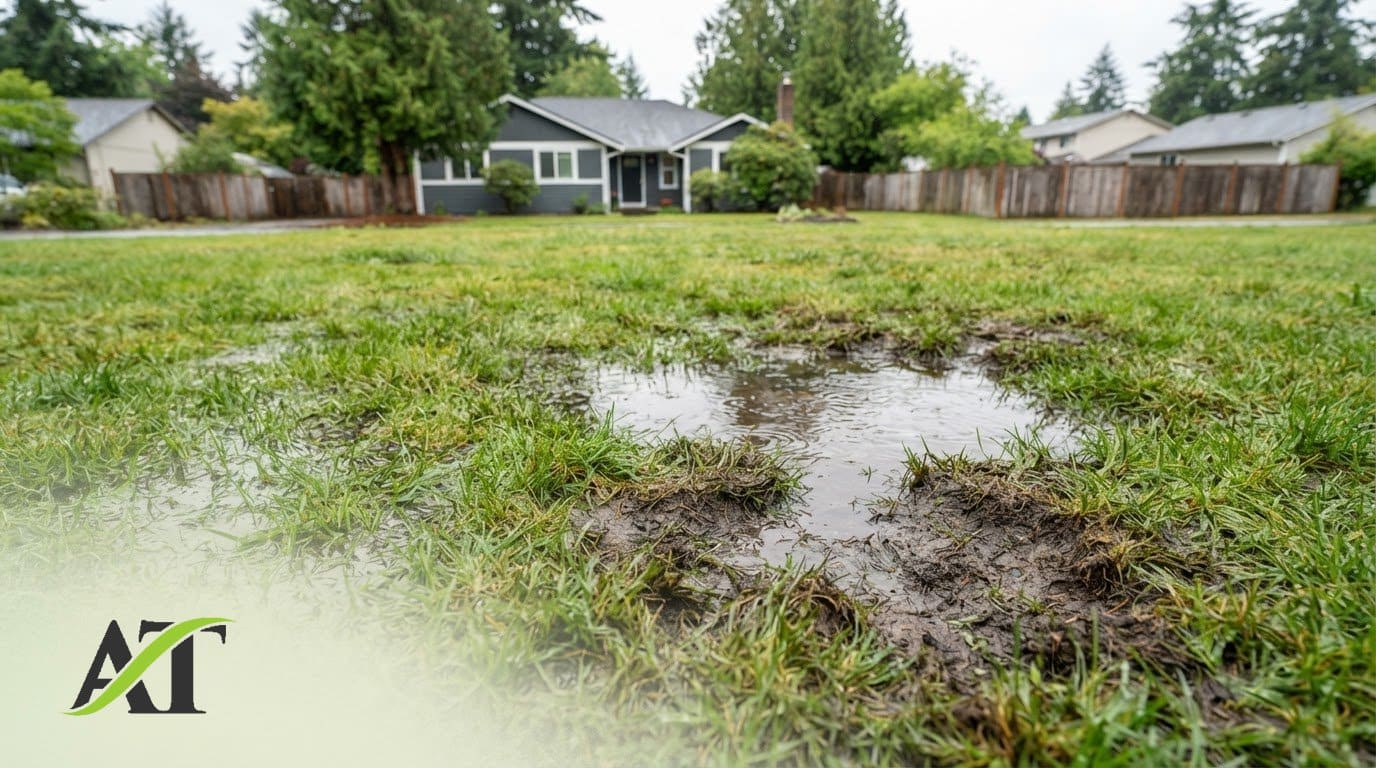
Watch your yard during a typical PNW rainstorm. This is the Water Test. If water pools in low spots or runs off the surface instead of soaking in, your soil is likely sealed shut. This drainage failure is a primary indicator that you need to learn how to fix compacted soil in lawn spaces. You might also notice bare spots or thinning grass that refuses to fill in, even after regular watering and care.
Performing the Screwdriver Test Correctly
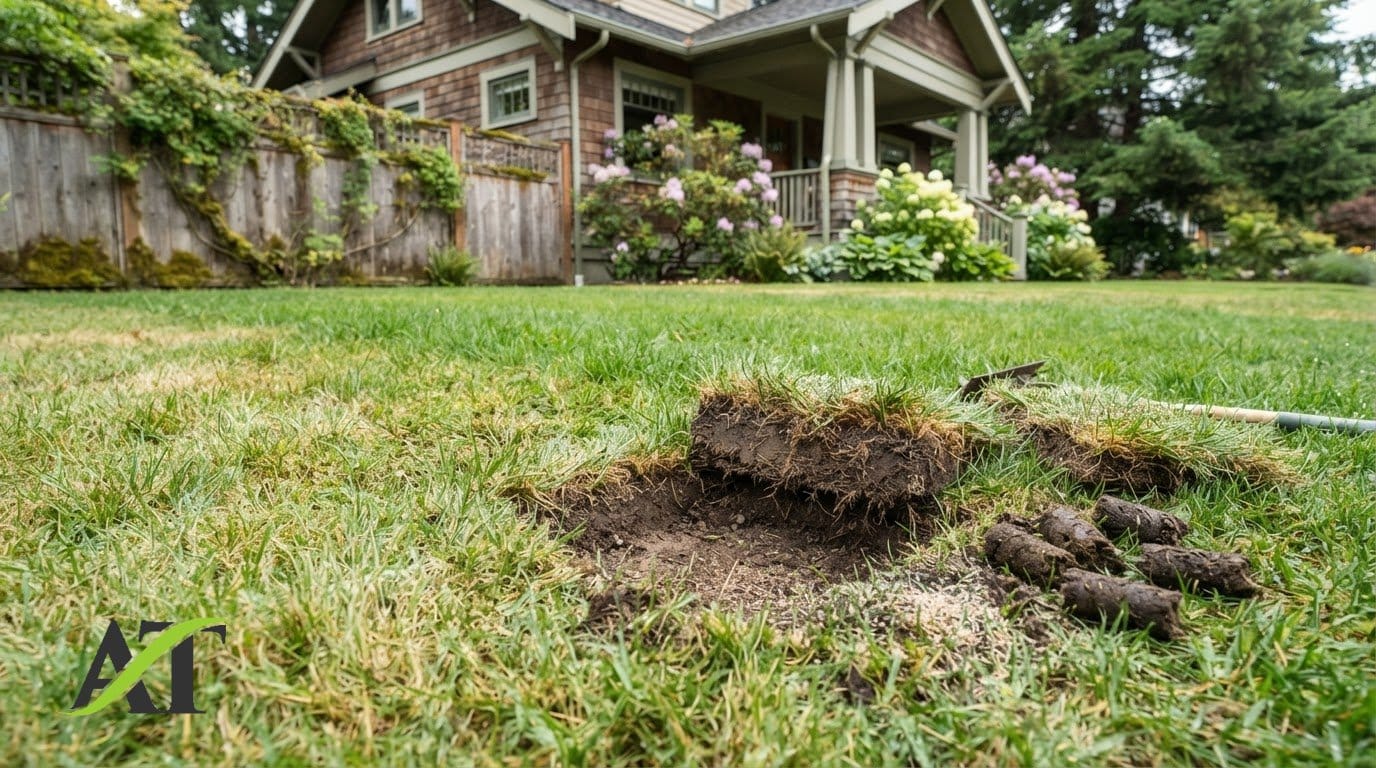
The Screwdriver Test is the most reliable DIY method. Take a standard flat-head screwdriver and try to push it into the ground. In a healthy lawn, it should slide in several inches without much effort. If you hit a “hard pan” just 1-2 inches below the surface, your soil is too dense for roots to breathe. Test at least ten different areas, especially high-traffic paths and slopes. If you find consistent resistance, you can request a professional quote to get a definitive assessment.
Recognizing Compaction-Loving Weeds
Nature uses weeds to tell a story about your soil. Broadleaf Plantain and Pineapple Weed are specialists that thrive in hard, low-oxygen ground. These indicator weeds have tough roots that penetrate soil where grass cannot survive. Pulling them is only a temporary fix. They will return every season as long as the ground remains like a brick. You must mechanically break up the soil to stop the cycle. Learning how to fix compacted soil in lawn areas is the only way to shift the advantage back to your grass.
Core Aeration: The Gold Standard for Fixing Compacted Soil
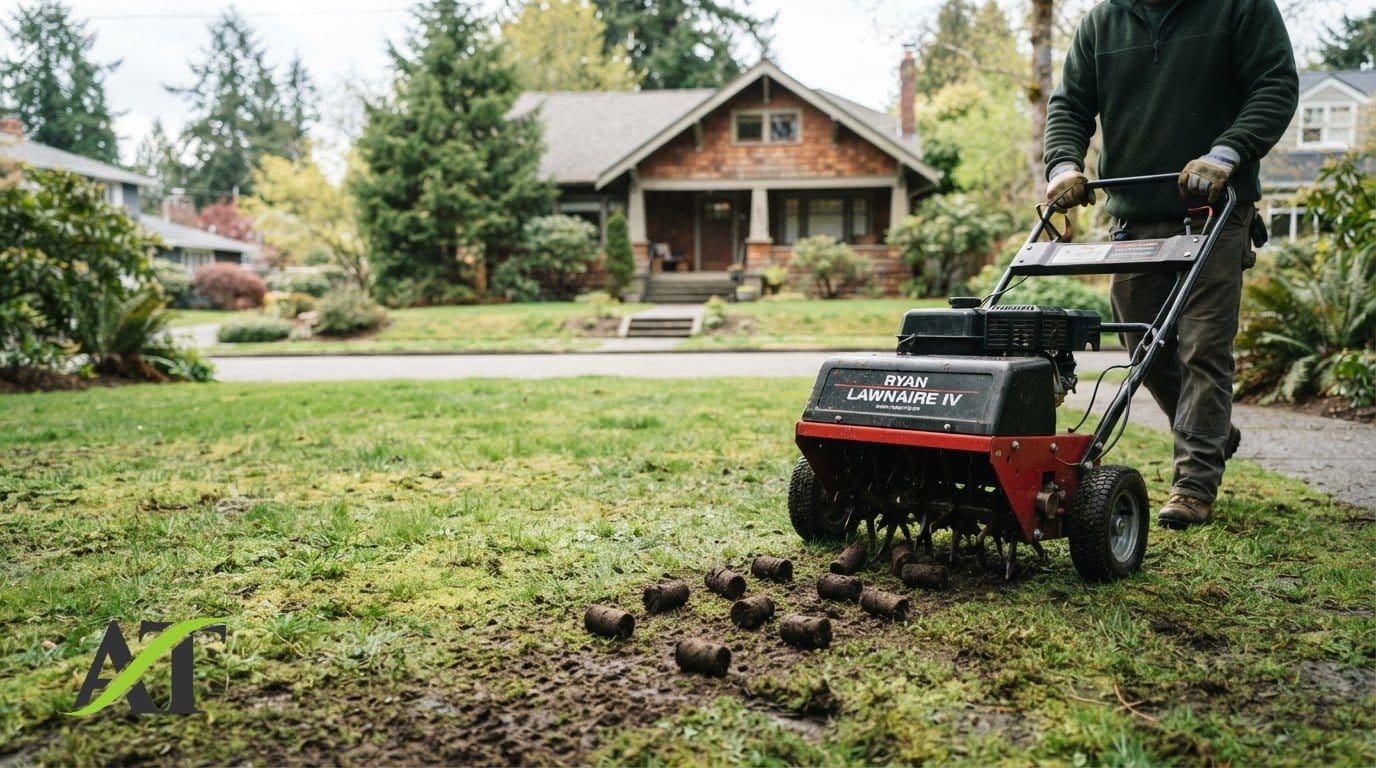
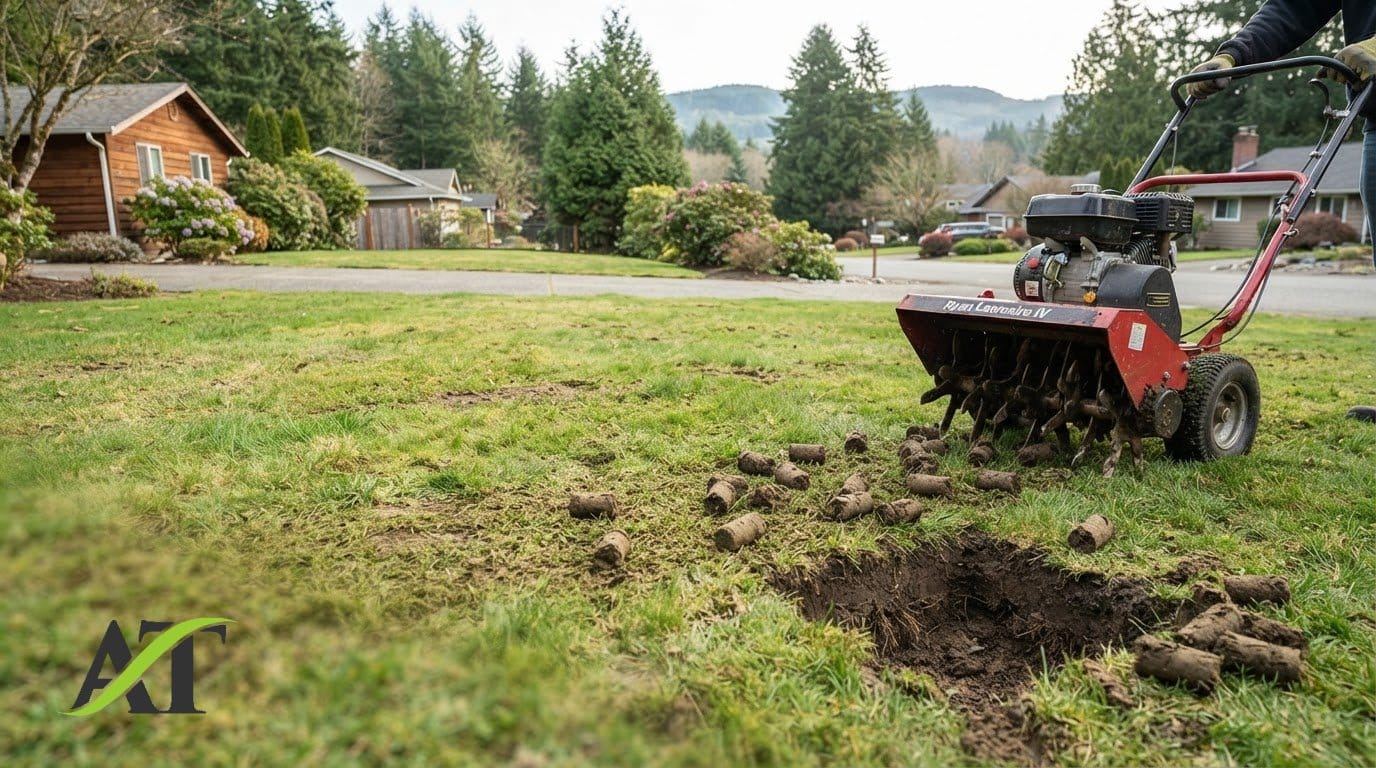
Core Aeration is the most effective method for restoring a struggling yard. This process involves a machine that pulls thousands of small soil plugs, or “cores,” out of the ground. By physically removing these plugs, you create immediate breathing room for the root system. If you want to know how to fix compacted soil in lawn areas, this mechanical “reset” is the only answer that works the first time. Unlike spiking, which uses solid tines to push soil sideways and actually increases density, Core Aeration provides a clear path for water, oxygen, and nutrients to reach the roots directly.
Check out our Core Aeration in Snohomish guide for local insights on keeping your turf healthy. These cores eventually break down on the surface, returning organic matter to the soil while the holes stay open to receive treatments like fertilizing.
Why Mechanical Aeration is the Only Real Fix
Liquid “aerators” are popular in big-box stores, but they often fail in heavy PNW clay. These chemical products struggle to penetrate deep enough to break up our glacial till. Only mechanical Core Aeration provides long-term relief for the soil structure. It physically changes the ground’s density, which is the only reliable way how to fix compacted soil in lawn spaces effectively. This is a critical step in both our Lawn Tune-Up and the Full Meal Deal restoration packages.
When to Aerate in the Seattle Area
Timing is everything in King and Snohomish Counties. The best windows are spring and fall when the grass is actively growing. Avoid aerating when the ground is bone-dry; the machine won’t penetrate. Conversely, don’t aerate when the soil is completely saturated, as this can damage the soil structure further. Aim for moist, soft ground that allows for deep core extraction. This ensures your Overseeding efforts have the best chance to succeed when soil temperatures are between 55°F and 75°F (13°C-24°C).
Get a free estimate for your lawn restoration today

Professional Solutions: The Lawn Tune-Up and Full Meal Deal
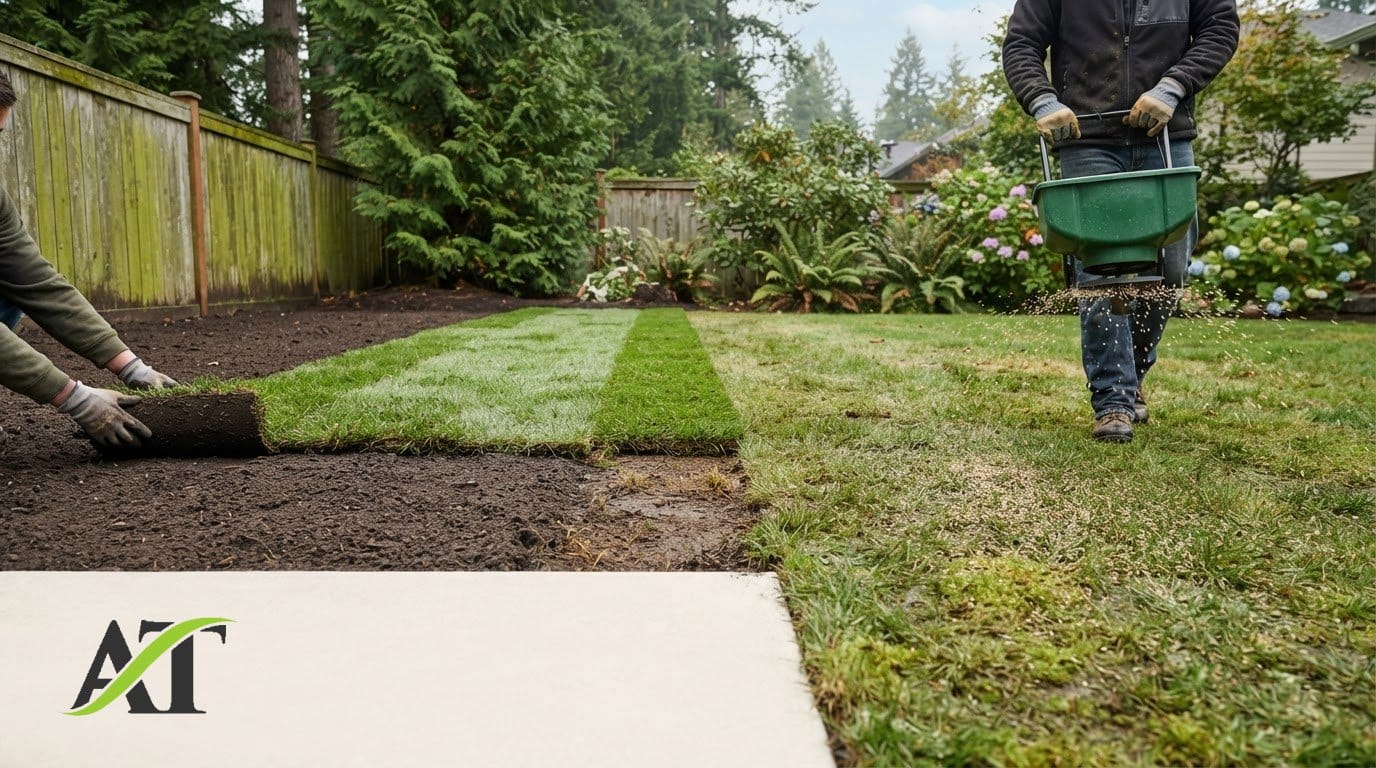
When DIY efforts fall short, a mechanical reset is required. The most efficient way how to fix compacted soil in lawn areas is through a bundled approach. We offer two primary solutions. The Lawn Tune-Up is our signature three-step process. It consists of Core Aeration, Overseeding, and Fertilizing. This package addresses the physical needs of the turf by opening the soil and providing new life. For more extensive details, you can view our Seattle Lawn Tune-Up service page. Overseeding is critical here. It ensures new, healthy grass fills the newly created spaces before weeds can take hold.
For lawns facing multiple issues, we provide the Full Meal Deal. This is the ultimate restoration for compacted, mossy lawns. It includes Power Raking (Dethatching), Core Aeration, Overseeding, and Fertilizing. By combining these mechanical processes, we remove the surface barrier of thatch and moss while simultaneously fixing the underlying soil structure.
The Critical Role of Soil Temperature
Successful restoration depends on timing. The optimal soil temperature for cool-season grass seed germination is 55°F-75°F (13°C-24°C). If the soil is too cold or too hot, germination will be slower and less consistent. We focus on soil temperature because it’s a more accurate predictor of success than air temperature. While we don’t offer absolute guarantees on germination, we know that results are driven by moisture, seed-to-soil contact, and weather conditions. Proper timing ensures your investment produces a thick, resilient lawn.
Choosing Between the Lawn Tune-Up and Full Meal Deal
Choosing the right service depends on your lawn’s condition. If the ground is just hard but relatively clear of debris, Core Aeration alone or a Lawn Tune-Up is often sufficient. However, in Bothell and Kenmore, heavy moss and thatch buildup are common. In these cases, you need the Full Meal Deal. The Power Raking (Dethatching) step clears the way so the Overseeding can actually touch the soil. You can Request a Quote for your local lawn restoration to see which path fits your property.
Restore Your Soil and Reclaim Your Yard
Your lawn doesn’t have to feel like concrete. By identifying signs of compaction early and using mechanical solutions like Core Aeration, you can restore the airflow your grass needs to thrive. Local clay and heavy rain often create the “North Seattle Factor,” but these issues are reversible with the right approach. Whether you need a standard Lawn Tune-Up or the heavy-duty Full Meal Deal to handle thatch and moss, our owner-operated team has the local expertise to get it done right.
We’ve been serving North Seattle neighborhoods since 2004 with a focus on physical labor and tangible outcomes. Results depend on moisture, weather, and seed-to-soil contact, but a mechanical reset is the essential first step. Now that you know how to fix compacted soil in lawn areas, it’s time to let your soil breathe again. We’re ready to help you restore your property’s health.
Frequently Asked Questions
How often should I have Core Aeration done in Seattle?
Most Seattle lawns benefit from Core Aeration once per year. Our local soil is heavy with clay and glacial till, which compacts easily under our frequent rainfall. High-traffic areas or yards that have experienced heavy equipment use—such as projects involving professional Ayr Tracked Plant & Equipment Hire—might need it twice. Consistent annual service is the best way how to fix compacted soil in lawn environments before it causes root die-off. We recommend scheduling this during the active growing seasons of spring or fall.
You can’t effectively fix a whole yard without mechanical help. While hand tools like broadforks exist, they are labor-intensive and don’t provide consistent results. Mechanical Core Aeration is the professional way how to fix compacted soil in lawn areas because it physically removes soil plugs. Without a machine, you won’t reach the depth needed to break through the hard pan common in Shoreline and Edmonds.
Will Core Aeration hurt my underground sprinklers or dog fence?
It can damage shallow lines if they aren’t properly marked before we arrive. Most irrigation heads and dog fence wires are buried deep enough to avoid our tines, but we ask homeowners to flag all components. This includes sprinkler heads, valve boxes, and shallow utility lines. Taking ten minutes to mark your yard prevents a simple restoration from turning into a repair job. We prioritize safety and precision during every service.
How long does it take for grass to grow after a Lawn Tune-Up?
Visible growth usually appears within 14 to 21 days after a Lawn Tune-Up. This timeline depends heavily on soil temperature, which should ideally be between 55°F and 75°F (13°C-24°C). If the ground is colder, germination will be slower and less consistent. We don’t offer absolute guarantees because success also relies on your watering habits and local weather. Keep the area moist to help the new seed establish.
Is it better to aerate in the spring or the fall in the PNW?
Both seasons work well, but many North Seattle homeowners prefer the fall. Late summer and early autumn offer the warm soil temperatures needed for Overseeding while avoiding the summer heat. Spring is also an excellent time to open up the soil after a wet winter. We perform Core Aeration in both windows to ensure your lawn has the breathing room it needs to stay healthy throughout the year.
Article by
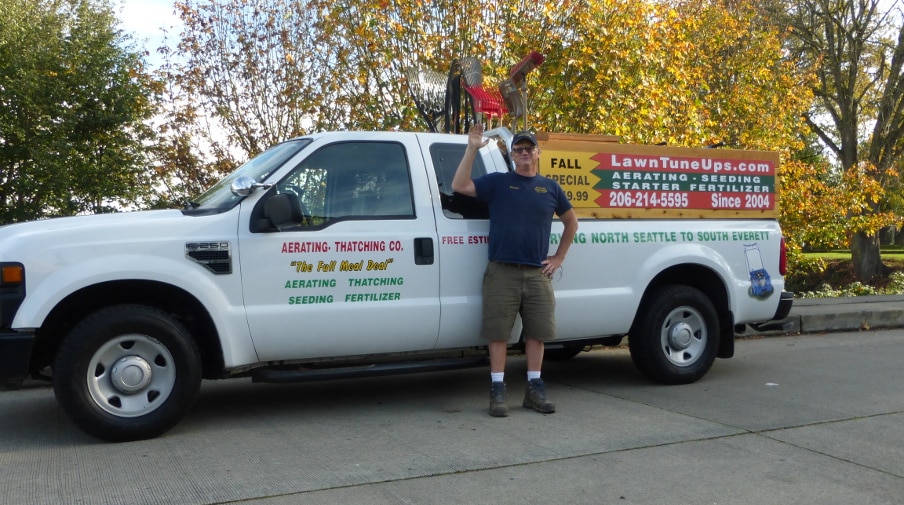
Stewart Armour
Stewart Armour is an independent lawn restoration expert, educator, and owner of Aerating Thatching Co., serving the greater Seattle area since 2004. With more than two decades of professional experience restoring Western Washington lawns, Stewart specializes in diagnosing lawn problems, improving soil health, and developing long-term lawn renovation strategies. His education includes turf management studies, advanced golf course turf training, and continuing education through Wilbur-Ellis University, State Turf Facilities, Soil First Academy, and Golf Course Applied Turf Physiology. Every article published on LawnTuneUps.com is grounded in practical field experience, current turf science, and a commitment to helping homeowners understand the why behind every recommendation—not just what to do.
Stewart has personally evaluated thousands of residential lawns throughout the Seattle area and remains committed to helping homeowners understand the science behind growing healthier, more resilient lawns.