How to Choose the Best Grass Seed for Lawns in the Greater Seattle Area
Choosing the right grass seed is crucial for a thriving lawn in Seattle's temperate climate. The Pacific Northwest, including the greater Seattle area, experiences mild, wet winters and warm, dry summers. Selecting grass seed suited to these conditions gives the lawn a better foundation for successful establishment and long-term performance.
For many Greater Seattle lawns, a quality cool-season turf seed blend built around perennial ryegrass and fine fescues is a practical starting point. Perennial ryegrass provides strong establishment and durability, while fine fescues help a blend adapt to shade and mixed-light conditions. The best mix still depends on how much sun, shade and traffic your particular lawn receives.
1. Understand Seattle's Climate and Soil Conditions
Seattle-area lawns grow through long stretches of cool, wet weather but also face increasingly dry summer periods. That makes cool-season grasses that can handle both moisture and seasonal summer stress a sensible choice.
Soil conditions vary considerably from property to property. Rather than assuming every Seattle lawn has the same drainage, fertility or pH, choose grass based first on the conditions you can actually observe: available sunlight, existing turf, traffic, moisture and how the lawn will be maintained.
2. Best Grass Types for Seattle Lawns
Seattle lawns are generally best suited to cool-season grasses. A blend can help the lawn perform across the different light and use conditions that often exist on the same property.
Perennial Ryegrass
Perennial ryegrass is a strong foundation for many Greater Seattle seed blends. It establishes relatively quickly, handles normal lawn traffic well and is especially useful for overseeding existing turf.
Fine Fescues
Fine fescues are a group of fine-bladed cool-season grasses commonly used where shade or mixed-light adaptability is important. They can complement perennial ryegrass in many Seattle-area lawn mixes.
Kentucky Bluegrass
Kentucky bluegrass may appear as a component of some cool-season blends. It does not need to be the primary grass in a Seattle seed mix, but it can have a place in an appropriately selected blend.
Turf-Type Tall Fescue
Turf-type tall fescue may be worth considering where summer resilience and deeper rooting are higher priorities. Its texture and establishment characteristics can differ from ryegrass/fine-fescue mixtures, so it should be selected deliberately.
Don't choose grass seed by the picture on the bag alone. Look at the actual grasses listed on the label and match them to the amount of sun, shade and use the lawn receives.
3. Consider Lawn Use and Maintenance
- Higher-traffic lawns: Perennial ryegrass can be an important part of the blend because it establishes well and handles normal lawn use.
- Shadier lawns: Look for a mixture with a stronger fine-fescue component rather than assuming one seed works equally well everywhere.
- Mixed sun and shade: A perennial ryegrass and fine-fescue mixture can provide useful adaptability across changing light conditions.
- Summer resilience: Turf-type tall fescue may deserve consideration where drought tolerance is a larger priority.
A single residential lawn can include full sun, tree shade, building shade and heavily used areas. That is one reason a well-selected mixture is often more practical than relying on only one grass species.
4. Choose a Quality Grass Seed Mix
Look for a quality turf-type cool-season seed mix with the actual grass species clearly identified on the label. Packaging may use phrases such as “Pacific Northwest,” “Cool Season,” or “Sun & Shade,” but those marketing names are not a substitute for checking what seed is really in the bag.
Perennial Ryegrass-Forward Blend
A quality mixture with perennial ryegrass as a major component can be a strong fit where the lawn receives good light and normal residential use.
Ryegrass + Fine Fescues
Combining perennial ryegrass with fine fescues can help a lawn adapt across areas that receive different amounts of light throughout the day.
Fine-Fescue-Forward Blend
Where light is limited, look for a blend with a stronger fine-fescue component rather than relying on a sun-oriented grass mix.
Compatible Overseeding Blend
When overseeding, choose cool-season grasses that complement the existing lawn so the new seedlings can blend into the established turf.
Check the grass species, purity, germination and actual seed content. Bag size alone does not tell you how much viable grass seed you are buying.
5. Coated Grass Seed: Know What You're Paying For
Coated grass seed has become increasingly visible in both homeowner and professional seed products. The concept sounds appealing: each seed may be surrounded by material designed to improve handling or carry moisture-retaining compounds, micronutrients, biological products or other seed treatments.
Those coatings can have legitimate purposes. The important thing for homeowners to understand is that the coating has weight. When you buy grass seed by the pound, part of the weight in a coated product may be coating rather than grass seed.
More of the Bag Weight Is Seed
With a quality uncoated turf blend, most of what you are paying for is the grass seed itself. This makes it easier to evaluate the seed separately and then provide the fertilizer, moisture and other establishment inputs the lawn actually needs.
Some Bag Weight Is Coating
A coated product can contain fewer actual grass seeds per pound because part of the package weight comes from material surrounding the seeds. The amount varies by product, which is why the seed label matters.
Look Beyond Price Per Bag
Compare the actual seed percentages, germination information and package weight. A heavier bag is not automatically a better seed value if a significant portion of that weight is coating or other material.
How Much Viable Seed Are You Buying?
Seed professionals use the concept of Pure Live Seed (PLS) to account for both seed purity and germination. You do not need to become a seed scientist, but the principle is useful: compare how much viable grass seed you are actually purchasing rather than judging value only by pounds.
Start With Quality Seed
For most lawn overseeding work, we prefer to start with a quality raw turf seed blend and manage the other establishment needs separately. That lets the seed be chosen for the grasses themselves rather than buying extra bag weight simply because those materials have already been attached to the seed.
Some coatings can provide useful seed treatments or establishment aids. The better question is whether the coating provides something your lawn actually needs and whether the price still makes sense after considering how much actual seed is in the package.
I would rather choose the grass blend for the quality and type of seed, then add what the lawn needs to help that seed establish. That keeps the seed decision separate from fertilizer, soil improvement and watering instead of assuming everything needs to come attached to the seed.
6. Test and Amend Your Soil
Soil can influence how well new grass establishes, but Greater Seattle properties do not all have identical soil conditions. If a lawn has persistent problems that cannot be explained by seed choice, sunlight, watering or surface preparation, understanding the underlying soil may help identify what is limiting the turf.
Lime and other soil treatments should not be treated as automatic requirements simply because the lawn is in Seattle. When soil improvement is actually appropriate, Aerating Thatching Co. also offers a Seattle lawn soil-amendment option that can be paired with applicable lawn services.
7. Planting Grass Seed in Fall or Early Spring
For Greater Seattle lawns, late summer into early fall is generally a strong grass-establishment window because soil is still warm while cooler weather reduces some of the stress new seedlings face. Early fall also gives young grass time to begin establishing before winter.
Spring can also work when conditions are suitable, but homeowners need to plan for consistent moisture as the lawn moves toward Seattle's drier summer period.
Weather, sunlight and soil conditions affect how frequently watering is needed, so avoid relying on a rigid one-size-fits-all schedule. For complete post-seeding instructions, see the Seattle Lawn After-Care Guide.
Seattle Lawn Tips for Success
Choosing good grass seed is important, but successful establishment also depends on what happens before and after the seed is spread.
Address Compaction When Needed
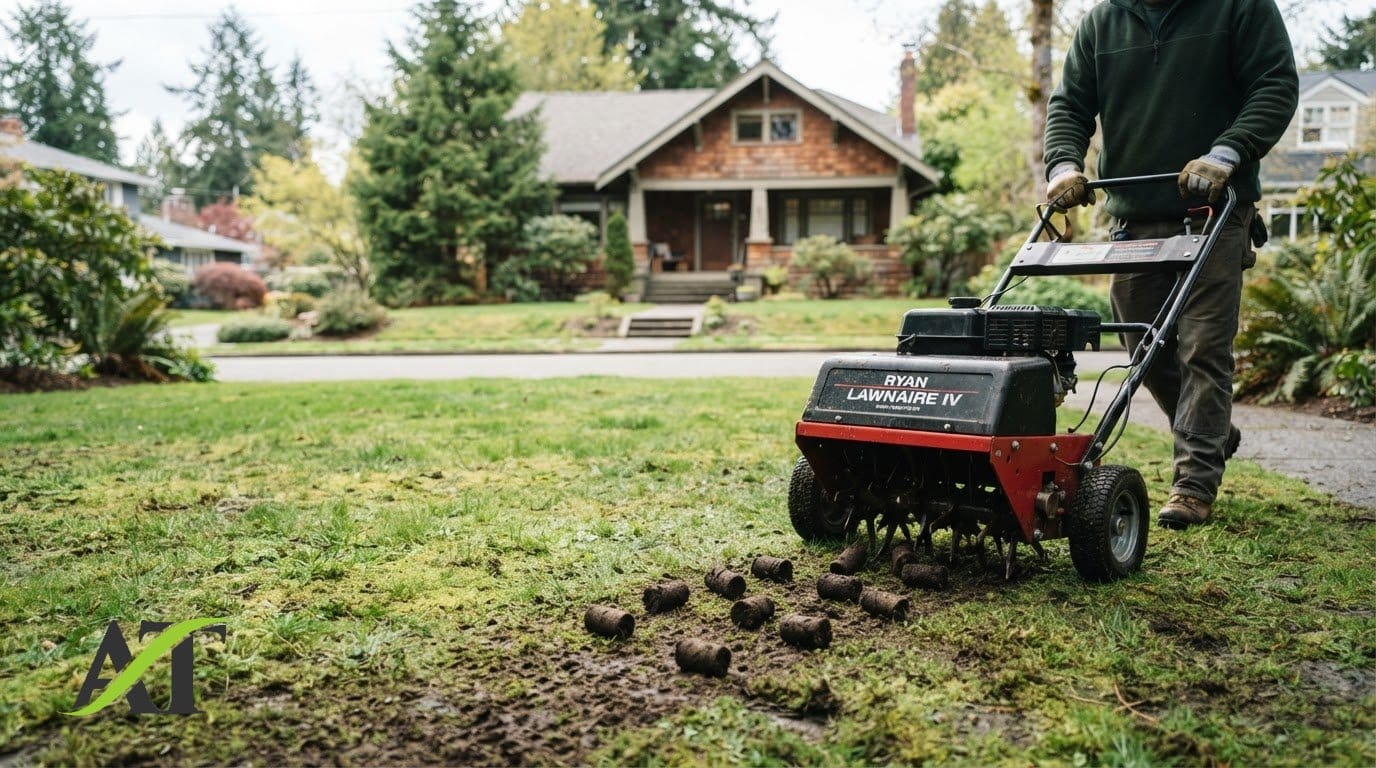
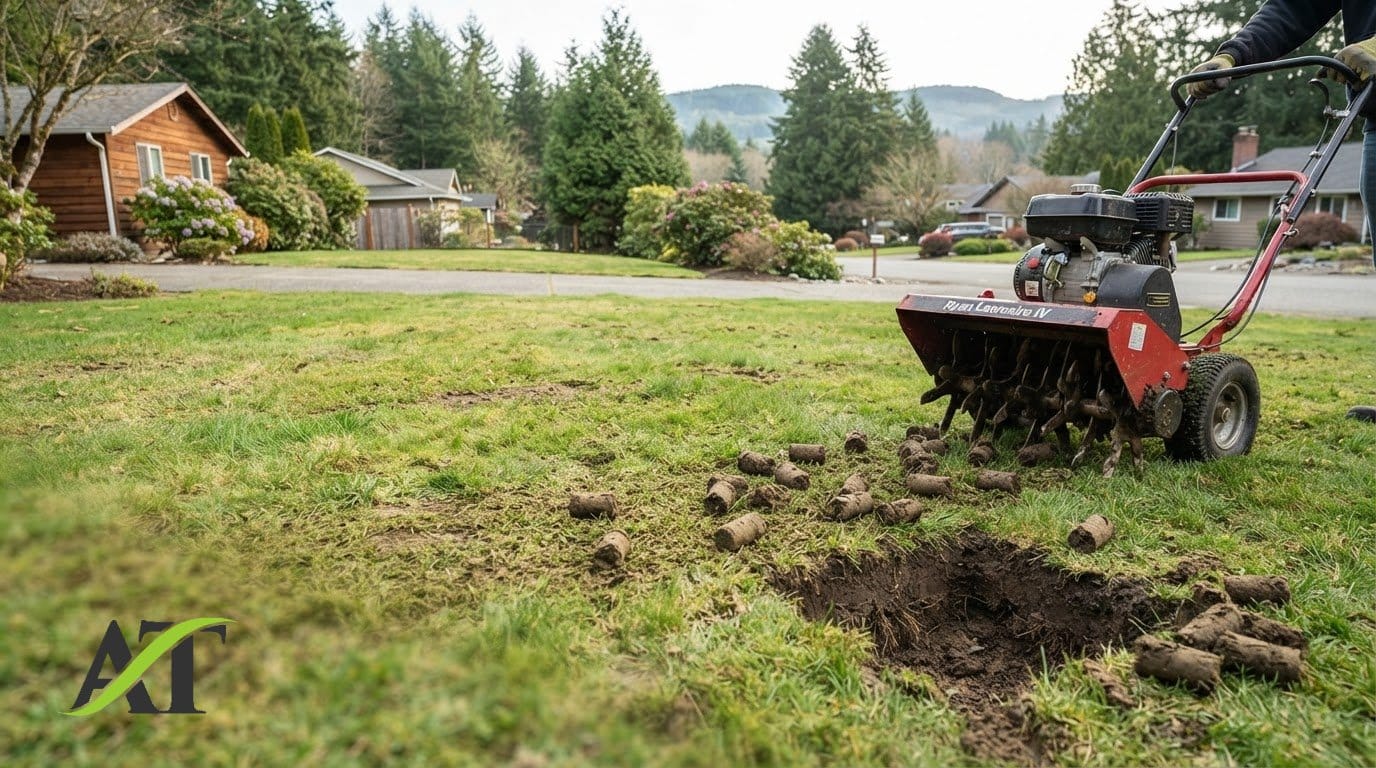
Core Aeration can create openings in compacted soil and provides a useful opportunity for overseeding when additional lawn density is needed.
Improve Seed-to-Soil Contact
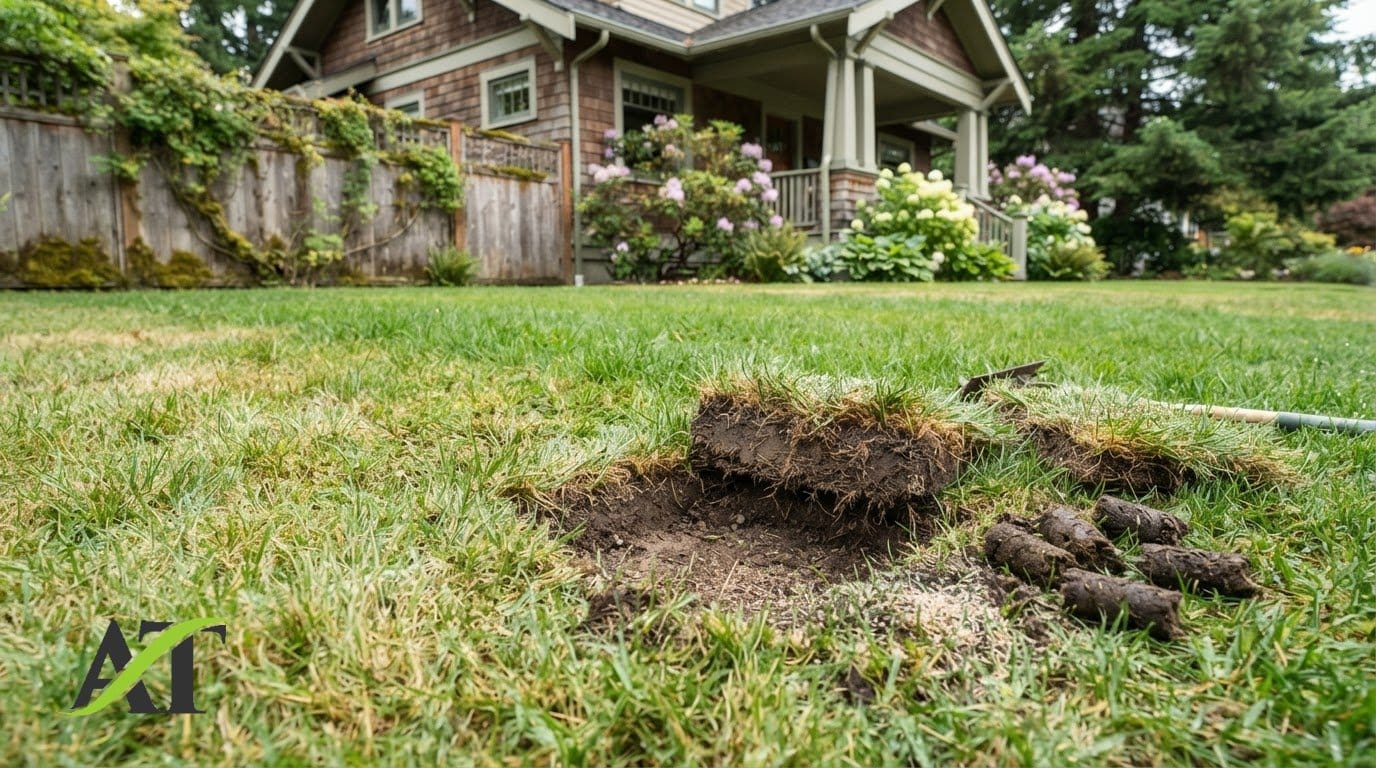
Remove loose debris and prepare bare or thin areas so seed can reach the soil. If the lawn has a significant layer of thatch or matted material, ordinary hand-raking is not the same as professional Dethatching (Power Raking).
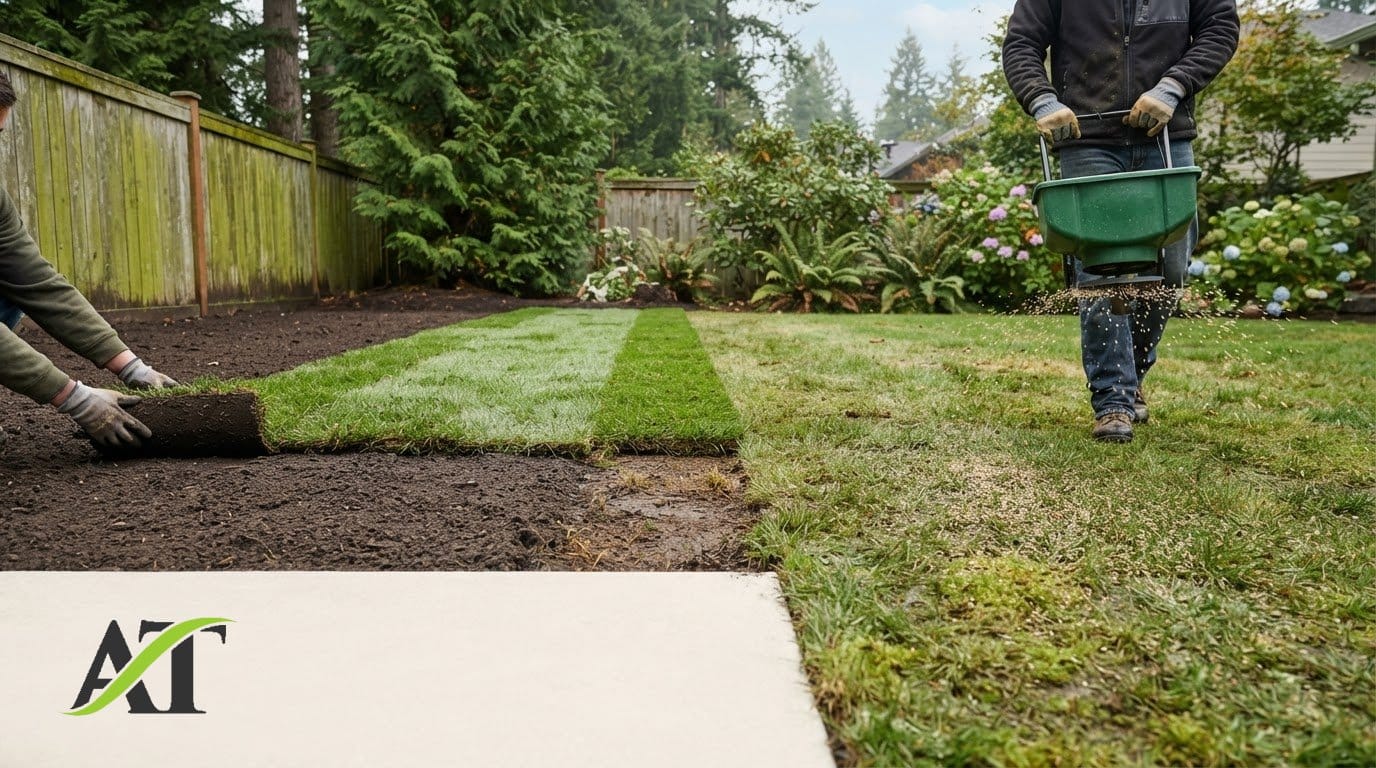
Spread Seed Consistently
Apply the grass seed according to the directions for the specific product you purchased. Avoid assuming one universal spreader setting works for every grass-seed blend.
Keep New Seed Moist
Newly seeded soil needs consistent moisture during establishment. Adjust watering to actual weather and site conditions rather than following the same schedule regardless of rain, heat, shade or wind.
With an existing thin lawn, choose a compatible cool-season blend that will complement the turf already growing there. Completely bare or heavily damaged areas put even more importance on surface preparation, seed-to-soil contact and consistent after-care.
Two Practical Tools for DIY Lawn Seeding
You do not need an elaborate tool collection to overseed a lawn. These two tools can help with basic surface preparation and more consistent seed distribution when you are doing the work yourself.

Groundskeeper II Rake
Useful for clearing loose debris and lightly working the lawn surface before seeding. It is a surface-preparation and cleanup tool, not a replacement for Dethatching (Power Raking) when a lawn has significant thatch buildup.
View on Amazon
Scotts EdgeGuard Mini Broadcast Spreader
A practical option for distributing grass seed more consistently across smaller residential lawns. Follow the application directions on the specific grass-seed label rather than relying on a universal spreader setting.
View on AmazonAs an Amazon Associate, we may earn from qualifying purchases. View our affiliate disclosure.
When You'd Rather Have the Lawn Overseeded Professionally
Selecting the right grass seed is only one part of rebuilding lawn density. When a lawn also has compaction or needs a more coordinated establishment process, professional overseeding can make sense.
Aerating Thatching Co.'s Seattle Lawn Tune-Up combines Core Aeration, Premium Overseeding and Starter Fertilizer for lawns that need both compaction relief and additional grass density. Not every lawn needs the larger service; lawns that are already reasonably dense may only need Core Aeration.
Grass Seed for Seattle Lawns FAQ
What type of grass seed is best for Seattle?
For many Seattle-area lawns, a quality cool-season blend built primarily around perennial ryegrass and fine fescues is a practical choice. The best blend depends on the lawn's sunlight, shade, traffic and existing grass.
Is perennial ryegrass good for Seattle lawns?
Yes. Perennial ryegrass is a strong component of many Greater Seattle lawn mixes because it establishes well and handles normal residential traffic. It is often most useful as part of a blend rather than assuming every lawn should be planted entirely in ryegrass.
What grass seed works well in Seattle shade?
Fine fescues are commonly used in cool-season mixtures where shade and mixed-light conditions are important. For shadier lawn areas, look for a blend with a stronger fine-fescue component and remember that very deep shade can still limit turf growth regardless of seed choice.
Is a grass-seed blend better than using one grass species?
A blend can be useful because many residential lawns contain different growing conditions within the same property. Combining compatible cool-season grasses can provide better adaptability across sun, shade and normal lawn use than relying on a single species for every area.
Is coated grass seed better than uncoated grass seed?
Not automatically. Coatings can carry useful treatments or help with establishment, but coating also adds weight that is not grass seed. For many residential overseeding projects, a quality uncoated turf blend provides more actual seed per pound and lets fertilizer and other establishment inputs be selected separately. Compare the seed label rather than relying only on bag weight or marketing claims.
Does coated grass seed contain less seed per pound?
It can. The coating contributes to the total package weight, so a heavily coated seed product can contain fewer actual grass seeds per pound than a comparable uncoated product. Check the seed analysis label, including purity and germination information, when comparing products.
When is the best time to seed a lawn in Seattle?
Late summer into early fall is generally a strong establishment window in Greater Seattle because soil remains warm while air temperatures begin to moderate. Spring can also work when conditions are suitable, but new grass must be kept consistently moist as summer approaches.
Choose the Seed for the Lawn You Actually Have
The best grass seed is not simply the bag with the strongest marketing claim. Start with a quality cool-season turf mix, look at the actual species, purity, germination and seed content on the label, and match the blend to your lawn's sun, shade, traffic and existing turf.
If you'd rather have the lawn professionally overseeded, learn how Premium Overseeding fits into Aerating Thatching Co.'s Seattle Lawn Tune-Up.
Learn About Seattle Lawn Overseeding