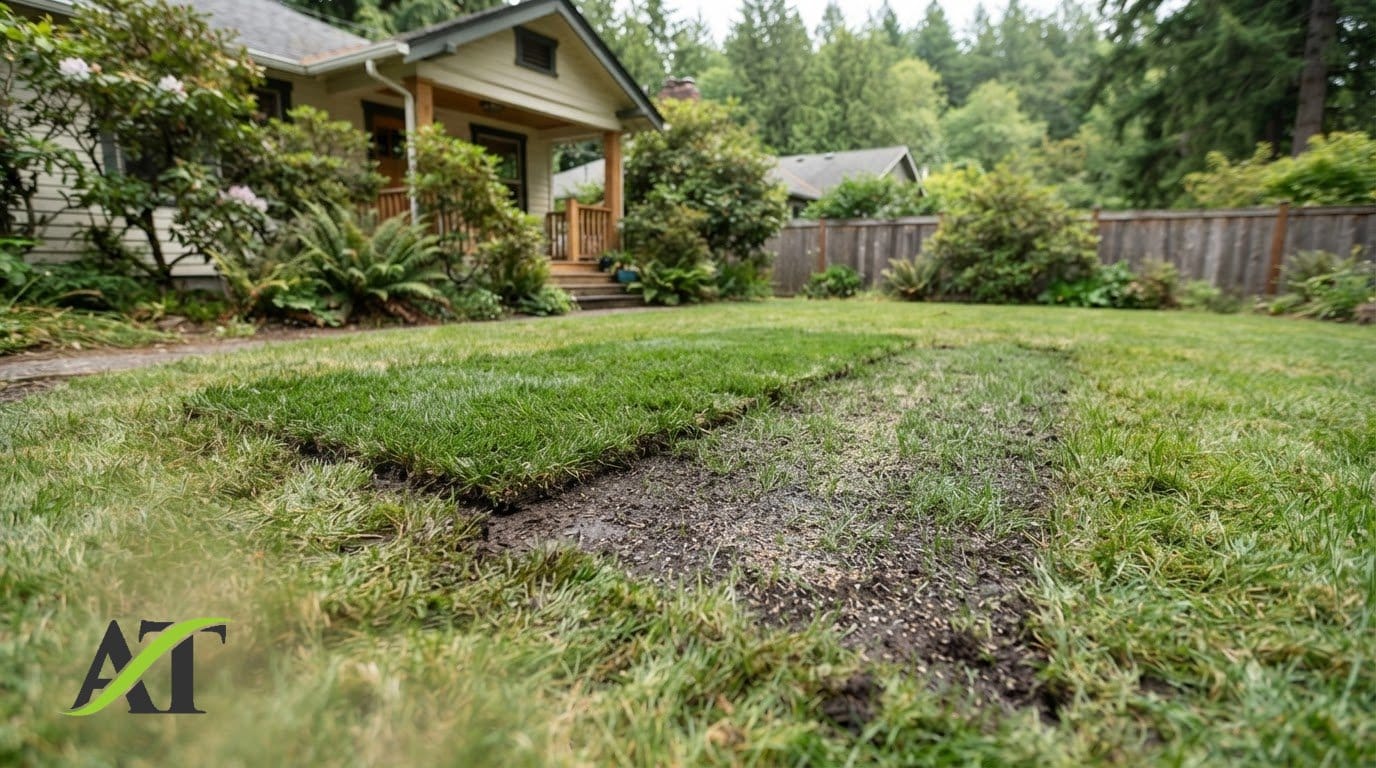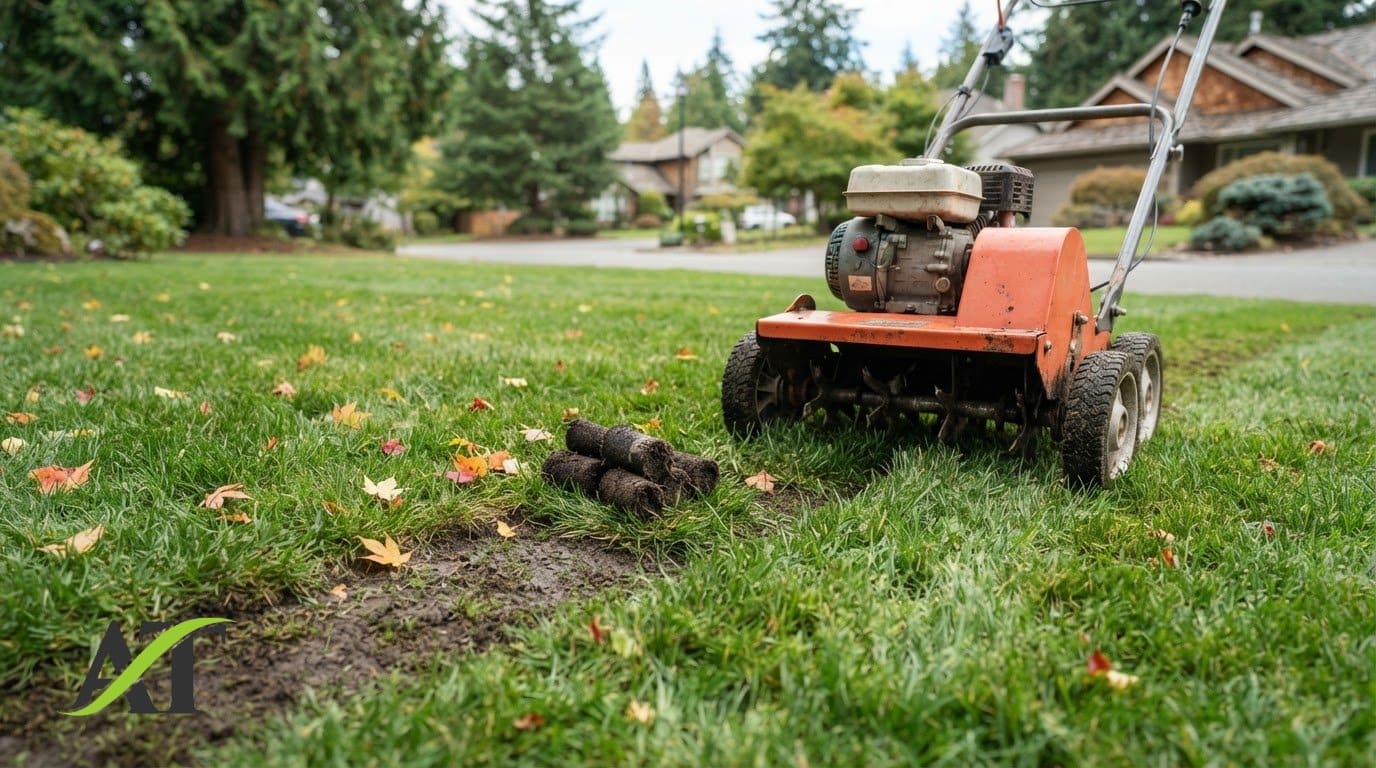
The calendar alone won’t tell you what your lawn needs. A useful fall lawn care schedule Lynnwood homeowners can follow starts with the condition of the turf, not a date on the page. It’s easy to wonder whether thin grass needs seed, compacted soil needs Core Aeration, or a layer of thatch is blocking growth. Acting on the wrong problem can waste effort, while waiting too long can narrow the window for Overseeding.
This checklist will help you decide what to inspect, which treatment addresses each issue, and when soil conditions make it sensible to act. You’ll work through thin or bare areas, compaction, excess thatch, and signs of drainage trouble, then consider fertilizing and aftercare. You’ll also see why Core Aeration can help compacted soil in the turf’s root zone but won’t fix every drainage problem. For lawns that need targeted restoration, we’ll clarify what a Lawn Tune-Up includes and when the additional Power Raking (Dethatching) in a Full Meal Deal may be appropriate. The goal is a sound next step, not extra work your lawn doesn’t need.
- Build your fall plan around what the turf shows, then check soil temperature before deciding whether to Overseed.
- Match the treatment to the problem: Core Aeration targets compaction in the shallow root zone, while persistent drainage issues need further diagnosis.
- Track thin or newly bare spots and manage fallen leaves so you can reassess lawn conditions as fall progresses.
- Choose based on need: a Lawn Tune-Up includes Core Aeration, Overseeding, and Fertilizing; a Full Meal Deal also includes Power Raking (Dethatching).
Why a Fall Lawn Care Schedule in Lynnwood Should Start with Lawn Conditions
A useful fall lawn care schedule follows the lawn’s condition, not dates alone. Before adding tasks, look at the turf, consider soil temperature if you’re planning Overseeding, and name the problem you want to solve. Thin grass, thatch, compaction, shade, and drainage can all affect lawn health, but they aren’t the same issue and don’t call for the same response.
Identify the lawn problem before choosing a treatment; the right work depends on what’s causing the symptoms. A lawn can be thin because grass is struggling to fill bare spots, or because shade limits growth. A visible thatch layer is different from compacted soil beneath the turf. And water that lingers may point to a drainage concern that Core Aeration alone won’t correct.
What to check before adding fall lawn tasks
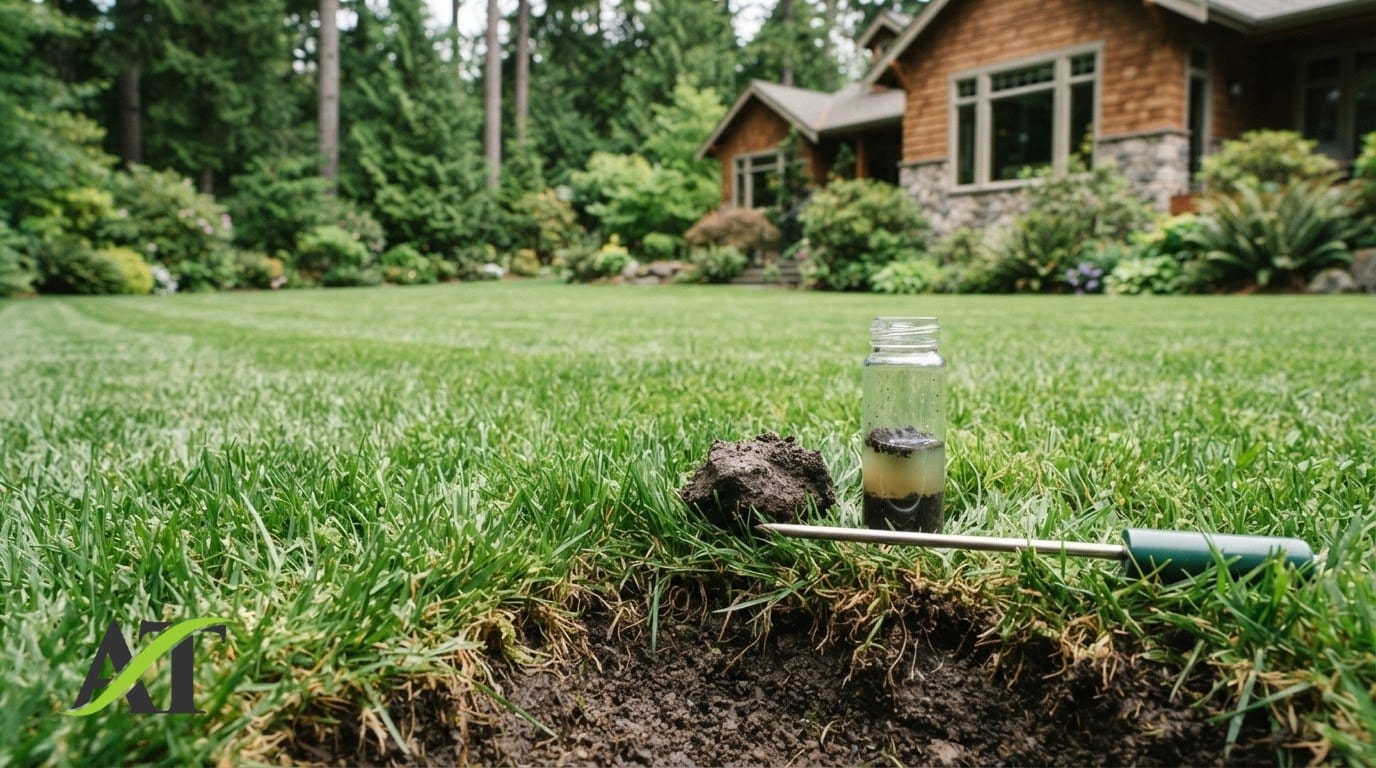
Walk the lawn and note where grass is thin or bare, whether thatch is visible between the green growth and soil, and whether the surface looks or feels unusually firm. Treat these as clues, not a diagnosis. Also consider whether a spot gets less sunlight, receives uneven irrigation, or stays wet. Those contributing factors need separate consideration before you decide what work makes sense.
Why a fixed date is not a reliable schedule
Seasonal timing depends partly on conditions. Soil temperature can help guide whether it’s a useful time to Overseed, while the lawn’s condition helps determine whether another treatment is relevant. A calendar can organize reminders, but it can’t tell you whether a thin area needs seed or whether persistent wetness calls for further diagnosis. A seasonal lawn care calendar can provide a planning reference; use your lawn’s actual condition to decide what to do.
For a general overview of what a Lawn is, Wikipedia describes lawns as managed grass areas. For fall planning, the practical point is simpler: assess the turf and its growing conditions before choosing the task. That keeps your checklist focused on a real need instead of a date-driven routine.
How to Sequence Fall Lawn Care in Lynnwood
A practical sequence keeps each task tied to a lawn need. Start by inspecting the turf, then identify the likely issue. If Overseeding is appropriate, check soil temperature and whether conditions can support establishment before choosing the work. This keeps your fall plan grounded in the lawn, not a preset package.
- Inspect the turf. Mark thin or bare areas, look for a layer of thatch, and note sections that seem firm underfoot.
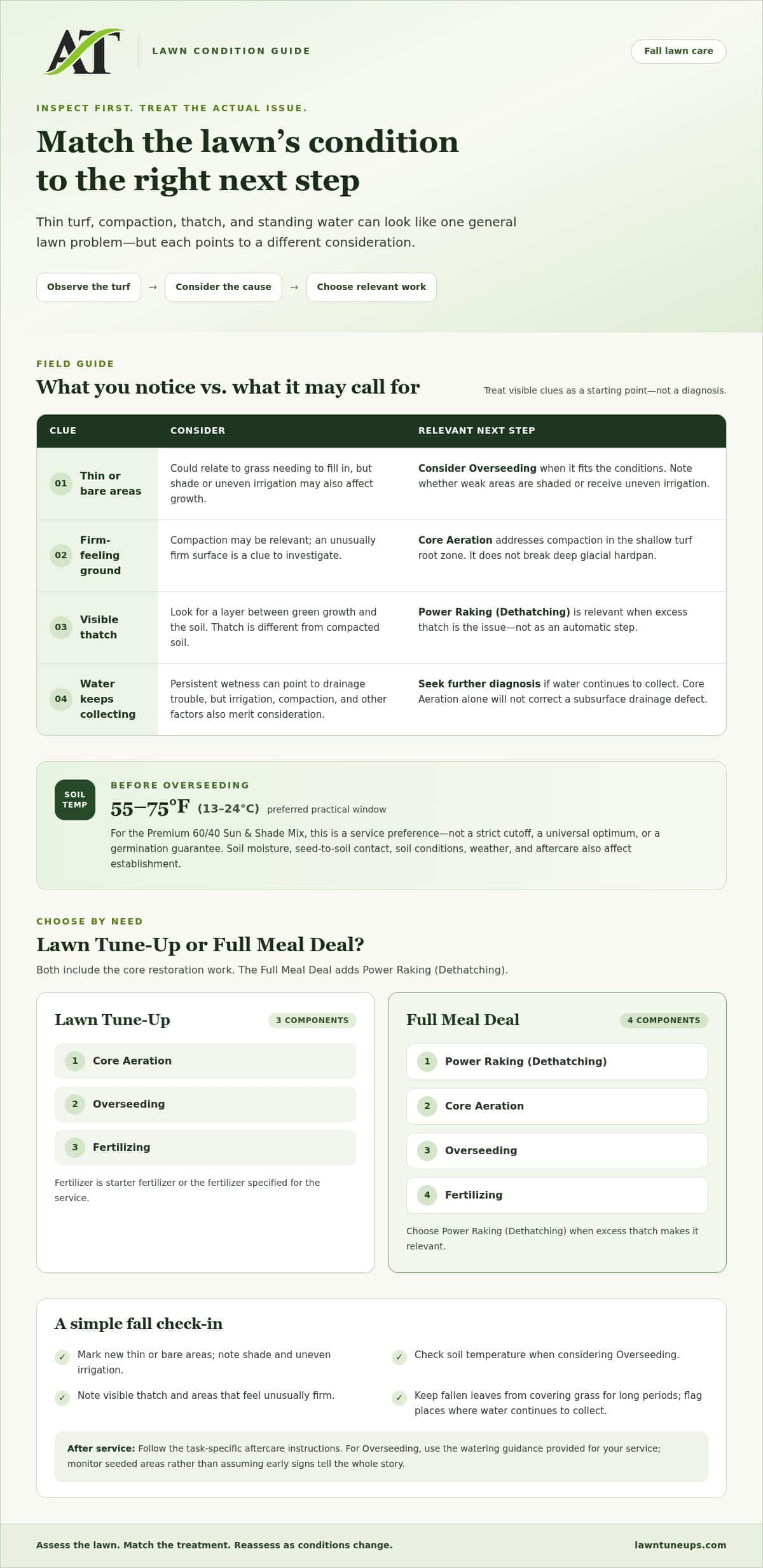
- Match symptoms to a possible cause. Thin turf may call for Overseeding, while compaction may make Core Aeration relevant. Shade, irrigation, or persistent wetness can also affect growth, so don’t assume every weak patch has the same cause.
- Check conditions before Overseeding. For the Premium 60/40 Sun & Shade Mix, we prefer soil temperatures around 55-75°F (13-24°C) as a practical window for our service. This is a preference, not a strict cutoff, universal optimum, or germination guarantee. Soil moisture, seed-to-soil contact, soil conditions, weather, and aftercare all affect establishment. The Premium 60/40 Sun & Shade Mix is one option for this work.
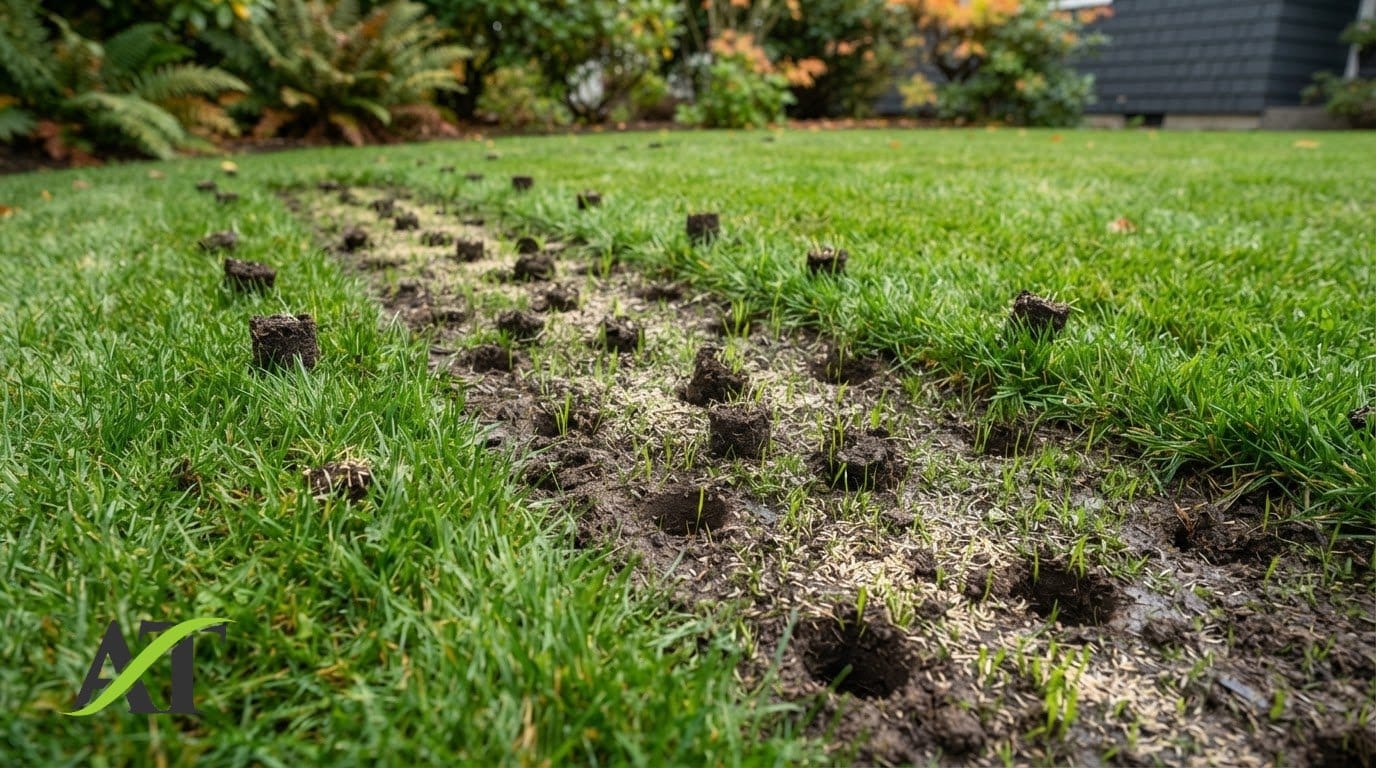
- Choose only the relevant treatment. Core Aeration addresses compaction in the shallow turf root zone. It won’t break deep hardpan or correct a subsurface drainage defect. Power Raking (Dethatching) is relevant when excess thatch is the issue, not as an automatic step.
For lawns with standing water or several possible causes of decline, further diagnosis may be needed before choosing a treatment. The National Association of Landscape Professionals (NALP) offers broader landscape-industry resources, but your next step should still fit the conditions on your property. If you’re unsure which issue is driving the decline, share your lawn’s symptoms and discuss next steps.
Lynnwood Fall Lawn Checklist: Monitor, Maintain, and Reassess
Build a check-in into your fall plan after each task. Keep brief notes about where the lawn changes. That record can help you tell whether thin spots are stable, spreading, or showing up somewhere new.
- Mark new bare or thin areas and note whether they’re shaded or receive uneven irrigation.
- Check soil temperature when deciding whether conditions still suit planned Overseeding.
- Note visible thatch or areas that feel unusually firm.
- Keep fallen leaves from covering grass for long periods, and flag places where water continues to collect.
For seeded areas, track whether the surface stays moist as directed in your service-specific aftercare instructions. Seed establishment can vary, so monitor the lawn rather than assuming early signs tell the whole story.
After Overseeding or Core Aeration
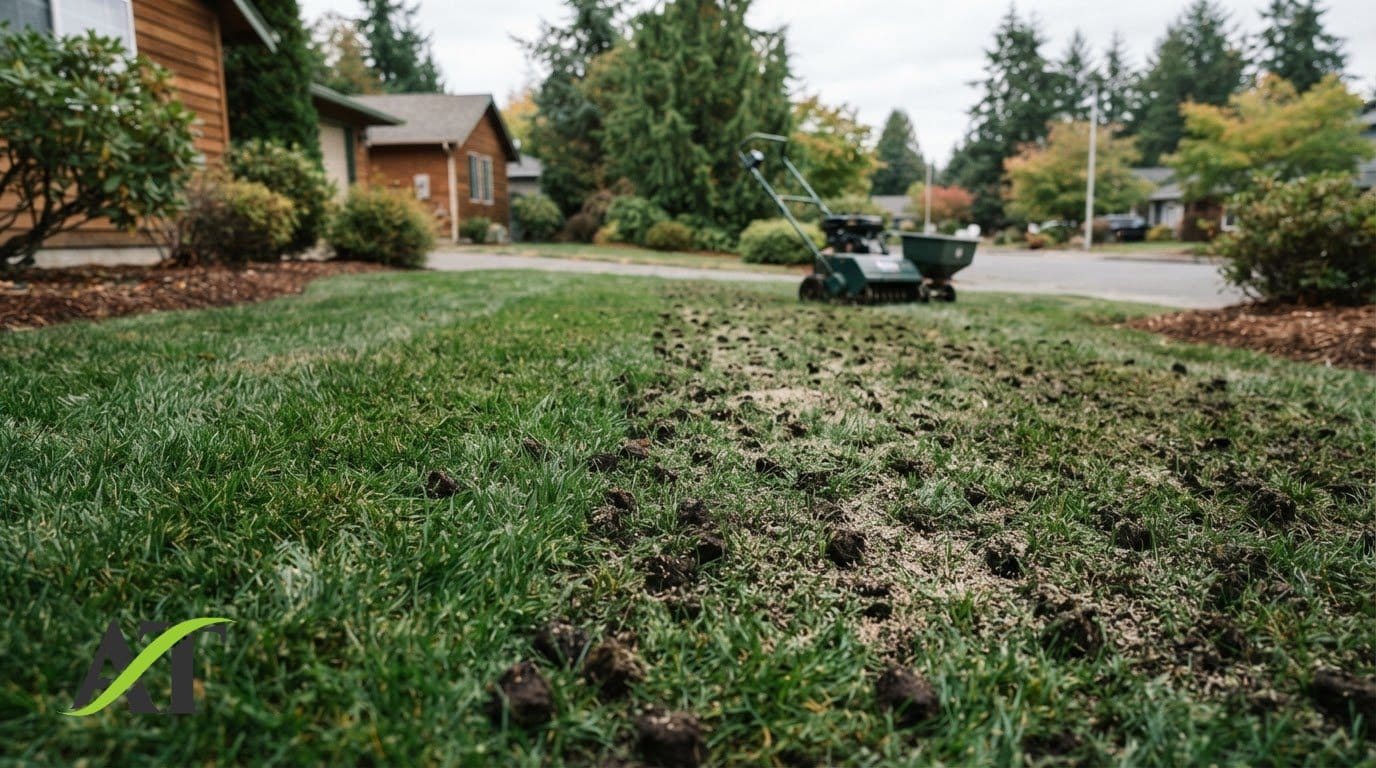
Follow the aftercare instructions for the work completed. For Overseeding, use the watering guidance provided for your service instead of applying a generic schedule. After Core Aeration, observe how the lawn responds and note areas that remain thin or firm. The Seattle lawn aftercare guide provides task-specific follow-up guidance.
When the lawn needs a closer diagnosis
If water keeps collecting in the same area, note the location and whether the issue persists after conditions change. Core Aeration works in the shallow turf root zone, so a continuing drainage concern may need further diagnosis. Reconsider whether the symptoms point to compaction, thatch, shade, irrigation, or drainage before choosing additional work. If chronic drainage issues around the yard begin to threaten residential structures or crawlspaces, homeowners can turn to regional specialists like DK Production Restoration for water mitigation and property restoration.
Choosing a Lawn Tune-Up or Full Meal Deal for Your Lynnwood Lawn
The right choice depends on what your lawn needs, not on choosing the longest list of services. In this fall lawn care schedule Lynnwood homeowners can use the visible condition of the turf to decide whether adding Power Raking (Dethatching) makes sense.
Which service matches the lawn’s needs?
A Lawn Tune-Up includes Core Aeration, Overseeding, and Fertilizing. It may fit a lawn with thin areas that could benefit from seed, or compaction concerns suited to Core Aeration. Those treatments address specific needs, but they can’t guarantee a particular result or correct issues caused by shade, irrigation, or subsurface drainage.
The Full Meal Deal includes Power Raking (Dethatching), Core Aeration, Overseeding, and Fertilizing. Its additional dethatching component is relevant when excess thatch is part of the problem. A thin lawn alone doesn’t establish that need. If you don’t see a thatch concern, don’t assume the larger service is necessary.
Use what you observed during your lawn checks to guide the decision. A visible thatch layer may support considering Power Raking (Dethatching); thin turf or compaction concerns may point toward the Lawn Tune-Up components. If symptoms suggest more than one cause, further diagnosis can help avoid choosing work that doesn’t address the main issue.
Plan the next step for your Lynnwood lawn
Before requesting service, note where the lawn is thin, whether thatch is visible, and any areas that stay wet or receive limited sunlight. These details help focus the conversation on the condition you want to address. A clear description is a practical starting point, especially when the cause isn’t obvious.
Ask Stewart About Your Lawn to discuss what you’re seeing and the next step that fits.
Take the Next Step Toward a Healthier Lawn
As you put your fall lawn care schedule Lynnwood plan into action, leave room to adjust it as the lawn changes. A new bare patch, lingering water, or persistent thin growth can be a reason to pause and reassess before adding another treatment. The goal is steady, informed care, not checking off every possible task.
Aerating Thatching Co. has provided lawn restoration services in Lynnwood since 2004. If you’re unsure what your lawn’s symptoms point to, sharing what you’ve noticed can help start a focused conversation about suitable next steps.
Ask Stewart About Your Lawn
With a clear assessment and the right work for your lawn, you can move into the next season with more confidence.
Frequently Asked Questions
Should I follow a fall lawn care calendar or wait for the right conditions?
Use a calendar to plan check-ins, but let the lawn’s current condition guide the work. The fall lawn care schedule Lynnwood homeowners follow may need to shift if the turf is still thickening, soil temperatures aren’t suitable for planned Overseeding, or a suspected problem hasn’t been identified. For example, a reminder to aerate is not a reason to do so if compaction isn’t the concern.
What soil temperature does Aerating Thatching Co. prefer for fall Overseeding?
For Seattle-area Overseeding with the Premium 60/40 Sun & Shade Mix, Aerating Thatching Co. prefers soil temperatures around 55-75°F (13-24°C) as a practical service window. This is a preference, not a strict cutoff or a guarantee of germination. Check soil temperature rather than relying on a warm afternoon reading, and remember that other seed types may have different temperature preferences.
Does Core Aeration fix poor lawn drainage in Lynnwood?
No. Core Aeration addresses compaction in the shallow turf root zone; it won’t correct a subsurface drainage defect. If water repeatedly collects in the same place, note where and when it happens, then consider whether the issue needs further diagnosis. The distinction matters: aerating without identifying the cause may not address persistent wet areas.
Does a Lawn Tune-Up include Power Raking (Dethatching)?
No. A Lawn Tune-Up includes Core Aeration, Overseeding, and Fertilizing. Power Raking (Dethatching) is not part of it. The Full Meal Deal includes Power Raking (Dethatching), Core Aeration, Overseeding, and Fertilizing. Choose based on the lawn’s needs: a visible thatch concern may make dethatching relevant, but it isn’t automatically needed for every lawn.
Can I Overseed a shaded lawn in the fall?
Yes, Overseeding may suit a shaded lawn if the site gets enough light and conditions support establishment. A shade-tolerant seed mix can be worth considering, but it can’t make up for very limited light. Check whether the area is thin throughout or only beneath a dense canopy, and consider how soil moisture and aftercare may affect the seeded area.
Article by
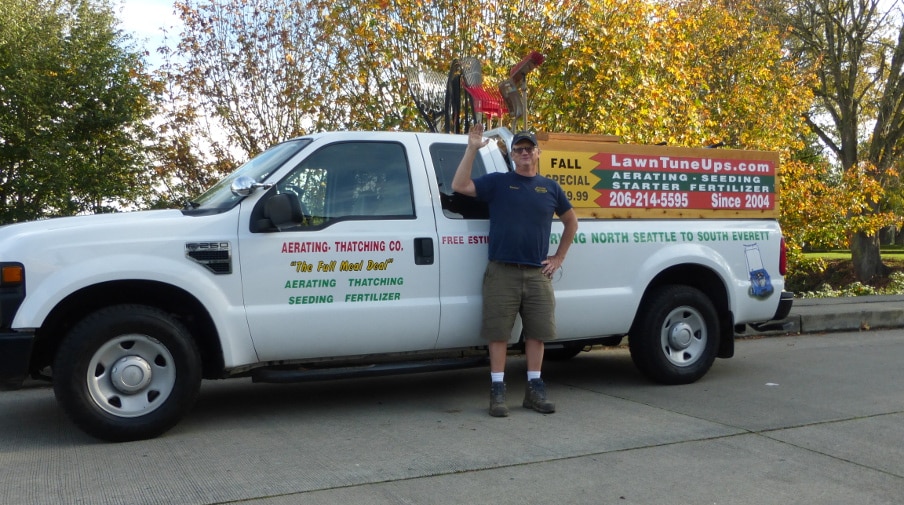
Stewart Armour
Stewart Armour is the owner of Aerating Thatching Co., an owner-operated Seattle-area lawn restoration business established in 2004. He helps homeowners understand Core Aeration, Power Raking (Dethatching), Overseeding, soil conditions, and the aftercare needed for stronger lawns. His background includes turf management study, advanced golf course turf training, and continuing education through Wilbur-Ellis University, State Turf Facilities, Soil First Academy, and Golf Course Applied Turf Physiology. Stewart has personally evaluated thousands of residential lawns throughout the Seattle area and focuses on recommending the work that fits each lawn’s condition.