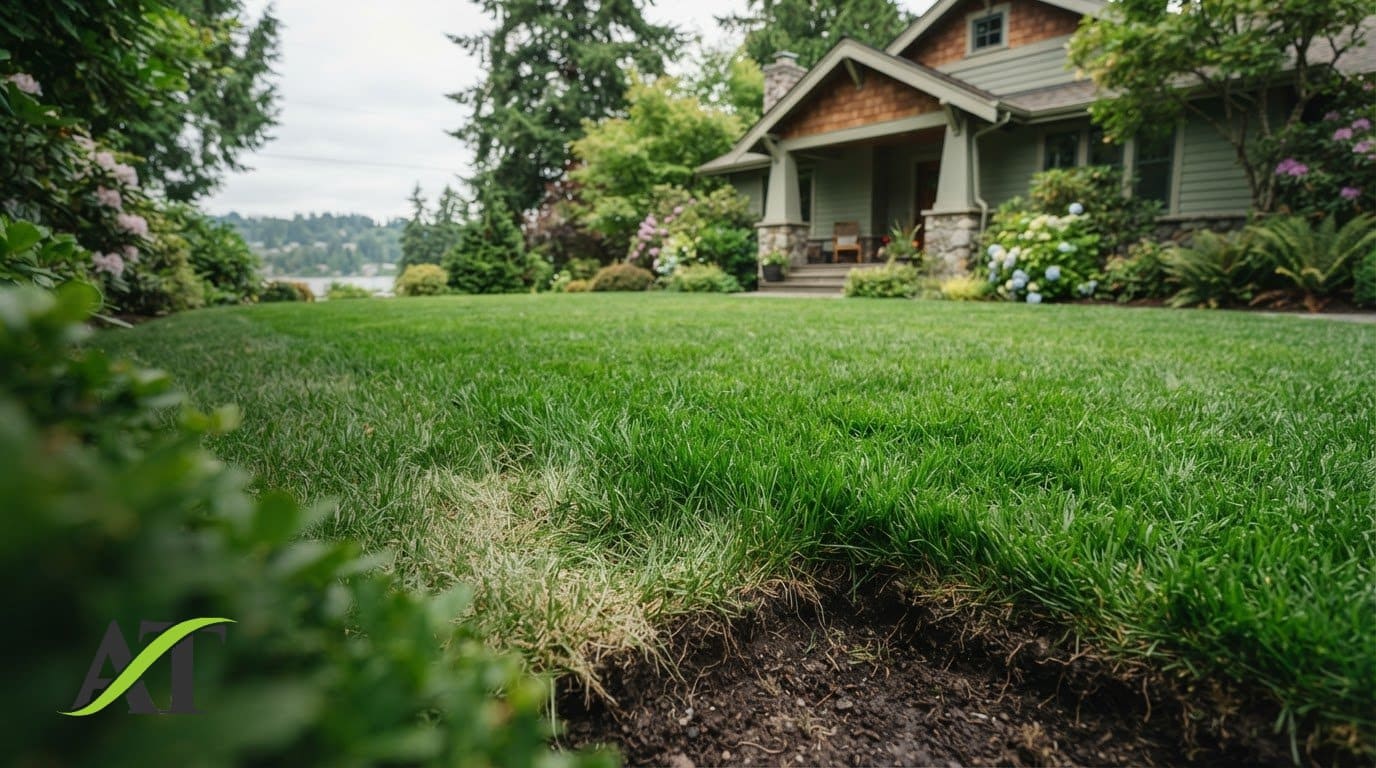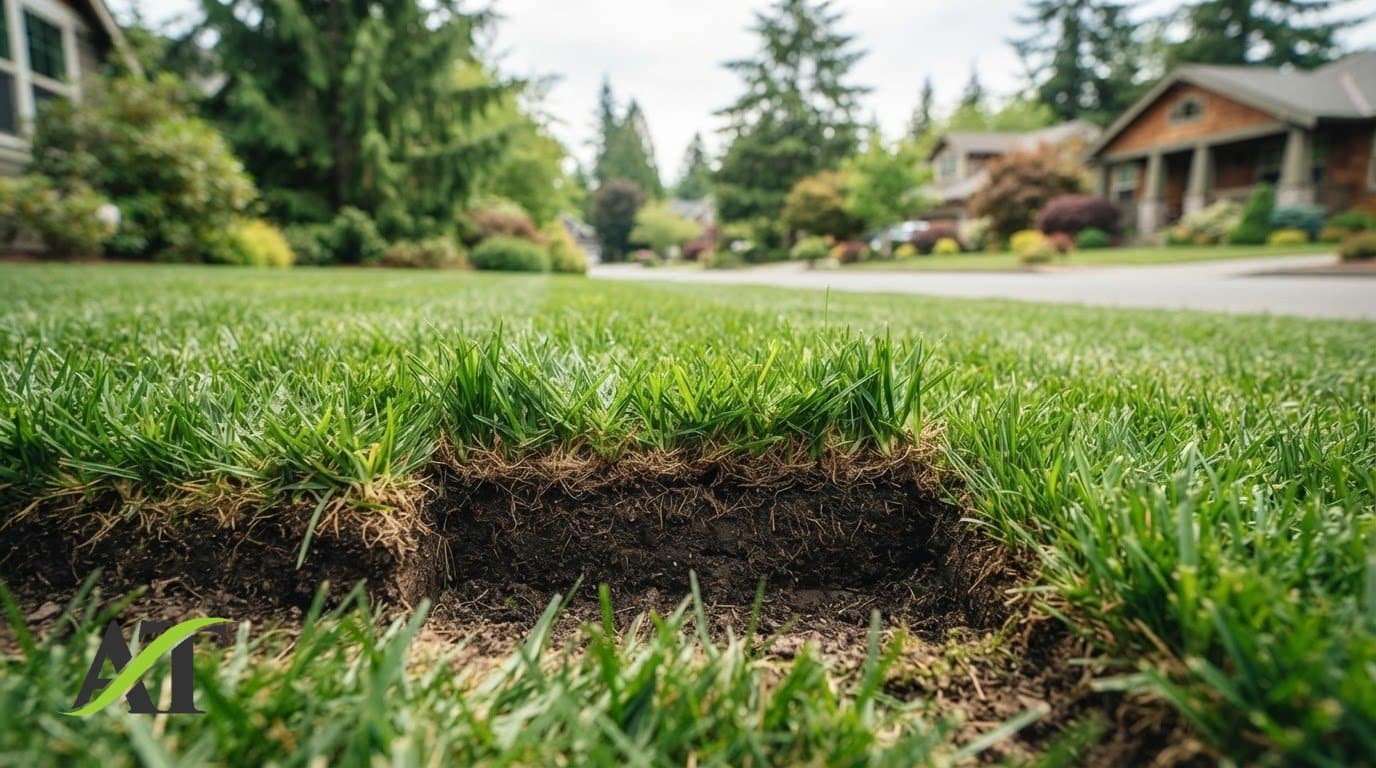
Poking holes in your lawn might actually be making your soil more compacted, not less. If you’ve spent weekends trying to fix thinning grass or heavy moss in Shoreline or Edmonds, you know how stubborn Seattle soil can be. When comparing core aeration vs spiking, the choice you make determines if your grass finally breathes or continues to struggle. Spiking might look like it’s helping, but in our damp climate, it often just pushes dirt aside and creates harder pockets underground.
We understand the frustration of watching water pool on the surface even after you’ve applied fertilizer. You want a thicker, greener lawn that actually absorbs nutrients. This article explains why Core Aeration is a foundational part of our Lawn Tune-Up, which consists of Core Aeration, Overseeding, and Fertilizing. You’ll learn why one method provides long-term health while the other is temporary. We’ll also cover how our Full Meal Deal, which includes Power Raking (Dethatching), Core Aeration, Overseeding, and Fertilizing, offers the most complete restoration for heavy moss and compaction.
Key Takeaways
- Understand the critical difference between core aeration vs spiking, as removing soil plugs is far more effective for Seattle clay than simply pushing dirt aside.
- Learn why Core Aeration is the superior choice for reducing soil compaction and allowing water, air, and nutrients to reach the root zone.
- Discover how a Lawn Tune-Up, which includes Core Aeration, Overseeding, and Fertilizing, provides a complete foundation for a healthier and greener lawn.
- Identify the ideal timing for lawn restoration by monitoring soil temperatures, aiming for the 55°F to 75°F range to support successful grass seed germination.
Understanding Lawn Aeration: Core Aeration vs. Spiking Basics
Aeration is the process of opening up your soil to let it breathe. The primary goal is simple: get air, water, and nutrients down to the root zone. In the Pacific Northwest, especially in areas like Shoreline and Edmonds, our heavy clay soil makes this a challenge. Choosing between core aeration vs spiking depends on whether you want to solve the problem or just hide it temporarily. Most local lawns suffer from compaction due to heavy rain and foot traffic, which essentially chokes the grass roots over time.
What is Core Aeration?
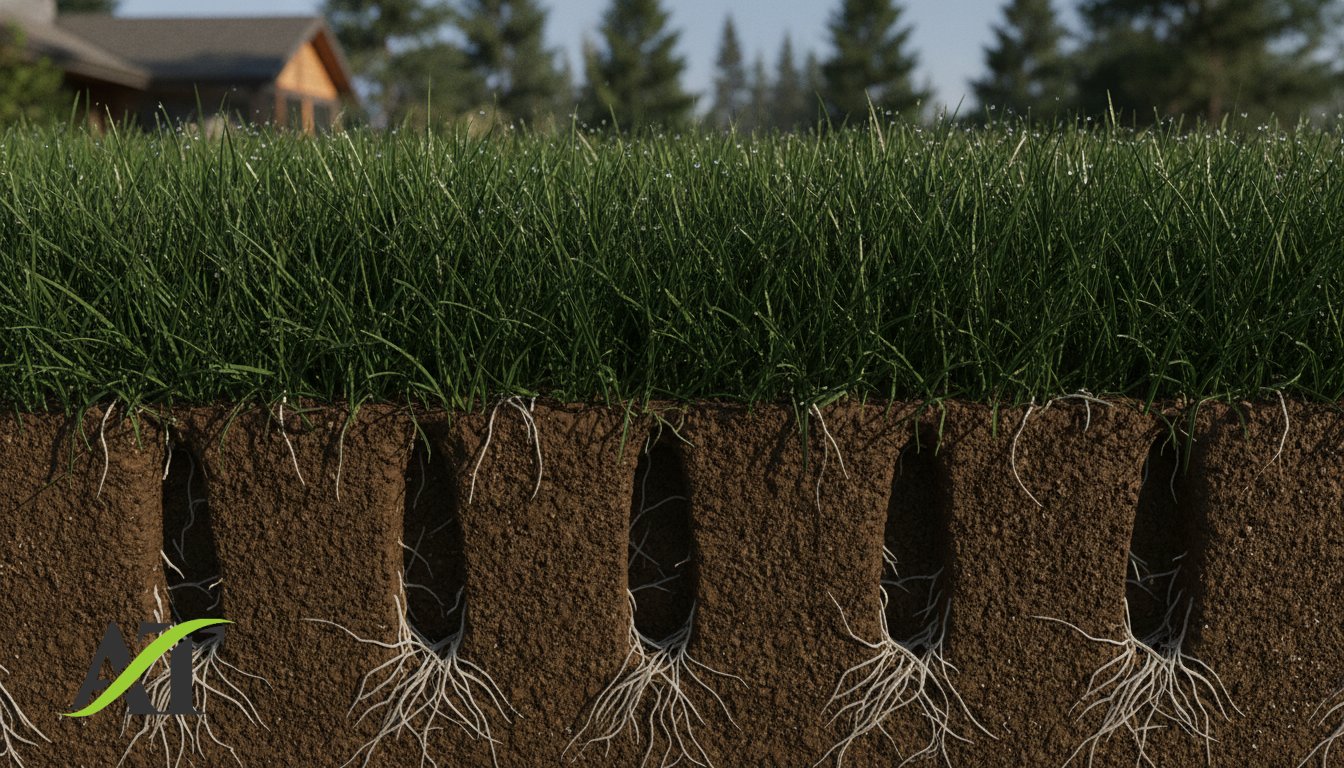
Core Aeration uses a mechanical Lawn aerator equipped with hollow tines. These tines pull cylindrical soil plugs, usually 2 to 3 inches deep, directly out of the ground. By removing these cores, you create physical space for roots to expand. These plugs eventually break down on the surface, returning valuable organic matter and nutrients to your lawn. This process is the foundation of our Lawn Tune-Up services, ensuring your grass has the best possible environment to grow. Removing the soil is the only way to truly reduce density in our local clay.
What is Lawn Spiking?
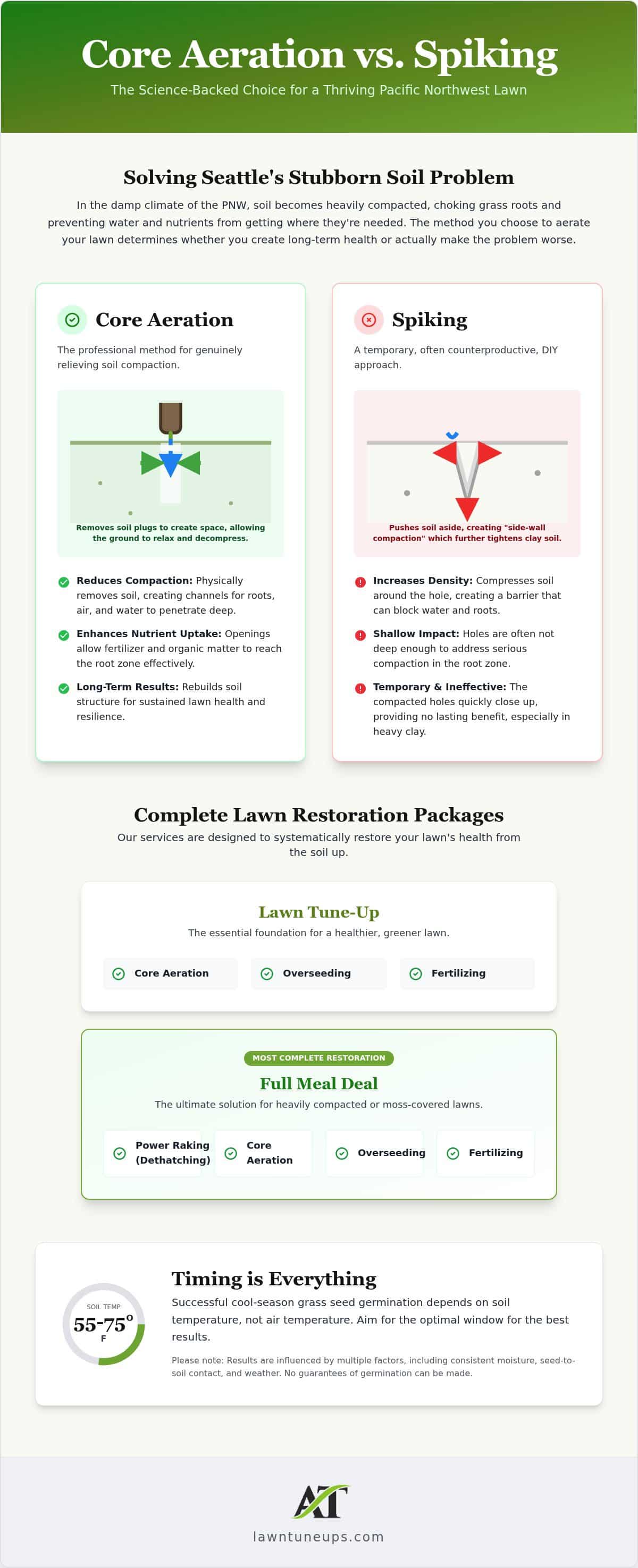
Spiking is a different approach that relies on solid tines. People often use spike shoes, pitchforks, or rolling spike tools to poke holes into the turf. Unlike extraction methods, spiking is a displacement process. It doesn’t remove any material from the ground. Instead, it pushes the soil downward and outward to create an opening. While it might seem easier for a DIY project, it doesn’t offer the same physical relief for compacted soil that mechanical extraction provides. In fact, pushing soil aside can sometimes make the surrounding dirt even tighter than it was before you started.
The Science of Soil Compaction: Why Core Aeration Wins
Understanding the physics of your yard is the first step toward fixing it. When comparing core aeration vs spiking, you have to look at where the soil goes. Spiking doesn’t remove anything. It just forces soil outward, which actually tightens the area immediately surrounding the hole. This increases the density of your yard instead of lowering it. Core Aeration reduces bulk density in heavy clay soil by physically removing material to create room for air and water.
The Danger of Side-Wall Compaction
Solid tines create a physical phenomenon called side-wall compaction. As the spike enters the ground, it compresses the dirt into a glazed or smeared wall. In the heavy clay common across North Seattle and Snohomish County neighborhoods, this wall acts like a barrier. It can actually block water and nutrients from moving sideways into the root zone. Instead of a helpful opening, you’ve created a series of small, compacted pockets that struggle to drain properly. This is why spiking often fails to provide long-term results for local homeowners.
How Core Aeration Rebuilds Soil Structure
Core Aeration is the only method that creates actual void space for roots to expand. By extracting material, you allow the tight, surrounding soil to relax and expand into the new openings. This physical transformation is vital for the health of cool-season grasses. Technical resources like the Practical lawn care for western Oregon guide emphasize how these mechanical practices serve as essential cultural maintenance. These newly created air pockets also boost microbial activity. Beneficial bacteria thrive in these oxygen-rich spaces, helping to break down organic matter and improve soil health from the inside out.
If your lawn feels like concrete and mowers bounce across the surface, it’s time for a professional restoration. You can get a quote for our restoration services to see how we can help your yard breathe again.
When to Choose Core Aeration Over Spiking in the PNW
Living in the Pacific Northwest means dealing with heavy clay and constant rain. For homeowners in Everett and Lynnwood, winter pooling is a common sight that ruins curb appeal. When evaluating core aeration vs spiking, the heavy clay soil is the primary reason to choose extraction. Spiking simply isn’t enough to handle the drainage issues our region faces. Core Aeration is superior because it physically removes material, allowing water to penetrate the ground rather than sitting on top. If you’re looking for the best time to start, our Buyer’s Guide to Core Aeration in Snohomish provides specific local insights on scheduling.
Soil Temperature and Germination Timing
Timing your restoration depends entirely on the ground, not the air. For optimal results, the soil temperature must be between 55°F and 75°F (13°C to 24°C). While grass seed can germinate outside this range, the process is usually slower and less reliable. We recommend planning your service when these temperatures are consistent during the spring or fall. Factors like moisture, seed-to-soil contact, and weather will still influence the outcome. Because of these variables, we don’t offer absolute guarantees on germination, but hitting that temperature window gives your lawn the best chance.
The Role of Thatch and Moss
Thatch and moss thrive in our damp climate, especially in Shoreline and Edmonds. Core Aeration helps by bringing beneficial soil microbes to the surface to digest organic debris. This is why it’s a foundational part of our Lawn Tune-Up. However, if your yard has a thick layer of dead grass, Power Raking (Dethatching) is the necessary first step. This ensures that when we perform a Full Meal Deal, the new seed actually reaches the soil. While core aeration vs spiking is a common debate, spiking does nothing to manage the thatch layer that chokes out healthy grass.
Maximizing Results: The Lawn Tune-Up and Full Meal Deal
Aeration is just the beginning of a healthy yard. While the core aeration vs spiking debate highlights how to open the soil, the real magic happens when you follow up with nutrients and new growth. We view Core Aeration as one part of a comprehensive restoration strategy. For most Seattle properties, we recommend the official Lawn Tune-Up. This specific service consists of Core Aeration, Overseeding, and Fertilizing. If your yard has heavy thatch or moss, you likely need the Full Meal Deal. This package includes Power Raking (Dethatching), Core Aeration, Overseeding, and Fertilizing to clear the way for new grass. You can find a deep dive into the process in our Shoreline Lawn Tune-Up guide.
Why Overseeding and Fertilizing Must Follow Aeration
The open holes created by Core Aeration are the perfect landing spots for new grass seed. This provides the direct seed-to-soil contact needed for establishment. We follow this with organic fertilizing to give those seedlings the nutrients they need to thrive. Keep in mind that soil temperature is the most important factor for success. We look for a range between 55°F and 75°F (13°C to 24°C). While moisture and weather play huge roles, there are no absolute guarantees on germination. We focus on creating the best possible conditions for your lawn to recover.
Getting a Professional Estimate in North Seattle
Don’t settle for high-gloss national chains or online aggregators. You want a neighborly, no-nonsense approach from someone who knows Snohomish County soil. Aerating Thatching Co. has been owner-operated since 2004, providing local expertise and physical labor you can trust. We know exactly what your lawn needs to handle the damp PNW climate. When you’re ready to stop guessing about core aeration vs spiking and start seeing results, we’re here to help. Request a Quote for your Lawn Tune-Up today.
Give Your Seattle Soil the Relief It Needs
Choosing the right method for your yard shouldn’t be a guessing game. When you weigh core aeration vs spiking, the mechanical removal of soil plugs is the clear winner for local conditions. Spiking simply displaces dirt, while Core Aeration creates the space necessary for roots to breathe. This is vital for the clay found throughout Shoreline and Snohomish County. As an owner-operated local service since 2004, we know how these restoration protocols transform struggling turf.
Our signature Lawn Tune-Up and Full Meal Deal are built for the Pacific Northwest. By focusing on soil health and the optimal germination temperature range of 55°F to 75°F, we provide a pragmatic path to a greener lawn. While weather variables mean there are no absolute guarantees on germination, these professional treatments offer the most reliable results. It’s time to stop fighting with compacted soil.
We take pride in providing dependable service to our neighbors. Let’s give your grass the restoration it deserves.
Frequently Asked Questions
Is spiking a lawn as good as core aeration?
No, spiking isn’t as effective as professional Core Aeration. While spiking just pushes soil aside, Core Aeration removes physical plugs from the ground. This process is essential for Seattle’s heavy clay soil because it reduces density rather than increasing it. When you compare core aeration vs spiking, extraction wins every time. It allows air and water to reach the roots without causing the glazing effect common with solid tines.
How often should I do core aeration in Seattle?
Most lawns in Shoreline and Edmonds benefit from Core Aeration once or twice a year. High-traffic areas or yards with heavy clay may need it in both spring and fall. Regular treatment is a foundational part of our Lawn Tune-Up, which includes Core Aeration, Overseeding, and Fertilizing. Consistent maintenance ensures your soil doesn’t return to a concrete-like state during our wet winters or dry summer months.
Will spiking my lawn help with moss control?
Spiking rarely helps with moss because it doesn’t solve the underlying drainage issues. Moss thrives in the compacted, damp soil found in North Seattle. To truly combat moss, you need to remove soil material through Core Aeration. For heavy moss and thatch, we recommend our Full Meal Deal. This combines Power Raking (Dethatching) with Core Aeration, Overseeding, and Fertilizing to create a healthier environment where grass can outcompete moss.
Can I overseed after spiking or do I need core aeration?
You can throw seed down after spiking, but Core Aeration is far more effective for Overseeding. The holes created by extraction provide the perfect seed-to-soil contact for new growth. Success depends on soil temperature, which should be between 55°F and 75°F. While we don’t offer absolute guarantees on germination due to weather and moisture, using the aeration holes as seed beds significantly improves your lawn’s establishment rates.
When is the best time for core aeration in Snohomish County?
The best times are spring and fall when soil temperatures are between 55°F and 75°F. In Snohomish County, this usually happens in May or September. You want the grass to be actively growing so it can recover quickly. We often perform our Lawn Tune-Up during these windows to ensure the Fertilizing and Overseeding components have the best chance to take hold before the weather turns too cold or dry.
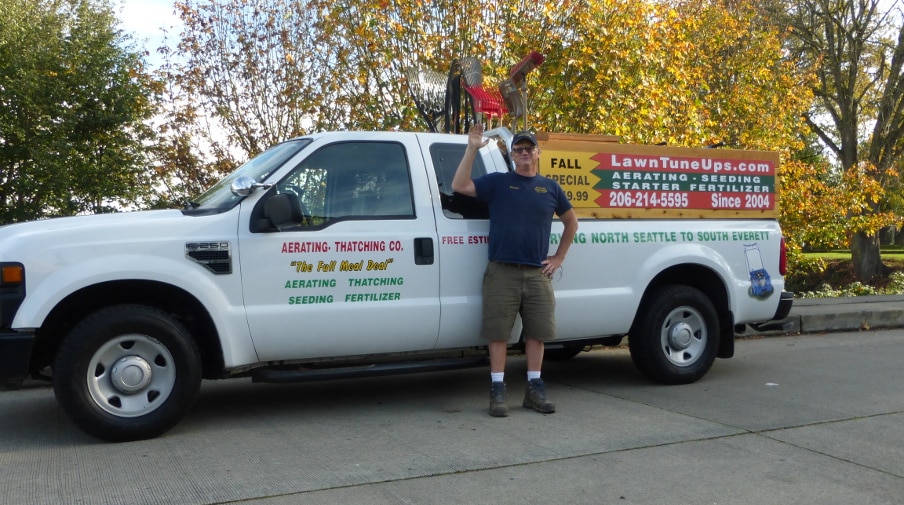
Article by
Stewart Armour
Stewart Armour is an independent lawn restoration expert, educator, and owner of Aerating Thatching Co., serving the greater Seattle area since 2004. With more than two decades of professional experience restoring Western Washington lawns, Stewart specializes in diagnosing lawn problems, improving soil health, and developing long-term lawn renovation strategies. His education includes turf management studies, advanced golf course turf training, and continuing education through Wilbur-Ellis University, State Turf Facilities, Soil First Academy, and Golf Course Applied Turf Physiology. Every article published on LawnTuneUps.com is grounded in practical field experience, current turf science, and a commitment to helping homeowners understand the why behind every recommendation—not just what to do.
Stewart has personally evaluated thousands of residential lawns throughout the Seattle area and remains committed to helping homeowners understand the science behind growing healthier, more resilient lawns.