The calendar says it is autumn, but your grass only cares about what is happening four inches underground. If you are waiting for a specific date to decide when to aerate lawn Mill Creek, you might be missing the most critical window for root health. We know the frustration of watching moss take over while heavy clay soil turns your yard into a drainage nightmare.
It is a common struggle for our neighbors here, especially with the 2026 drought emergency making every drop of water count. This guide provides the exact soil temperature milestones you need for successful Core Aeration. You will learn why the 55°F-75°F (13°C-24°C) range is the sweet spot for Overseeding and how to tell if your property needs a Lawn Tune-Up, which includes Core Aeration, Overseeding, and Fertilizing, or the Full Meal Deal, which includes Power Raking (Dethatching), Core Aeration, Overseeding, and Fertilizing. We are breaking down soil health into a practical plan that works for our local climate.
Key Takeaways
- Successful germination requires a precise soil temperature window of 55°F-75°F (13°C-24°C) to ensure your new grass establishes reliably.
- Knowing when to aerate lawn Mill Creek involves targeting late March through May for moss issues or September through October for summer recovery.
- Relieving compaction in our local heavy clay soil through Core Aeration is the only way to fix drainage problems and stop moss from taking over.
- Choose between a Lawn Tune-Up for essential maintenance or a Full Meal Deal for heavy-duty restoration that includes Power Raking (Dethatching).
Why Timing is Critical for Core Aeration in Mill Creek’s Climate
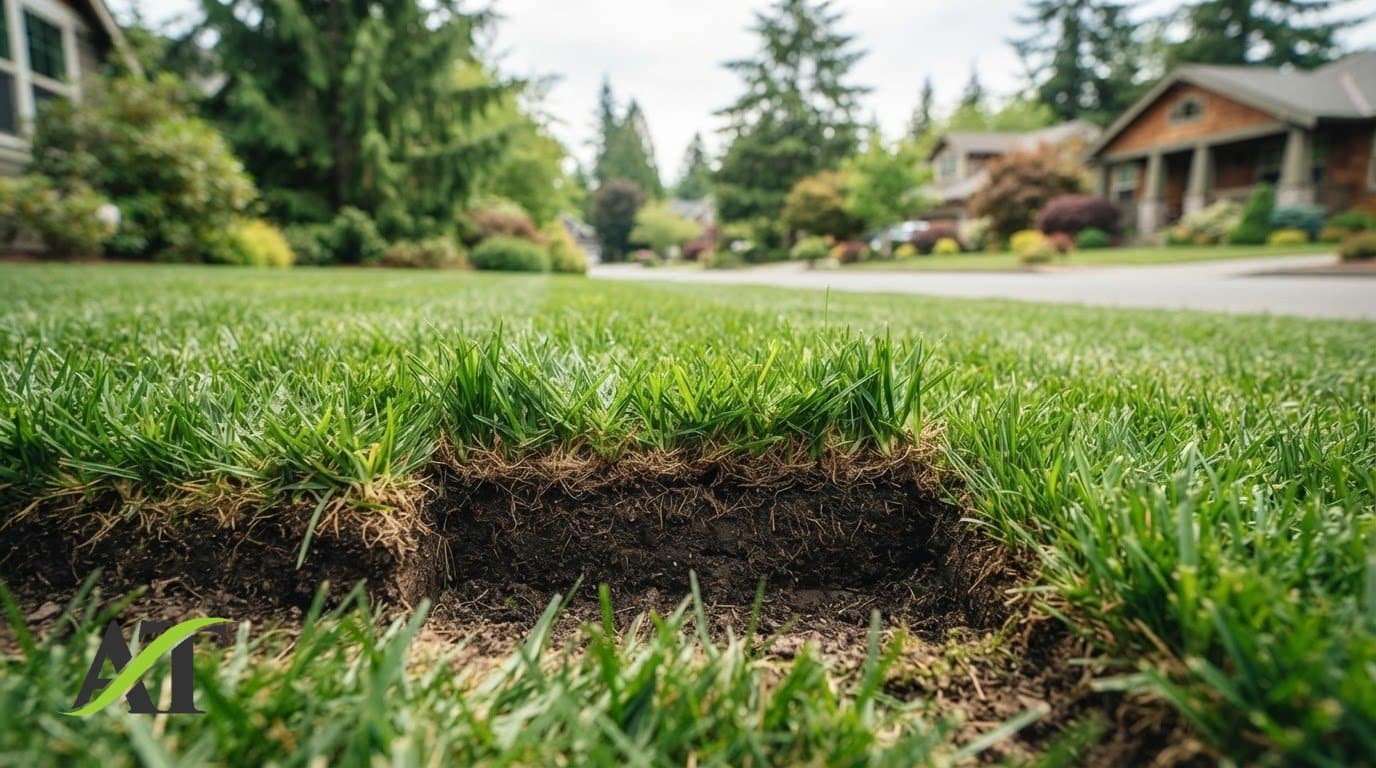
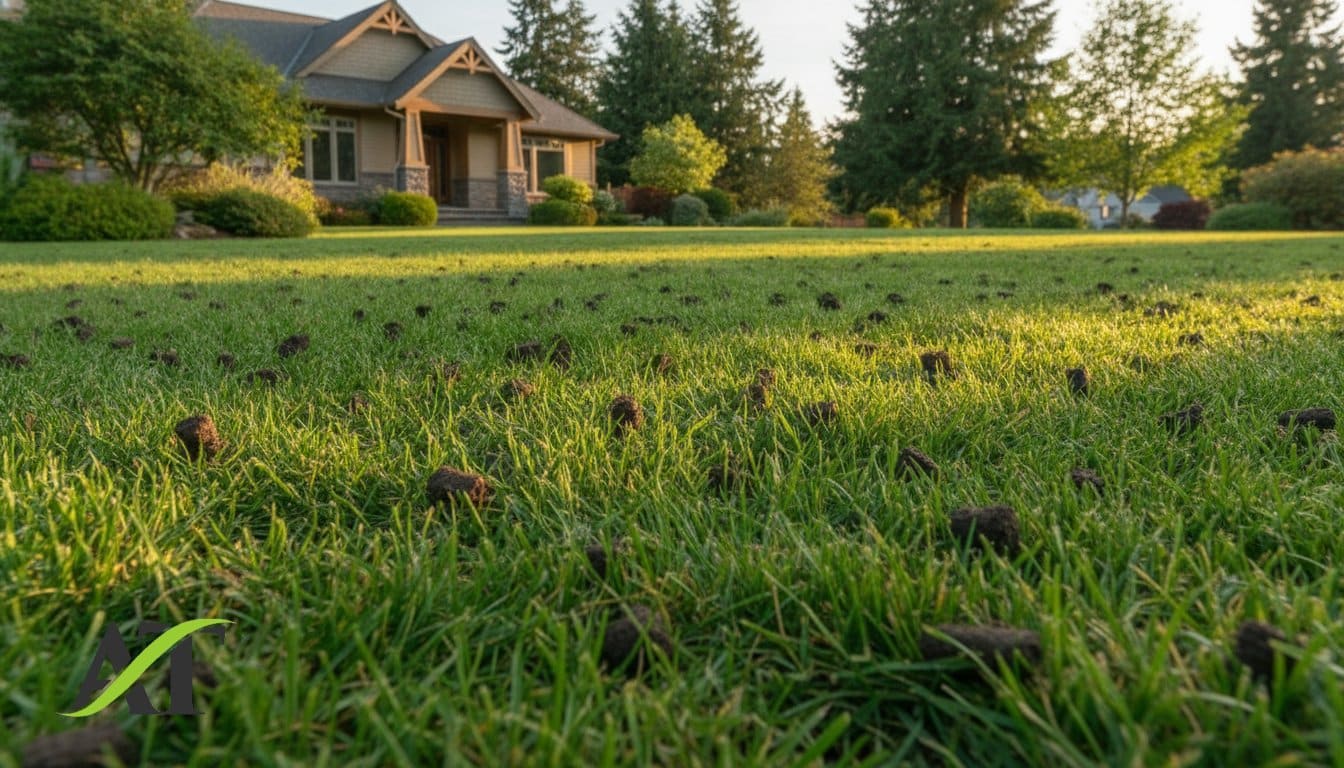
Mill Creek sits on a foundation of heavy clay. This soil holds moisture like a sponge in winter but turns into a brick during summer dry spells. Core Aeration is the mechanical removal of soil cores to allow air, water, and nutrients to reach the root zone. If you are researching What is a Lawn Aerator?, you will find it is the most effective way to break through this density. Knowing when to aerate lawn Mill Creek is the difference between a thriving yard and a swampy mess. Proper timing ensures your grass is active enough to fill the holes before moss moves in. We see this every year; lawns that skip this step struggle to survive the August heat.
The Problem with Compacted Soil in Snohomish County
Our local weather creates a perfect storm for hardpan soil. Heavy Snohomish County rain combined with regular foot traffic squeezes the air out of the ground. When soil is compacted, you will notice water pooling on the surface and grass that looks thin or yellow. Without air pockets, roots suffocate. Moss loves these conditions. It thrives in the damp, low-oxygen environment that kills off healthy turf. Once moss establishes a foothold in compacted soil, it is very difficult to remove without mechanical intervention. This leads to a cycle of thinning grass and increasing moss coverage that only gets worse over time.
How Core Aeration Solves Local Drainage Issues
Removing those small soil plugs creates immediate relief. These new pathways allow roots to expand deeper into the earth. It also makes your other maintenance efforts much more effective. For example, Organic Fertilizing works better because nutrients reach the roots instead of washing away. Similarly, a Lime Application corrects soil acidity more efficiently by penetrating the surface. Aeration turns a stagnant yard into a functional ecosystem that can actually breathe. This process is the foundation of any successful lawn restoration in our region. It prepares the ground to handle the heavy PNW rains without drowning your grass.
The Science of Soil Temperature: When Mill Creek Lawns Wake Up
Many homeowners check the weather app and see a sunny 65-degree day, assuming it’s time to start work. However, air temperature is a poor indicator of plant activity. The ground takes much longer to warm up or cool down than the atmosphere. For cool-season grasses, soil temperature dictates success. If you are deciding when to aerate lawn Mill Creek, you must look at the thermometer in the dirt rather than the one on your porch.
The optimal soil temperature range for germination is 55°F-75°F (13°C-24°C). While germination can occur outside this range, it will be slower, less consistent, and produce less reliable establishment. This is why a Lawn Tune-Up, which consists of Core Aeration, Overseeding, and Fertilizing, is most effective when the ground hits this “sweet spot.” It ensures the seeds have the biological environment they need to thrive immediately after the soil is opened.
Why 55°F-75°F is the Magic Number for Overseeding
Grass seeds require consistent moisture and warmth to break dormancy. In our local clay-heavy soil, the ground stays cold long after the winter frost vanishes. Following principles of Lawn Management Through the Seasons helps homeowners understand that timing is a biological requirement. Keep in mind that while temperature is vital, results are also influenced by moisture, seed-to-soil contact, and local weather patterns.
Measuring Your Soil Temperature at Home
You don’t need expensive equipment to get an accurate reading. A simple meat thermometer stuck four inches into the ground in a few different spots will do the trick. Mill Creek mornings are often deceptive; the air feels crisp, but the ground might still be holding onto warmth. Check your levels before you request a quote to ensure your timing aligns with the science of your specific property.
Spring vs. Fall: Choosing Your Mill Creek Lawn Restoration Window
Deciding when to aerate lawn Mill Creek usually involves choosing between two specific windows. Each season serves a different purpose for your property’s health. While spring handles the aftermath of winter, fall prepares the turf for the year ahead. Understanding when to aerate lawn Mill Creek helps you plan for the best possible results before the seasons shift. For a deep dive into local requirements, check out Core Aeration in Snohomish: The Buyer’s Guide. Most local experts view the fall window as the gold medalist because it offers the most stable conditions for long-term root development.
Spring Aeration: Fighting Moss and Preparing for Summer
The spring window runs from late March through May. This is the time to tackle the moss mats that inevitably grow during Mill Creek’s long, wet winters. Core Aeration during this period breaks up compaction to improve drainage before the grass enters its peak growth phase. If your lawn has a thick layer of debris, it’s the right time for the Full Meal Deal. This service includes Power Raking (Dethatching), Core Aeration, Overseeding, and Fertilizing. It is designed to clear out the old and make room for the new.
Fall Aeration: The Ideal Time for Overseeding
September and October offer the best results for new growth. The soil remains warm, but the air temperature drops, which reduces stress on young plants. This creates a natural nursery for new seed. Fall is also the prime time for Organic Fertilizing to strengthen roots before winter. While this season is ideal, keep in mind that successful establishment is influenced by moisture levels and weather patterns. Proper timing ensures your lawn is dense enough to survive the next summer cycle.

Professional Restoration with the Lawn Tune-Up and Full Meal Deal
Deciding when to aerate lawn Mill Creek is only half the battle. You also need the right combination of treatments to see a real transformation. We offer two primary restoration bundles to meet the specific needs of your soil. The Lawn Tune-Up consists of Core Aeration, Overseeding, and Fertilizing. This is our standard maintenance package for healthy lawns that need a boost. For yards struggling with heavy debris, we provide the Full Meal Deal. This comprehensive service includes Power Raking (Dethatching), Core Aeration, Overseeding, and Fertilizing. While we use professional-grade methods, we don’t offer absolute guarantees on germination. Success is always influenced by moisture, seed-to-soil contact, soil conditions, and unpredictable weather patterns.
When to Choose the Full Meal Deal
If your lawn feels spongy when you walk on it, you likely have a thatch problem. Thick thatch acts like a barrier, preventing water and nutrients from reaching the dirt. Choosing the Full Meal Deal ensures that Power Raking (Dethatching) clears this layer before we begin the aeration process. Removing this debris is vital for Overseeding because it creates the direct seed-to-soil contact required for new grass to take hold. This extra step is often necessary for Mill Creek properties that haven’t had mechanical restoration in several years.
The Aerating Thatching Co. Difference
We aren’t a national chain with a one-size-fits-all approach. Our team brings local expertise and golf course superintendent training to every job. We use premium quality seeds specifically chosen for the Western Washington climate. This neighborly, professional approach ensures you get reliable advice on when to aerate lawn Mill Creek to maximize your property’s potential. We take pride in restorative work that produces tangible outcomes for our community.
Secure Your Lawn’s Future with Proactive Restoration
Successful lawn care in Snohomish County is about responding to the ground, not a calendar. Aiming for the 55°F to 75°F soil temperature window provides the most reliable environment for new growth. Knowing when to aerate lawn Mill Creek ensures you aren’t just guessing with your property maintenance. Whether you choose a Lawn Tune-Up for essential care or the Full Meal Deal to clear out heavy thatch, you’re taking the right steps to beat back moss and improve drainage.
Since 2004, we’ve brought golf course-level training and specialized mechanical restoration to Western Washington. We rely on organic fertilizer and premium seed blends to help your yard recover from summer stress. While we don’t offer absolute guarantees on germination due to weather and moisture variables, our professional-grade processes give your grass the strongest possible foundation.
Your property deserves the attention of a local craftsman who understands our heavy clay soil. We’re ready to help you build a lawn that thrives through every season.
Frequently Asked Questions
How often should I aerate my lawn in Mill Creek?
Most lawns in our area benefit from annual treatment due to the heavy clay soil. If your yard sees high traffic or the ground feels like a brick, once a year is the standard. Some properties with severe compaction might require it twice a year; once in spring and once in fall. Regular aeration ensures the roots don’t suffocate under the weight of Snohomish County’s wet climate.
Is it better to aerate in the spring or the fall in the PNW?
Both seasons have unique benefits, but fall is the top choice for restoration. Deciding when to aerate lawn Mill Creek depends on your goals. Spring is perfect for breaking up moss mats and preparing for summer heat. Fall provides warm soil and cool air, creating an ideal nursery for seeds. We recommend fall for the most reliable root development before winter dormancy sets in.
What is the difference between a Lawn Tune-Up and a Full Meal Deal?
These bundles differ based on the level of debris in your yard. A Lawn Tune-Up consists of Core Aeration, Overseeding, and Fertilizing. It is ideal for maintenance. The Full Meal Deal is a heavy-duty restoration option that includes Power Raking (Dethatching), Core Aeration, Overseeding, and Fertilizing. Choose the latter if you have a thick layer of thatch blocking water and nutrients from reaching the soil.
Can I aerate if my lawn is currently covered in moss?
Yes, you should aerate precisely because moss indicates a drainage and compaction problem. Moss thrives in damp, low-oxygen soil where grass roots struggle. Core Aeration relieves this pressure and creates air pockets. When combined with a Lawn Tune-Up, it gives new grass a chance to outcompete the moss. This process is essential for shifting the environment back in favor of healthy turf.
How long does it take for grass seed to germinate after Overseeding?
Germination typically occurs within 10 to 21 days depending on conditions. Success depends on the soil temperature being between 55°F and 75°F (13°C to 24°C). While seeds can sprout outside this range, the process will be slower and less consistent. We don’t offer absolute guarantees because moisture, seed-to-soil contact, and local weather patterns play a major role in how quickly the new grass establishes.

Article by
Stewart Armour
Stewart Armour is an independent lawn restoration expert, educator, and owner of Aerating Thatching Co., serving the greater Seattle area since 2004. With more than two decades of professional experience restoring Western Washington lawns, Stewart specializes in diagnosing lawn problems, improving soil health, and developing long-term lawn renovation strategies. His education includes turf management studies, advanced golf course turf training, and continuing education through Wilbur-Ellis University, State Turf Facilities, Soil First Academy, and Golf Course Applied Turf Physiology. Every article published on LawnTuneUps.com is grounded in practical field experience, current turf science, and a commitment to helping homeowners understand the why behind every recommendation—not just what to do.
Stewart has personally evaluated thousands of residential lawns throughout the Seattle area and remains committed to helping homeowners understand the science behind growing healthier, more resilient lawns.