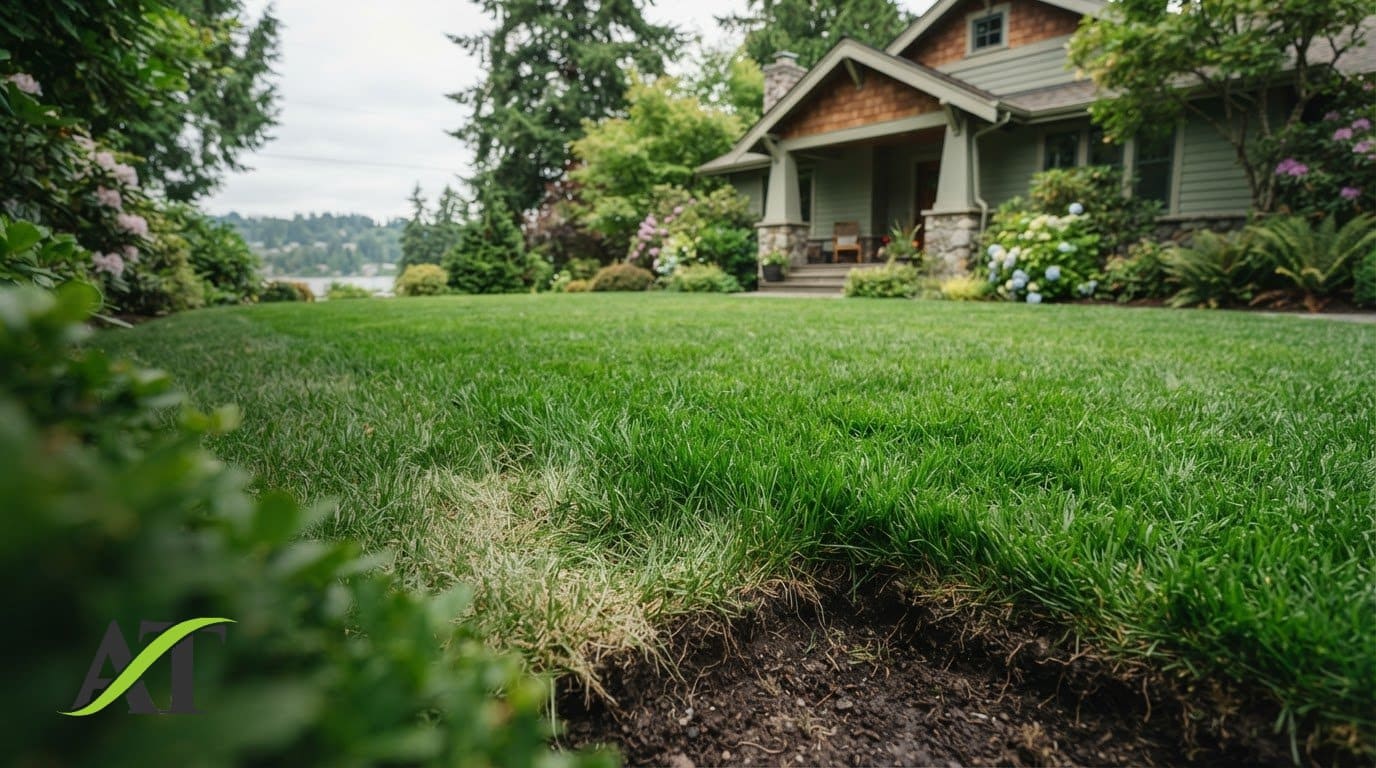
Why does your Kenmore lawn look like a mossy swamp in the winter but feel like a sun-baked brick by July? If you live near Lake Washington, you’re likely fighting a losing battle against heavy clay soil that refuses to breathe. You might have tried heavy watering or extra fertilizer, but the reality is that without core aeration Kenmore lawns simply cannot absorb the nutrients they need to thrive. It’s frustrating to watch your grass thin out while moss takes over the yard, despite your best efforts.
We understand that a healthy yard starts from the ground up, not the top down. In this guide, you’ll discover how Core Aeration breaks through compacted soil to allow air, water, and nutrients to reach the root zone. We will show you why this mechanical process is the essential foundation of a professional Lawn Tune-Up, a service that combines Core Aeration, Overseeding, and Fertilizing. You’ll learn the exact steps needed to transform hard, thinning turf into a thick, resilient carpet of green. We are laying out a clear plan for lawn restoration that works with our local Washington climate to ensure your soil is ready for the 2026 growing season.
Key Takeaways
- Learn how core aeration Kenmore services break through heavy clay to fix drainage issues and stop moss growth.
- Discover the specific components of a Lawn Tune-Up and when your yard requires the deeper restoration of a Full Meal Deal.
- Understand why monitoring soil temperature between 55°F and 75°F is essential for successful Overseeding results.
- Identify the signs of soil compaction that starve your grass of oxygen, water, and nutrients.
- Get a clear restoration plan for 2026 to transform hard, thinning turf into a thick and resilient lawn.
What is Core Aeration and Why Does Your Kenmore Lawn Need It?
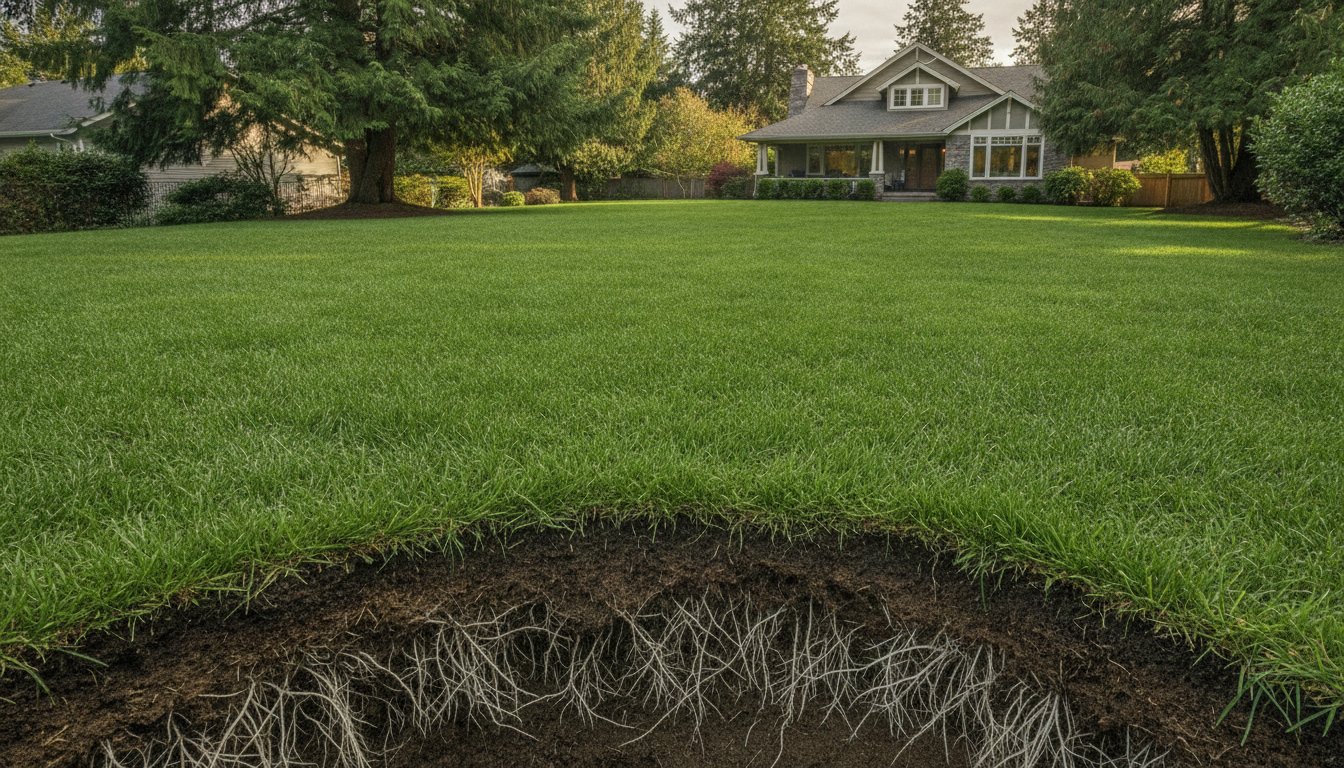
Core Aeration is a mechanical process that removes small cylinders of soil, called cores or plugs, from your turf. These plugs are usually two to three inches deep. By pulling these cores out, we create immediate pathways for oxygen, water, and nutrients to reach the root zone. In our local area, core aeration Kenmore services are essential because of the geography. Many properties near the Sammamish River or Lake Washington sit on heavy clay. This soil packs down tightly over time, essentially suffocating your grass.
Without this physical intervention, your lawn becomes a closed system. Fertilizer sits on the surface. Rainwater runs off instead of soaking in. We use specialized equipment to ensure these holes stay open, allowing the ground to expand and breathe again. It’s the first step in any real restoration effort. This mechanical removal is the only way to truly fix the structure of your soil.
The Difference Between Core Aeration and Spiking
Many homeowners try to use spike aerators or even spiked shoes. This is a mistake. Spiking simply pushes the soil aside to make a hole, which actually increases compaction around the entry point. It’s like driving a nail into wood; the material has nowhere to go but out. Core Aeration uses hollow tines to physically remove the dirt. This creates actual space in the soil profile. It relieves pressure rather than adding to it. This distinction is why we only use mechanical core removal for a Lawn Tune-Up.
Signs Your Kenmore Property Needs Help
You don’t need a lab test to know your soil is compacted. Look for these red flags on your property:
- Water pooling in low spots long after the rain stops.
- Thinning grass that looks stressed even with regular watering.
- Moss taking over areas where grass used to grow thick.
- Hard ground that’s difficult to poke with a screwdriver.
If you see these issues, your soil has likely reached its limit. It’s time to break that cycle of compaction before the next growing season begins. Ignoring these signs usually leads to more expensive repairs later on.
Why Soil Compaction is the Number One Enemy of Turf Health
Compaction is the silent killer of local lawns. When soil particles are pressed together, they eliminate the tiny air pockets known as pore space. This is a common struggle for properties in Kenmore, where heavy foot traffic, pets, or even the weight of a mower turns the ground into concrete. Without those air pockets, your grass literally suffocates. It can’t breathe, and it certainly can’t drink. When you invest in core aeration Kenmore services, you’re physically reversing this damage by reintroducing oxygen to the root zone.
Professional core aeration Kenmore services solve this by physically opening the soil. This creates what we call the “sponge effect.” Instead of water sheeting off the surface, it sinks into the holes and stays there. This reservoir of moisture is exactly what your turf needs to survive the dry spells common in late July and August. Healthy soil should be about 25 percent air and 25 percent water; compaction ruins that balance.
The Impact on Root Development
Grass roots are opportunistic. They will only grow where there is room to move and access to moisture. In compacted soil, roots stay trapped in the top inch of dirt because they can’t penetrate the hardpan. This makes them incredibly vulnerable to heat and drought. By performing Core Aeration, we provide the paths roots need to dive deep. Deep roots mean a more resilient lawn that stays green longer without constant watering. It’s the difference between a lawn that survives the summer and one that thrives.
Just as your lawn depends on deep roots, your trees also require proper care to thrive in challenging soil conditions. If you’re looking for expert arborist services in Central Texas, you can discover We Love Trees to ensure your property’s canopy receives professional attention.
Improving Drainage and Runoff
If you live near Lake Washington, you know that drainage is a constant battle. High water tables and clay-heavy slopes mean rain often has nowhere to go. Core Aeration helps surface water move into the soil profile effectively rather than pooling in your yard or running into the street. It turns your entire lawn into a functional drainage system. This is especially vital for preventing the moss growth that loves the soggy, compacted conditions found in Kenmore yards. Homeowners throughout the greater Puget Sound region face these same challenges, and our seasonal lawn restoration guide for Everett homeowners covers how the same clay soil and drainage issues affect properties across Snohomish County.
Proper drainage also plays a crucial role in pest prevention by eliminating the standing water where insects often breed. For homeowners in Pennsylvania looking to maintain a safe and comfortable outdoor environment, you can discover Mosquito Assassin Pest Control LLC and their comprehensive pest management solutions.
Don’t settle for a light rental machine that just bounces off the surface of your yard. Professional-grade equipment is significantly heavier, ensuring we get the depth needed to actually break through the hardpan. If your yard feels like a brick, it’s time to get a professional assessment of your soil health before the next rainy season hits.
The Restoration Blueprint: Lawn Tune-Up vs. Full Meal Deal
Restoring a lawn in the Pacific Northwest requires more than just a bag of seed from a big-box store. You need a structured approach that addresses soil structure and plant health at the same time. We’ve developed two primary service packages to handle the specific challenges of our local environment. Whether you’re looking for annual maintenance or a complete overhaul, understanding these options is the first step toward a better yard. For most homeowners seeking core aeration Kenmore services, the choice depends on the current condition of their turf.
The Lawn Tune-Up is our signature maintenance service. It consists of three essential steps: Core Aeration, Overseeding, and Fertilizing. This combination works together to relieve compaction, introduce new grass varieties, and provide the nutrients needed for establishment. We use professional-grade grass seed and organic fertilizers to ensure the best possible start for your new lawn. It’s an efficient way to keep a healthy lawn from thinning out over time without unnecessary labor.
When to Choose a Lawn Tune-Up
This service is ideal for lawns that receive regular care but need a boost. If your grass is relatively clear of debris but feels hard underfoot, a Lawn Tune-Up is the right choice. It focuses on maintaining density and improving soil health without the need for aggressive mechanical cleaning. It’s the standard for local maintenance because it solves the compaction issue while thickening the turf. We recommend this as an annual treatment to prevent moss from gaining a foothold in thinning areas.
The Full Meal Deal for Heavy Restoration
Some yards need more intensive labor to see results. The Full Meal Deal is designed for lawns that have been neglected or have developed a thick layer of debris. This comprehensive package includes four specific components: Power Raking (Dethatching), Core Aeration, Overseeding, and Fertilizing. By adding Power Raking (Dethatching) at the start, we pull up the dead organic matter that blocks seed-to-soil contact. This is vital for core aeration Kenmore projects where a heavy thatch layer has become a barrier to water and nutrients.

Timing and Temperature: When to Schedule Service in Kenmore
Timing is everything for yard work in the Pacific Northwest. Many homeowners wait for a warm afternoon to think about their grass, but the air temperature is often misleading. For successful core aeration Kenmore projects, we focus entirely on what’s happening beneath the surface. The ground takes much longer to warm up in the spring and longer to cool down in the fall than the air around it. Scheduling your service during these transitional windows ensures the soil is soft enough for deep penetration and warm enough for new growth.
We typically see the highest demand during the spring and fall seasons. These windows provide the natural moisture needed to help the soil plugs break down and return nutrients to the earth. If you wait until the heat of summer, the ground often becomes too hard for even professional machinery to penetrate deeply. Proper planning ensures that your Core Aeration happens when the biology of your lawn is ready to respond.
The Science of Germination
Successful Overseeding depends on a specific window of soil temperature. The optimal soil temperature range for cool-season grass seed germination is 55°F–75°F (13°C–24°C). If the soil is colder than this, the seed will sit dormant and may rot before it ever sprouts. If it’s too hot, the young shoots can wither before they establish a root system. While germination can occur outside this range, it will be slower, less consistent, and produce less reliable establishment. Results are always influenced by moisture, seed-to-soil contact, and unpredictable weather patterns, so we don’t offer absolute guarantees regarding germination. If you’re curious how these same temperature principles apply to neighboring communities, our Lawn Tune Up Everett seasonal restoration guide walks through the precise timing windows for Snohomish County properties.
Preparing Your Lawn for Restoration
A little preparation goes a long way toward a smooth service day. Before our crew arrives to perform a Lawn Tune-Up or a Full Meal Deal, you should flag any underground obstacles. This includes sprinkler heads, shallow cables, or hidden drain lines that a machine might damage. We also recommend watering your lawn a day or two in advance if the ground is bone-dry. The soil should be moist but not saturated. This allows our equipment to pull the cleanest, deepest plugs possible during the Core Aeration process.
Once the work is done, your main job is keeping the seed moist. Consistent watering is the final piece of the puzzle for a successful restoration. If you’re ready to get on the schedule for the 2026 season, you can Request a Quote to secure your spot during the peak growing windows.
Prepare Your Kenmore Lawn for a Healthy 2026
A thick, green lawn isn’t the result of luck or over-watering. It’s the result of healthy soil and proper timing. By addressing compaction through Core Aeration, you’re giving your grass the oxygen and drainage it needs to survive the Pacific Northwest climate. Success depends on maintaining soil temperatures between 55°F and 75°F for new growth, so scheduling your service during the right seasonal window is critical. Whether you need a standard Lawn Tune-Up or the deep restoration of a Full Meal Deal, we have the tools to get the job done right.
We’ve been serving the Kenmore and North Seattle community as an owner-operated business since 2004. We know the local clay soil and we know how to fix it. Our professional-grade machinery ensures that every core aeration Kenmore project we handle achieves the depth required for real results. While factors like moisture and weather mean no one can offer absolute guarantees on germination, starting with a solid foundation of mechanical restoration is the best move you can make for your property.
Your yard is a valuable part of your home. We look forward to helping you restore it to its full potential and seeing your grass thrive this coming season.
Frequently Asked Questions
Is core aeration better than liquid aeration for Kenmore lawns?
Mechanical core aeration is far more effective for the heavy clay found in Kenmore. Liquid products claim to soften soil, but they don’t physically remove the material causing the blockage. By pulling actual plugs, we create immediate space for roots to expand. This physical removal is the only way to truly fix the soil structure in our local geography. It ensures that your next application of fertilizer actually reaches the root zone.
How long does it take for grass seed to germinate after Overseeding?
Most cool-season grass seeds germinate within 10 to 21 days after Overseeding. This timeline depends heavily on the soil temperature staying between 55°F and 75°F. If the ground is too cold, the process will be significantly slower and less consistent. We don’t offer absolute guarantees on germination because factors like daily moisture levels and unpredictable weather patterns play a major role in how quickly the new turf establishes itself.
What should I do with the soil plugs left on my lawn after Core Aeration?
You should leave the soil plugs on the surface to decompose naturally. These cores contain beneficial microbes and nutrients that your lawn needs to thrive. They usually break down within one to two weeks, especially with a bit of rain or regular watering. Once they are dry and brittle, you can mow over them to turn them back into a fine top-dressing. This process helps recycle organic matter back into the soil profile.
Can I walk on my lawn immediately after a Lawn Tune-Up?
It’s best to keep foot traffic to a minimum for at least two to three weeks. A Lawn Tune-Up involves fresh seed and fertilizer that need time to settle into the aeration holes. Heavy traffic can displace the seed or re-compact the soil before the new roots have a chance to take hold. Wait until the new grass has been mowed at least once before allowing pets or children to play on the area.
How often should I have my lawn aerated in the Pacific Northwest?
Annual service is the recommended standard for maintaining a healthy yard in our region. Many homeowners schedule core aeration Kenmore every spring or fall to keep the soil from becoming too dense. If your property has heavy clay or experiences high foot traffic from kids and pets, you might consider aerating twice a year. Regular maintenance prevents the lawn from thinning out and keeps moss from taking over the yard.
Article by
Stewart Armour
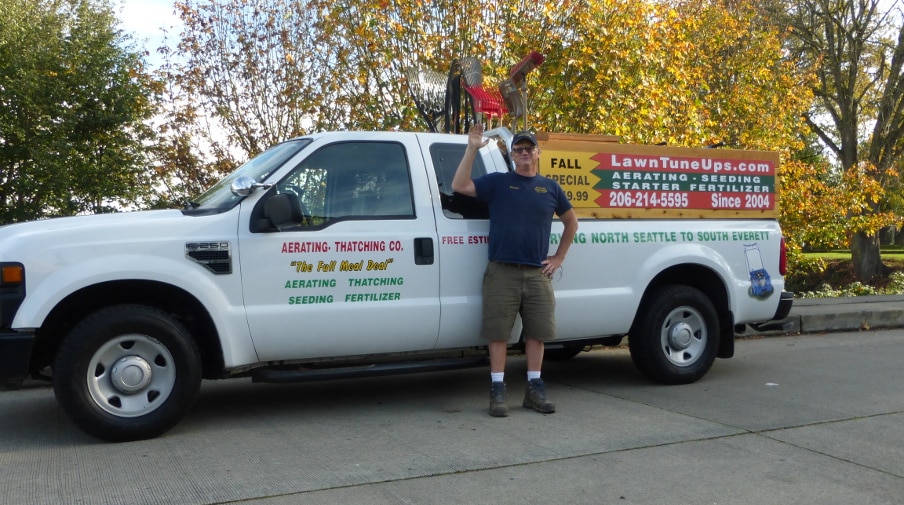
Stewart Armour is an independent lawn restoration expert, educator, and owner of Aerating Thatching Co., serving the greater Seattle area since 2004. With more than two decades of professional experience restoring Western Washington lawns, Stewart specializes in diagnosing lawn problems, improving soil health, and developing long-term lawn renovation strategies. His education includes turf management studies, advanced golf course turf training, and continuing education through Wilbur-Ellis University, State Turf Facilities, Soil First Academy, and Golf Course Applied Turf Physiology. Every article published on LawnTuneUps.com is grounded in practical field experience, current turf science, and a commitment to helping homeowners understand the why behind every recommendation—not just what to do.
Stewart has personally evaluated thousands of residential lawns throughout the Seattle area and remains committed to helping homeowners understand the science behind growing healthier, more resilient lawns.