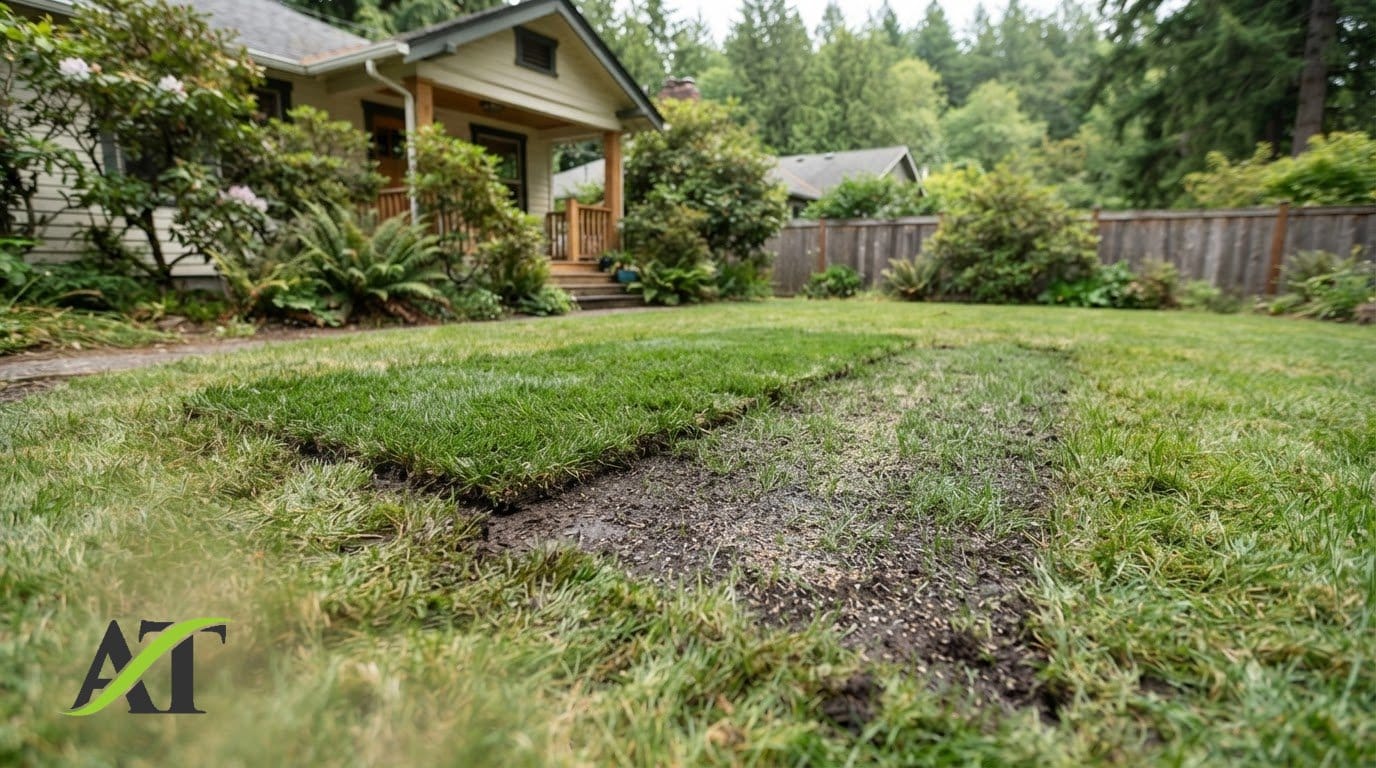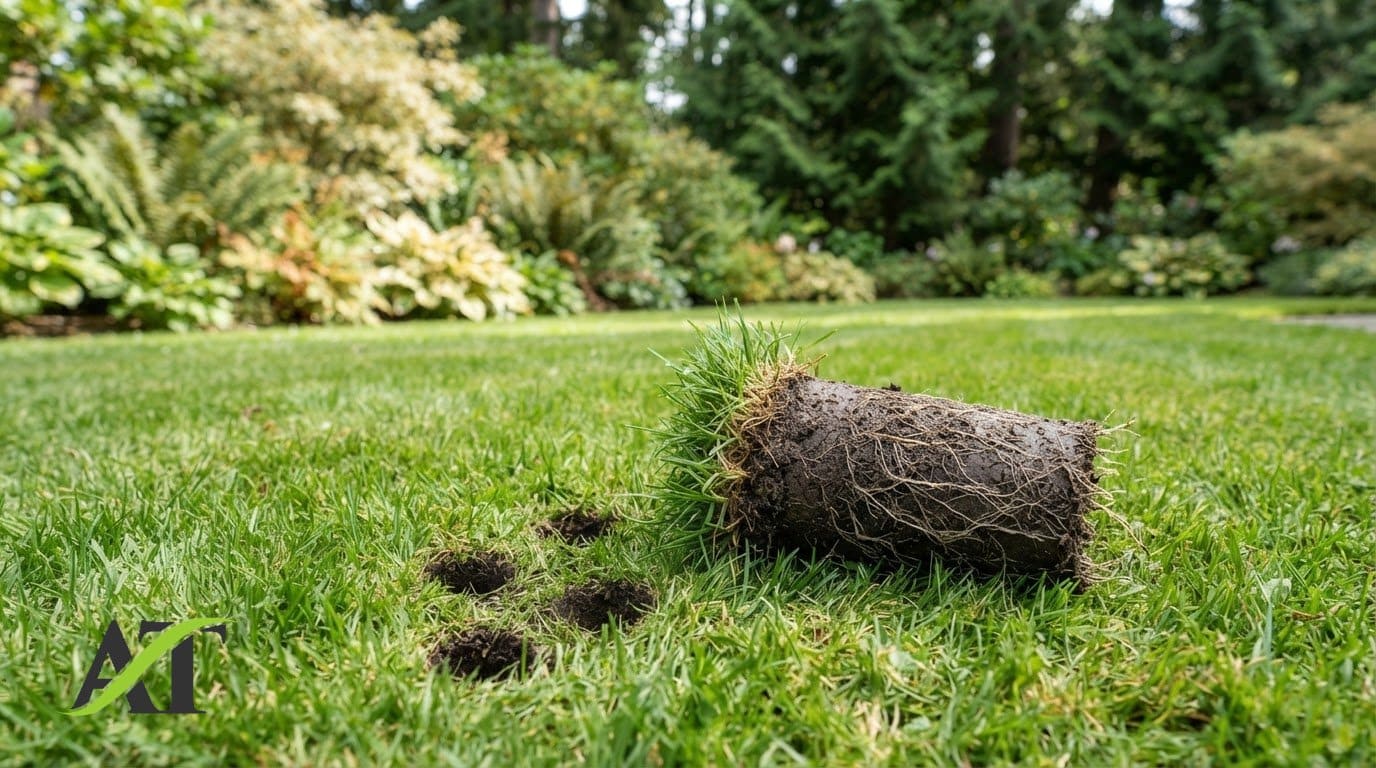
Clay soil isn’t simply bad soil. Clay soil lawn treatment in Kenmore starts with understanding that fine particles hold water and nutrients, but can compact easily and slow the movement of air and water. Fertilizer may support turf, but clay can retain nutrients longer than sandy soil, so adding more isn’t automatically the answer.
Clay’s tradeoffs show up in how soil handles water and how grass grows. This guide explains clay soil’s benefits and drawbacks, and how to think about fertilizing without treating every thin or soggy patch as a fertilizer problem. It also explains why sand isn’t a reliable shortcut, how compaction affects treatment choices, and where aeration and overseeding can fit. Start by identifying what the soil and lawn are showing before choosing a treatment.
Key Takeaways
- Learn why adding sand is not a simple fix for clay soil and what makes the mixture harder to manage.
- Weigh clay’s ability to hold water and nutrients against its tendency to compact and restrict air movement.
- Use how the soil handles water and changes between wet and dry conditions to guide your lawn-care decisions.
- Understand why clay lawns may need a different fertilizing approach, and when a Lawn Tune-Up with Core Aeration and Overseeding may fit.
1. What is Clay Soil?
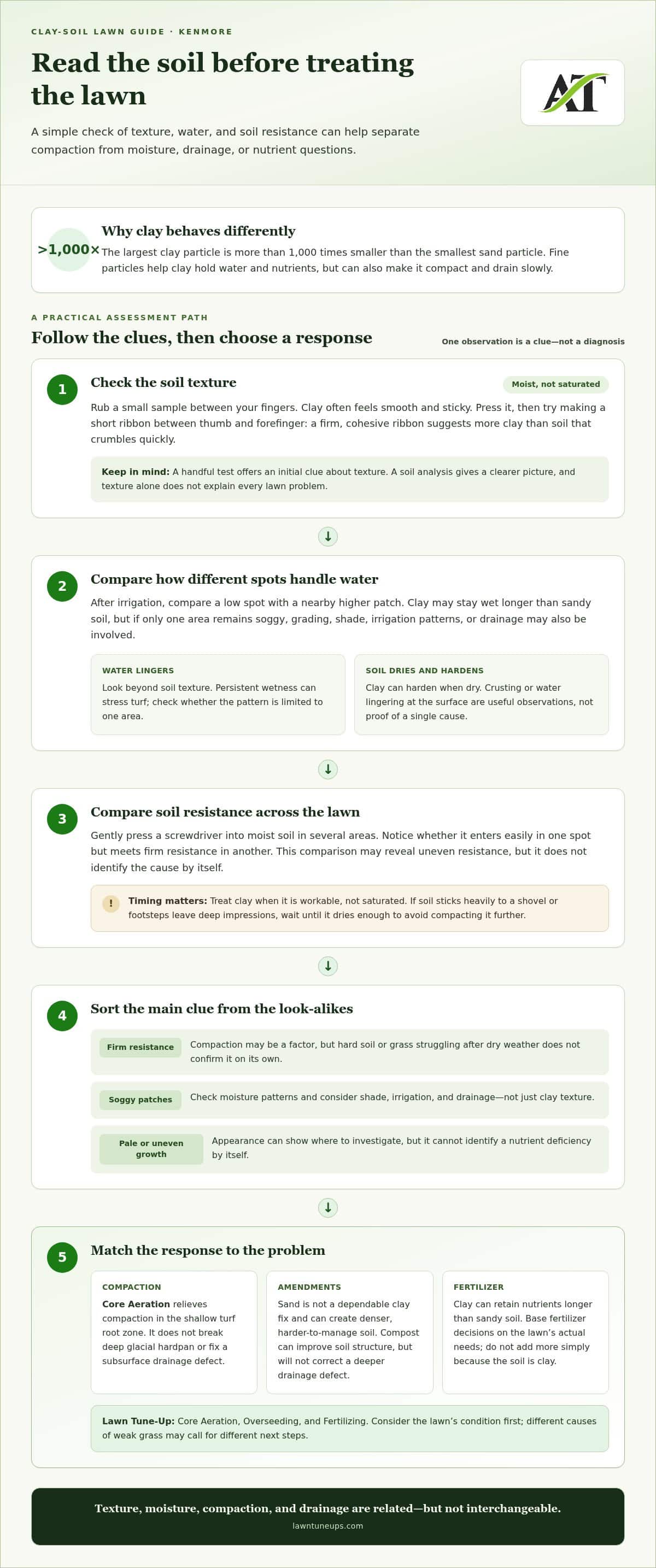
Clay soil contains very fine mineral particles packed closely together. The largest clay particle is more than 1,000 times smaller than the smallest sand particle. That size difference helps explain why clay can hold water and nutrients, yet drain slowly and compact under pressure.
Adding sand to a clay lawn isn’t a dependable shortcut. Sand doesn’t change clay’s underlying texture, and mixing the materials can create denser, harder-to-manage soil. Fine clay can fill the spaces between larger sand grains instead of creating easy pathways for water. In Kenmore, avoid using sand alone to address sticky soil, puddling, or poor growth.
There’s no single topdressing mix that suits every clay lawn. The right material depends on the lawn’s condition and the purpose of topdressing. Compost can help improve soil structure, but it won’t correct a deeper drainage defect. Choose material suited to the surface and spread it without burying the grass.
In Kenmore and King County, keep loose amendments and fertilizer on the lawn so they don’t wash into gutters or storm drains. This helps limit sediment and nutrient runoff.
Treat clay when the soil is workable, not saturated. If soil sticks heavily to a shovel or footsteps leave deep impressions, wait until it dries enough to avoid compacting it further. For lawn care in Kenmore, soil moisture and the treatment needed matter more than the calendar date.
Kenmore homeowners can address clay-soil concerns with targeted lawn treatments, such as soil amendments or turf services. First distinguish compaction from slow drainage, shade, or another cause of weak grass. Clay soil lawn treatment in Kenmore should match the problem, not rely on sand as a universal remedy.
2. Benefits and drawbacks of clay soil
Clay soil can store nutrients for lawn grass. Its fine particles hold nutrients better than sandy soil, helping keep them in the root zone. Clay also holds substantial water in small pores. During dry spells, that reserve may support grass longer than soil that drains quickly, provided roots can reach the stored water and nutrients.
There’s a tradeoff. Compaction reduces air space, making it harder for roots to grow and water to move through the soil. Dense soil can leave grass with shallow roots that are more exposed to drought stress, even when deeper soil holds moisture. Hard soil or grass that struggles after dry weather can point to compaction, but those signs alone don’t confirm the cause.
Water retention can also become a drawback. After rain or irrigation, clay may stay wet longer than sandy soil. Grass roots need air as well as water, so persistent wetness can stress turf. Compare a patch that stays soggy with one that dries quickly: different areas may have different problems. Shade, irrigation patterns, and drainage can also affect how each patch performs.
Organic matter can improve soil structure, but fresh material needs careful use. As it breaks down, microorganisms may temporarily use nitrogen that plants would otherwise access. A heavy layer of fresh organic material over actively growing turf, for example, can leave grass competing for available nitrogen. Choose amendments to suit the lawn’s condition rather than assuming more material means better growth.
Use these contrasts to guide your next step: identify whether the main issue is compaction, excess moisture, or weak growth. If you’re unsure what your lawn is showing, describe what you’re seeing and ask for guidance.
3. Clay soil properties
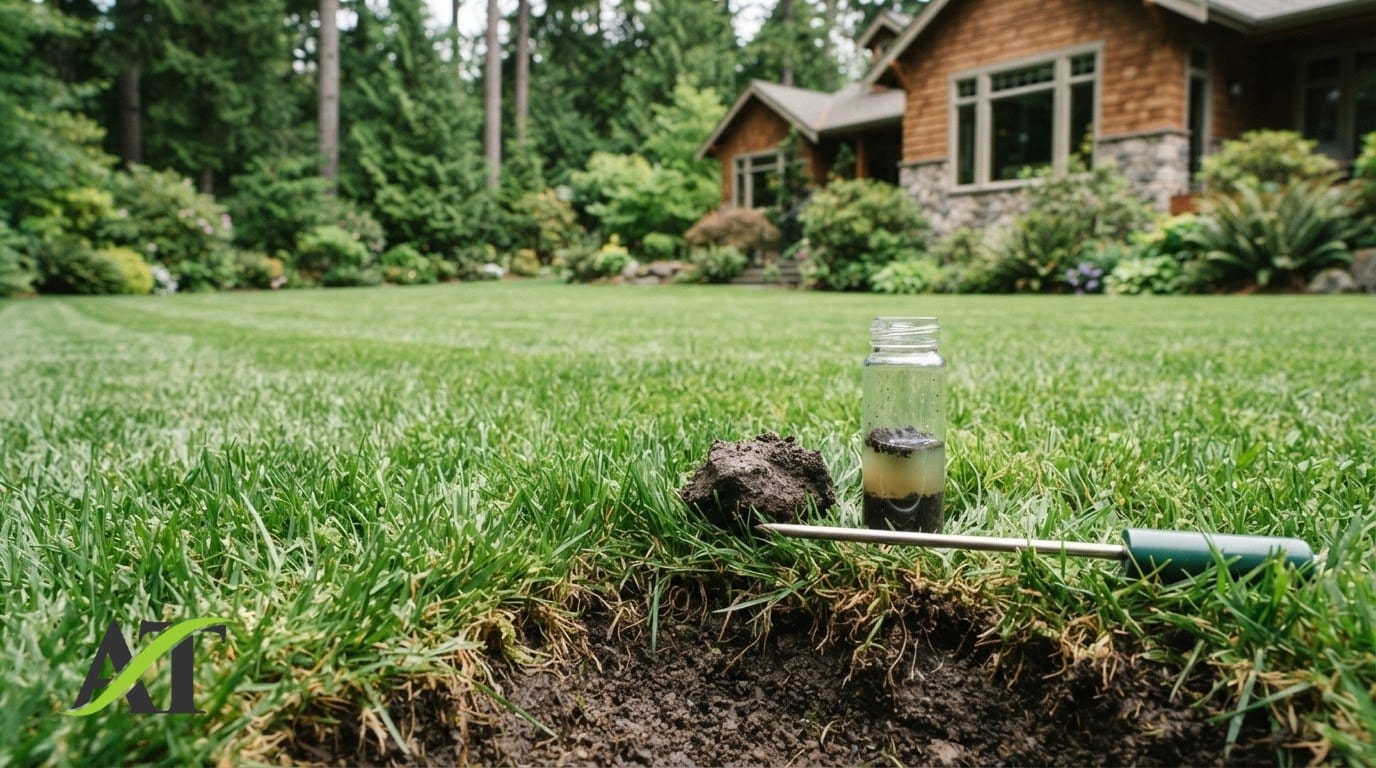
Kenmore’s name alone doesn’t tell you what type of clay is in a particular lawn. Soil texture varies from property to property, so examine a sample from the area you want to treat. A handful test offers an initial clue, while a soil analysis gives a clearer picture.
Start with moist soil, not a saturated handful. Rub a small sample between your fingers: clay often feels smooth and sticky, then holds together when pressed. Squeeze it into a short ribbon between thumb and forefinger. A firm, cohesive ribbon suggests more clay than a sample that crumbles quickly. This simple check describes texture, not every condition affecting the lawn.
Clay changes noticeably as its moisture level shifts. When wet, it can feel heavy and sticky; when dry, it hardens and may crust or crack. Water also enters slowly and takes time to drain. After irrigation, compare a low spot with a nearby higher patch. If only one area stays wet, grading, shade, or drainage may be factors alongside soil texture.
Clay particles hold water and nutrients, including ammonium and trace elements such as potassium, calcium, and magnesium. A dense surface layer, however, can impede the movement of water, air, and fertilizer. Look for crusting after the soil dries or water lingering at the surface. These clues can help distinguish a surface issue from a deeper drainage problem.
Compaction changes how the root zone functions. Gently press a screwdriver into moist soil in several lawn areas. Notice whether it enters easily in one spot but meets firm resistance in another. This comparison can reveal uneven resistance, though it won’t identify the cause by itself. Core Aeration relieves compaction in the shallow turf root zone, not deep hardpan or subsurface drainage defects.
For clay soil lawn treatment in Kenmore, match the next step to what the soil sample and lawn reveal. Texture, moisture, compaction, and drainage are related, but they’re not interchangeable problems. Note where water lingers and where soil feels firm before choosing an amendment or other treatment.
Clay texture varies between properties, so there’s no single type that can be identified as common to Kenmore lawns.
4. Fertilizing clay soil
Clay can hold nutrients, so fertilizer decisions should reflect the lawn’s actual needs. Look for uneven growth, pale patches, or areas responding differently to the same care. These clues show where to investigate, but appearance alone can’t identify a nutrient deficiency. Don’t choose a fertilizer simply because the lawn grows in clay.
Before applying anything, review recent lawn-care notes and the fertilizer label. Check that the product suits the grass and intended use, then follow its directions for application and watering. If you have a soil analysis, use its recommendations to guide product selection. This helps prevent a guess about one nutrient from leading to unnecessary applications of several.
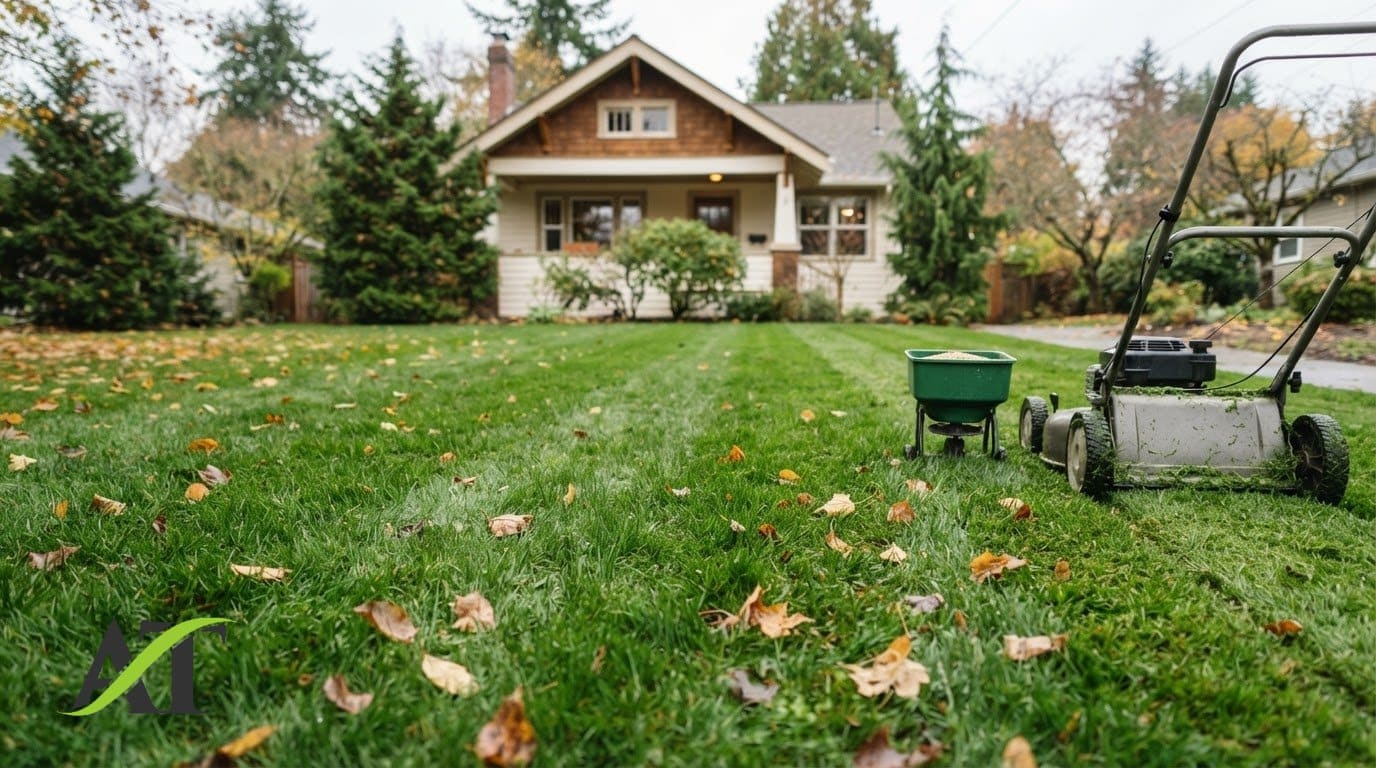
Even coverage matters. Apply fertilizer across the intended lawn area, taking care around hard surfaces where granules could remain and wash away. Avoid overlapping passes that concentrate product in stripes. If you use a spreader, follow the product directions for its setting and use. Record the product and application date so future care isn’t based on memory alone.
Give the turf time to respond before deciding it needs another feeding. Compare the same areas as grass grows and note whether the pattern changes. A weak patch that stays weak may have a cause unrelated to nutrients. Reassess light, traffic, and watering rather than repeating an application automatically. The practical takeaway: fertilize for a demonstrated need, apply evenly, and reassess before repeating.
Aerating Thatching Co.: Lawn Tune-Up
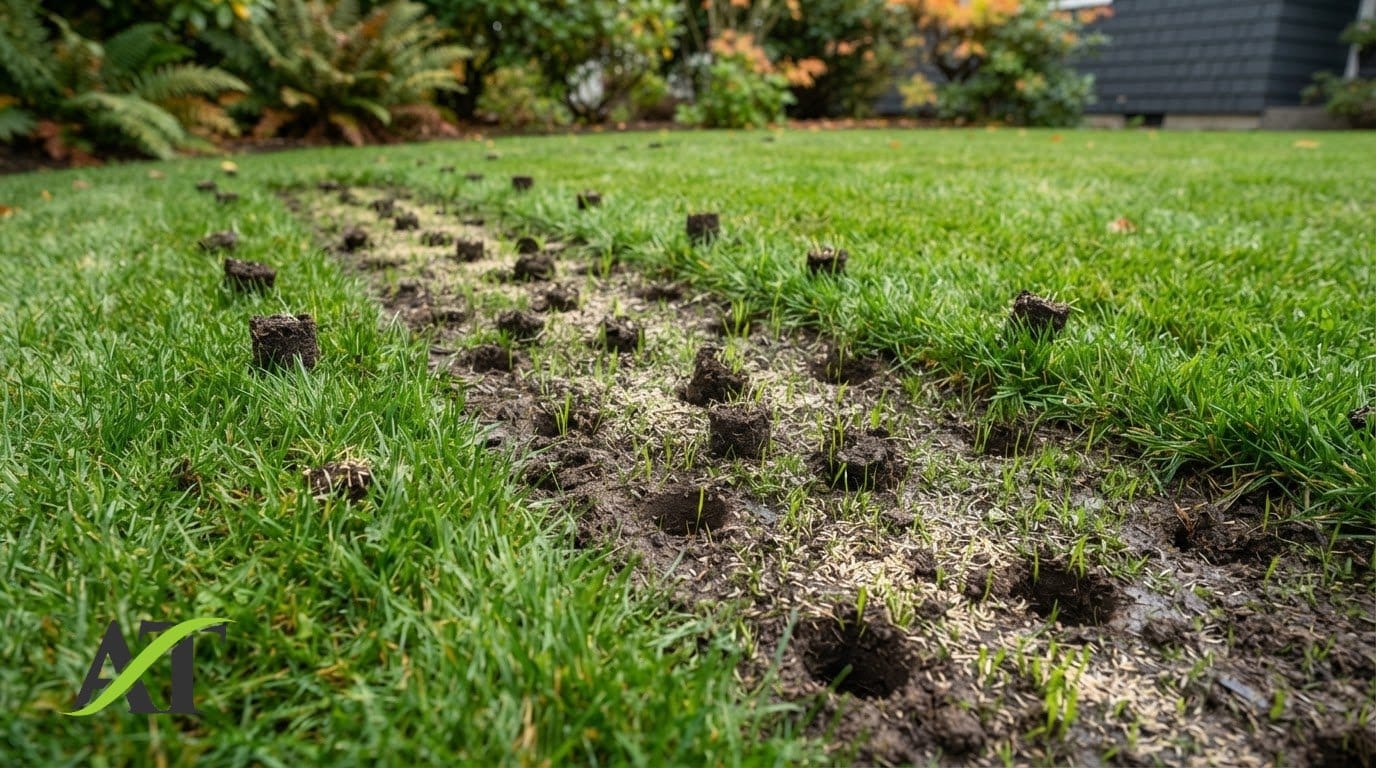
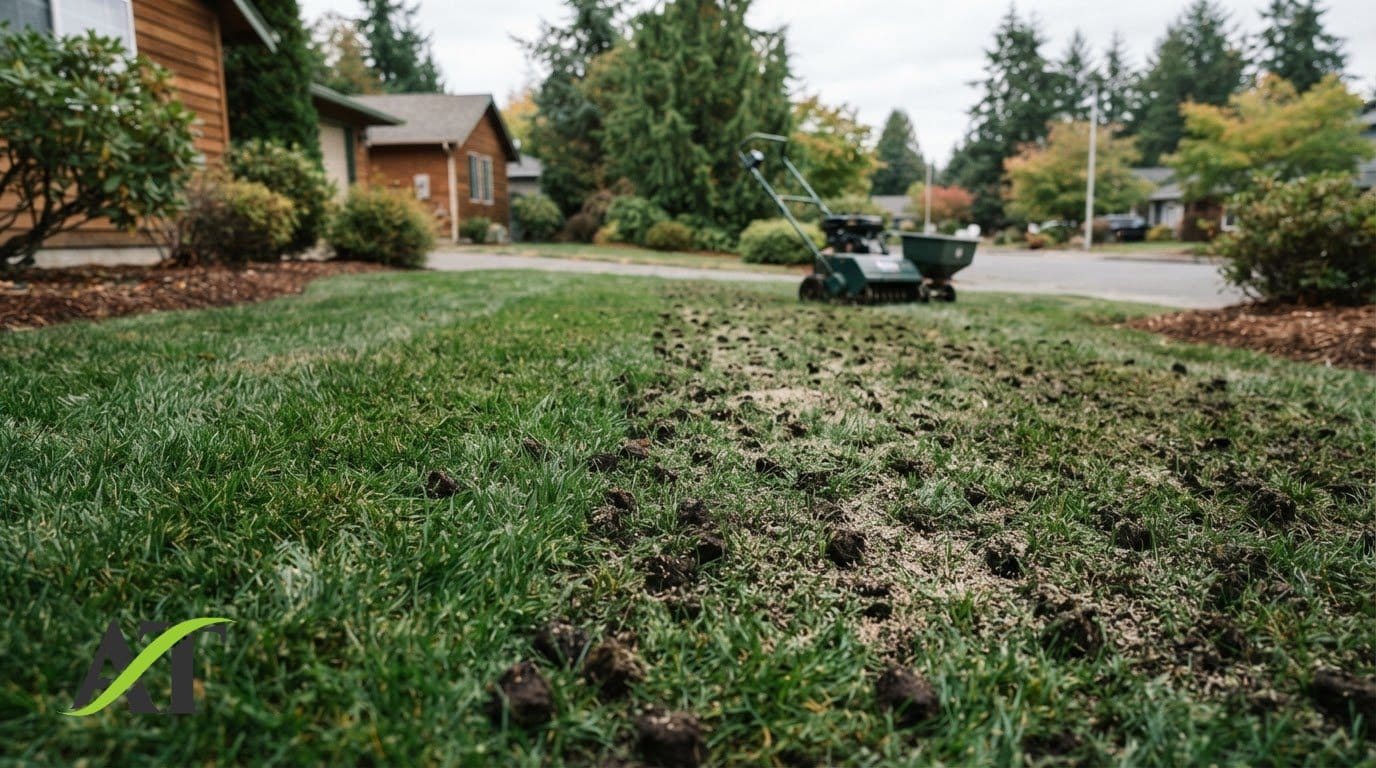
Aerating Thatching Co.’s Lawn Tune-Up combines Core Aeration, Premium Overseeding, and Starter Fertilizer. It can suit a clay lawn with compacted shallow soil and thin turf that would benefit from new seed and fertilizer. Core Aeration works in the shallow turf root zone. It won’t break deep hardpan or fix a subsurface drainage defect.
That distinction matters. If water stays in one area or the lawn remains soggy, the drainage issue needs assessment before choosing a turf treatment. If compaction and sparse grass are the main concerns, the Lawn Tune-Up provides a focused combination instead of assuming every clay lawn needs the same work.
Choose the Next Step for Your Lawn
Before choosing a treatment, note where grass is thin, where water lingers, and how the soil feels underfoot. These patterns help distinguish a lawn-wide concern from a problem limited to one area. A simple record of what you observe can make the next decision more focused.
A sound plan for clay soil lawn treatment in Kenmore starts with the lawn’s symptoms, not a one-size-fits-all application. Decide what you want to improve, then match the work to that goal. If the cause remains unclear, Aerating Thatching Co. can offer straightforward advice to help you weigh the signs and choose a sensible next step.
With a clear diagnosis and treatment suited to the problem, you can move forward with a more purposeful plan for healthier lawn growth.
Frequently Asked Questions
What is Clay Soil?
Clay soil is classified by texture, based on the proportion of fine mineral particles in a sample. A lawn’s surface appearance can’t reliably identify that texture. Compare samples from separate areas, since a front lawn and shaded side strip may behave differently. This distinction helps avoid treating every weak patch as a soil-texture problem.
How can I test lawn soil drainage and compaction in Kenmore?
Keep a simple lawn map and mark where water collects or grass struggles. After rain or irrigation, note whether the same spots show symptoms repeatedly. Record foot traffic, shade, and recent watering near those areas too. Comparing notes over time can reveal patterns and provide a more useful starting point for deciding what needs attention.
How and when should I aerate a clay soil lawn in Kenmore?
Choose a time when the ground is workable, not waterlogged or rock hard. Avoid scheduling Core Aeration just after heavy rain if footprints leave deep marks. Focus on whether compacted turf is the concern: aeration isn’t a general treatment for every thin or wet patch. Persistent standing water needs a separate assessment of its cause.
What should I gather before choosing a clay lawn treatment?
Record where the lawn looks weak, when you first noticed the pattern, and whether it changes after watering or rainfall. Note recent fertilizer or amendment applications, along with areas that get heavy foot traffic. These details help distinguish a recurring issue from a temporary change and make it easier to match the next step to the lawn’s symptoms.
How often should clay soil lawns be aerated and topdressed?
There isn’t one schedule that suits every lawn. Reassess the marked areas, especially traffic lanes and spots where grass struggles to establish. Topdressing is a separate treatment decision, not a routine addition to Core Aeration. Consider it only when the surface and purpose call for it, and keep grass blades visible after spreading material.
What are the risks of adding sand or compost to clay lawn soil?
Uneven topdressing can bury grass in low spots while leaving higher areas with too little material. A layer spread too thickly may cover grass blades and block light. Apply suitable material evenly, keeping the turf exposed. Avoid spreading amendments on saturated ground, where foot traffic and handling can disturb the lawn surface.
Article by
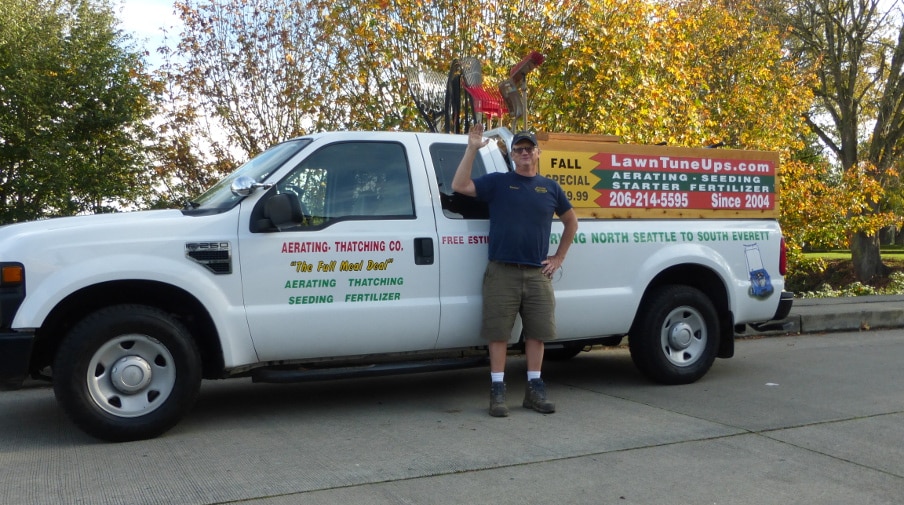
Stewart Armour
Stewart Armour is the owner of Aerating Thatching Co., an owner-operated Seattle-area lawn restoration business established in 2004. He helps homeowners understand Core Aeration, Power Raking (Dethatching), Overseeding, soil conditions, and the aftercare needed for stronger lawns. His background includes turf management study, advanced golf course turf training, and continuing education through Wilbur-Ellis University, State Turf Facilities, Soil First Academy, and Golf Course Applied Turf Physiology. Stewart has personally evaluated thousands of residential lawns throughout the Seattle area and focuses on recommending the work that fits each lawn’s condition.