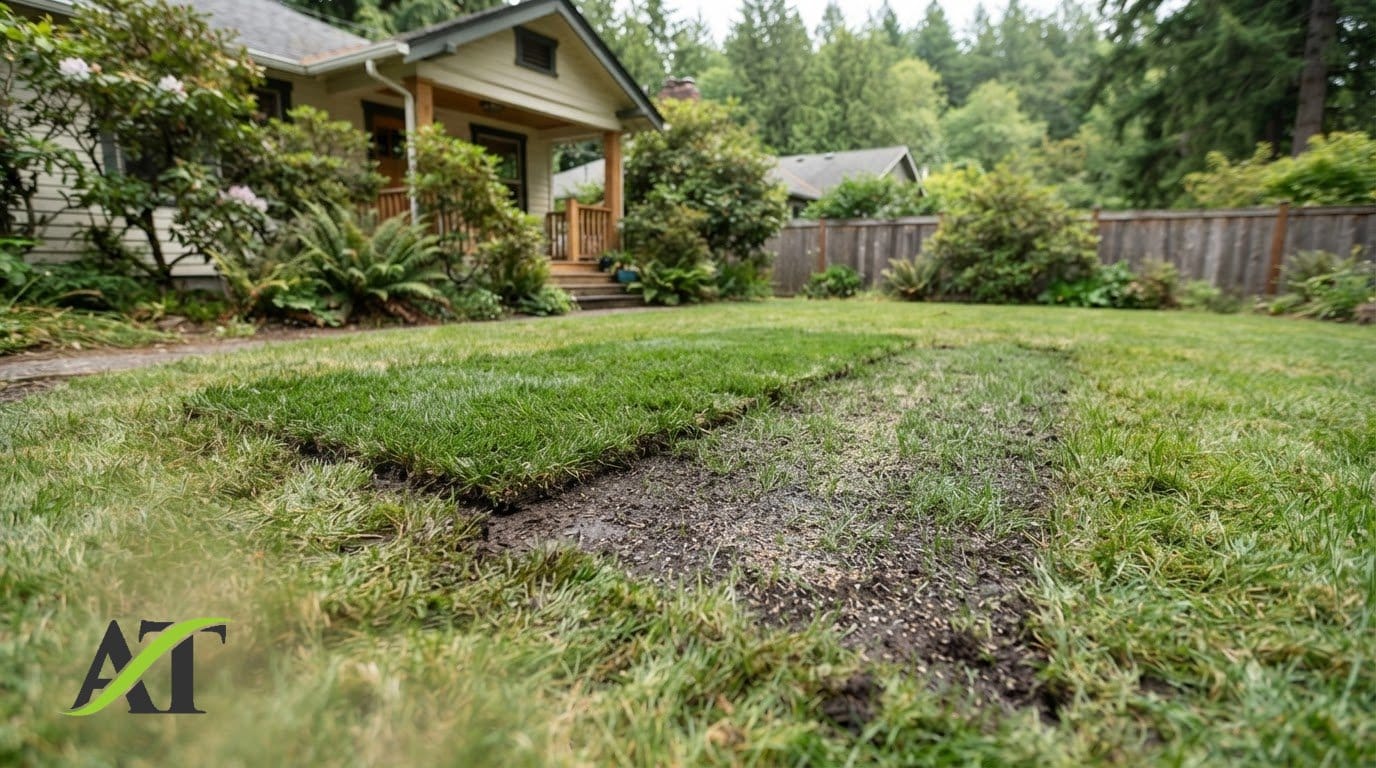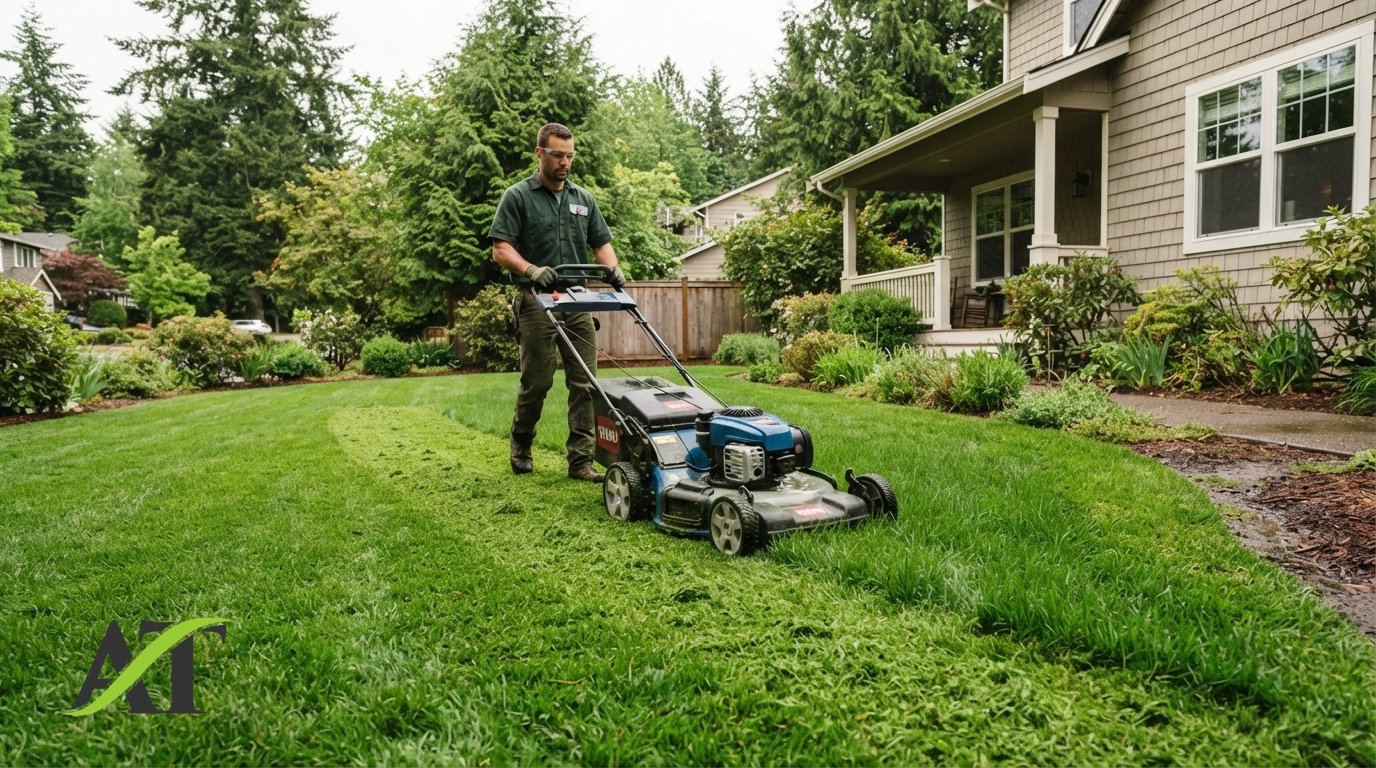
A greener lawn often starts with leaving grass clippings in place and mowing carefully. If you’re learning how to make grass greener in Shoreline, keep the grass about 3 inches tall and mow when it reaches around 4 inches, removing no more than one-third of its height in a single pass.
It’s easy to assume that clearing clippings will help your lawn or that a close cut means less work. But grass clippings return nutrients to the turf as they break down, and raking them up doesn’t reduce thatch. This guide explains how clippings and thatch differ, how mowing habits affect your lawn, and what to do when grass has grown too tall to follow the one-third rule in a single cut.
Key Takeaways
- Leave fine, evenly spread clippings on the lawn to return nutrients. Removing clippings doesn’t solve thatch.
- Use the one-third rule to avoid cutting too much grass at once, with a higher target for shady areas.
- Choose grass seed and fertilizer with your lawn’s growing conditions in mind. Timing and sunlight both matter.
- Find out when a Lawn Tune-Up, with Core Aeration, Overseeding, and Fertilizing, may suit your lawn.
1. Grass clippings and thatch
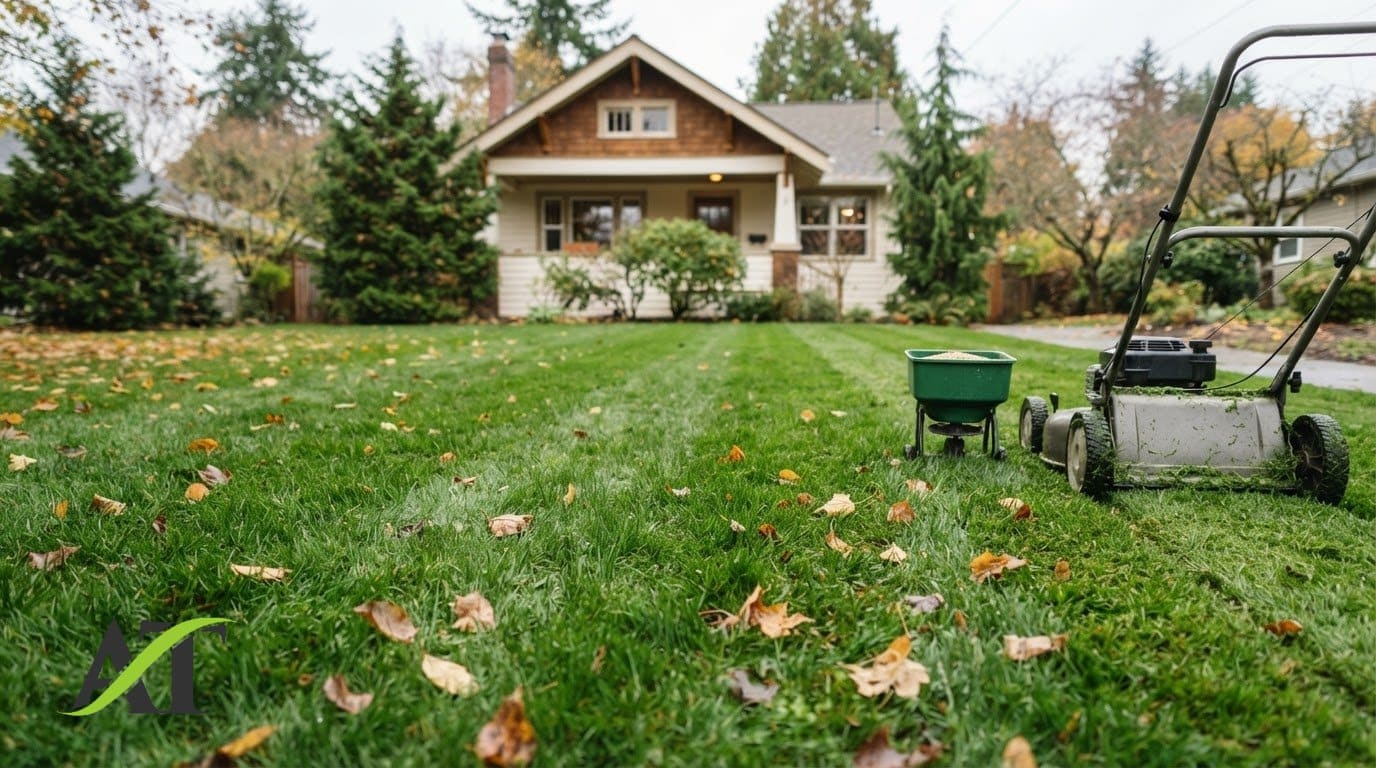
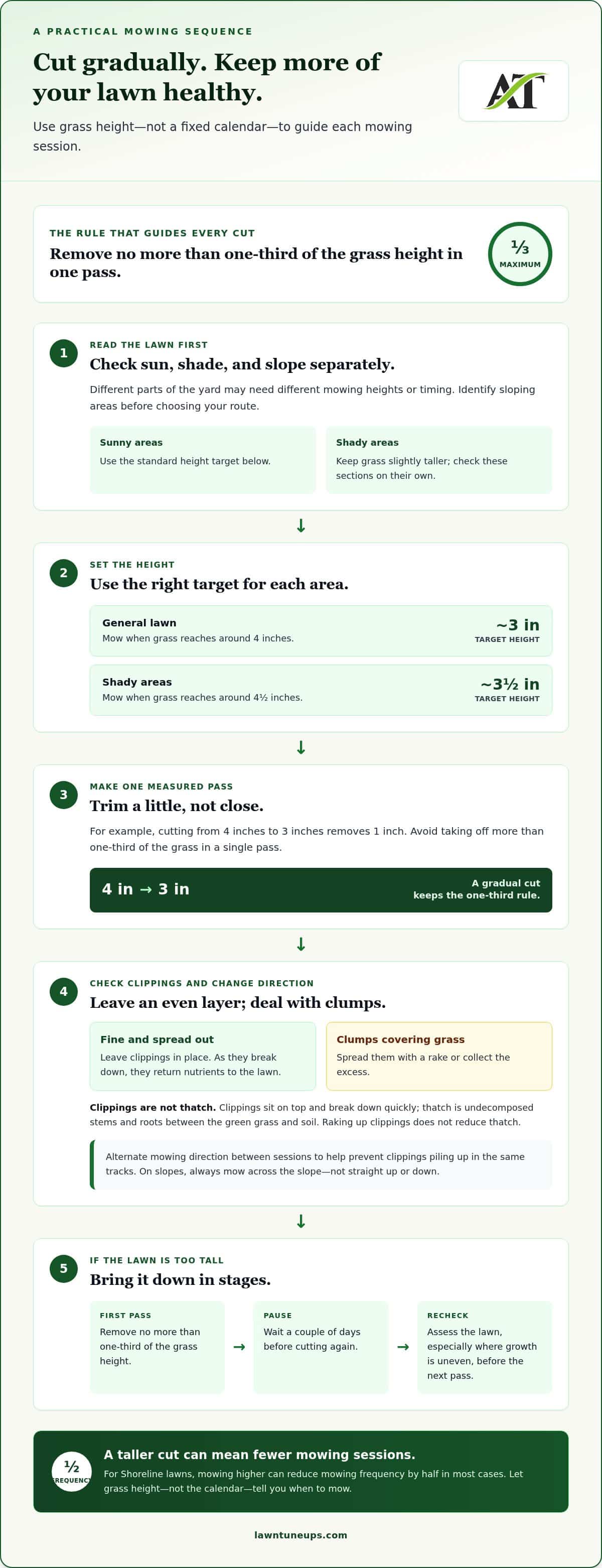
Leave short, evenly spread clippings on your Shoreline lawn after mowing. They return nutrients to the soil as they break down. Raking clippings does not reduce thatch, and removing them takes those nutrients away. Thatch is a layer of undecomposed stems and roots between the green grass and soil. Clippings sit on top and break down quickly, so they are not the same material.
Check the lawn after mowing. If clumps cover the grass, spread them with a rake or collect the excess. Alternate your mowing direction between cuts to help prevent clippings from piling up in the same tracks. On slopes, mow across the slope rather than straight up or down. Sharpen rotary mower blades at least once each season. Sharp blades make clean cuts and leave less ragged grass behind.
For Shoreline watering and fertilizer rules, follow current city and water-provider notices, along with fertilizer label directions. Water enough to moisten the turf’s root zone, then adjust frequency for rainfall, soil, sun, and how quickly the lawn dries. Check soil moisture before watering again. A fixed schedule can waste water when rain has already soaked the lawn.
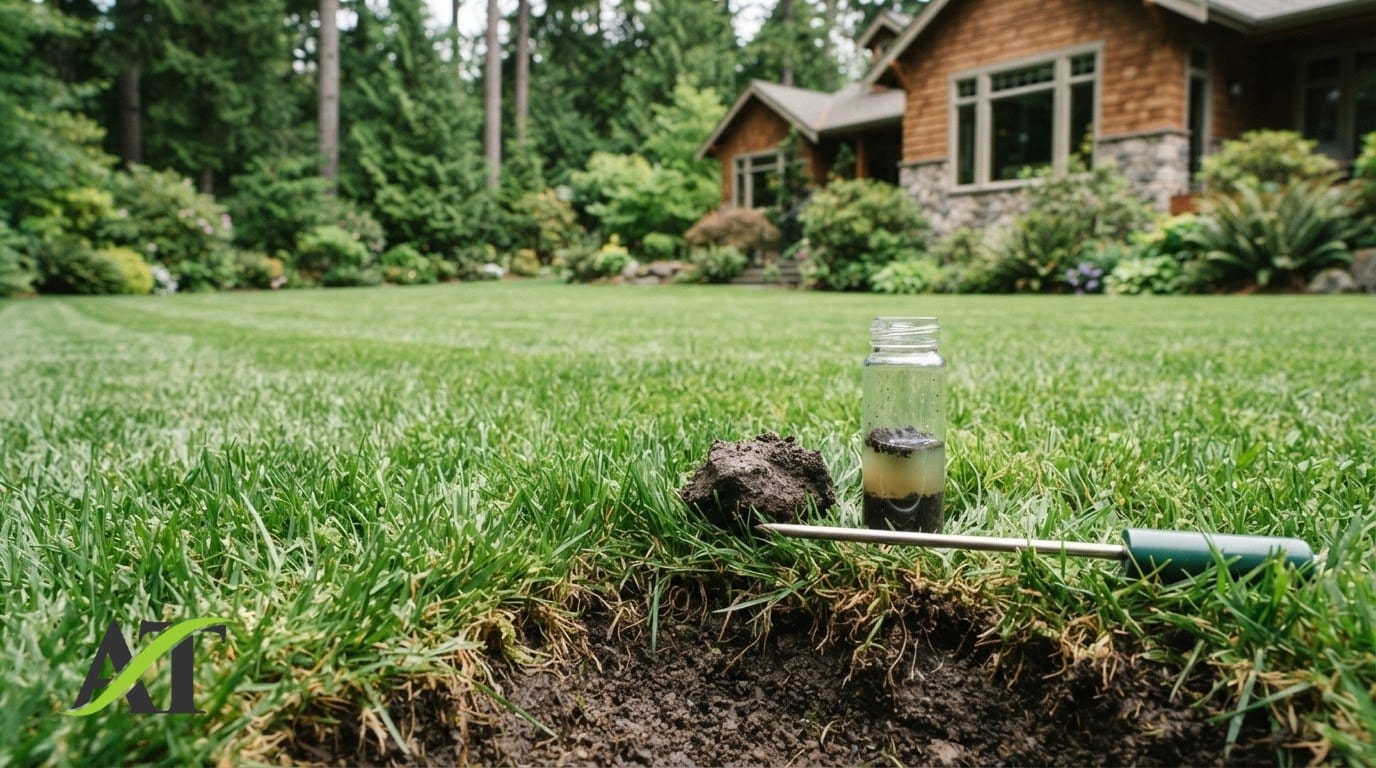
A soil test is the practical way to find out whether pH or nutrients are limiting growth. Collect a representative sample and use the results to guide adjustments. Grass needs suitable pH and nutrients, including nitrogen, but the right targets depend on the grass and soil. Don’t add lime or fertilizer simply because the lawn looks pale.
Choose fertilizer based on soil-test needs and follow the label for application and watering. Keep granules off hard surfaces and out of storm drains. To investigate weeds or disease, note whether damage appears in patches, follows mower tracks, or occurs mainly in shade. Compare leaf shape, spots, and spread before treating. Weeds, fungal disease, poor drainage, and drought each call for a different response, so identify the cause first.
2. One-third mowing rule
If you’re deciding how to make grass greener in Shoreline, start by cutting gradually. Remove no more than one-third of the grass height in one pass. Aim to keep grass about 3 inches tall, and mow when it reaches around 4 inches. Cutting from 4 inches to 3 inches removes 1 inch. Resist the urge to trim it close in one go.
Shady areas need a slightly higher target. Keep grass there around 3 1/2 inches tall, and mow when it reaches 4 1/2 inches. Check sunny and shaded sections separately, since one setting or timing may not suit every part of the yard.
If the lawn has grown well past its target height, don’t force it down in one pass. First remove no more than one-third of the grass, then wait a couple of days before cutting again. Recheck the lawn before the second pass, especially where the grass is uneven.
Keeping grass taller can also mean mowing less often. Use the grass’s height, not a fixed calendar, to decide when to mow. If the lawn remains uneven after careful mowing, investigate other causes of thin growth.
Vary your route across the lawn from one mowing session to the next instead of following the same lines every time. Before starting, identify sloping sections and plan a route that crosses them. On flatter areas, choose a different direction for the next session. Don’t make a downhill pass just to match the pattern elsewhere. Alternate direction while following the across-slope rule wherever the ground is sloped.
3. What grass types grow best in Shoreline, Washington’s climate?
Choose grass seed for your property’s conditions, not just the city name. A lawn in open sun has different needs from one shaded by trees or buildings. Consider the existing turf, too. Overseeding with a compatible blend can help fill thin areas, while a poorly matched seed may establish unevenly. Identify the sunny, shaded, and mixed-light sections before choosing seed.
Aerating Thatching Co. uses its Premium 60/40 Sun & Shade Mix for Seattle-area Overseeding. Its name indicates a blend intended for lawns with sun and shade, but each yard still needs a practical assessment. Note where grass thins, how much direct light those areas receive, and whether the soil stays damp or dries quickly. Those conditions affect which areas need seed and how you prepare them.
For this mix and our Overseeding work, our preferred practical window is a soil temperature of 55–80°F. This is a service preference, not a strict cutoff, a universal optimum, or a germination guarantee. Check soil temperature rather than relying only on a warm afternoon. Other seed types may prefer different conditions, so don’t treat this range as a rule for every blend.
Temperature alone doesn’t determine whether grass seed establishes. Seed needs contact with soil, suitable moisture, and conditions that support growth. Before overseeding, inspect bare patches and compacted areas, then address the cause of thinning. Seed cannot correct deep shade, a drainage defect, or persistent soil problems by itself.
For a lawn with both sunny and shaded sections, compare the areas before selecting seed. The Premium 60/40 Sun & Shade Mix is one local option. Establishment still depends on seed-to-soil contact, soil conditions, weather, moisture, and aftercare.
4. When is the best time to fertilize lawns in Shoreline?
Fertilize while the grass is actively growing instead of choosing a date simply because it appears on a calendar. Look for steady new growth that responds to mowing, rather than grass that is dormant or struggling through stressful conditions. Match the application window to the lawn’s current state.
Consider the weather around the planned application. A dry stretch can leave grass under stress, while heavy rain may carry nutrients away from the area you intended to treat. Avoid applying just before conditions could wash granules off the turf. The package directions explain how to apply that specific fertilizer.
Consider what other work is planned for the lawn, too. If you’re seeding bare areas, coordinate fertilizer timing with the seed and treatment plan. Newly establishing grass has different needs from established turf, so don’t assume one schedule suits both. If you already had a service that included Starter Fertilizer, don’t add more right away.
The Seattle lawn care calendar can help you plan ahead. Use it as a reminder to inspect the lawn, not as an automatic instruction to fertilize. Actual timing varies with weather and soil conditions. Check whether growth has resumed, consider recent weather, and follow the product directions.
If you’re unsure how fertilizer fits into your lawn’s current care plan, ask Stewart about your lawn.
Aerating Thatching: Lawn Tune-Up
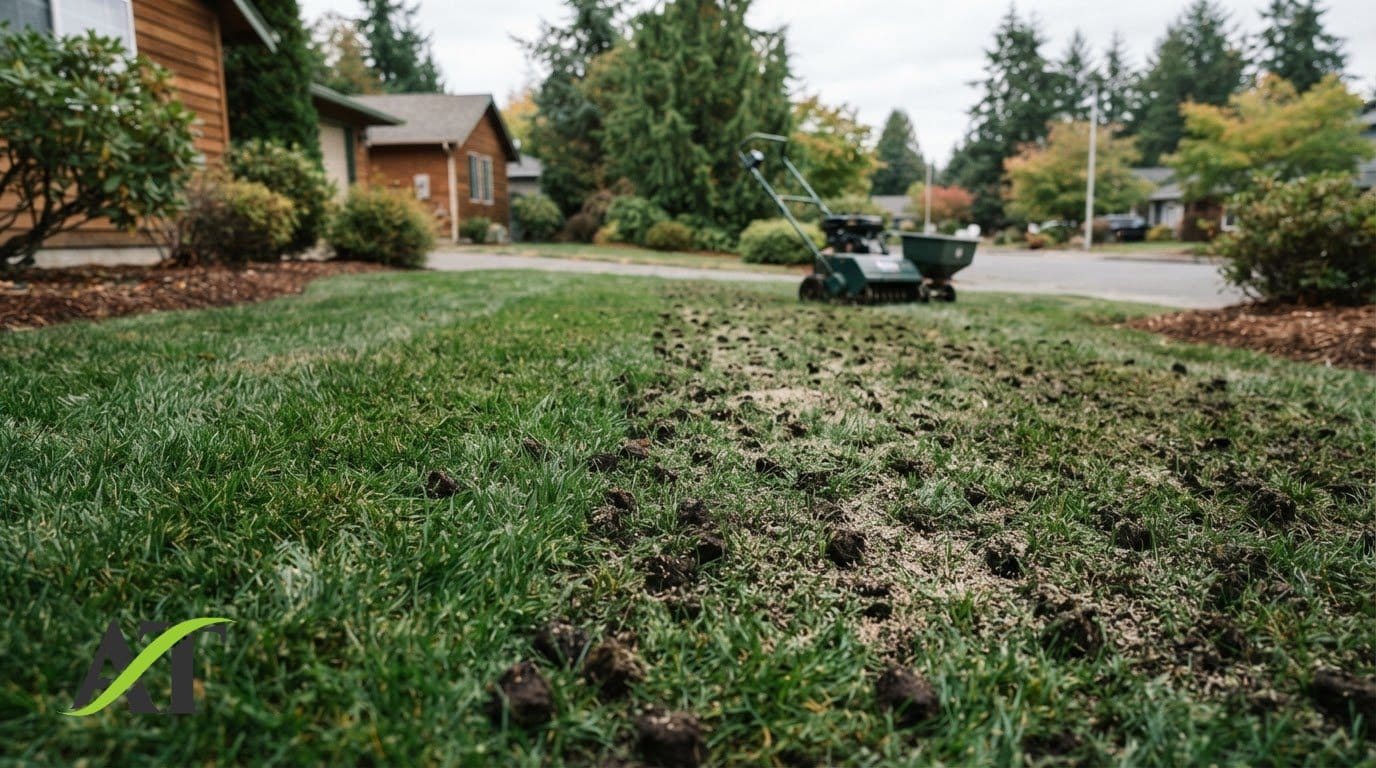
Aerating Thatching Co.’s Lawn Tune-Up can help when careful mowing and nutrient recycling aren’t enough. It combines Core Aeration, Premium Overseeding, and Starter Fertilizer to address soil compaction and thin coverage.
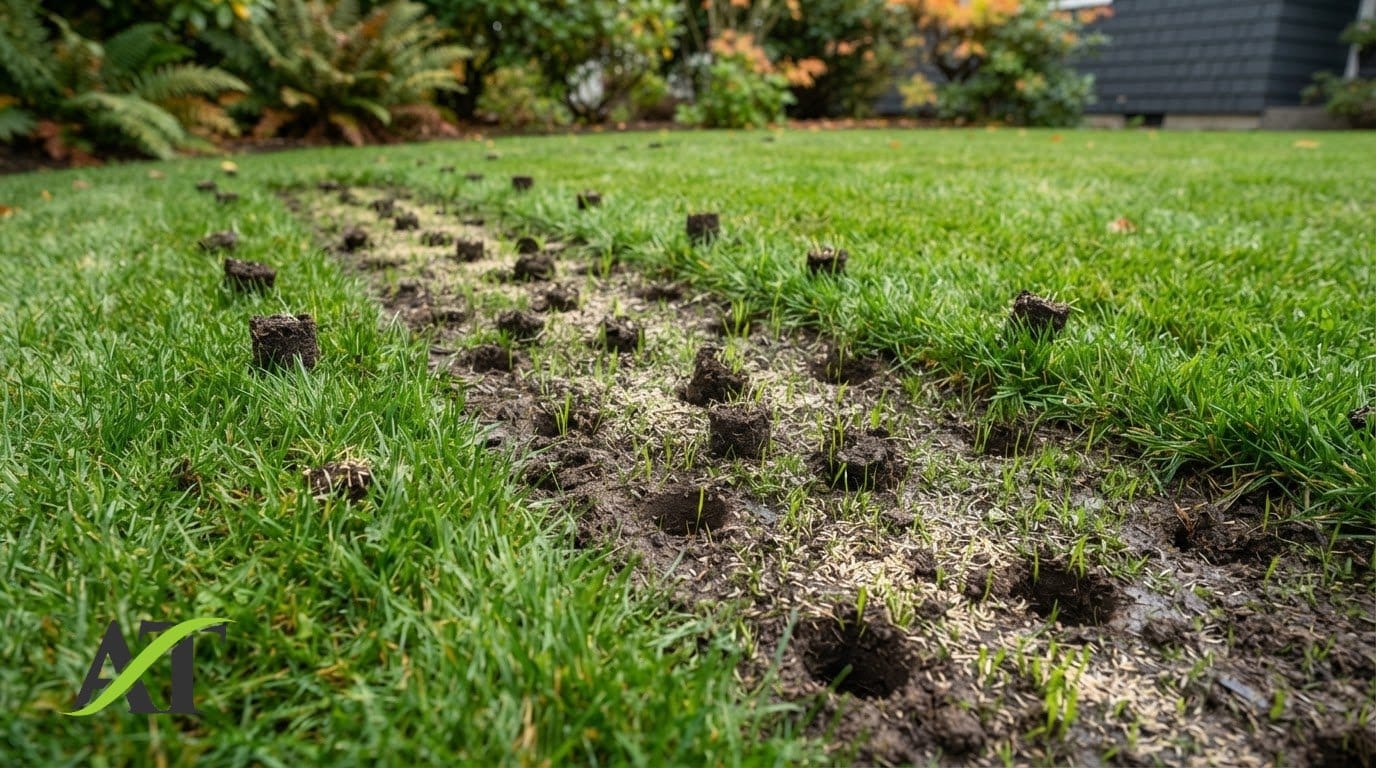
Consider Core Aeration when soil compaction is limiting growth. It relieves compaction, but it won’t remove moss, fix drainage, replace missing grass, or correct deep hardpan. A thick thatch layer calls for Power Raking (Dethatching) instead. Shade, watering, and soil conditions can also affect turf, so identify the likely issue before choosing a service. After any service, proper watering, mowing, and traffic management matter for results.
If you’d like honest, no-pressure advice on what your lawn needs, contact Aerating Thatching Co. through Ask Stewart About Your Lawn.
Frequently Asked Questions
How should you mow and aerate a lawn for greener grass?
Mow according to the lawn’s height, following the one-third rule. Schedule Core Aeration in spring or fall when soil is moist but not saturated. A dense lawn may benefit from Core Aeration without Overseeding. Add seed where turf is thin or weak. Core Aeration relieves soil compaction, but it doesn’t remove moss, fix drainage, or replace missing grass.
What soil pH and nutrients help grass grow greener in Shoreline?
Grass needs suitable pH and nutrients, including nitrogen, but the right targets depend on the grass and soil. Use a representative soil test to guide any adjustments.
Which lawn fertilizers are effective and safe for use in Shoreline?
Choose fertilizer based on soil-test needs and follow its label directions for application and watering. Follow current city and water-provider notices, and keep granules off hard surfaces and out of storm drains.
Article by
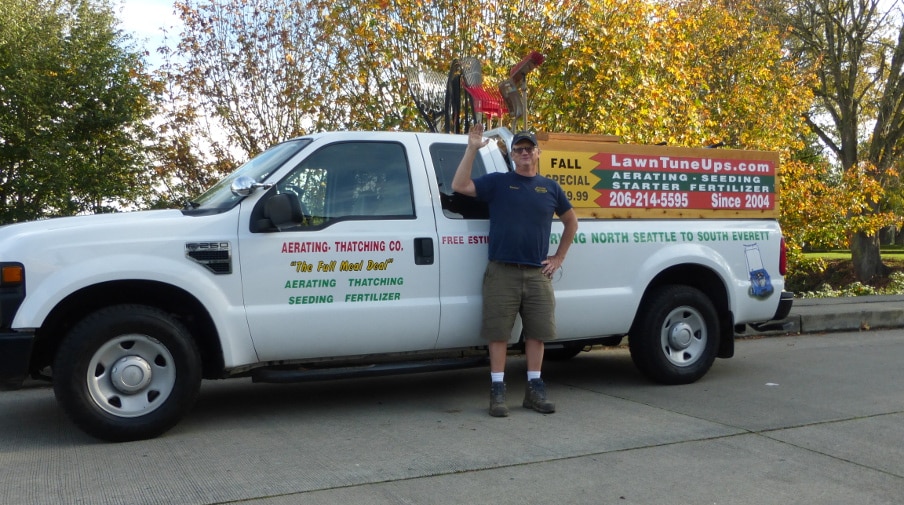
Stewart Armour
Stewart Armour is the owner of Aerating Thatching Co., an owner-operated Seattle-area lawn restoration business established in 2004. He helps homeowners understand Core Aeration, Power Raking (Dethatching), Overseeding, soil conditions, and the aftercare needed for stronger lawns. His background includes turf management study, advanced golf course turf training, and continuing education through Wilbur-Ellis University, State Turf Facilities, Soil First Academy, and Golf Course Applied Turf Physiology. Stewart has personally evaluated thousands of residential lawns throughout the Seattle area and focuses on recommending the work that fits each lawn’s condition.