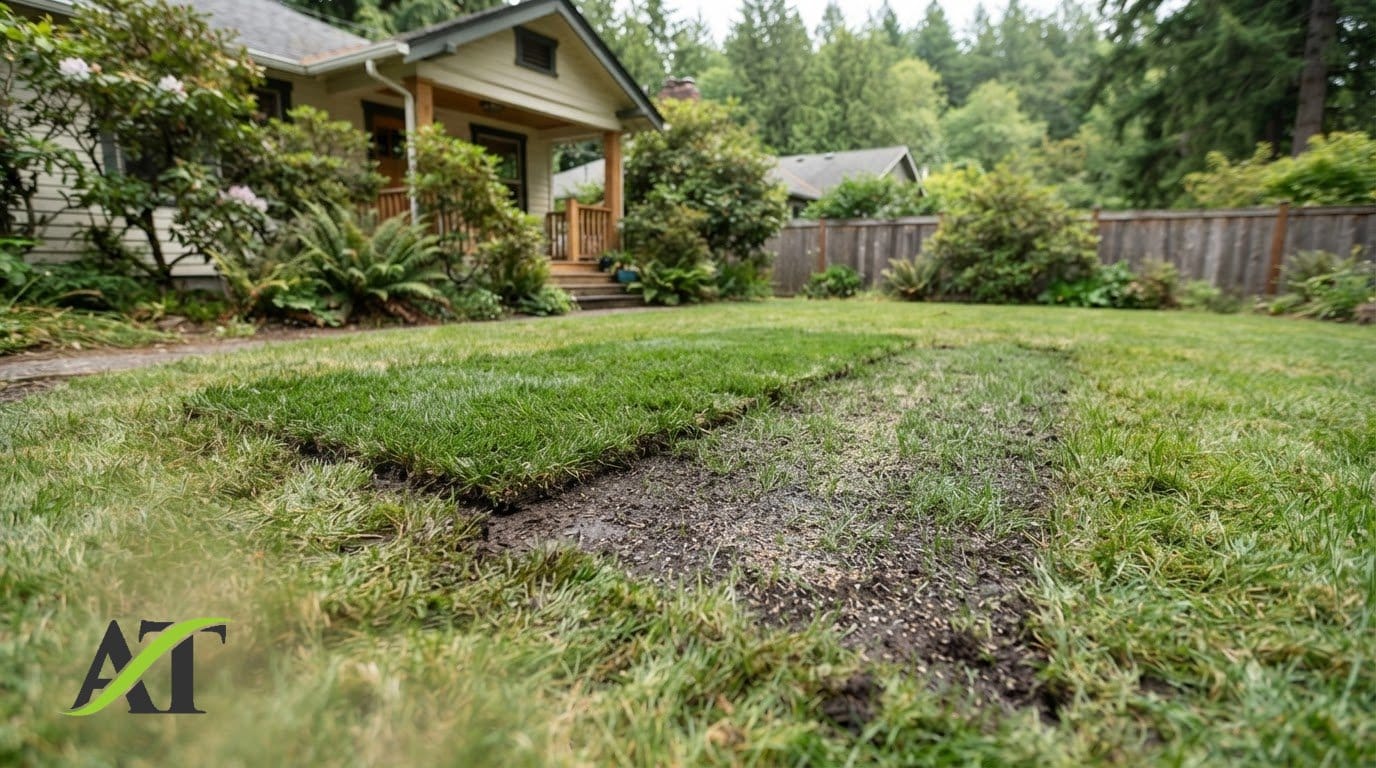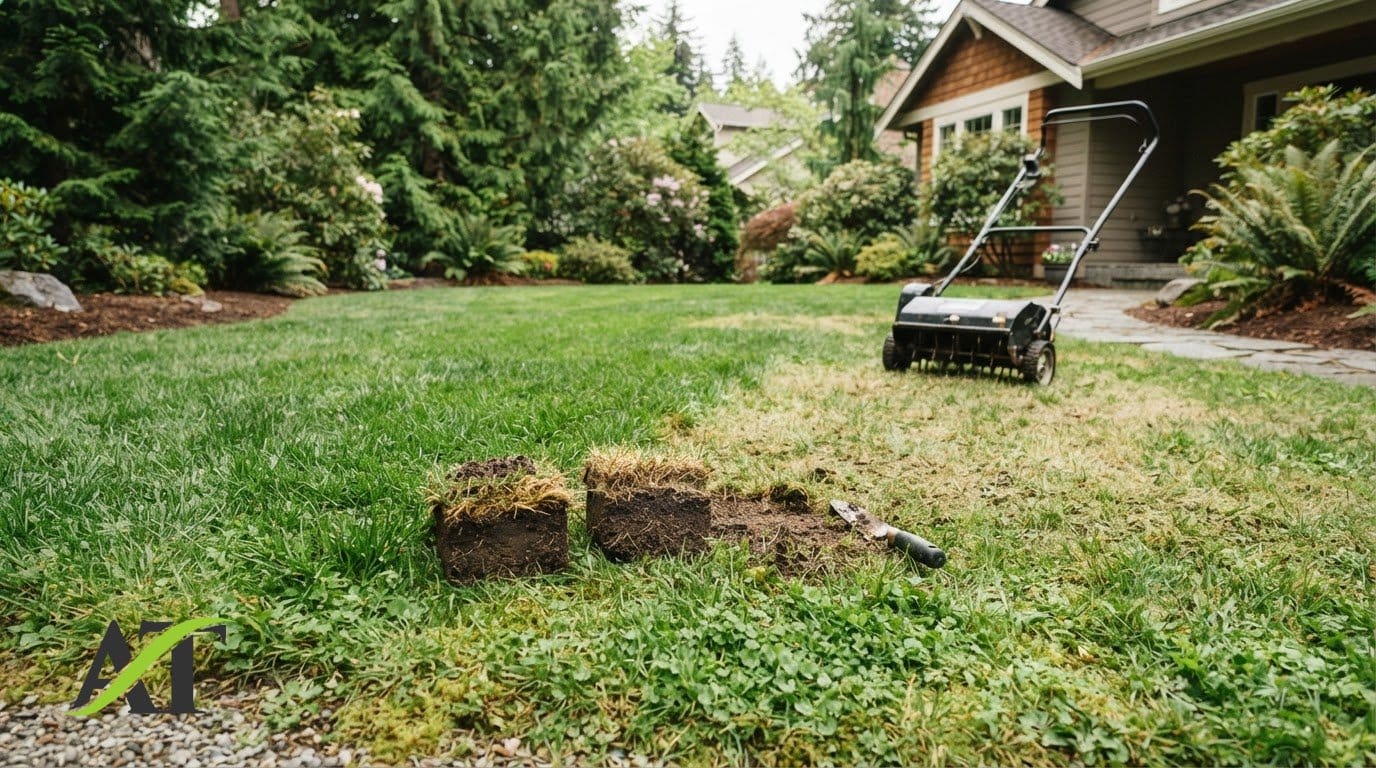
A thinning lawn does not automatically need a full restoration package. If bare or weak areas keep returning, or you cannot identify the cause, decide first whether the problem is compaction, thatch, shade, moss, irrigation, or drainage. Then choose targeted work—or a different solution—based on that diagnosis.
You can improve a lawn without paying for treatments it does not need. Inspect the turf and soil separately: look for firm soil, a substantial thatch layer, limited light, uneven watering, or water that remains after rain. Those observations help determine whether lawn work is appropriate and which service fits.
This guide explains when professional lawn work may be useful, how to distinguish compaction and thatch from shade, irrigation, and drainage problems, and when a smaller treatment may be enough. It also covers the preparation and aftercare that affect overseeding and turf recovery.
Use those distinctions to choose among a manageable homeowner repair, targeted lawn work, or further diagnosis. A service should address the problem you can observe rather than assume that every weak lawn needs the largest package.
Key Takeaways
- Consider professional help when thin or bare turf persists, the cause is unclear, or the work requires equipment and preparation. Identify the problem before selecting a package.
- Core Aeration removes small plugs from the shallow turf root zone and can relieve compaction there. It does not break deep glacial hardpan or correct a subsurface drainage defect.
- Overseeding adds grass where turf is thin, while Power Raking (Dethatching) addresses a significant layer of surface thatch. Neither service is automatically needed for every lawn.
- Inspect for compaction, thatch, shade, moss, irrigation issues, and drainage conditions. Persistent standing water or recurring damage may require further diagnosis rather than more turf treatment.
Is it worth it to hire a lawn service?
Hire help when thin turf keeps returning, the cause is uncertain, or the work calls for specialized equipment. Before booking, identify whether compaction, a significant thatch layer, missing grass, shade, irrigation, or drainage is the main concern.
Compare Services by the Lawn’s Needs
Compare services by the work included, not by the size of the package. A suitable plan should explain which problem each step addresses and whether it includes Core Aeration, Premium Overseeding, Starter Fertilizer, or Power Raking (Dethatching). Core Aeration targets compaction in the shallow turf root zone; Overseeding helps fill thin turf; Power Raking (Dethatching) addresses excessive surface thatch. Moss, shade, irrigation, and drainage problems require their own assessment.
Aeration and Related Treatments
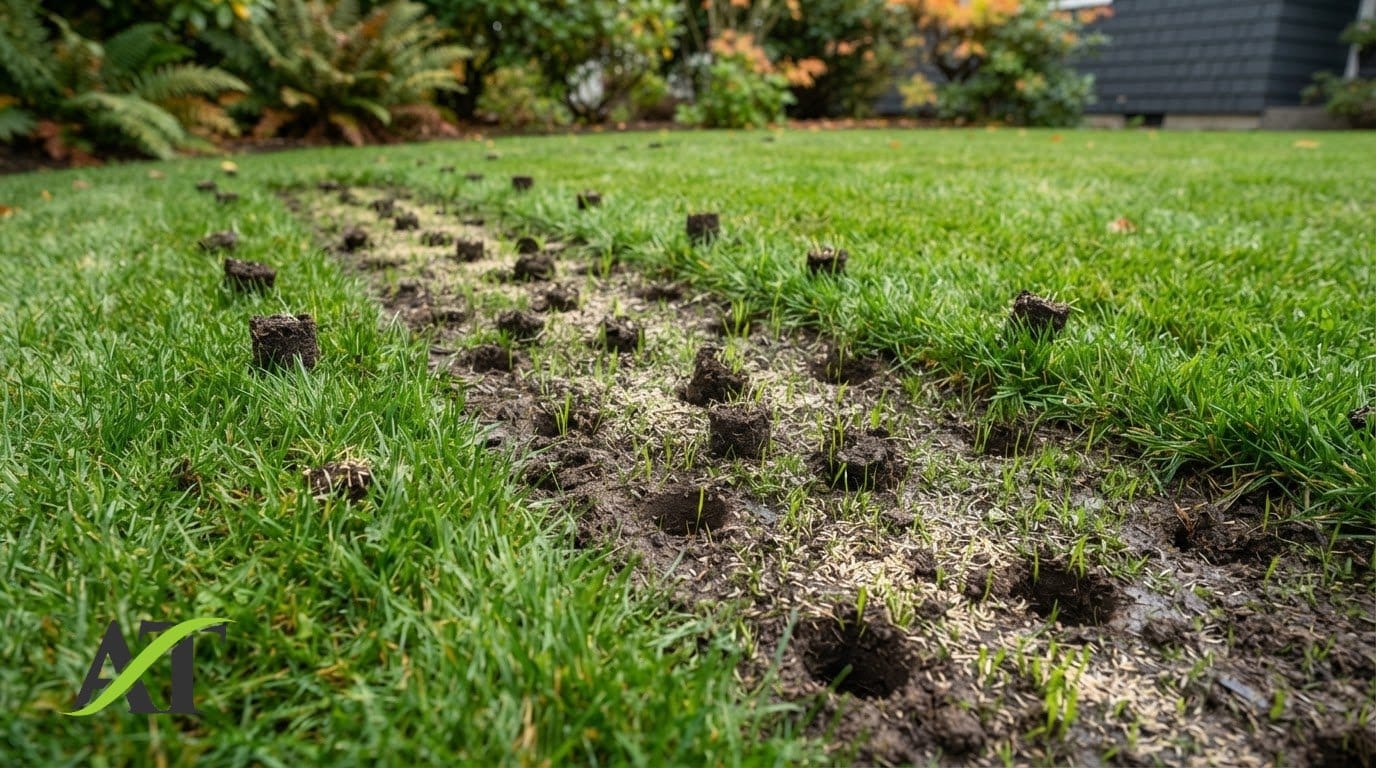
Core Aeration removes small plugs from the shallow turf root zone, creating openings that can relieve compaction and improve seed-to-soil contact. It does not break deep glacial hardpan or repair a subsurface drainage defect. It works best when the soil is moist but not saturated. Choose it for evidence of compaction, not simply because the lawn has weak growth.
Core Aeration, Overseeding, and Fertilizing address different needs and are not automatically included together. Core Aeration is available on its own. The Lawn Tune-Up combines Core Aeration, Premium Overseeding, and Starter Fertilizer. Power Raking (Dethatching) is a separate treatment for excess surface thatch, so select it only when the lawn has that condition.
Restoration Timing and Common Risks
Plan around the work selected rather than a fixed completion or reuse date. Core Aeration is a short treatment, while overseeded areas need continued moisture and time to establish. Seed-to-soil contact, soil conditions, weather, and homeowner aftercare all affect results. Follow the applicable aftercare guidance and limit traffic on newly seeded areas.
After overseeding, follow the service’s aftercare guidance for watering, mowing, and traffic. Avoid cutting new growth too short or applying additional fertilizer immediately after a service that already included Starter Fertilizer. Persistent standing water or recurring bare patches may indicate a drainage, shade, or irrigation issue that Core Aeration alone will not solve.
Overseeding with Puget Sound-appropriate blends
Overseeding adds grass seed to existing turf, helping fill thin areas without replacing the whole lawn. It is a practical choice in Edmonds when the lawn can receive the watering and traffic management new grass requires. Choose the seed mix according to the lawn’s light and the areas you want to thicken, while remembering that persistent shade, drainage, or irrigation problems need more than seed alone.
For a bare spot, remove loose debris and expose the soil surface. Seed needs contact with soil, not a covering of leaves or matted grass. Spread seed evenly, then follow its care directions. A thin area under a tree may need a shade-tolerant blend, while a sunny spot may call for another mix.
After seeding, keep the seedbed from drying out, but avoid watering so heavily that seed washes away or gathers in piles. Check the soil surface regularly and adjust watering as rain and drying conditions change. Limit foot traffic on seeded spots to avoid disturbing seed and emerging grass.
Mowing too soon or cutting new grass too short can disrupt establishment. Wait until new growth is ready, then use a sharp blade and avoid removing too much at once. If existing turf needs mowing while seeded patches are vulnerable, work carefully around them. Aftercare depends on seed-to-soil contact, moisture, soil, weather, and the seed blend.
Overseeding is convenient for scattered thin areas, but it won’t correct persistent shade, poor drainage, or a damaged soil surface by itself. If you’re unsure which seed or preparation fits, compare the lawn’s actual condition with the available service options before choosing.
Power Raking (Dethatching)
Power Raking (Dethatching) removes built-up plant material at the lawn surface. Thatch is a layer of dead stems and roots between the green grass and soil. Moss may also sit above the soil, but it is not thatch. Part the grass in a small area and look for a dense, springy layer that hides the soil.
Power Raking (Dethatching) is appropriate when the lawn has a clear buildup of surface thatch. A thin lawn without significant thatch may need a different response, such as addressing shade, compaction, or another cause of weak growth. Match the service to the condition rather than removing surface material simply to change the lawn’s appearance.
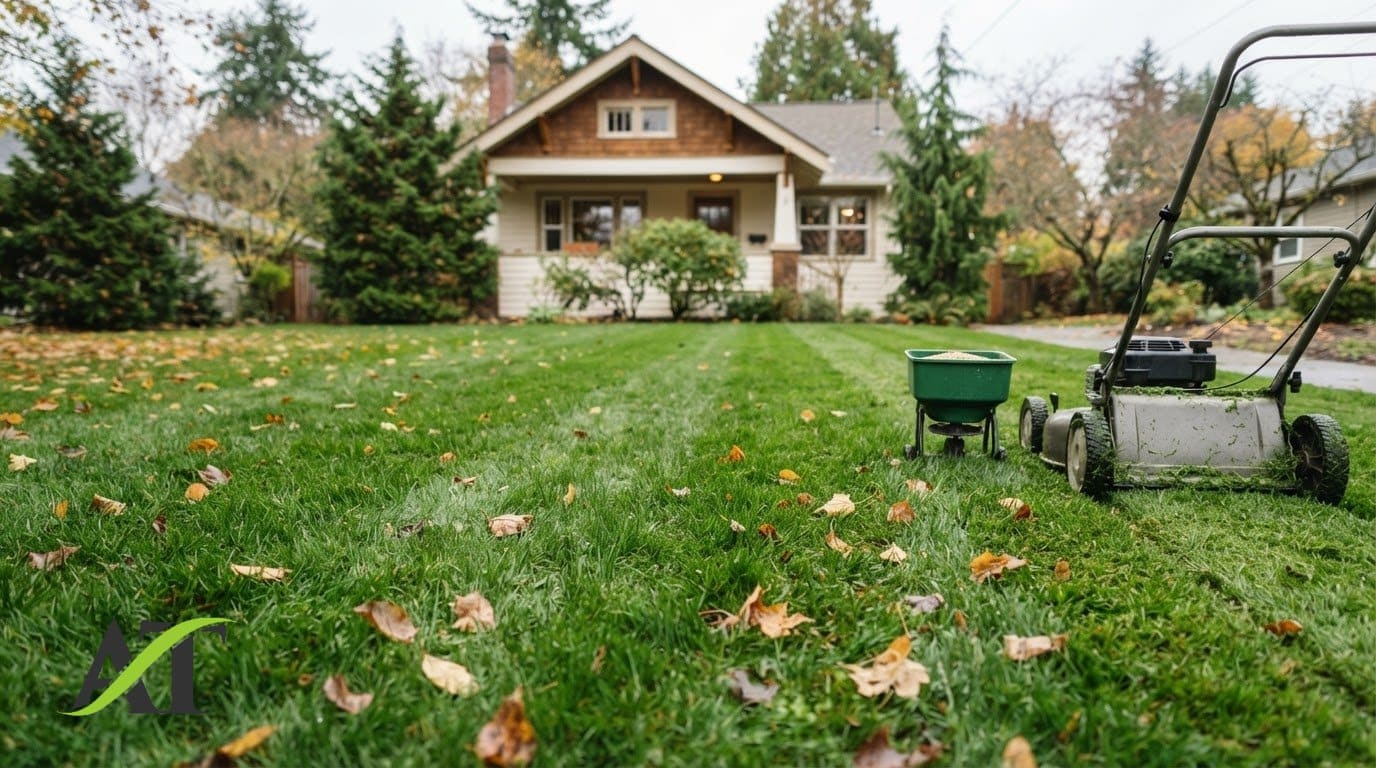
Timing matters. Avoid Power Raking (Dethatching) when the soil is saturated or the grass is stressed, because wet or vulnerable turf can be damaged. Remove loose leaves and debris first, then inspect the lawn before deciding whether the surface has enough thatch to require service.
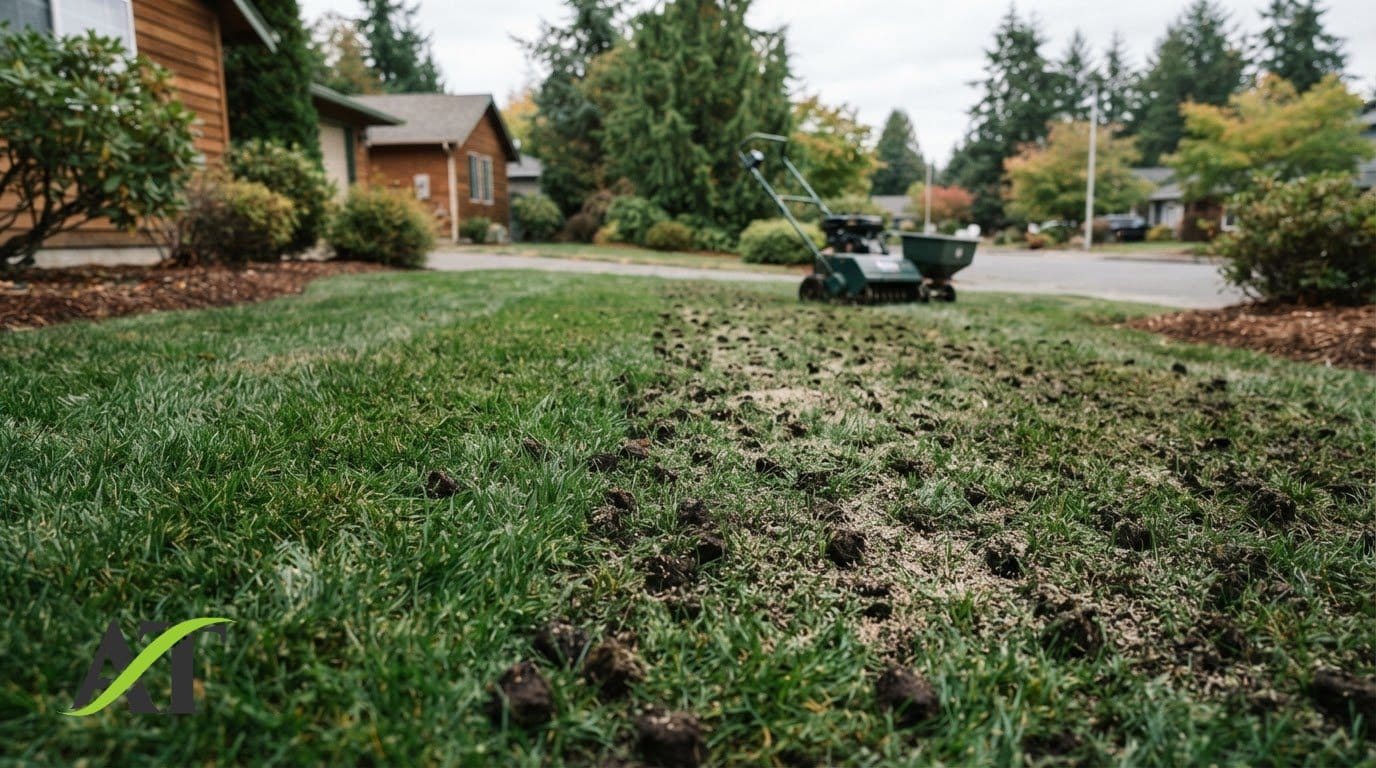
After Power Raking (Dethatching), remove loosened material rather than leaving it in heavy piles. Check for exposed soil, torn turf, and areas that still feel compacted. If the lawn is thin, Overseeding may help fill open ground, but seed needs contact with soil. Power Raking (Dethatching) alone won’t resolve poor drainage or persistent moss caused by shade.
Don’t use Power Raking (Dethatching) on the whole lawn just to make it look better immediately. The process can leave turf rough and exposed while it recovers. Match the work to the amount of thatch, the lawn’s condition, and the next step planned. Inspect carefully to distinguish surface buildup from a soil, shade, irrigation, or drainage problem.
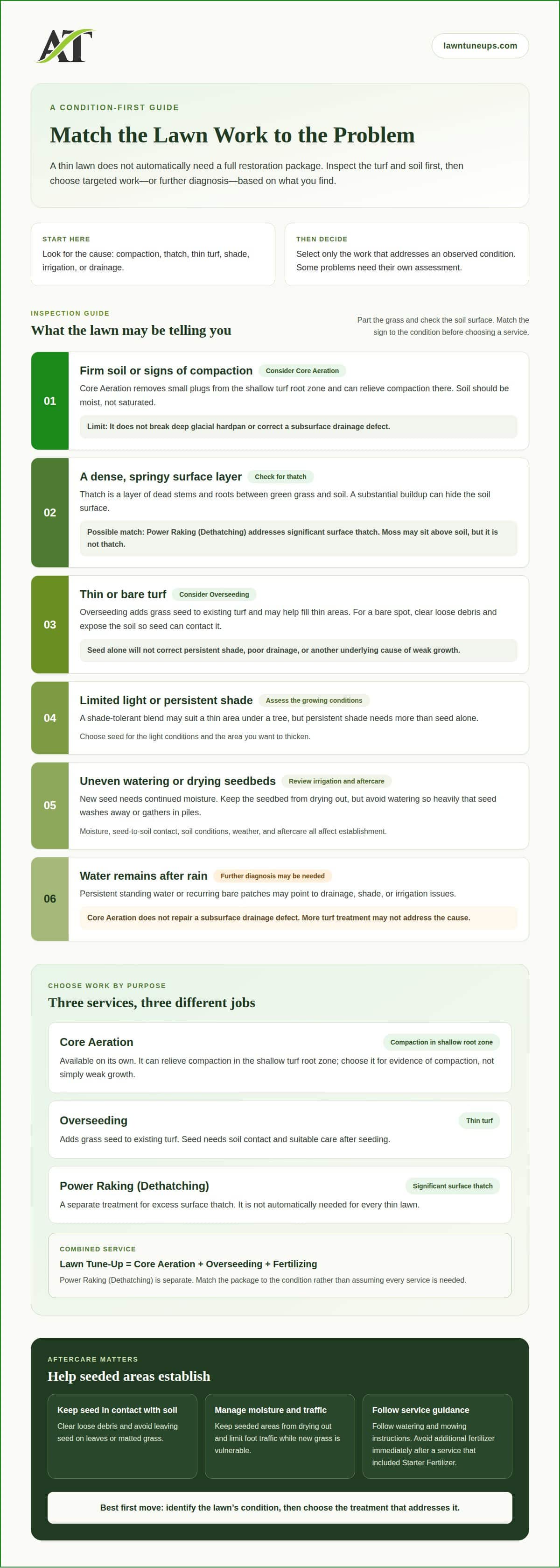
Soil, thatch, moss, and drainage inspection
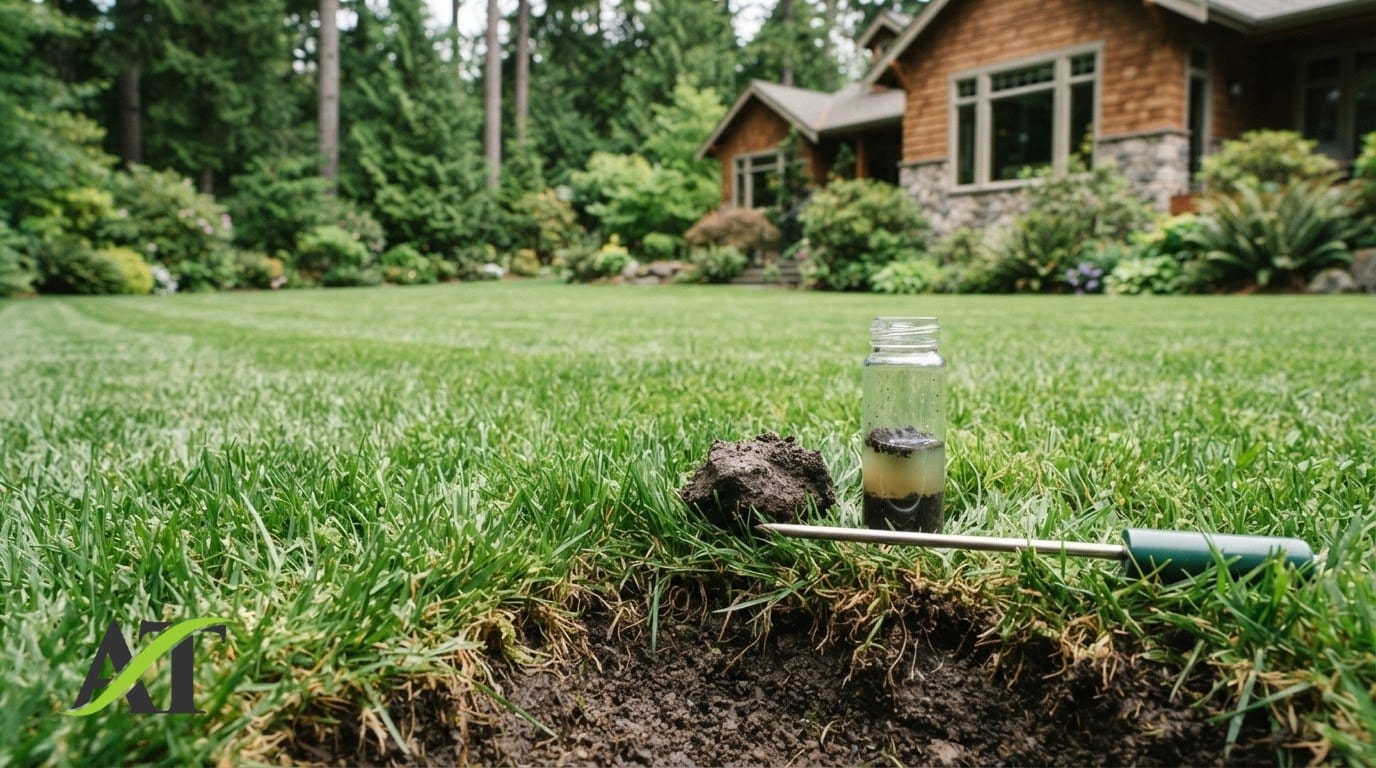
Before choosing lawn work, inspect the soil and turf surface separately. Soil varies from property to property, so a broad regional assumption matters less than the conditions in your own yard. Look at the areas that stay thin, feel firm, hold water, or show a layer of surface material before selecting a treatment.
Part the grass in a thin patch and examine the layer above the soil. Thatch is accumulated plant material; moss is a separate growth that can cover the surface. Compacted soil feels firm and resists probing, while bare soil signals a different issue. These signs need different responses, not the same cleanup method.
Track water after rainfall and during outdoor watering. If puddles remain in one spot while nearby ground drains, note the location and how the water moves. Core Aeration works in the shallow turf root zone; it can relieve compaction there but won’t correct deep hardpan or a subsurface drainage defect.
Look for patterns before choosing a response to moss or thinning grass. Moss under dense shade may indicate limited sunlight; moss beside persistently wet soil points to moisture conditions. Note where turf stays thin, water collects, or thatch forms a continuous mat. This simple record helps distinguish surface buildup from soil, shade, irrigation, or drainage issues. Match the treatment to the cause rather than applying every available treatment.
Aerating Thatching Co.: Lawn Tune-Up
Aerating Thatching Co.’s Lawn Tune-Up consists of Core Aeration, Premium Overseeding, and Starter Fertilizer. It can suit a lawn with compaction and thinning turf when seed is needed to fill sparse areas. Core Aeration works in the shallow turf root zone, so the package won’t fix deep hardpan, a subsurface drainage defect, or persistent shade.
Choose the Lawn Tune-Up when the lawn needs Core Aeration, Premium Overseeding, and Starter Fertilizer together. If the main issue is a significant thatch layer, Power Raking (Dethatching) is a separate service and is not included. If the lawn is reasonably dense and does not need new seed, Core Aeration can be selected on its own. Overseeding also requires seed-to-soil contact, moisture, and consistent aftercare.
Choose the Next Step for Your Lawn
A useful lawn restoration plan in Edmonds starts by identifying the problem that needs attention first. Note which areas stay thin, feel firm, hold water, or change after rain. This information helps focus the work instead of applying the same treatment across the entire yard.
When the lawn needs Core Aeration, Premium Overseeding, and Starter Fertilizer, Aerating Thatching Co. offers them together as a Lawn Tune-Up. The package does not correct a drainage defect or persistent shade. Describe the lawn’s symptoms so Stewart can discuss a suitable next step without assuming every area needs the same service.
Frequently Asked Questions
Do I need a lawn service?
Consider professional lawn work when thinning, compaction, or excess thatch keeps returning, or when the cause is unclear. Aerating Thatching Co. provides Core Aeration, Power Raking (Dethatching), and Overseeding rather than routine mowing or irrigation repair. A lawn that stays thin despite regular mowing should be assessed for soil, shade, irrigation, drainage, or seedbed problems before choosing a treatment.
How does it work?
A restoration job starts by identifying the visible problem and matching the service to it. Before service, mark sprinkler heads, oil tank caps, shallow utilities, and pet fencing so they are visible. After treatment, complete the required aftercare: water as directed, manage mowing, and limit traffic as instructed while existing turf recovers or new grass establishes.
Is it a good time to book?
Book when the lawn’s condition is clear and you can provide the aftercare the work requires. For Core Aeration, soil that is moist but not saturated is commonly suitable. Overseeding also requires attention to moisture and reduced traffic. Dry conditions or saturated soil can affect whether the planned service fits the lawn’s current condition.
What does lawn restoration in Edmonds, Washington typically include?
Restoration work depends on the lawn’s condition, not a fixed list of treatments. Aerating Thatching Co.’s Lawn Tune-Up includes Core Aeration, Premium Overseeding of up to 10 pounds, and Starter Fertilizer. The Full Meal Deal includes Power Raking (Dethatching), Core Aeration, Premium Overseeding of up to 20 pounds, and Starter Fertilizer. Neither package includes moss treatment or drainage repair. A persistent wet spot may need diagnosis beyond turf restoration.
What is the best time to restore a lawn in Edmonds?
Plan around the service being performed: seeding requires ongoing attention to moisture and traffic, while aeration timing depends on soil condition, ideally moist but not saturated.
How should I choose grass seed for my lawn?
Choose a blend according to the lawn’s light, soil condition, and the areas you want to thicken rather than assuming one seed fits every yard. For our Premium 60/40 Sun & Shade Mix and Seattle-area Overseeding, we prefer soil temperatures around 55–80°F (13–27°C) as a practical service window. This is not a strict cutoff, a universal optimum for every seed type, or a germination guarantee. Moisture, seed-to-soil contact, soil conditions, weather, and homeowner aftercare also affect establishment.
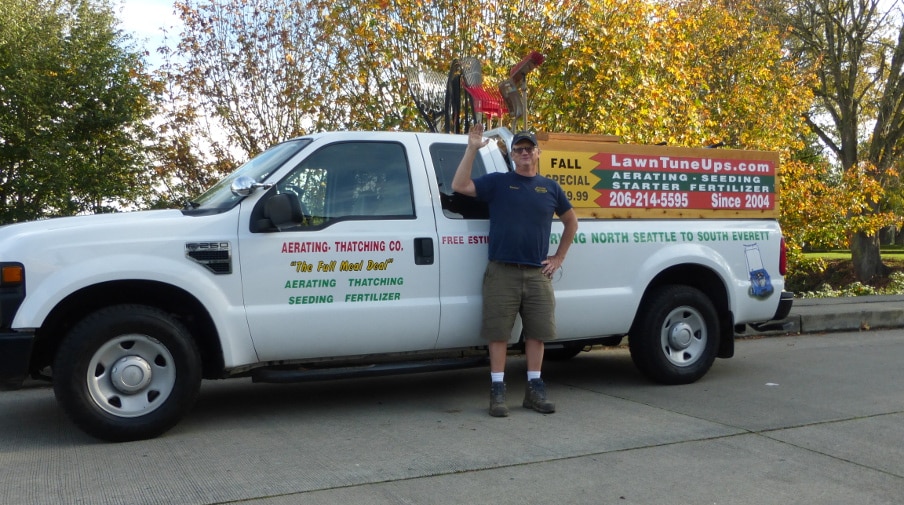
Article by
Stewart Armour
Stewart Armour is the owner of Aerating Thatching Co., an owner-operated Seattle-area lawn restoration business established in 2004. He helps homeowners understand Core Aeration, Power Raking (Dethatching), Overseeding, soil conditions, and the aftercare needed for stronger lawns. His background includes turf management study, advanced golf course turf training, and continuing education through Wilbur-Ellis University, State Turf Facilities, Soil First Academy, and Golf Course Applied Turf Physiology. Stewart has personally evaluated thousands of residential lawns throughout the Seattle area and focuses on recommending the work that fits each lawn’s condition.