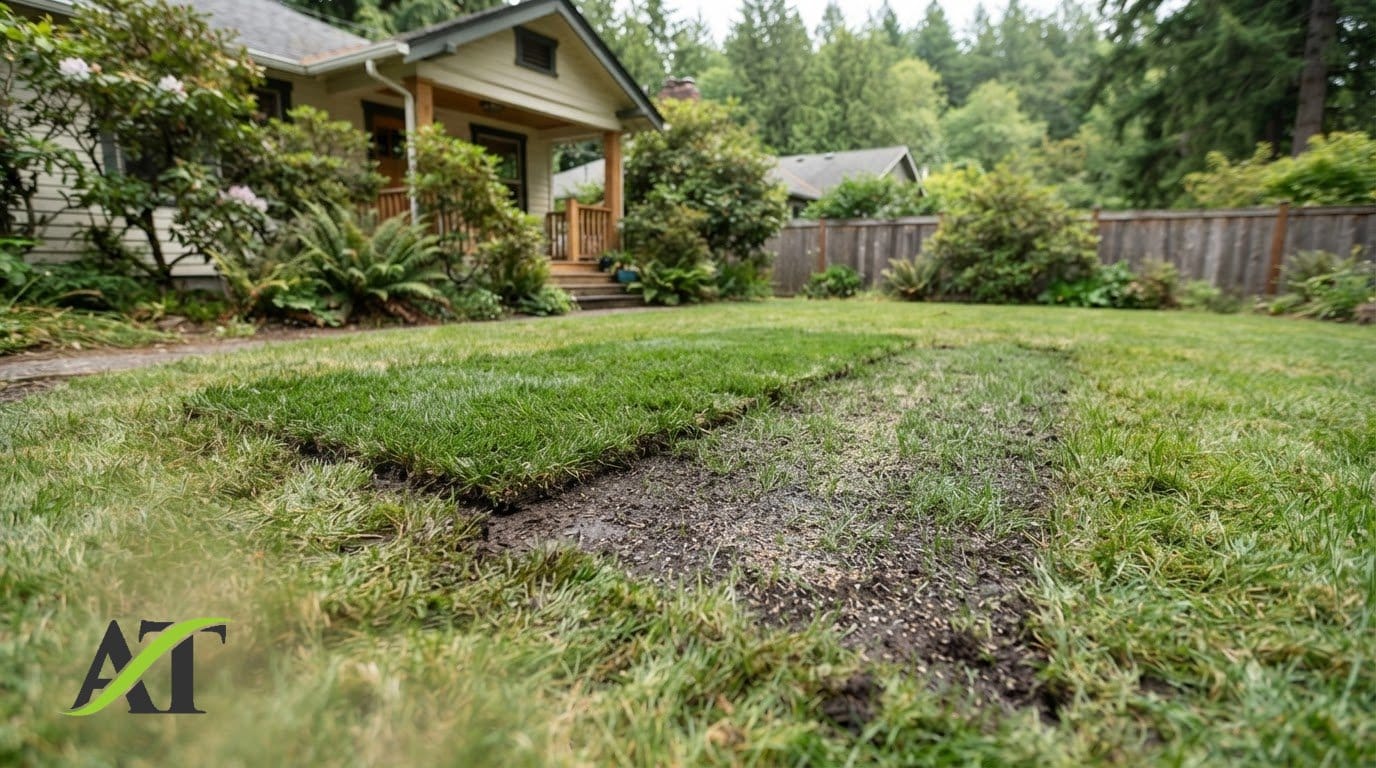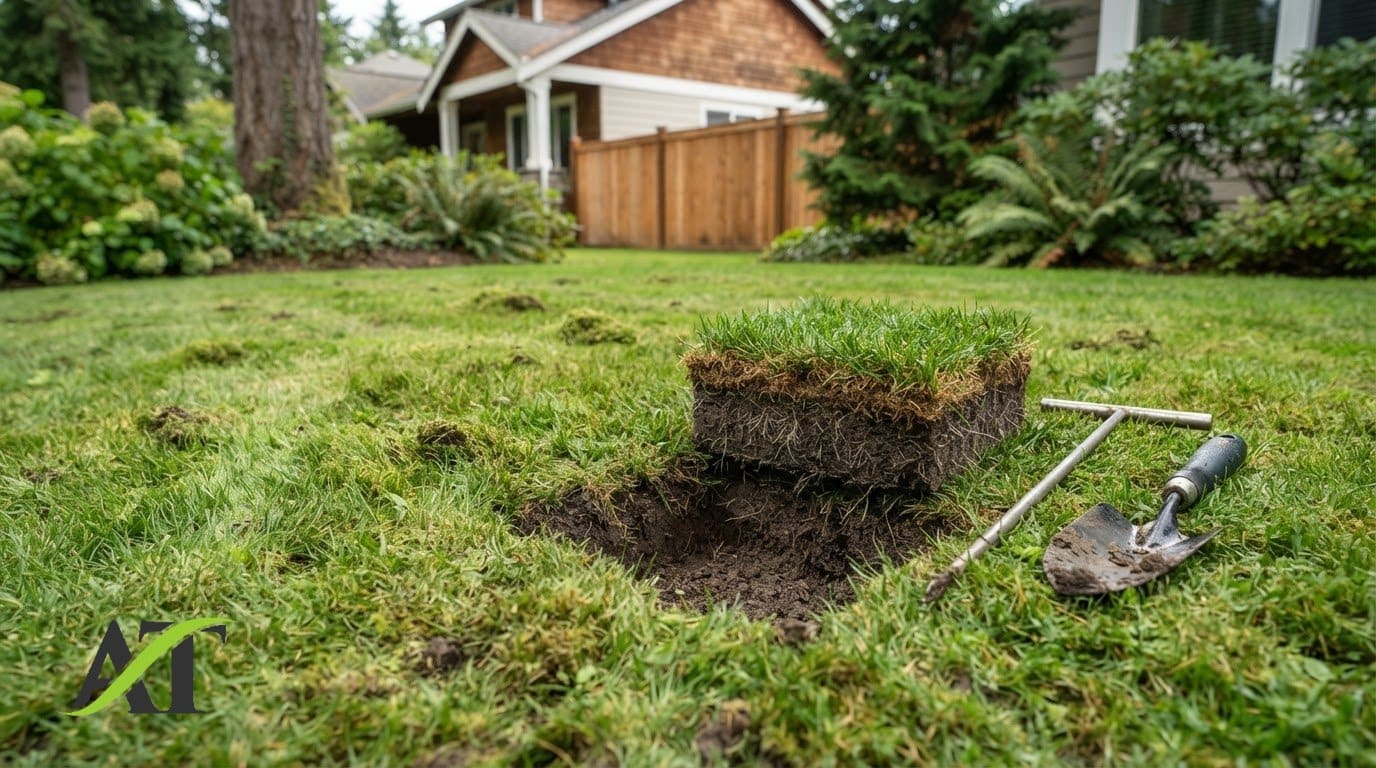
Rolling a bumpy lawn can make the problem worse by adding compaction. If you’re searching for “what to do for a bumpy lawn Mountlake Terrace,” start by identifying the cause rather than reaching for a quick fix. A rough surface can result from compacted soil, excess thatch, thin grass, soil castings, or ground that has shifted or settled.
It’s frustrating when you feel every bump under the mower but can’t tell what’s happening below the grass. The right response depends on the cause. Core Aeration can help with compaction in the shallow turf root zone, while Power Raking (Dethatching) addresses excessive thatch. Neither treatment levels every kind of uneven ground.
This guide explains what to look for, which lawn treatments may fit common causes, and when the issue needs further diagnosis. You’ll also learn when a Lawn Tune-Up or Full Meal Deal may be a proportionate restoration step for a Mountlake Terrace lawn.
Key Takeaways
- Map uneven areas and inspect the turf before choosing what to do for a bumpy lawn in Mountlake Terrace.
- Look for clues that distinguish thin grass, thatch, compaction, earthworm castings, surface heaving, and drainage concerns.
- Match the treatment to the likely cause, and recognize when persistent drainage or grade issues need further diagnosis.
- Choose between a Lawn Tune-Up and Full Meal Deal based on whether Power Raking (Dethatching) fits the lawn’s needs.
What Makes a Lawn Bumpy in Mountlake Terrace?
A bumpy lawn can have several causes, and its appearance alone may not reveal which one is responsible. Sparse grass, a spongy thatch layer, compacted soil, earthworm castings, surface heaving, and drainage or grade problems can all make mowing feel uneven. Since these issues call for different responses, first note the pattern and inspect the turf.
How to inspect the uneven areas before choosing a fix
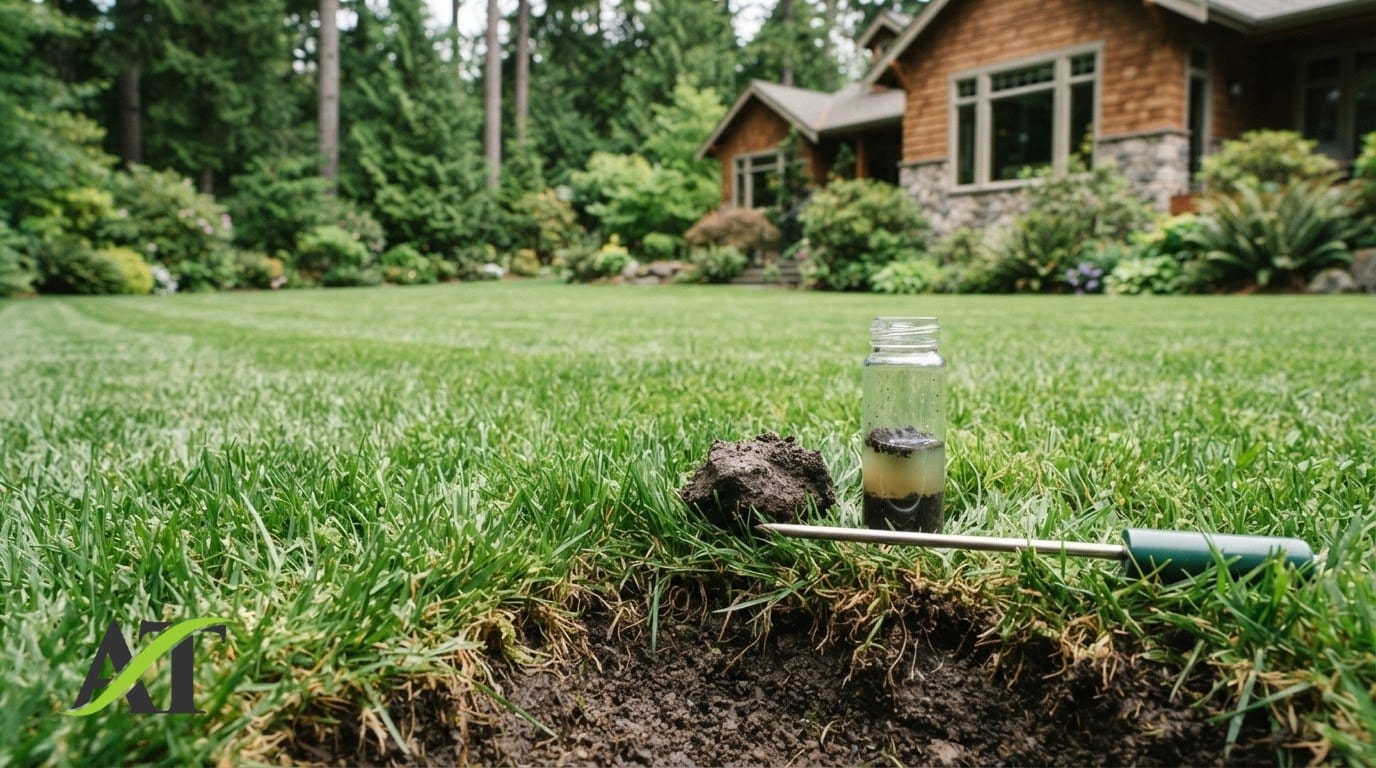
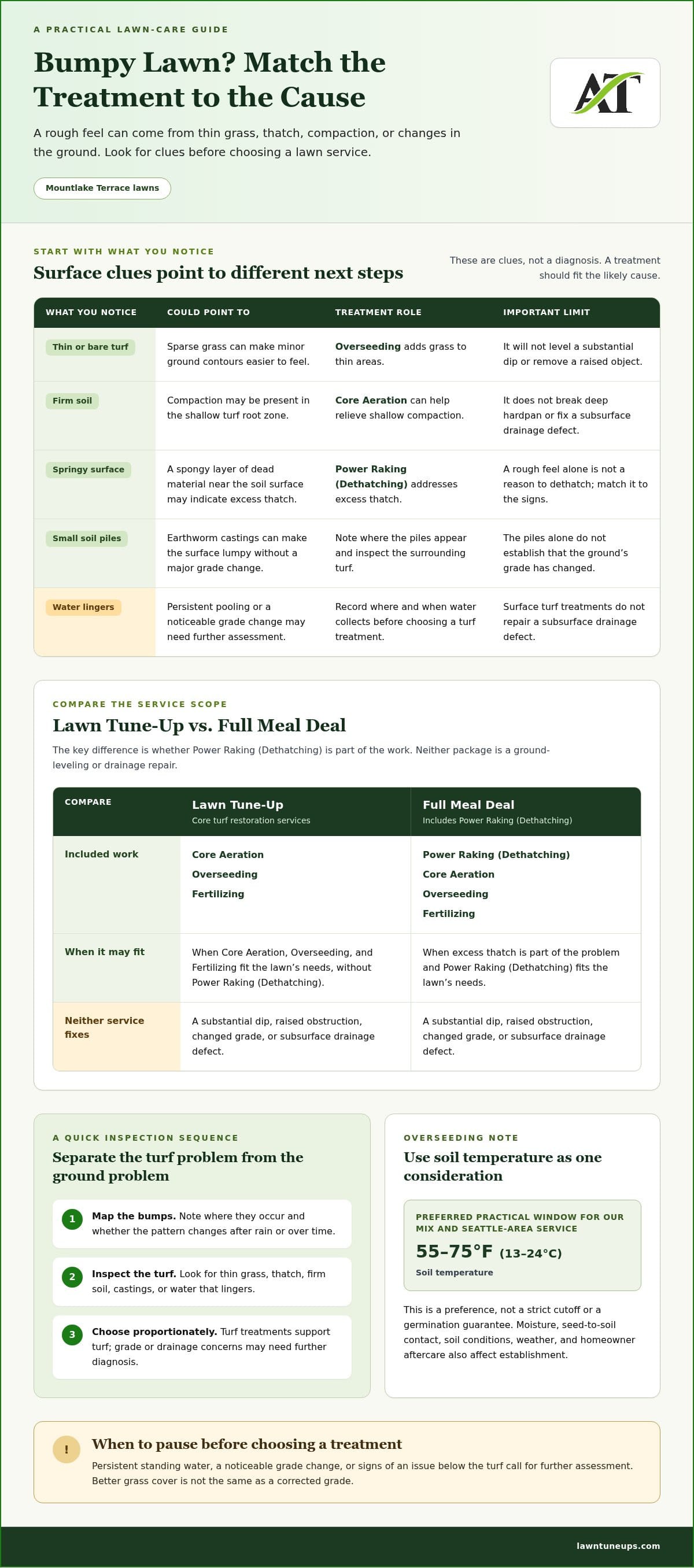
Walk the lawn and note whether bumps are scattered, cover most of the area, or cluster in particular spots. Check for thin turf, a springy layer of dead material near the soil surface, small soil piles, and areas where water remains after rain. These are clues, not a diagnosis. If low areas stay wet or the ground’s shape suggests a deeper grade or subsurface issue, further assessment may be needed.
The ground’s feel can help narrow the possibilities. Compacted soil may feel firm, while excess thatch can feel springy underfoot. Small soil castings can make the surface lumpy without a major change in grade. Seasonal lifting and settling can also leave uneven patches. Frost heaving describes how freezing conditions can push soil upward. Persistent pooling, however, can point to a concern that surface turf treatments won’t resolve.
Why a thin lawn can make bumps feel worse
Grass cover and thatch can soften the feel of minor surface irregularities. Where turf is sparse, you can feel the ground’s contours more easily, so a thin lawn may seem rougher even if the soil grade hasn’t changed. Shade, irrigation patterns, or other stresses can contribute to thin grass. Overseeding can add grass to bare or thin areas, but it won’t level a substantial dip or remove a raised obstruction.
When deciding what to do for a bumpy lawn in Mountlake Terrace, separate two questions: is the grass cover thin, and has the ground itself changed? That distinction helps avoid treating a turf-density problem as a grading problem, or expecting seed to correct uneven soil.
Which Lawn Treatments Can Help, and What They Cannot Fix
Choose a treatment for the problem you identified, not simply because the lawn feels uneven. Core Aeration, Overseeding, and Power Raking (Dethatching) address different turf conditions. None is a universal leveling method.
Match the treatment to the problem
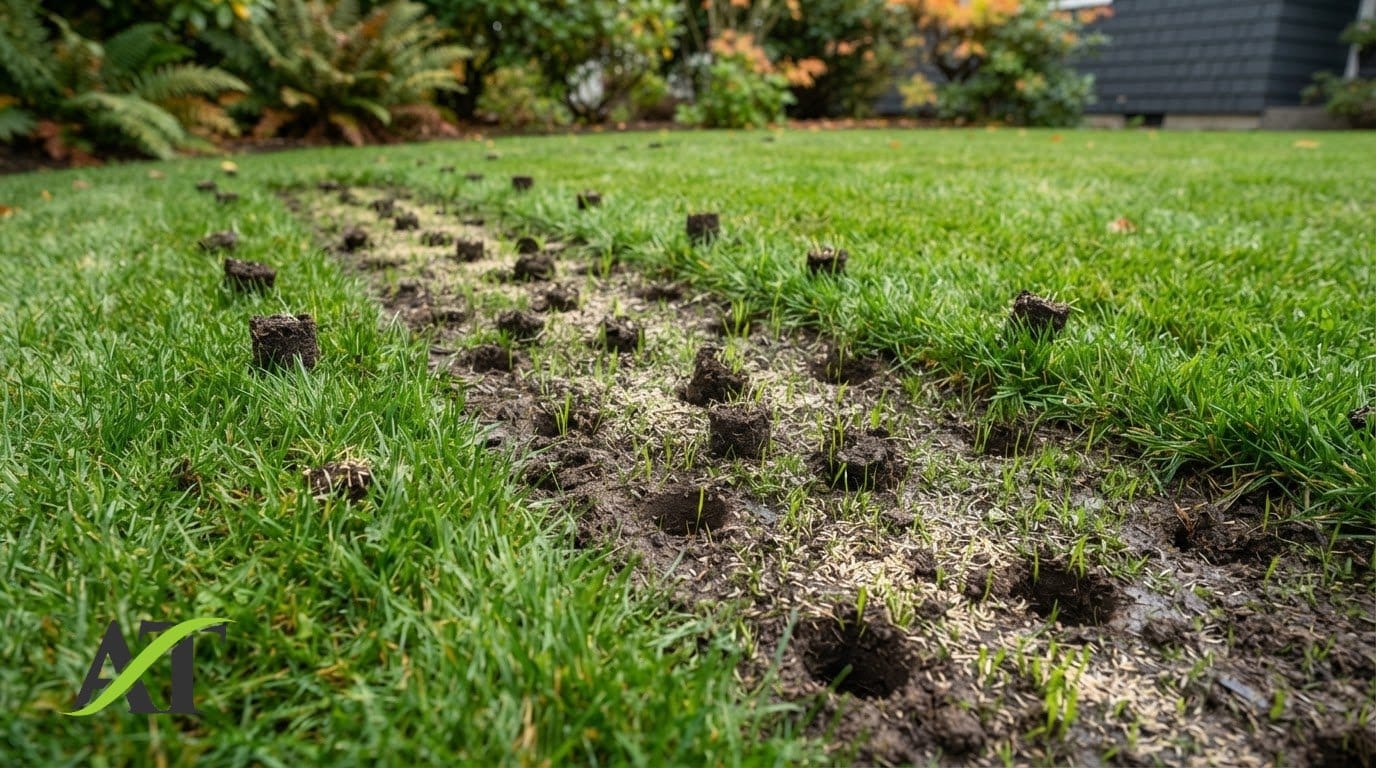
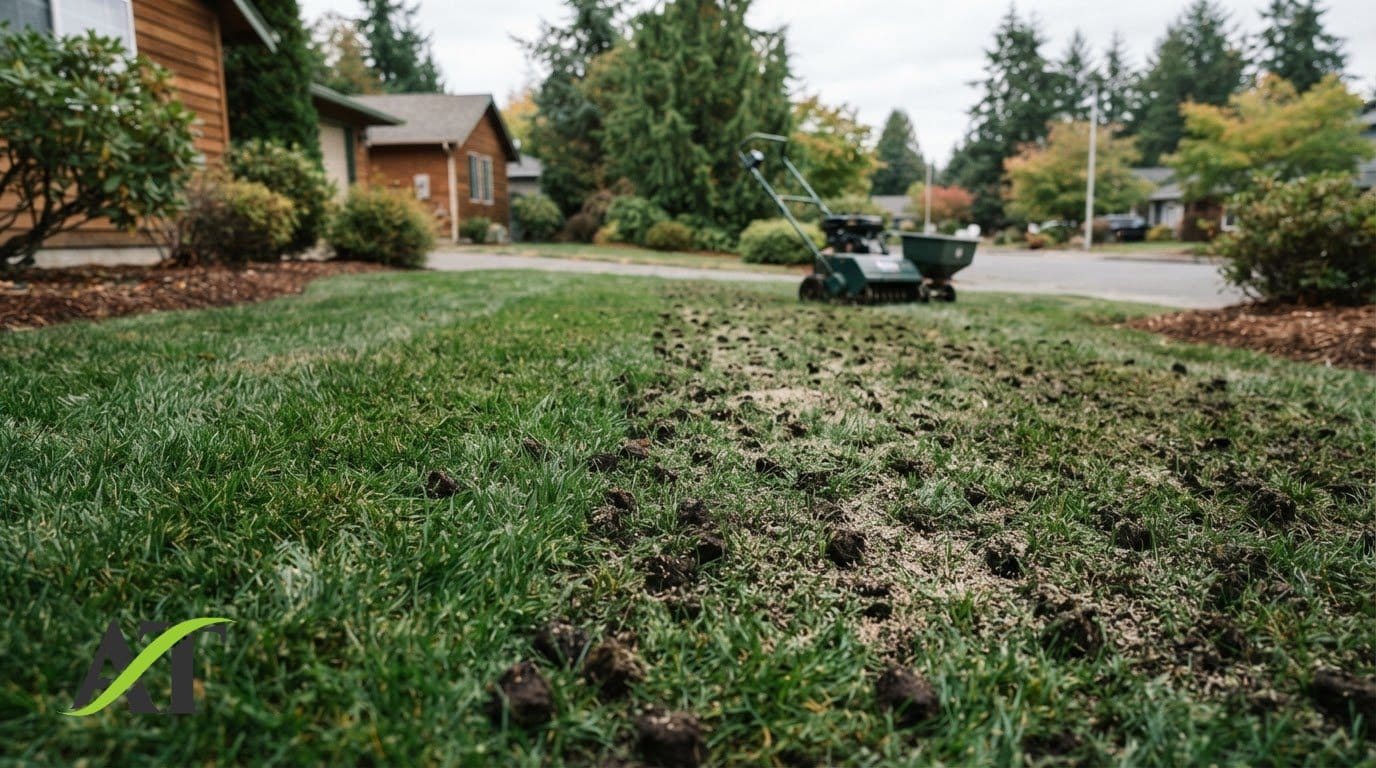
Core Aeration removes plugs from the shallow turf root zone and can help relieve compaction there. It doesn’t break through deep hardpan or correct a subsurface drainage defect. Overseeding adds grass to thin areas, but new growth won’t reshape a dip or remove a raised object. Power Raking (Dethatching) is appropriate when excess thatch is the issue, not just because the surface feels rough.
These treatments aren’t automatically needed together. Our Power Raking (Dethatching) service addresses thatch buildup when it is part of the problem. If symptoms point to persistent pooling, a change in grade, or an issue below the turf, pause before choosing a standard lawn treatment. The National Association of Landscape Professionals offers broader landscaping context, but the visible symptoms in your lawn should guide your next step.
When lawn restoration is not the same as ground leveling
Turf restoration can improve grass coverage and address shallow compaction, but it doesn’t automatically change the lawn’s grade. A Lawn Tune-Up consists of Core Aeration, Overseeding, and Fertilizing. It doesn’t reshape the ground. A low spot or persistent water issue may need separate diagnosis before you choose turf restoration. For broader structural changes or complete ground reshaping, consulting full-service garden design and renovation teams such as Handy Landscapes illustrates how deeper grading and outdoor improvements are planned.
Match the response to the cause and keep the goal realistic: improving turf is different from correcting a ground-level or subsurface defect. If you’d like to discuss what you’re seeing, Ask Stewart About Your Lawn.
How to Choose a Practical Next Step for Your Lawn
Use a simple sequence before choosing a treatment. For a bumpy lawn in Mountlake Terrace, record the symptoms first, then match the response to the likely cause.
- Map the bumps. Note where they occur and whether the pattern changes after rain or over time.
- Inspect the turf. Look for thin grass, thatch, firm soil, castings, or water that lingers.
- Separate the issues. Decide whether the main concern is turf cover, a change in grade, or drainage.
- Choose a proportionate response. Use a turf treatment only when its purpose fits the signs you found.
When Overseeding may support a bumpy-looking lawn
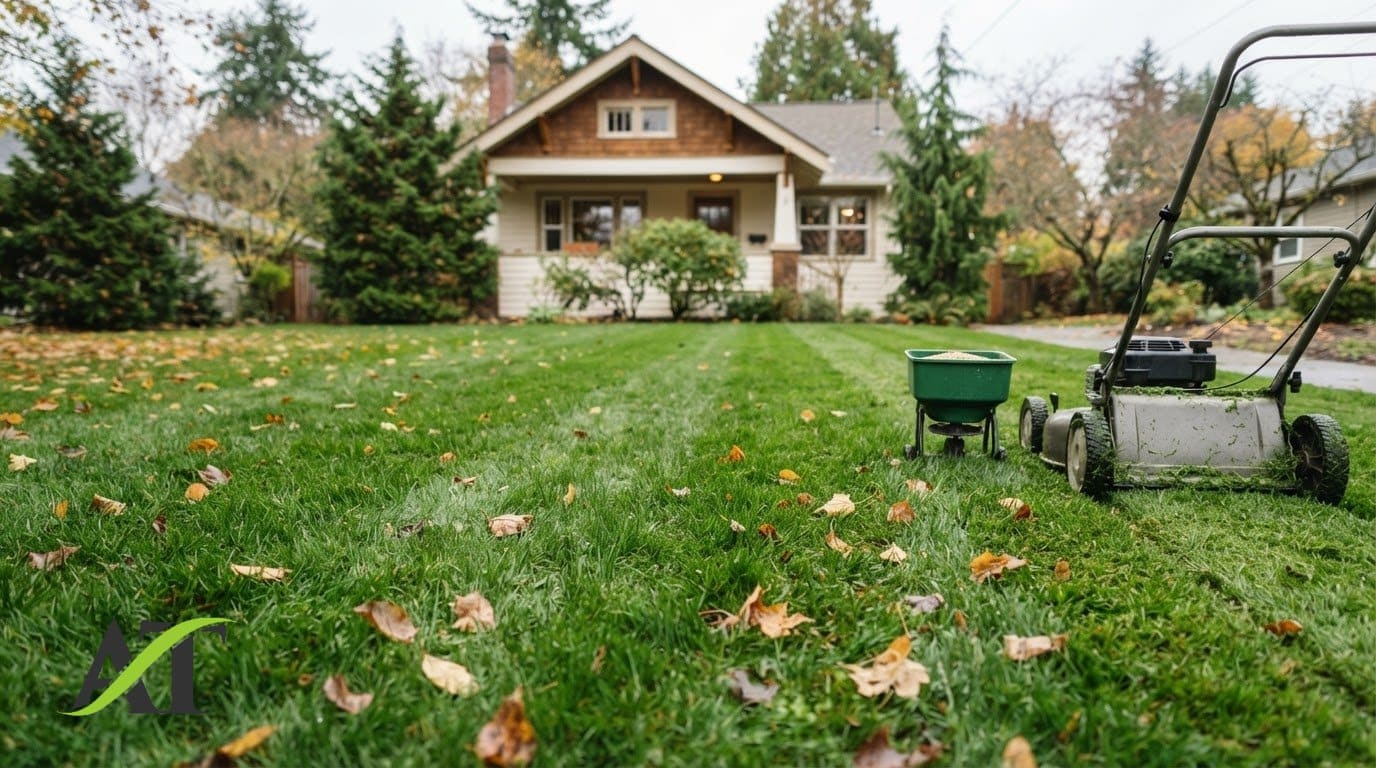
More grass cover may soften the appearance of minor surface irregularities, but Overseeding won’t correct a pronounced dip or raised area. For our Premium 60/40 Sun & Shade Mix and Seattle-area service, we prefer soil temperatures around 55-75°F (13-24°C) as a practical window. This is not a strict cutoff or a germination guarantee. Moisture, seed-to-soil contact, soil conditions, weather, and homeowner aftercare also affect establishment.
When to pause and seek a clearer diagnosis
Persistent standing water, a noticeable grade change, or signs of an issue below the turf call for further assessment. Surface treatments can support turf, but they don’t repair subsurface drainage defects; property owners troubleshooting underground pipe problems or settling can review professional solutions through resources like avdrain.ca. Don’t mistake better grass cover for a corrected grade. If water repeatedly collects in the same area, record where and when it happens before choosing a lawn treatment.
After Core Aeration, Overseeding, or Power Raking (Dethatching), follow the care instructions for the service. The lawn after-care guide explains what to do after these treatments.
Choosing a Lawn Tune-Up or Full Meal Deal in Mountlake Terrace
Once you’ve identified the likely cause, match the service scope to the lawn’s needs. Don’t choose based on how bumpy the surface feels alone. Thin turf or shallow compaction points to different work than excess thatch, and neither package corrects a grade or subsurface drainage problem.
Which service scope fits the diagnosed lawn?
A Lawn Tune-Up is the relevant scope when the lawn needs Core Aeration, Overseeding, and Fertilizing, but the diagnosis doesn’t point to excess thatch. Power Raking (Dethatching) is not included.
The Full Meal Deal includes Power Raking (Dethatching), Core Aeration, Overseeding, and Fertilizing. Consider it when excess thatch is part of the diagnosis and the lawn also needs the other included work. If thatch isn’t the issue, the additional work may not fit the problem. Neither package reshapes the ground or corrects a drainage defect.
A straightforward next step for Mountlake Terrace homeowners
Describe where the bumps occur and what you notice there, such as a spongy surface, sparse grass, or areas that stay wet. Include whether the unevenness is scattered or concentrated in one area. These details keep the discussion focused on the symptoms and a proportionate next step.
Let the diagnosis guide the service scope rather than choosing the largest package by default. Persistent standing water or a pronounced change in grade may call for further assessment before turf restoration.
Ask Stewart About Your Lawn
Take the Next Step With a Clear Picture of Your Lawn
There’s no one-size-fits-all answer to what to do for a bumpy lawn in Mountlake Terrace. Note where the unevenness occurs and what you observe there. That gives the conversation a practical starting point and helps keep the response focused on the symptoms.
Aerating Thatching Co. serves Mountlake Terrace and has operated since 2004. If the cause isn’t clear, you don’t have to guess at a treatment or assume the lawn needs every available service. Describe what you’re seeing, including any areas where water lingers or the ground seems to have changed shape.
We serve homeowners in North Seattle, Shoreline, Edmonds, Lynnwood, Mill Creek, Bothell, Kenmore, Lake Forest Park, Mountlake Terrace, Snohomish, Everett, Brier, Woodway, Green Lake, Ballard, and Greenwood. Ask Stewart About Your Lawn to discuss a practical next step.
A careful diagnosis is a solid first step toward choosing work that fits your lawn. With the right issue in view, you can move ahead with more confidence.
Frequently Asked Questions
Can I mow a bumpy lawn safely?
Mow only if you can keep the mower under control and avoid hidden or raised obstacles. Walk the route first, and don’t mow over anything you can’t identify. If the mower tilts sharply, catches, or repeatedly jolts in one spot, stop rather than forcing a pass. Note the location and inspect it more closely before mowing there again.
Should I use a heavy roller to flatten a bumpy lawn?
A heavy roller usually isn’t a dependable way to correct a rough lawn. The Iowa State University Extension guide advises against heavy rolling for this purpose. A roller can press the surface down temporarily without removing what caused the unevenness, so the same spot may remain troublesome. First determine whether you’re dealing with a small surface irregularity or a more substantial change in the ground.
Are earthworms responsible for bumps in a lawn, and should I remove them?
Earthworms alone aren’t a good reason to try to eliminate them. If you see castings, note whether they’re limited to a few small spots or appear alongside broader changes in the lawn. Avoid treating the whole yard based on one clue. If uneven areas extend beyond the spots with castings, consider other explanations rather than assuming worms account for every bump.
When can I mow after Overseeding?
Follow the instructions provided for your seed and service instead of setting a mowing date by guesswork. Before mowing, check that the seeded area is ready according to that guidance, not just that the surrounding established grass looks tall. Keep the first pass controlled and avoid sharp turns across the new seed area. A universal number of days could be misleading because establishment varies.
Article by
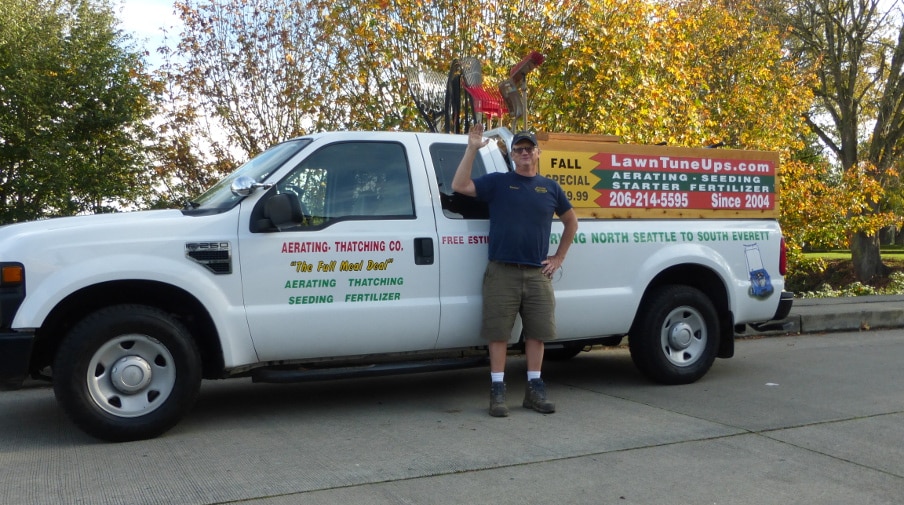
Stewart Armour
Stewart Armour is the owner of Aerating Thatching Co., an owner-operated Seattle-area lawn restoration business established in 2004. He helps homeowners understand Core Aeration, Power Raking (Dethatching), Overseeding, soil conditions, and the aftercare needed for stronger lawns. His background includes turf management study, advanced golf course turf training, and continuing education through Wilbur-Ellis University, State Turf Facilities, Soil First Academy, and Golf Course Applied Turf Physiology. Stewart has personally evaluated thousands of residential lawns throughout the Seattle area and focuses on recommending the work that fits each lawn’s condition.