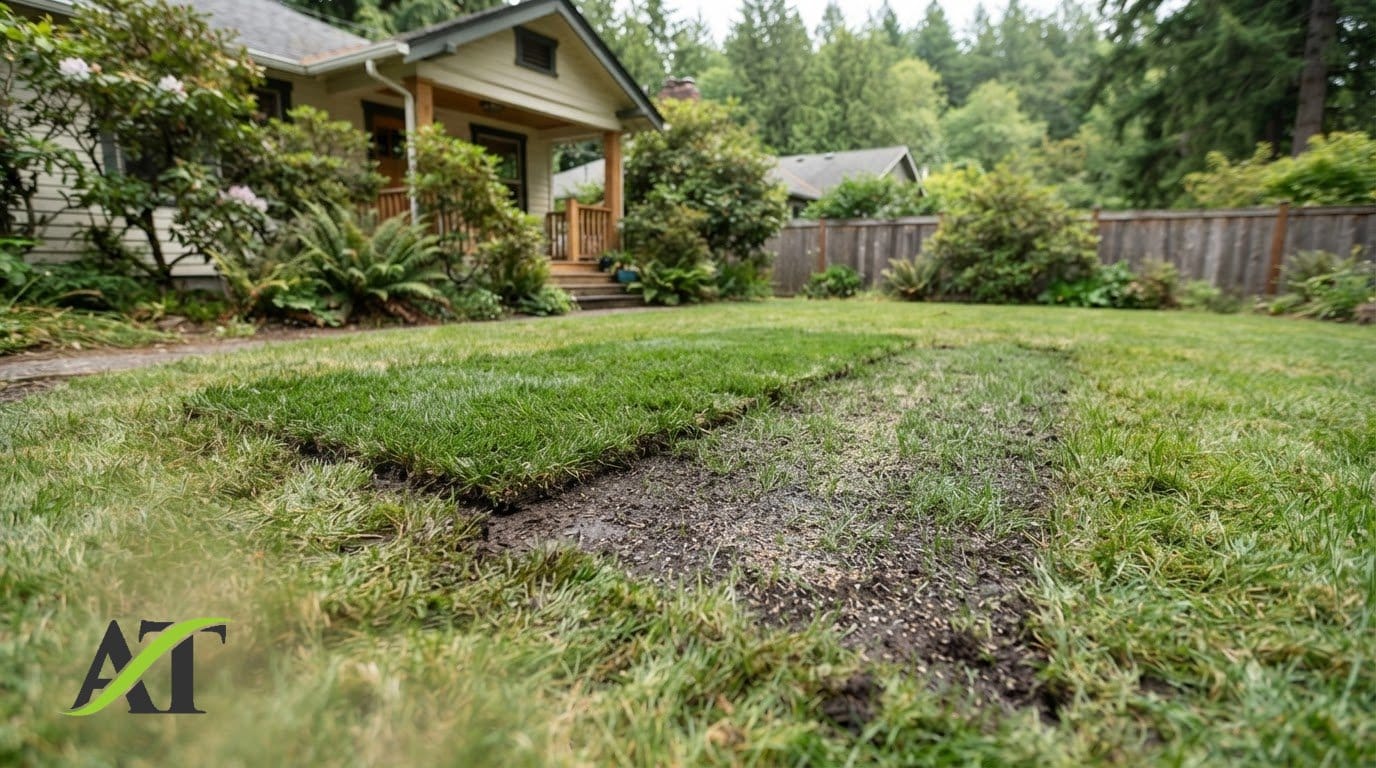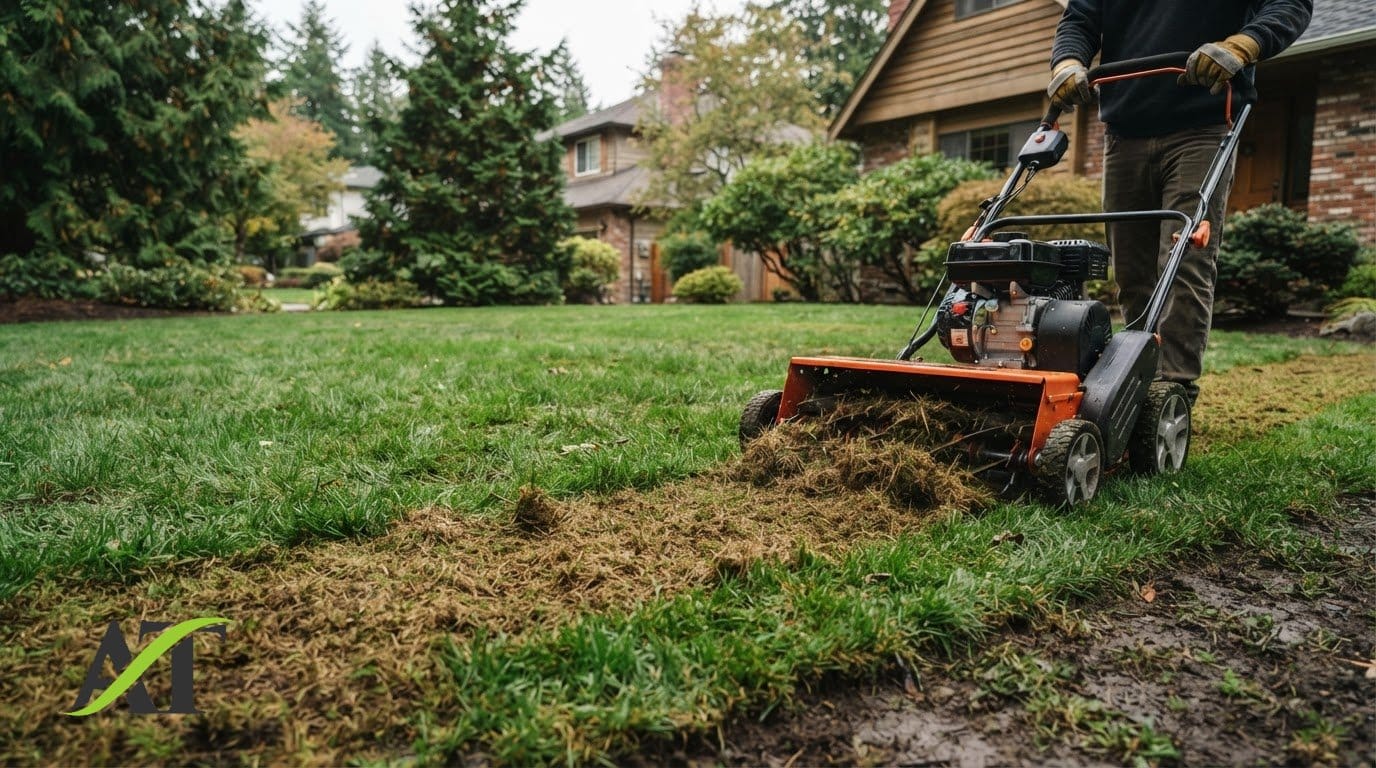
Trying to decide when to power rake your Seattle lawn? The calendar matters, but your lawn’s condition matters more. Fall, especially September and October, is generally the better window for more intensive Power Raking (Dethatching), while spring is better suited to lighter work when the grass is actively growing.
It’s reasonable to worry about damaging healthy turf. Power raking can stress grass, so it shouldn’t be automatic or used to tackle every thin, spongy, or mossy patch. This guide explains how to recognize when thatch may call for removal, when weather or turf condition makes it wiser to wait, and why moss or poor growth may point to a different problem. You’ll also learn how Seattle’s spring and fall seasons affect timing and how to choose a proportionate next step, whether that’s focused Power Raking (Dethatching) or a Lawn Tune-Up, which does not include power raking.
Key Takeaways
- For Seattle lawns, fall is generally suited to more intensive Power Raking (Dethatching), while spring is better for lighter work.
- Check whether the problem is actually thatch before treating; moss, shade, compaction, irrigation, and drainage concerns can call for a different next step.
- Postpone Power Raking (Dethatching) if the lawn is stressed or the soil is too wet to support treatment.
- Match the work to the need: Power Raking (Dethatching) is focused thatch removal, while a Lawn Tune-Up includes Core Aeration, Overseeding, and Fertilizing.
When to Power Rake a Lawn in Seattle: Start With the Seasonal Window
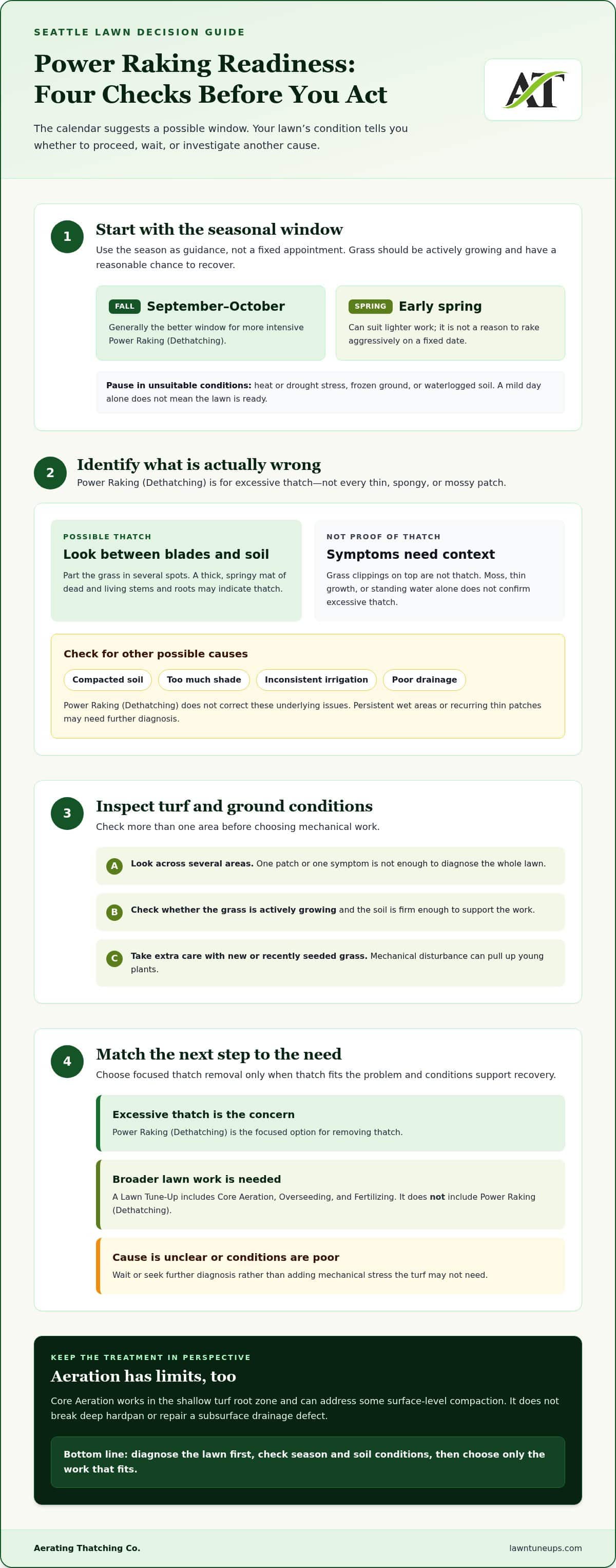
If you’re deciding when to power rake your Seattle lawn, use the season as a guide, not a guarantee. September and October are generally suitable for more intensive Power Raking (Dethatching), while early spring can suit lighter work. In either period, the grass should be actively growing and have a reasonable chance to recover. Local weather can shift the window from year to year, so check conditions as well as the calendar.
Why a calendar date is only a starting point
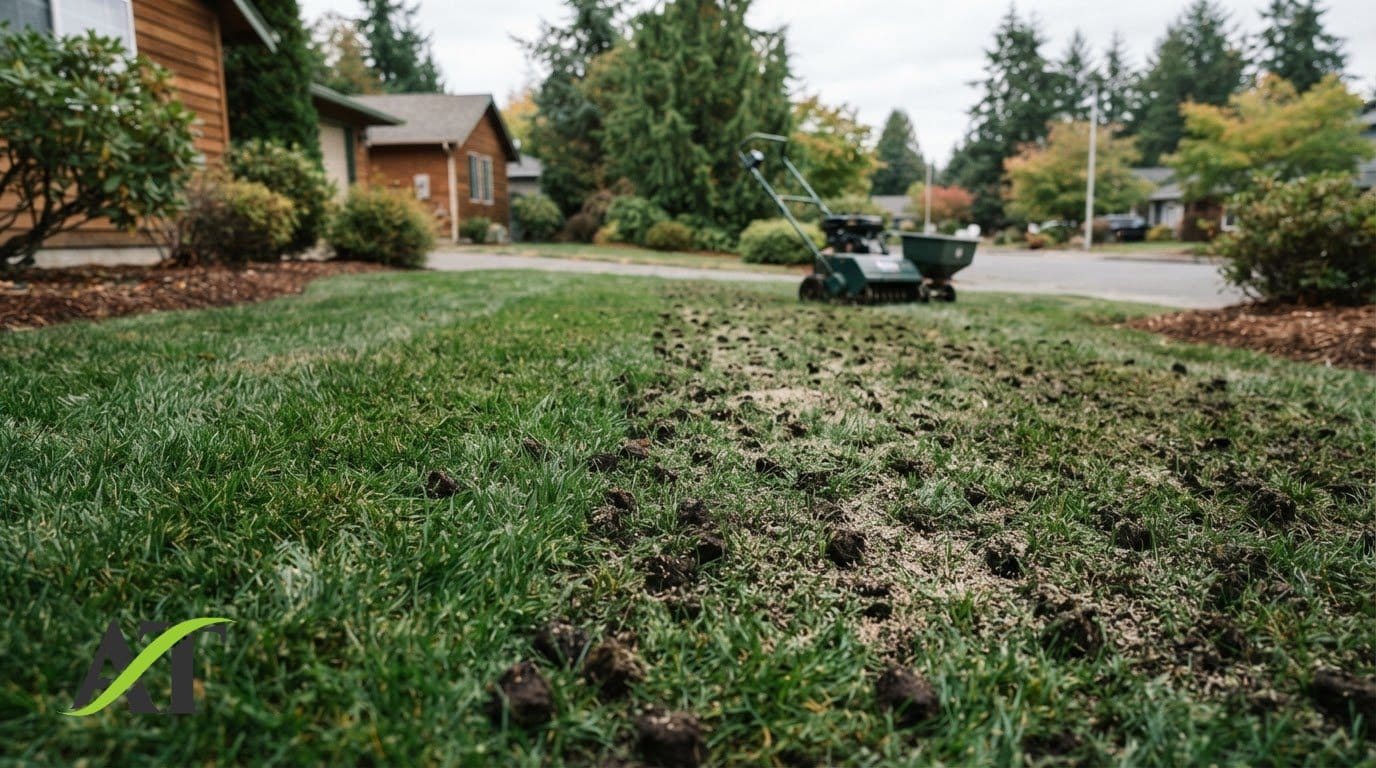
Power Raking (Dethatching) mechanically pulls thatch from the turf. Grass that’s growing can recover better from this disturbance than turf already struggling through stress. Fall is generally favored for more intensive work in Western Washington; spring is a lighter option, not a reason to rake aggressively on a fixed date. Consider the lawn’s current condition before choosing a treatment. The Power Raking (Dethatching) service is a focused option when thatch removal fits the problem you see.
When Seattle-area homeowners should postpone
Wait if the lawn is struggling through heat or drought, the ground is frozen, or the soil is waterlogged. Stressed turf has less capacity to recover, and saturated ground may be damaged by mechanical work. A mild day alone doesn’t make conditions suitable. Look at the grass and soil, too, and postpone if either is under strain.
Seattle timing in brief: Consider active growth, with fall as the general window for more intensive dethatching and spring for lighter work. Postpone during heat stress, drought, frozen ground, or saturated conditions. Treat these seasonal windows as guidance, not fixed dates for every lawn.
Is Your Seattle Lawn Ready for Power Raking, or Could It Cause Stress?
Power Raking (Dethatching) is a mechanical treatment for removing an excessive thatch layer, not a routine annual task. The machine works through the turf, so an unnecessary or overly aggressive pass can tear healthy grass and leave the lawn with more recovery work. For homeowners asking when to power rake lawn Seattle, start by identifying what’s actually causing the problem.
What lawn conditions suggest thatch may be the issue?
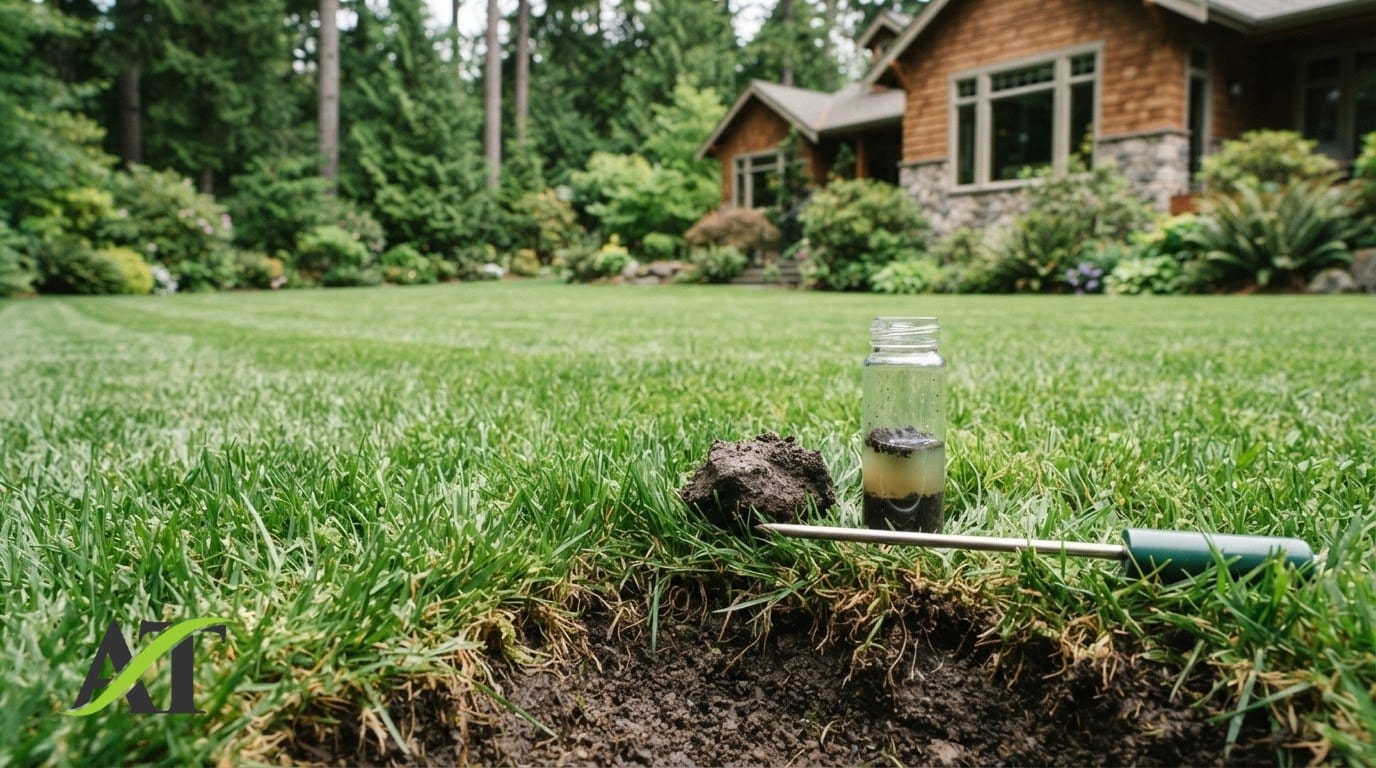
Part the grass in a few spots and look at the layer between the green blades and the soil. Thatch is a mat of dead and living stems and roots. If this layer feels thick and springy, thatch may be contributing to a spongy feel underfoot. Grass clippings sitting on top are not the same thing, and one patch or one symptom isn’t enough to diagnose the whole lawn.
A thick, spongy layer between grass and soil may point to thatch; moss, thin growth, or standing water alone calls for a closer look. Moss can appear where conditions favor it, but it doesn’t prove thatch is excessive. Thin turf can also have several causes.
When power raking is not the right fix
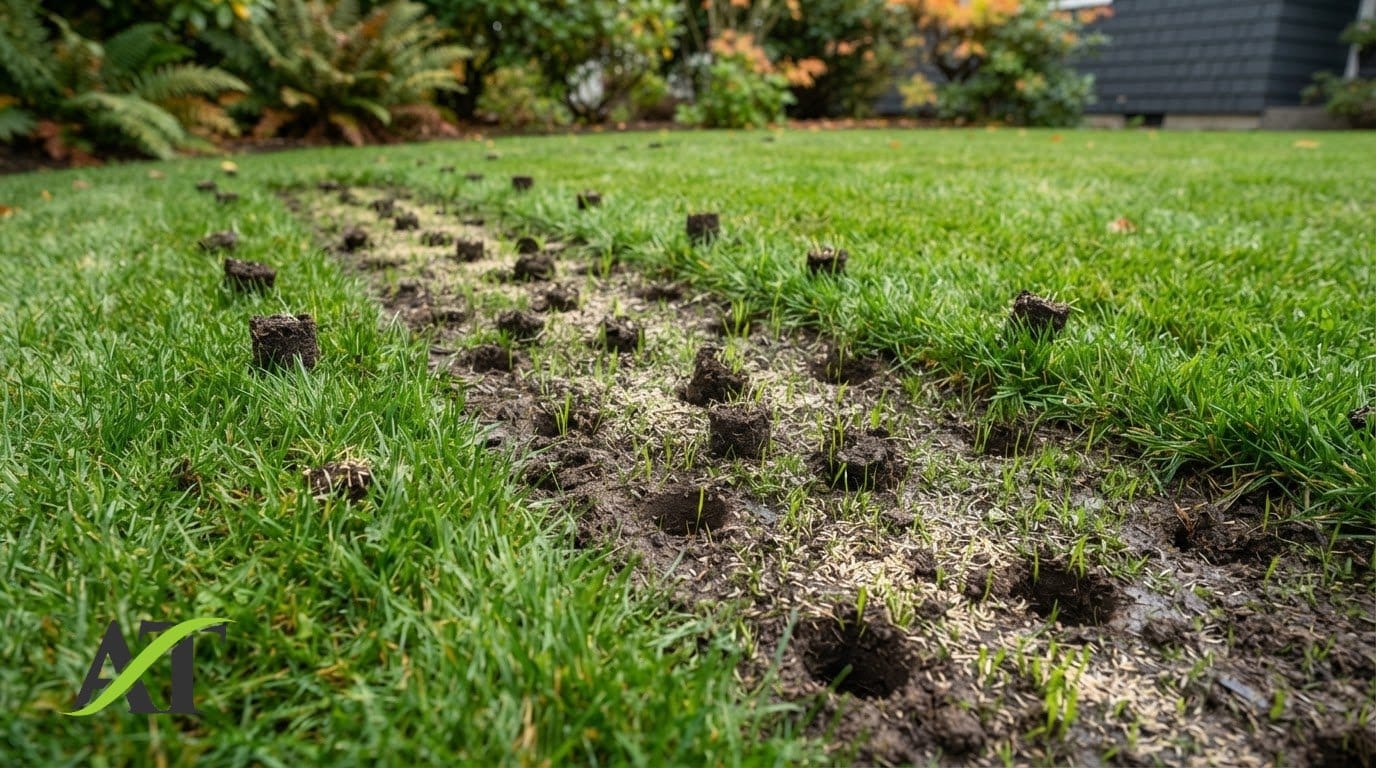
Compacted soil, too much shade, inconsistent irrigation, or poor drainage can all contribute to weak growth. Power Raking (Dethatching) doesn’t correct those underlying issues. Core Aeration works in the shallow turf root zone and can address some surface-level compaction, but it won’t break deep hardpan or repair a subsurface drainage defect. Persistent wet areas or recurring thin patches may need further diagnosis before choosing a treatment.
Look at more than one area before deciding. If the cause remains unclear, Ask Stewart About Your Lawn so the next step can match the condition, rather than adding mechanical stress the turf doesn’t need.
How to Decide Whether to Power Rake Now or Wait
A calendar can point to a possible window, but a quick readiness check helps decide whether to act or wait. If you’re asking when to power rake lawn Seattle lawns, work through these steps before scheduling:
- Identify the concern. Is there a thick thatch layer, or could moss, shade, compaction, or drainage explain the lawn’s condition?
- Inspect the turf. Look across several areas. New or recently seeded grass needs particular care because mechanical disturbance can pull up young plants.
- Assess growth and ground conditions. Is the grass actively growing, and is the soil firm enough to support the work? Postpone if turf is stressed or soil is saturated.
- Choose the next step. Proceed only if thatch removal fits the problem and conditions support recovery. If the cause of poor growth is unclear, pause for further diagnosis.
For broader seasonal planning, the Seattle Lawn Care Calendar can help you consider the timing of lawn work alongside current conditions. Treat it as a guide, not a substitute for checking your own turf and weather.
Plan power raking around overseeding
If overseeding is part of the plan, sequence the work to suit the lawn’s condition and the restoration steps being considered. Power Raking (Dethatching) can disturb existing grass and newly sown seed, so don’t assume it belongs before every seeding project. Recently seeded areas may need a different approach than established turf. When treatments are combined, follow the relevant lawn after-care guidance for recovery.
If you’re unsure whether thatch removal is appropriate, describe what you’re seeing and get guidance on a proportionate next step.
Seattle Power Raking: Choose the Service That Matches Your Lawn
The right service depends on what your lawn needs, not on how many treatments can be combined. If assessment points to excess thatch and the rest of the lawn doesn’t need renovation, Power Raking (Dethatching) can be the focused option. Learn what this treatment involves on the Seattle Power Raking (Dethatching) page.
Power raking alone or as part of broader work?
A Lawn Tune-Up includes Core Aeration, Overseeding, and Fertilizing. It does not include Power Raking (Dethatching). Choose it when those three steps fit the lawn’s needs, without assuming that a thin lawn also needs dethatching.
The Full Meal Deal combines Power Raking (Dethatching), Core Aeration, Overseeding, and Fertilizing. It may suit a lawn that needs all four components, but it isn’t automatically the right choice just because power raking is under consideration. Match the scope to the assessment. If the main concern is compaction, poor drainage, or shade, adding dethatching alone won’t address the underlying cause.
After the timing decision
Even with suitable timing, the lawn’s condition and weather influence recovery. After mechanical work, follow care instructions for the treatments performed, especially if dethatching is combined with Core Aeration or Overseeding. Avoid assuming that every lawn will recover on the same schedule. Keep the plan proportionate, and base the next step on what the turf actually needs.
In short, when to power rake lawn Seattle homeowners should decide by combining seasonal readiness with a clear reason to remove thatch. If there’s no evidence that dethatching is needed, a different treatment or further diagnosis may be more appropriate.
Ask Stewart About Your Lawn
Make Your Next Lawn-Care Step Deliberate
Your question, when to power rake lawn Seattle, has no fixed-date answer. Before scheduling work, note what you see across the lawn and what you want to improve. That gives you a clearer starting point for deciding whether a focused treatment makes sense or whether the cause needs more diagnosis.
Power Raking (Dethatching) is a distinct service, not an automatic step for every lawn. Aerating Thatching Co. is an owner-operated local business founded in 2004, with thatch removal among its lawn restoration services. The aim is to match the work to the condition, not disturb healthy turf without a reason.
If you’re still unsure, share what you’ve noticed and take the next step with a clear, practical plan. Your lawn doesn’t need every treatment. It needs the right one at the right time.
Ask Stewart About Your Lawn
Frequently Asked Questions
What month is best to power rake a lawn in Seattle?
No single month suits every lawn. Across North Seattle, Shoreline, Edmonds, Lynnwood, Mill Creek, Bothell, Kenmore, Lake Forest Park, Mountlake Terrace, Snohomish, Everett, Brier, Woodway, Green Lake, Ballard, and Greenwood, September and October are common windows for more intensive dethatching; early spring may suit lighter work. The answer to when to power rake lawn Seattle homeowners need depends on active growth, turf condition, and current weather, not a booking date alone.
Is fall or spring better for power raking a Seattle lawn?
Fall is generally the better choice for more intensive Power Raking (Dethatching), while spring can work for lighter removal. Neither season is always right: the grass needs to be growing, and the lawn should be in suitable condition to recover. If spring growth is slow or fall weather leaves the soil saturated, wait for better conditions rather than treating the season as a guarantee.
Can you power rake a lawn when the soil is wet?
A little surface moisture isn’t the same as saturated ground, but postpone if the soil is waterlogged. Wet soil may not support equipment well, and treatment can damage turf or leave tracks. Check whether the ground feels firm underfoot and whether it’s holding water. There’s no need to use a set moisture threshold; if the lawn is soft and saturated, wait until conditions improve.
How often should a lawn be power raked?
Power rake only when the lawn has enough thatch to warrant removal, not automatically every year. A thin or stressed lawn may have another cause, and unnecessary mechanical treatment can add strain. Inspect the layer between the grass and soil in several spots; don’t judge frequency by how much debris collects after mowing. Reassess as the lawn changes rather than following a fixed annual schedule.
Should you power rake before overseeding?
Only if the lawn’s condition indicates that thatch removal is needed. Power Raking (Dethatching) can disturb existing turf, so it shouldn’t be added to every Overseeding plan by default. Assess established grass first, then coordinate the timing and order of treatments. Avoid power raking newly seeded areas, since mechanical disturbance can pull up young grass. Recovery also depends on weather and aftercare.
Article by
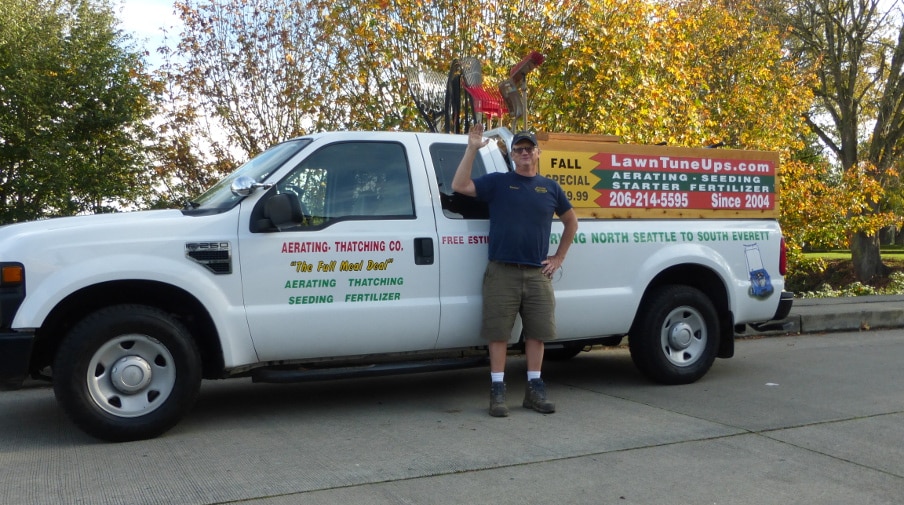
Stewart Armour
Stewart Armour is the owner of Aerating Thatching Co., an owner-operated Seattle-area lawn restoration business established in 2004. He helps homeowners understand Core Aeration, Power Raking (Dethatching), Overseeding, soil conditions, and the aftercare needed for stronger lawns. His background includes turf management study, advanced golf course turf training, and continuing education through Wilbur-Ellis University, State Turf Facilities, Soil First Academy, and Golf Course Applied Turf Physiology. Stewart has personally evaluated thousands of residential lawns throughout the Seattle area and focuses on recommending the work that fits each lawn’s condition.