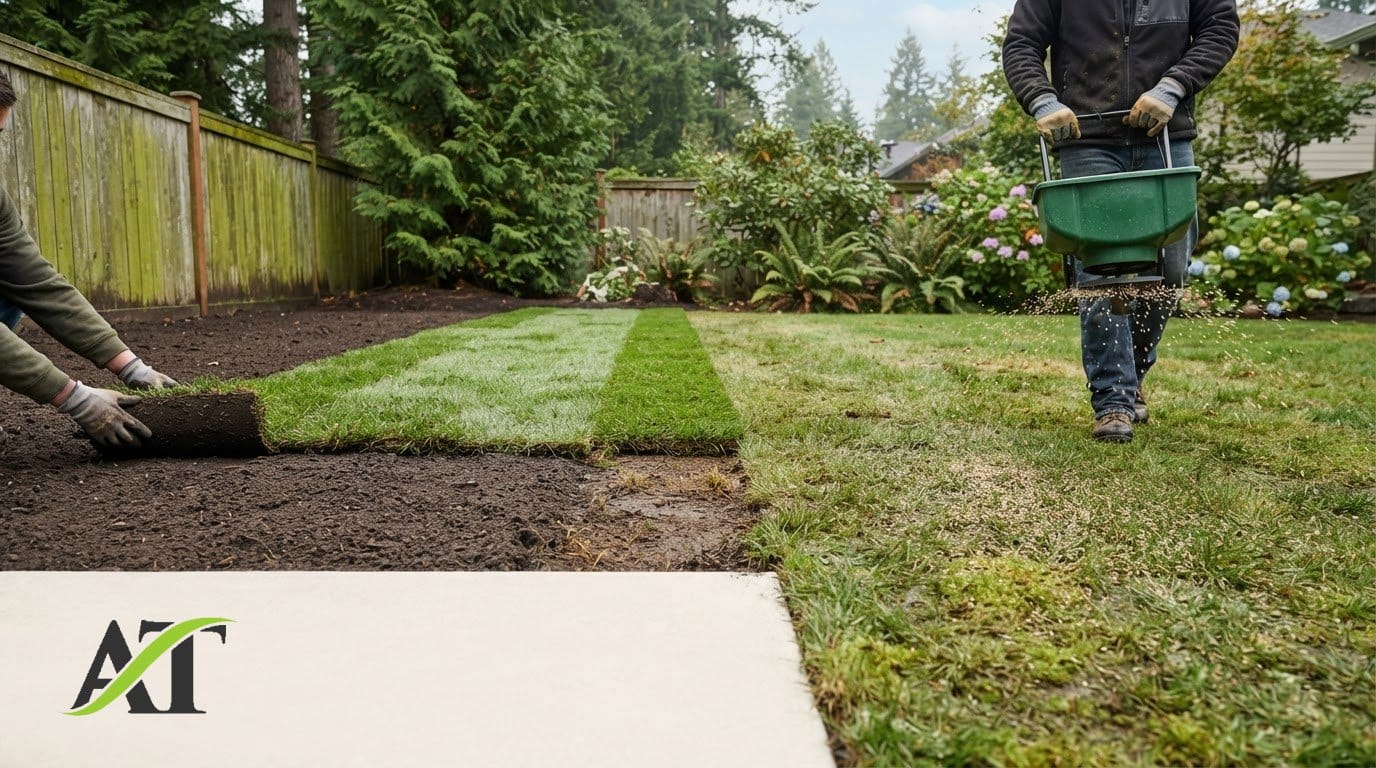
What if the reason your grass looks tired isn’t a lack of fertilizer, but a soil structure that’s essentially suffocating your roots? You’ve likely noticed how Lynnwood’s heavy clay soil turns into a hard brick in the summer and a mossy sponge during our long rainy seasons. It’s a common sight in Snohomish County; thinning turf that just won’t respond to standard store-bought treatments. A professional Lawn Tune Up Lynnwood offers the mechanical reset your property needs to break through that compaction. By focusing on the soil-to-seed relationship, you can transform a struggling yard into a thick, resilient landscape that handles the PNW weather with ease.
We know you want a lawn that stays green without constant guesswork. This article explores how combining Core Aeration, Overseeding, and Fertilizing creates the ideal environment for new growth. We’ll discuss why timing matters, specifically focusing on soil temperatures between 55°F and 75°F to ensure the best possible results for cool-season grasses. You’ll learn how these professional methods improve drainage, crowd out persistent moss, and build a lawn that survives the summer heat. It’s about working with the local environment to get the results you expect from a seasoned contractor who knows the dirt under your feet.
Key Takeaways
- A professional Lawn Tune Up Lynnwood uses Core Aeration, Overseeding, and Fertilizing to restore air and water flow to compacted clay soil.
- Successful germination depends on soil temperatures between 55°F and 75°F, a critical window that ensures new grass establishes reliably in our PNW climate.
- Determine if your yard needs the standard three-part restoration or the Full Meal Deal, which includes Power Raking (Dethatching) for heavily mossy turf.
- Learn the essential steps for preparing your property, such as marking sprinkler heads and underground lines to ensure a safe and efficient mechanical service.
What is a Lawn Tune-Up and Why Does Lynnwood Need It?
A professional Lawn Tune-Up is a specific, three-part restoration process consisting of Core Aeration, Overseeding, and Fertilizing. This service provides the professional Lawn Tune Up Lynnwood residents need to move past the cycle of weekly mowing and start fixing the foundation. In Lynnwood, standard maintenance often masks deep-seated issues like soil compaction and heavy thatch. Switching to a restoration mindset means you’re addressing why the grass is thin rather than just cutting what’s left. This approach aligns with Organic lawn management by building soil health to support a self-sustaining ecosystem.
The Lynnwood Soil Challenge: Compaction and Moss
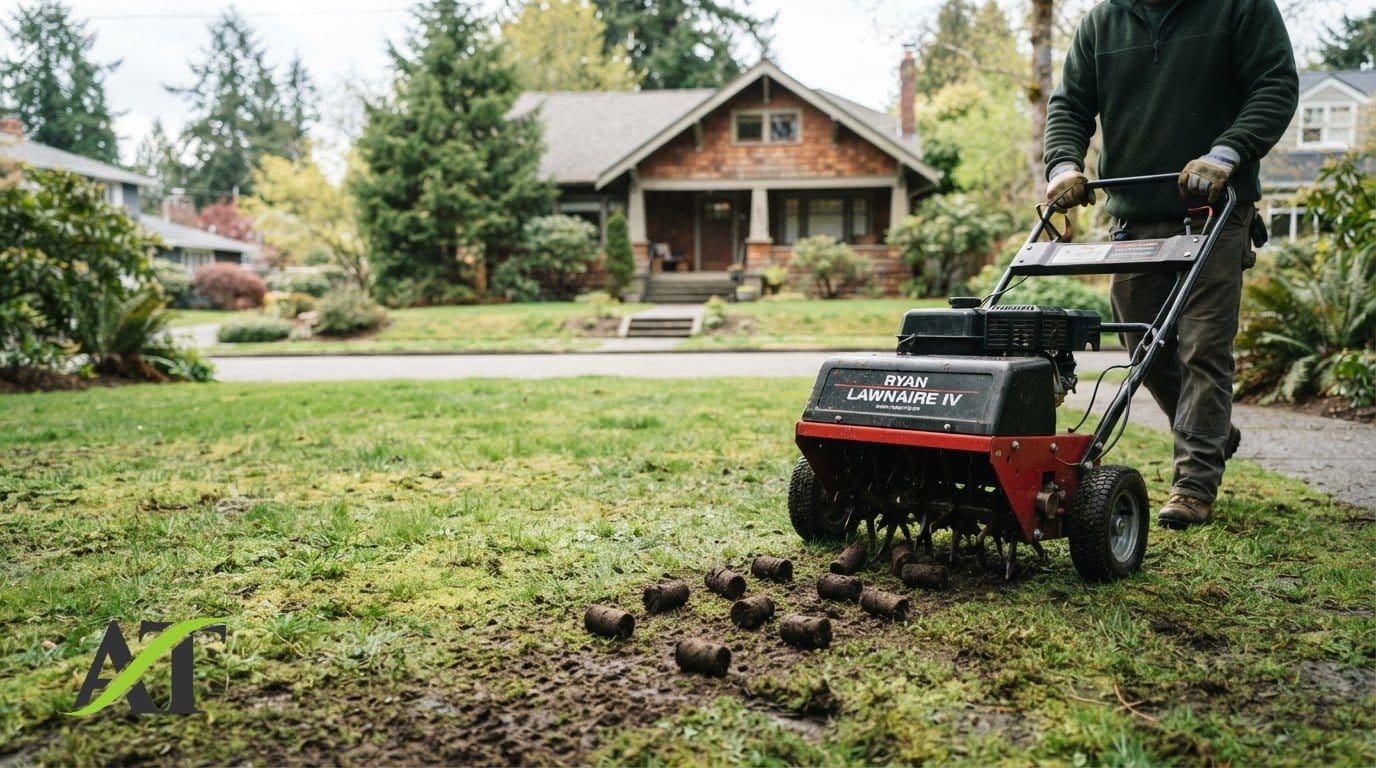
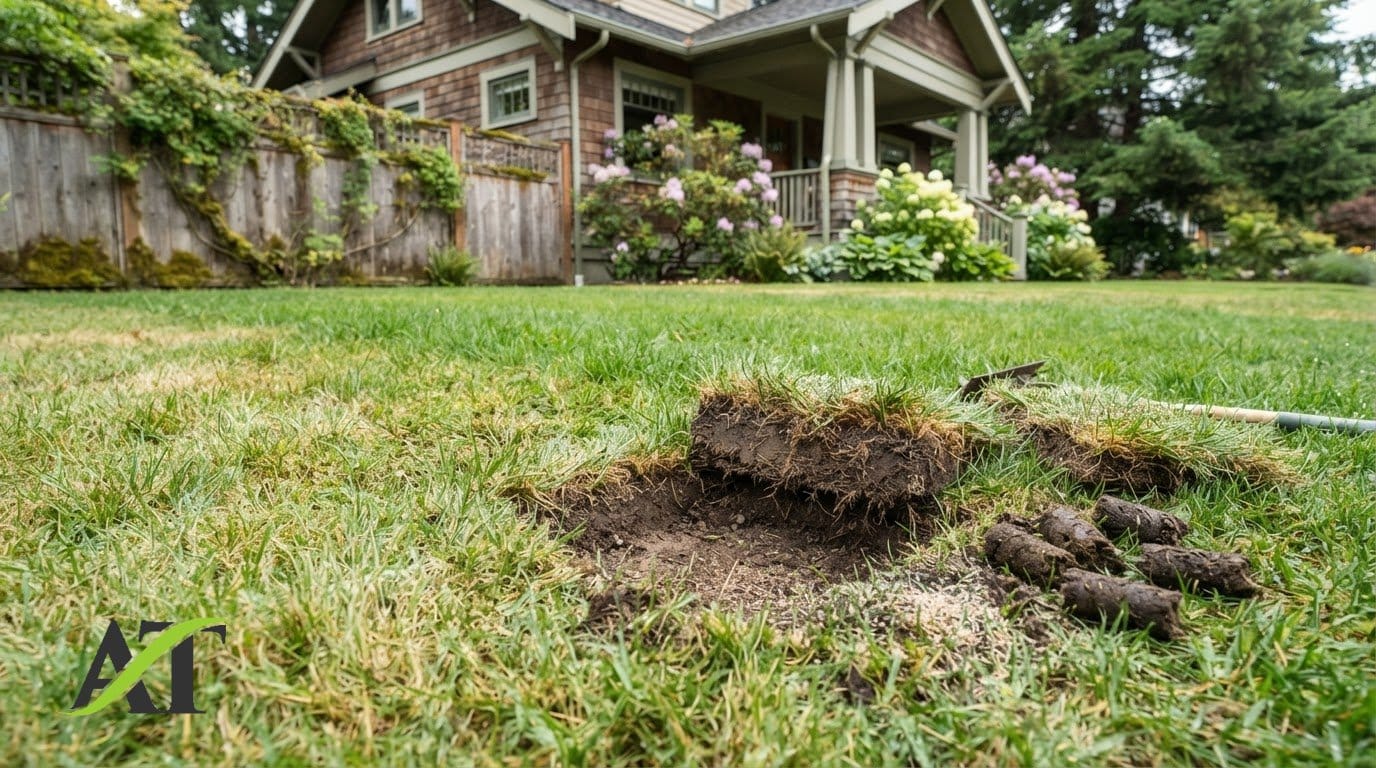
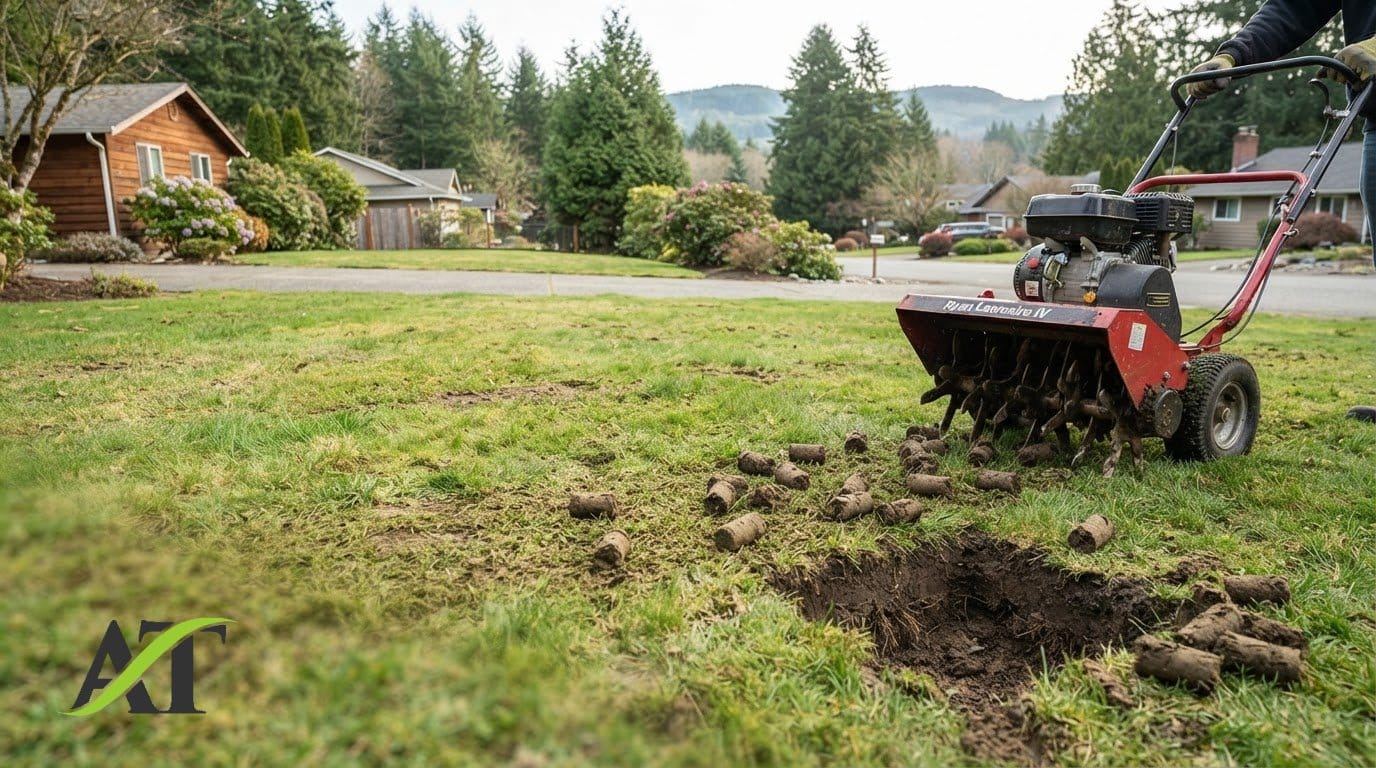
Snohomish County is known for dense, clay-heavy soil. This geography creates a literal barrier for your lawn. When soil is compacted, air, water, and nutrients can’t reach the root zone. Core Aeration is the primary tool for breaking up that clay brick. By pulling physical plugs of soil from the ground, we allow the roots to breathe and create the perfect pockets for new seed to take hold. Without this mechanical intervention, your lawn will likely remain a mossy sponge every winter.
When to Move Beyond Basic Mowing
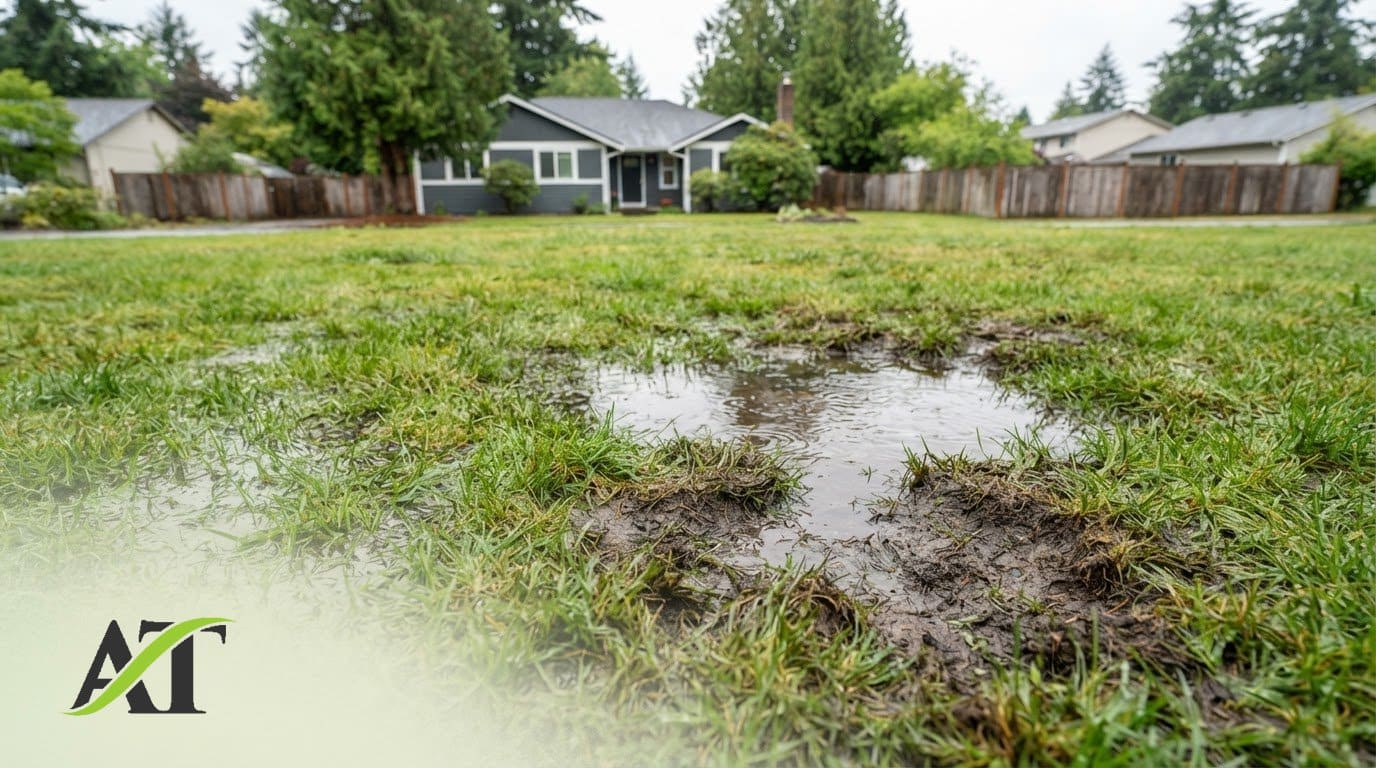
Mowing only manages the height of your grass; it doesn’t fix thinning patches or standing water. If your yard feels spongy underfoot or looks pale despite regular watering, it’s time for a professional reset. Investing in a restorative service is more cost-effective than buying retail seed every spring. Store-bought seed often fails because it sits on top of compacted soil without proper contact. A professional restoration ensures the seed-to-soil contact necessary for growth. Signs you need a Lawn Tune Up Lynnwood include:
- Water pooling on the surface after light rain.
- Persistent moss growth in shaded areas.
- Grass that stays brown or thin despite fertilizing.
The Science of Overseeding: Soil Temperature and Germination
Many homeowners check the air temperature before they start yard work. That’s a mistake when it comes to growing grass. Soil temperature is the real driver of success. For the cool-season turfgrasses common in our region, the optimal soil temperature range is 55°F–75°F (13°C–24°C). Within this window, the biological processes inside the seed trigger quickly and efficiently. If you seed when the ground is colder or hotter, germination will be slower, less consistent, and produce less reliable establishment.
Cool-Season Grass Requirements in the PNW
Lynnwood’s climate means our best windows for restoration are usually late spring or early fall. Homeowners often see a warm afternoon in March and think it’s time to seed, but the ground is still too cold. During a professional Lawn Tune Up Lynnwood, we time our services to match these biological needs. Moisture and local weather patterns also dictate the outcome. Consistent dampness is necessary, but it can’t replace the fundamental need for warm soil. We wait for the right conditions to ensure your investment has the best chance to take hold.
Maximizing Results Without Guarantees
We don’t offer absolute germination guarantees because too many variables are out of our hands. Success depends on moisture, soil condition, and weather. However, we maximize your results through mechanical precision. The Core Aeration step is non-negotiable for success in our local clay. It provides the essential seed-to-soil contact that simple broadcast seeding misses. By dropping seed into aeration holes, we protect it from drying out and give it a direct path to the root zone. We follow this with Organic Fertilizing to provide a nutrient-rich base for the young plants. If you want to see how this fits your yard, you can request a quote for our next available window.
Lawn Tune-Up vs. The Full Meal Deal: Which Do You Need?
Choosing the right service depends on the current state of your turf. A standard Lawn Tune-Up consists of Core Aeration, Overseeding, and Fertilizing. This is the baseline for a professional Lawn Tune Up Lynnwood. It works well for lawns that are thin but relatively clean. However, if your yard has a thick layer of dead organic matter, the seed won’t reach the soil. The Full Meal Deal is our more intensive option. It includes four specific components: Power Raking (Dethatching), Core Aeration, Overseeding, and Fertilizing.
Identifying Thatch Buildup in Lynnwood
You can identify a thatch problem with a simple sponge test. Walk across your lawn. If it feels bouncy or soft, you likely have excessive buildup. Thatch is a layer of living and dead stems and roots between the green grass and the soil surface. When this layer exceeds half an inch, it blocks water and nutrients. For yards that haven’t seen professional care in years, Power Raking (Dethatching) is the essential first step to clear this debris so the rest of the restoration can work.
The Full Meal Deal Advantage
The Full Meal Deal provides the ultimate clean slate for a Lawn Tune Up Lynnwood restoration. We start with Power Raking (Dethatching) to mechanically pull up the debris that chokes your grass. Once the surface is clear, we follow with Core Aeration to open the soil and Overseeding to introduce fresh, resilient turf. We finish with Fertilizing to jumpstart growth. This combination of mechanical cleaning and biological feeding creates the maximum possible density. It’s the most thorough way to handle a neglected PNW yard.

Planning Your Professional Service in Lynnwood
Preparation is the key to a smooth service day. Before we arrive for your Lawn Tune Up Lynnwood, please mark your sprinkler heads and underground lines. We use professional Core Aeration equipment that pulls deep plugs from the soil. Any hidden obstacles like valve boxes, shallow lighting wires, or invisible dog fences can be damaged if they aren’t flagged. Our booking process is built around the biology of your grass. We prioritize scheduling when soil temperatures hit that 55°F to 75°F sweet spot. This focus on local conditions helps us deliver the results you expect from a professional contractor.
Local Service Areas and Scheduling
We serve Lynnwood, Edmonds, and Mountlake Terrace with a focus on restorative outcomes. Our peak seasons in the spring and fall are busy because local homeowners know timing is everything. Scheduling early ensures you don’t miss the window when the ground is most receptive to new growth. Once we complete the mechanical work, you’ll need to follow a strict watering schedule. Keeping the soil damp is essential for the new Overseeding to take hold. You should also avoid mowing the area until the new blades are well-established.
Next Steps for a Greener Lawn
Every yard is different. We provide estimates based on your specific square footage to ensure you get exactly what you need. Whether you require a standard Lawn Tune-Up or the more intensive Full Meal Deal, we’re here to help you navigate the process. Getting an accurate estimate is the first step toward a thick, healthy landscape that can handle the PNW weather. You can Request a Quote for your Lynnwood Lawn Tune-Up today to get on our calendar for the upcoming season.
Transform Your Lynnwood Landscape
Improving your lawn in Snohomish County requires more than just water and luck. It takes a mechanical reset of the soil structure. By choosing a professional Lawn Tune Up Lynnwood, you address the root causes of thinning grass and moss growth. Success starts with the ground; specifically hitting that 55°F to 75°F soil temperature window for optimal germination. Whether you choose the standard Lawn Tune-Up or the intensive Full Meal Deal, the goal is a thick and self-sustaining landscape that can handle the local weather.
We’ve been serving the Lynnwood community since 2004. Our team uses specialized equipment for Core Aeration and Power Raking (Dethatching) to ensure every job is done right. We take pride in our organic-first fertilizing approach because it builds long-term soil health. You don’t have to settle for a struggling yard when local expertise and physical labor are available to do the heavy lifting for you.
Let’s get your property back on track for a greener, healthier season.
Frequently Asked Questions
What is the difference between a Lawn Tune-Up and a Full Meal Deal?
A Lawn Tune-Up is our signature three-part restoration consisting of Core Aeration, Overseeding, and Fertilizing. It’s designed to fix thin turf and soil compaction. The Full Meal Deal is a more intensive four-step process that adds Power Raking (Dethatching) as the first step. We recommend the Full Meal Deal for lawns with heavy moss or organic buildup that would otherwise block new seeds from reaching the soil surface.
Is Power Raking (Dethatching) included in the basic Lawn Tune-Up?
No, Power Raking (Dethatching) isn’t included in the base service. The standard package focuses strictly on Core Aeration, Overseeding, and Fertilizing. If your yard feels spongy or has a thick layer of dead grass stems, you should consider adding Power Raking as an optional upgrade. This mechanical cleaning ensures the ground is clear and ready for the aeration and seeding steps that follow to be effective.
What is the best soil temperature for grass seed germination in Lynnwood?
Optimal germination for cool-season grasses occurs when soil temperatures are between 55°F and 75°F. It’s a common mistake to rely on air temperature, but the ground warms up much slower in the spring. While seed can grow outside this range, the results are typically slower and less consistent. We time every Lawn Tune Up Lynnwood service to hit this specific biological window for the most reliable establishment possible.
Do you offer a guarantee that my new grass seed will grow?
We don’t offer absolute germination guarantees because success depends on factors we can’t control. Moisture, weather patterns, and your follow-up care all play a role in the final outcome. However, we maximize your chances by using professional equipment to ensure proper seed-to-soil contact. Our mechanical process places the seed exactly where it needs to be, but your commitment to a consistent watering schedule is the final piece of the restoration puzzle.
How long should I wait to mow my lawn after a Lawn Tune-Up?
You should wait until the new grass reaches at least three inches in height before your first mow. This usually takes three to four weeks, depending on the soil temperature and how much water the yard receives. When you finally mow, keep your blade at a high setting to avoid stressing the young plants. Avoiding heavy traffic during this time gives the new Overseeding enough time to develop a strong root system.
Article by
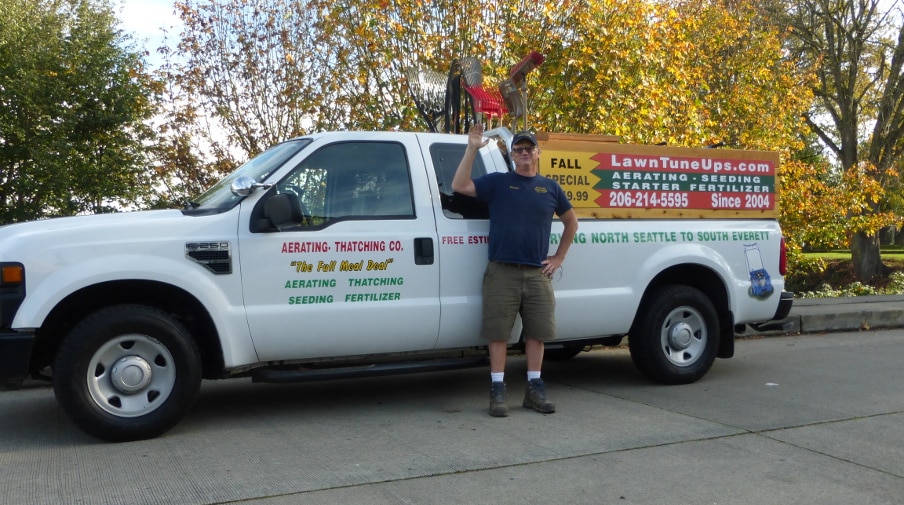
Stewart Armour
Stewart Armour is an independent lawn restoration expert, educator, and owner of Aerating Thatching Co., serving the greater Seattle area since 2004. With more than two decades of professional experience restoring Western Washington lawns, Stewart specializes in diagnosing lawn problems, improving soil health, and developing long-term lawn renovation strategies. His education includes turf management studies, advanced golf course turf training, and continuing education through Wilbur-Ellis University, State Turf Facilities, Soil First Academy, and Golf Course Applied Turf Physiology. Every article published on LawnTuneUps.com is grounded in practical field experience, current turf science, and a commitment to helping homeowners understand the why behind every recommendation—not just what to do.
Stewart has personally evaluated thousands of residential lawns throughout the Seattle area and remains committed to helping homeowners understand the science behind growing healthier, more resilient lawns.