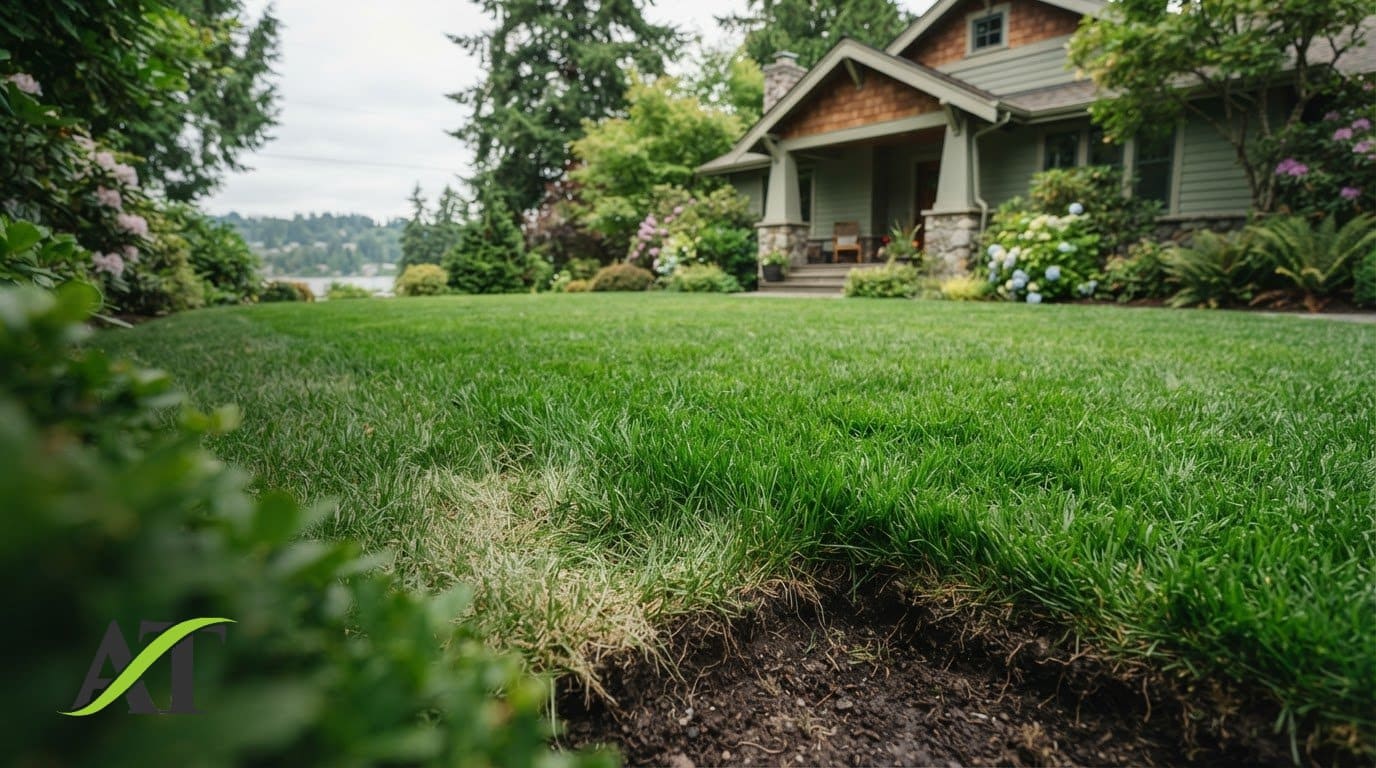
Why does your lawn struggle with moss and thin patches while others stay lush and green through the PNW summer? Most Edmonds homeowners feel frustrated when hard clay soil and thick thatch choke out new growth. It’s a common local battle. You’ve likely wondered if you just need a quick fix or a total overhaul. This guide reveals the exact strategy for successful overseeding Edmonds lawns in 2026.
You’ll discover why soil temperature, within the 55°F to 75°F range, is the only metric that truly matters for consistent germination. We’ll break down the specific components of a standard Lawn Tune-Up, which includes Core Aeration, Overseeding, and Fertilizing. You’ll also see how the Full Meal Deal provides a deeper restoration with Power Raking (Dethatching), Core Aeration, Overseeding, and Fertilizing. By the end, you’ll know exactly how to prep your soil for a lawn that is better equipped to survive the heat and look professional year-round.
Key Takeaways
- Learn why tracking soil temperature between 55°F and 75°F is the only reliable way to time your overseeding Edmonds project for maximum growth.
- Identify whether your turf needs a standard Lawn Tune-Up or the intensive Full Meal Deal, which includes Power Raking (Dethatching) for heavy thatch removal.
- Discover why seed blends featuring Perennial Ryegrass and Fine Fescue are specifically suited for the unique climate and tree-lined streets of the Edmonds area.
- Understand the critical role of post-care maintenance and how a professional Lime Application can help balance soil pH for more resilient grass.
Understanding Overseeding in Edmonds: Timing and Soil Science
Overseeding is the professional practice of sowing new grass seed into your existing turf to increase density. The goal is to fill in thin patches and create a lawn that naturally resists moss and weeds. Successful overseeding Edmonds properties isn’t about the date on the calendar. It’s about the conditions beneath the surface. We focus on mechanical restoration that works with local biology rather than fighting against it.
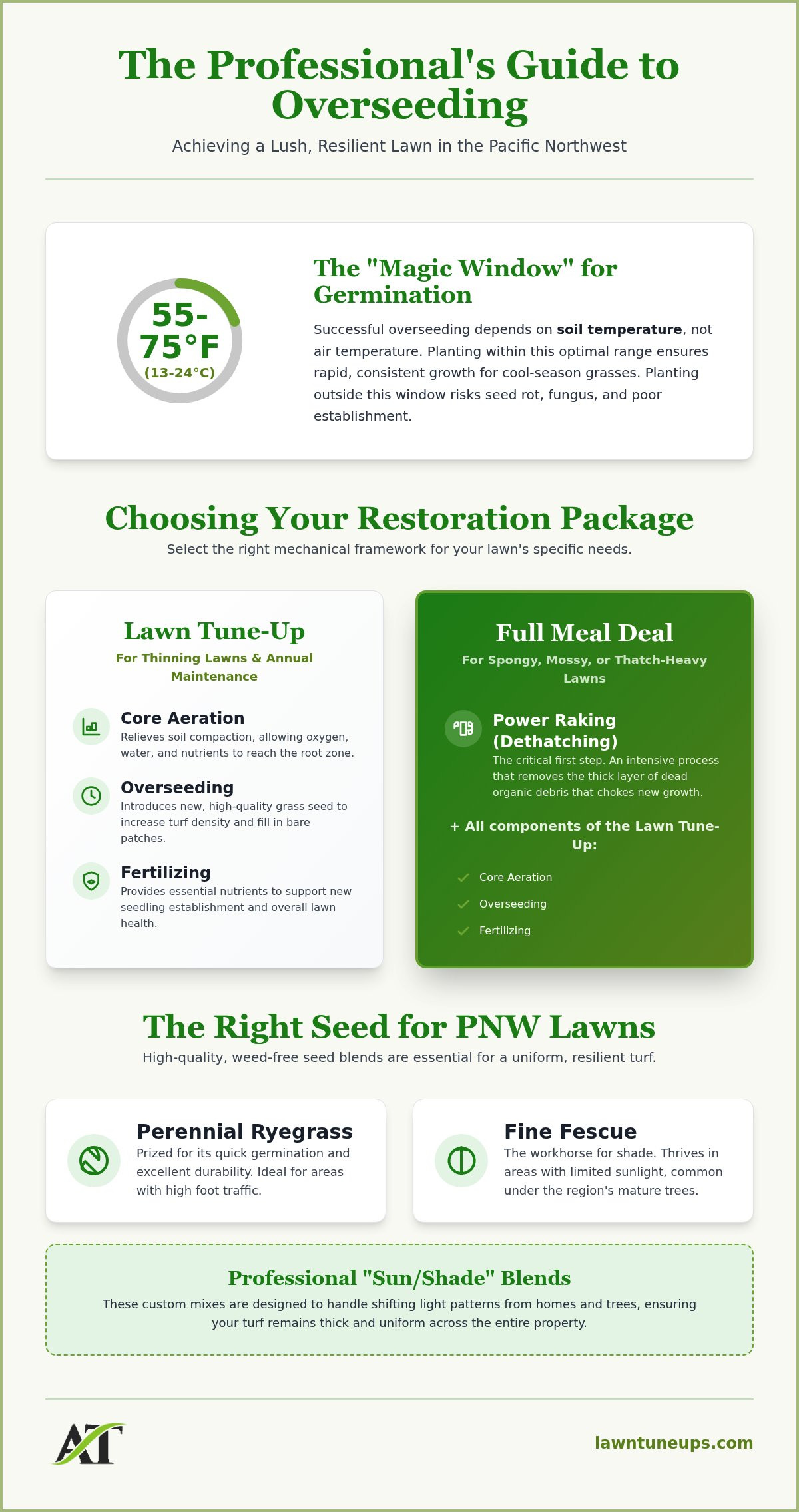
Soil temperature, not air temperature, is the primary driver of seed germination. For the cool-season grasses we use in the Pacific Northwest, the critical range is 55°F-75°F (13°C-24°C). If you plant when the ground is too cold, the seed sits idle. This makes it a target for rot, fungus, or hungry birds. While germination can happen at lower temperatures, it’s slower and far less consistent. Following proven overseeding tips focused on soil temperature rather than air temperature is the most reliable way to time your project for consistent results.
In Edmonds, microclimates matter. Homes in the Edmonds Bowl or near the waterfront often have cooler soil due to the Puget Sound’s influence. Inland areas like Westgate or Firdale Village usually warm up faster. You can’t rely on what a neighbor three miles away is doing when planning for overseeding Edmonds lawns. You have to know what your specific soil is doing before you commit to a project.
Why 55°F-75°F is the “Magic Window” for PNW Lawns
Germination outside this window is unpredictable. Early spring seeding in damp, cold soil is especially risky. The ground is often saturated, and cold temperatures prevent the seed from establishing a strong root system quickly. We don’t offer absolute guarantees on germination because results depend on moisture, weather, and soil conditions. However, planting within this 55°F-75°F range provides the most reliable establishment for a thick, healthy lawn.
Comparing Restoration Packages: Lawn Tune-Up vs. Full Meal Deal
Successful overseeding Edmonds lawns requires more than just scattering seed across the yard. It requires a mechanical framework that ensures seed-to-soil contact. We’ve developed two specific restoration packages to handle the different soil and turf conditions found across the Pacific Northwest, focusing on what your grass actually needs to thrive. If you’re weighing your options and wondering whether lawn restoration with overseeding is a better investment than laying new sod, understanding these packages will help clarify the right path for your property.
When to Choose the Lawn Tune-Up
The Lawn Tune-Up is our essential standard for yearly turf health. It consists exclusively of Core Aeration, Overseeding, and Fertilizing. This package is ideal for aging lawns that are thinning but don’t have a major thatch problem. Core Aeration is the heavy lifter here. It pulls physical plugs of soil from the earth to relieve compaction. This allows oxygen, water, and nutrients to reach the root zone. Our Lawn Tune-Up Seattle services are designed to combat the wear and tear typical of busy residential neighborhoods, providing a much-needed boost to established grass.
The Full Meal Deal: Total Lawn Rebirth
If your grass feels spongy underfoot or looks choked by a brown layer of debris, you need the Full Meal Deal. This comprehensive package includes four specific components: Power Raking (Dethatching), Core Aeration, Overseeding, and Fertilizing. Power Raking (Dethatching) is the critical differentiator. It’s an intensive mechanical process that clears out the thick organic debris that blocks new growth. Without it, your seed gets trapped in the thatch and dies before it can sprout. This “total rebirth” approach is the best way to handle overseeding Edmonds lawns that have been neglected or overtaken by moss. You can request a quote online to see which restoration level fits your property’s needs.
Top Grass Seed Blends for Edmonds and Ballard Lawns
Choosing the right seed is as critical as the mechanical work itself. In our region, Perennial Ryegrass and Fine Fescue are the dominant choices for overseeding Edmonds properties. Ryegrass is prized for its quick germination and its ability to withstand heavy foot traffic. Fine Fescue is the essential workhorse for our many shaded residential lots. We prioritize high-quality, weed-free seed to ensure you aren’t accidentally planting future headaches. Integrating Organic Fertilizing into the service provides the necessary nutrients for these new seedlings to establish quickly and stay resilient against the elements.
Many residential streets in Edmonds share the same landscape characteristics as the tree-lined blocks of Ballard. This is why “Ballard Sun/Shade” blends are a staple in our overseeding Edmonds projects. These mixes are specifically designed to handle the shifting light patterns caused by mature maples and evergreens. They ensure your turf remains uniform and thick, even as it transitions from full afternoon sun to deep morning shade.
Best Blends for Coastal Edmonds Properties
Properties near the water face unique challenges like salt spray and higher moisture levels. For these areas, we select moisture-resistant cool-season varieties that won’t succumb to rot in our damp winters. In the Edmonds Bowl, where large trees create significant canopy cover, Fine Fescue thrives. It maintains a deep green color with less sunlight than traditional grasses.
Seed-to-Soil Contact: The Secret to Germination
Throwing seed on top of thick thatch or moss is a waste of time and resources. The seed must touch the dirt to grow. This is why Core Aeration is a non-negotiable part of our restoration process. By pulling physical plugs from the earth, we create thousands of small “pockets.” These holes catch the seed, protect it from the elements, and provide direct access to the soil. It’s the most effective way to ensure your investment actually takes root. For a deeper look at how mechanical preparation transforms results, these expert overseeding tips for a thicker, greener lawn walk through exactly why seed-to-soil contact is the foundation of every successful restoration.
Maximizing Your Investment: Post-Overseeding Care
Once the mechanical work of overseeding Edmonds lawns is complete, the responsibility shifts to consistent maintenance. The first few weeks are critical for establishment. You must keep the top inch of soil consistently moist to prevent the new seeds from drying out. If the seed dries after it has begun to germinate, it will die. We provide the professional foundation, but your watering schedule determines the final result.
Watering for Success in the Snohomish Climate
In the Snohomish County climate, a “little and often” approach works best. You aren’t trying to soak the ground deep like you would for established grass. Instead, aim for light, frequent misting two to three times a day. This keeps the surface damp without washing away the seed. You’ll know your soil has reached the 55°F threshold for active growth when you see consistent sprout activity, usually within 10 to 21 days depending on the variety.
Long-term Maintenance and Soil Health
Soil chemistry is often the hidden reason why lawns fail. Our region’s acidic soil can prevent grass from absorbing nutrients. This is why Professional Lime Application in Edmonds is frequently recommended as an add-on to our restoration packages. Balancing the pH ensures the Organic Fertilizing we provide actually reaches the roots.
Avoid the temptation to mow too early. You must wait until the new grass reaches at least 3 inches in height. Mowing sooner can pull young seedlings right out of the ground. Remember that we don’t offer absolute guarantees on germination. Success depends on weather, moisture levels, and your soil’s specific condition. To get started on a plan tailored to your property, you can request a quote today.
Start Your Edmonds Lawn Transformation Today
Achieving a thick, resilient lawn in the Pacific Northwest requires moving beyond basic maintenance. Success starts with timing your overseeding Edmonds project when soil temperatures sit between 55°F and 75°F. Whether your yard needs the standard Lawn Tune-Up or the intensive debris removal of the Full Meal Deal, the focus must remain on mechanical soil health. We use specialized equipment to ensure every seed has the contact it needs to thrive. Our owner-operated team has been refining these restorative processes since 2004, combining local expertise with organic soil health solutions. We understand the specific clay soils and microclimates of the Edmonds Bowl and surrounding neighborhoods.
Your property deserves more than just a green surface; it needs a deep, healthy root system that can survive the summer heat. We’re here to provide the manual skill and specialized tools to make that happen. A lush, thick lawn is within reach when you follow a proven restoration plan. Let’s build a thicker, healthier turf together.
Frequently Asked Questions
What is the best month for overseeding in Edmonds?
The best time for overseeding Edmonds lawns is determined by soil temperature rather than a specific month. You need a consistent soil temperature range of 55°F-75°F (13°C-24°C) for successful germination. In our local climate, this window typically opens in late spring or early fall. Planting outside this range leads to slower, less reliable establishment and increases the risk of seed rot in cold, damp ground.
What is the difference between a Lawn Tune-Up and a Full Meal Deal?
A Lawn Tune-Up consists of Core Aeration, Overseeding, and Fertilizing. It’s designed for routine maintenance of healthy turf. The Full Meal Deal is more intensive, including Power Raking (Dethatching), Core Aeration, Overseeding, and Fertilizing. The primary difference is the addition of Power Raking (Dethatching), which is essential for removing heavy organic debris. This mechanical step ensures the seed actually reaches the soil instead of getting trapped in a layer of thatch.
How long does it take for grass seed to germinate in the Pacific Northwest?
In the Pacific Northwest, most cool-season grass seeds germinate within 10 to 21 days. However, this timeline is heavily influenced by moisture, seed-to-soil contact, and weather conditions. Because these environmental factors vary so much in Edmonds, we don’t offer absolute guarantees on germination speed. To see the best results, you must maintain a soil temperature between 55°F and 75°F while keeping the ground consistently moist throughout the first three weeks.
Can I overseed my lawn if I have a lot of moss?
You can definitely overseed a mossy lawn, but the moss must be mechanically managed first. Moss thrives in compacted, acidic soil where grass is thin. For these conditions, we recommend the Full Meal Deal to remove debris and open the soil. We also suggest a professional Lime Application as an optional add-on. This helps balance the soil pH, creating an environment where new grass can compete more effectively against future moss growth.
Do I need to water my lawn every day after overseeding?
Yes, you must water daily during the initial establishment phase of overseeding Edmonds turf. The goal is to keep the top inch of soil consistently moist without creating puddles. We recommend a “little and often” approach, watering two to three times a day for short durations. Once the new grass reaches about 3 inches in height, you can transition back to a deeper, less frequent watering schedule that supports deep root growth.
Article by
Stewart Armour
Stewart Armour is an independent lawn restoration expert, educator, and owner of Aerating Thatching Co., serving the greater Seattle area since 2004. With more than two decades of professional experience restoring Western Washington lawns, Stewart specializes in diagnosing lawn problems, improving soil health, and developing long-term lawn renovation strategies. His education includes turf management studies, advanced golf course turf training, and continuing education through Wilbur-Ellis University, State Turf Facilities, Soil First Academy, and Golf Course Applied Turf Physiology. Every article published on LawnTuneUps.com is grounded in practical field experience, current turf science, and a commitment to helping homeowners understand the why behind every recommendation—not just what to do.
Stewart has personally evaluated thousands of residential lawns throughout the Seattle area and remains committed to helping homeowners understand the science behind growing healthier, more resilient lawns.