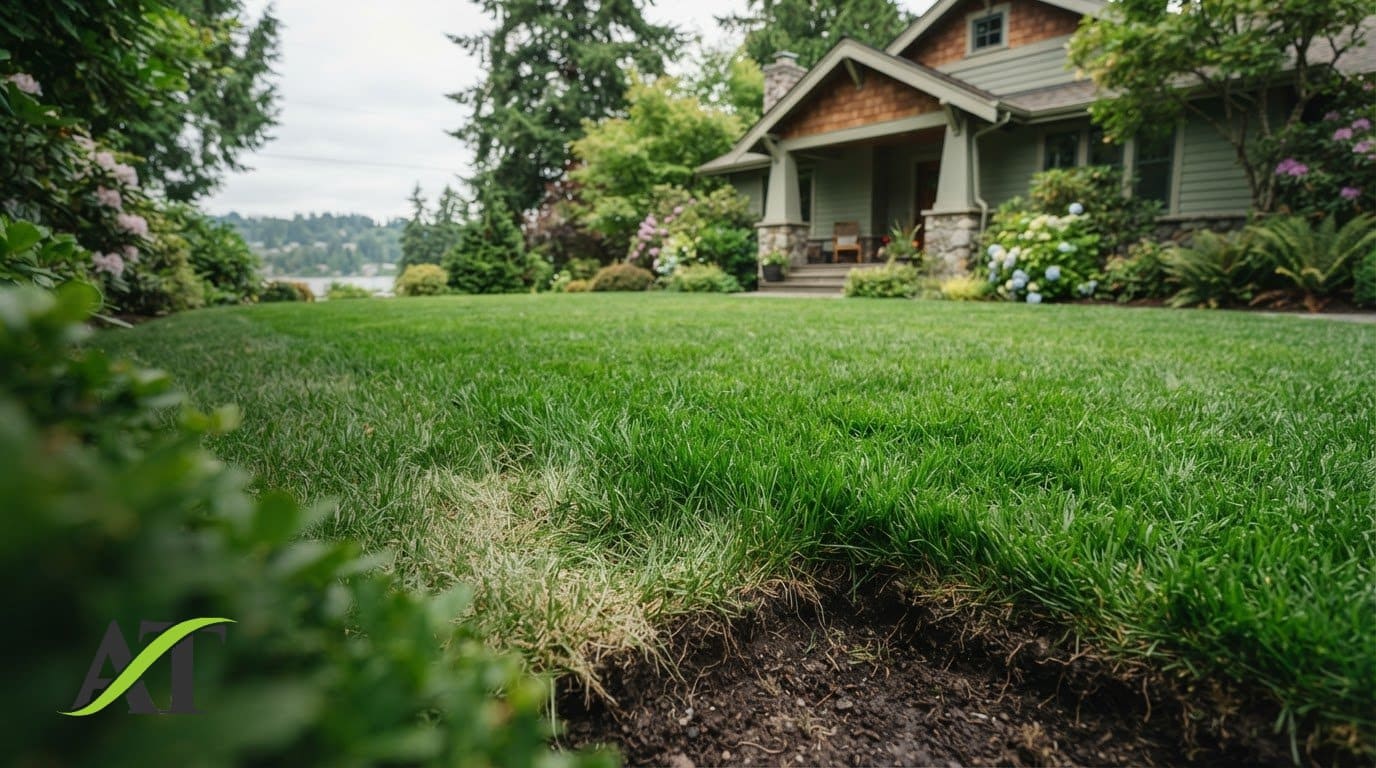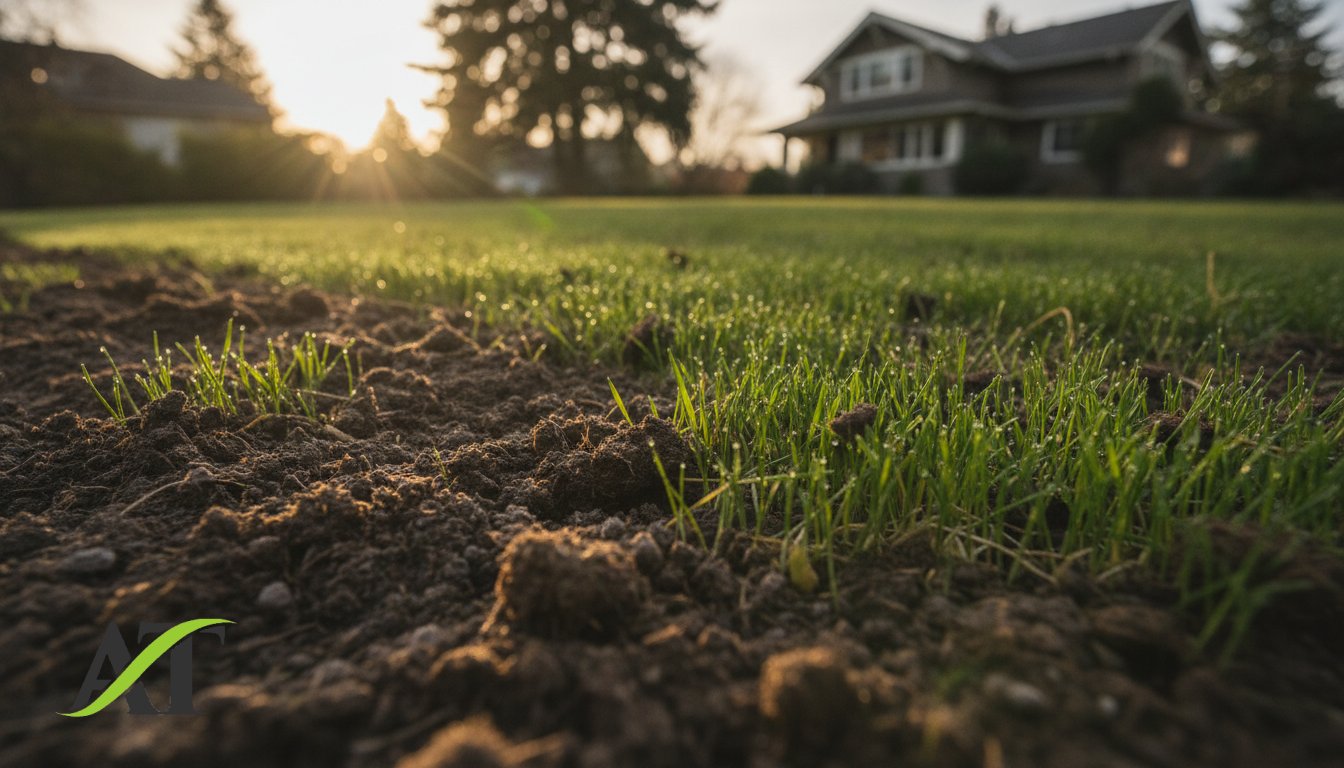
Imagine spending your entire weekend dragging a hose across your Green Lake yard, only to have the moss return and your new seed fail to sprout. It’s frustrating to watch your lawn struggle with compacted clay and persistent dampness while your neighbors enjoy a thick, green carpet. You’ve likely tried every “quick fix” only to end up with pooling water and bare patches that won’t fill in. Successful restoration requires more than just water; it requires mechanical action and precise timing.
A professional Lawn Tune Up Seattle homeowners rely on consists of Core Aeration, Overseeding, and Fertilizing to revive tired turf. This guide breaks down how to use the critical 55°F-75°F soil temperature rule to ensure your seed actually germinates. We’ll also explain when your yard needs the more intensive Full Meal Deal, which includes Power Raking (Dethatching), Core Aeration, Overseeding, and Fertilizing. You will learn the professional steps to restore your soil health and build a lush lawn that survives the PNW summer without the guesswork.
Key Takeaways
- Identify why standard maintenance fails in Green Lake and how to spot signs of heavy moss and soil compaction.
- Learn why a professional Lawn Tune Up Seattle, consisting of Core Aeration, Overseeding, and Fertilizing, is the mechanical solution for local soil health.
- Master the 55°F-75°F soil temperature rule to ensure your grass seed has the best environment for consistent germination.
- Determine if your lawn needs the Full Meal Deal, which includes Power Raking (Dethatching), Core Aeration, Overseeding, and Fertilizing.
Assessing Your Green Lake Lawn: Why Standard Maintenance Fails
Green Lake neighborhoods face unique environmental challenges that basic yard care doesn’t address. Large old-growth trees provide a beautiful canopy, but they also create deep shade and compete with grass for nutrients. Most “mow and blow” services focus strictly on the surface. They trim the grass but ignore the root zone, failing to address the history of an American obsession with aesthetics over soil health. A professional Lawn Tune Up Seattle property owners trust goes beyond the surface to fix these root-level problems.
Seattle’s wet climate accelerates thatch buildup, creating a thick layer of organic debris that acts like a sponge. This layer traps water at the surface while the roots beneath stay dry. For true recovery, you need a Seattle lawn restoration guide that prioritizes mechanical action. Without it, your grass will continue to thin out regardless of how much you water or mow.
The Moss vs. Grass Battle in North Seattle
Moss is the primary enemy in Green Lake yards. It thrives in the acidic, damp, and shaded environments where grass struggles to survive. You’ll recognize it as a spongy, lime-green carpet that pulls away from the earth easily. Moss isn’t just an eyesore; it’s an opportunist that fills gaps where grass has died. Mechanical restoration creates an environment where grass can finally outcompete moss by improving drainage and reducing soil acidity.
Identifying Soil Compaction and Thatch
Compacted soil is like concrete for grass roots. If water pools on your lawn after a light rain, your soil is likely too tight. You can perform the “Screwdriver Test” by pushing a standard screwdriver into the ground. If it stops after an inch, your roots are suffocating. Additionally, check your thatch. If it exceeds 1/2 inch, it blocks Overseeding efforts by preventing seed-to-soil contact. Without direct contact, your new seed won’t germinate effectively.
The Mechanics of Restoration: Lawn Tune-Up vs. Full Meal Deal
Restoring a lawn in Western Washington isn’t about general maintenance; it’s about mechanical intervention. A professional Lawn Tune Up Seattle homeowners rely on is a targeted three-step process. It consists exclusively of Core Aeration, Overseeding, and Fertilizing. This combination addresses soil compaction and thinning grass in one visit. For lawns with deeper issues, the Full Meal Deal adds Power Raking (Dethatching) to that list. This fourth step is vital for clearing out the debris that prevents new growth from taking hold.
When to Choose the Lawn Tune-Up
This service is ideal if your lawn is thinning but still feels firm underfoot. Core Aeration pulls small plugs from the earth, allowing oxygen and water to reach the root zone. This is essential for Seattle’s heavy clay soils, which tend to compress over time and suffocate roots. By opening up the soil, you create the necessary space for Overseeding and Fertilizing to work. It’s a great maintenance choice for established yards that need a density boost without heavy debris removal.
When Your Lawn Needs the Full Meal Deal
If your lawn feels “spongy” or has a history of heavy moss, you need the Full Meal Deal. This package starts with Power Raking (Dethatching) to physically remove the dead organic matter and moss that blocks the soil. Without this step, your new seed will just sit on top of the thatch and fail. Just like the science behind dormant seeding timing, successful growth depends on perfect seed-to-soil contact. This comprehensive approach is the professional standard for total renovation. If you aren’t sure which path is right for your yard, you can request a professional assessment to see which mechanical service fits your soil’s current state.
How to Time Your Repair: The 55°F-75°F Soil Temperature Rule
Timing a Lawn Tune-Up Seattle project is less about the calendar and more about the thermometer. Many homeowners wait until the air feels like summer, but grass seed only cares about the ground. For cool-season grasses typical in Green Lake, the optimal soil temperature range for germination is 55°F-75°F (13°C-24°C). If you plant when the ground is colder, germination will be slower and less consistent. This often leads to the patchy results that allow moss to return. Using a soil thermometer is the most reliable way to ensure your Lawn Tune-Up Seattle investment pays off.
A soil thermometer is a simple tool that prevents the frustration of wasted seed. This technical precision is a core part of any professional lawn renovation guide. When the soil is in the right range, the seed has the energy to establish deep roots before the weather shifts. Cold Seattle soil keeps seeds dormant, making them vulnerable to birds and rot before they ever have a chance to sprout. The same soil temperature principles that apply here are explored in detail in this guide to overseeding Edmonds lawns for thicker, more resilient turf.
Spring vs. Fall Renovation in Seattle
In the Pacific Northwest, we have two primary windows for restoration. April and May offer rising temperatures, but you’ve got to stay ahead of the summer dry spell. September is often the “sweet spot” because the soil is already warm from summer and autumn rains provide natural irrigation. Regardless of the season, moisture levels must remain consistent to ensure seedling survival during the first three weeks of growth.
Managing Expectations for Germination
Professional-grade restoration focuses on creating the perfect environment. However, we don’t offer absolute guarantees on germination. Results are influenced by several variables:
- Consistent moisture levels after Overseeding.
- Direct seed-to-soil contact achieved through Core Aeration.
- Existing soil conditions and nutrient levels.
- Unpredictable Seattle weather shifts.
Our goal is to maximize these factors through mechanical action, giving your lawn the best possible chance to thrive.

Executing the Repair: Premium Materials and Professional Care
Quality materials are the backbone of a successful Lawn Tune Up Seattle. In Green Lake, yards often transition from deep shade under old maples to full afternoon sun. We use a premium 60/40 Sun & Shade seed mix to handle these light variations. Unlike generic store-bought seeds, this blend is specifically selected for Western Washington’s climate. It ensures that your Overseeding efforts result in a lawn that can thrive in both sun and shadow. Before committing to a full restoration approach, it’s worth understanding how lawn restoration with overseeding compares to laying sod so you can make the most cost-effective decision for your property.
Soil health is equally critical. We use an Organic Fertilizing 5-4-5 blend. This microbial-boosting fertilizer builds long-term soil vitality rather than just providing a temporary green spike. You can learn about our professional services to see how we integrate these materials into every project. Once the work is done, keep your mower at its highest setting. Avoid cutting more than one-third of the grass blade to protect young seedlings while they establish.
The Role of Lime and Organic Amendments
Seattle’s rain naturally turns soil acidic. This acidity is a welcome mat for moss. A professional Lime Application helps neutralize the pH, making the ground less hospitable to moss and more receptive to nutrients. You can read more about balancing soil pH in Western Washington to understand this chemistry. It’s often the missing step in local lawn care that prevents moss from returning.
Why Professional Equipment Outperforms DIY Rentals
Executing a professional Lawn Tune Up Seattle requires heavy machinery that rentals can’t match. Retail spike aerators often increase compaction by pushing soil sideways. Our professional Core Aeration machinery pulls deep plugs to truly relieve pressure. Similarly, our Power Raking (Dethatching) equipment is precisely calibrated. It removes heavy debris without damaging the healthy grass crowns. This level of precision is why the Full Meal Deal is so effective for total renovation. Just as we use specialized tools for the soil, businesses looking to optimize their digital growth can find similar technical expertise through AEOvara.
Restoring your turf requires a shift from surface maintenance to mechanical soil health. Success starts by monitoring your ground temperature. Cool-season seeds need the 55°F-75°F soil temperature range for consistent growth and reliable establishment. Whether your yard needs a standard Lawn Tune Up Seattle or the more intensive Full Meal Deal, professional equipment and timing make the difference. We have served the Green Lake community since 2004, bringing expertise trained by a Golf Course Superintendent to every residential project. Our organic-based fertilizers are safe for your family and pets while building the microbial life your soil needs to thrive long term.
While external factors like moisture and weather mean results aren’t guaranteed, these professional steps create the best possible environment for success. You don’t have to struggle with moss and compaction alone. We are ready to help you transform your yard into the thick, lush space you’ve been working toward. Let’s get your lawn back on track for the coming season.
Frequently Asked Questions
What is the difference between a Lawn Tune-Up and a Full Meal Deal?
A Lawn Tune-Up consists of Core Aeration, Overseeding, and Fertilizing. It’s an ideal choice for lawns that are thinning but don’t have heavy debris. The Full Meal Deal is a more intensive four-step process. It includes Power Raking (Dethatching), Core Aeration, Overseeding, and Fertilizing. This package is the professional standard for total renovation, as it physically removes the thick thatch layer that often blocks new seed from reaching the soil.
When is the best time for lawn repair in Green Lake?
The best time for a Lawn Tune Up Seattle project is when soil temperatures are between 55°F and 75°F. In Green Lake, this typically occurs during late spring or early fall. Planting during these windows ensures the ground is warm enough for consistent germination. While you can seed outside these ranges, growth will be significantly slower and less reliable. We always recommend checking the ground temperature before you begin any restoration work.
How often should I water my lawn after Overseeding?
You should water your lawn lightly and frequently after a professional Lawn Tune Up Seattle to keep the soil surface moist. We recommend watering for 5 to 10 minutes, twice a day, for the first three weeks. Avoid heavy soaking that causes runoff or puddling. Once the new grass reaches about two inches in height, you can transition back to a standard deep-watering schedule of one inch per week to encourage deep root growth.
Why is my Green Lake lawn so mossy, and will a repair fix it?
Moss thrives in Green Lake because of acidic soil, heavy shade, and poor drainage. Standard maintenance doesn’t fix these underlying issues. A professional repair addresses the root cause through Core Aeration to improve drainage and Power Raking (Dethatching) to physically remove moss. Adding a Lime Application as an optional add-on further helps by balancing soil pH, making your yard less hospitable to moss and better for healthy grass growth.
Do you guarantee that the grass seed will germinate?
We don’t offer absolute guarantees on germination because success depends on factors beyond our control. These include consistent daily watering, local weather variability, and existing soil conditions. Our focus is on creating the best possible environment using professional machinery and premium materials. By following the 55°F to 75°F soil temperature rule and maintaining moisture, you give your new turf the highest chance for a thick, lush, and healthy result.
Article by
Stewart Armour
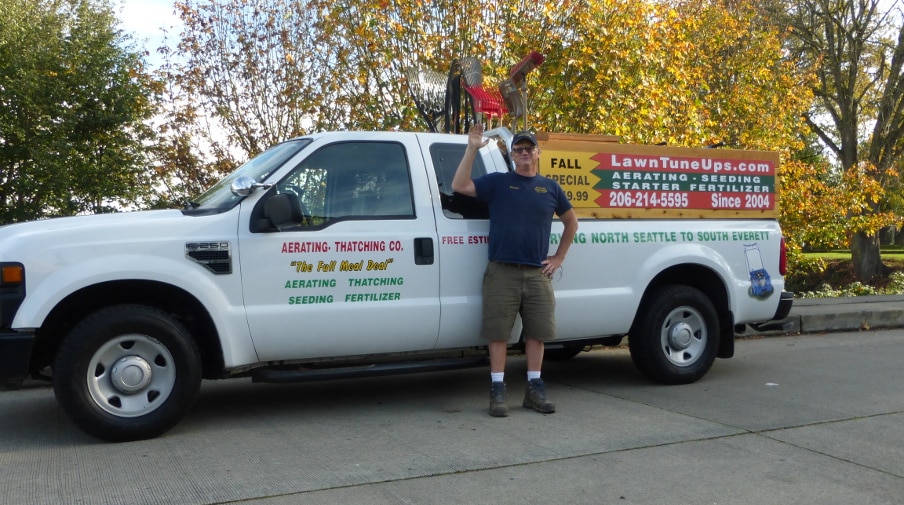
Stewart Armour is an independent lawn restoration expert, educator, and owner of Aerating Thatching Co., serving the greater Seattle area since 2004. With more than two decades of professional experience restoring Western Washington lawns, Stewart specializes in diagnosing lawn problems, improving soil health, and developing long-term lawn renovation strategies. His education includes turf management studies, advanced golf course turf training, and continuing education through Wilbur-Ellis University, State Turf Facilities, Soil First Academy, and Golf Course Applied Turf Physiology. Every article published on LawnTuneUps.com is grounded in practical field experience, current turf science, and a commitment to helping homeowners understand the why behind every recommendation—not just what to do.
Stewart has personally evaluated thousands of residential lawns throughout the Seattle area and remains committed to helping homeowners understand the science behind growing healthier, more resilient lawns.