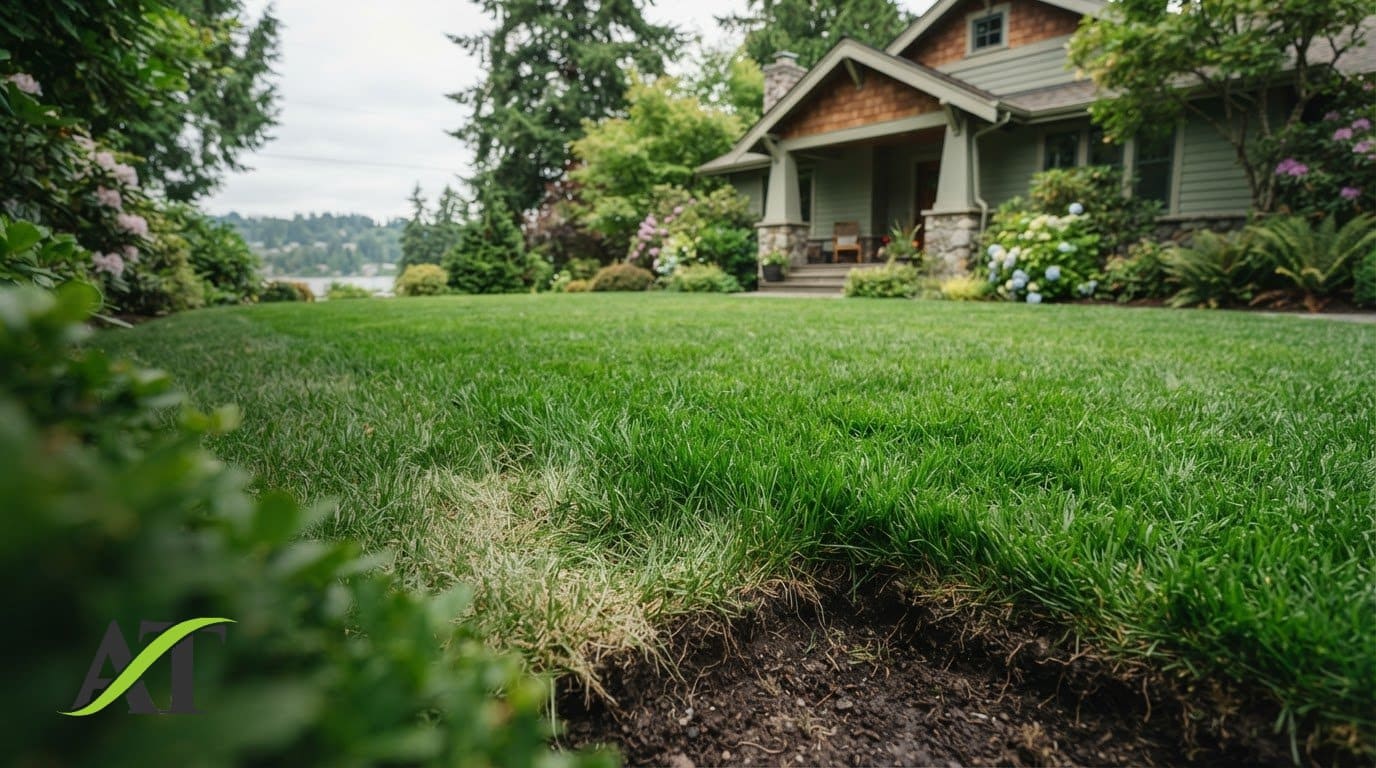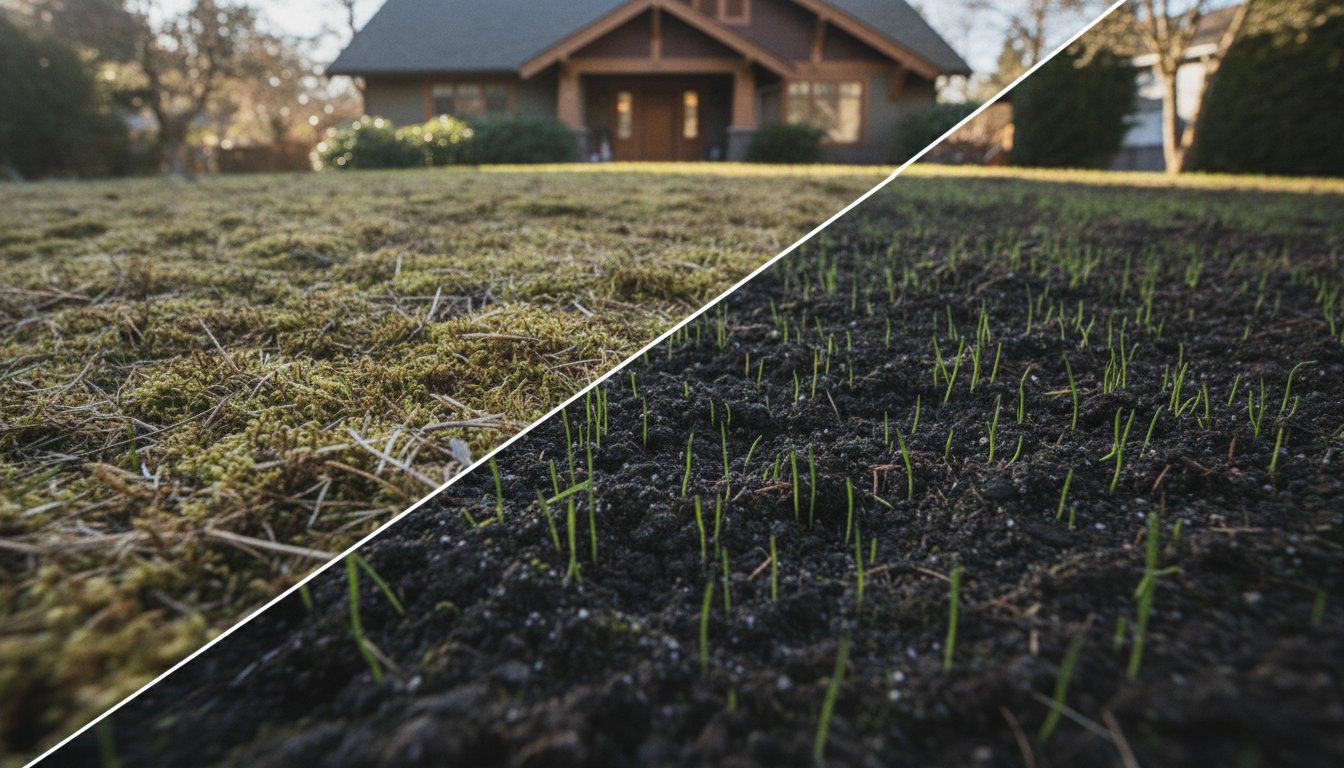
Your Edmonds lawn shouldn’t feel like walking on a wet sponge every time you step outside. If water pools on the surface instead of soaking in, you’re likely dealing with a thick layer of moss and suffocating thatch. Professional power raking Edmonds properties is the most effective way to strip away this debris and let your soil breathe again. It’s a heavy-lifting process that resets your yard. This treatment turns a soft, mossy mess into a firm foundation for new growth.
We understand the frustration of watching moss win the battle against your grass year after year. This article provides the exact steps to remove that barrier using Power Raking (Dethatching) techniques that local experts have used since 2004. You’ll learn how to clear the way for successful Overseeding by ensuring your soil temperatures are in the optimal 55°F–75°F range for germination. We’ll walk through the restoration process and explain how this fits into a Full Meal Deal to give your lawn a complete seasonal recovery.
Key Takeaways
- Identify the “suffocation layer” of moss and thatch that blocks nutrients and water from reaching your soil.
- Learn the professional technique for power raking Edmonds properties, including how to prep your grass before the machine arrives.
- Discover why the Full Meal Deal is the most effective restoration path, grouping Power Raking (Dethatching) with Core Aeration, Overseeding, and Fertilizing.
- Find out how to use soil temperatures between 55°F–75°F to ensure your new grass seed establishes properly for a thicker lawn.
What is Power Raking (Dethatching) and Why Edmonds Lawns Need It?
Power Raking (Dethatching) is a mechanical restoration process that uses a specialized machine equipped with vertical tines. These tines spin at high speeds to reach deep into the turf, physically lifting out dead grass, debris, and moss. It’s much more aggressive than a standard leaf rake. In our local climate, power raking Edmonds yards is often the only way to break through years of organic buildup that prevents your lawn from thriving. The goal is simple: clear a path so air, water, and nutrients can actually reach the soil.
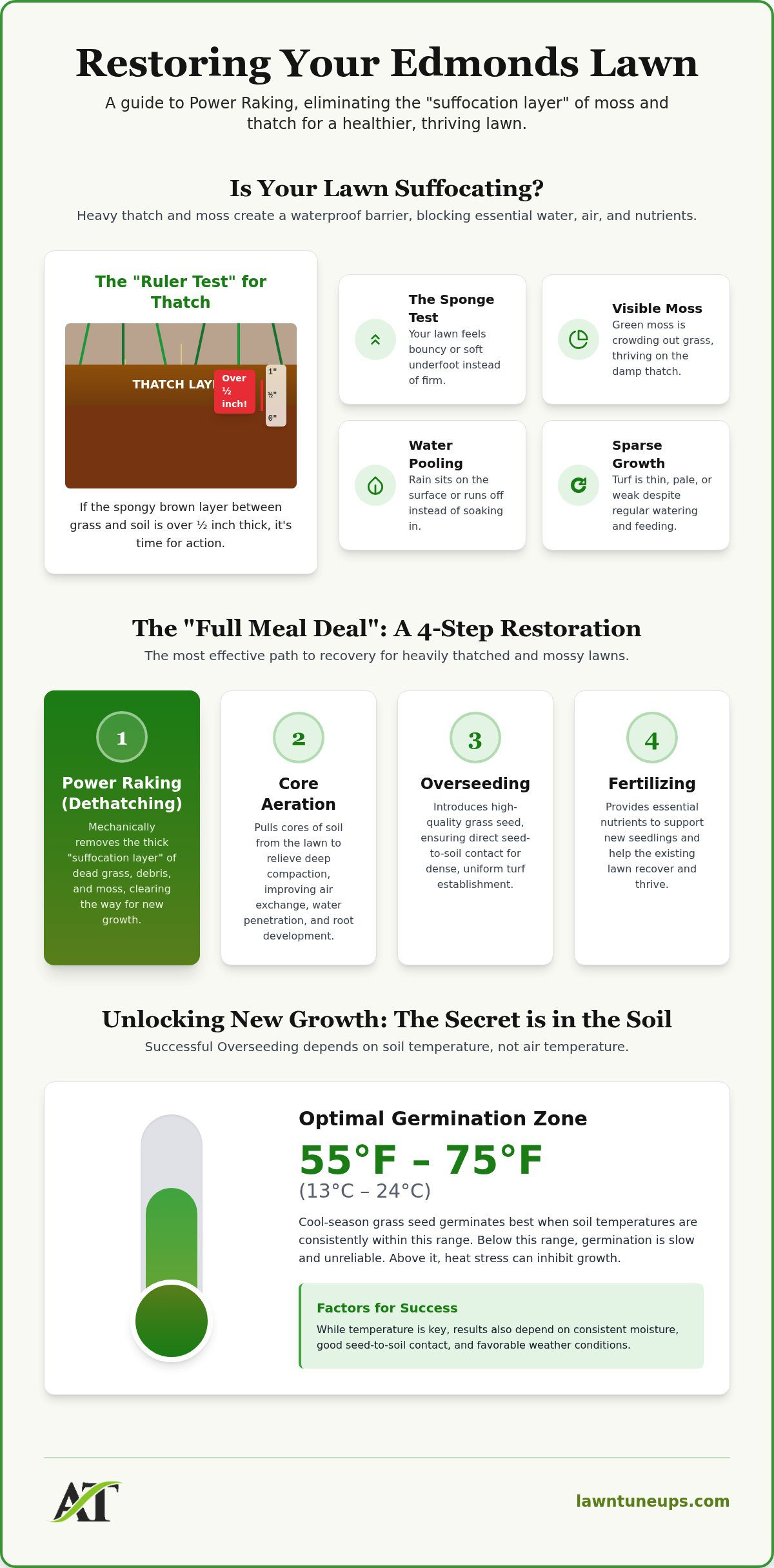
Every lawn has a bit of thatch, which is a layer of living and dead organic matter between the green blades and the soil surface. A thin layer is beneficial because it provides cushioning and helps regulate temperature. However, Edmonds lawns often develop a “suffocation layer” that exceeds half an inch. Once it gets this thick, it acts like a roof over your soil, shedding water and blocking fertilizers from doing their job. Understanding the full power raking benefits can help you see why this process is essential rather than harmful to your lawn’s long-term health.
Thatch vs. Moss: The Edmonds Homeowner’s Double Threat
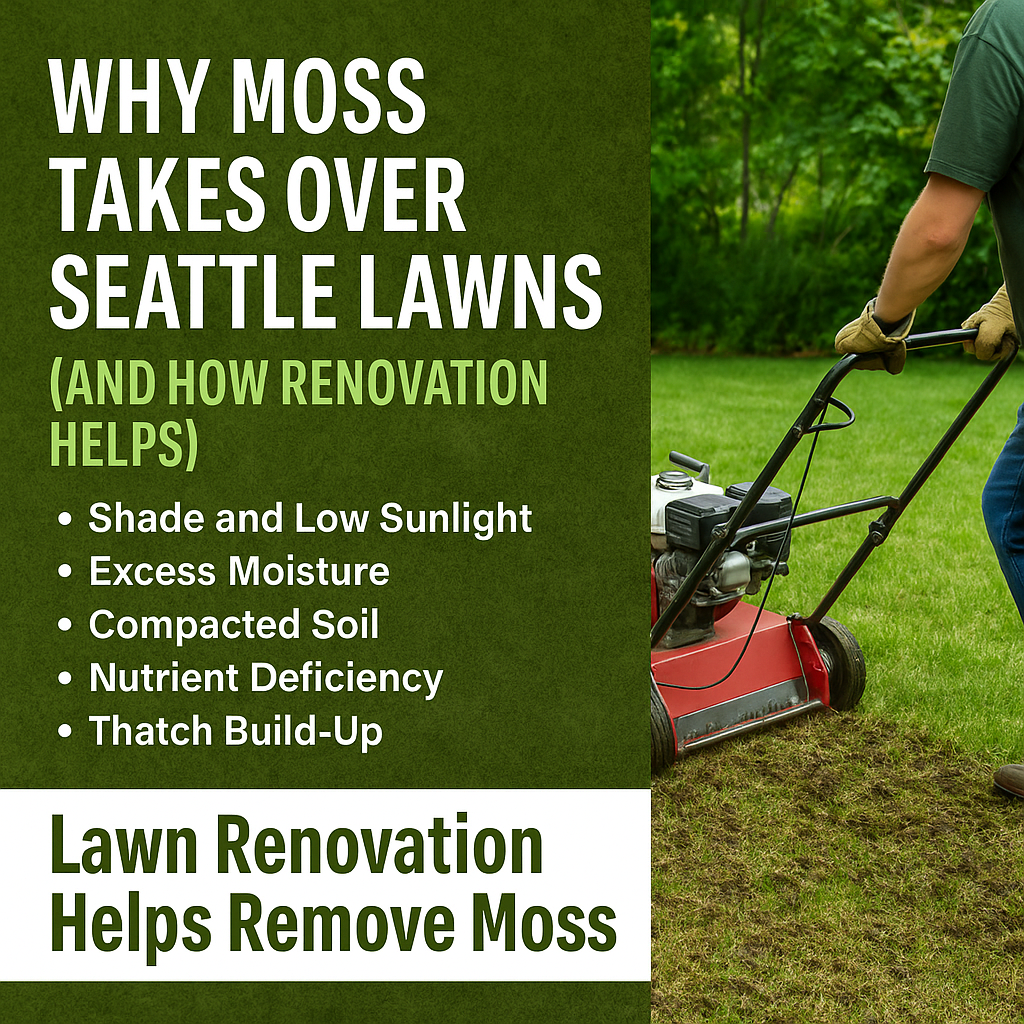
Edmonds is known for its damp, shaded microclimates and heavy evergreen canopy. These conditions are a playground for moss. Unlike grass, moss doesn’t need deep roots; it thrives on the moist surface of a thick thatch layer. Over time, the moss intertwines with dead grass to create a dense, waterproof barrier. Standard hand-raking barely scratches the surface of this PNW mat. You need the mechanical force of Power Raking (Dethatching) to rip that layer apart and expose the soil below.
The Biological Benefit of a Clean Surface
Clearing the surface does more than just make the yard look better. It dramatically improves drainage, which is vital for preventing root rot during our rainy spring months. A clean surface is also the primary requirement for successful Overseeding. For new grass to grow, the seed must have direct contact with the soil. When we perform a Full Meal Deal, we ensure the debris is gone so the seed can establish. Keep in mind that while we aim for the best results, grass seed germination depends on soil temperatures staying between 55°F and 75°F. Without a clean surface, even the best seed won’t stand a chance against the local elements.
5 Signs Your Edmonds Property Requires Power Raking (Dethatching)
Identifying the need for power raking Edmonds lawns is straightforward once you know what to look for. Our local soil and weather create unique challenges that often result in a heavy buildup of organic matter. If you notice these symptoms, your lawn is likely struggling to breathe. It’s better to catch these signs early before the grass is completely overwhelmed by the surrounding environment.
- The Sponge Test: Walk across your grass. If it feels bouncy or soft like a sponge rather than firm ground, you have excessive thatch.
- Visible Moss: Moss thrives in the damp shade of Edmonds. If green moss is physically crowding out your grass blades, it’s using the thatch as a base.
- Water Pooling: During a typical PNW rain shower, watch your lawn. If water sits on the surface or runs off the sides instead of soaking in, a waterproof thatch barrier has formed.
- Sparse Growth: If your turf looks thin and pale despite regular feeding, the nutrients aren’t reaching the roots.
The ‘Ruler Test’ for Thatch Depth
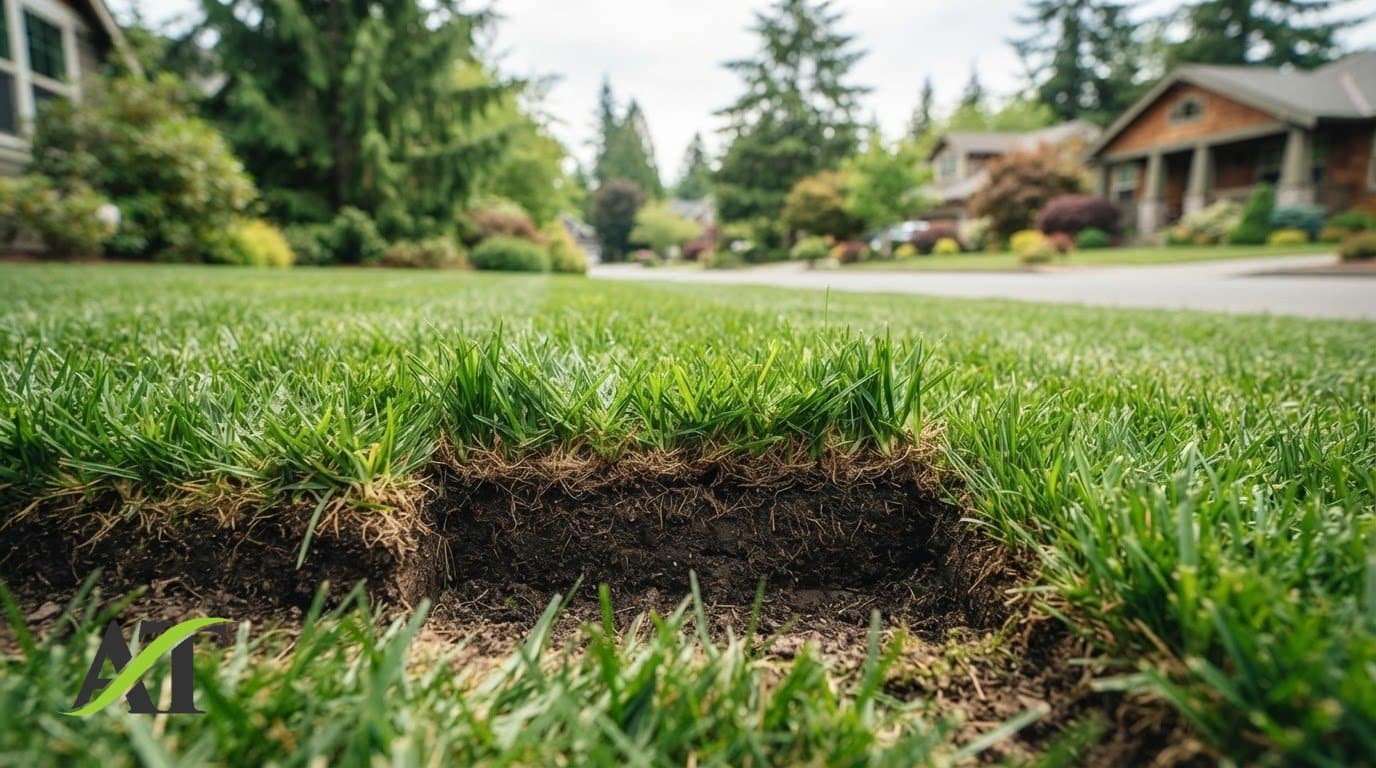
To get a definitive answer, use a trowel to cut a small wedge out of your lawn. Measure the brown, spongy layer between the green grass and the soil. If this layer is over half an inch thick, it’s time for intervention. Waiting too long makes Power Raking (Dethatching) much harder on the remaining grass because the roots begin to grow into the thatch instead of the soil. It’s better to clear it now so your soil is ready for the restoration work needed to bring it back to life.
Identifying Drainage Issues in Edmonds
Edmonds is famous for its hills and heavy clay soil. It’s easy to confuse soil compaction with a thatch problem. While Core Aeration fixes deep compaction, Power Raking (Dethatching) solves surface runoff. On sloped properties, removing this “roof” of dead debris is critical for erosion control. It allows water to penetrate the root zone rather than washing away your topsoil. Once the surface is clear, successful Overseeding requires soil temperatures between 55°F and 75°F for the best results. Without this preparation, your new seed won’t reach the soil it needs to survive. If you’re also dealing with hardpan clay beneath the surface, learning about compacted soil solutions Seattle homeowners rely on can help you address both the surface and deep drainage issues at once.
How to Power Rake Your Lawn: A Step-by-Step Restoration Guide
Successful power raking Edmonds lawns starts with proper preparation. You can’t just roll the machine onto a tall lawn and expect clean results. First, mow your grass down to a height of approximately 1.5 inches. This short cut allows the vertical tines of the Power Raking (Dethatching) machine to reach the soil surface without getting tangled in long blades. Once the grass is short, run the machine in methodical, overlapping rows across the entire turf area. This ensures you don’t leave behind strips of untouched moss or thatch.
Be prepared for the massive volume of debris this process creates. It’s common to pull up 3 to 5 times more material than you would during a heavy autumn leaf cleanup. This debris is a mix of dead organic matter and moss that has been choking your root system for years. Removing it is the only way to clear the path for the next steps in a Full Meal Deal, which include Core Aeration and Overseeding. Without this heavy lifting, your new seed will simply sit on top of the trash and fail to grow. Many homeowners are surprised to discover the true power raking benefits once they see how dramatically their lawn responds after the debris layer is finally removed.
Timing Your Project with Edmonds Weather
Timing is everything in the Pacific Northwest. For the best results, you need to coordinate your project with soil temperatures. Grass seed germination is most reliable when soil temperatures are between 55°F and 75°F (13°C to 24°C). While seeds might sprout outside this window, the process will be significantly slower and less consistent. We track these temperatures closely to ensure your restoration has the best chance of success. Waiting for this specific window prevents wasted seed and ensures a faster recovery for your turf.
Post-Raking Cleanup and Debris Management
Don’t leave the pulled-up thatch sitting on your lawn. It will quickly smother any remaining healthy grass and become a breeding ground for mold. For a standard Edmonds residential lot, you should plan on filling multiple yard waste bins. If you have a larger property, you might even need a temporary debris trailer. Since we’ve been working as local contractors since 2004, we know exactly how much waste a typical yard produces. Proper disposal is just as important as the raking itself to ensure your soil is clean and ready for Core Aeration.
Maximizing Results with the Full Meal Deal in Edmonds
While power raking Edmonds lawns is the essential first step for restoration, it’s rarely a standalone solution. Stripping away the moss and thatch often leaves the yard looking thin and vulnerable. That’s why we recommend the Full Meal Deal. This package includes Power Raking (Dethatching), Core Aeration, Overseeding, and Fertilizing to ensure a complete recovery. Core Aeration pulls small plugs from the ground to relieve compaction in Edmonds’ heavy clay soil. Overseeding then introduces new, hardy grass varieties to fill the gaps, while Organic Fertilizing provides a steady supply of nutrients to kickstart growth without the risk of chemical burn.
Full Meal Deal vs. Lawn Tune-Up: Which do you need?
Choosing the right service depends on your current lawn health. A Lawn Tune-Up consists of Core Aeration, Overseeding, and Fertilizing. It’s the perfect choice for lawns that are already firm and healthy but need a boost. However, if your lawn is mossy, spongy, or has a thick thatch layer, you need the Full Meal Deal. This service adds Power Raking (Dethatching) to the base package, providing the mechanical force needed to clear the surface before the other treatments begin. Our team has provided professional power raking Edmonds services since 2004, and we’ve seen how these combined steps transform a failing yard into a healthy one.
Managing Expectations for Seed Germination
Successful restoration depends on more than just the equipment we use. We focus on soil health because it’s the foundation of a green lawn. For the best results, grass seed requires soil temperatures between 55°F and 75°F (13°C to 24°C). Germination will be slower and less consistent if the soil is colder or hotter than this range. We don’t offer absolute guarantees on germination because outcomes are influenced by moisture levels, seed-to-soil contact, and the often unpredictable Edmonds weather. We invite you to request a quote for a professional assessment of your property. Our team will help you decide which restoration plan fits your specific soil conditions.
Start Your Edmonds Lawn Restoration Today
A thick, healthy lawn doesn’t happen by accident in the Pacific Northwest. It requires a pragmatic approach to soil health and debris management. By identifying the signs of a “suffocation layer” and choosing the right restoration path, you can turn a mossy, spongy yard into a firm and breathable outdoor space. Professional power raking Edmonds is the heavy-lifting tool that makes this transformation possible. It clears the way for air, water, and nutrients to reach the roots where they’re needed most.
Our team has been owner-operated since 2004. We understand the specific challenges of local clay soil and moss growth. Whether you need a simple Lawn Tune-Up for a healthy yard or the comprehensive Full Meal Deal to reset a struggling one, we have the specialized expertise to handle the job. We focus on creating the best conditions for growth by timing our work with optimal soil temperatures. This ensures your property gets the results-driven care it deserves.
Your lawn has the potential to be the greenest on the block. We look forward to helping you restore its strength and beauty for the seasons ahead.
Frequently Asked Questions
Will Power Raking (Dethatching) kill my grass?
Power Raking (Dethatching) won’t kill healthy grass, but it will expose the thin areas where moss and thatch were previously hiding. Your lawn will look brown or thin for a few weeks as it recovers from the process. This is a normal part of the restoration. By removing the debris, you’re allowing the remaining grass to finally access the nutrients it needs to thrive.
When is the best time for Power Raking (Dethatching) in Edmonds?
The best time for power raking Edmonds properties is during the spring or early fall when the grass is actively growing and can recover quickly. We recommend timing this service so that any subsequent Overseeding happens when soil temperatures are between 55°F and 75°F (13°C–24°C). This window provides the best environment for new growth to establish before the weather becomes too extreme.
Can I Power Rake my lawn if it is currently wet?
You shouldn’t power rake a lawn that is saturated or dripping wet. While the soil should be slightly moist to reduce dust, standing water makes the machine too aggressive. Raking a wet lawn can lead to the tines pulling up healthy grass roots along with the thatch. We monitor the local weather closely to ensure the ground is in the right condition for a clean, professional restoration.
How much debris does Power Raking (Dethatching) actually produce?
Power Raking (Dethatching) produces a surprising amount of waste, often three to five times the volume of a standard leaf cleanup. On a typical residential lot in Edmonds, you can expect to fill multiple large yard waste bins with the pulled-up moss and dead organic matter. This is exactly why we consider this the heavy lifting portion of our service. It’s a massive amount of material that must be removed for the soil to breathe.
Do I need to fertilize immediately after Power Raking (Dethatching)?
Yes, fertilizing is a critical step in the recovery process after the debris is removed. In our Full Meal Deal, we use Organic Fertilizing to provide essential nutrients without the risk of burning the newly exposed grass crowns. This feeding, combined with Core Aeration and Overseeding, helps the turf fill back in quickly. It also helps prevent moss from immediately returning to the bare spots created during the cleaning.
Article by
Stewart Armour
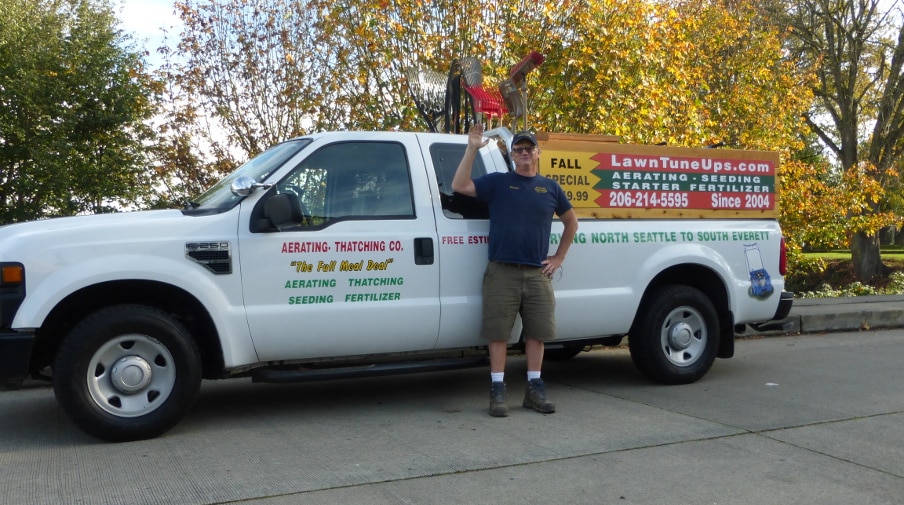
Stewart Armour is an independent lawn restoration expert, educator, and owner of Aerating Thatching Co., serving the greater Seattle area since 2004. With more than two decades of professional experience restoring Western Washington lawns, Stewart specializes in diagnosing lawn problems, improving soil health, and developing long-term lawn renovation strategies. His education includes turf management studies, advanced golf course turf training, and continuing education through Wilbur-Ellis University, State Turf Facilities, Soil First Academy, and Golf Course Applied Turf Physiology. Every article published on LawnTuneUps.com is grounded in practical field experience, current turf science, and a commitment to helping homeowners understand the why behind every recommendation—not just what to do.
Stewart has personally evaluated thousands of residential lawns throughout the Seattle area and remains committed to helping homeowners understand the science behind growing healthier, more resilient lawns.