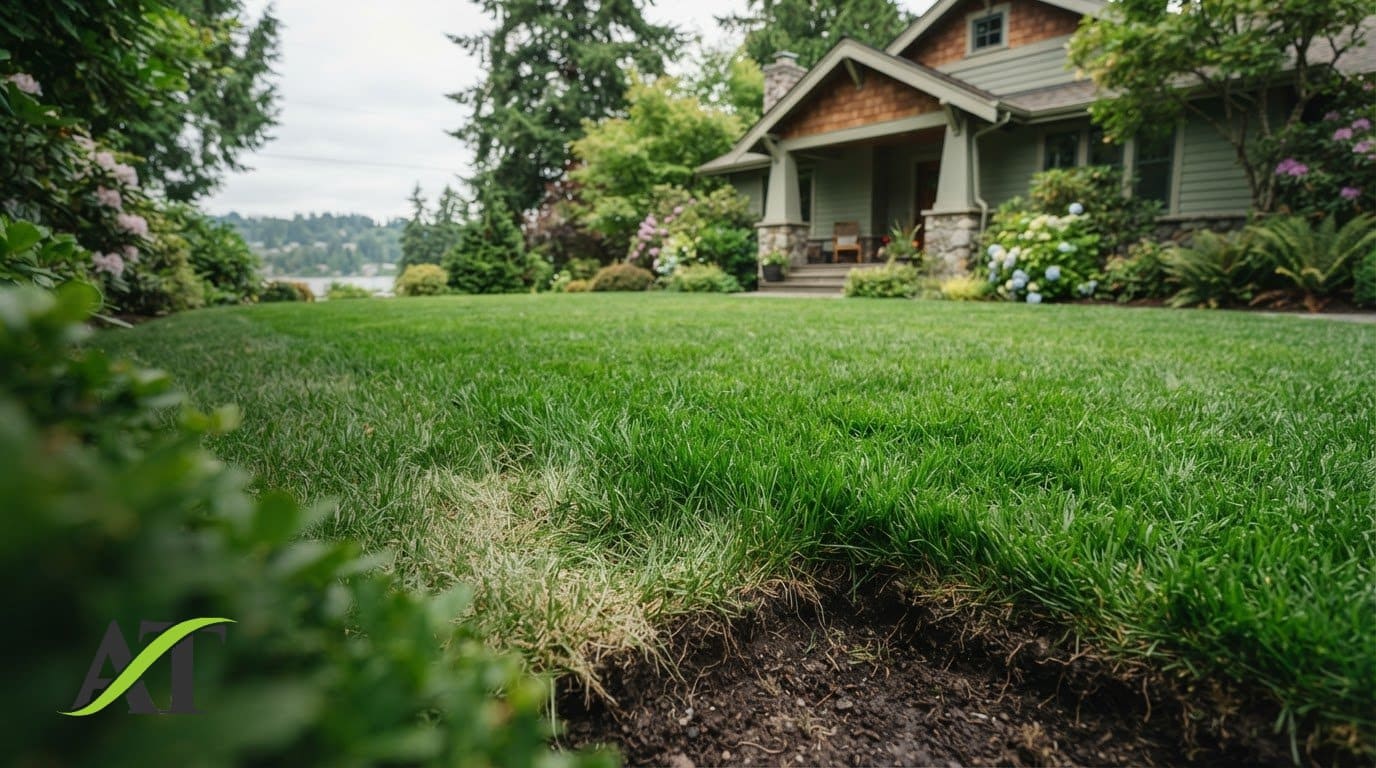
You step out onto your lawn in Lake Forest Park and it feels like walking on a soaked sponge. Your feet sink into a thick, springy layer of debris rather than firm soil. You aren’t alone in this. Many homeowners in our corner of the Pacific Northwest struggle with this exact issue. You’ve probably noticed that water runs off the surface instead of soaking in, while moss thrives where the grass used to be. It’s frustrating to work hard on your yard only to see it thin out despite your best efforts.
This article will help you understand why thatch builds up and how to restore your lawn’s natural thickness. We’ll show you how to identify the signs of a “choked” lawn and explain the specific steps to fix it. You’ll learn the difference between a standard Lawn Tune-Up Lake Forest Park residents use for maintenance, which consists of Core Aeration, Overseeding, and Fertilizing, and the intensive Full Meal Deal which adds Power Raking (Dethatching). We will also explain why soil temperature, not air temperature, determines your success when it’s time to grow new grass.
Key Takeaways
- Learn why the damp Pacific Northwest climate and acidic soil in Lake Forest Park lead to heavy thatch buildup that chokes your grass.
- Use the “Sponge Test” to determine if your lawn’s bouncy feel is caused by a thick layer of debris blocking water and nutrients.
- Understand the mechanical differences between Power Raking (Dethatching) for surface debris and Core Aeration for deep soil health.
- Discover why a standard Lawn Tune-Up Lake Forest Park is ideal for maintenance, while the Full Meal Deal provides the ultimate restoration for heavy thatch.
- Find out why monitoring soil temperature between 55°F and 75°F is the most critical factor for successful grass seed germination and establishment.
What is Thatch Buildup and Why is it Common in Lake Forest Park?
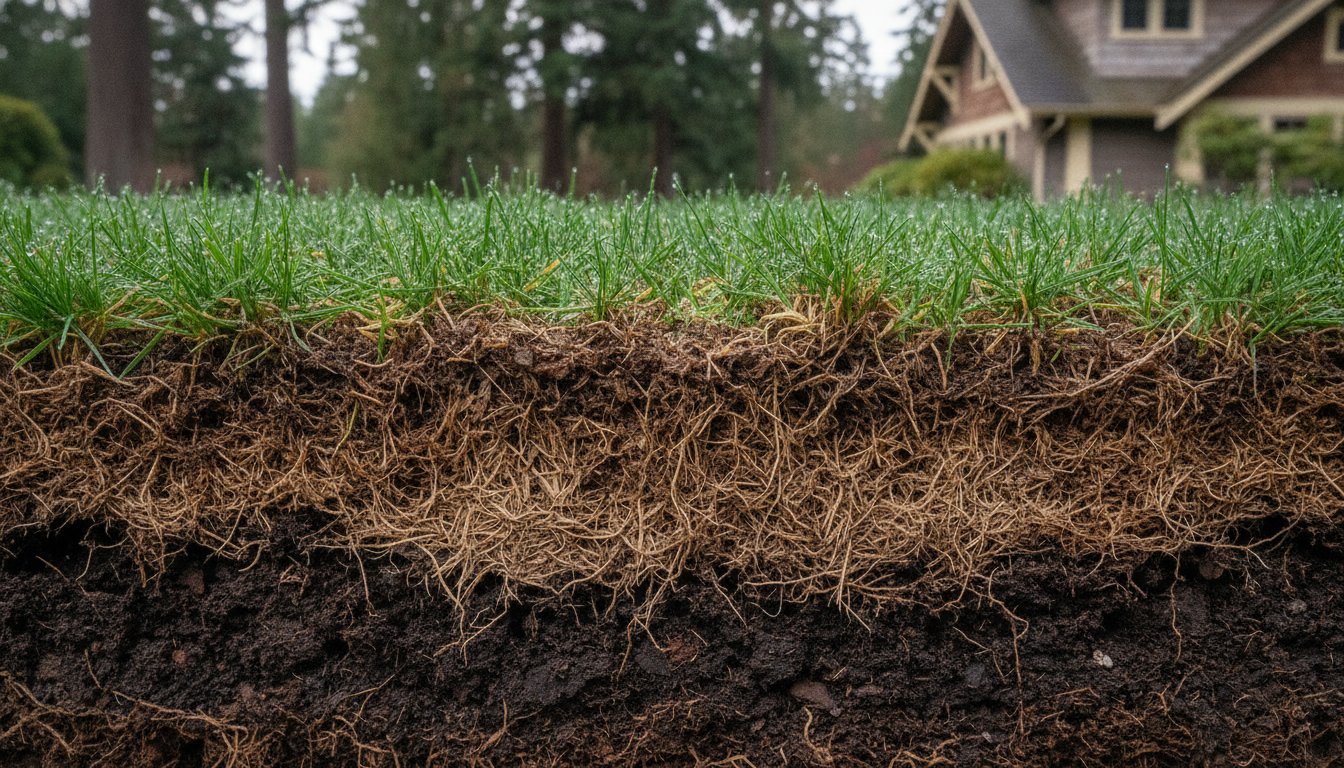
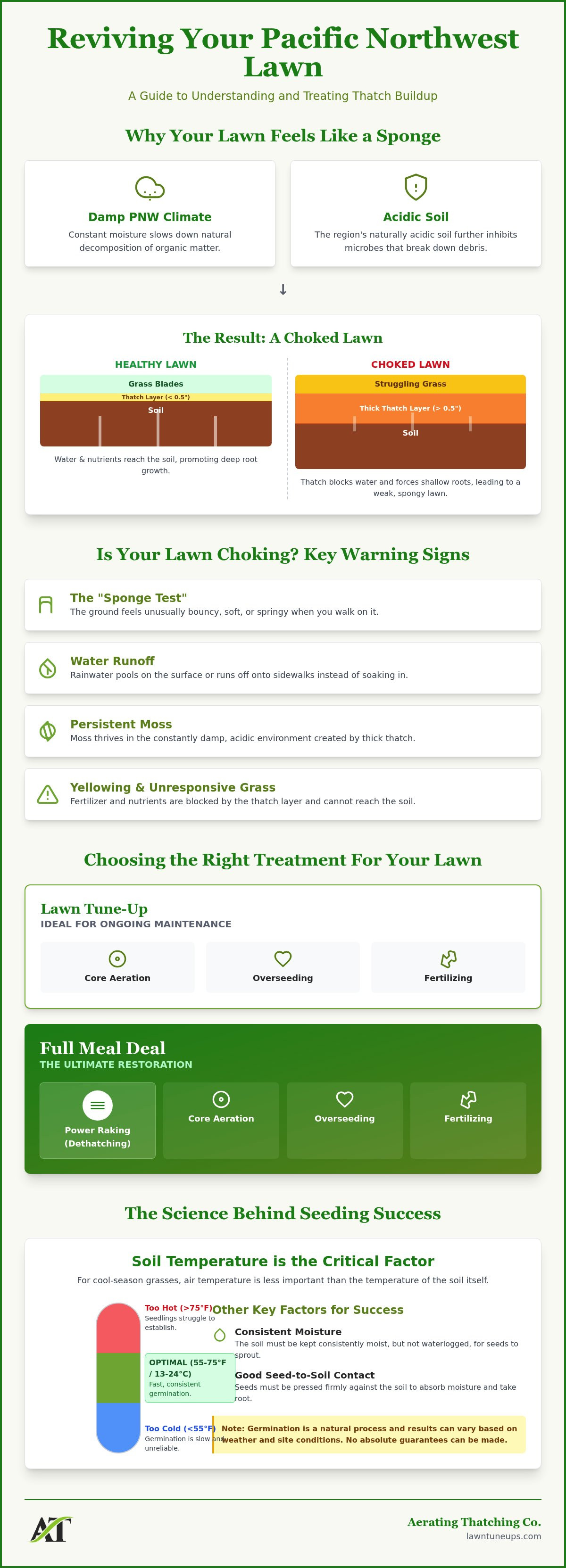
Thatch isn’t just a collection of grass clippings. It’s a dense, tightly woven layer of living and dead stems, roots, and organic debris that accumulates between the green blades of your lawn and the soil surface. In a perfectly balanced environment, soil microbes break this material down into nutrients. However, Lake Forest Park homeowners face a specific set of environmental hurdles. Our damp Pacific Northwest climate, combined with naturally acidic soil, significantly slows down the natural decomposition of organic matter. Instead of disappearing, the debris piles up year after year.
A small amount of thatch is actually beneficial. It acts as a cushion for foot traffic and protects the soil from temperature spikes. The trouble starts when that layer exceeds half an inch. At this point, it stops being a cushion and starts acting like a sponge that never dries out. This soggy environment is a primary reason why moss is such a persistent pain point in our community. If you are looking for a Lawn Tune Up Lake Forest Park, it’s vital to determine if your thatch is thin enough for a standard treatment or if it requires a more aggressive approach.
The Problem with Heavy Thatch Layers
When thatch becomes too thick, it functions like a waterproof roof over your soil. Rain and irrigation water often hit the surface of the thatch and run off toward the sidewalk rather than reaching the roots. This leaves your lawn perpetually dehydrated despite the heavy local rainfall. A thick layer also causes the “crown” of the grass plant to grow higher. Roots begin to weave into the thatch itself instead of the nutrient-rich soil below. This leads to several lawn health issues:
- Increased Drought Sensitivity: Roots in the thatch dry out much faster than roots in the ground.
- Spongy Turf: The lawn feels unstable and “bouncy” underfoot.
- Crown Rot: Constant moisture trapped in the thatch promotes fungal diseases that kill the grass from the base up.
Restoring a lawn in this condition requires more than just water and fertilizer. It needs a mechanical reset to clear the way for healthy growth. If the thatch is too deep, the seeds and nutrients from a standard Lawn Tune-Up, which consists of Core Aeration, Overseeding, and Fertilizing, won’t reach the earth where they can do their job.
Signs Your Lawn Needs Professional Power Raking (Dethatching)
Identifying a thatch problem doesn’t require a degree in horticulture. You can usually tell just by walking across your yard. If the ground feels bouncy or soft, you’re likely feeling a thick mat of organic debris rather than firm soil. This is known as the “Sponge Test.” In Lake Forest Park, where many properties sit on hillsides, this layer becomes a significant liability. Instead of soaking into the root zone, rainwater hits the thatch and slides right off. You’ll see puddling in low spots or dry, brown patches on slopes even after a heavy downpour. If your yard fails the sponge test, a standard Lawn Tune-Up Lake Forest Park service might not be enough to reach the soil.
Another clear indicator is yellowing grass that doesn’t respond to fertilizer. If you’ve applied nutrients but see no improvement, the thatch is likely blocking the pellets from reaching the soil. To be certain, you can perform a physical check. Take a trowel and cut a small, wedge-shaped “pie slice” out of your turf about three inches deep. Lift it out and look at the profile. If the brown, fibrous layer between the green blades and the soil is thicker than half an inch, it’s time for professional Power Raking (Dethatching). The same debris-stripping process used in power raking Edmonds lawns applies directly to properties here in Lake Forest Park, where identical Pacific Northwest conditions create the same thick thatch layers. If you’re unsure about the depth, you can request a professional assessment to see if your soil is ready for a refresh.
Moss vs. Thatch: A Lake Forest Park Connection
Moss is a persistent local issue that thrives in the damp, shaded, and acidic environments created by excessive thatch. Because thatch holds surface moisture like a wet blanket, it creates a perfect nursery for moss spores to take hold. Many homeowners try to kill moss with chemicals, but it will simply return if the underlying thatch remains. Removing that debris is the first essential step in a long-term moss management strategy. Once the surface is clear, a standard Lawn Tune-Up Lake Forest Park residents rely on can help thicken the grass to outcompete future moss growth.
Managing Thatch: Power Raking (Dethatching) vs. Core Aeration
Many homeowners use these terms interchangeably, but they serve very different roles in lawn restoration. Power Raking (Dethatching) is a mechanical process designed to pull up that thick, suffocating mat of surface debris we’ve described. It clears the “roof” off your lawn so the grass can breathe. Core Aeration targets what’s happening below the surface. It uses hollow tines to pull small plugs of soil out of the ground, which relieves compaction and allows for deep root gas exchange. If you’re planning a Lawn Tune Up Lake Forest Park, understanding which tool to use is the difference between a thriving yard and wasted effort.
While both services are valuable, they tackle different problems. If you have a thick sponge of thatch, Core Aeration alone won’t fix it because the plugs will just get trapped in the debris. Conversely, Power Raking won’t help if your soil is as hard as a brick. This is why our most effective restorations often combine both treatments. It’s important to remember that a standard Lawn Tune-Up includes Core Aeration, Overseeding, and Fertilizing. It does not include Power Raking (Dethatching), which is why we identify it as an essential restoration add-on for neglected properties.
When to Choose Power Raking (Dethatching)
If your thatch layer measures 3/4 of an inch or more, you need mechanical intervention. Power Raking (Dethatching) strips away the dead material to reveal the actual soil. This creates the perfect “seed bed.” Without this step, your new grass seed will sit on top of the debris and never establish a root system. For a Lawn Tune Up Lake Forest Park project to succeed on a yard with heavy buildup, clearing this barrier is the first priority.
The Role of Core Aeration
Lake Forest Park often has heavy clay soil that packs down over time. Core Aeration is the only way to break that tension. By removing those physical “plugs,” we create open channels in the earth. These holes allow lime and organic fertilizer to reach the root zone immediately rather than washing away in the rain. It’s a fundamental step for any healthy lawn in the North Seattle area, ensuring that nutrients actually reach the grass roots where they’re needed most. If standing water or poor drainage is also a concern on your property, exploring compacted soil solutions Seattle homeowners use to restore drainage and growth can help you understand the full scope of mechanical treatments available.
Restoring Your Lawn with the Full Meal Deal
When a standard maintenance approach isn’t enough to break through years of debris, we recommend the Full Meal Deal. This is our most comprehensive restoration package. It includes four essential steps: Power Raking (Dethatching), Core Aeration, Overseeding, and Fertilizing. By combining these mechanical processes, we clear the surface, open the soil, and provide the nutrients necessary for a total lawn reset. This package is the ultimate solution for Lake Forest Park properties struggling with thick, spongy turf and persistent moss.
The success of this restorative work depends heavily on timing and soil health. Because Lake Forest Park soil is typically high in acidity, adding an optional Lime Application to your service is often necessary to balance pH levels. We also focus on the science of growth. Grass seed germination is driven by soil temperature rather than air temperature. The optimal soil temperature range for cool-season grass is 55°F to 75°F (13°C to 24°C). While we use professional-grade seed, results are always influenced by moisture, seed-to-soil contact, and weather conditions. Establishing a thick lawn requires the right environment, not just the right equipment.
Timing Your Restoration in Lake Forest Park
The best windows for a Lawn Tune Up Lake Forest Park or a Full Meal Deal are during the spring and early fall. These seasons provide the natural moisture and soil temperatures needed for establishment. After we complete the mechanical work, your main job is consistent watering. New seedlings must stay moist until they are at least two inches tall. Without proper aftercare, even the best restoration efforts will produce thin or patchy results. We’ll provide you with specific guidance on how to manage your yard during this critical phase.
Next Steps for Your Lawn
Every yard has unique challenges, from heavy shade to steep slopes. You can explore our full list of services to see which restorative treatments fit your property. If you’re ready to fix your spongy turf and restore your lawn’s density, the next step is a custom evaluation. We can help you determine if you need a standard maintenance service or a more aggressive restoration plan.
Restore Your Lawn’s Health and Density
Thatch doesn’t have to be a permanent problem for your yard. By using the right mechanical restoration techniques, you can clear the debris and let your grass breathe again. Whether you need a standard Lawn Tune Up Lake Forest Park for annual maintenance or the intensive Full Meal Deal to handle deep buildup, we have the specialized equipment for the job. We’ve spent years learning exactly how to manage the unique moisture and soil conditions of our local area.
We’ve been serving the community as local experts since 2004. Our focus is always on organic soil health and tangible restorative outcomes. We don’t spend our time on mowing or pruning; we specialize in the heavy labor required to transform compacted, thatched properties. While factors like weather and moisture affect every lawn differently, starting with a clean seed bed and healthy soil is the best way to ensure establishment. We’re ready to help you take the first step toward a thicker, greener lawn.
Your lawn is a major part of your home’s value and your daily environment. We look forward to helping you restore its natural beauty and density.
Frequently Asked Questions
How do I know if I have thatch buildup or just moss?
Thatch is a physical layer of organic debris located between the grass blades and the soil surface. You can identify it using the “Sponge Test” mentioned earlier; if the ground feels bouncy and soft, thatch is the likely culprit. Moss is a opportunistic plant that grows on top of this layer because thatch holds moisture like a wet blanket. In Lake Forest Park, these two issues often go hand in hand. Removing the thatch is the first step to clearing out the moss for good.
Is Power Raking (Dethatching) included in a standard Lawn Tune-Up?
No, Power Raking (Dethatching) is not part of the base package. A standard Lawn Tune Up Lake Forest Park residents book for maintenance consists exclusively of Core Aeration, Overseeding, and Fertilizing. If your lawn has a thatch layer thicker than half an inch, you should upgrade to the Full Meal Deal. This restorative package includes Power Raking (Dethatching) along with the other three components to ensure the new seed actually reaches the soil.
What is the best time of year for lawn restoration in Lake Forest Park?
The best windows for service are spring and early fall. These seasons offer the most reliable moisture and the correct soil temperatures for growth. We aim for periods when the soil stays between 55°F and 75°F to ensure the grass seed establishes quickly. Performing a Lawn Tune Up Lake Forest Park homeowners can trust requires hitting these specific weather windows to avoid the summer’s high heat or the winter’s dormant period.
How long does it take for grass seed to germinate after Overseeding?
You can typically expect to see new growth within 7 to 21 days. This timeline depends heavily on maintaining consistent moisture and having a soil temperature between 55°F and 75°F (13°C to 24°C). If the soil is colder, germination will be slower and less reliable. We don’t provide absolute guarantees on germination because results are influenced by many factors, including your watering schedule, seed-to-soil contact, and unpredictable weather patterns.
Do I need to be home when Aerating Thatching Co. performs the service?
You don’t need to be home while we work as long as we have clear access to your yard. Please ensure that all gates are unlocked and that pets are kept safely inside. Because we focus entirely on mechanical restoration and do not offer mowing or maintenance services, our crews are trained to work efficiently through the property. We’ll leave you with specific aftercare instructions so you know exactly how to manage your new seed.
Article by
Stewart Armour
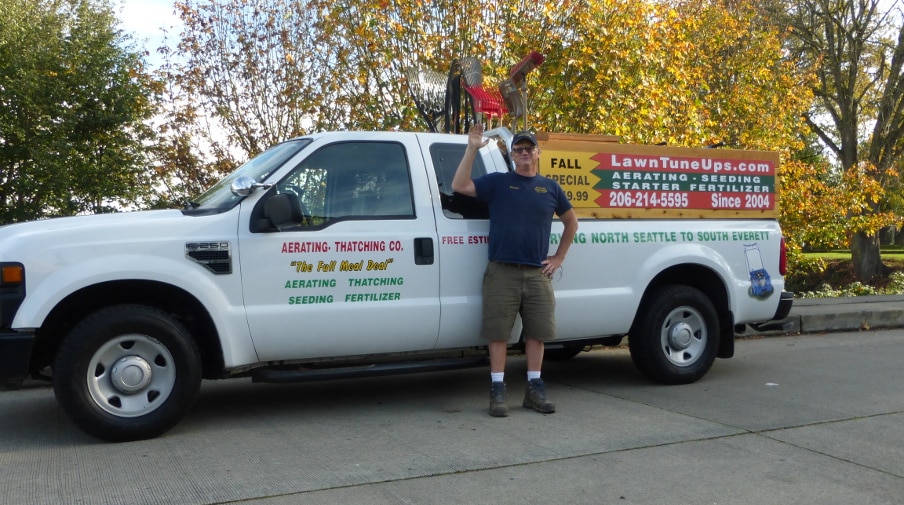
Stewart Armour is an independent lawn restoration expert, educator, and owner of Aerating Thatching Co., serving the greater Seattle area since 2004. With more than two decades of professional experience restoring Western Washington lawns, Stewart specializes in diagnosing lawn problems, improving soil health, and developing long-term lawn renovation strategies. His education includes turf management studies, advanced golf course turf training, and continuing education through Wilbur-Ellis University, State Turf Facilities, Soil First Academy, and Golf Course Applied Turf Physiology. Every article published on LawnTuneUps.com is grounded in practical field experience, current turf science, and a commitment to helping homeowners understand the why behind every recommendation—not just what to do.
Stewart has personally evaluated thousands of residential lawns throughout the Seattle area and remains committed to helping homeowners understand the science behind growing healthier, more resilient lawns.