Most homeowners think power raking is a recipe for lawn destruction, but it’s actually the most effective mechanical “exfoliation” your grass can get. Understanding the power raking benefits is essential when your yard feels like walking on a wet sponge or if the PNW rain pools on the surface instead of soaking in. It’s frustrating to watch expensive fertilizer sit on top of a dead layer without ever reaching the roots. You want a thick, green yard, but it often feels like your grass is suffocating under its own weight.
In this guide, we’ll show you why removing that debris is the first step toward a healthy restoration. You’ll learn how to distinguish between a “dead” lawn and one that just needs to breathe. We’re going to debunk the myths that keep people from dethatching and explain why we include Power Raking (Dethatching) in our Full Meal Deal. This approach ensures your lawn doesn’t just survive the process, but recovers with the nutrients and seed it needs to thrive.
Key Takeaways
- Power Raking (Dethatching) removes the waterproof mat of debris that blocks oxygen and nutrients from reaching your soil.
- Discover the long-term power raking benefits that outweigh the temporary thinned look your lawn has immediately after service.
- Understand why Power Raking (Dethatching) and Core Aeration are distinct tools that solve unique problems, from surface debris to deep compaction.
- The Full Meal Deal offers the best results by combining Power Raking (Dethatching), Core Aeration, Overseeding, and Fertilizing for a complete restoration.
What is Power Raking (Dethatching) and Why Does Your Lawn Need It?
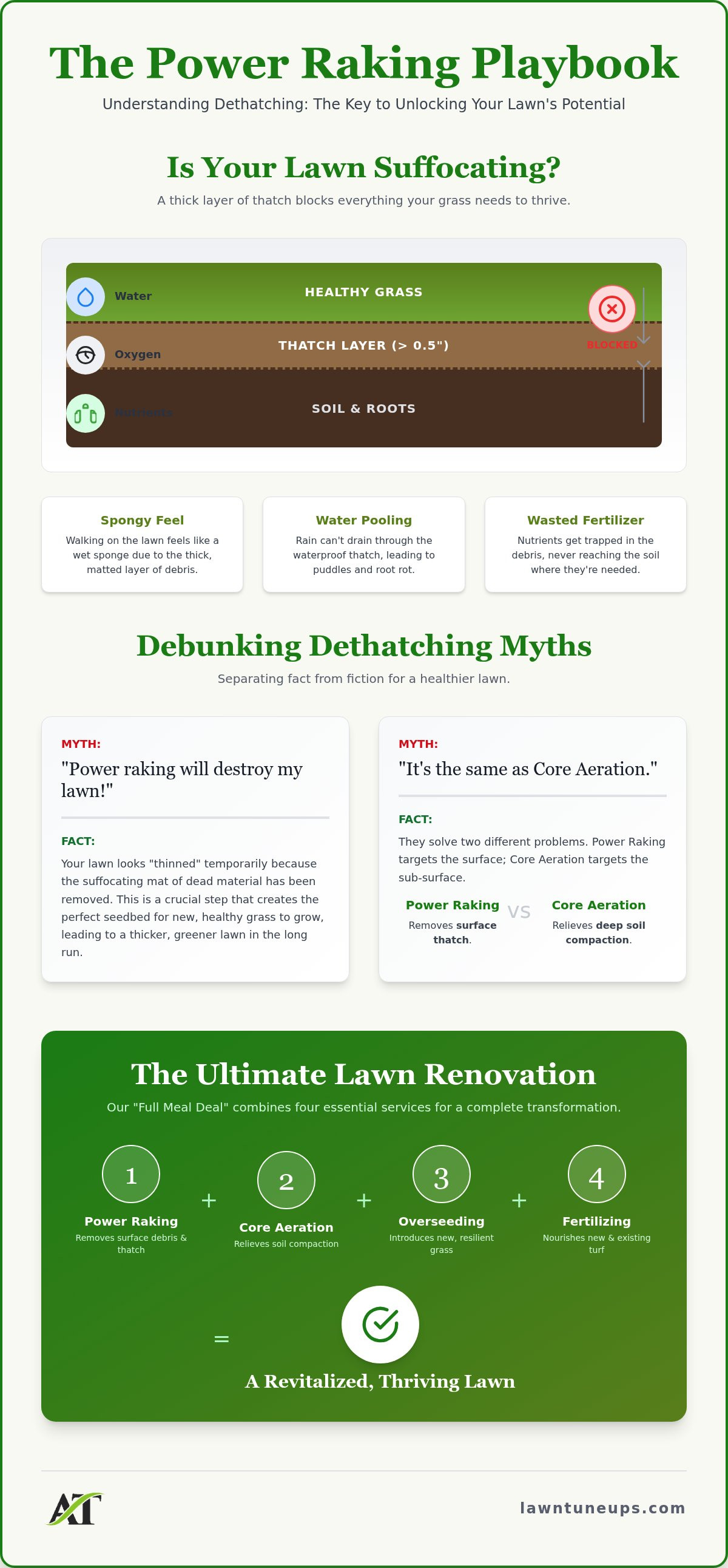
Power Raking (Dethatching) is a mechanical process that targets the organic layer of debris tucked between your grass blades and the soil surface. Many homeowners believe thatch is just dead grass clippings, but it’s actually a dense, waterproof mat of stems, roots, and organic matter. While a thin layer of about a half-inch can protect the soil, anything thicker becomes a problem. It turns into a barrier that blocks oxygen, water, and nutrients from reaching the root zone. Understanding these power raking benefits helps you decide when your lawn needs more than a simple mow.
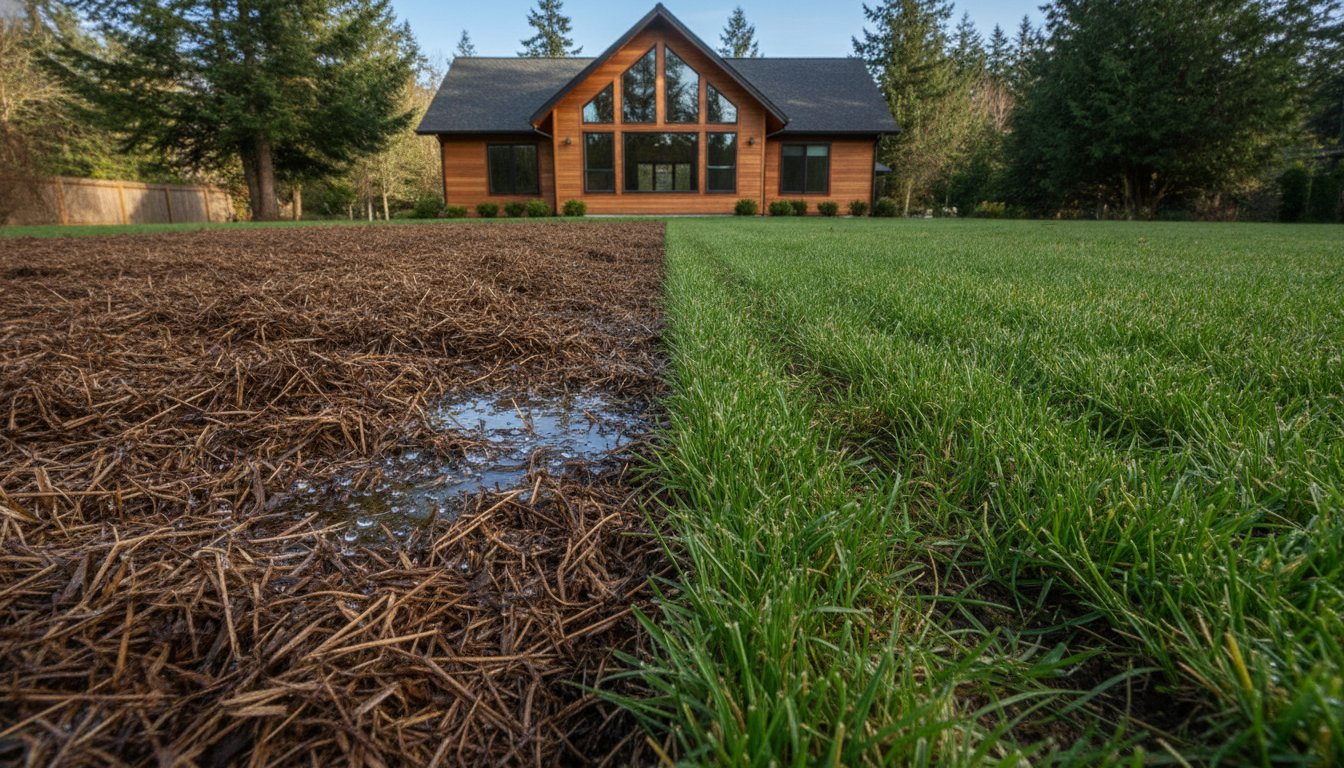
In the North Seattle and Snohomish County area, this barrier causes major headaches during our heavy rainy seasons. Without proper drainage, water pools on top of the thatch layer. This leads to root rot and fungal issues. One of the primary power raking benefits is restoring that critical vertical drainage. A professional service provides several advantages:
- Prevents water pooling and root rot during PNW rains.
- Opens the soil surface for better oxygen exchange.
- Allows nutrients to reach the root zone instead of sitting on top.
If your lawn feels spongy underfoot, you likely have an excessive layer that requires professional intervention. Using a specialized Dethatcher is the only way to pull this material up effectively and prepare the ground for restorative treatments.
The Difference Between Hand Raking and Mechanical Power Raking
Hand raking is fine for removing loose leaf litter, but it won’t touch the root-choking thatch layer. It’s a surface-level fix for a sub-surface problem. Mechanical Power Raking (Dethatching) uses vertical tines that reach deep into the turf. These tines lift and pull the buried organic mat to the surface without destroying the healthy root system. It’s much more efficient than manual labor. We handle the massive debris removal that a standard garden rake can’t touch. This process is a foundational step in our Full Meal Deal, which includes Power Raking (Dethatching), Core Aeration, Overseeding, and Fertilizing to ensure a total lawn reset.
Busting Common Myths: Is Power Raking (Dethatching) Too Aggressive?
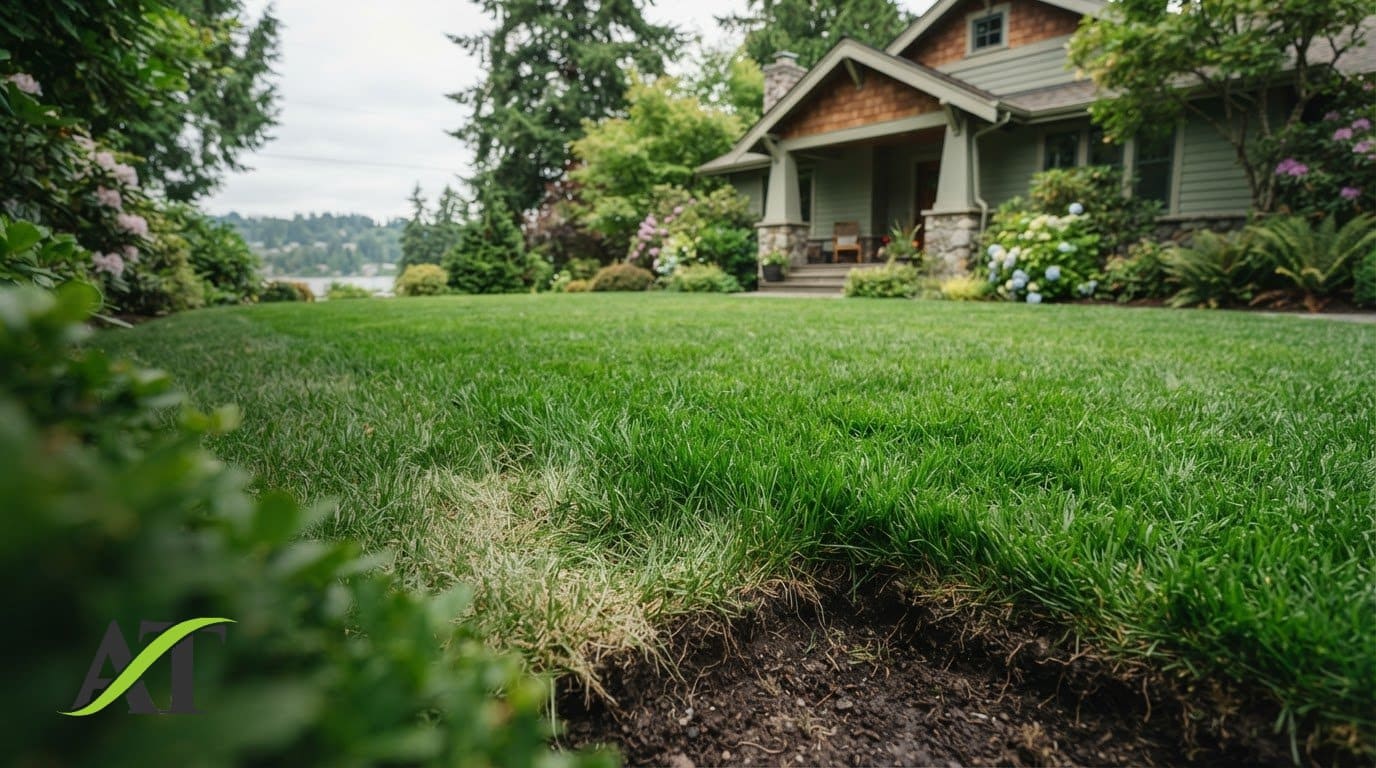
Many homeowners hesitate to schedule service because they’ve heard horror stories about torn-up yards. Let’s clear the air. The biggest myth is that your lawn will be ruined. In reality, the lawn looks “thinned” temporarily because the dead material is gone. You are finally seeing the actual grass plants without the brown mat hiding them. According to the University of Minnesota Extension, removing this layer is critical for long-term health. Clearing this space is one of the primary power raking benefits, as it allows your lawn to finally breathe.
Another common misconception is that Power Raking (Dethatching) replaces Core Aeration. They aren’t interchangeable. Power Raking (Dethatching) handles surface debris, while Core Aeration addresses sub-surface compaction. We treat Power Raking (Dethatching) as the “heavy lifting” phase of our Full Meal Deal. This service works best when the grass is actively growing. If you try to do this during a summer heatwave or winter freeze, the lawn won’t have the energy to recover. If you aren’t sure about your lawn’s current state, you can get a professional assessment from our team.
Why Your Lawn Looks Worse Before It Looks Better
A freshly raked lawn often has a “shorn” look. This isn’t damage; it’s a sign of successful debris removal. Removing the “dead” layer reveals the gaps where new grass needs to grow. This is essential for Overseeding success. One of the greatest power raking benefits is creating perfect seed-to-soil contact. Without clearing that space, your new seed would just sit on top of the thatch and dry out. Once the debris is gone, your lawn is primed for a total transformation.
The Scientific Benefits of Power Raking for PNW Turf
Achieving a healthy lawn in the Pacific Northwest requires more than just water and sun. One of the primary power raking benefits is the immediate increase in nutrient absorption. When a thick organic mat covers your soil, fertilizer gets trapped in the debris instead of reaching the roots. By clearing this layer, you ensure that your organic treatments actually feed the grass. This mechanical reset is a key reason why we include Power Raking (Dethatching) in our Full Meal Deal. Without it, you’re essentially wasting money on products that never reach their target.
In local areas like Shoreline and Edmonds, moss thrives on the damp, shaded environment that heavy thatch provides. Removing this organic mat eliminates the humid microclimate where fungal pathogens and moss breed. This significantly improves your lawn’s natural disease resistance. It’s a proactive way to keep your turf healthy during our long, wet winters. Additionally, this process is vital for successful Overseeding. Grass seed must have direct contact with the soil to establish roots. Following the University of Minnesota Extension guide on thatch control, we prioritize this mechanical clearing to maximize your restoration results.
The Soil Temperature Factor for Recovery
Timing is everything when it involves lawn recovery. We only perform Power Raking (Dethatching) when the grass is ready to grow back quickly. For cool-season grasses in our region, the optimal soil temperature range for germination is 55°F to 75°F (13°C to 24°C). If you rake when the soil is too cold or too hot, the new seed will struggle. Germination might still happen outside this window, but it’ll be slower and much less consistent. We monitor these conditions to ensure your lawn has the best chance to thicken up after the debris is gone. Factors like moisture and weather also play a role, so we aim for the most reliable window possible.
Maximizing Results: Why We Recommend the Full Meal Deal
Power Raking (Dethatching) on its own is only half the battle for a struggling lawn. While it clears debris, it doesn’t address soil compaction or thin grass growth. To see the full power raking benefits, you have to follow through with nutrients and new seed. We developed the Full Meal Deal to provide a logical, four-step restoration. We rake to clear the surface, aerate to let the roots breathe, seed to thicken the turf, and fertilize to fuel the recovery. This synergy ensures every treatment works harder because the physical obstacles are gone.
Preparation is key for homeowners in Lynnwood or Everett. Before our crew arrives, mow your lawn down to about two inches. Mark any obstacles like irrigation heads or shallow cables to ensure our equipment moves safely through the yard. After the service, your main job is moisture management. New seed requires consistent watering to establish properly. While we use premium seed blends, results are always influenced by soil conditions, weather, and seed-to-soil contact. Without proper watering, even the best mechanical work won’t reach its potential. Keep the soil damp until you see consistent growth.
What’s Included in the Full Meal Deal?
The Full Meal Deal is our most intensive restoration package. It consists of four specific components: Power Raking (Dethatching), Core Aeration, Overseeding, and Fertilizing. This is the best choice for lawns with a spongy feel or heavy debris buildup. If your lawn is already relatively clear of thatch, you might opt for our standard Lawn Tune-Up. That service includes Core Aeration, Overseeding, and Fertilizing, but excludes the mechanical raking step. Choosing the right level of care ensures you get the best power raking benefits for your specific property.
Ready to Restore Your North Seattle Lawn?
Realizing the full power raking benefits starts with looking past the temporary “thinned” appearance to the healthy, green yard waiting underneath. You now know that removing the organic barrier is the only way to ensure your fertilizer and seed actually reach the soil. This mechanical “exfoliation” is a critical first step, but it works best when paired with the Core Aeration and Fertilizing found in our comprehensive packages. Since 2004, we’ve helped homeowners in North Seattle and Snohomish County perform this mechanical restoration with owner-operated expertise and specialized Power Raking (Dethatching) equipment. Whether your yard needs the intensive Full Meal Deal or a standard Lawn Tune-Up, we have the professional tools to handle the heavy lifting that hand raking simply can’t touch. We take pride in restorative work that produces tangible outcomes for our neighbors.
It’s time to stop guessing and start growing. We look forward to helping you achieve the thick, resilient lawn your property deserves.
To ensure your yard stays healthy and vibrant year after year, it helps to follow a professional standard for Recurring Lawn Maintenance and Seasonal Property Care.
Frequently Asked Questions
Is Power Raking (Dethatching) the same as regular raking?
No, regular raking only clears surface debris like leaves or grass clippings. Power Raking (Dethatching) uses a specialized machine with vertical tines to reach deep into the turf. It pulls up the thick, waterproof mat of organic matter that blocks oxygen and nutrients. This mechanical process is much more aggressive than a hand tool and is necessary for lawns with heavy buildup.
Will Power Raking (Dethatching) kill my grass?
No, it won’t kill your grass when performed during periods of active growth. Your lawn will look thinned immediately after service because we’ve removed the brown, dead layer of thatch. This is one of the primary power raking benefits. It reveals the soil surface and clears the path for new blades to emerge, resulting in a much thicker, healthier yard within a few weeks.
When is the best time of year to Power Rake in Seattle?
The best times are during the spring or fall when the grass is actively growing and the weather is mild. In Seattle, this typically means March through May or September through October. We focus on soil temperature rather than air temperature for recovery. Optimal germination for cool-season grass occurs when the soil is between 55°F and 75°F (13°C-24°C). Recovery is slower and less consistent outside this range.
How much debris does Power Raking (Dethatching) actually remove?
Power Raking (Dethatching) removes a surprising amount of debris that hand tools simply cannot touch. It is common to pull up enough material to fill a dozen or more large lawn bags from a standard residential yard. This heavy mechanical lifting is why we include the service in our Full Meal Deal. Removing this massive volume of material is essential for restoring drainage and nutrient flow.
Do I need to Overseed immediately after Power Raking?
Yes, you should always follow up with seed. One of the greatest power raking benefits is the excellent seed-to-soil contact it provides. Without Overseeding, the newly exposed soil is vulnerable to weed invasion and may stay looking thin for a long time. We always follow our raking process with Core Aeration, Overseeding, and Fertilizing as part of the Full Meal Deal to ensure a fast, healthy recovery.
Article by
Stewart Armour
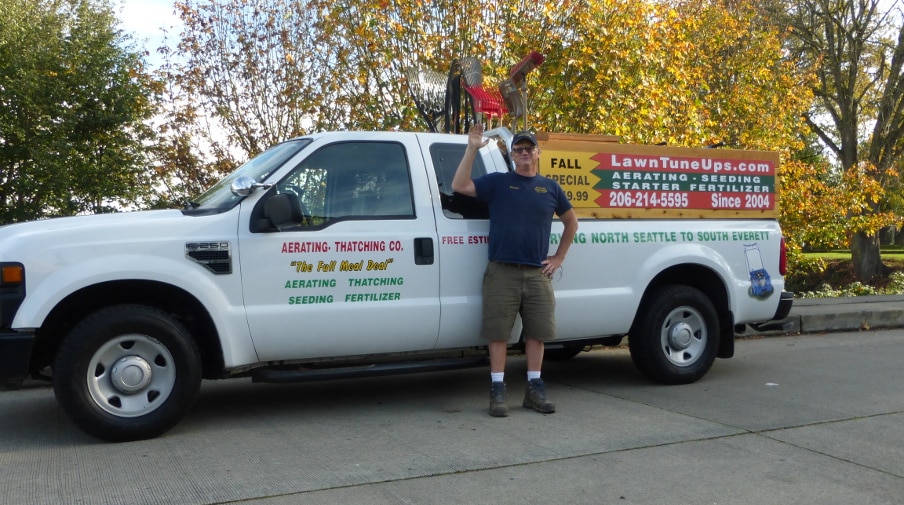
Stewart Armour is an independent lawn restoration expert, educator, and owner of Aerating Thatching Co., serving the greater Seattle area since 2004. With more than two decades of professional experience restoring Western Washington lawns, Stewart specializes in diagnosing lawn problems, improving soil health, and developing long-term lawn renovation strategies. His education includes turf management studies, advanced golf course turf training, and continuing education through Wilbur-Ellis University, State Turf Facilities, Soil First Academy, and Golf Course Applied Turf Physiology. Every article published on LawnTuneUps.com is grounded in practical field experience, current turf science, and a commitment to helping homeowners understand the why behind every recommendation—not just what to do.
Stewart has personally evaluated thousands of residential lawns throughout the Seattle area and remains committed to helping homeowners understand the science behind growing healthier, more resilient lawns.