Why does your Kenmore lawn look like a mossy swamp in winter and feel hard underfoot by midsummer? If your yard is wet, thin, and stubborn, compaction may be part of the story. Heavy watering and extra fertilizer don’t always help when the soil is packed tight. It’s frustrating to watch grass thin out while moss spreads, despite your best efforts.
This guide explains what Core Aeration does, what it doesn’t do, and how to decide whether your lawn needs it. Core Aeration relieves soil compaction. It is not a cure-all, so we’ll also cover how to tell compaction apart from thatch, shade, irrigation, and drainage problems. Then we’ll walk through the Lawn Tune-Up and the Full Meal Deal so you can match the service to what your lawn actually needs.
Key Takeaways
- Core Aeration removes small soil plugs to relieve compaction in the shallow root zone. It does not remove moss, fix drainage, replace missing grass, or replace Power Raking (Dethatching).
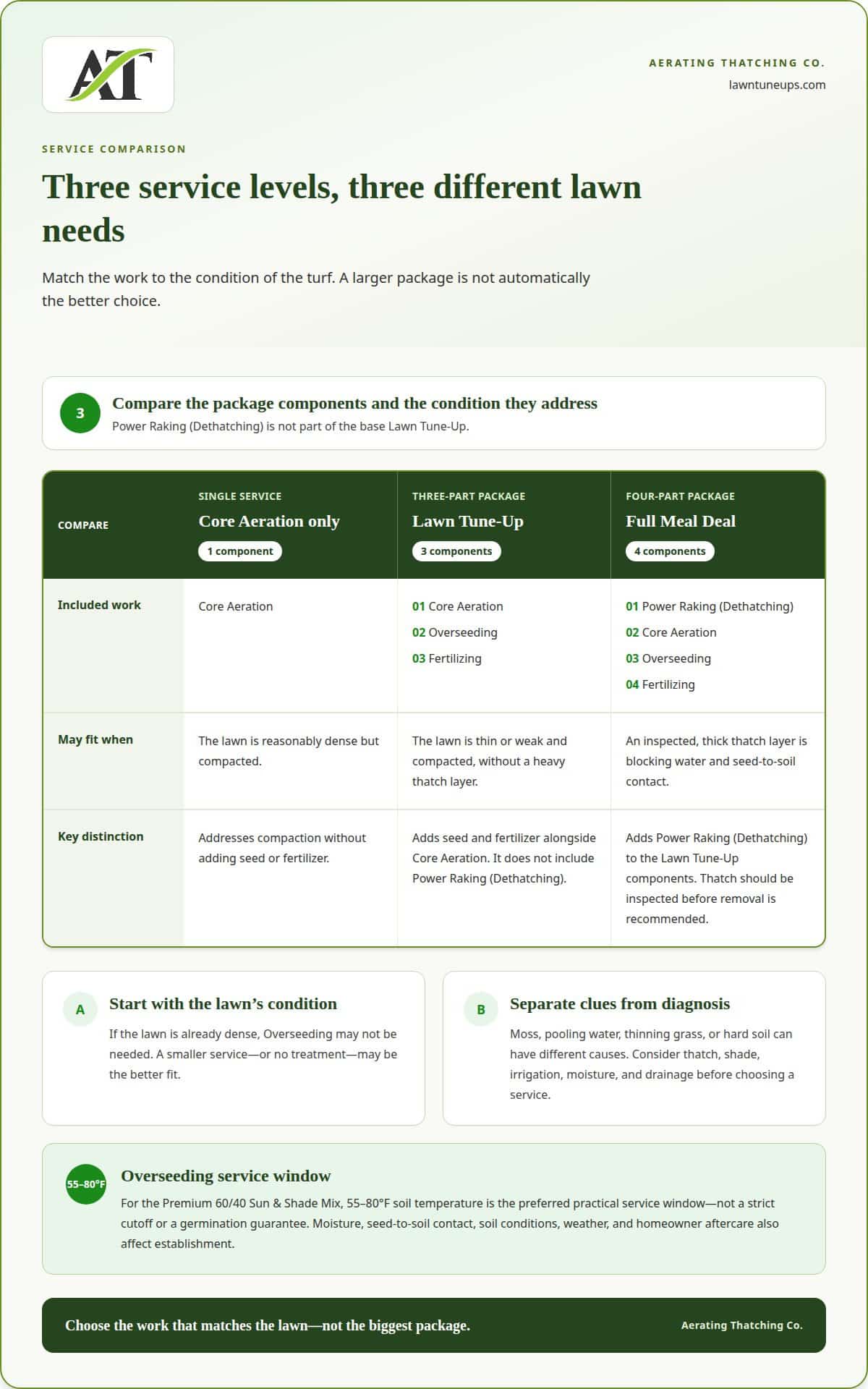
- A Lawn Tune-Up consists of Core Aeration, Overseeding, and Fertilizing. A Full Meal Deal adds Power Raking (Dethatching) to those three.
- Our preferred practical service window for Overseeding is 55–80°F soil temperature. It is not a strict cutoff or a germination guarantee.
- Moss, yellow grass, and wet spots are clues, not a full diagnosis. Check thatch, shade, watering, and drainage too.
- Not every lawn needs the biggest package. Sometimes the right answer is a smaller service or no treatment.
What Is Core Aeration, and Does Your Kenmore Lawn Need It?
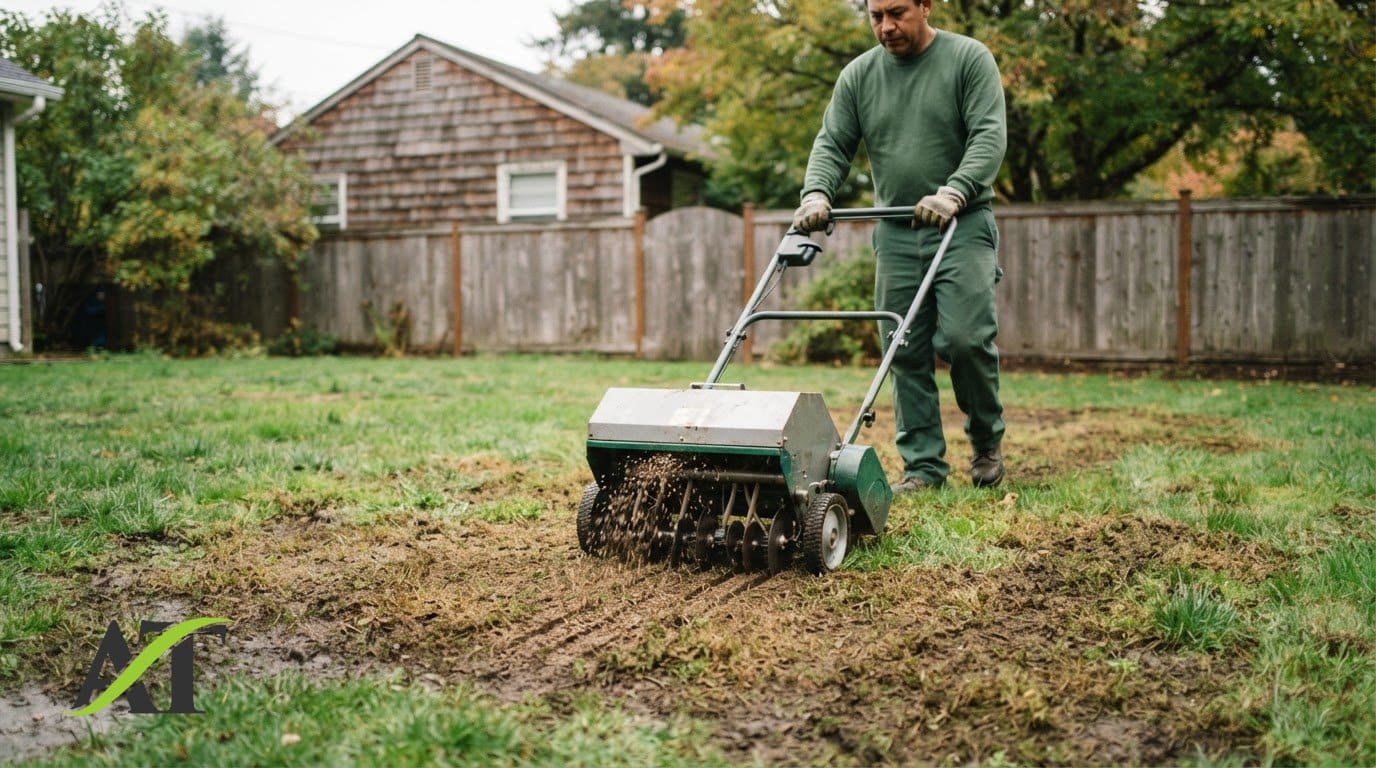
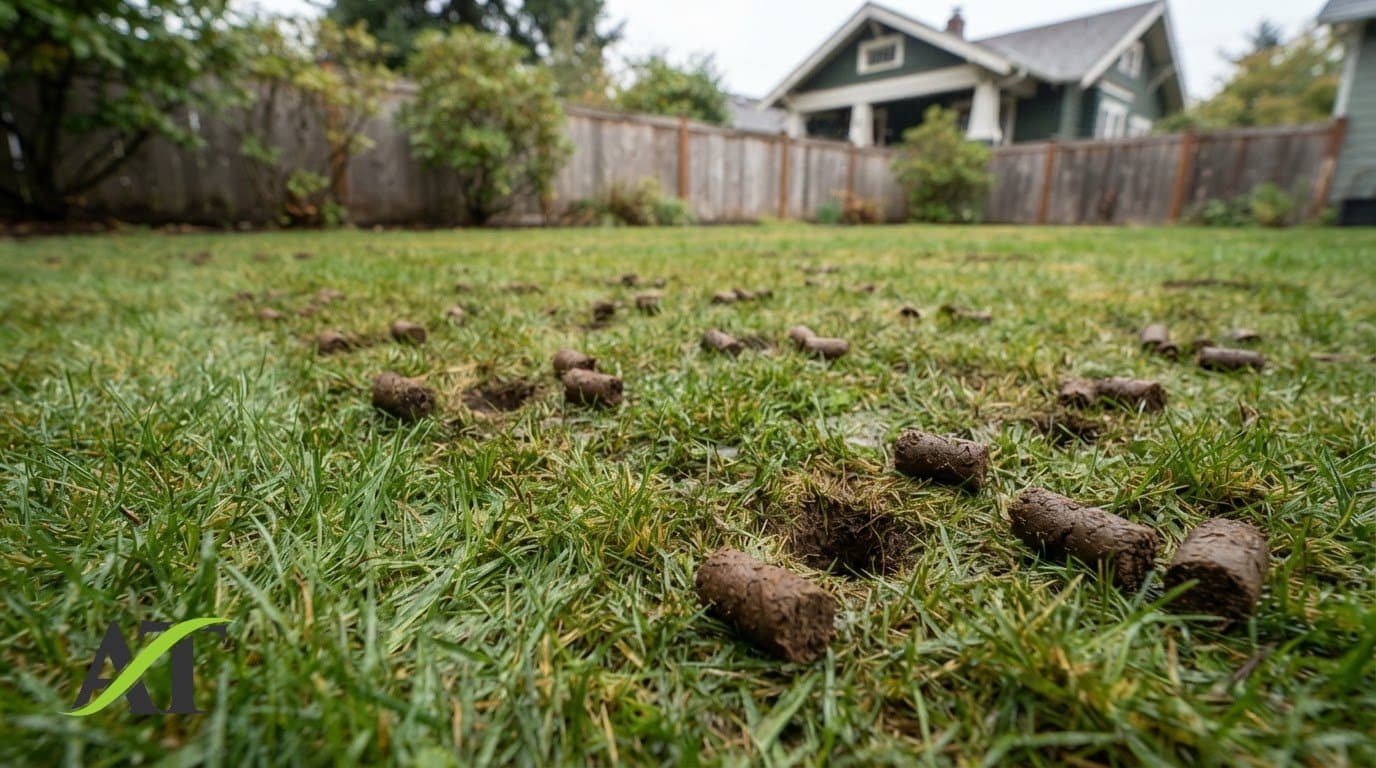
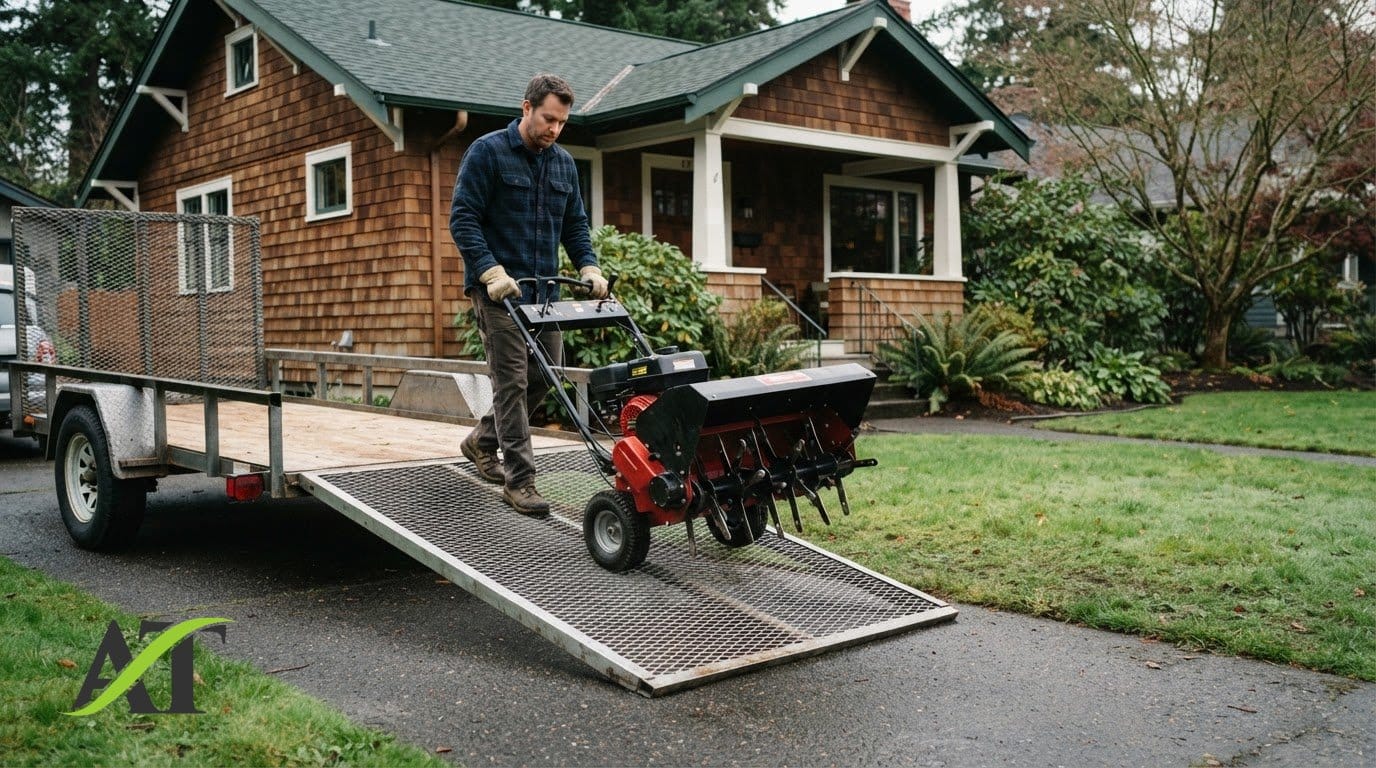
Core Aeration is a mechanical process that removes small plugs of soil from your turf. Pulling those plugs creates openings that let air, water, and nutrients reach the grass roots. It works in the shallow turf root zone. It does not break up deep hardpan, reshape the ground, or repair a drainage defect below the surface.
For core aeration in Kenmore, the question is whether compaction is actually your problem. Lawns near the Sammamish River and Lake Washington often deal with clay-heavy, wet ground, and clay packs down over time. For a closer look at local soil, see our guide to clay soil lawn treatment in Kenmore. Core Aeration can help when compaction is what’s holding the lawn back. It won’t help much when the real cause is something else.
The Difference Between Core Aeration and Spiking
Spike aerators and spiked shoes push a hole into the soil without taking anything out. Core Aeration uses hollow tines that pull plugs out. That creates actual space in the soil instead of just pushing dirt aside. For a general overview, see this explanation of core and plug lawn aeration. Our Lawn Tune-Up uses Core Aeration for this reason.
Signs Your Kenmore Property Needs a Closer Look
These are clues. None of them is a complete diagnosis on its own:
- Water pooling on the surface long after rain stops.
- Thinning grass that looks stressed even with regular watering.
- Moss spreading where grass used to grow thick.
- Ground that’s hard to push a screwdriver into.
Each of these can also point to shade, a thick thatch layer, uneven irrigation, or a drainage problem. Consider moisture and site conditions before deciding. Our article on getting rid of moss in a Kenmore lawn walks through the causes. If you’re unsure, ask Stewart to take a look before you commit to any treatment.
How Compaction Affects Turf Health
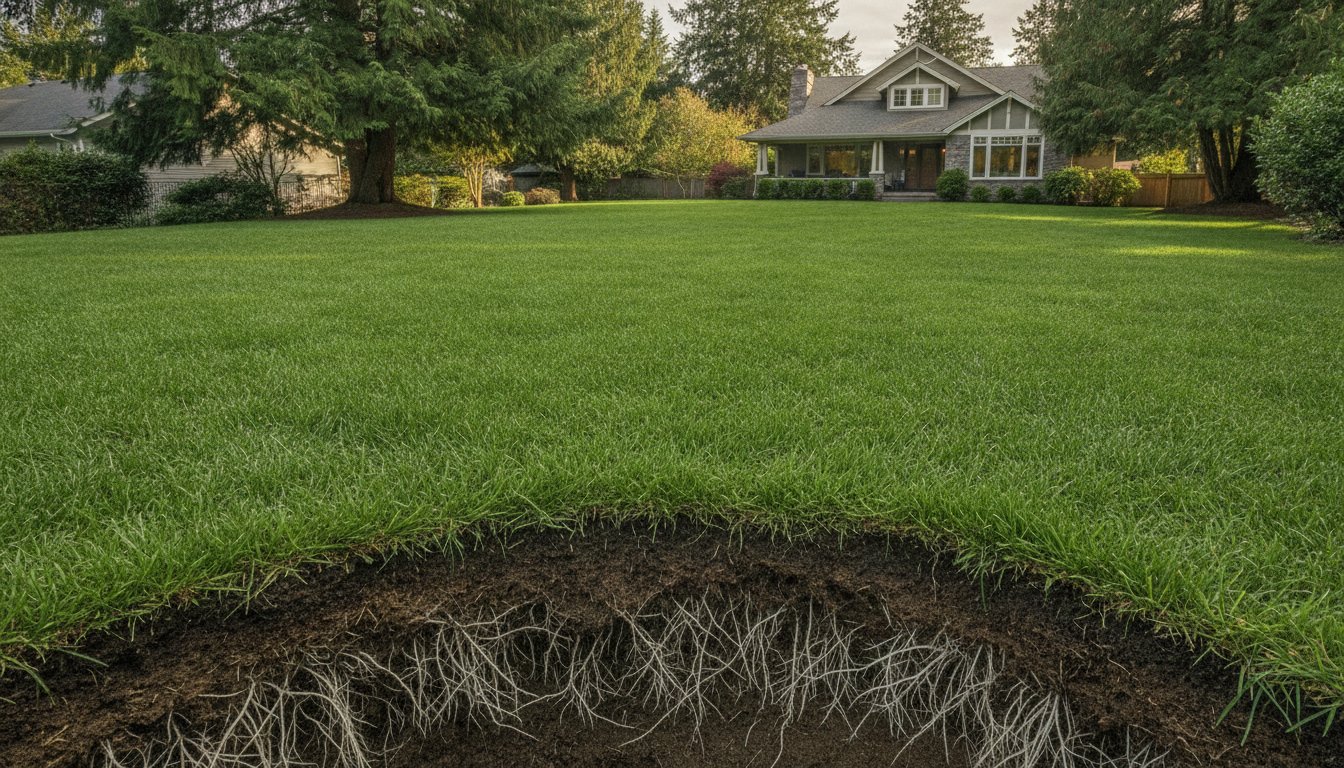
When soil particles are pressed together, the tiny air pockets between them shrink. Foot traffic, pets, and mowers all add to it. Compacted soil makes it harder for air, water, and nutrients to move down to the roots. Core Aeration reopens some of that space in the root zone. The Clemson University Cooperative Extension guide on aerating lawns explains how compaction damages roots and how coring restores pore space and water infiltration.
Aeration also doesn’t replace good watering, mowing, and fertilizing. It sets up the soil so those things work better.
The Impact on Root Development
Roots grow where they can find room, air, and moisture. In tight soil they tend to stay shallow, which leaves the lawn more exposed to dry spells. By opening channels in the root zone, Core Aeration gives roots a way to move deeper. A deeper root system helps a lawn handle summer dryness, though results depend on watering, weather, and soil conditions.
Improving Drainage and Runoff
Aeration can help surface water soak into the turf instead of sitting on top of compacted soil. That’s a real benefit for some Kenmore lawns. But it does not fix a subsurface drainage defect or a high water table. If water sits in the same spot for long stretches, aeration alone won’t solve it, and a drainage problem needs separate diagnosis. For a similar discussion, see our guide to when core aeration helps and when it doesn’t.
Thinking about doing it yourself? A manual hollow-tine corer can suit a small, accessible area. A rental machine is heavy and unfamiliar, and you would need to learn to operate and maneuver it. You’d also need to handle transport, loading, and the plugs left behind. Our comparison of DIY vs. professional lawn aeration covers how to weigh area, effort, and access.
Lawn Tune-Up vs. Full Meal Deal: Which One Fits?
Core Aeration by itself does not include Overseeding or Fertilizing. Those come with the packages below, and the right choice depends on the condition of your turf. Add-ons such as lime, soil amendments, or an organic-based fertilizer upgrade are optional, not automatic in either package.
| Package | What it consists of | Usually fits |
|---|---|---|
| Core Aeration only | Core Aeration | Reasonably dense lawns that are compacted |
| Lawn Tune-Up | Core Aeration, Overseeding, Fertilizing | Thinning lawns without a heavy thatch layer |
| Full Meal Deal | Power Raking (Dethatching), Core Aeration, Overseeding, Fertilizing | Lawns where thatch is a real barrier |
When to Choose a Lawn Tune-Up
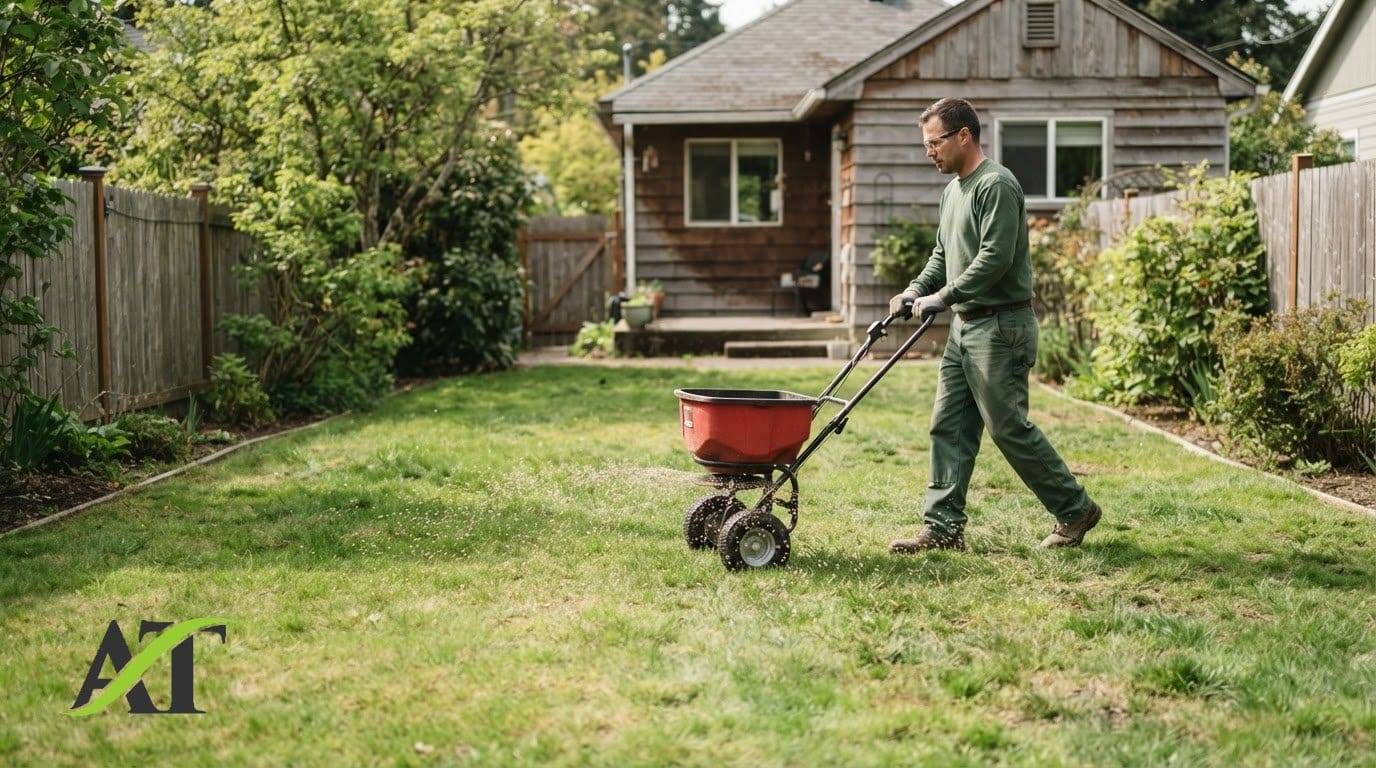
A Lawn Tune-Up suits a lawn that is thin or weak and feels hard, but isn’t buried in thatch. It relieves compaction, adds new seed, and applies fertilizer. If your lawn is already dense, Overseeding may not be needed, so a smaller service could be the better fit.
The Full Meal Deal for Heavy Restoration
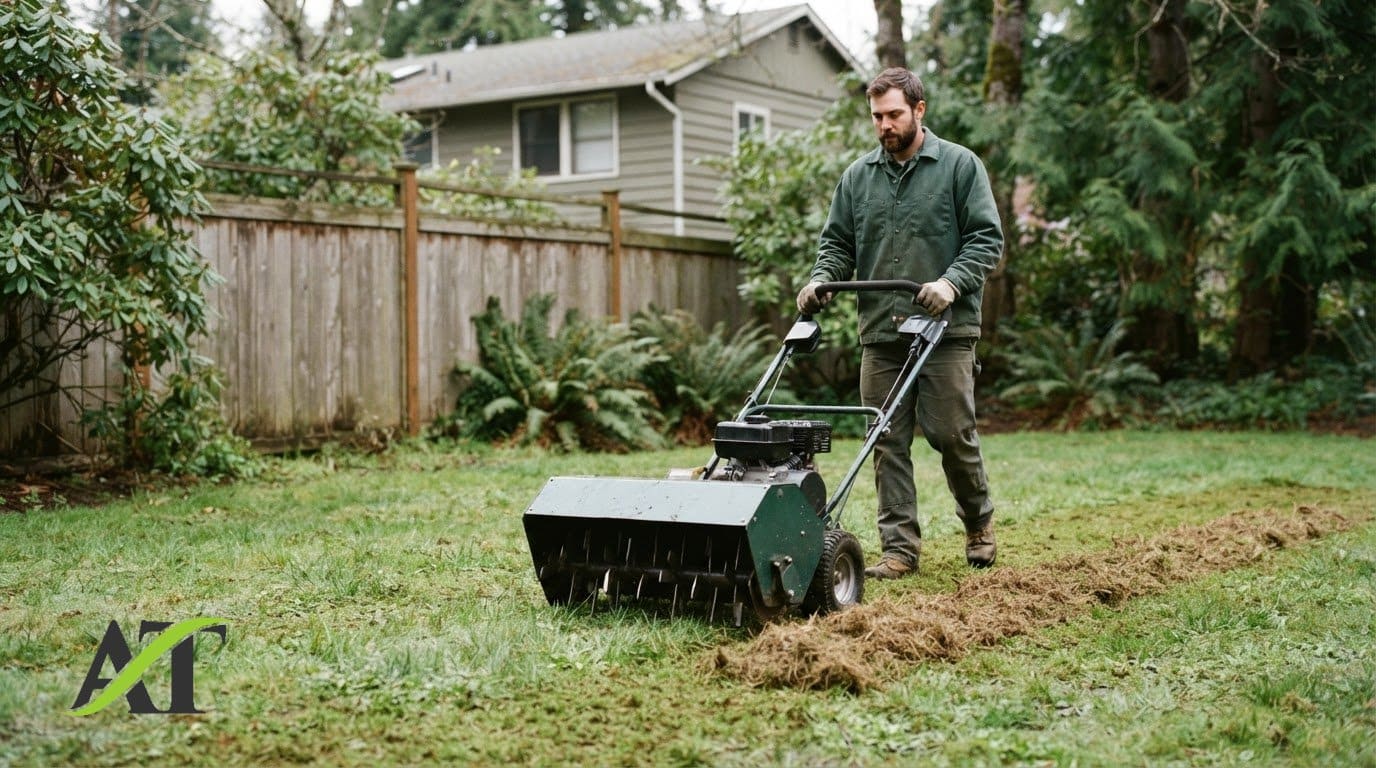
The Full Meal Deal includes four components: Power Raking (Dethatching), Core Aeration, Overseeding, and Fertilizing. It makes sense when a thick thatch layer is blocking water and seed-to-soil contact. Core Aeration does not replace Power Raking (Dethatching). Thatch should be inspected before anyone recommends removing it, and not every thin lawn has a thatch problem. See when to power rake a lawn in Seattle for more.
Raking the loosened material afterward is a separate, optional step. For a broader look at restoring a worn lawn through the seasons, see our seasonal lawn restoration guide.
Timing: When to Schedule Service in Kenmore
Spring and fall are the common service windows, when the soil is moist but not saturated. Summer dryness alone is not a reason to aerate. Exact timing varies with weather, soil conditions, and active growth. The Iowa State University Extension’s core aeration guidelines also stress soil moisture and seasonal timing for cool-season lawns.
The Science of Germination
For Overseeding, 55–80°F soil temperature is our preferred practical service window for the Premium 60/40 Sun & Shade Mix. It is not a universal optimum, a strict cutoff, or a germination guarantee. Moisture, seed-to-soil contact, soil conditions, weather, and your aftercare all affect how well new seed establishes. We don’t guarantee germination or lawn recovery.
Preparing Your Lawn for Restoration
- Mark sprinkler heads, oil tank caps, shallow utilities, pet fencing, and other hidden items before service. Marking them is the homeowner’s responsibility.
- Aim for soil that is moist but not saturated.
- Plan your aftercare: watering, mowing, and traffic management matter, and the right approach differs for standalone Core Aeration, established grass, and new seed. Follow our aftercare guide.
- Don’t add extra fertilizer right after a service that already included starter fertilizer.
- Don’t apply herbicides to newly seeded turf unless the product label explicitly permits it. Weed management is the homeowner’s responsibility.
If soil pH is a question, 6.5 is the ideal pH for lawns in Western Washington. Use a soil test and the product directions to decide whether lime is needed. Lime raises overly acidic soil. It is not a moss killer or a fix for compaction.
Prepare Your Kenmore Lawn
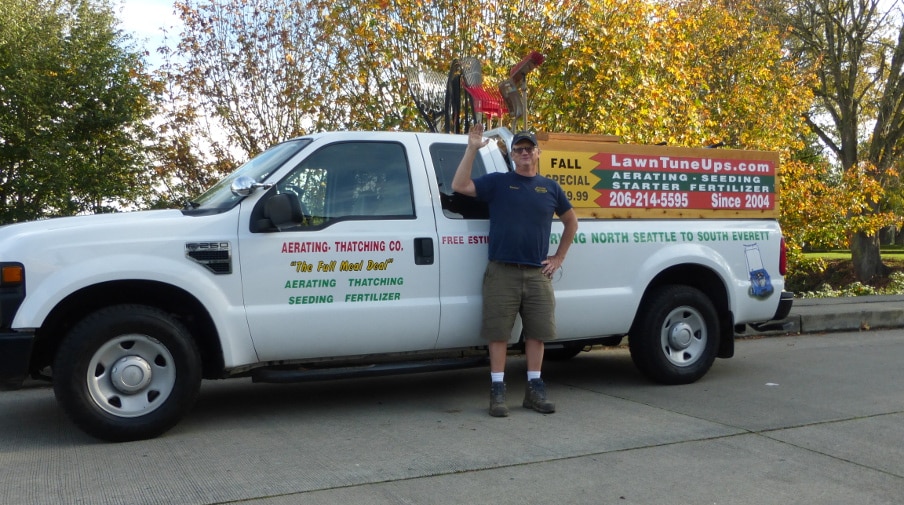
A thick lawn comes from healthy soil, the right service, and good aftercare. Core Aeration is a strong first step when compaction is the issue. Stewart runs Aerating Thatching Co. as an owner-operated business, established in 2004, and gives honest, no-pressure advice on matching the service to your lawn’s actual need.
Frequently Asked Questions
Is core aeration better than liquid aeration for Kenmore lawns?
Core Aeration physically removes soil plugs to relieve compaction in the root zone. Liquid products don’t remove any soil. If compaction is the problem, mechanical coring is the approach we offer and recommend.
How long does it take for grass seed to germinate after Overseeding?
There is no fixed timeline. Germination speed depends on soil temperature, moisture, seed-to-soil contact, weather, and aftercare. Our preferred practical service window is 55–80°F soil temperature, and we don’t guarantee germination.
What should I do with the soil plugs left on my lawn after Core Aeration?
Leave them on the lawn to break down. They crumble back into the turf over time with rain or watering. Raking them up is optional.
Can I walk on my lawn immediately after a Lawn Tune-Up?
Traffic management is part of aftercare. Fresh seed needs protection while it establishes, and product labels may have their own instructions. Follow our aftercare guide for the services performed rather than assuming a fixed waiting period.
How often should I have my lawn aerated in the Pacific Northwest?
It depends on the lawn. Spring and fall are the common windows, but aerate only when the lawn shows signs of compaction and the soil is moist but not saturated. A lawn with no compaction clues may not need it. If you’re unsure, ask Stewart about your lawn. Lawns larger than 2,000 square feet are priced by estimate.
Article by
Stewart Armour
Stewart Armour is the owner of Aerating Thatching Co., an owner-operated Seattle-area lawn restoration business established in 2004. He helps homeowners understand Core Aeration, Power Raking (Dethatching), Overseeding, soil conditions, and the aftercare needed for stronger lawns. His background includes turf management study, advanced golf course turf training, and continuing education through Wilbur-Ellis University, State Turf Facilities, Soil First Academy, and Golf Course Applied Turf Physiology. Stewart has personally evaluated thousands of residential lawns throughout the Seattle area and focuses on recommending the work that fits each lawn’s condition.