North Seattle-area lawn care • Aerating Thatching Co.
The Seattle Lawn Renovation Checklist: 10 Signs to Assess Before You Renovate
A thin, patchy or mossy lawn deserves a closer look before you choose a service. Use this checklist to decide whether your lawn needs regular maintenance, a targeted repair, or a more complete renovation.
Start with what you can observe, then address the reason the grass is struggling. The right next step depends on the lawn’s condition and the growing conditions around it.
Does your lawn actually need renovation?
Consider renovation when there is widespread thinning or damage and the conditions causing it can be addressed. A few isolated worn spots may need only targeted repair. A reasonably dense lawn may need better maintenance or core aeration rather than a complete renovation package.
Persistent standing water, deep shade or unexplained damage deserves investigation before reseeding. Counting symptoms is useful for organizing your observations; it is not a diagnosis or a service recommendation.
10 signs to check around your lawn
Walk the lawn and note where each problem occurs. Is it confined to one corner, repeated along a path, or spread across most of the lawn?
-
Worn paths and bare patches
Look at areas used by children, pets, garden equipment or a seasonal pool.
Next step: Plan how to reduce repeated wear while repaired grass establishes. Compare a small patch repair with renovation if damage is widespread.
-
Grass that stays thin after routine care
Record what you have already tried and whether the same areas keep declining.
Next step: Review light, watering, soil conditions and traffic before adding more seed or fertilizer.
-
Compacted, heavily used soil
Traffic can compact soil and restrict the movement of air and water.
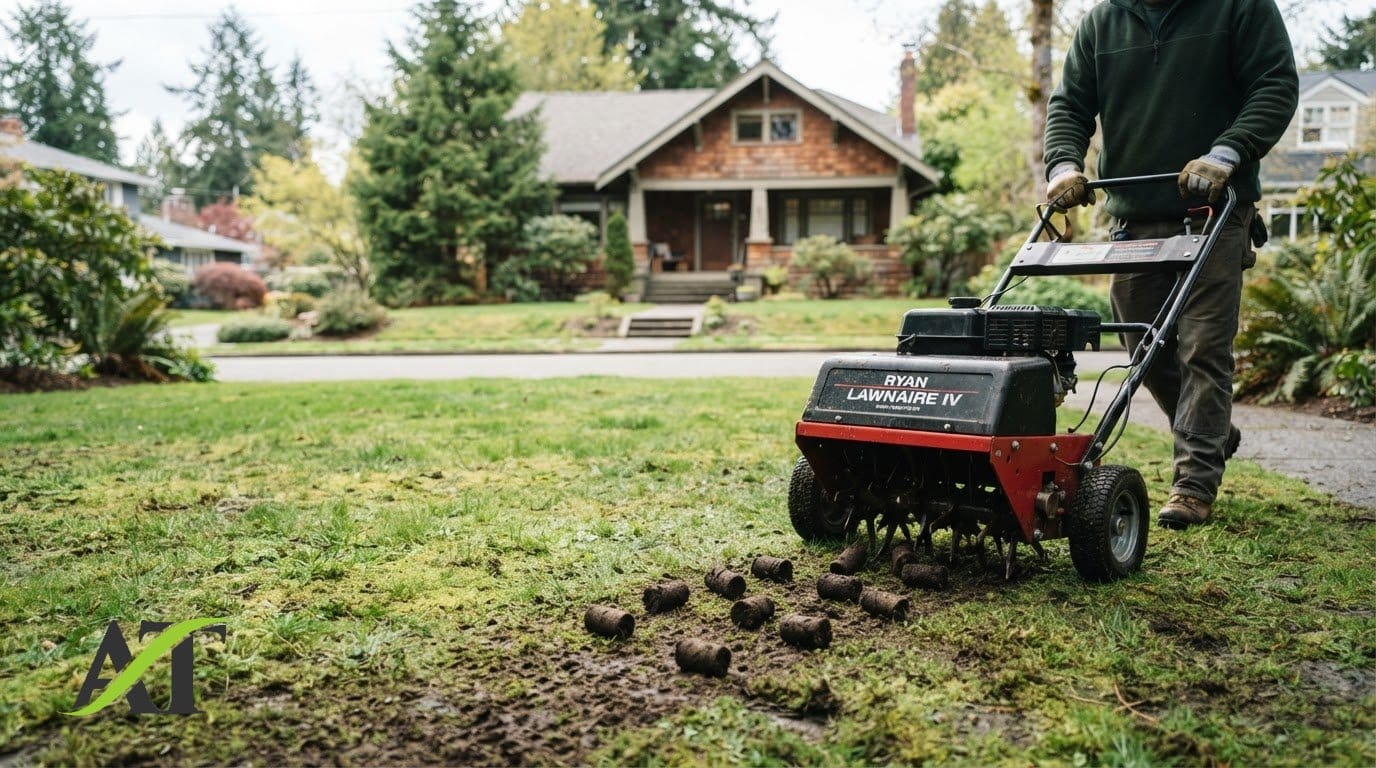
Next step: Consider core aeration where compaction is the issue. If grass is also thin, discuss overseeding as part of the plan.
-
A buildup of thatch
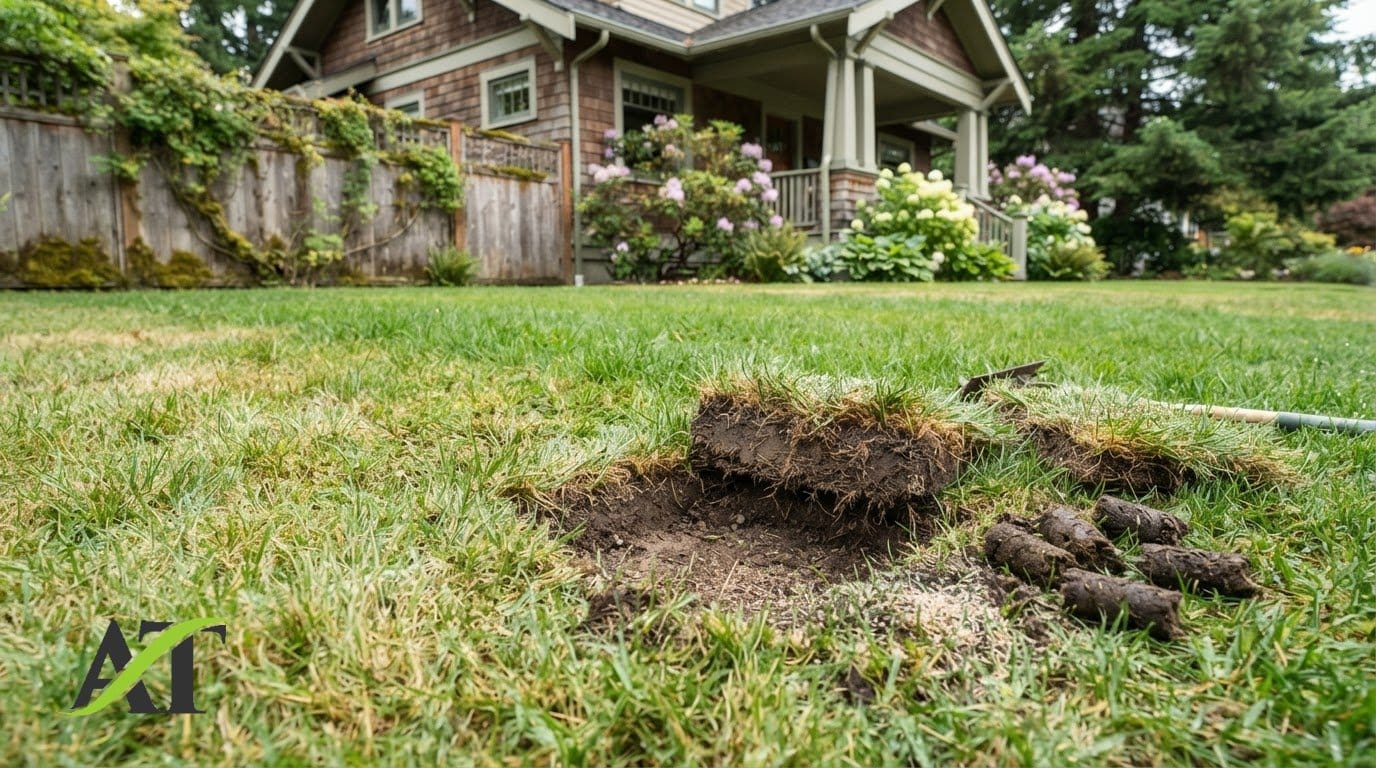
Thatch is a layer of living and dead stems and roots between green growth and soil. Excess buildup can interfere with lawn health.
Next step: Have the layer assessed before choosing dethatching. Surface leaves and loose debris are a different cleanup task.
-
Moss replacing areas of grass
Moss can accompany shade, excess moisture, compaction or other conditions that weaken grass.
Next step: Identify those conditions as well as addressing the moss. Its presence alone does not establish that the lawn needs lime.
-
Water collecting in the same places
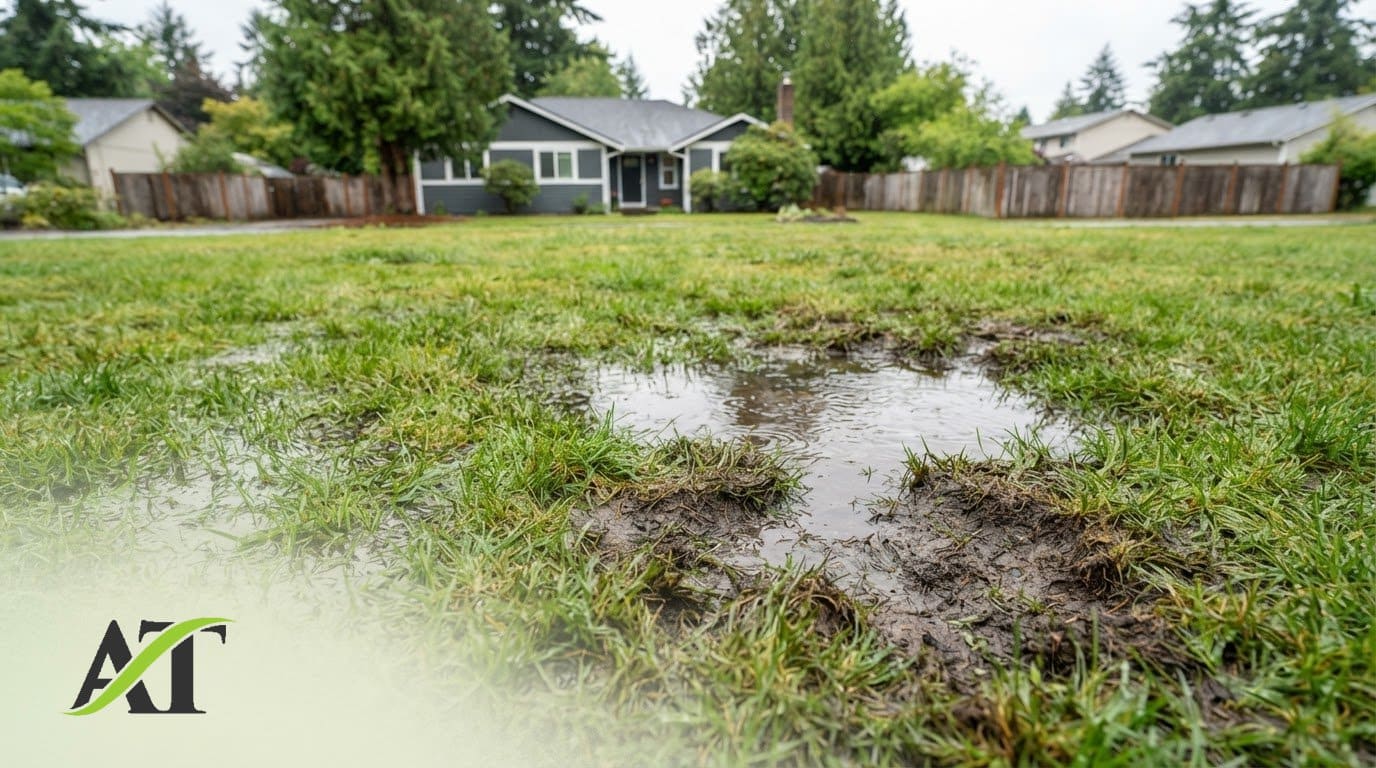
Mark persistent puddles and areas that remain wet after the rest of the lawn dries.
Next step: Investigate drainage before reseeding. Core aeration may help compacted soil, but it does not correct every drainage problem.
-
Brown patches during dry weather
Summer dormancy can make grass brown without making it dead. Uneven watering or dry soil may also deserve attention.
Next step: Assess recovery and water distribution before renovating. Where appropriate, explore a soil wetting agent for water-repelling soil.
-
Weeds filling gaps in the lawn
Note whether weeds occupy a few patches or much of the lawn.
Next step: Plan weed management alongside rebuilding grass cover. Check any treatment’s label for reseeding restrictions before scheduling seed work.
-
Repeated damage or unexplained dieback
Photograph changing patches, disturbed soil and other clues before repairing the area.
Next step: Seek a diagnosis when pests, disease or another cause is suspected. Renovation is a repair step, not a substitute for identifying the cause.
-
Grass struggling under trees or in shade
Check how much light reaches the lawn and whether tree growth has changed the site.
Next step: Match seed to the conditions. In deeply shaded areas, consider whether a different planting would be more suitable than repeated lawn repair.
Regional guidance: WSU Extension’s Puget Sound lawn tip sheet, WSU Home Lawns, and OSU’s lawn establishment and renovation guide.
Fix the cause before rebuilding the grass
Use the checklist to separate repair work from problems that need a different solution first. Drainage, unsuitable light, ongoing traffic and unresolved damage can limit the value of reseeding.
For a lawn with recurring poor growth, a laboratory soil test can help guide soil decisions. Follow the laboratory’s sampling instructions and use its recommendations rather than assuming every lawn needs lime. See why soil testing can be useful.
Choose a next step that fits the lawn
Maintain or repair a small area
Start here when most of the lawn is reasonably dense and the problem is localized. Adjust the care routine, remove debris and plan patch repair where needed.
Compaction may justify core aeration without requiring the largest package.
Improve a thin lawn
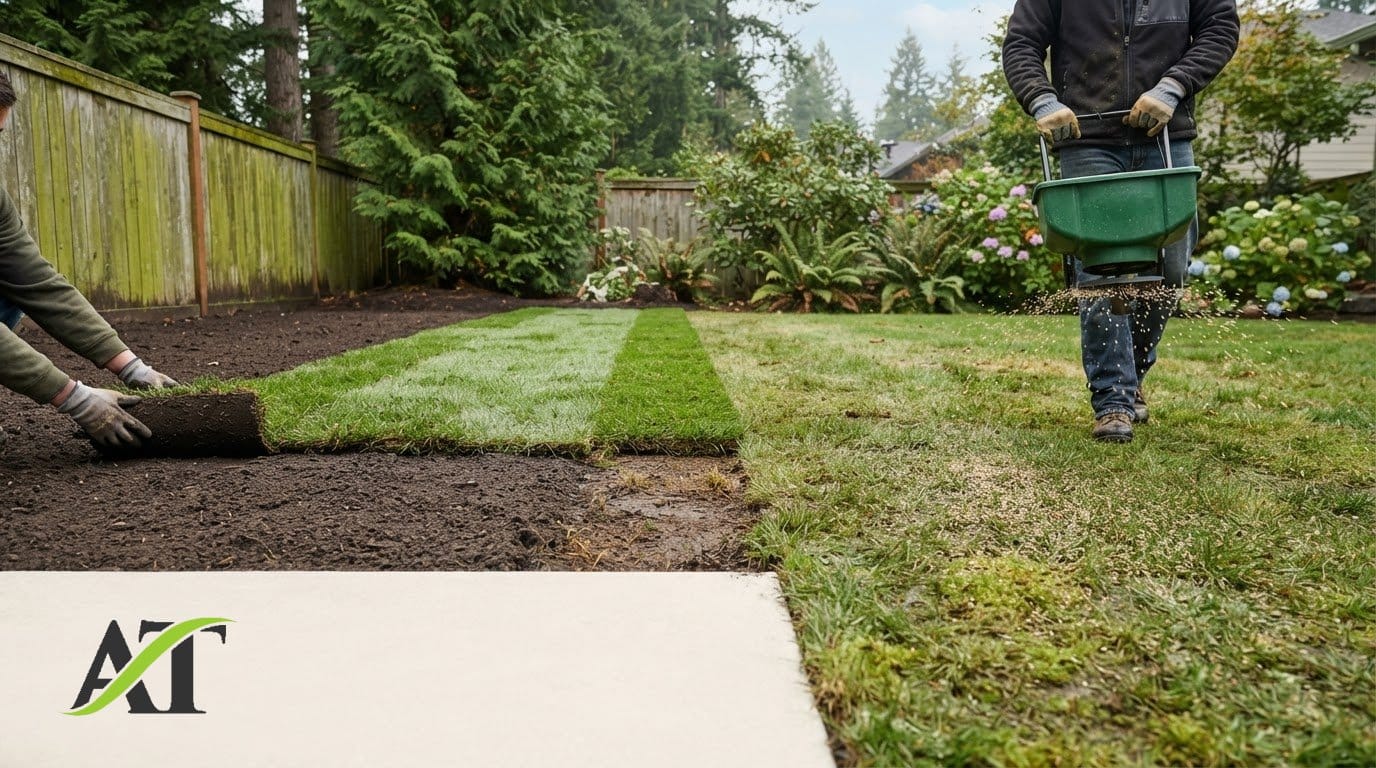
The Lawn Tune-Up combines core aeration, premium overseeding and starter fertilizer.
Consider it when increasing grass density is part of the goal and more extensive surface cleanup is not needed.
Restore a lawn needing more preparation
The Full Meal Deal Lawn Renovation includes dethatching/power raking and cleanup, core aeration, heavier overseeding and starter fertilizer.
Discuss this option when the lawn’s condition calls for more preparation before rebuilding grass cover.
Plan for growing weather and after-care
Spring and early fall offer useful opportunities for lawn repair in the Puget Sound area. Choose timing that gives new grass favorable growing conditions and allows you to manage watering; avoid treating a calendar date as a guarantee.
See WSU’s seasonal lawn guidance and OSU’s discussion of seeding conditions.
- Arrange watering before seed goes down.
- Plan to limit traffic while new grass establishes.
- Follow the seed and service instructions for watering, mowing and follow-up care.
Use our lawn-care calendar to plan ahead and review the lawn after-care guide before scheduling work.
Helpful tools for assessment and small repair jobs
These tools support specific homeowner tasks. You do not need to buy them to request advice or book a service.
As an Amazon Associate, we earn from qualifying purchases.

Soil Sampler With Footstep
Collect soil for a laboratory test when investigating recurring poor growth. Follow the laboratory’s instructions for sampling depth and combining samples.
View Soil Sampler on Amazon
Groundskeeper II / Dethatching Rake
A hand-rake option for cleanup and suitable small-area preparation. Match the tool to the task; it does not replace core aeration for compacted soil.
View Rake on Amazon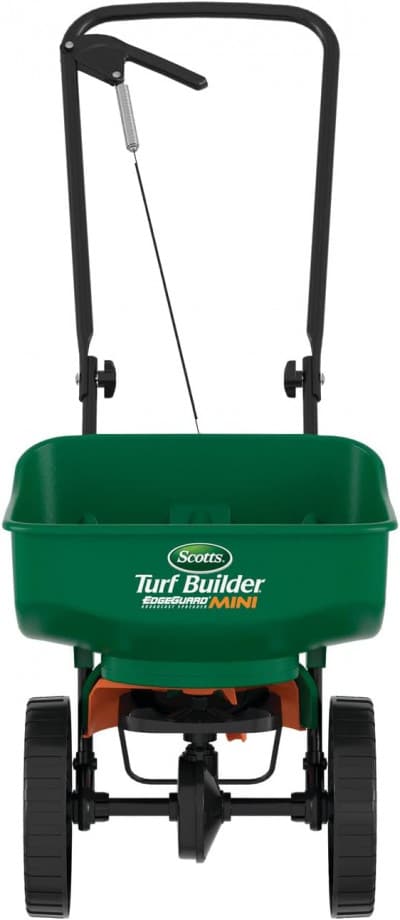
Scotts EdgeGuard Mini Broadcast Spreader
Use a spreader for an overseeding job when even distribution is needed. Check the seed instructions and spreader settings for the material you are applying.
View Spreader on AmazonLawn renovation questions
Does every thin lawn need dethatching?
No. Check for excessive thatch or surface buildup before choosing dethatching. A thin lawn may need a different combination of improved care, core aeration and overseeding.
Can renovation fix a lawn that stays wet?
It depends on the cause. Persistent standing water needs a drainage assessment; aeration and reseeding do not fix every source of excess water.
Should I renovate just because my lawn turns brown in summer?
No. Summer browning can include dormancy. Assess the lawn’s recovery and investigate areas that remain damaged before deciding on repair or renovation.
How do I choose between a Lawn Tune-Up and the Full Meal Deal?
A Lawn Tune-Up focuses on core aeration, overseeding and starter fertilizer. The Full Meal Deal adds dethatching/power raking and cleanup with heavier overseeding when more preparation is appropriate. Ask Stewart which approach fits your lawn.
Not sure which next step fits your lawn?
Describe the areas that concern you and what you have already tried. Stewart personally reviews quote requests and can recommend a suitable next step.
Aerating Thatching Co. has been owner-operated since 2004, with Stewart on every job. Our focus is helping you choose work that fits the lawn’s condition.