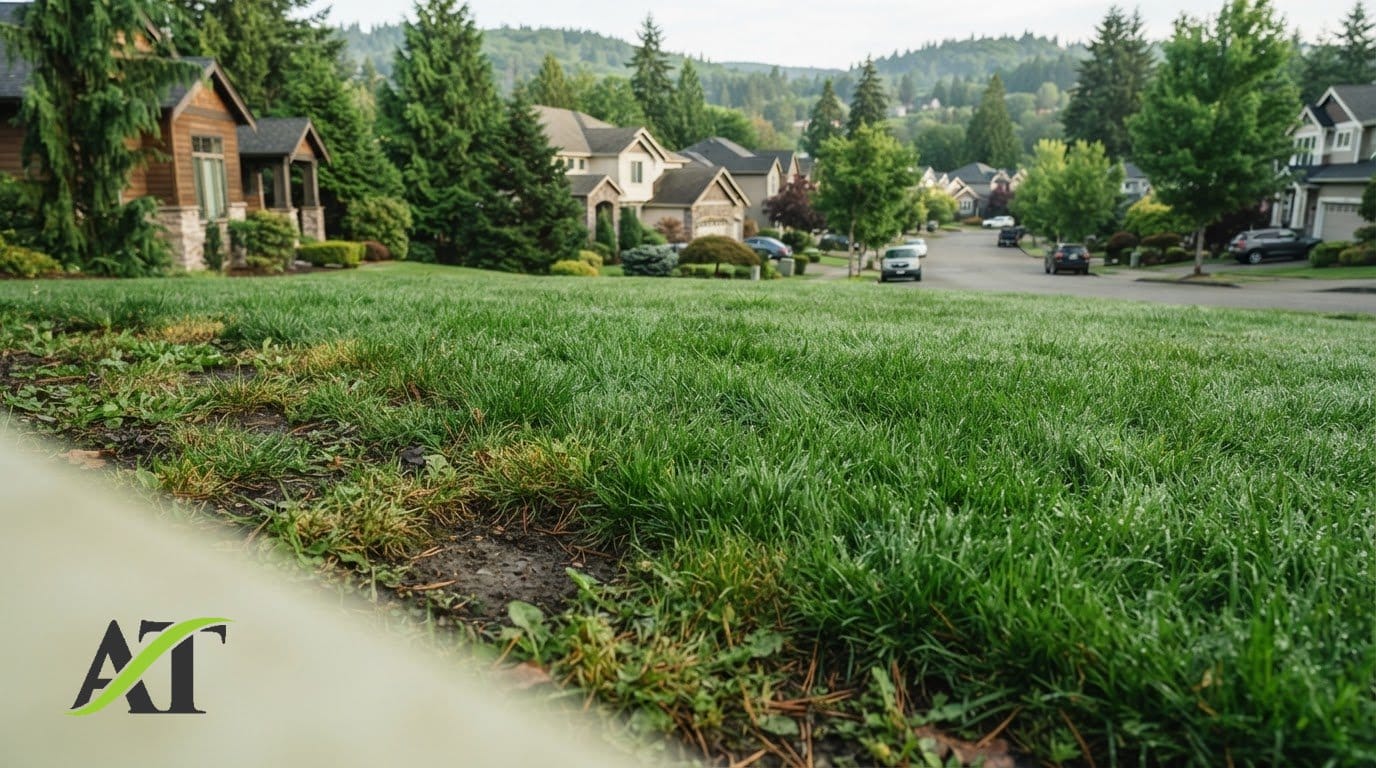
If you’re concerned about thatch buildup Lake Forest Park lawns can develop, a spongy or thinning patch may seem to call for a quick fix. But aggressive raking can pull up healthy grass when the real issue is moss, compacted soil, or another lawn problem. Before choosing a treatment, part the grass and check what’s between the blades and the soil.
This guide explains how to recognize possible thatch and distinguish it from moss and compacted soil. You’ll learn how to inspect several parts of your lawn, what each finding may suggest, and when professional Power Raking (Dethatching) makes sense. Thatch removal is useful when there’s a dense layer to address, but it isn’t a universal lawn fix. We’ll also compare the Full Meal Deal with the Lawn Tune-Up, so you can match the treatment to what you find in your Lake Forest Park lawn.
Key Takeaways
- Spongy or matted grass can point to thatch buildup Lake Forest Park, but these clues call for inspection, not an automatic diagnosis.
- Thatch, moss, and compacted soil have different signs and call for different treatments.
- Inspect several areas, including a healthy-looking section, before deciding what your lawn needs.
- The Full Meal Deal includes Power Raking (Dethatching), Core Aeration, Overseeding, and Fertilizing. The Lawn Tune-Up includes Core Aeration, Overseeding, and Fertilizing.
How to Spot Possible Thatch Buildup in a Lake Forest Park Lawn
A lawn that feels spongy underfoot, has matted grass, or seems to let water reach the soil slowly may need a closer look. These signs can point to thatch buildup Lake Forest Park, but none confirms excessive thatch on its own. Check the lawn itself rather than assuming nearby yards have the same problem.
Thatch is an organic layer between the green grass and the soil surface. It forms from plant material, including stems and roots. For a basic overview of its composition and how it can accumulate, see What is lawn thatch.
What does thatch look and feel like?
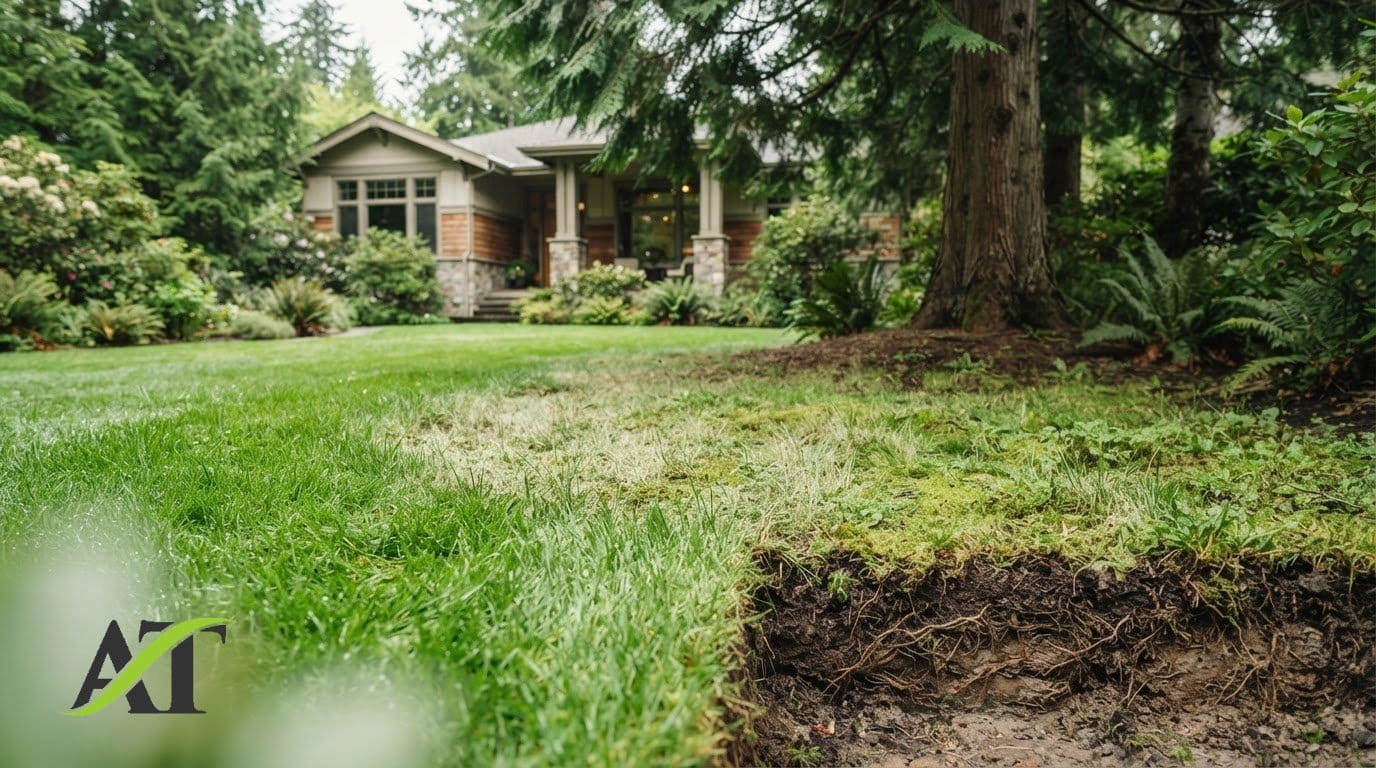
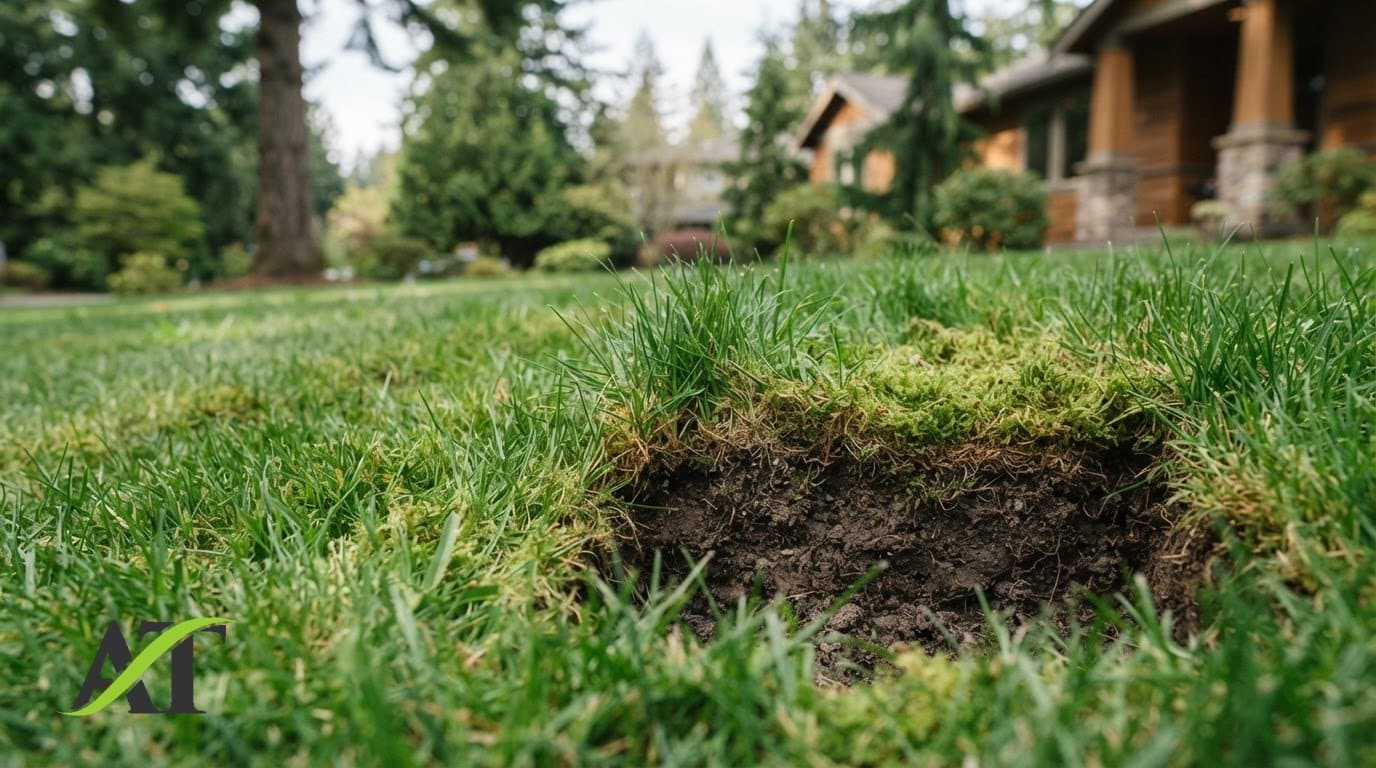
A thin layer of plant material can be present without forming a dense mat. The concern is a thicker, tangled layer that feels springy and separates the grass from the soil below. To inspect, gently part the grass or lift a small section of turf. Look at the boundary between the green blades and soil. A compacted mat of brown material suggests thatch may be present, but one small spot doesn’t tell you whether the rest of the lawn has the same condition.
When should Lake Forest Park homeowners inspect the lawn?
Check areas where grass looks weak, feels unusually spongy, or lies flat in a matted layer. Inspect more than one spot, including both a problem area and a healthier-looking section. Compare the material beneath the grass and note whether the same kind of layer appears in multiple places. Looking at several areas gives you a more useful basis for deciding what to do next.
Symptoms can overlap. Moss may grow alongside conditions that affect grass, while compacted soil or poor growing conditions can contribute to weak growth and slow water movement. Treat these signs as a reason to investigate, not proof that Power Raking (Dethatching) is needed.
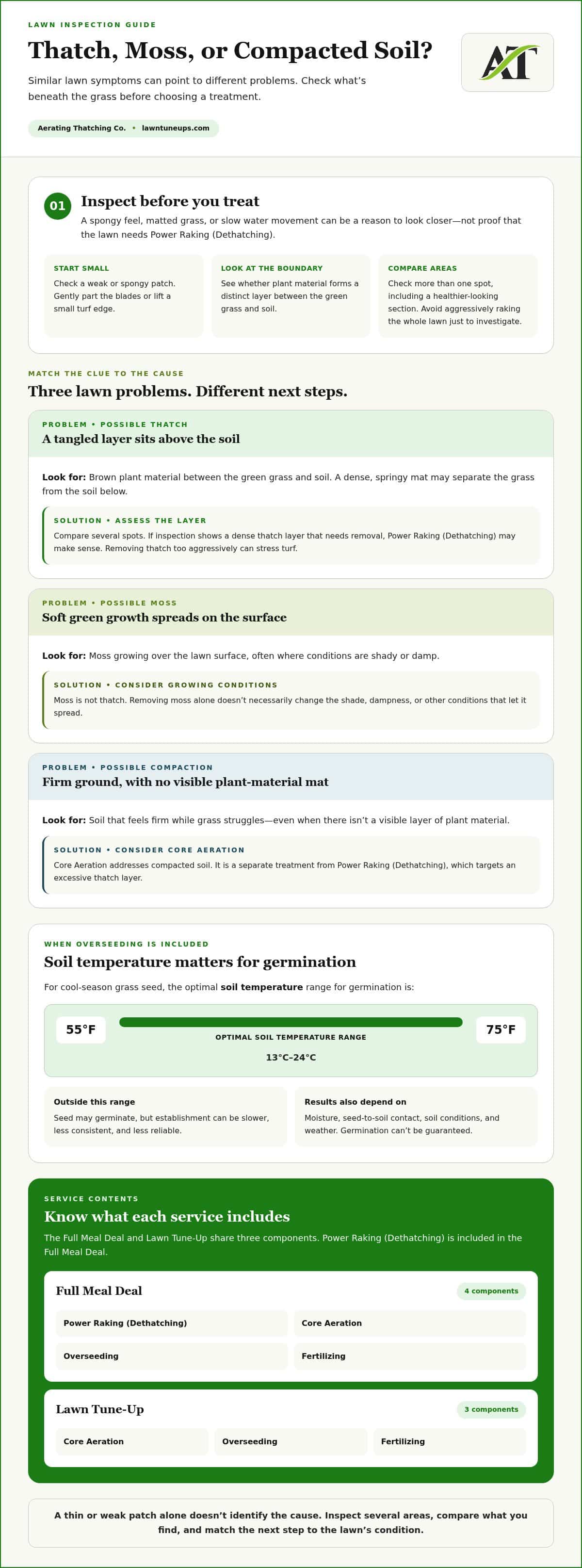
Thatch, Moss, or Compacted Soil: Tell These Lake Forest Park Lawn Problems Apart
Thin, weak turf can have different underlying causes. Look beneath the grass and at the lawn surface before deciding whether Power Raking (Dethatching) or another treatment fits what you’ve found.
| Possible issue | Visible clues | Likely next step |
|---|---|---|
| Thatch | A layer of tangled brown plant material sits between green grass and soil. | Inspect several spots. If a dense layer is present, consider whether Power Raking (Dethatching) is appropriate. |
| Moss | Green, soft growth spreads over the lawn surface, often where conditions are shady or damp. | Consider the lawn’s growing conditions as well as the moss. Moss itself is not thatch. |
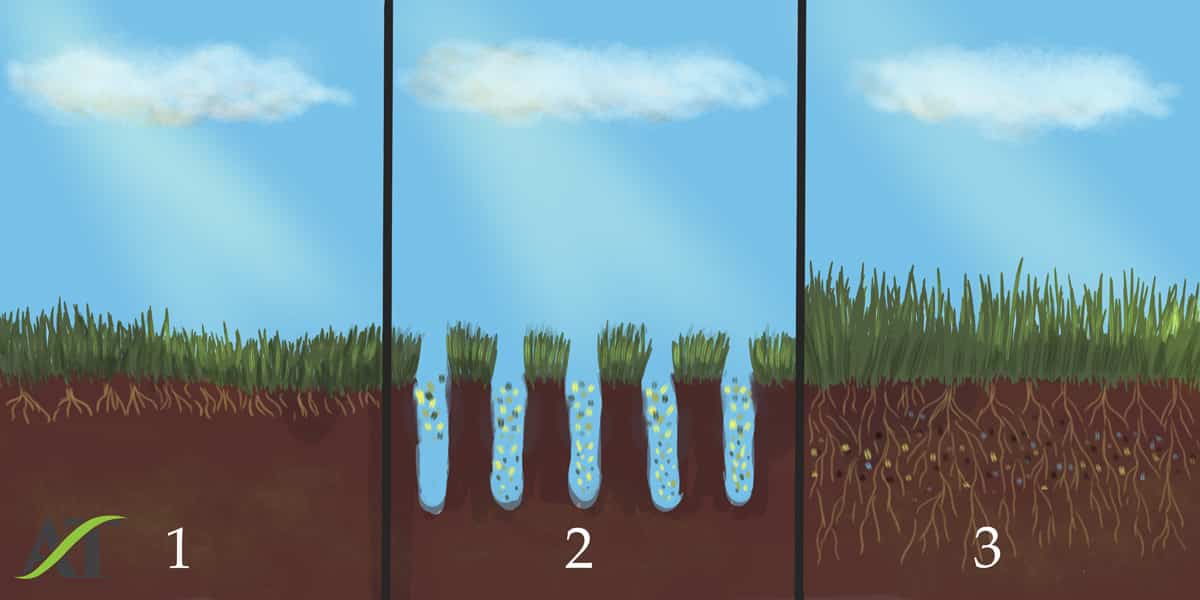
| Compacted soil | The ground feels firm, and grass may struggle even without a visible layer of plant material. | Consider Core Aeration, a separate treatment aimed at compacted soil. |
Is moss the same thing as thatch?
No. Moss grows on the surface; thatch is an organic layer beneath the grass and above the soil. Removing moss alone doesn’t necessarily change the shade, dampness, or other conditions that let it spread. For guidance on assessing and controlling thatch in your lawn, see the University of Minnesota Extension resource. For local guidance on Power Raking, see the Lake Forest Park power-raking FAQ.
Could compacted soil explain the same symptoms?
Yes. Compaction means soil particles are pressed together, not covered by a mat of dead plant material. Core Aeration addresses compacted soil, while Power Raking (Dethatching) targets an excessive thatch layer. They aren’t interchangeable treatments. If you’re unsure what you’re seeing, request a lawn restoration quote and describe the symptoms and areas you inspected. A Snohomish County Core Aeration buyer’s guide can offer more detail on aeration.
Managing Suspected Thatch Buildup in Lake Forest Park
Use a measured process before choosing a treatment: inspect several areas, compare what you find, then match the next step to the likely cause. Thatch buildup Lake Forest Park isn’t diagnosed by a symptom or location alone. A thin patch may reflect thatch, compaction, moss, or other growing conditions, and each calls for a different response.
How can you inspect without damaging healthy grass?
Start with a small check in a weak or spongy area, then compare it with a healthier part of the lawn. Part the blades gently or lift a small turf edge to see whether a distinct layer of tangled plant material sits above the soil. Avoid aggressively raking the whole lawn just to investigate. Note whether the soil feels firm, the grass is matted, and the suspected layer appears in more than one spot.
If Overseeding is part of the plan, soil temperature matters. For cool-season grass seed, 55°F-75°F (13°C-24°C) is the optimal range for germination. Seed may germinate outside that range, but establishment can be slower, less consistent, and less reliable. Moisture, seed-to-soil contact, soil conditions, and weather also affect results, so germination can’t be guaranteed.
When does professional Power Raking make sense?
Power Raking (Dethatching) makes sense when inspection shows a dense thatch layer that needs removal. It isn’t the right fix for every thin lawn. Removing thatch too aggressively can stress turf, so the decision should account for the lawn’s condition and the extent of the thatch, not just one weak patch. Learn more about professional lawn restoration services and how Power Raking fits into treatment options.
Lake Forest Park Thatch Treatment: What the Full Meal Deal Includes
Once you’ve inspected the lawn and identified likely thatch, choose a treatment that matches what you found. The Full Meal Deal includes Power Raking (Dethatching), Core Aeration, Overseeding, and Fertilizing. Each treatment has a different role: Power Raking (Dethatching) removes thatch, Core Aeration addresses compacted soil, and Overseeding adds grass seed. The right combination depends on the lawn’s condition, not just the presence of a thin or weak patch.
Which service includes Power Raking (Dethatching)?
The Full Meal Deal includes all four treatments: Power Raking (Dethatching), Core Aeration, Overseeding, and Fertilizing. The Lawn Tune-Up is different. It includes Core Aeration, Overseeding, and Fertilizing only. Power Raking (Dethatching) isn’t part of the Lawn Tune-Up; it’s a separate optional add-on. The Seattle Lawn Tune-Up guide explains what the base service covers.
That distinction matters if your inspection points to thatch buildup Lake Forest Park. The Lawn Tune-Up provides its three included treatments, but it doesn’t include thatch removal. If your lawn also needs Power Raking (Dethatching), choose the Full Meal Deal or add Power Raking (Dethatching) to the Lawn Tune-Up. Review the lawn restoration services to understand how the treatments differ.
What is a sensible next step for a Lake Forest Park lawn?
If you’ve found persistent weak or matted areas and suspect the lawn needs professional restoration, request a quote. You don’t have to choose a treatment first. Describe what you observed, including whether you found a distinct layer beneath the grass and whether the symptoms appear in several areas.
Choose the Right Next Step for Your Lawn
Spongy or thinning grass is a reason to inspect, not proof that your lawn needs Power Raking (Dethatching). Check more than one area and distinguish a layer of thatch from surface moss or compacted soil before choosing a treatment. The right response to thatch buildup Lake Forest Park depends on what’s happening beneath the grass.
When Power Raking (Dethatching) is appropriate, the Full Meal Deal combines it with Core Aeration, Overseeding, and Fertilizing. The Lawn Tune-Up includes Core Aeration, Overseeding, and Fertilizing, with Power Raking (Dethatching) available as a separate optional add-on. Aerating Thatching Co. provides lawn restoration services in North Seattle, Shoreline, Edmonds, Lynnwood, Mill Creek, Bothell, Kenmore, Lake Forest Park, Mountlake Terrace, Snohomish, Everett, Brier, Woodway, Green Lake, Ballard, and Greenwood.
If your lawn’s symptoms point to professional restoration, request a quote and describe what you found during your inspection. That’s a practical next step toward choosing a suitable treatment.
A careful diagnosis can help you choose a treatment that fits your lawn’s condition.
Frequently Asked Questions
What are the signs of thatch buildup in a lawn?
Common signs include spongy-feeling turf, matted grass, or water that seems slow to reach the soil. Part the grass and look for a dense layer of tangled plant material between the green blades and soil surface. These clues can suggest thatch buildup Lake Forest Park, but they don’t confirm it. Check more than one area, since moss, compaction, or other growing conditions can cause similar symptoms.
Is moss the same as thatch?
No. Moss is growth on the lawn’s surface, while thatch is a layer of organic plant material between the grass and soil. Moss may grow where conditions are shady or damp, but removing it alone doesn’t necessarily change the conditions that helped it spread. Check beneath the grass before choosing a treatment. If there’s no dense thatch layer, Power Raking (Dethatching) may not address the main issue.
Can I remove thatch by raking my lawn?
A gentle inspection with your hands or a rake in a small area can help you see what’s beneath the grass. Avoid aggressively raking the entire lawn based on one symptom. Heavy raking can stress healthy turf, and it won’t correct problems such as compacted soil or moss-favoring conditions. If you find a dense layer of thatch across multiple areas, consider whether professional Power Raking (Dethatching) is a suitable next step.
When should I consider Power Raking (Dethatching) in Lake Forest Park?
Consider Power Raking (Dethatching) when inspection shows a dense layer of thatch in multiple areas, rather than just weak grass or surface moss. The treatment is for suitable thatch conditions, not every thin lawn. Aerating Thatching Co. serves North Seattle, Shoreline, Edmonds, Lynnwood, Mill Creek, Bothell, Kenmore, Lake Forest Park, Mountlake Terrace, Snohomish, Everett, Brier, Woodway, Green Lake, Ballard, and Greenwood.
Does a Lawn Tune-Up include Power Raking (Dethatching)?
No. A Lawn Tune-Up includes Core Aeration, Overseeding, and Fertilizing. Power Raking (Dethatching) isn’t part of the base service; it’s a separate optional add-on. The Full Meal Deal includes all four treatments: Power Raking (Dethatching), Core Aeration, Overseeding, and Fertilizing. Choose based on what your lawn needs rather than assuming Power Raking (Dethatching) is included in every restoration service.
Article by
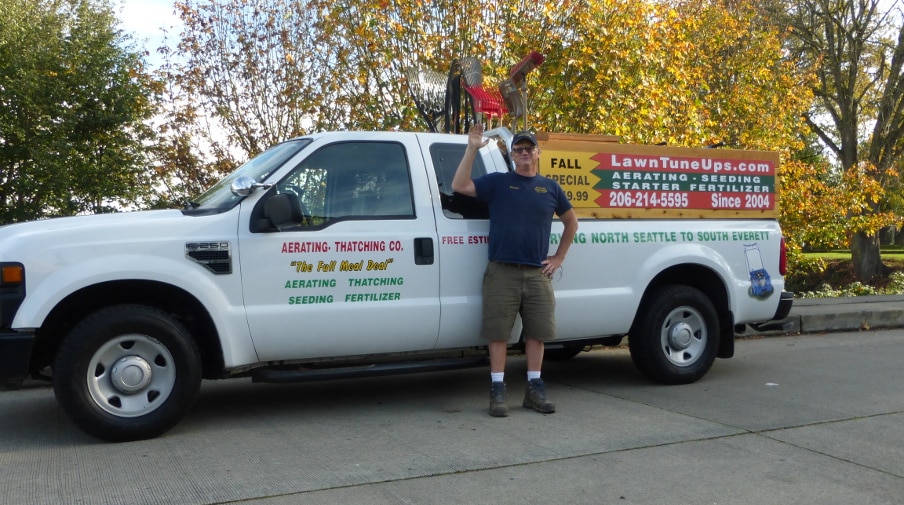
Stewart Armour
Stewart Armour is an independent lawn restoration expert, educator, and owner of Aerating Thatching Co., serving the greater Seattle area since 2004. With more than two decades of professional experience restoring Western Washington lawns, Stewart specializes in diagnosing lawn problems, improving soil health, and developing long-term lawn renovation strategies. His education includes turf management studies, advanced golf course turf training, and continuing education through Wilbur-Ellis University, State Turf Facilities, Soil First Academy, and Golf Course Applied Turf Physiology. Every article published on LawnTuneUps.com is grounded in practical field experience, current turf science, and a commitment to helping homeowners understand the why behind every recommendation—not just what to do.
Stewart has personally evaluated thousands of residential lawns throughout the Seattle area and remains committed to helping homeowners understand the science behind growing healthier, more resilient lawns.