North Seattle-area lawn care • Aerating Thatching Co.
Why Moss Takes Over Seattle Lawns—and When Renovation Helps
Moss often finds room where grass is thin or growing conditions favor it. Before choosing a treatment, look at the light, moisture, soil and remaining grass.
This guide helps you identify useful clues, understand what lawn renovation can address and choose a next step that fits your yard.
Why does moss keep growing in a lawn?
Moss is often favored by shade, excess moisture, compaction or conditions that weaken grass. Removing existing moss can open space for repair, but lasting improvement also depends on whether the site can support denser grass.
Renovation can address surface buildup, compaction and thin grass when those are the problems. It cannot change how much sunlight reaches the lawn or guarantee that persistent drainage problems disappear.
See OSU Extension’s How to Manage Moss in Oregon Lawns for Pacific Northwest context.
Check the conditions before choosing the work
Compare mossy areas with healthier parts of the lawn. Record where the problem occurs, when it is most noticeable and what you have already tried.
Light and shade
Observe the light reaching the affected area. Where grass repeatedly fails in deep shade, discuss whether turf is realistic before investing in repeated reseeding.
Moisture and drainage
Note puddles, wet soil and irrigation patterns. An area that stays saturated needs a closer look at the source of the water and how it drains.
Traffic and compaction
Check worn paths, play areas and places disturbed by equipment. Confirm compaction before assuming that every mossy patch needs aeration.
Remaining grass cover
Look at how much grass is left beneath and around the moss. A small patch and a lawn with widespread thinning may need different repair plans.
Thatch and surface material
Inspect the layer between the grass and soil. Moss and excess thatch are different findings; avoid choosing aggressive removal solely because the surface looks green and spongy.
Soil and routine care
Review mowing, watering and feeding. A soil test can help guide nutrient and pH decisions. Moss alone does not establish a need for lime.
When lawn renovation can help
A renovation plan may combine several tasks, each with a different purpose:
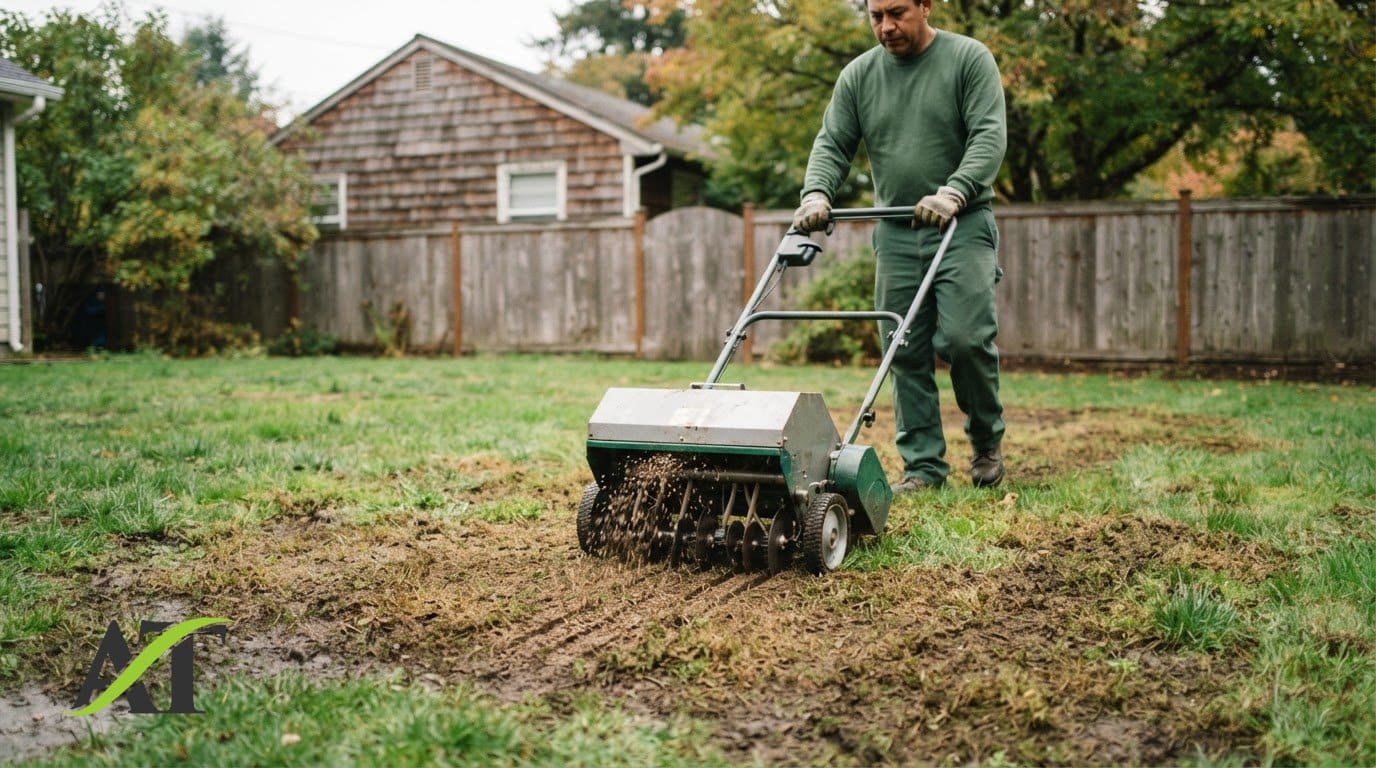
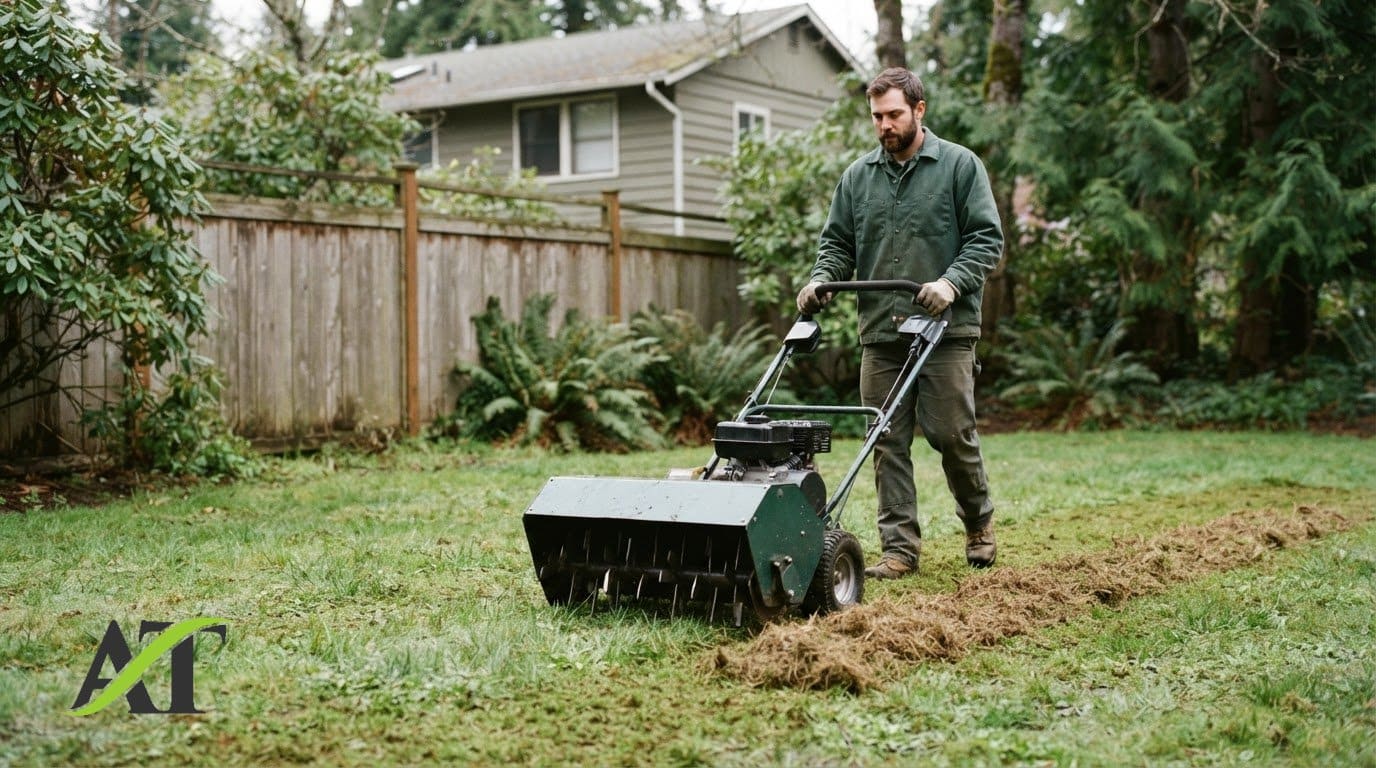
- Dethatching/power raking: Removes excess surface material and can lift moss to prepare the lawn for repair.
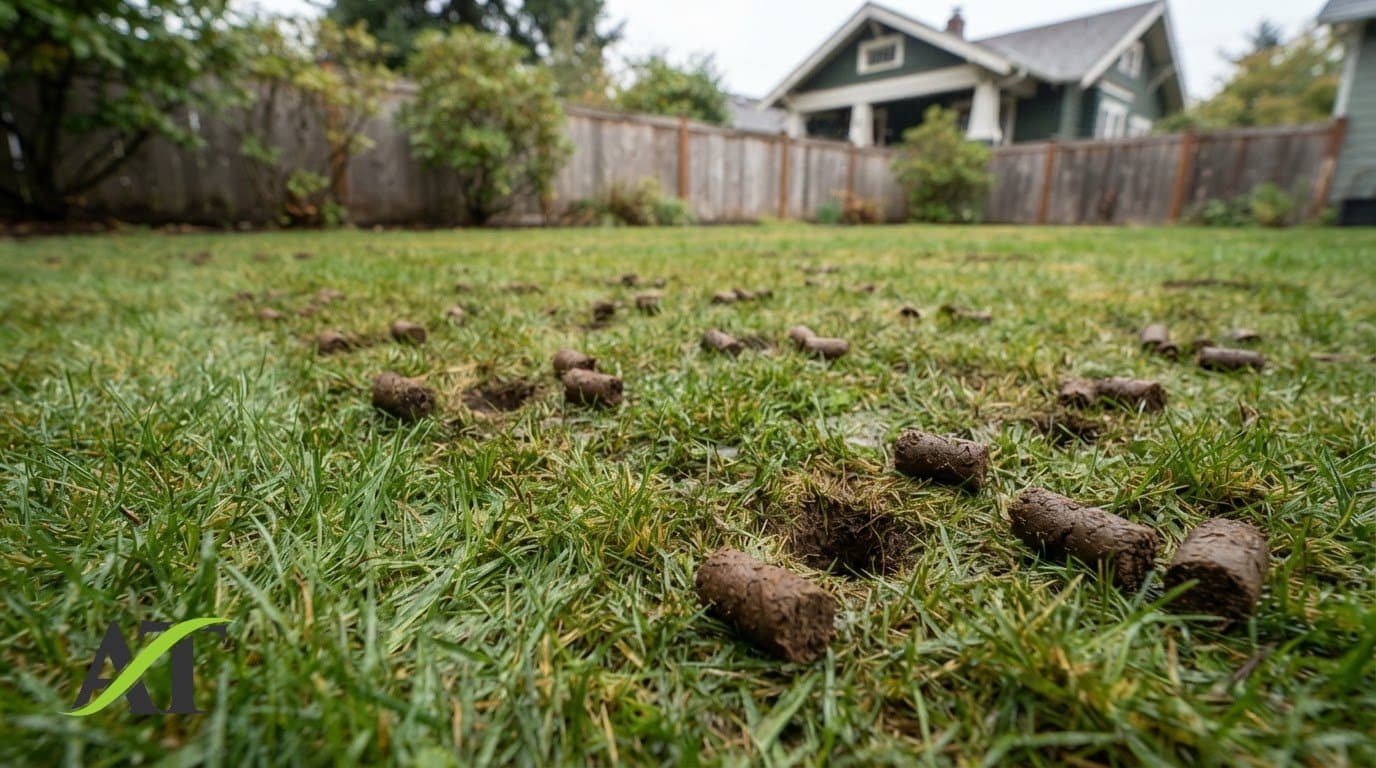
- Core aeration: Removes soil plugs where compaction is limiting the lawn.
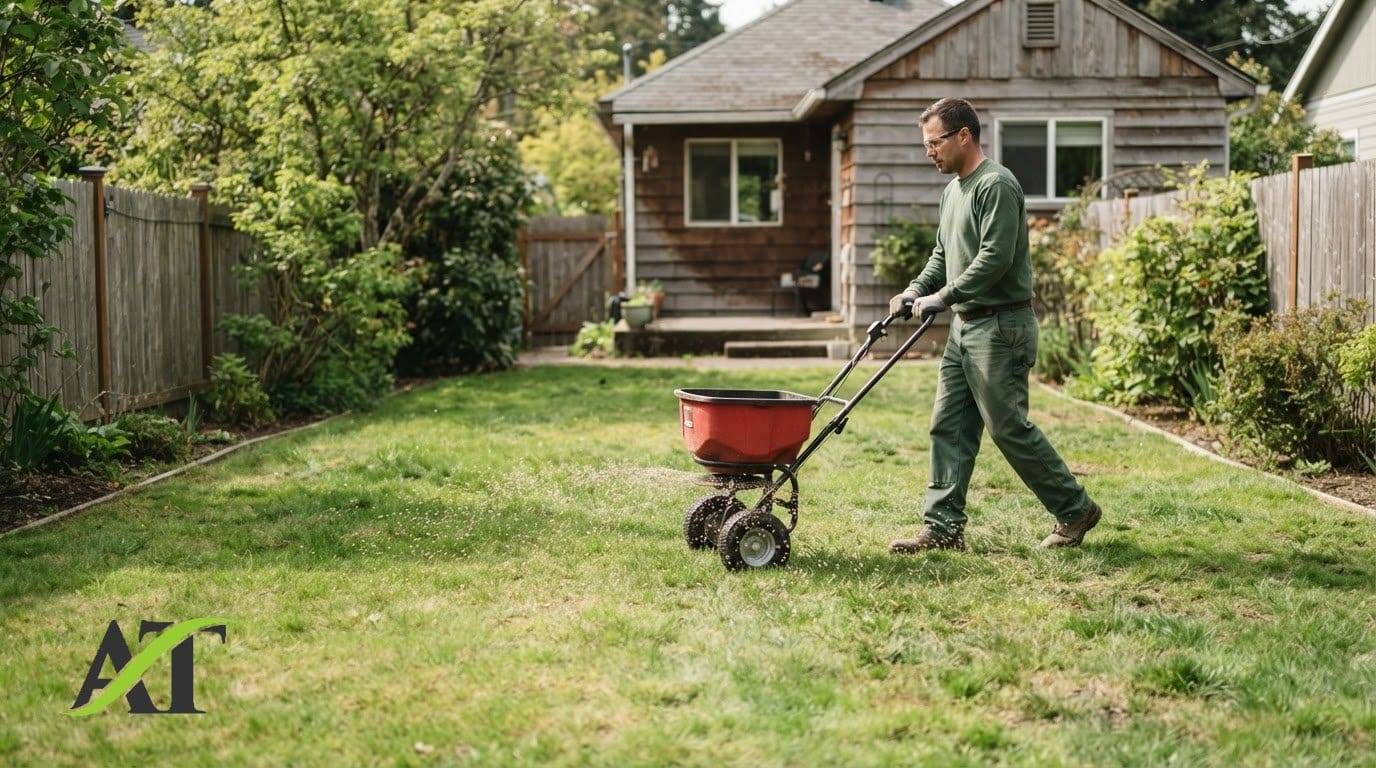
- Overseeding: Adds grass seed to rebuild thin areas when growing conditions support establishment.
- Fertilizer: Supports grass growth as part of a suitable feeding plan.
Discuss the cause of repeated failure before booking. Persistent saturation or unsuitable light may call for a separate site solution or a different use of that area.
OSU Extension’s Managing Moss in Lawns in Western Oregon explains why removal and repair need to be paired with improvements to growing conditions.
Choose the service that fits the assessment
Targeted surface work
Ask about Dethatching (Power Raking) when surface removal is appropriate. Confirm the extent of removal, raking arrangements and whether reseeding belongs in the plan.
Lawn Tune-Up
The Lawn Tune-Up combines core aeration, premium overseeding and starter fertilizer. It may fit a thin lawn that does not require extensive surface removal.
Full Meal Deal Lawn Renovation
The Full Meal Deal combines dethatching/power raking, optional raking, core aeration, overseeding and starter fertilizer when the lawn needs broader repair.
Compare current service pricing, then ask which tasks fit your lawn. The presence of moss does not automatically mean the largest package is appropriate.
Two tools for a small-patch repair
If the area is manageable and the growing conditions can support grass, plan removal and reseeding together. These tools support separate steps; neither corrects shade or drainage.
As an Amazon Associate, I earn from qualifying purchases.
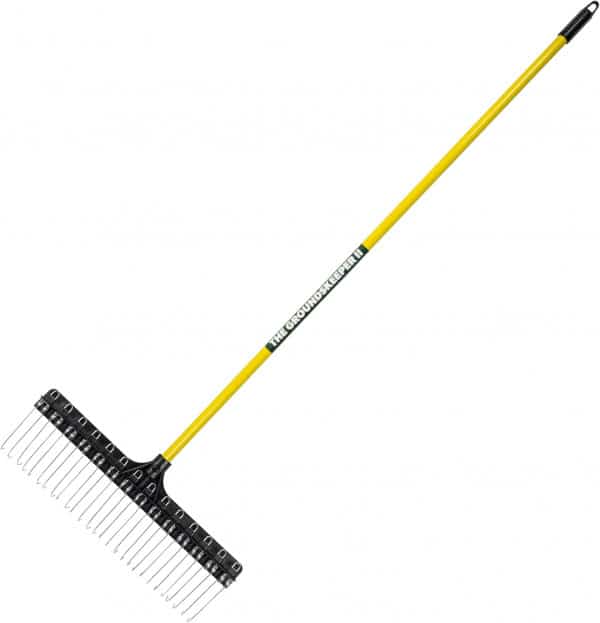
Dethatching Rake
A hand tool for lifting moss and loose surface material from small areas. Work carefully to avoid unnecessarily tearing out healthy grass.
Assess the ground left behind and prepare a recovery plan before clearing a larger patch.
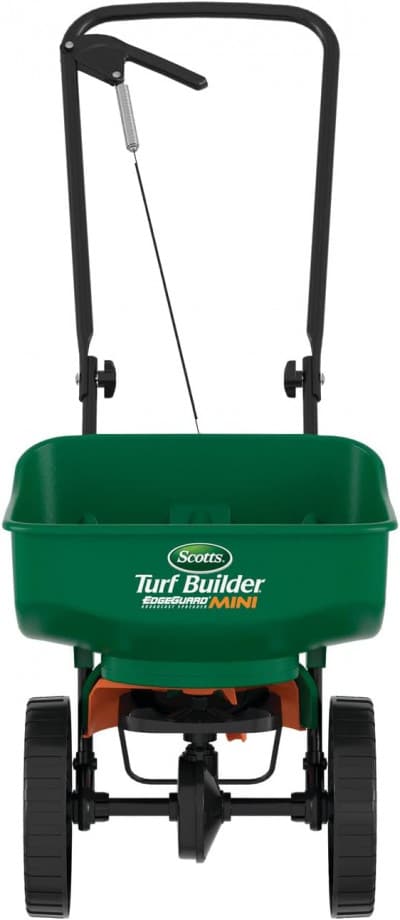
Scotts Turf Builder EdgeGuard Mini Broadcast Spreader
A broadcast spreader for applying seed over a prepared repair area. Measure the area and follow the seed label and spreader guidance for the material you are using.
It distributes material; suitable soil contact and care afterward remain part of establishing new grass.
For widespread moss, very little remaining grass or an uncertain cause, ask for an assessment before beginning extensive DIY removal.
Plan for recovery—not just removal
Moss removal can leave open ground. Choose a work date that allows grass to recover and new seed to establish. OSU Extension favors spring for extensive mechanical moss removal; discuss timing before undertaking a major removal as fall growth slows.
- Before work: Confirm access, preparation and any sprinkler heads or hidden obstacles that need marking.
- After seeding: Follow the recommended watering and mowing instructions and limit wear during establishment.
- As the lawn recovers: Compare grass density and site conditions with your earlier photos.
- If moss returns: Revisit the conditions that favor it before repeating the same treatment.
Review our lawn after-care guide before booking so you can plan the care your lawn will need.
Common questions about moss and renovation
Does moss mean my lawn needs lime?
No. Moss alone does not establish the soil’s pH or lime requirement. Use soil-test results to guide that decision. Lime does not directly remove existing moss.
Will renovation keep moss away permanently?
No permanent result is guaranteed. Removal and reseeding can improve a suitable lawn, but moss can return if the conditions that favor it remain.
Does every mossy lawn need core aeration?
No. Core aeration addresses compaction. Confirm the soil problem rather than assuming moss proves a need for aeration.
What if grass keeps failing in the same shaded or wet area?
Reassess whether the site can support turf before paying for repeated reseeding. A separate drainage assessment or an alternative planting may be more appropriate than repeating lawn renovation alone.
Owner-operated since 2004
Ask Stewart what is limiting your lawn
Stewart Armour personally performs the work at Aerating Thatching Co. Describe where the moss appears, how much grass remains, the light and moisture conditions, and what you have already tried.
He can help you compare targeted lawn work with a broader renovation and discuss the care needed afterward.