What if the thatch under your lawn doesn’t need aggressive removal? A thin layer can be normal, and raking too hard can stress grass that doesn’t need it. With lawn power raking Brier homeowners can start by checking the thatch layer and how well the grass is growing, rather than judging by a spongy feel alone.
Power Raking (Dethatching) lifts excess thatch from the turf, but the lawn may look rough afterward and needs suitable conditions to recover. Timing matters, too. Spring, when grass is actively growing, and early fall are common windows for treatment in Brier.
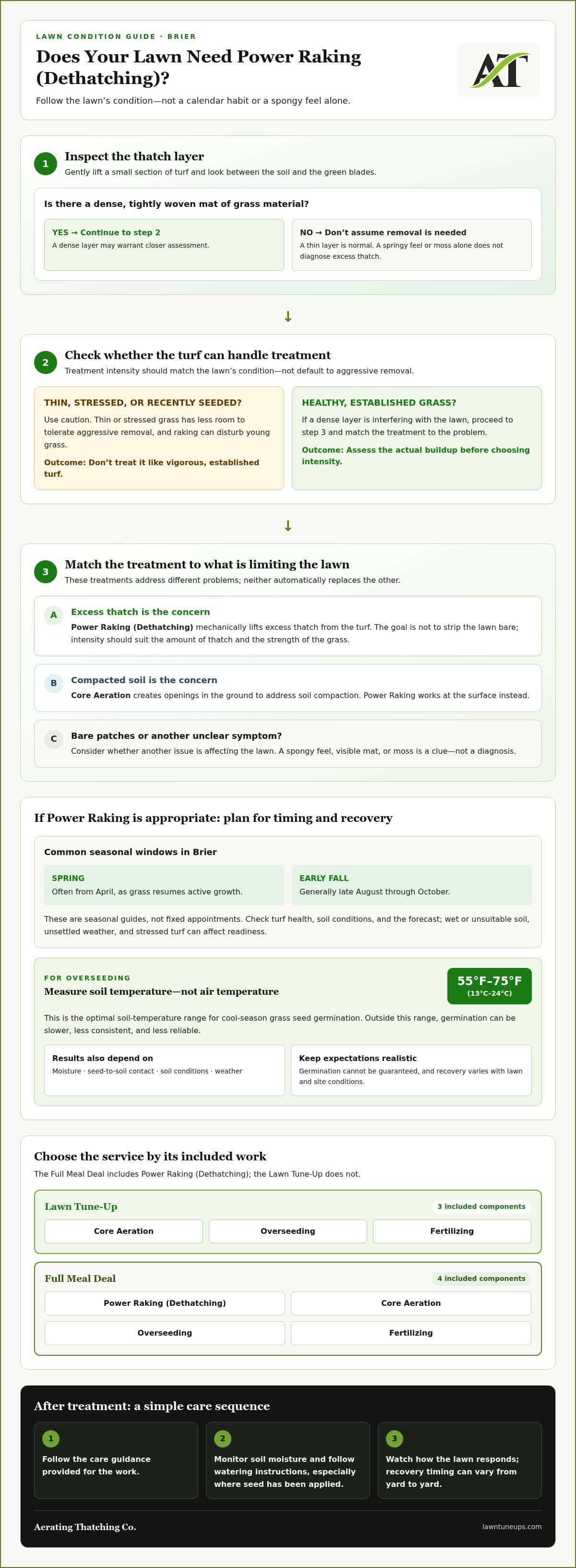
This guide explains how to assess thatch, what to expect from Power Raking (Dethatching), and how to plan for recovery. It also explains the difference between the Full Meal Deal, which includes Power Raking (Dethatching), Core Aeration, Overseeding, and Fertilizing, and the Lawn Tune-Up, which includes Core Aeration, Overseeding, and Fertilizing. Knowing what each service covers helps you focus on the work your lawn needs.
Key Takeaways
- For lawn power raking Brier, treat a spongy feel or visible mat as clues, not a diagnosis. Check for accumulated grass material between the soil and green blades.
- Power Raking (Dethatching) mechanically lifts excess thatch. The treatment intensity should suit the lawn’s condition, not default to aggressive removal.
- Use turf condition and seasonal weather to guide timing. For Overseeding, cool-season grass seed germinates best when soil temperatures are 55°F-75°F (13°C-24°C). Moisture and seed-to-soil contact also affect results.
- Match the service to the work needed: the Lawn Tune-Up includes Core Aeration, Overseeding, and Fertilizing; the Full Meal Deal also includes Power Raking (Dethatching).
Does Your Brier Lawn Need Power Raking (Dethatching)?
Thatch is a layer of living and dead grass material that builds up between the soil and green blades. A little is normal. The key question is whether a dense layer is interfering with the lawn or whether another issue is causing the symptoms. For a basic explanation of what thatch is, start with how this layer forms and where it sits in the turf.
Power Raking (Dethatching) mechanically lifts and removes excess thatch. It is useful when buildup warrants removal, not simply because a lawn looks untidy. The lawn’s condition should guide how much raking it can handle.
What thatch looks and feels like in a Brier yard
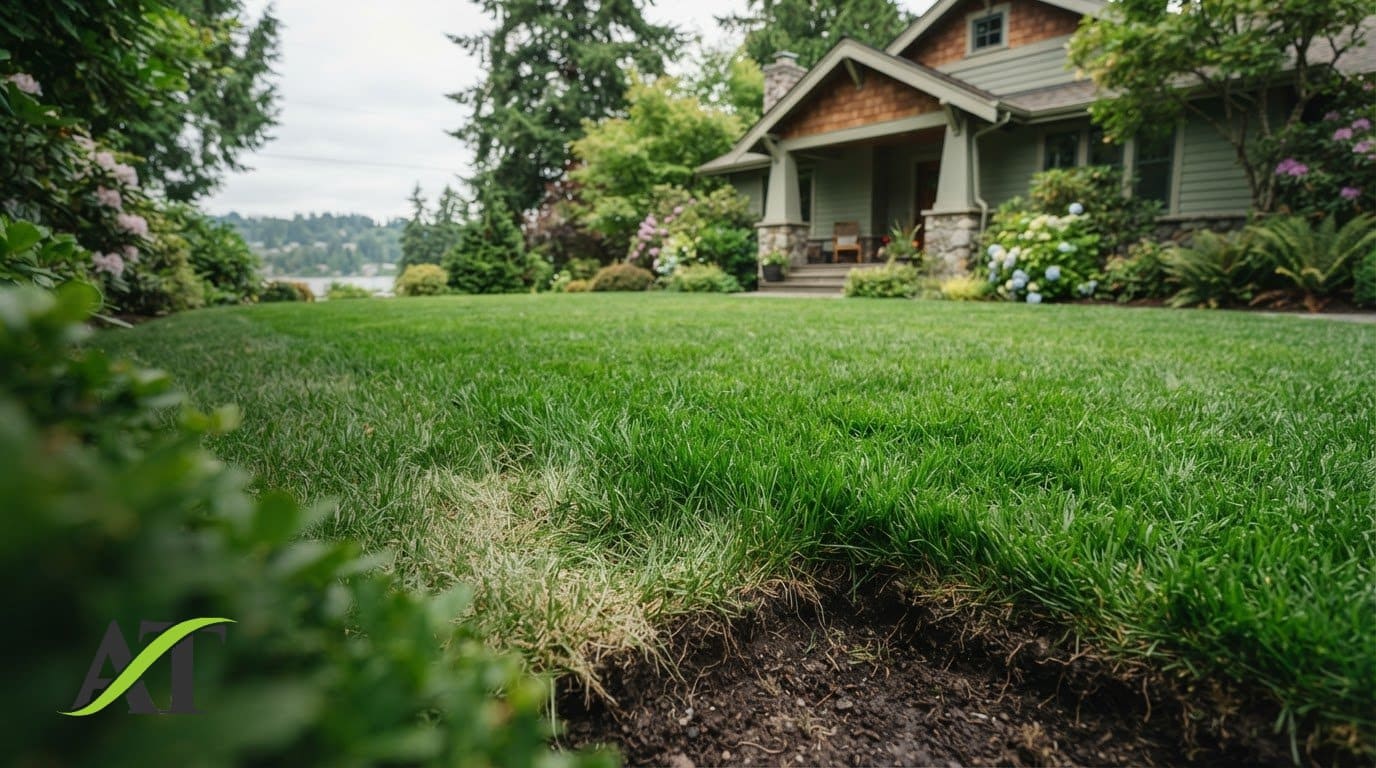
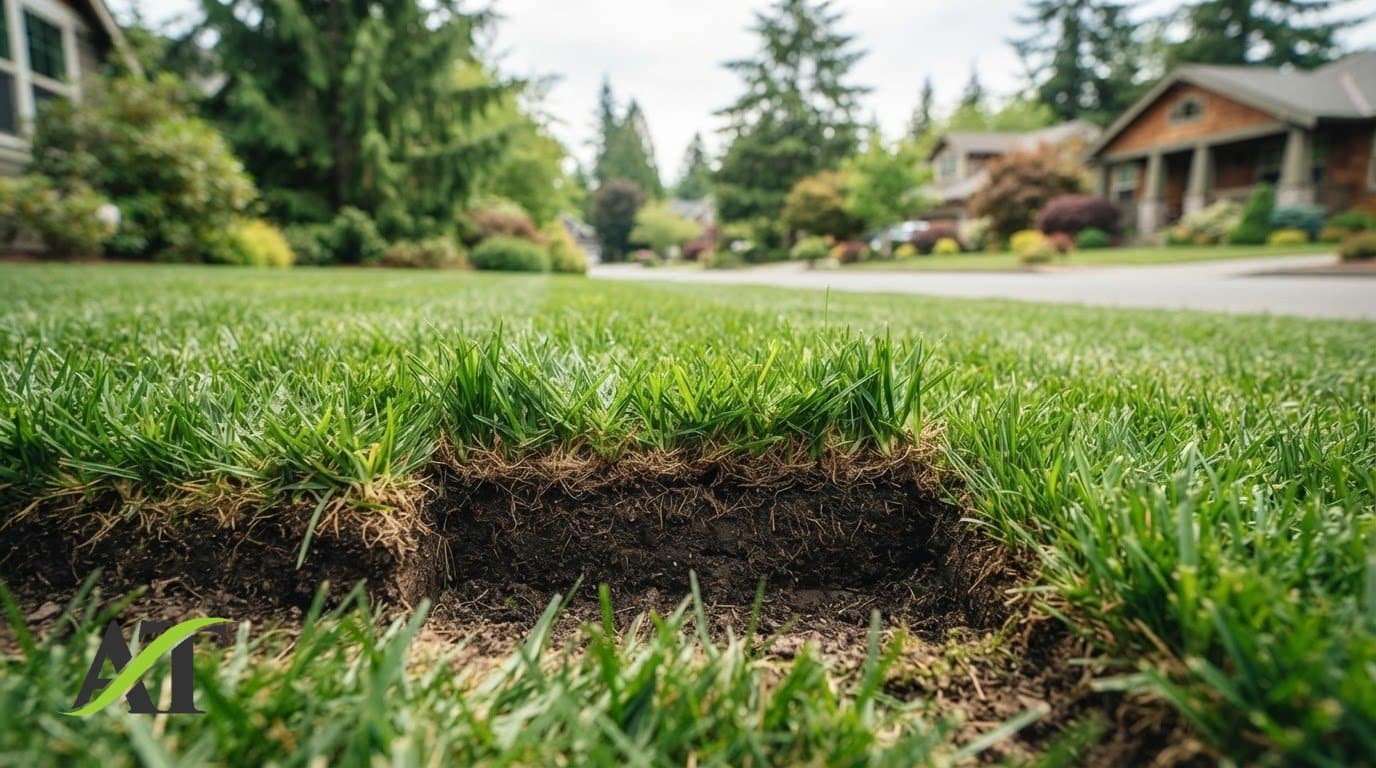
Check whether the lawn feels springy or spongy, then look for a tightly woven mat near the soil. To inspect more closely, gently lift a small section of turf and look at the layer between the soil and grass blades. A visible mat or soft feel is a clue, not a diagnosis. Moss can grow alongside thatch, but its presence alone doesn’t show that the thatch is excessive. Bare patches and compacted soil can also affect how a lawn feels and grows, and may need a different assessment.
When Power Raking may not be the right first step
Thin or stressed grass has less room to tolerate aggressive removal. Recently seeded areas also need care because raking can disturb young grass. First consider whether you’re seeing a thatch layer or another problem, such as bare soil or compaction. Don’t schedule treatment just because a year has passed. A sound decision about lawn power raking Brier lawns starts with the turf’s actual condition, then matches the treatment intensity to what’s there.
How Power Raking Works, and How It Affects Your Brier Lawn
Power Raking (Dethatching) uses mechanical tines to lift excess thatch from the turf so it can be removed. The goal isn’t to strip the lawn bare. Treatment intensity should match the amount of thatch and the strength of the existing grass. The University of Missouri Extension’s guide to Managing Thatch in Home Lawns also explains why lawn condition matters when choosing a removal method.
Power Raking removes excess material in the thatch layer; Core Aeration addresses compacted soil by creating openings in the ground. These treatments target different problems. Neither automatically replaces the other, and not every lawn needs both.
Power Raking versus Core Aeration
Think of the two treatments as separate tools. Power Raking (Dethatching) works at the surface, lifting built-up grass material from the turf. Core Aeration targets compaction in the soil. A lawn with a thatch problem may benefit from the first, while compaction calls for a different response. Choose based on what is limiting the lawn rather than assuming one treatment solves both issues.
Why results depend on lawn condition
After Power Raking, the lawn can look rough or thinner because loosened material has been pulled from the turf. That temporary disturbance doesn’t, on its own, show that the grass has been damaged or predict how quickly it will recover. Healthy, established grass may respond differently from thin or stressed turf. Results also depend on how firmly the treatment is applied and the conditions for recovery afterward.
For lawn power raking Brier homeowners should base the decision on the lawn’s condition and the amount of thatch, not on the assumption that harder raking works better. If you’re weighing the treatment for your yard, request a lawn service quote and describe what you’re seeing.
When to Schedule Power Raking in Brier and What to Do After
There isn’t one calendar date that suits every lawn. In Brier and the wider Pacific Northwest, spring, often from April as grass resumes active growth, and early fall, generally late August through October, are common windows for Power Raking (Dethatching). Treat these as seasonal guides, not fixed appointments. Wet or unsuitable soil, unsettled weather, and turf already under stress can all affect whether the lawn is ready. The University of Minnesota Extension guide to controlling thatch in your lawn offers more context on treatment and timing.
Choose a window that suits the lawn
Look at current turf health and soil conditions alongside the forecast. Avoid treating a thin, stressed lawn as though it can handle the same intensity as established, vigorous turf. For lawn power raking Brier homeowners should weigh the thatch problem against the lawn’s capacity to recover, rather than follow a fixed annual schedule.
Support Overseeding after lawn restoration
If Overseeding is part of the plan, measure soil temperature, not air temperature. The optimal soil-temperature range for cool-season grass seed germination is 55°F-75°F (13°C-24°C). Outside that range, germination can be slower, less consistent, and less reliable. Moisture, seed-to-soil contact, soil conditions, and weather also affect results, so germination can’t be guaranteed.
After treatment, use this simple sequence:
- Follow the care guidance provided for the work.
- Monitor soil moisture and follow watering instructions, especially where seed has been applied.
- Watch how the lawn responds instead of assuming a specific recovery timeline applies to every yard.
Power Raking in Brier: Choose the Right Service and Next Step
The right service depends on what your lawn needs. If excess thatch is the main concern, Power Raking (Dethatching) addresses it. Core Aeration targets compacted soil instead. They solve different problems, so don’t assume one is included in the other or that every lawn needs both.
What the Lawn Tune-Up and Full Meal Deal include
The Lawn Tune-Up consists of Core Aeration, Overseeding, and Fertilizing. Power Raking (Dethatching) isn’t part of this service. The Full Meal Deal includes Power Raking (Dethatching), Core Aeration, Overseeding, and Fertilizing. Lime Application or another treatment is an optional add-on, not an included component of either service.
For an overview of lawn restoration services, compare the work each option covers with the conditions you’ve observed. A lawn with a clear thatch concern may need a different combination from one where compaction or thin turf is the main issue. This keeps the plan focused instead of adding treatments without a reason.
Request a quote for Brier Power Raking
Aerating Thatching Co. provides Power Raking (Dethatching) in Brier. When requesting a quote, describe what you’ve noticed about the thatch and turf so you can take a practical next step toward addressing your lawn’s needs.
Power Raking is for excess thatch, the Lawn Tune-Up covers Core Aeration, Overseeding, and Fertilizing, and the Full Meal Deal includes all four treatments.
Make a Condition-Based Plan for Your Brier Lawn
Excess thatch is a reason to assess your lawn, not an automatic signal to rake aggressively. Look at the turf and soil, then consider whether the issue is thatch, compaction, or another cause. Timing should suit the lawn’s condition and seasonal weather, with recovery needs in mind.
For lawn power raking Brier homeowners can choose the service that fits the work: the Lawn Tune-Up includes Core Aeration, Overseeding, and Fertilizing. The Full Meal Deal includes those three treatments plus Power Raking (Dethatching). Aerating Thatching Co. serves Brier, and you can request a quote based on your lawn’s needs.
A thoughtful assessment is a practical first step toward a healthier lawn. Request a quote from Aerating Thatching Co. to discuss Power Raking (Dethatching) for your Brier lawn.
Frequently Asked Questions
Is Power Raking good for every lawn in Brier?
No. Power Raking (Dethatching) suits lawns with excess thatch, and treatment intensity should reflect turf health. Thin, stressed, or recently seeded areas need careful assessment before mechanical removal. Aerating Thatching Co. serves Brier and nearby communities, including North Seattle, Shoreline, Edmonds, Lynnwood, Mill Creek, Bothell, Kenmore, Lake Forest Park, Mountlake Terrace, Snohomish, Everett, Woodway, Green Lake, Ballard, and Greenwood.
When is the best time to Power Rake a lawn in Brier?
Spring, when the lawn is actively growing, and early fall are common windows for Power Raking (Dethatching) in Brier. Use those seasons as guides, not fixed dates. Current turf health, soil conditions, and seasonal weather matter. Avoid scheduling based on the calendar alone, especially if grass is already stressed. Choose a window that suits the lawn’s condition and gives it a reasonable chance to recover.
Does Power Raking remove moss from a lawn?
Power Raking (Dethatching) targets excess thatch, not moss. The equipment may lift some surface material as it works, but moss presence alone doesn’t show that a lawn has excessive thatch, and raking isn’t a moss-control treatment. Check the layer between the soil and grass blades to assess thatch separately. If moss and a spongy lawn occur together, don’t assume one is the cause of the other.
What should I do after Power Raking and Overseeding?
Follow the service guidance, monitor soil moisture, and give the lawn time to respond without expecting a fixed recovery timeline. For cool-season grass seed, optimal germination occurs at a soil temperature of 55°F-75°F (13°C-24°C). Outside that range, germination can be slower, less consistent, and less reliable. Moisture, seed-to-soil contact, soil conditions, and weather also affect results, so germination isn’t guaranteed.
What is included in the Full Meal Deal, and how does it differ from a Lawn Tune-Up?
The Full Meal Deal includes Power Raking (Dethatching), Core Aeration, Overseeding, and Fertilizing. The Lawn Tune-Up includes Core Aeration, Overseeding, and Fertilizing only; Power Raking (Dethatching) isn’t part of that service. Choose based on the work your lawn needs. Lime Application or other treatments are optional add-ons, not included components of either service.
Article by
Stewart Armour
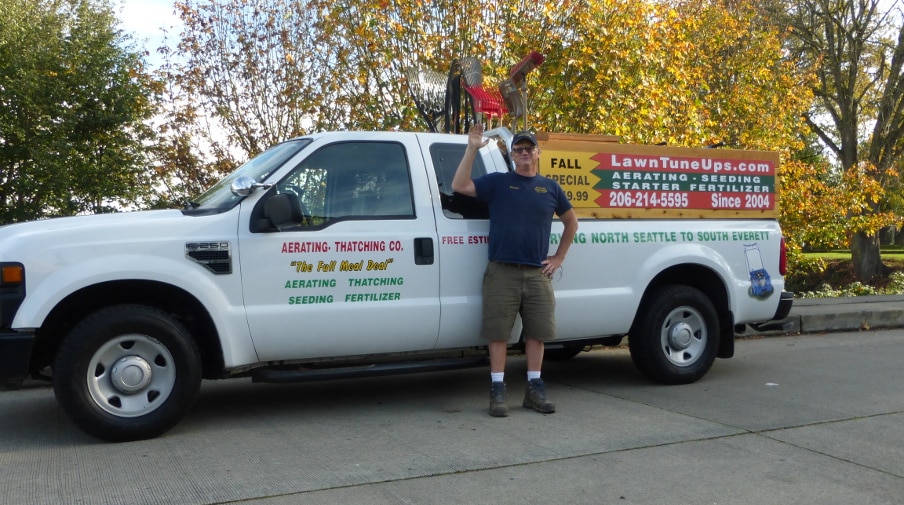
Stewart Armour is an independent lawn restoration expert, educator, and owner of Aerating Thatching Co., serving the greater Seattle area since 2004. With more than two decades of professional experience restoring Western Washington lawns, Stewart specializes in diagnosing lawn problems, improving soil health, and developing long-term lawn renovation strategies. His education includes turf management studies, advanced golf course turf training, and continuing education through Wilbur-Ellis University, State Turf Facilities, Soil First Academy, and Golf Course Applied Turf Physiology. Every article published on LawnTuneUps.com is grounded in practical field experience, current turf science, and a commitment to helping homeowners understand the why behind every recommendation—not just what to do.
Stewart has personally evaluated thousands of residential lawns throughout the Seattle area and remains committed to helping homeowners understand the science behind growing healthier, more resilient lawns.