Most Snohomish homeowners wait for the first warm day of spring to throw down seed, but your lawn’s success actually depends on what’s happening six inches underground. It’s frustrating to watch expensive seed wash away in the PNW rain or get choked out by moss before it even has a chance to sprout. If you’ve struggled with overseeding lawn Snohomish in the past, you know that thin spots often return year after year. We understand that local homeowners want a reliable, no-nonsense approach to property maintenance.
This guide reveals the exact 55°F–75°F (13°C–24°C) soil temperature window and the mechanical steps required for successful results. While we don’t offer absolute germination guarantees due to weather variables, following a professional process maximizes your success. We’ll explain the difference between a Lawn Tune-Up, consisting of Core Aeration, Overseeding, and Fertilizing, and the Full Meal Deal, which includes Power Raking (Dethatching), Core Aeration, Overseeding, and Fertilizing. You’ll learn how to create the seed-to-soil contact necessary to transform your yard into a thick, healthy landscape.
Key Takeaways
- Focus on the 55°F–75°F (13°C–24°C) soil temperature range as the critical metric for successful grass seed germination.
- Learn how Core Aeration and Power Raking (Dethatching) provide the mechanical preparation needed for maximum seed-to-soil contact.
- Choose between a Lawn Tune-Up (Core Aeration, Overseeding, and Fertilizing) or the Full Meal Deal (Power Raking (Dethatching), Core Aeration, Overseeding, and Fertilizing).
- Identify the precise seasonal windows for overseeding lawn Snohomish to outcompete moss and ensure long-term turf density.
Why Overseeding is Essential for Snohomish Lawns
Overseeding is the methodical process of planting grass seed directly into existing turf to increase its density. For homeowners in Snohomish, this isn’t just a cosmetic choice. Our local climate features high moisture levels and acidic soil that naturally favor moss over grass. When your lawn thins out, moss takes over quickly. Regular overseeding lawn Snohomish prevents this encroachment by keeping the canopy tight and resilient. It’s a foundational part of any long-term yard care strategy that avoids heavy chemical use.
Signs Your Lawn Needs Restoration
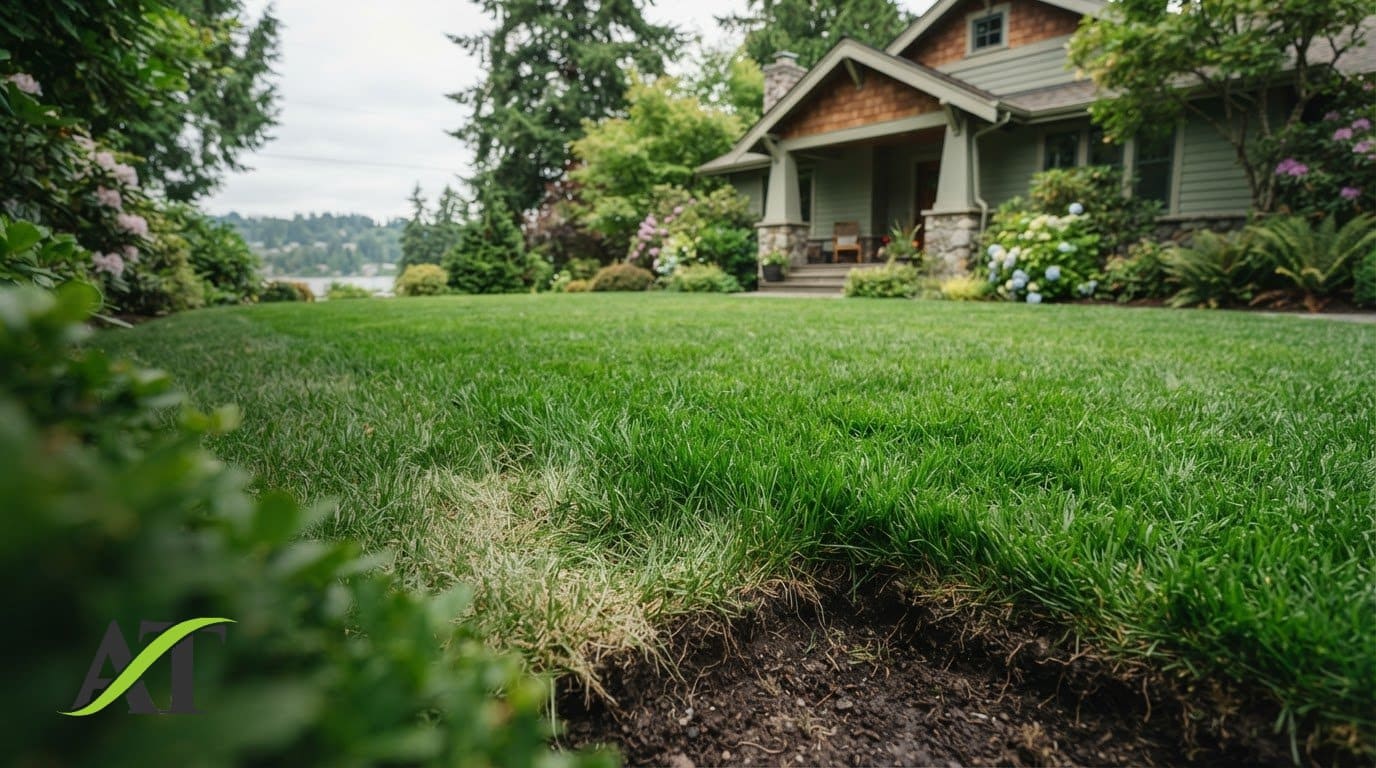
You’ll notice thinning blades and visible soil patches where the turf has lost its vigor. If persistent moss returns every spring despite your best efforts at raking, the grass is simply too sparse to compete. Another clear indicator is a slow recovery after our typical summer dry spells or heavy winter frosts. These are signs that your lawn’s root system needs the boost that only a professional restoration can provide. Identifying these issues early prevents a total lawn failure.
The Benefits of a Thicker Turf
A thick lawn acts as a physical barrier. It provides natural weed suppression by leaving no room for invasive seeds to take hold. This strategy is a key component of Organic lawn management, as it reduces the reliance on synthetic chemicals to maintain a clean look. Beyond aesthetics, dense turf improves moisture retention in the root zone. This is vital for Snohomish residential properties during the drier months. A healthy lawn also significantly enhances your home’s curb appeal.
There’s a big difference between a quick spot repair and a comprehensive restoration. While a handful of seed might fix a hole, it won’t solve systemic thinning across the yard. Successful overseeding lawn Snohomish requires a professional approach like our Lawn Tune-Up, which includes Core Aeration, Overseeding, and Fertilizing. For more neglected yards, the Full Meal Deal provides Power Raking (Dethatching), Core Aeration, Overseeding, and Fertilizing. These professional services combine mechanical preparation with high-quality seed to ensure your property stays green and healthy throughout the year.
The Science of Success: Soil Temperature and Germination
Many homeowners watch the thermometer on their porch, but the ground temperature is what truly matters. Seed needs warmth at the root level to trigger biological growth. The optimal soil temperature range for cool-season grass seed germination is 55°F–75°F (13°C–24°C). While germination can occur outside this range, the process will be slower and the results less reliable. Success for overseeding lawn Snohomish depends on soil conditions and moisture levels rather than just a specific date on the calendar.
When to Overseed in Snohomish
When planning for overseeding lawn Snohomish, timing is everything. Early fall is the ideal goldilocks zone for our region. The soil remains warm from the summer months, and our returning rains provide natural, consistent irrigation. Late spring offers a secondary window once the ground finally warms past the 55°F mark. We generally advise against dormant seeding in the winter. Our wet Snohomish climate often causes seeds to rot or wash away before they ever have a chance to sprout.
Managing Expectations for Growth
No professional can offer an absolute germination guarantee. Variables like sudden weather shifts and existing soil health play a major role in the outcome. Consistent moisture is critical during the first 21 days to ensure the new grass establishes a strong root system. Soil moisture is the specific catalyst that breaks seed dormancy and initiates growth. The CSU Extension Lawn Care Guide confirms that mechanical preparation helps manage these environmental factors. If you want to ensure your timing is right, you can request a quote to schedule your service during these peak biological windows.
Preparing for Overseeding: Core Aeration and Power Raking (Dethatching)
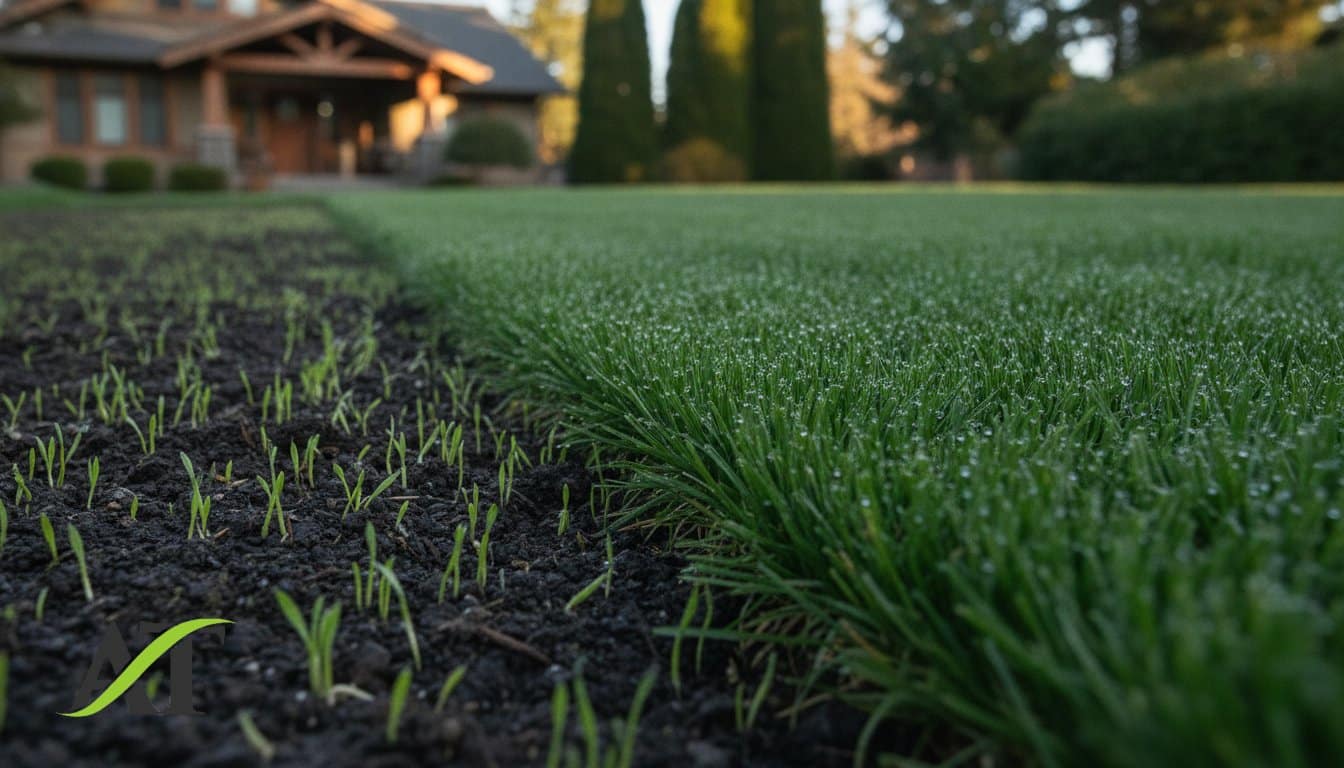
Seed-to-soil contact is the absolute priority for success when you’re overseeding lawn Snohomish. If a seed doesn’t touch the dirt, it can’t grow. Our local Snohomish clay soils are notoriously prone to heavy compaction, which creates a hard surface that repels water and prevents roots from spreading. Mechanical preparation is mandatory because it breaks this surface tension and gives new seedlings a protected place to start. Without these steps, most of your seed will simply wash away in the next PNW rainstorm.
The Role of Core Aeration
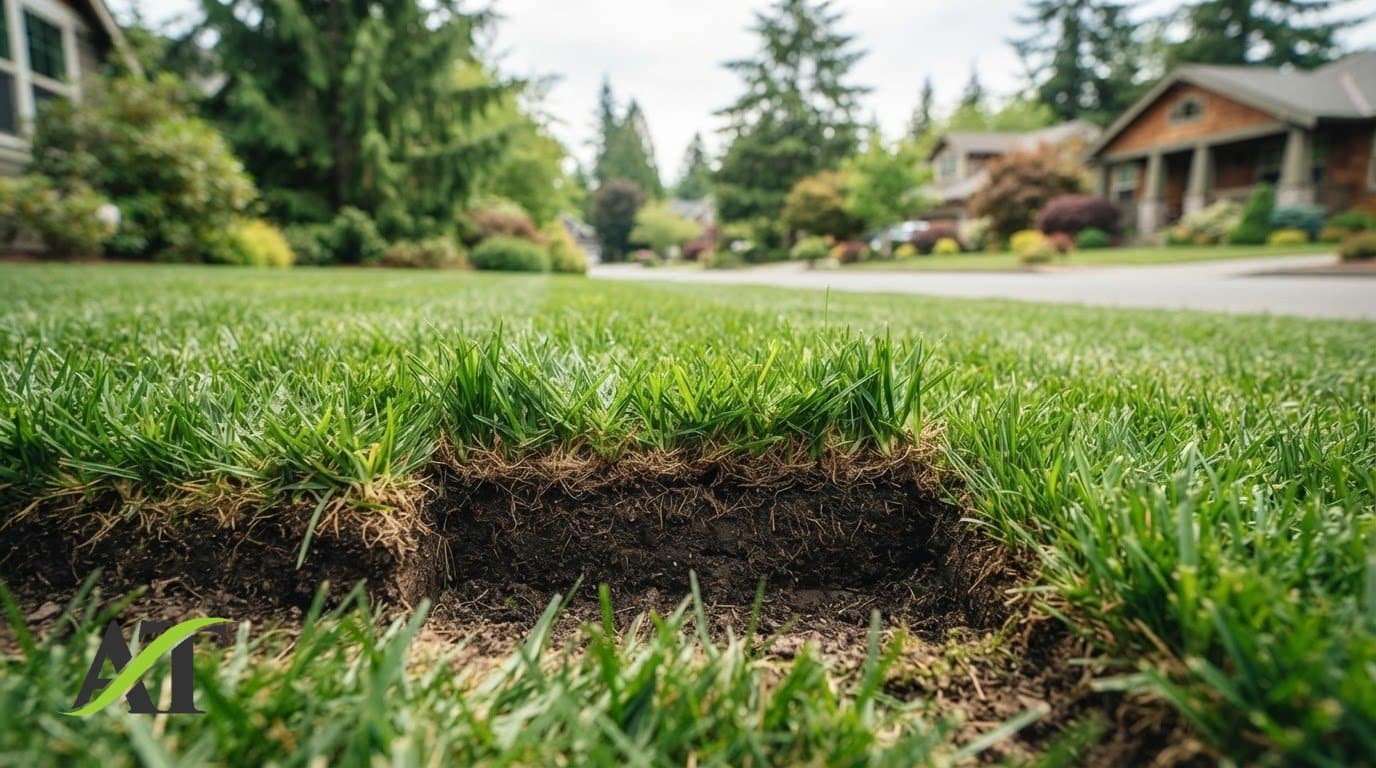
Core Aeration involves pulling small cylinders of soil out of the ground to open up the turf. This process relieves pressure in the root zone, allowing oxygen and water to circulate freely. These holes create protected “pockets” where new seed can settle and germinate safely. It establishes a perfect micro-environment that shields the seed from wind and runoff. You can find more detail on these benefits in our Core Aeration in Snohomish guide.
When to Add Power Raking (Dethatching)
You should consider adding Power Raking (Dethatching) if your lawn has a thatch layer thicker than 1/2 inch. Thatch is a dense mat of organic debris that sits on top of the soil, acting like a sponge that traps seed before it can reach the ground. By removing this barrier, we ensure that every seed has a clear path to the dirt. This is why Power Raking (Dethatching) is the critical first step in our Full Meal Deal. It’s the best way to handle neglected yards or areas where moss has become a dominant force. Proper preparation ensures your overseeding lawn Snohomish project delivers the thick, green results you expect.

Professional Restoration: The Lawn Tune-Up and Full Meal Deal
The Lawn Tune-Up is our standard restoration package. It consists of Core Aeration, Overseeding, and Fertilizing. This service is ideal for lawns that have thinned out but remain relatively clear of debris. If your yard is neglected or choked by moss, the Full Meal Deal is the better option. This package includes Power Raking (Dethatching), Core Aeration, Overseeding, and Fertilizing. We prioritize organic fertilizing to build soil health over time rather than providing a synthetic chemical spike. Select the package that matches your current thatch and moss levels to get the best results for overseeding lawn Snohomish.
Why Hire Aerating Thatching Co.?
We’ve served the specific needs of Snohomish County turf since 2004. Our team focuses exclusively on mechanical lawn restoration rather than general mowing or cosmetic maintenance. We use specialized equipment built for the heavy clay and high moisture common in our region. This local experience allows us to identify the correct soil temperature windows effectively for every project. You can Request a Quote to see how our targeted approach differs from standard landscaping services. We take pride in restorative work that creates tangible, lasting outcomes.
Post-Service Care for New Seed
Proper care after overseeding lawn Snohomish is the difference between a thick lawn and a failed project. You should prioritize the following steps to protect your investment:
- Apply short, frequent bursts of water to keep the seedbed moist.
- Avoid deep soaking, which can wash away seeds or cause rot in the root zone.
- Wait to mow the area until the new grass reaches at least 3 inches in height.
The first 3 weeks following an Overseeding service represent the most critical window for ensuring successful germination and long-term turf density. During this time, the seed requires consistent moisture to break dormancy and establish its initial root structure. Once the grass is established, you can return to a more standard watering and mowing schedule.
Transform Your Property with a Professional Restoration
Successful overseeding lawn Snohomish requires more than just high-quality seed. It demands a precise 55°F–75°F soil temperature window and mechanical preparation to ensure seed-to-soil contact. Whether your yard needs the standard efficiency of a Lawn Tune-Up or the intensive thatch removal of the Full Meal Deal, our team brings the right tools for the job. We’ve been a local, owner-operated business since 2004, using specialized restoration equipment designed for PNW soil health. Every service includes organic fertilizing to support long-term growth without synthetic spikes. While weather and moisture always play a role in germination, our methodical approach maximizes your chances for a thick, resilient turf that naturally outcompetes moss and weeds.
We look forward to helping you achieve the thick, green lawn your property deserves. With the right timing and professional care, your turf can thrive through every Snohomish season.
Frequently Asked Questions
When is the best time for Overseeding lawn in Snohomish?
The best time for overseeding lawn Snohomish is early fall, typically from September to early October. This window provides the ideal balance of warm soil and returning PNW rains. A secondary window exists in late spring once the ground warms up. We avoid winter seeding because our heavy rainfall often causes seeds to rot or wash away before they can establish a strong root system.
Is Core Aeration necessary before Overseeding?
Yes, Core Aeration is essential because it ensures maximum seed-to-soil contact. Snohomish clay soils are prone to heavy compaction, which prevents seeds from reaching the dirt. By pulling soil plugs, we create protected pockets where new seeds can settle and germinate safely. This mechanical preparation is the most effective way to prevent your investment from washing away during a typical Pacific Northwest rainstorm.
What is the difference between a Lawn Tune-Up and the Full Meal Deal?
A Lawn Tune-Up consists of Core Aeration, Overseeding, and Fertilizing. It’s the standard choice for lawns that are thinning but relatively clear of debris. The Full Meal Deal is a more intensive restoration that adds Power Raking (Dethatching) as the first step. This package includes Power Raking (Dethatching), Core Aeration, Overseeding, and Fertilizing. It’s specifically designed for yards with heavy moss or thatch buildup over half an inch thick.
How long does it take for grass seed to germinate in Snohomish?
Most cool-season grass seeds germinate within 7 to 21 days under ideal conditions. This timeline depends heavily on maintaining consistent moisture during the first three weeks. While we don’t offer absolute germination guarantees due to weather variables, professional overseeding lawn Snohomish significantly improves your odds. Soil conditions and proper seed-to-soil contact are the primary factors that influence how quickly and evenly your new turf begins to thicken.
What soil temperature is needed for Overseeding to work?
The optimal soil temperature range for germination is 55°F–75°F (13°C–24°C). While grass seed can sprout outside this window, the process will be much slower and less consistent. We focus on soil temperature rather than air temperature because the ground holds heat differently. If the soil is too cold, the seed remains dormant; if it’s too hot, the young seedlings can dry out before they establish roots.
Article by
Stewart Armour
Stewart Armour is an independent lawn restoration expert, educator, and owner of Aerating Thatching Co., serving the greater Seattle area since 2004. With more than two decades of professional experience restoring Western Washington lawns, Stewart specializes in diagnosing lawn problems, improving soil health, and developing long-term lawn renovation strategies. His education includes turf management studies, advanced golf course turf training, and continuing education through Wilbur-Ellis University, State Turf Facilities, Soil First Academy, and Golf Course Applied Turf Physiology. Every article published on LawnTuneUps.com is grounded in practical field experience, current turf science, and a commitment to helping homeowners understand the why behind every recommendation—not just what to do.
Stewart has personally evaluated thousands of residential lawns throughout the Seattle area and remains committed to helping homeowners understand the science behind growing healthier, more resilient lawns.