North Seattle lawn guidance
Seattle Lawn Aeration: What It Can Improve—and What It Cannot
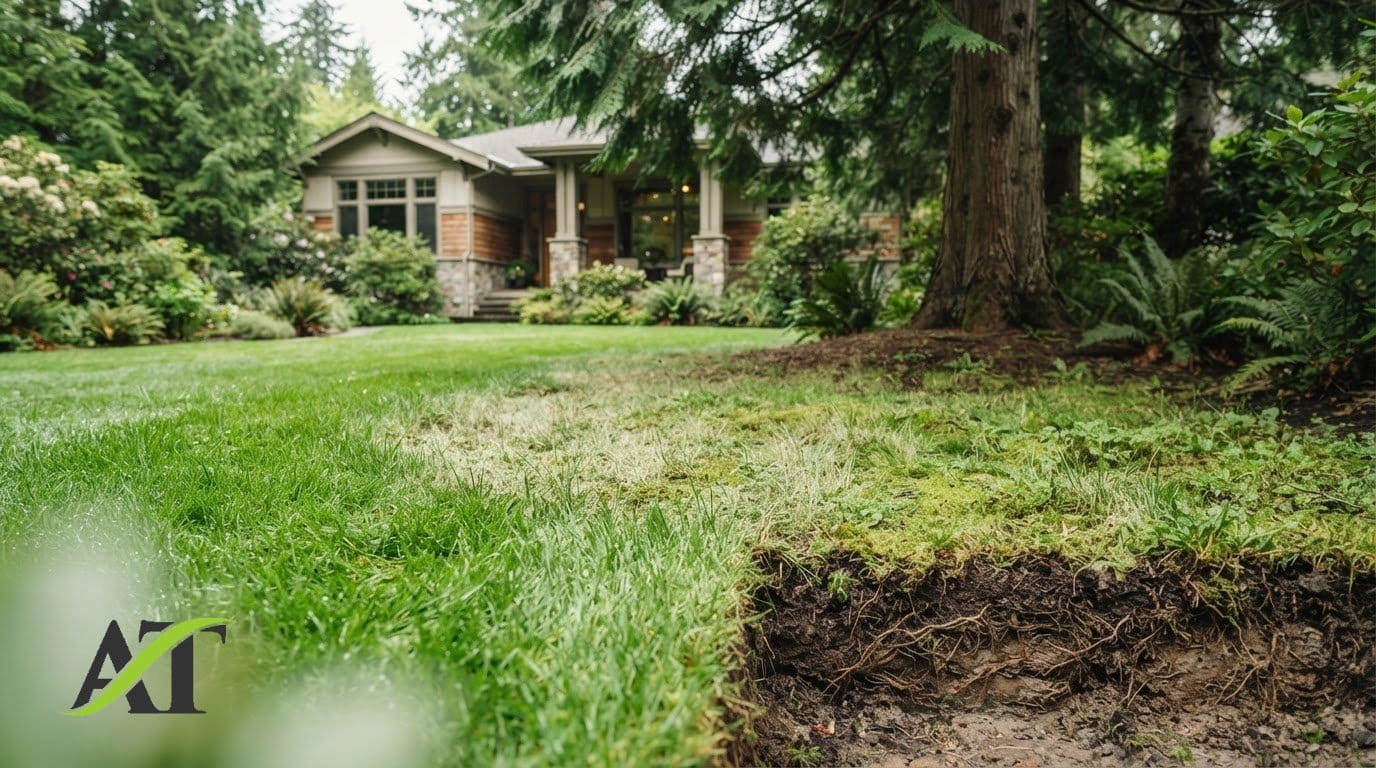
Core aeration is often recommended for a lawn that feels hard, has compacted soil, or struggles to absorb water. It can help when compaction is part of the problem. It is not a universal fix for standing water, poor soil, weeds, or every thin lawn.
For homeowners in the North Seattle area, the useful question is not simply “Should I aerate?” It is “What is keeping this lawn from growing well?” Identifying the cause helps you choose between core aeration, dethatching, overseeding, or a different repair. For a broader timing and care overview, see our Seattle lawn aeration guide.
What core aeration can help with
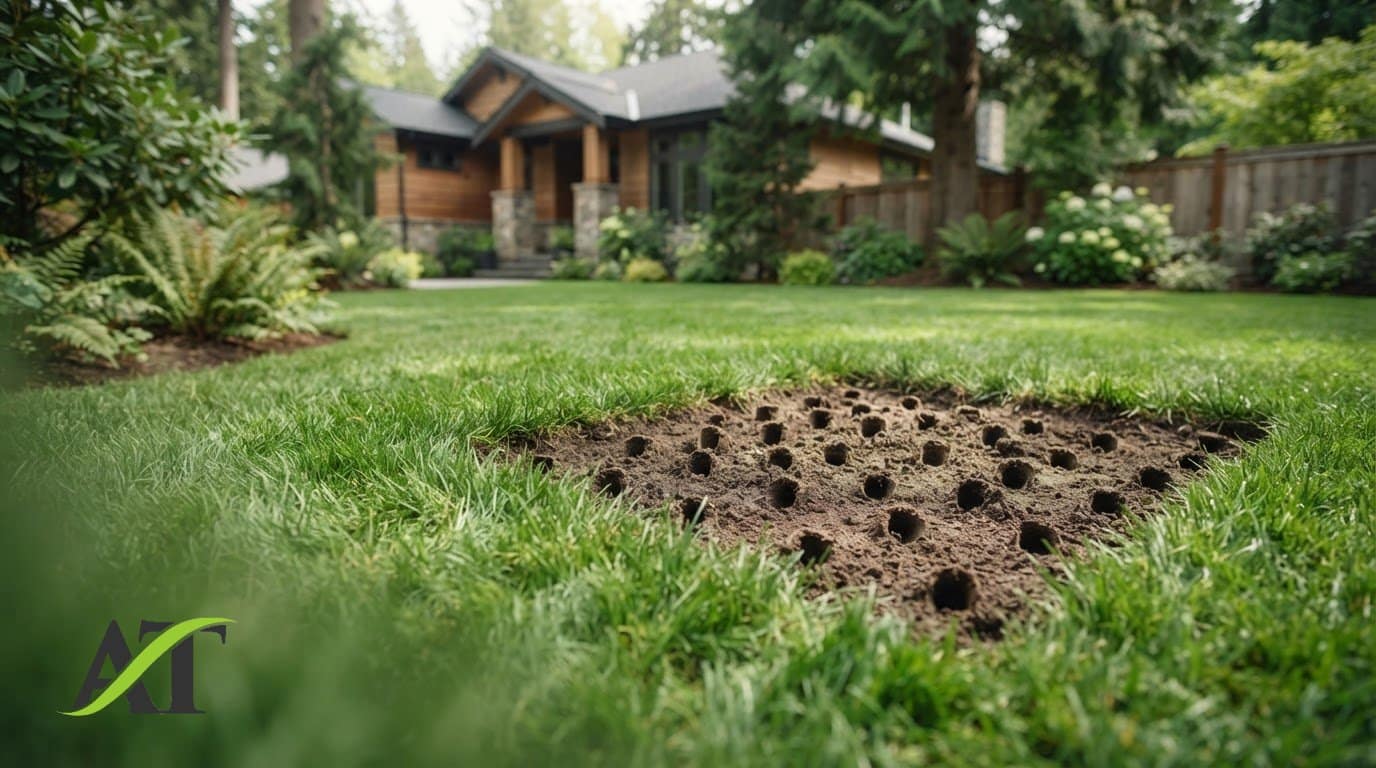
A core aerator pulls small soil plugs from the lawn. The openings can help air and water move into compacted soil and give roots more room to grow. Aeration can also support overseeding by creating places where seed can contact soil.
Washington State University Extension describes aeration as a way to increase soil oxygen and water penetration, encourage root growth, reduce compaction, and improve germination of overseeded grasses. Those are useful benefits when compacted soil is limiting the lawn.
Source: WSU Extension, “Lawns”.
Signs compaction may be involved
- The soil feels hard, especially in walkways or play areas.
- A screwdriver or similar probe is difficult to push into moist soil.
- Water runs off or pools in areas where the ground is otherwise fairly level.
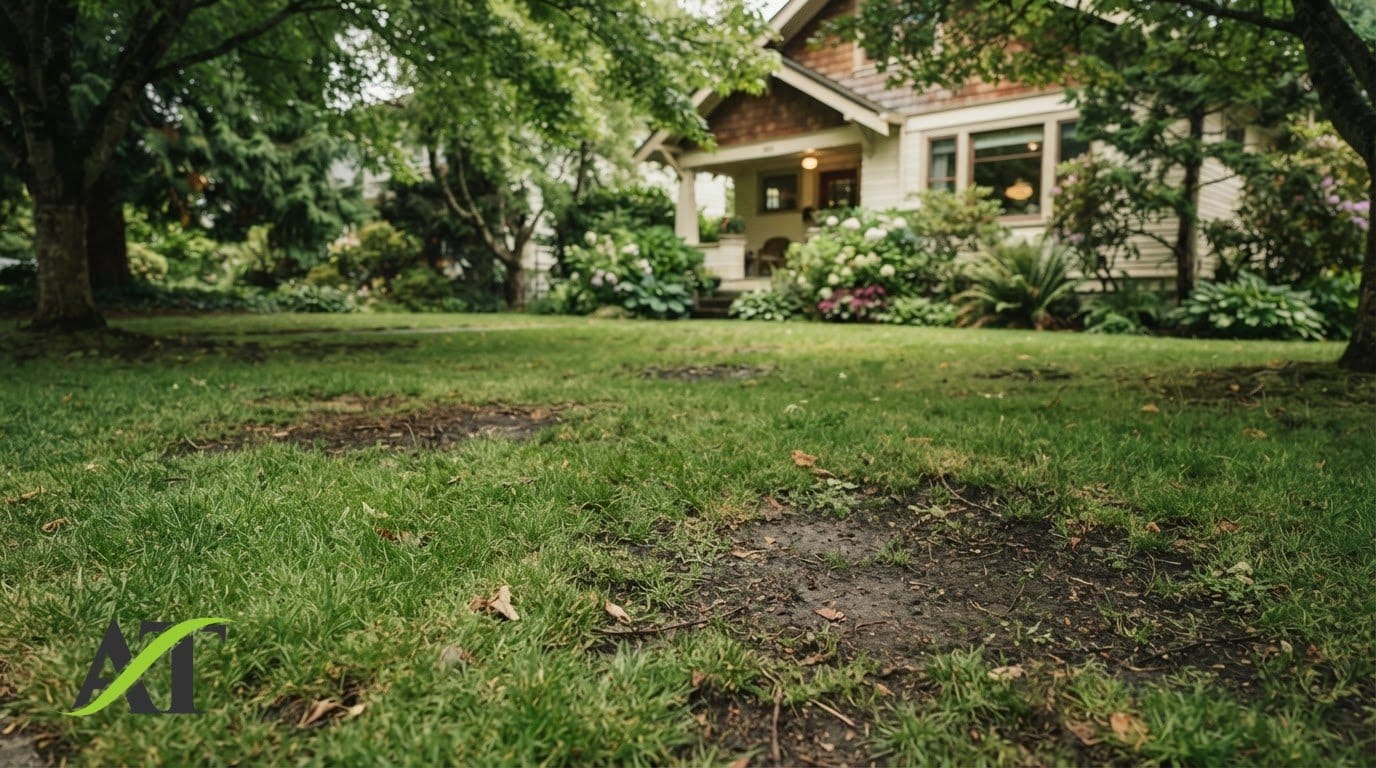
- Grass is thin in places that receive repeated foot or equipment traffic.
What aeration does not promise
- It does not guarantee that puddles or drainage problems will disappear.
- It does not directly remove a thick thatch layer.
- It does not eliminate weeds or automatically reduce fertilizer needs.
- It does not correct a slope, downspout discharge, or deeper soil issue.
Better infiltration is not the same as fixing drainage
When compacted soil is restricting water entry, core aeration may help water infiltrate the lawn more readily. That is different from correcting a drainage system or changing the grade of a yard. Water may still collect if the surface is low, the soil below is slow to drain, runoff is directed into the lawn, or the area stays saturated for another reason.
Watch what happens after ordinary rain or irrigation. Is water pooling only in a compacted traffic area, or does it collect along a slope, beside a downspout, or across a broad low spot? Persistent standing water deserves a closer look at the site. Aeration may be one part of a response, but it should not be sold as a guaranteed drainage repair.
Compaction or thatch? Choose the treatment for the problem
Compaction is a condition in the soil. Thatch is a layer of living and dead stems, roots, and other material between the green grass and the soil surface. A little thatch is normal. WSU Extension notes that a thin layer can be beneficial, while excessive thatch can interfere with water, air, and nutrient movement.
To inspect thatch, part the grass and look at the layer just above the soil. If the lawn feels spongy and that layer is thick, dethatching may be worth considering. If the soil beneath the grass is hard and difficult to probe, compaction may be involved. A lawn can have both conditions, so one treatment may not address every issue.
A quick decision guide
- Hard, compacted soil: Consider core aeration, especially in high-traffic areas.
- Thick thatch above the soil: Consider dethatching or power raking; aeration by itself does not remove thatch.
- Thin grass with open soil: Overseeding may help if the seed has suitable conditions and follow-up care.
- Persistent pooling or runoff: Diagnose the location and water source before assuming aeration will fix it.
For a more detailed comparison, read Do I Need Dethatching or Aeration?
When dethatching may be the better next step
If you find a substantial thatch layer, physical removal may be more relevant than aeration alone. A hand rake can help with small areas or light surface debris. A power dethatcher can remove more material, but it can also stress turf if used too aggressively. Check the equipment instructions, use suitable conditions, and plan to remove the loosened debris.
WSU Extension distinguishes these jobs: core aeration addresses compaction and soil openings, while dethatching removes excess material at the lawn surface. If you are unsure how much thatch is present or how the grass will respond, get advice before using powered equipment.

Dethatching rake
A manual rake may be useful for a small patch or light thatch removal. It takes physical effort and is not a substitute for addressing compacted soil.

Greenworks 40V dethatcher / scarifier
A powered option to consider for a lawn that needs thatch removal. Follow the manufacturer’s instructions and avoid aggressive passes that could damage healthy turf.
As an Amazon Associate, LawnTuneUps.com may earn from qualifying purchases.
Will aeration reduce fertilizer, pesticide, or water use?
Aeration can help water enter compacted soil, but that alone does not show that a lawn will need less irrigation. Water needs depend on weather, soil, grass type, shade, mowing, and how the lawn is watered. Check soil moisture and water appropriately rather than relying on aeration to prevent overwatering.
Aeration also does not guarantee lower fertilizer or pesticide use. The more reliable approach is to identify what the lawn needs, use soil testing when it can inform a decision, and apply products only when appropriate and according to their labels. Improving compaction may support healthier turf, but it is not a replacement for sound lawn management.
Choosing a practical next step
If compaction is limiting your lawn, core aeration may be a useful service. If excess thatch is the main issue, dethatching may be more appropriate. Some lawns need both, while others need a different diagnosis. Aerating Thatching Co. is owner-operated, and Stewart reviews quote requests to help match the work to the lawn’s condition.
Learn about core aeration service in the Seattle area, or review our dethatching and power-raking service if thatch appears to be the larger concern.
Not sure what your lawn needs?
Share what you are seeing, and request a recommendation for your North Seattle-area lawn. The right next step depends on the cause of the problem—not just the symptom.
Seattle lawn aeration FAQs
Does lawn aeration fix standing water?
It may improve water entry when compacted soil is a contributing factor. It will not necessarily correct low spots, grading, subsurface drainage, or water being directed into the lawn.
Does core aeration remove thatch?
No. Core aeration removes small plugs of soil. Dethatching or power raking is used to remove excess thatch at the surface. WSU Extension notes that aeration can help maintain thatch at its current depth, but it is not a thatch-removal method.
Will aeration make my lawn need fewer chemicals?
There is no guaranteed reduction. Aeration can help relieve compaction, but fertilizer and pesticide decisions should be based on the lawn’s actual needs and appropriate guidance.
How often should a Seattle-area lawn be aerated?
It depends on soil compaction, traffic, and lawn condition. A high-traffic area may need attention more often than a lightly used lawn. Inspect the lawn and address a demonstrated need rather than following a fixed schedule automatically.
Should I aerate or dethatch first?
Start by checking whether the main issue is hard soil, excess thatch, or something else. Compaction points toward core aeration; a thick surface layer points toward dethatching. Some lawns need both, and a professional assessment can help decide the order.
For more detail, consult WSU Extension’s lawn guidance and its chapter on urban soil management.