What if bare patches in your Kenmore lawn aren’t a sign it simply needs more seed? Thin turf can have several causes, and adding seed before understanding the problem may waste effort. If you’re concerned about lawn health Kenmore, start by looking for clues: thinning, discoloration, compacted-looking ground, or spots that keep failing.
It’s frustrating when a lawn looks tired and the cause isn’t clear. Soil condition, moisture, seed-to-soil contact, and seasonal stress can all affect recovery, so the right next step depends on what you find. This guide covers common signs of poor turf health, likely causes, and practical ways to choose a response. It also explains when a Lawn Tune-Up, with Core Aeration, Overseeding, and Fertilizing, may suit your lawn. Results depend on conditions, and seed establishment can’t be guaranteed.
Key Takeaways
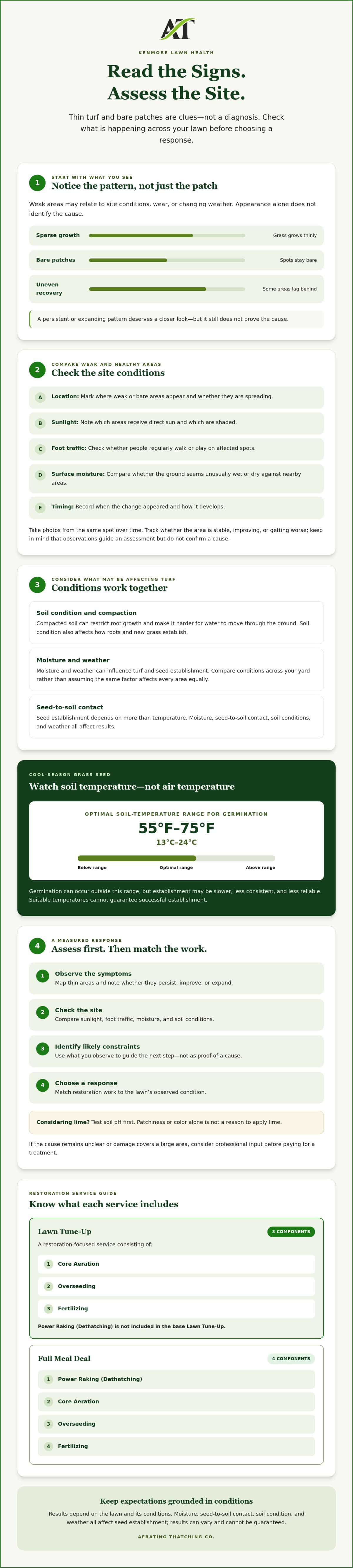
- Thinning turf, bare patches, and uneven growth are clues, not a diagnosis. Check site conditions before choosing a treatment.
- For lawn health Kenmore, consider how soil condition, compaction, moisture, seed establishment, and weather may be affecting your turf.
- Use a simple assessment: note the symptoms, check the site, identify likely constraints, and then choose a response. Test soil pH before considering lime.
- A Lawn Tune-Up includes Core Aeration, Overseeding, and Fertilizing. The Full Meal Deal also includes Power Raking (Dethatching).
How to Recognize Lawn Health Problems in Kenmore
Thinning turf, bare patches, and uneven growth are easy to notice. The cause is harder to identify. A weak area might relate to site conditions, wear, or a change in weather, so don’t choose a treatment based on appearance alone. A general overview of what is a lawn can provide background, but your yard’s own pattern is the more useful starting point.
Which lawn symptoms should Kenmore homeowners look for?
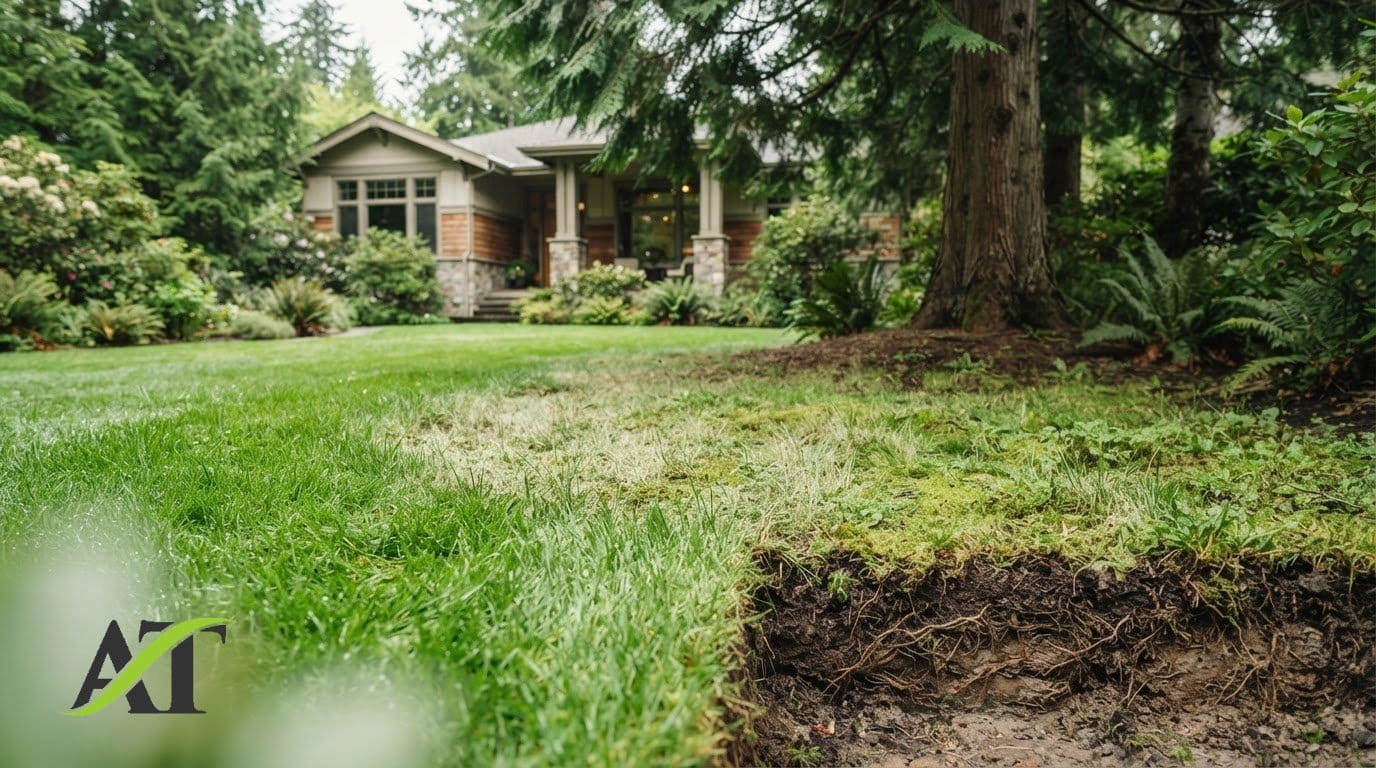
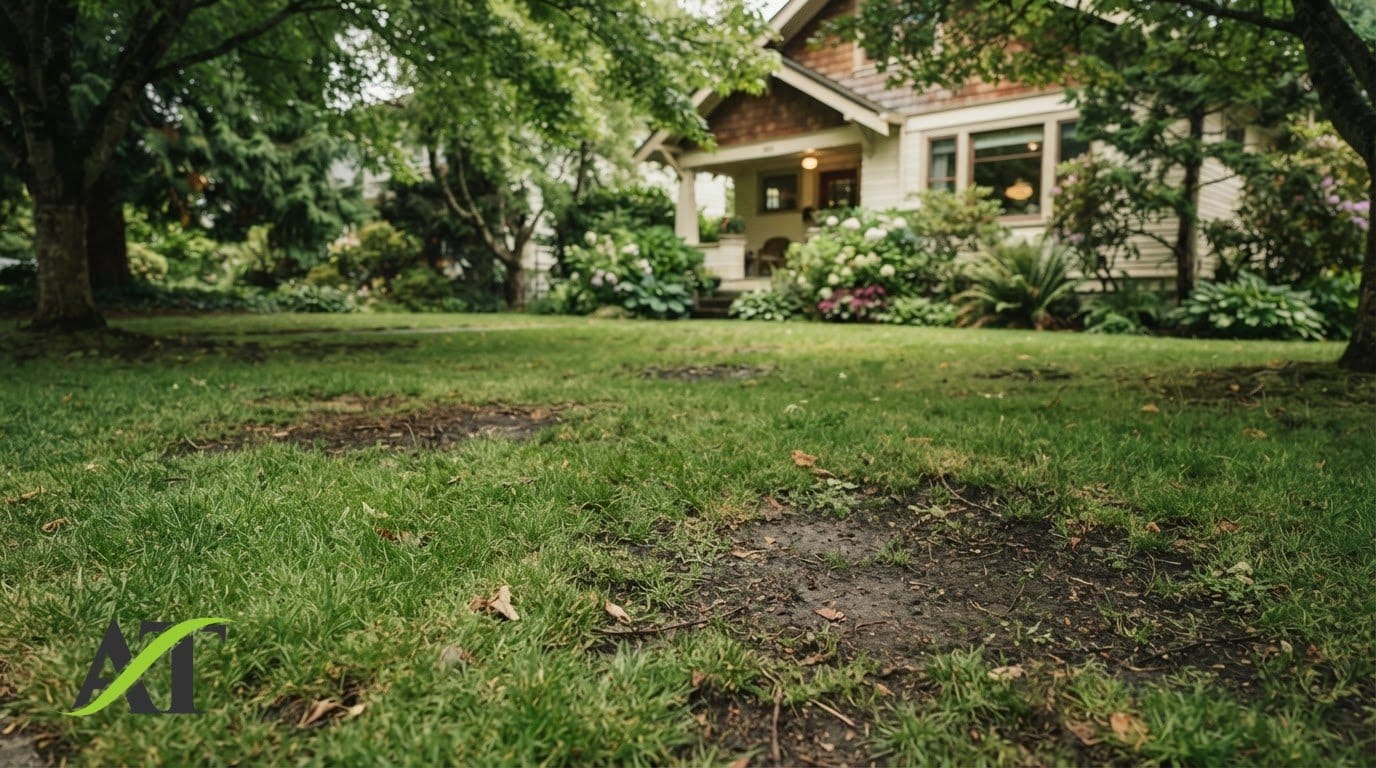
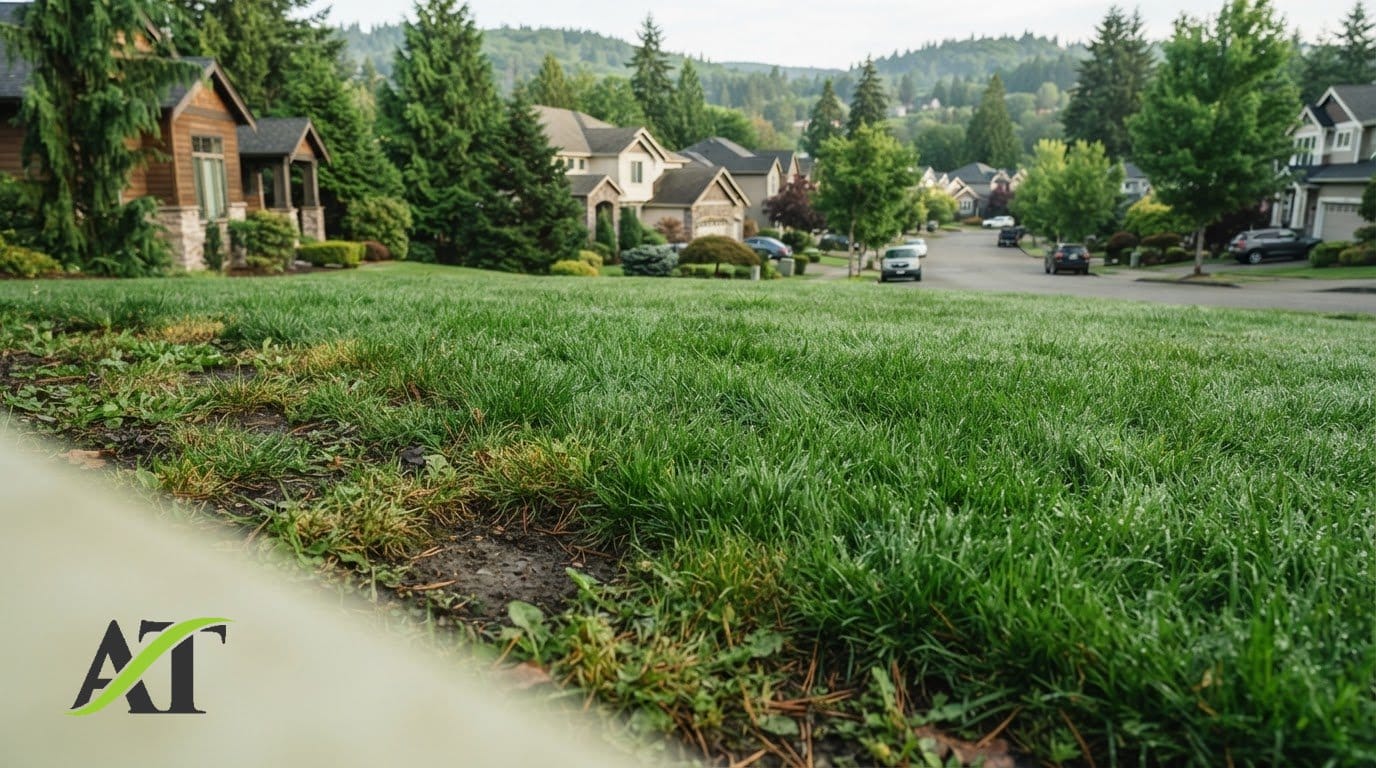
Look for grass that grows sparsely, patches that stay bare, or sections that recover more slowly than the rest of the lawn. Note whether the problem is widespread or limited to one area. Some variation may be temporary and seasonal. A pattern that persists or expands deserves a closer look, but it doesn’t identify the cause on its own.
What observations help narrow down the cause?
Use this lawn health Kenmore checklist before selecting a response. Comparing weak areas with healthier parts of the same yard can help you spot differences in conditions.
- Location: Mark where weak or bare areas appear and whether they’re spreading.
- Sunlight: Note which areas receive direct sun and which are shaded.
- Foot traffic: Check whether people regularly walk or play on affected spots.
- Surface moisture: Compare whether the ground seems unusually wet or dry against nearby areas.
- Timing: Record when you first noticed the change and how it develops.
Take photos from the same spot over time to see whether a patch is stable, improving, or getting worse. These observations can guide an assessment by showing where and when turf struggles, but they don’t prove the cause. Keep your notes handy as you consider the site conditions and possible next steps.
What Can Affect Lawn Health in Kenmore?
Soil condition, compaction, moisture, and weather can all influence turf, but they won’t affect every Kenmore yard in the same way. Look at your own lawn rather than assuming a regional pattern explains the problem. Shade, drainage, and how the ground responds to rain are useful details to note. The WSU Extension Home Lawn Guide offers Pacific Northwest lawn guidance to help put those observations in context.
How soil and site conditions influence turf
Compacted soil can restrict root growth and make it harder for water to move through the ground. Soil condition also affects how well roots and new grass establish. If you suspect a pH problem, test the soil before considering lime. A test can help determine whether pH is a concern, rather than relying on the lawn’s appearance alone.
Why seed establishment depends on more than temperature
Cool-season grass seed responds to soil temperature, not air temperature alone. The optimal soil-temperature range for cool-season grass seed germination is 55°F-75°F (13°C-24°C). Germination can occur outside that range, but establishment may be slower, less consistent, and less reliable. Moisture, seed-to-soil contact, soil conditions, and weather also affect results, so suitable temperatures can’t guarantee successful establishment.
For lawn health Kenmore, use these factors as a checklist, not a diagnosis. Note how the soil and conditions vary across your yard before choosing a treatment. To discuss restoration options for your property, you can request a lawn-care quote.
How to Assess and Improve Lawn Health in Kenmore
A useful assessment follows a clear order: observe the symptoms, check the site, identify likely constraints, then choose a response. Map thin areas and note shade, foot traffic, and whether the soil seems persistently wet or dry. If the cause remains unclear or damage covers a large area, consider getting professional input before paying for a treatment.
Test before considering lime
If you suspect soil pH may be affecting growth, confirm it with a soil test first. Don’t apply lime based on patchiness or color alone. The test can help show whether pH is a concern and whether a lime application is worth considering for your lawn.
Match restoration work to the condition
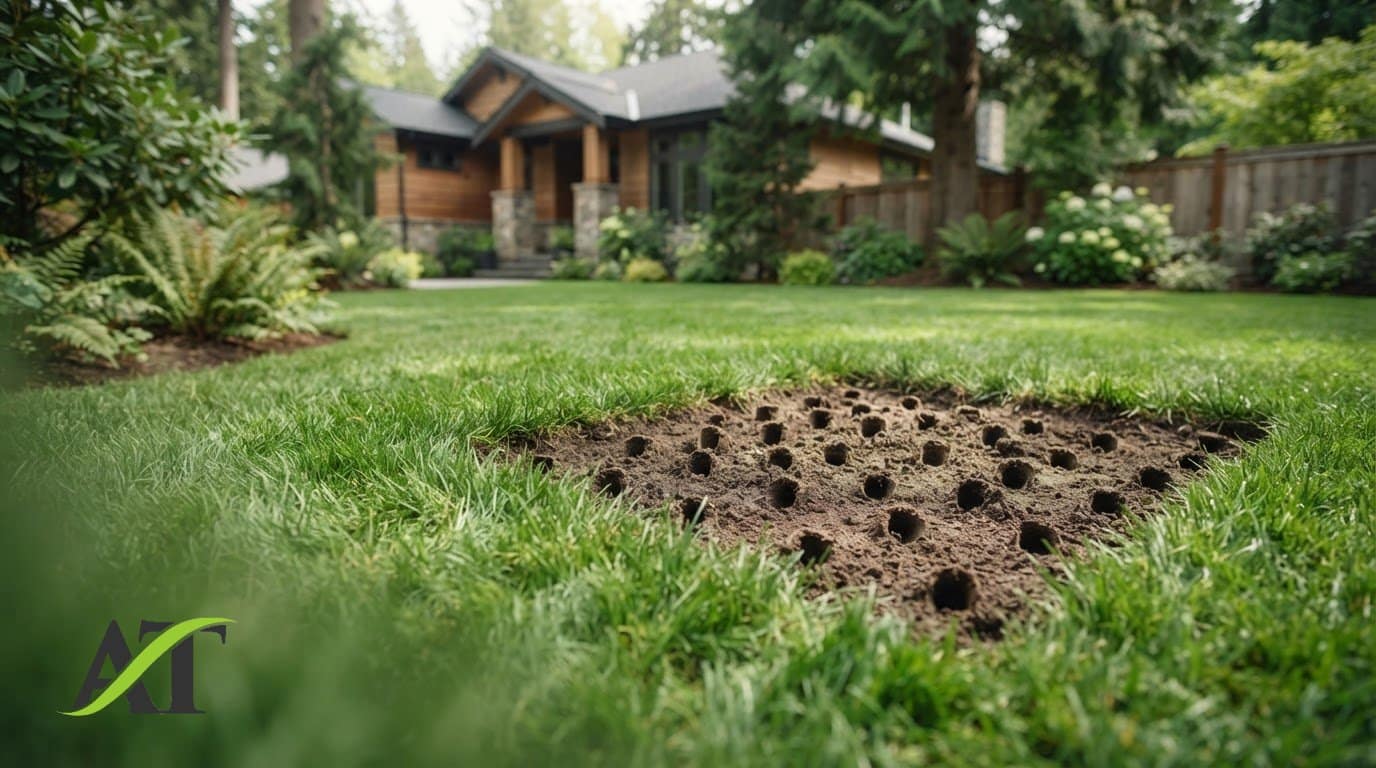
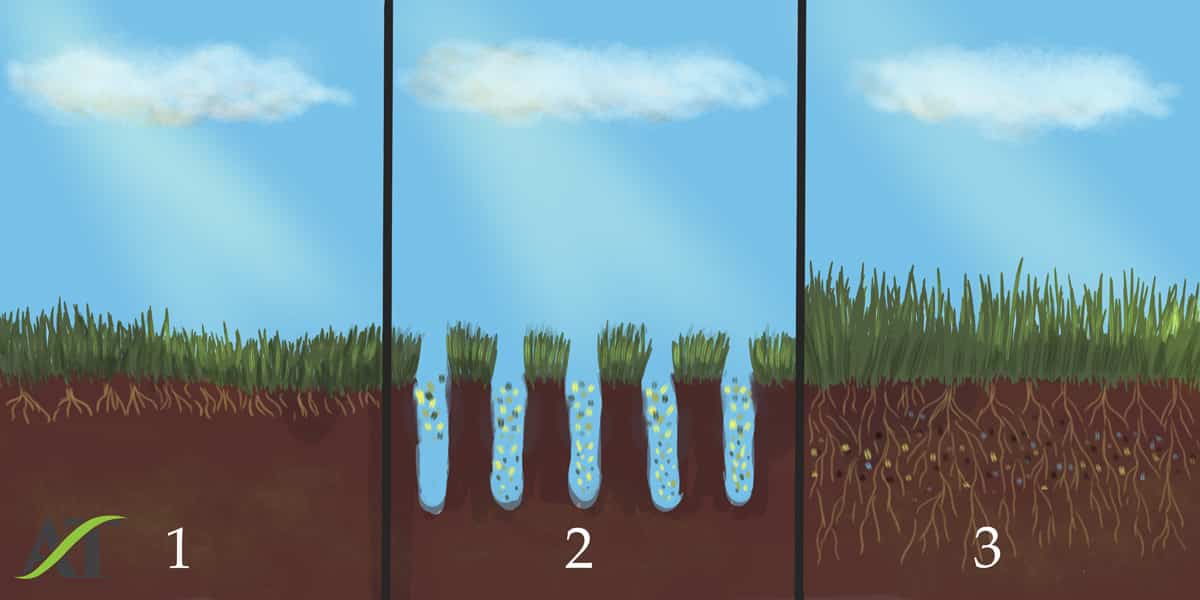
Different treatments address different needs. Core Aeration can help relieve compacted soil and improve the movement of air and water through it. Overseeding adds grass seed to thin areas. Fertilizing supplies nutrients that support turf growth. These are the three components of a Lawn Tune-Up, a restoration-focused service rather than general lawn maintenance.
Power Raking (Dethatching) is not included in the base Lawn Tune-Up. It’s included in the Full Meal Deal, alongside Core Aeration, Overseeding, and Fertilizing. Match the work to the lawn’s observed condition rather than assuming every struggling yard needs the same treatment. Seed establishment also depends on moisture, seed-to-soil contact, soil conditions, and weather, so results can vary.
For lawn health Kenmore, a measured assessment helps match restoration work to the need. Aerating Thatching Co. serves Kenmore with lawn restoration and soil-health treatments.
When a Kenmore Lawn Tune-Up May Be the Right Next Step
A Lawn Tune-Up may be worth considering when thinning keeps returning despite appropriate basic care, or when the lawn needs several restoration steps rather than one targeted response. The important thing is to match the work to the condition. Not every treatment suits every yard, even within Kenmore.
What the Lawn Tune-Up includes, and what it doesn’t
The base Lawn Tune-Up consists of Core Aeration, Overseeding, and Fertilizing. Core Aeration can address compacted soil, Overseeding adds seed to thin turf, and Fertilizing supplies nutrients. Power Raking (Dethatching) is not part of this base service. It’s included in the Full Meal Deal, which consists of Power Raking (Dethatching), Core Aeration, Overseeding, and Fertilizing.
These steps can support restoration, but they don’t guarantee a particular result. Cool-season seed germination is most favorable when soil temperature is 55°F-75°F (13°C-24°C). Moisture, seed-to-soil contact, soil conditions, and weather also affect establishment.
How to decide whether to request an assessment
If the same areas keep thinning after suitable basic care, or a large part of the lawn is struggling, professional input can help clarify which restoration work may fit. Aerating Thatching Co. serves Kenmore, but the right approach depends on your lawn’s condition and your property’s specific needs. Review the available lawn restoration services to understand the options.
For lawn health Kenmore, start with the recurring symptoms and consider which treatments address their likely cause. A quote request is a practical next step if restoration seems appropriate.
Take the Next Step Toward a Stronger Lawn
Better turf starts with understanding the pattern, not guessing at the fix. Note where growth is thin, check site conditions, and test soil pH before considering lime. For lawn health Kenmore, matching restoration work to the actual need can help you avoid treatments that miss the cause.
A Lawn Tune-Up brings together Core Aeration, Overseeding, and Fertilizing. Seed establishment and recovery depend on conditions such as moisture, soil, and weather, so results can vary. Aerating Thatching Co. is an owner-operated local business founded in 2004, serving Kenmore and nearby communities.
Start with what your lawn is showing, then choose a next step that fits. A clear assessment can help you work toward thicker, healthier turf one decision at a time.
Frequently Asked Questions
Is a Lawn Tune-Up the same as general lawn maintenance?
No. A Lawn Tune-Up is a restoration service, not routine lawn maintenance. It consists of Core Aeration, Overseeding, and Fertilizing to address turf and soil needs; it doesn’t replace regular care. Aerating Thatching Co. doesn’t provide weekly mowing, edging, or general lawn maintenance. The company serves Kenmore and nearby North Seattle, Shoreline, Edmonds, Lynnwood, Mill Creek, Bothell, Lake Forest Park, Mountlake Terrace, Snohomish, Everett, Brier, Woodway, Green Lake, Ballard, and Greenwood.
What is included in a Lawn Tune-Up?
A Lawn Tune-Up includes exactly three components: Core Aeration, Overseeding, and Fertilizing. Power Raking (Dethatching), lime, and Lawn Soil Amendments aren’t part of the base service. Ask whether any of these are appropriate as optional add-ons. The Full Meal Deal is separate and has its own defined set of four components.
When is the best time to overseed a lawn in Kenmore?
Overseed when site and weather conditions are suitable, using soil temperature to judge germination conditions rather than air temperature alone. For cool-season grass seed, 55°F-75°F (13°C-24°C) soil temperature is optimal. Germination can occur outside that range, but establishment may be slower and less consistent. Moisture, seed-to-soil contact, soil conditions, and weather all affect results, so no timing guarantees germination.
Can lawn aeration fix every thin or patchy area?
No. Core Aeration may help where soil compaction limits air and water movement, but thin or patchy turf can have other causes. Check site conditions and whether new seed can establish before choosing a treatment. If the cause remains unclear, professional input can help identify a suitable next step. For lawn health Kenmore, don’t assume one symptom proves compaction or that aeration alone will restore every area.
Does the Full Meal Deal include Power Raking (Dethatching)?
Yes. The Full Meal Deal includes Power Raking (Dethatching), Core Aeration, Overseeding, and Fertilizing. The Lawn Tune-Up is different: its base service consists only of Core Aeration, Overseeding, and Fertilizing. Power Raking (Dethatching) is not included in the base Lawn Tune-Up, so check which service matches the work your lawn may need.
Article by
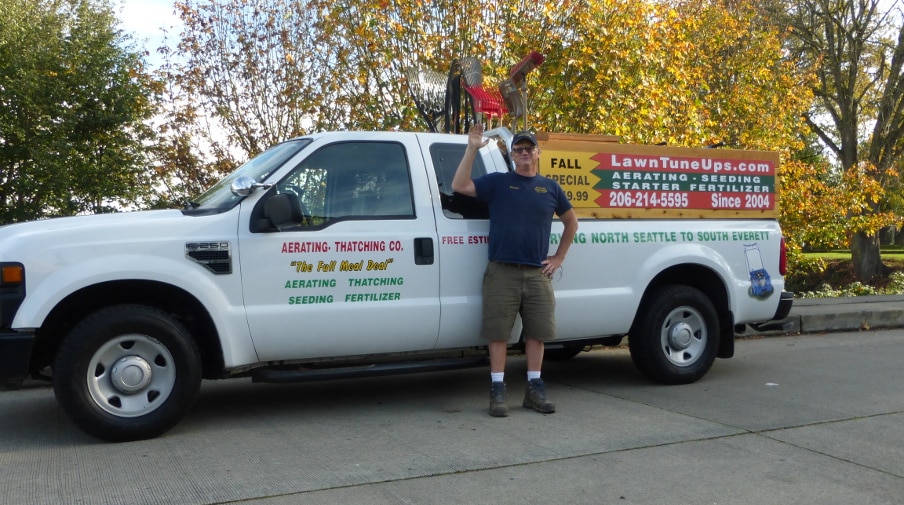
Stewart Armour
Stewart Armour is an independent lawn restoration expert, educator, and owner of Aerating Thatching Co., serving the greater Seattle area since 2004. With more than two decades of professional experience restoring Western Washington lawns, Stewart specializes in diagnosing lawn problems, improving soil health, and developing long-term lawn renovation strategies. His education includes turf management studies, advanced golf course turf training, and continuing education through Wilbur-Ellis University, State Turf Facilities, Soil First Academy, and Golf Course Applied Turf Physiology. Every article published on LawnTuneUps.com is grounded in practical field experience, current turf science, and a commitment to helping homeowners understand the why behind every recommendation—not just what to do.
Stewart has personally evaluated thousands of residential lawns throughout the Seattle area and remains committed to helping homeowners understand the science behind growing healthier, more resilient lawns.