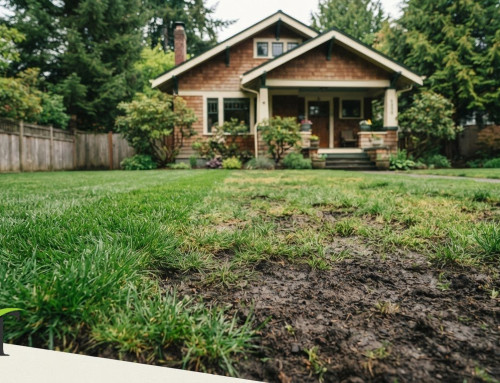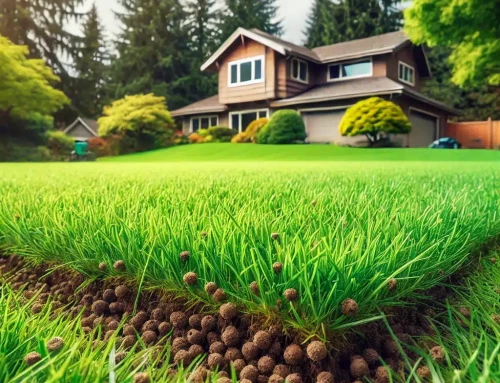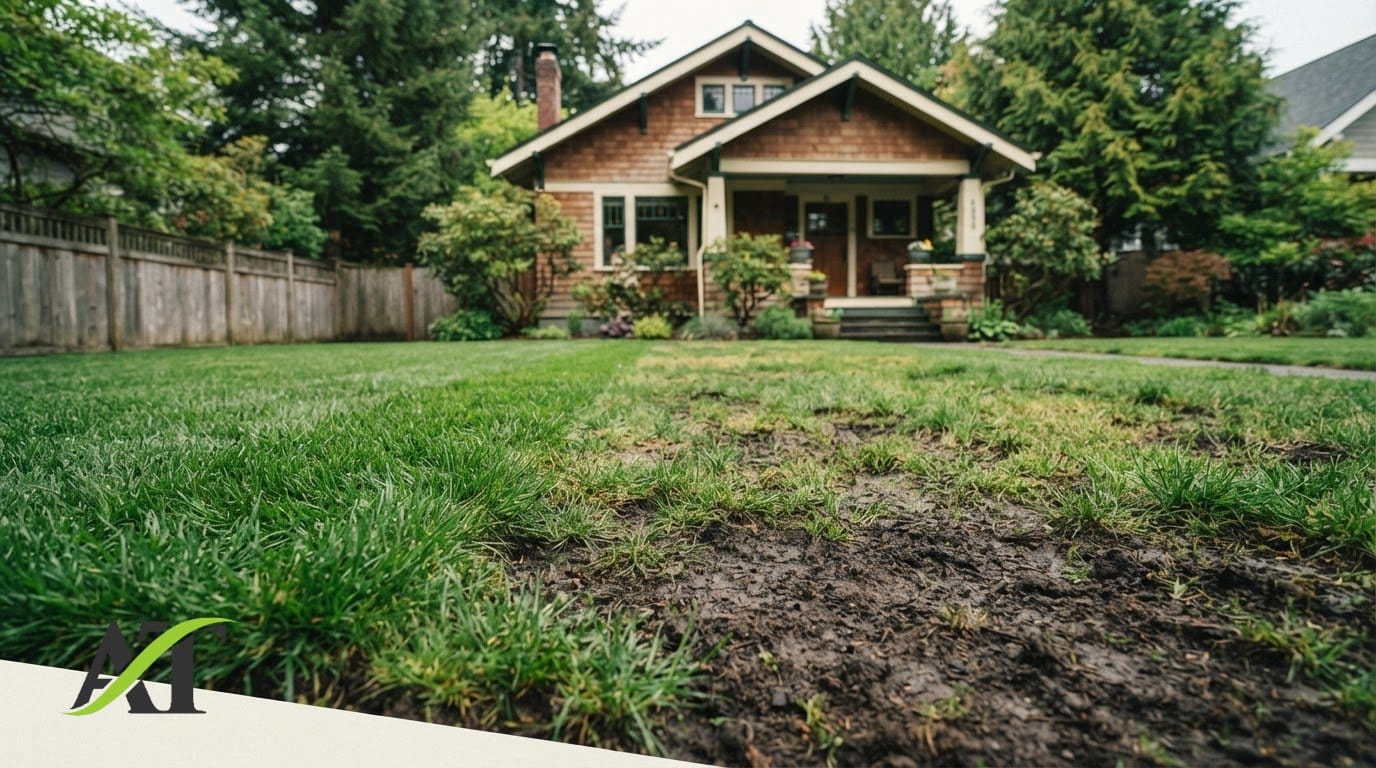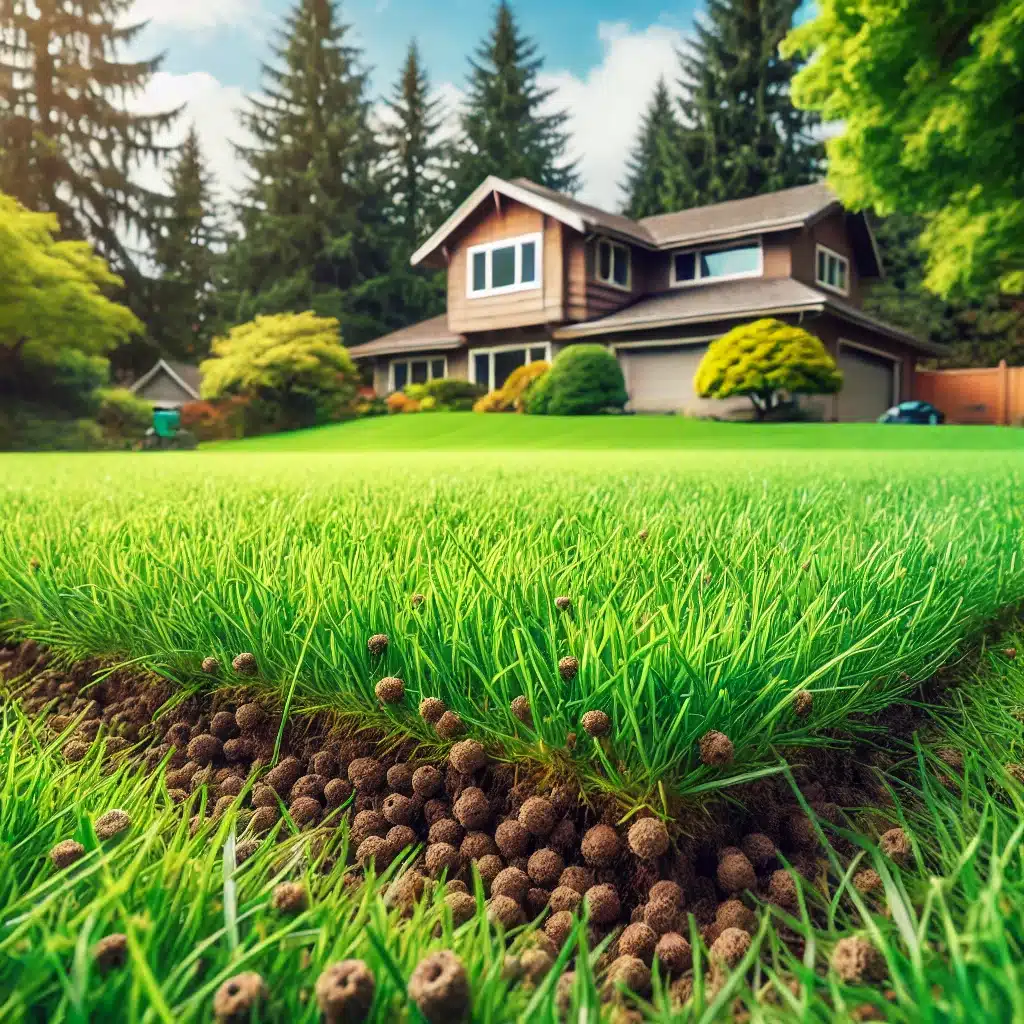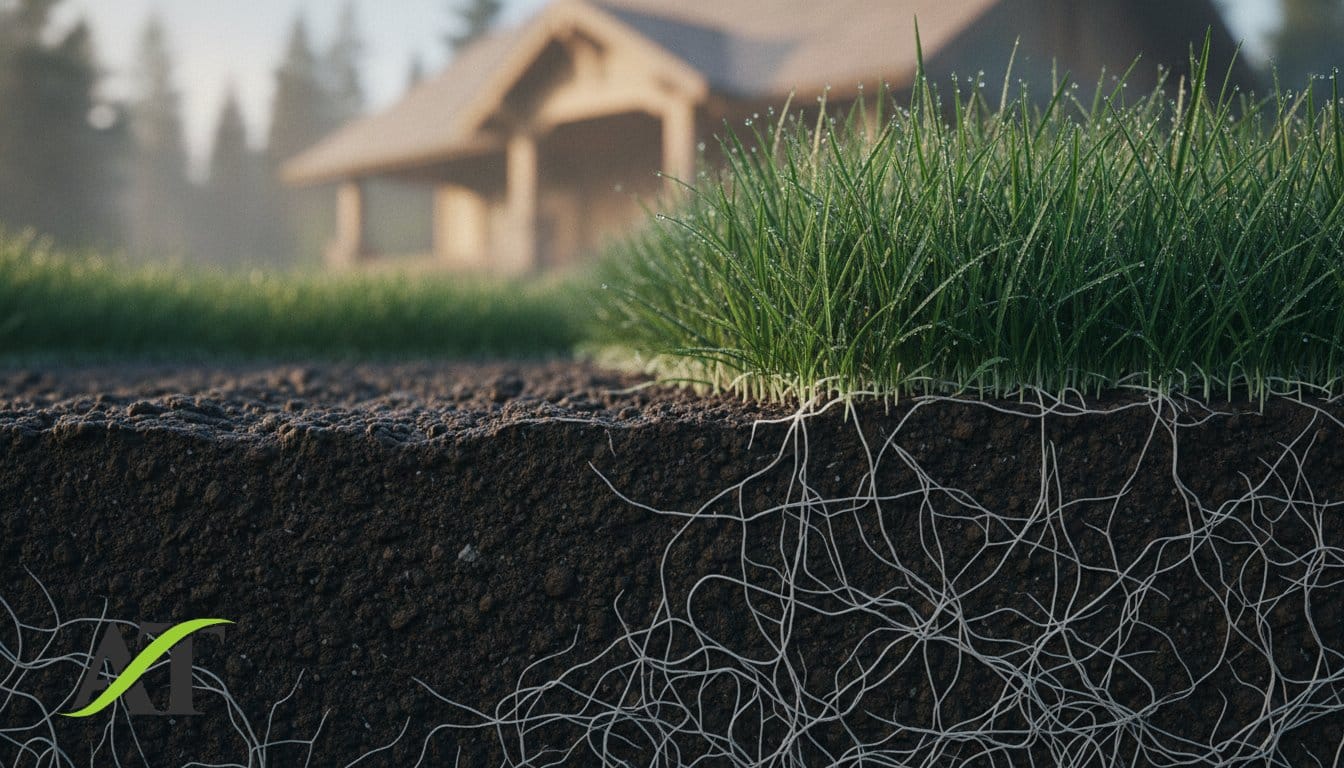
Why does your lawn seem to get thinner every year, even when you’re dumping store-bought fertilizer on it every spring? If you’re dealing with the heavy, compacted clay soil common here in the Pacific Northwest, you’ve likely noticed that standard chemicals just don’t cut it. You end up with persistent moss and grass that looks hungry no matter what you do. Your soil has likely become a dead medium. Understanding how organic fertilizer improves soil health is the first step toward breaking this cycle. Unlike synthetic salts that provide a quick green-up, organic nutrients feed the microbes that actually build your soil’s structure.
It’s frustrating to watch your hard work wash away or get choked out by weeds. We’ve seen hundreds of lawns in North Seattle and Snohomish County struggle with these issues. This guide shows you how switching to organic treatments transforms your yard into a thriving biological engine for thicker grass. We’ll explain how organic matter improves drainage, creates a safe environment for your kids and pets, and why it’s a core component of our Lawn Tune-Up.
Key Takeaways
- Learn how organic fertilizer improves soil health by feeding the microbes that build a resilient, long-term foundation for your grass.
- Understand why the slow-release nature of organic nutrients prevents the common “surge-and-starve” cycle seen with store-bought synthetics.
- Discover why soil temperature, specifically the 55°F–75°F range, is the critical factor for successful germination in our local PNW conditions.
- See why combining Core Aeration with organic treatments as part of a Lawn Tune-Up ensures nutrients reach the root zone for maximum impact.
Organic Fertilizer vs. Synthetic: Building a Soil Pantry
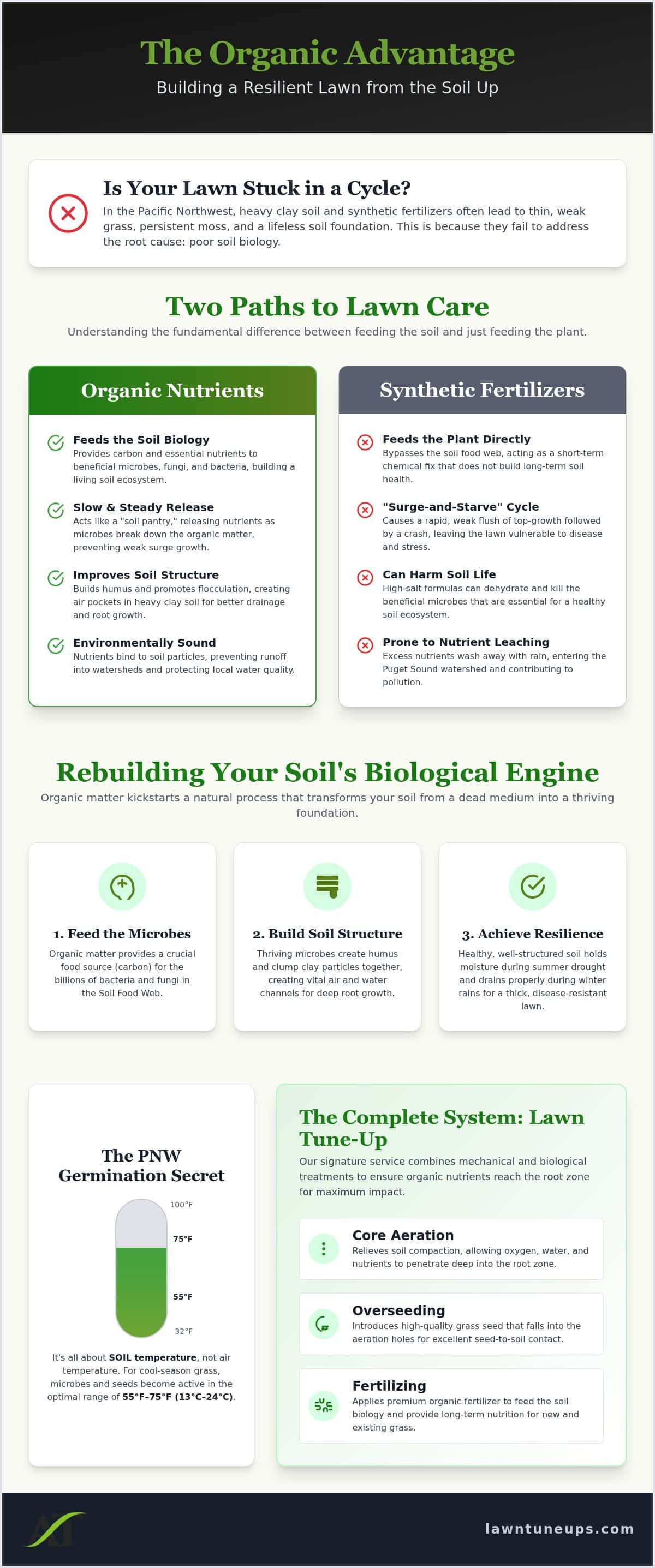
Most homeowners think of fertilizer as grass food. That’s a common mistake. Organic fertilizers are complex materials that feed the soil itself. While synthetics act like a sugary energy drink for your grass, organic matter builds a long-term pantry. This is fundamentally how organic fertilizer improves soil health; it provides a steady supply of nutrients that stay put. This process improves the Cation Exchange Capacity (CEC) in Edmonds and Lynnwood lawns. A higher CEC means your soil can actually hold onto nutrients instead of letting them wash away during our heavy rains.
The Problem with Synthetic ‘Quick Fixes’
Synthetic products are often high-salt formulas. These salts can dehydrate and kill the beneficial microbes your lawn needs to thrive. When you use these “quick fixes,” you often see a sudden surge of growth followed by a total crash. This “surge-and-starve” cycle leaves grass weak and susceptible to disease. There’s also an environmental cost. Excess synthetic nitrogen doesn’t stay in the soil. It often leaches into the Puget Sound watershed, contributing to algae blooms and water quality issues that organic options help avoid.
Why Organic Matter is the Secret to Turf Density
Heavy clay soil is the standard in our area. It’s thick, sticky, and suffocates roots. Organic fertilizer adds physical structure to these heavy soils by promoting the creation of humus. Humus is the stable, dark organic matter that remains after plant and animal residues have fully decomposed, acting as a sponge for water and nutrients. This improved structure allows roots to penetrate deeper into the ground. When your soil has better structure, it drains more efficiently during the winter and holds moisture better during the summer. Understanding how organic fertilizer improves soil health is the only way to get a truly resilient lawn.
How Organic Fertilizer Rebuilds the Biological Engine
Your lawn’s success depends on the Soil Food Web. This invisible network of bacteria, fungi, and grass roots works together to process nutrients. A major way how organic fertilizer improves soil health is by providing the carbon these organisms need to survive. Unlike synthetics, organic inputs stimulate mycorrhizal fungi. These fungi attach to grass roots, effectively extending their reach to find water and nutrients. This partnership is vital for drought resistance during our dry PNW summers. A healthy biological engine also naturally suppresses common lawn diseases. It creates an environment where beneficial organisms outcompete harmful pathogens. Learning how organic fertilizer improves soil health helps you stop fighting against your dirt and start working with it. To keep these microbes active, they need oxygen. This is why we often recommend a Core Aeration Snohomish homeowners can rely on to open up the soil profile.
Feeding the Microbes That Feed Your Grass
Bacteria are the primary decomposers in your yard. They use the carbon found in organic fertilizer as a primary energy source. As these microbes thrive, they help break down thatch naturally over time. This biological process recycles nutrients back into the soil while keeping the surface clear for new growth. The Benefits of Using Compost and organic fertilizers include this steady microbial activity. It ensures your grass has a constant, reliable supply of food rather than the spikes and dips of chemical alternatives.
Improving Soil Structure and Drainage
Organic matter also changes the physical nature of your ground through a process called flocculation. This occurs when organic compounds cause tiny clay particles to clump together. These clumps create essential air pockets in the soil. In Shoreline and Lake Forest Park, where “soggy yard” syndrome is a constant headache, these air pockets are lifesavers. They improve drainage and prevent roots from drowning in standing water during our wet winters. If your yard feels like a wet sponge every winter, you might want to request a quote to see how our organic program can help.
Maximizing Organic Results in the Pacific Northwest
Homeowners often wonder why their grass stays dormant despite their best efforts. In the Pacific Northwest, the delay usually comes down to soil temperature. While you might feel the sun on your face, the optimal soil temperature for cool-season grass seed germination is strictly 55°F–75°F (13°C–24°C). This is also the range where microbes become active. If you want to know how organic fertilizer improves soil health, you have to understand that it relies on these microbes to break down materials. Without that warmth, the “soil pantry” stays closed. Germination can happen in colder dirt, but it’s slower and far less reliable.
Soil Temperature vs. Air Temperature
A warm afternoon in March doesn’t mean your ground is ready for Overseeding. Soil holds winter’s chill much longer than the air does. You can check this yourself by sticking a kitchen thermometer four inches into the turf. When Selecting and Using Organic Fertilizers, timing is everything. If you apply them when the ground is still 45°F, the nutrients just sit there. They won’t start working until the biological engine warms up enough to process them.
The Role of pH in Nutrient Availability
Local soils in Everett and Shoreline are naturally acidic. High acidity acts like a padlock on your soil’s nutrients, making them impossible for grass to absorb. This is why even the best organic fertilizer can seem ineffective in moss-prone areas. A professional Lime Application Edmonds homeowners trust is the partner your fertilizer needs. Lime neutralizes that acidity, unlocking the soil so your grass can actually use the food you’re providing. Balancing pH is a vital part of how organic fertilizer improves soil health over the long term.
Integrating Fertilizing into Your Lawn Tune-Up
Organic fertilizer works best when it can actually reach the soil. Applying it to a compacted, thatch-heavy lawn is often a waste of time and money. This is why our professional Lawn Tune-Up consists of Core Aeration, Overseeding, and Fertilizing. Core Aeration pulls plugs of soil from the ground, creating direct channels for nutrients to reach the root zone. This mechanical process is a fundamental part of how organic fertilizer improves soil health in North Seattle yards. For lawns struggling with thick debris, we recommend the Full Meal Deal. This service includes Power Raking (Dethatching), Core Aeration, Overseeding, and Fertilizing to ensure nothing stands between the nutrients and the dirt.
Why Mechanical Restoration Comes First
Power Raking (Dethatching) clears the surface of dead organic buildup. If you skip this, your organic fertilizer gets trapped in the thatch layer instead of feeding the roots. There is also a natural synergy between Overseeding and organic feed. The slow-release nutrients provide a steady energy source for new sprouts as they establish. While we use high-quality materials, remember that results depend on multiple factors. Moisture, seed-to-soil contact, soil conditions, and weather all play a role in your lawn’s success; for professional assistance in other regions, you can learn more about Performance Lawns, INC and their specialized fertilization services.
Similarly, those looking for comprehensive landscaping and construction in the Southwest can learn more about Green Earth, LC and their decades of experience in the Verde Valley region.
Timing is critical for any restoration in Shoreline or Woodway. We typically schedule these services when soil temperatures are in the optimal 55°F–75°F range. This ensures the biological engine is ready to process the organic matter. Waiting for the right seasonal window prevents the “surge-and-starve” cycle and supports long-term vitality. If your grass feels thin or unresponsive, a professional assessment can help identify the right path forward.
Build a Resilient Lawn from the Ground Up
Transforming your yard starts with shifting your focus from the grass blades to the soil life beneath them. Understanding how organic fertilizer improves soil health is the key to breaking the cycle of thin grass and persistent moss. By feeding the biological engine of your soil and ensuring proper drainage through Core Aeration, you create a foundation that thrives even in our heavy clay conditions.
We’ve been serving the Seattle area since 2004; we know exactly what local turf needs to succeed. Whether you choose a Lawn Tune-Up or the Full Meal Deal, our organic approach prioritizes long-term vitality over a temporary chemical green-up. Remember to watch your soil temperatures and keep moisture consistent for the best establishment.
Your lawn is an investment in your home’s value and your family’s outdoor space. Let’s work together to make it the thickest, healthiest yard on the block.
Frequently Asked Questions
Is organic fertilizer safe for my pets and children in Woodway?
Yes. Organic fertilizers are made from natural materials that don’t contain the harsh synthetic salts found in chemical alternatives. Families in Woodway and Shoreline can feel confident letting their kids and pets play on the grass shortly after application. Because these treatments focus on long-term vitality, they don’t leave behind toxic residues. This makes them a responsible choice for local residential landscapes.
How long does it take to see results from organic fertilizer?
You will typically see a deeper green within two to three weeks, but the real transformation happens underground over several months. Organic matter works by rebuilding the soil structure rather than providing a synthetic quick fix. Understanding how organic fertilizer improves soil health means realizing that results are cumulative. Each application builds a thicker, more resilient turf that resists drought and disease better than chemically treated lawns.
Can I apply organic fertilizer if my soil is still cold?
It is best to wait until soil temperatures reach at least 55°F. Organic fertilizers rely on microbial activity to break down and release nutrients. If the ground is too cold, those microbes are dormant. The fertilizer will just sit there until it warms up. For successful Overseeding and nutrient uptake in neighborhoods like Everett, we recommend monitoring soil temperature rather than air temperature to ensure the biological engine is active.
Do I need to aerate before applying organic fertilizer?
Core Aeration is highly recommended to maximize your results. Aeration pulls plugs of soil from the ground. This allows the organic material to reach the root zone directly. Without this step, nutrients get trapped in the thatch layer or run off compacted clay. This mechanical restoration is a key part of our Lawn Tune-Up and is essential for understanding how organic fertilizer improves soil health by opening up the soil profile.
Why is my lawn still mossy after fertilizing?
Fertilizer alone won’t kill moss; you must address the underlying soil conditions. Moss thrives in the acidic, compacted, and shady environments common in North Seattle and Snohomish. To fix this, we often recommend a Lime Application to balance soil pH alongside our organic treatments. Combining these with Core Aeration helps improve drainage. This creates an environment where healthy grass can finally outcompete moss for space and nutrients.
Article by
Stewart Armour
Stewart Armour is an independent lawn restoration expert, educator, and owner of Aerating Thatching Co., serving the greater Seattle area since 2004. With more than two decades of professional experience restoring Western Washington lawns, Stewart specializes in diagnosing lawn problems, improving soil health, and developing long-term lawn renovation strategies. His education includes turf management studies, advanced golf course turf training, and continuing education through Wilbur-Ellis University, State Turf Facilities, Soil First Academy, and Golf Course Applied Turf Physiology. Every article published on LawnTuneUps.com is grounded in practical field experience, current turf science, and a commitment to helping homeowners understand the why behind every recommendation—not just what to do.
Stewart has personally evaluated thousands of residential lawns throughout the Seattle area and remains committed to helping homeowners understand the science behind growing healthier, more resilient lawns.