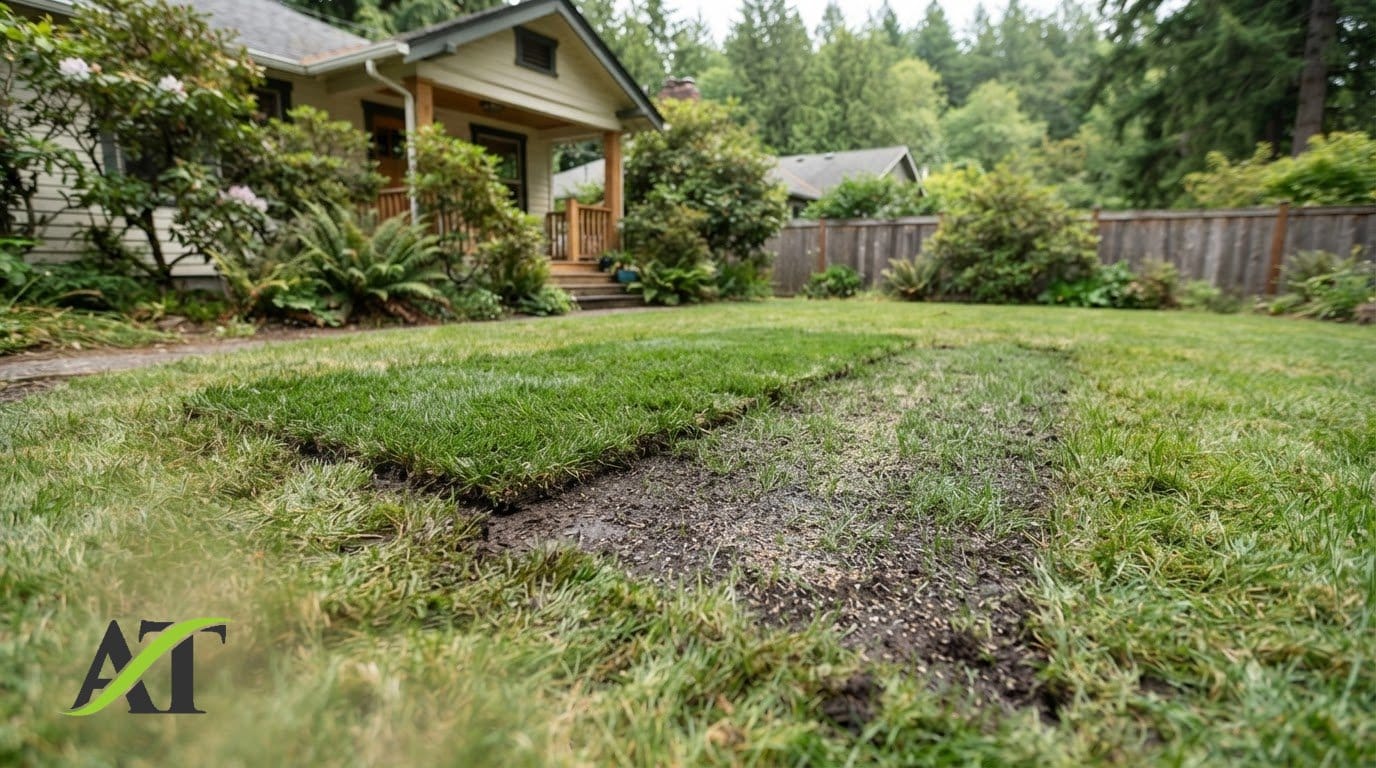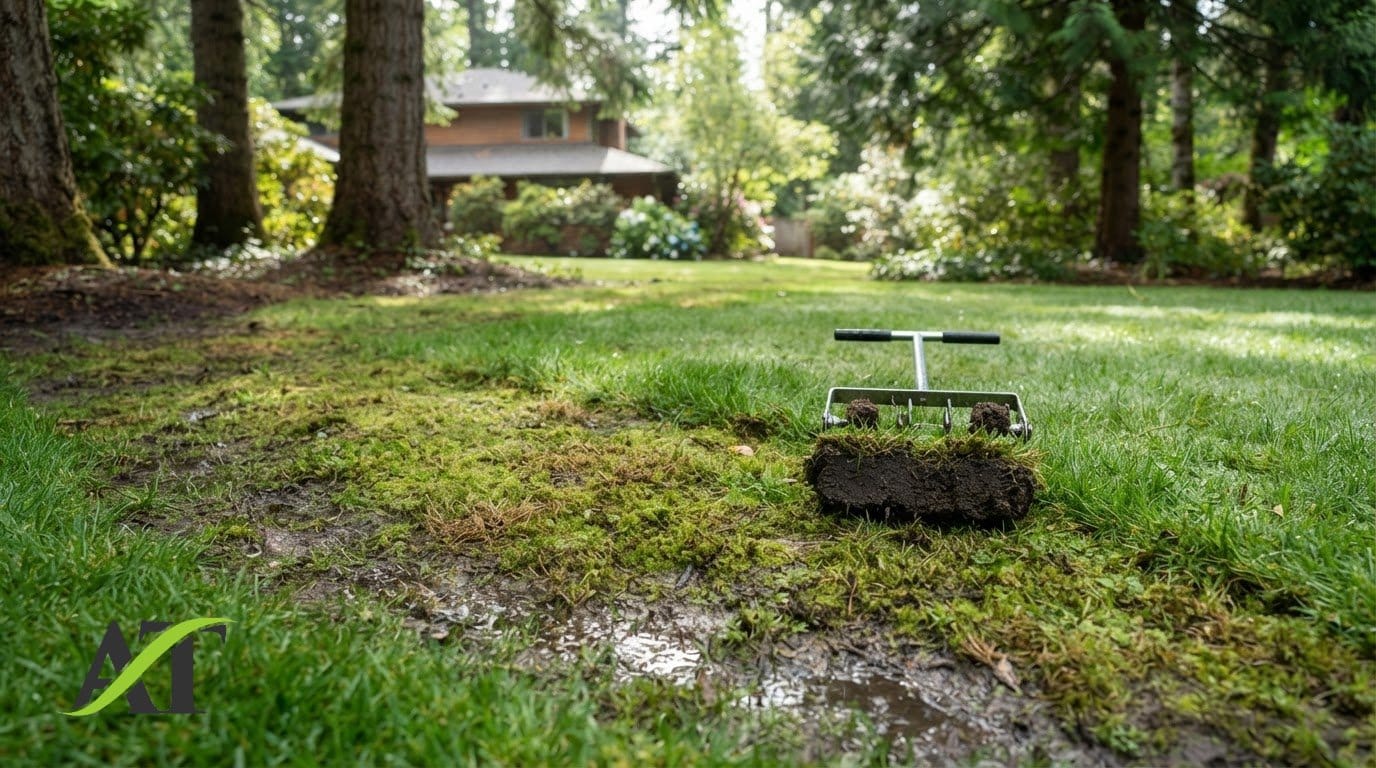
What if the moss you keep removing isn’t the real problem? Getting rid of moss in lawn Kenmore begins with finding out why it has room to grow. Shade, wet soil, compaction, and soil acidity can all weaken grass, giving moss an advantage.
It’s frustrating to clear a patch only to see moss return. Removing what’s there can improve the lawn’s appearance, but it won’t correct the conditions that favor moss. The right next step depends on what’s happening beneath and around the affected area.
This guide explains how to assess likely causes, remove existing moss responsibly, and decide whether lawn restoration could help grass compete. You’ll also learn what Core Aeration, Overseeding, and Power Raking (Dethatching) can address, and when a drainage or site-specific issue may need further diagnosis.
Key Takeaways
- A lasting approach to getting rid of moss in lawn Kenmore starts by identifying what is weakening the grass, not assuming moss points to one specific soil problem.
- Check sunlight, lingering wet areas, thatch, and signs of compacted turf to narrow down which conditions may be contributing.
- If soil acidity is a concern, use a soil test to guide your next step and avoid applying lime without a reason.
- When thin turf or compaction calls for restoration, a Lawn Tune-Up combines Core Aeration, Overseeding, and Fertilizing; it does not treat moss directly.
Why Moss Grows in Kenmore Lawns, and What It Can Tell You
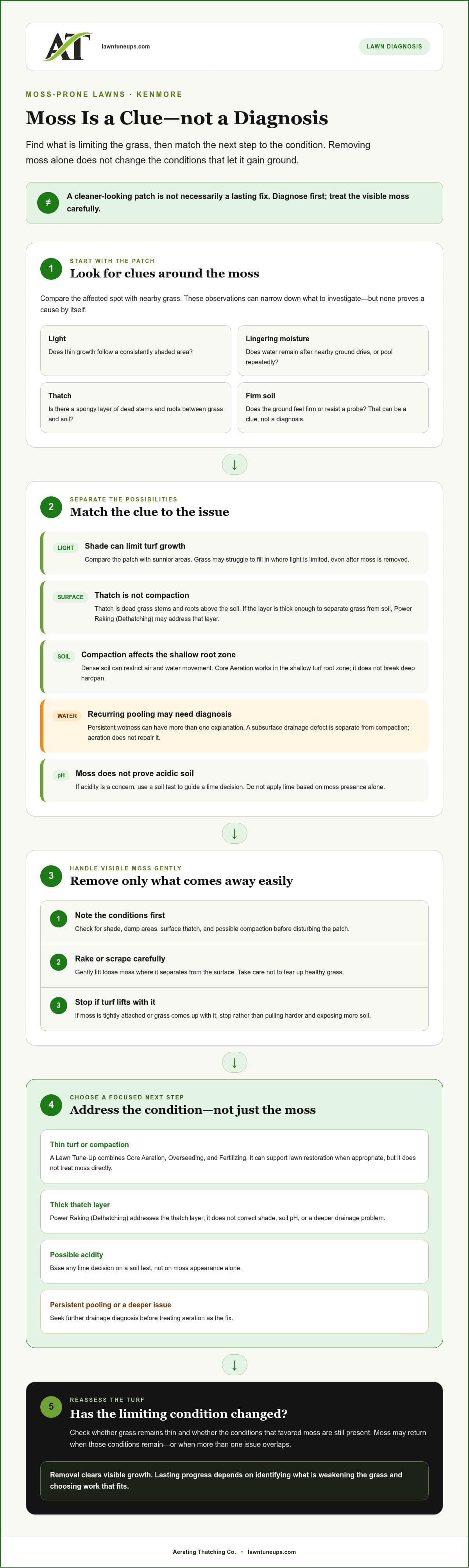
Moss in a lawn is a reason to look more closely, not a diagnosis by itself. It can gain ground where turf is struggling, but its presence doesn’t prove the soil is acidic or identify a single fix. For homeowners getting rid of moss in lawn Kenmore, the first useful decision is which conditions are actually limiting grass in that part of the yard.
Kenmore lawns vary from property to property. Check the affected area rather than assuming the same cause applies across the whole lawn. Moss can also grow where more than one condition is at work.
Which lawn conditions can give moss an advantage?
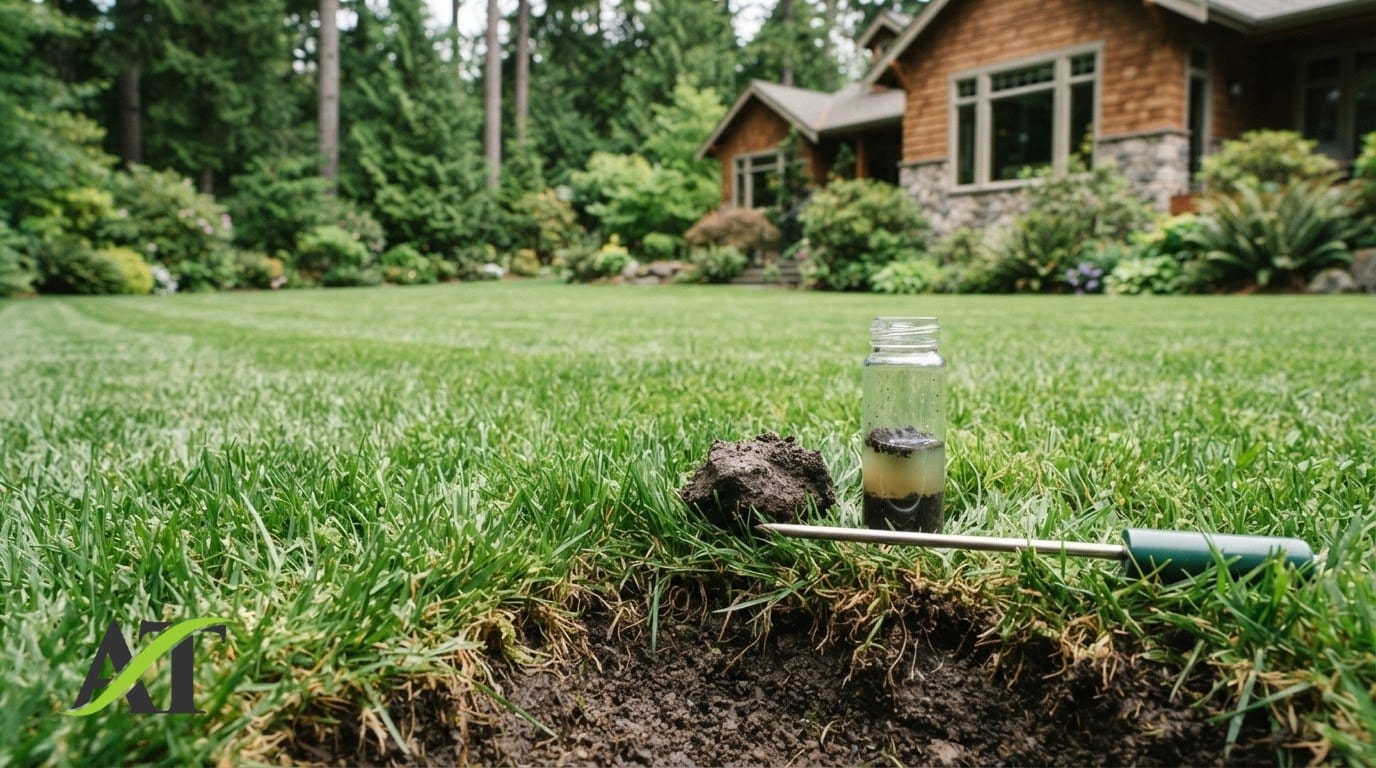
Low light can limit turf growth, while persistently damp ground can make it harder for grass to thrive. Compaction is different: dense soil can restrict air and water movement in the shallow root zone. Thatch is a layer of dead grass stems and roots above the soil; it isn’t the same as compaction or moss. Poor subsurface drainage is a separate issue that surface raking or aeration may not resolve.
Soil pH may also affect turf, but moss alone can’t tell you whether the soil is acidic. If acidity is a concern, use a soil test to guide any decision about lime.
What moss does, and does not, tell you
Visible moss is a clue to investigate. Note whether the patch sits under shade, stays damp after nearby areas dry, or has a spongy layer of thatch. Firm, difficult-to-penetrate soil may point toward compaction, while recurring standing water may call for closer drainage diagnosis. General information about Moss describes where it grows, but it can’t diagnose your lawn.
Moss removal alone does not correct the underlying growing conditions that allowed moss to gain ground. Causes can overlap, so one treatment may remove moss or address one issue without helping turf recover from the others. Identify the likely cause before choosing a lasting next step.
How to Remove Existing Moss Without Mistaking Removal for a Lasting Fix
Once you’ve noted the conditions around a mossy patch, deal with the visible growth carefully and then judge how the turf responds. A practical sequence is:
- Identify likely causes. Note shade, damp areas, surface thatch, or signs of compacted soil before disturbing the patch.
- Remove loosened moss carefully. Rake or scrape the surface gently where the moss comes away easily, taking care not to tear up healthy grass.
- Assess turf recovery. Look at whether grass remains thin and whether the conditions that favored moss are still present before choosing a next step.
Moss removal is an immediate task; changing the conditions that favor moss is the longer-term work. Raking or scraping can clear the surface, but it won’t provide more light, relieve compaction, correct soil pH, or resolve a drainage problem. That distinction matters for getting rid of moss in lawn Kenmore without mistaking a cleaner-looking patch for a lasting fix.
When is raking or scraping appropriate?
Gentle manual removal can work for an accessible patch where moss has loosened from the lawn surface. Use care around desirable grass. If the moss is tightly attached or the turf lifts with it, stop rather than pulling harder and damaging grass or exposing more soil. The aim is to remove loose material, not strip the area bare.
Why can moss return after removal?
Moss can reappear if the conditions that gave it an advantage remain. A shaded area may still limit grass growth, compacted soil may still restrict the shallow root zone, and persistent wetness may still signal a drainage concern. Removing moss doesn’t show which of these is responsible, or whether several overlap. Diagnose first, then decide whether Core Aeration, Overseeding, pH correction, or further drainage diagnosis fits the lawn. Ask Stewart About Your Lawn if you’d like to discuss a restoration approach based on the conditions you’ve found.
How to Diagnose a Mossy Kenmore Lawn Before Choosing a Fix
Before choosing work, compare the mossy area with nearby grass. Notice how much direct light it receives, whether water lingers after surrounding ground dries, and whether a spongy layer of dead stems sits between grass and soil. These are clues, not proof. A useful plan for getting rid of moss in lawn Kenmore depends on matching the work to the condition you can actually identify.
How do you tell compaction, thatch, and drainage problems apart?
Thatch is a surface layer of dead stems and roots. If it’s thick enough to separate grass from soil, Power Raking (Dethatching) may address that layer, but it won’t correct shade, pH, or a deeper drainage problem. Compacted soil may feel firm and resist a probe, though that sign alone isn’t a diagnosis. Core Aeration works in the shallow turf root zone; it cannot break deep hardpan or repair a subsurface drainage defect.
Pay attention to where and when water remains. A damp surface may have several explanations, while recurring pooling or a problem that seems to extend below the turf root zone calls for further diagnosis before aeration is treated as the fix.
When might shade or soil pH be the main limitation?
Grass in a low-light area may struggle to fill in, even after moss is removed. Compare the patch with sunnier parts of the lawn and note whether the thin growth follows a consistent shade pattern. Don’t assume moss means acidic soil. Lime should follow evidence of a pH need, not moss presence alone. A soil test gives a sounder basis for a lime decision than moss appearance. For more guidance on interpreting pH and lime decisions, consult this Kenmore lawn lime and soil pH guide.
Once you’ve identified the likely limitation, you can choose a focused next step rather than treating every mossy patch the same way.
When Lawn Restoration Makes Sense for Moss-Prone Turf in Kenmore
Restoration may help when the diagnosis points to thin grass, shallow turf-root-zone compaction, or bare areas that need new grass established. It isn’t a moss treatment. A plan for getting rid of moss in lawn Kenmore should match the work to the lawn’s condition, rather than assume every mossy patch needs the same package.
Which restoration components address which lawn conditions?
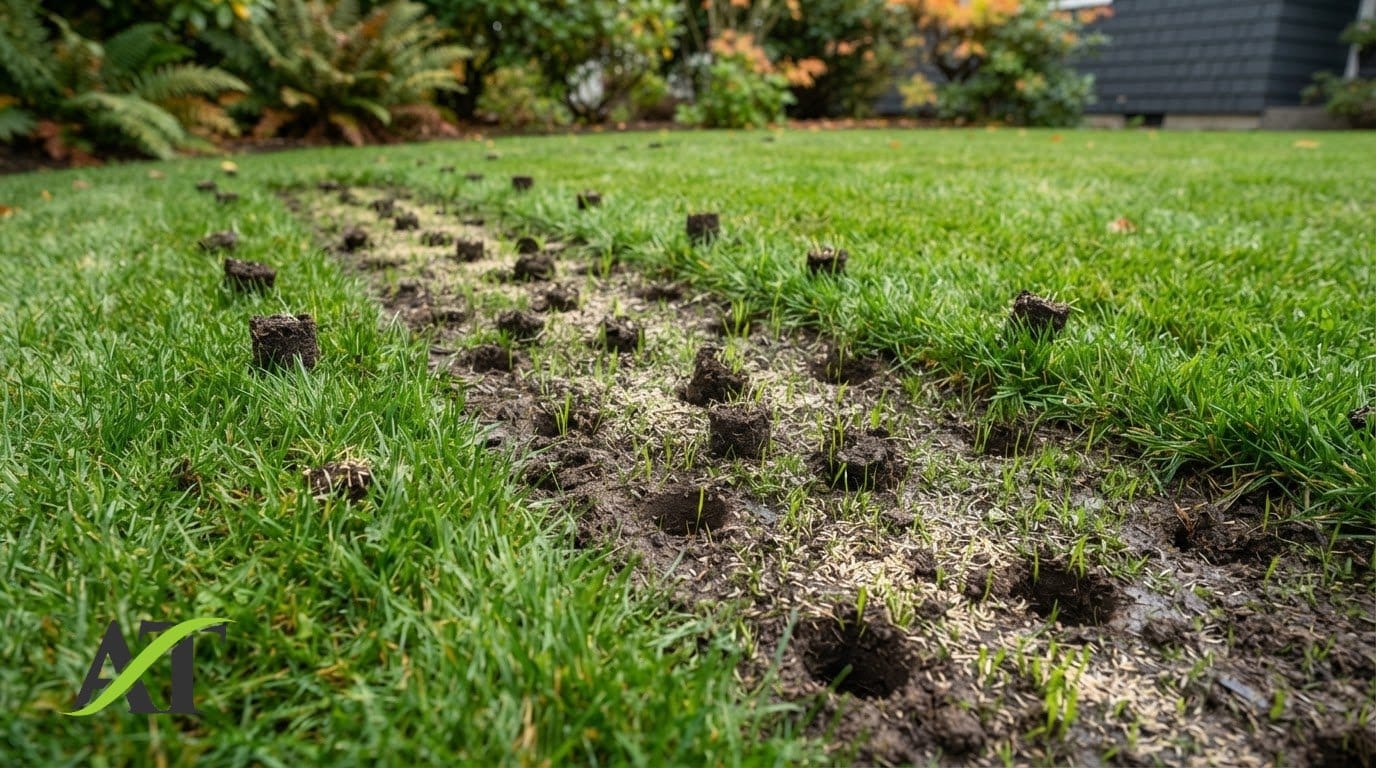
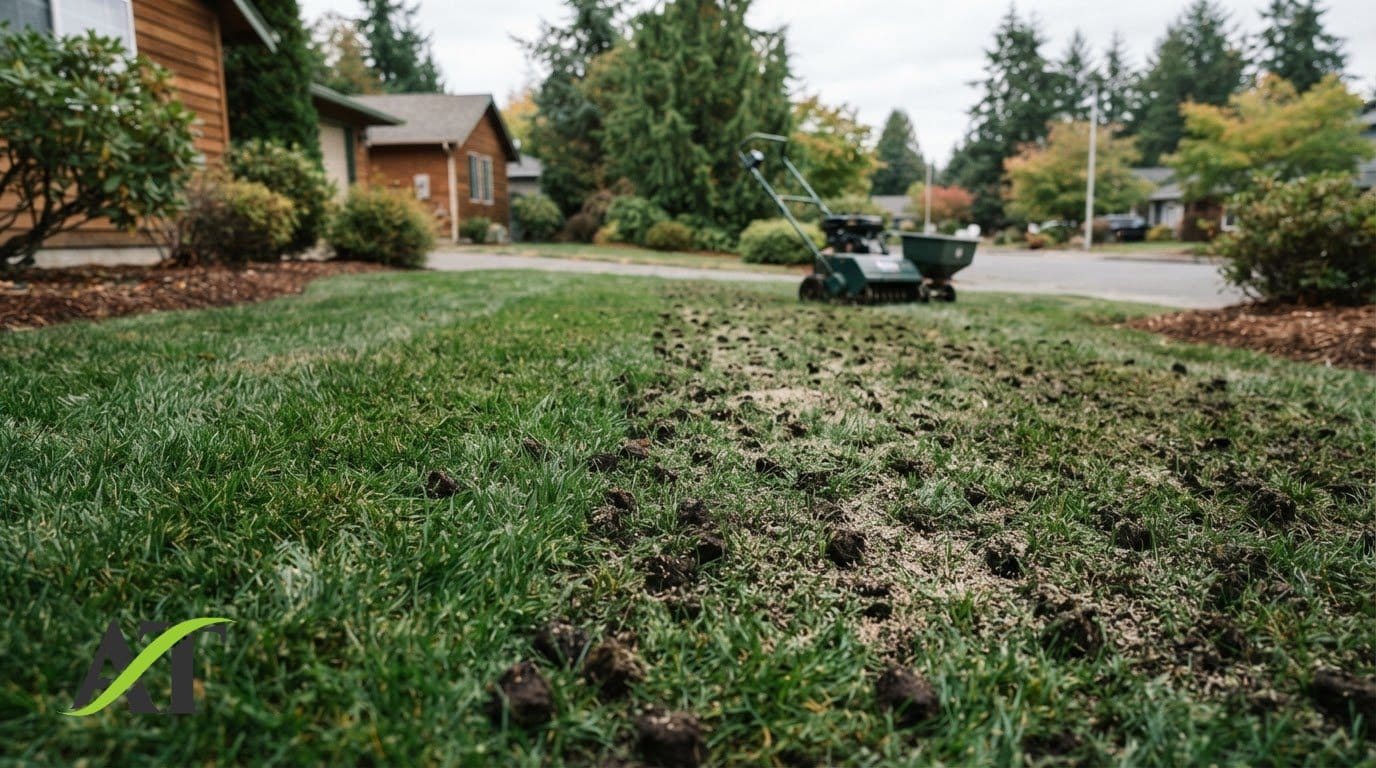
Core Aeration can address compaction in the shallow turf root zone. It won’t break deep hardpan or fix a subsurface drainage defect. Overseeding adds seed where turf is thin, giving grass a chance to fill in when conditions support establishment. The Lawn Tune-Up service combines Core Aeration, Overseeding, and Fertilizing. It does not include moss treatment or Power Raking (Dethatching).
Power Raking (Dethatching) is a separate component that addresses surface thatch. The Full Meal Deal combines Power Raking (Dethatching), Core Aeration, Overseeding, and Fertilizing. Choose based on what the lawn needs; a thatch layer alone doesn’t establish that every component is necessary.
What should homeowners expect after restoration?
New grass establishment depends on seed-to-soil contact, moisture, soil conditions, weather, and aftercare. Restoration can support turf recovery, but it can’t remove a lasting shade constraint or resolve an underlying drainage defect. Follow the relevant Seattle lawn aftercare guide so you know how to care for the lawn after Core Aeration, Overseeding, or Power Raking (Dethatching).
If diagnosis points to a problem below the turf root zone, investigate that issue before expecting aeration or seeding to solve it. Restoration is most useful when it addresses a condition that the work can reasonably support.
Ask Stewart About Your Lawn
Choose a Lawn Plan That Fits What You Find
A lawn doesn’t need an all-at-once overhaul. You can make a manageable plan around the areas that matter most, then decide what to address as you see how the turf responds. For getting rid of moss in lawn Kenmore, steady, well-chosen steps can make lawn care feel more workable.
Aerating Thatching Co. is an owner-operated local business founded in 2004. Kenmore homeowners can discuss restoration options with the team and choose a practical next step for their lawn.
With a clear plan in hand, you can move forward with confidence and give your lawn room to recover.
Frequently Asked Questions
Will lime get rid of moss in my Kenmore lawn?
No. Lime won’t lift moss from the lawn or make bare spots fill in. It’s a soil amendment, not a surface clean-up step. If moss remains after a lime application, adding more lime isn’t a way to clear it. Treat moss removal and soil adjustment as separate tasks, and avoid applying lime as a quick response to visible moss.
Does core aeration remove lawn moss?
No. Core Aeration leaves surface moss in place; it creates openings in the soil rather than clearing the lawn surface. If your goal is to remove visible moss, aeration alone won’t do that. Think of it as a separate restoration step, appropriate only when the lawn’s condition calls for it, not as a substitute for physically clearing moss.
Can moss come back after I rake it out?
Yes. After raking, take a photo of the cleared patch and note its boundaries. This gives you a simple record to compare later, rather than relying on memory about whether the moss has returned or the area has changed. Check the patch again as the grass responds, and use that record to describe the pattern if you seek further diagnosis.
Should I dethatch a lawn just because it has moss?
No. First part the grass and inspect the layer between the green blades and the soil. A mat of dead stems and roots is different from moss lying on the surface. If you can’t identify a thatch layer, moss alone isn’t a reason to choose Power Raking (Dethatching). The goal is to address the condition present, not add work without a clear need.
When should I overseed a mossy lawn?
For Seattle-area Overseeding with our seed, we prefer soil temperatures around 55-75°F (13-24°C) as a practical window. This is a service preference, not a strict cutoff or a germination guarantee, and other grass seed may have different temperature preferences. Use soil temperature, rather than afternoon air temperature alone, when deciding whether conditions suit overseeding.
Article by
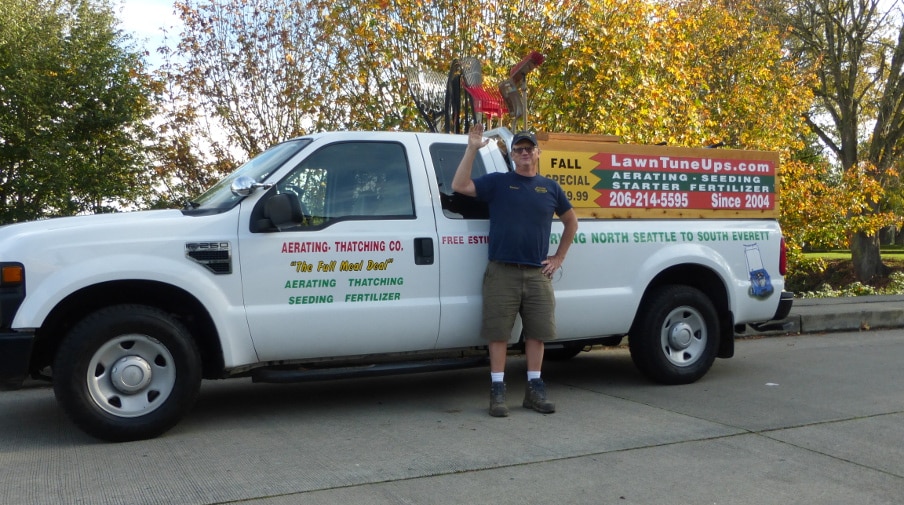
Stewart Armour
Stewart Armour is the owner of Aerating Thatching Co., an owner-operated Seattle-area lawn restoration business established in 2004. He helps homeowners understand Core Aeration, Power Raking (Dethatching), Overseeding, soil conditions, and the aftercare needed for stronger lawns. His background includes turf management study, advanced golf course turf training, and continuing education through Wilbur-Ellis University, State Turf Facilities, Soil First Academy, and Golf Course Applied Turf Physiology. Stewart has personally evaluated thousands of residential lawns throughout the Seattle area and focuses on recommending the work that fits each lawn’s condition.