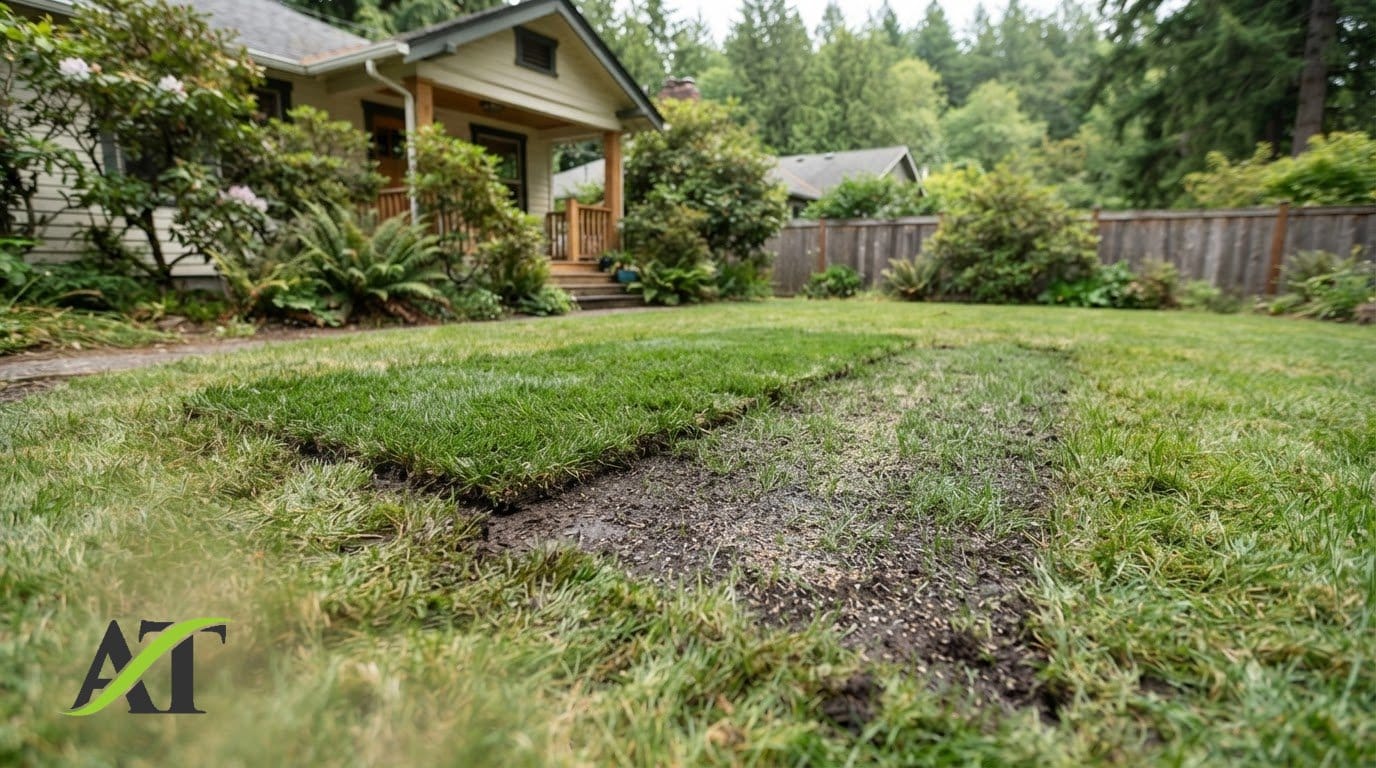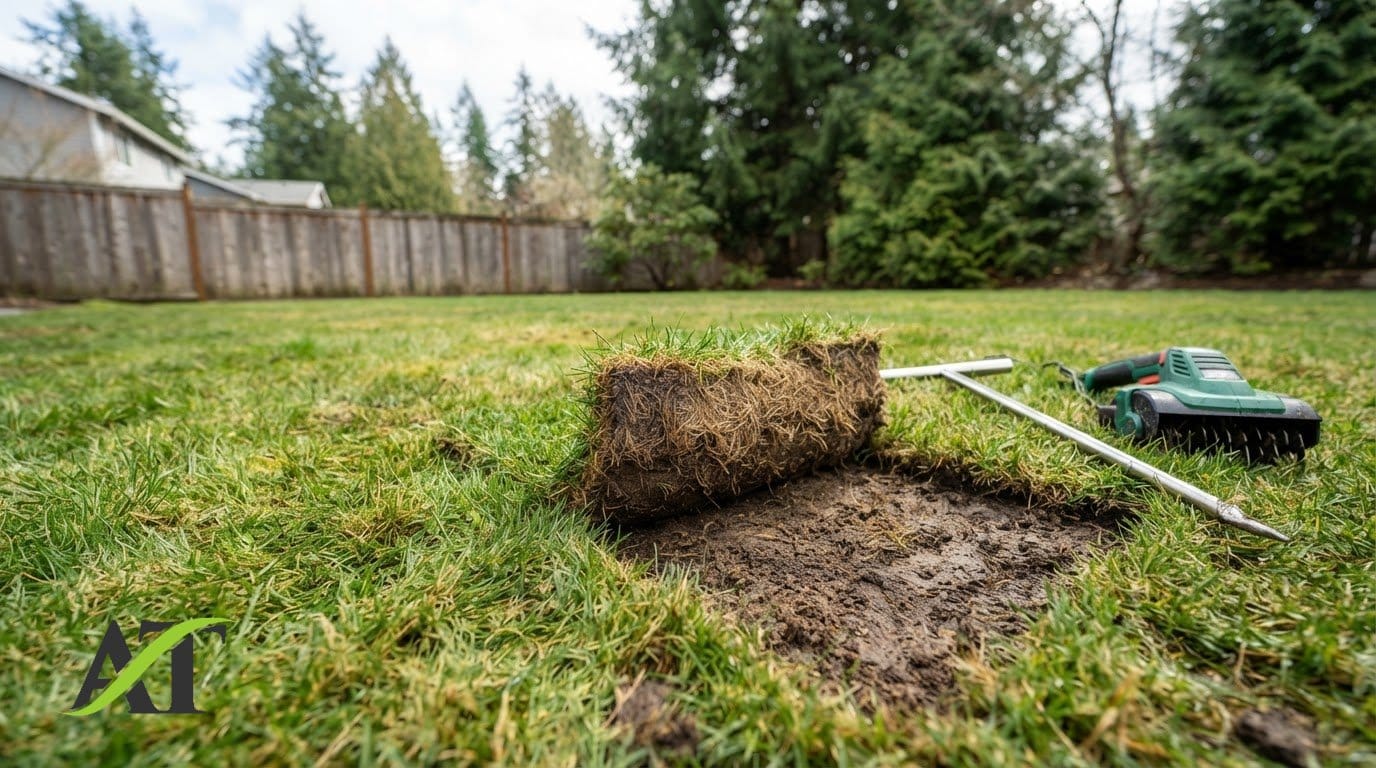
A thin lawn doesn’t automatically need dethatching. Before choosing a lawn dethatching service Lynnwood homeowners can use, look closely at the grass and soil instead of relying on the calendar. Thatch is a layer of plant material between the green grass and soil. Compaction, shade, irrigation issues, or drainage trouble can also leave turf struggling.
It makes sense to avoid disturbing grass unnecessarily. Power Raking (Dethatching) removes excess thatch, but it won’t correct every cause of thin or weak turf. Core Aeration works in the shallow turf root zone and can address compaction there. It won’t fix a subsurface drainage problem or break deep glacial hardpan.
This guide explains how to look for thatch, distinguish its symptoms from other lawn problems, and decide what to do next. You’ll learn what Power Raking (Dethatching) can address, when a Lawn Tune-Up may fit better, and why a Full Meal Deal makes sense only when the lawn needs each included service.
Key Takeaways
- Check whether thatch is actually the problem before choosing a treatment. Shade, irrigation, compaction, and drainage can also affect turf.
- A lawn dethatching service should match the lawn’s symptoms, not a fixed annual schedule.
- Power Raking (Dethatching) removes excess thatch, but it won’t solve every cause of thin grass.
- Match the next step to the diagnosis: a Lawn Tune-Up and a Full Meal Deal address different needs.
Does Your Lynnwood Lawn Need Dethatching? Signs and Look-Alikes
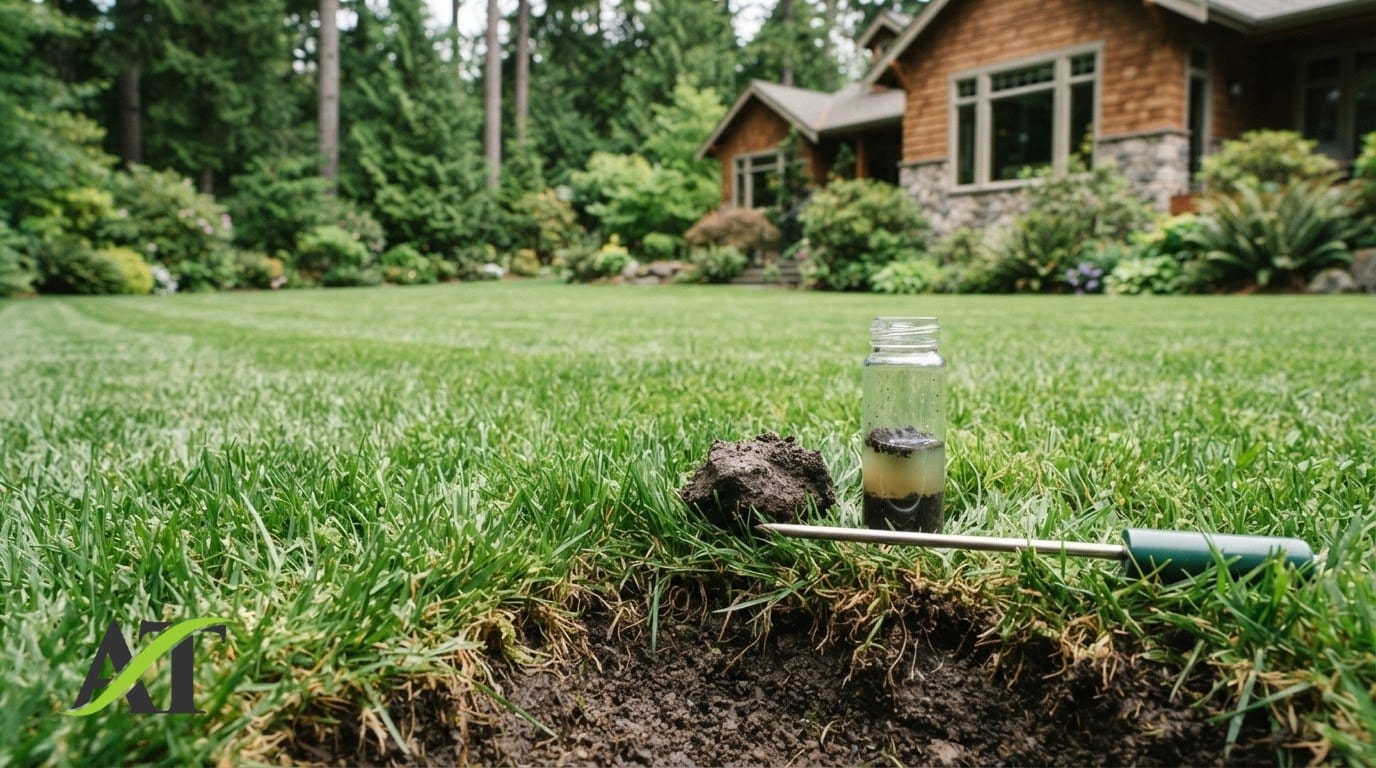
Before choosing a treatment, identify what may be holding your lawn back. Thatch is accumulated dead plant material between the green grass and the soil. A small amount is normal. The concern is a dense layer that interferes with contact between grass and soil. The Thatch (lawn) overview explains how this layer forms and how excess thatch can affect turf.
Look for more than one clue. A lawn with excess thatch may feel spongy underfoot, or you may see a distinct, springy mat when you part the grass and inspect down to the soil. Water may seem slow to reach the soil, and the turf may look weak despite routine care. These signs can point to excess thatch, but none confirms it on its own. A thick-looking layer may include living stems or other material, so check what is actually between the grass and soil.
One symptom alone can’t diagnose the cause of a struggling lawn.
How to distinguish thatch from other lawn problems
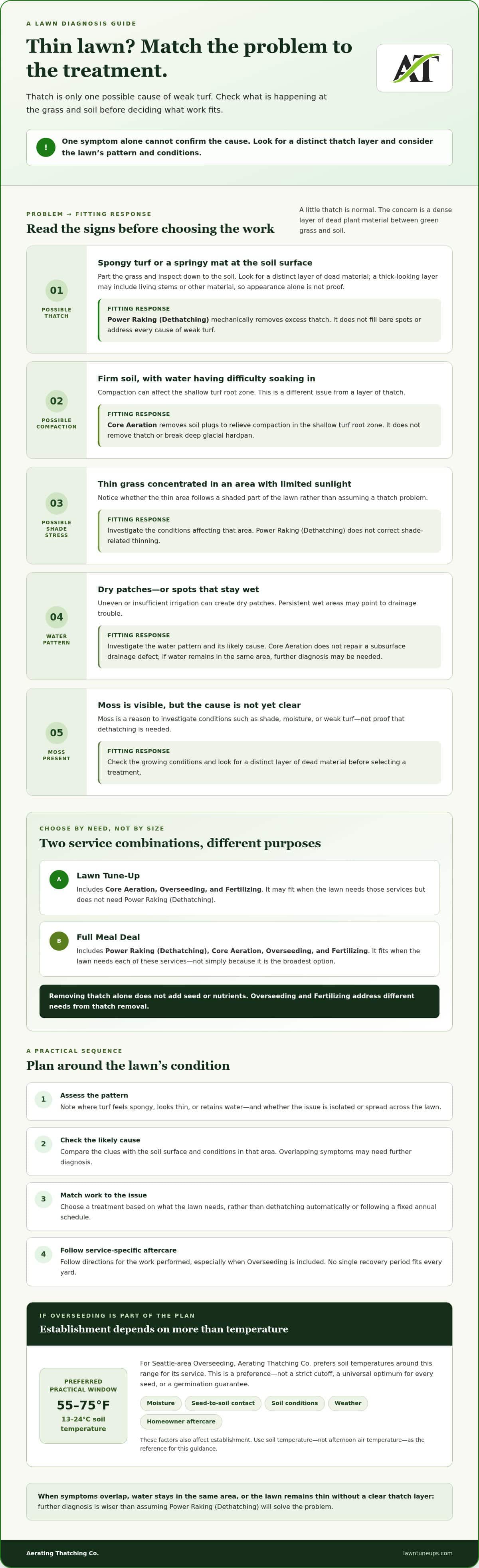
A spongy surface can fit excess thatch, while compacted soil may feel firm and make it difficult for water to soak in. Shade can leave grass thin in areas with limited sunlight. Uneven or insufficient irrigation can create dry patches, while persistent wet areas may point to drainage trouble. Moss is a reason to investigate conditions such as shade, moisture, or weak turf, not proof that Power Raking (Dethatching) is needed.
- Notice whether the problem follows a shaded area, a dry zone, or a spot that stays wet.
- Part the grass and look for a distinct layer of dead material. Don’t judge by color or moss alone.
If symptoms overlap, or the lawn stays thin without a clear thatch layer, further diagnosis is wiser than assuming power raking will solve it. Aerating Thatching Co. provides Power Raking (Dethatching) to address excess thatch, not every cause of poor turf. That distinction matters when considering a lawn dethatching service in Lynnwood.
What Power Raking (Dethatching) Does, and What It Cannot Fix
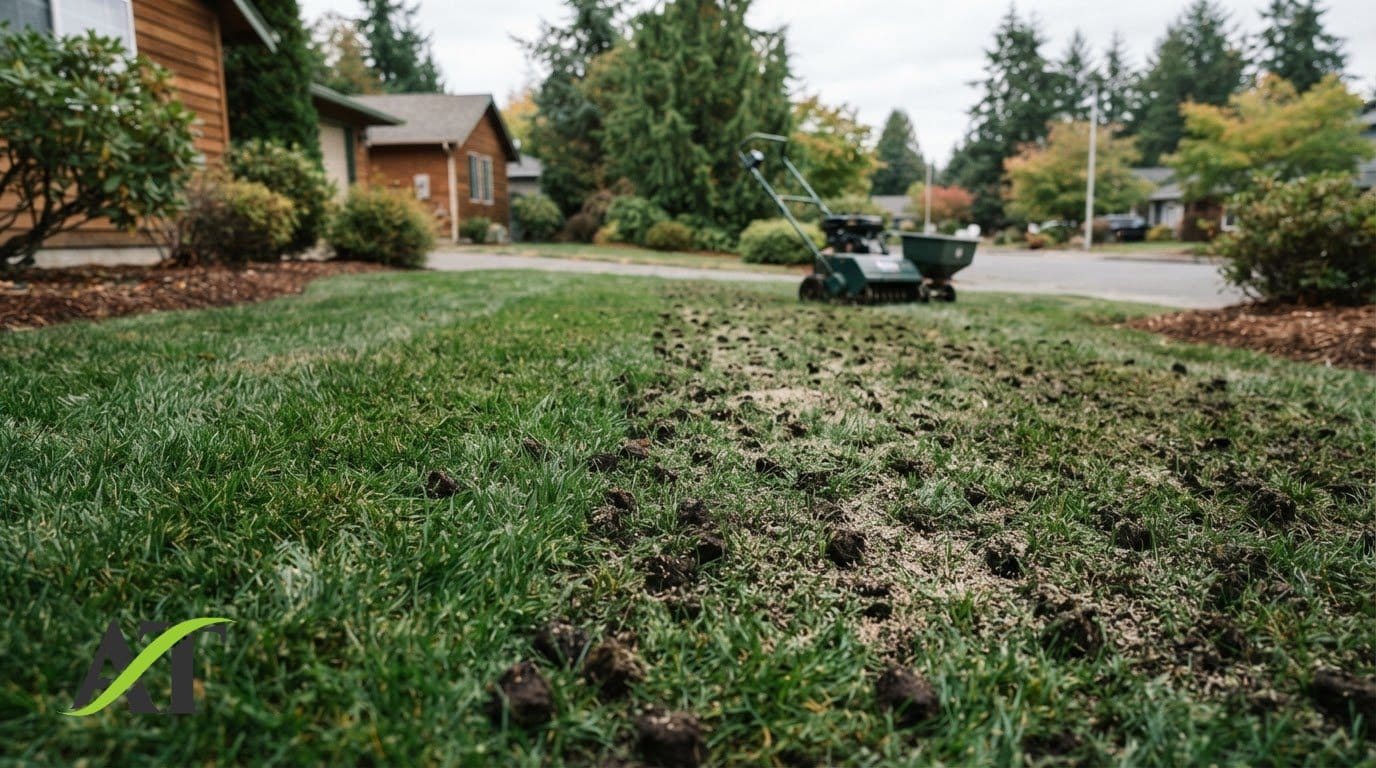
Power Raking (Dethatching) mechanically pulls excess thatch from the lawn. It targets a layer of dead plant material, not every cause of weak or thin grass. The University of Minnesota Extension’s guidance on thatch control explains why excess thatch can affect turf health and when dethatching may be appropriate.
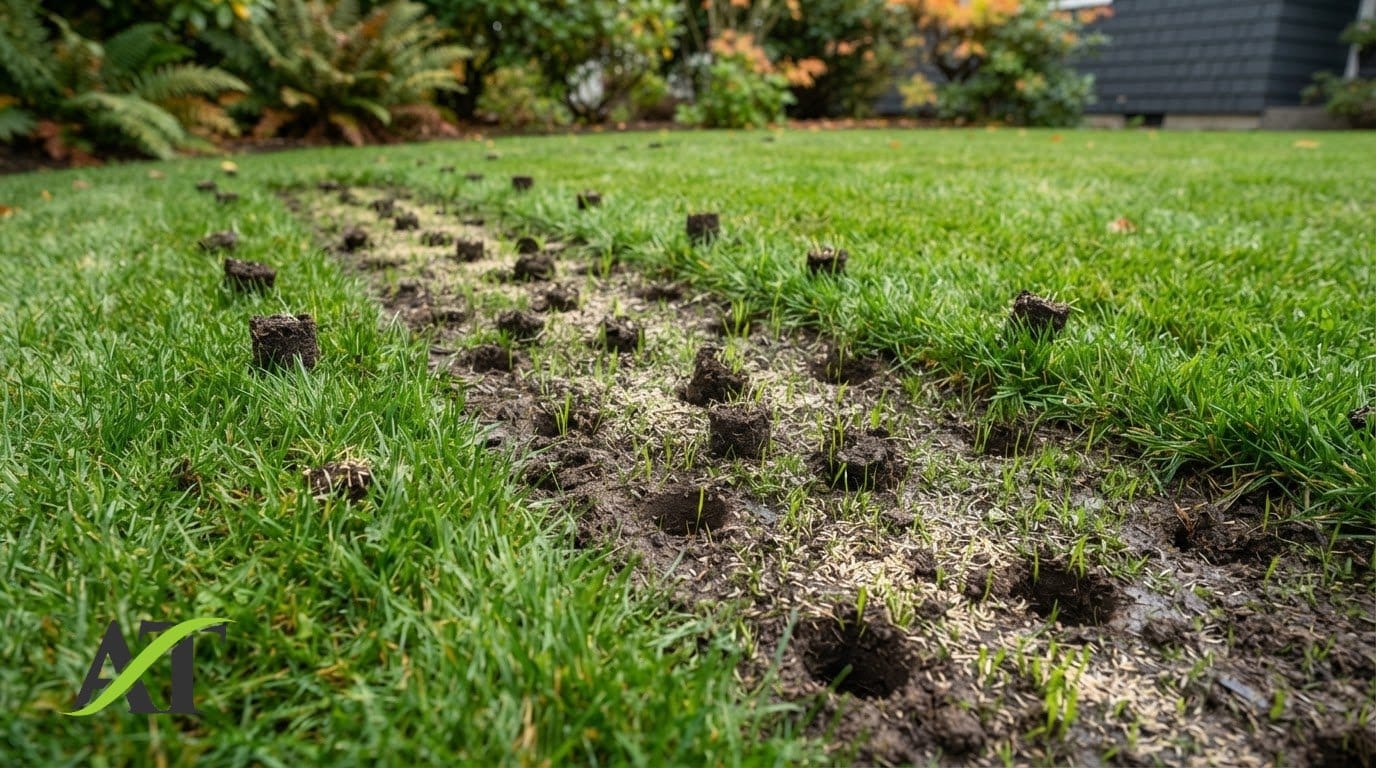
Core Aeration addresses a different issue. It removes plugs of soil to relieve compaction in the shallow turf root zone. The treatments aren’t interchangeable, and neither one breaks through deep glacial hardpan or repairs a subsurface drainage defect. If water remains in the same area or the lawn struggles after surface conditions are addressed, the cause may need further diagnosis.
- Power Raking (Dethatching): Targets excess thatch by removing built-up dead material. It won’t correct compaction, shade, irrigation problems, or drainage defects.
- Core Aeration: Targets compaction in the shallow turf root zone by removing soil plugs. It won’t remove thatch or fix deep hardpan and subsurface drainage problems.
When dethatching may need to be paired with restoration
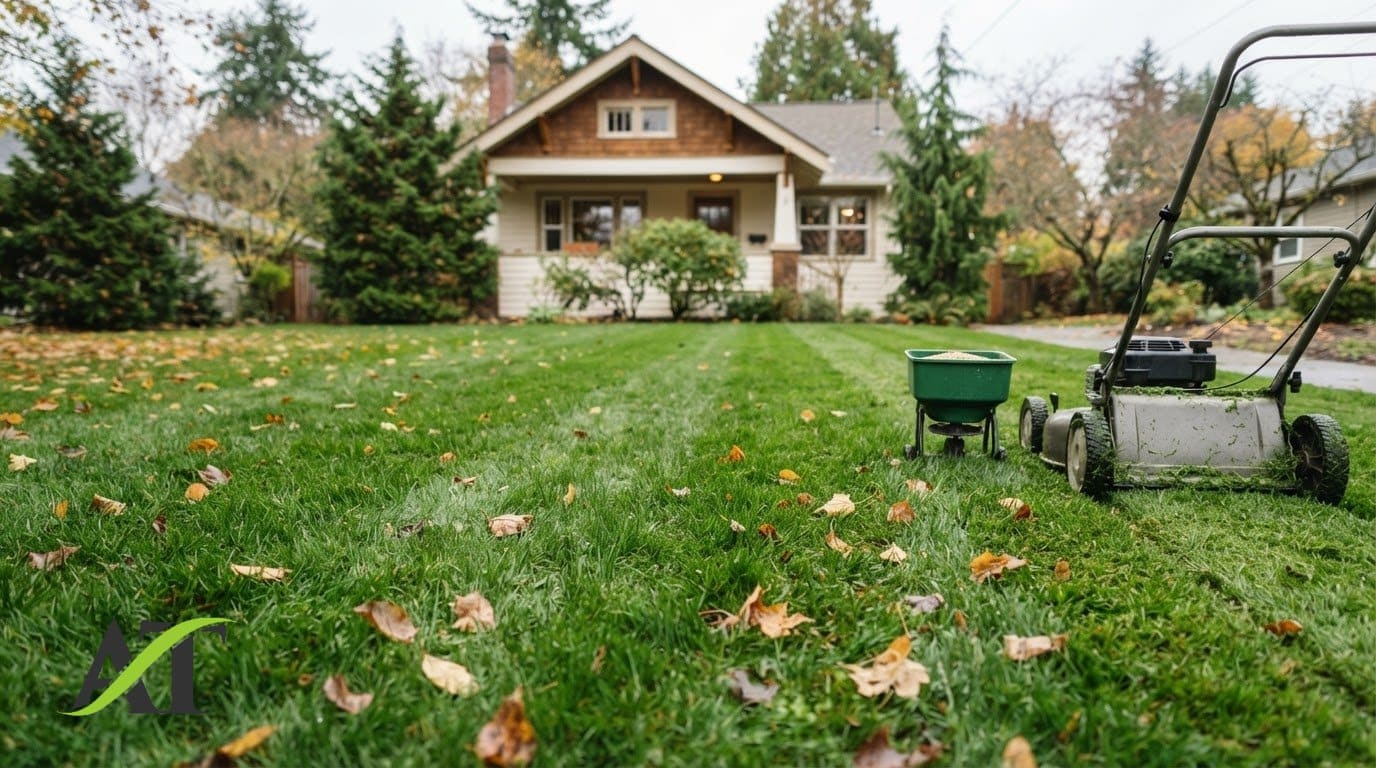
Removing thatch doesn’t fill bare spots or add seed and nutrients. Overseeding adds grass seed to thin areas, while Fertilizing supplies nutrients. Those services address different needs from thatch removal. A Lawn Tune-Up includes Core Aeration, Overseeding, and Fertilizing. The Full Meal Deal includes Power Raking (Dethatching), Core Aeration, Overseeding, and Fertilizing. The right fit depends on what the lawn needs, not on choosing the broadest treatment by default.
Review the Power Raking (Dethatching) service details to understand what the work addresses. If you’re unsure which problem is affecting your yard, Ask Stewart About Your Lawn and describe the symptoms you’re seeing.
How Lynnwood Homeowners Can Plan Dethatching and Lawn Recovery
Plan the work around the lawn’s condition, not a fixed annual schedule. A lawn dethatching service Lynnwood homeowners consider should fit into a clear process: assess the symptoms, identify the likely cause, choose the treatment that fits, then plan for aftercare. A lawn with excess thatch may need different work from one that’s thin because of shade or staying wet.
- Assess the pattern: Note where turf feels spongy, looks thin, or retains water. Is the problem limited to one area or spread across the lawn?
- Identify the likely issue: Compare those clues with what you see at the soil surface and the conditions in that area. Overlapping symptoms may need further diagnosis.
- Choose a treatment: Match the work to the likely cause instead of dethatching automatically.
- Plan aftercare: Follow instructions for the work performed, especially if the service includes Overseeding.
What to consider before scheduling
Keep track of where and when problems show up. Water lingering in one area, for example, calls for a different investigation than a spongy feel across a patch of turf. Note whether the issue changes with shade, irrigation, or use. Symptoms can have more than one cause, so don’t use the calendar alone to decide. The lawn’s condition and soil conditions matter, and no single recovery period fits every yard.
What supports recovery after treatment
Follow the aftercare directions for the specific work performed. With Overseeding, establishment depends on moisture, seed-to-soil contact, soil conditions, weather, and homeowner aftercare. For our Seattle-area Overseeding, we prefer soil temperatures around 55-75°F (13-24°C) as a practical window for our service. This is a preference, not a universal cutoff or a germination guarantee. The Seattle lawn aftercare guide covers care after Power Raking (Dethatching), Core Aeration, and Overseeding.
Aerating Thatching Co. serves homeowners in Lynnwood and nearby communities, including North Seattle, Shoreline, Edmonds, Mill Creek, Bothell, Kenmore, Lake Forest Park, Mountlake Terrace, Snohomish, Everett, Brier, Woodway, Green Lake, Ballard, and Greenwood. The same diagnosis-first approach applies across the service area: identify the problem before selecting the work.
Choosing a Lynnwood Dethatching Service That Fits Your Lawn
Choose based on the problem you’ve identified, not the size of a package. If you’ve found excess thatch but the rest of the lawn is holding up, Power Raking (Dethatching) may address that specific issue. If the lawn is thin for another reason, dethatching alone may not help. A lawn dethatching service in Lynnwood should match the work to the lawn’s condition.
For more detail on what the work involves, see the Power Raking (Dethatching) service information. Keep the purpose of each treatment in view: removing excess thatch is different from relieving compaction or adding seed to thin turf.
When a broader lawn restoration may be appropriate
If the lawn needs several treatments, compare the components before deciding. A Full Meal Deal combines Power Raking (Dethatching), Core Aeration, Overseeding, and Fertilizing. A Lawn Tune-Up includes Core Aeration, Overseeding, and Fertilizing, but not Power Raking (Dethatching). The Full Meal Deal details lay out its components. Neither option fits every lawn, and selecting a treatment can’t guarantee a particular result.
Persistent wet areas, extensive thin patches, or symptoms that don’t clearly point to excess thatch may call for further diagnosis before choosing a package. A focused treatment is sensible when it fits the cause. A broader restoration makes sense only when the lawn needs its included work.
Take the next step for your Lynnwood lawn
When describing your lawn, note where the grass feels spongy, looks thin, or holds water, and share your main concern. Those details help Stewart understand what you’re seeing and consider a practical next step without assuming every lawn needs the same treatment.
Make Your Next Lawn-Care Decision With Confidence
Your next step doesn’t have to be a whole-lawn overhaul. Keep a simple record of where grass thins, where water lingers, and whether affected spots change with shade or use. Notes or photos taken from the same vantage point can make the pattern easier to explain and help keep treatment focused. The goal isn’t to label every rough patch as thatch. It’s to make a sound decision for your yard.
If you’re considering a lawn dethatching service in Lynnwood, describe what you see and what concerns you most. Stewart can help you think through a practical next step based on your lawn’s symptoms, without assuming every problem calls for the same treatment.
A clear diagnosis is a useful place to start. With the right next step, you can move forward with a lawn-care plan that feels manageable.
Frequently Asked Questions
Does every lawn need dethatching each year?
No. Thatch buildup varies, so an annual power-raking date isn’t a reliable rule. Removing material without a clear need can disturb turf unnecessarily. If you’re unsure, inspect more than one representative spot rather than basing the decision on a single patch. A lawn without a dense thatch layer may need a different kind of attention, or none at all.
Does power raking remove moss from a lawn?
Power Raking (Dethatching) may pull up some moss along with other surface material, but that isn’t the same as targeted moss treatment. Removing moss can leave spaces behind, so consider what should occupy those areas afterward. If grass is sparse, simply removing moss won’t fill the gaps. The right follow-up depends on how much healthy turf remains and what’s limiting its growth.
Can dethatching fix a lawn with poor drainage?
No. If water runs off the lawn, pools in low spots, or leaves the ground saturated, note which pattern you see and where it occurs. Those observations can help describe a surface-flow issue or a problem below the turf, but they don’t establish the cause on their own. Don’t treat a wet lawn as a thatch problem based only on standing water. Persistent or widespread wetness needs further diagnosis.
Can dethatching alone make a thin lawn thicker?
Not by itself. After excess thatch is removed, the lawn may still have bare ground or sparse grass. Before deciding on restoration, note whether thinness follows a path, appears in isolated patches, or covers a broad area. Those patterns help describe the problem, but don’t prove its cause. If grass seed is part of the plan, establishment depends on suitable conditions as well as the treatment selected.
What should I do after professional dethatching?
Confirm which work was completed and keep the aftercare directions for those specific treatments together, especially if the visit included more than Power Raking (Dethatching). Don’t assume instructions for one treatment apply to another. If Overseeding was included, use the seed-care directions as your guide rather than judging progress from a single glance. The Seattle lawn aftercare guide covers care after lawn restoration work.
Article by
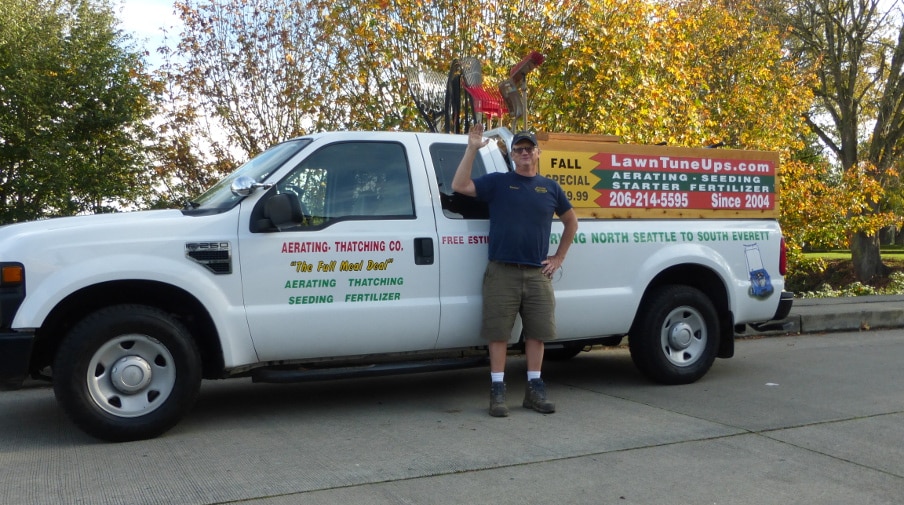
Stewart Armour
Stewart Armour is the owner of Aerating Thatching Co., an owner-operated Seattle-area lawn restoration business established in 2004. He helps homeowners understand Core Aeration, Power Raking (Dethatching), Overseeding, soil conditions, and the aftercare needed for stronger lawns. His background includes turf management study, advanced golf course turf training, and continuing education through Wilbur-Ellis University, State Turf Facilities, Soil First Academy, and Golf Course Applied Turf Physiology. Stewart has personally evaluated thousands of residential lawns throughout the Seattle area and focuses on recommending the work that fits each lawn’s condition.