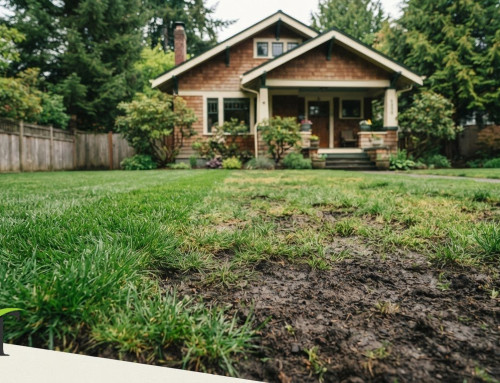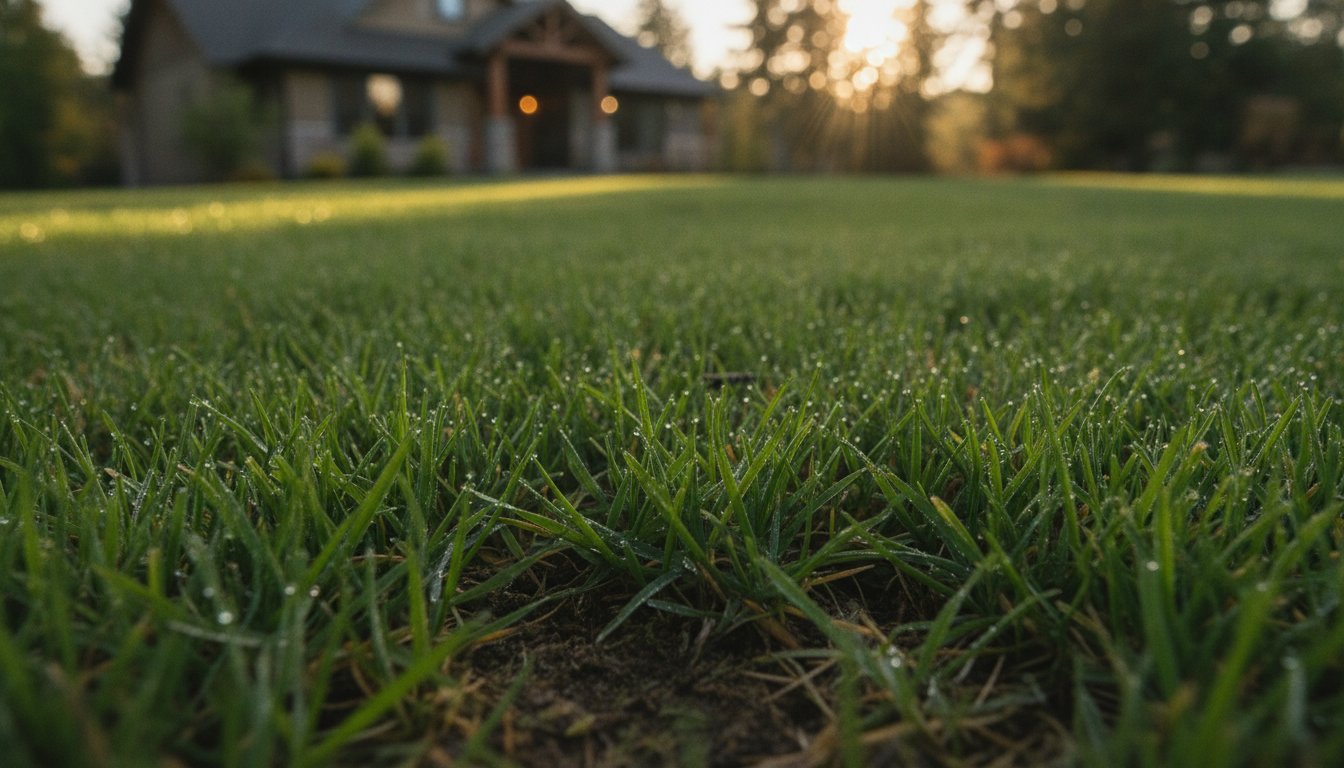
Why does your backyard look more like a mossy sponge than a healthy lawn every spring? In Mill Creek, the combination of acidic soil and compacted clay often makes a standard organic lawn treatment Mill Creek homeowners try on their own feel like a waste of money. You likely want a green, thick turf that’s safe for your family, yet the PNW rainy season keeps leaving you with puddles and runoff concerns. We understand the struggle of trying to balance a beautiful yard with environmental responsibility.
The good news is that effective care involves more than just swapping products. It requires a mechanical and biological restoration of the soil itself. You’ll learn how to achieve a lush, chemical-free lawn by combining organic fertilizing with essential mechanical work. We will explain how our Lawn Tune-Up, consisting of Core Aeration, Overseeding, and Fertilizing, builds a foundation for health. We also cover the Full Meal Deal, which includes Power Raking (Dethatching), Core Aeration, Overseeding, and Fertilizing. This guide provides a clear path to better drainage and improved soil vitality.
Key Takeaways
- Learn why a successful organic lawn treatment Mill Creek residents rely on requires a combination of natural nutrients and mechanical soil improvements.
- Understand that grass seed germination depends on soil temperature, with the ideal range between 55°F and 75°F for reliable establishment.
- Discover how a Lawn Tune-Up or the more intensive Full Meal Deal addresses the specific challenges of Mill Creek’s compacted clay soil.
- See why mechanical processes like Core Aeration and Power Raking (Dethatching) are essential for allowing organic matter to reach your lawn’s root zone.
Understanding Organic Lawn Treatment in Mill Creek
Choosing an organic lawn treatment Mill Creek homeowners can trust involves more than just swapping products. It’s a shift from a quick fix mentality to a soil building strategy. Synthetic nitrogen provides an immediate green spike, but it often leaves the soil sterile and dependent on more chemicals. Organic fertilizing focuses on the long-term health of the ecosystem. By following the principles of organic lawn management, we nurture the microbes that feed the grass naturally. Healthy soil acts as the first line of defense against local weeds and moss.
The Mill Creek Soil Challenge: Acidity and Compaction
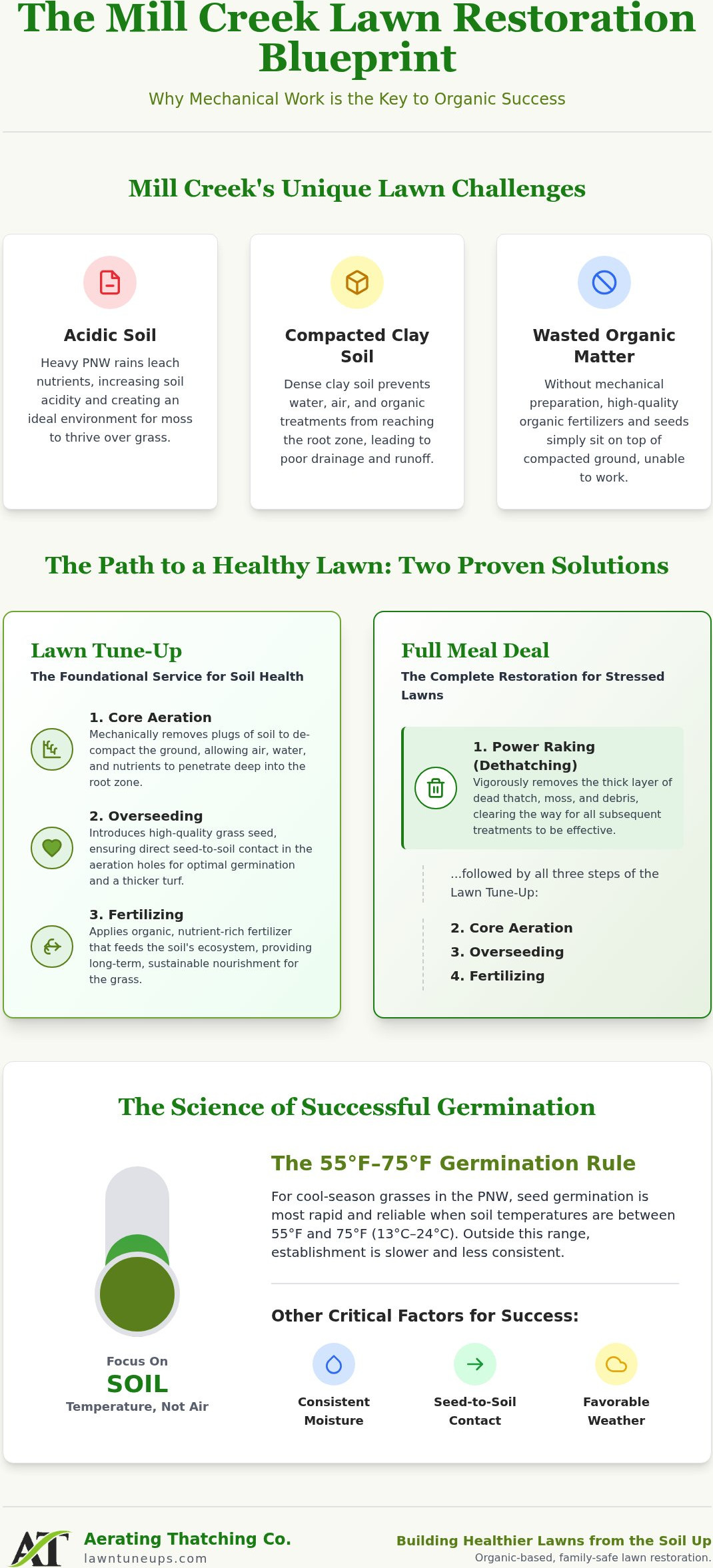
Mill Creek’s environment is tough on turf. Heavy PNW rains leach vital nutrients and increase soil acidity over time. Moss thrives in these damp, acidic conditions. To counter this, a professional Lime Application helps neutralize the pH. This makes nutrients available to the grass again. We also face the issue of heavy clay soil. When the ground is compacted, organic matter can’t reach the roots. This is why Core Aeration is a necessary partner to any organic program. It creates the physical space needed for the soil to breathe and drain properly.
Safety for Families and Local Wildlife
Organic ingredients offer peace of mind. Our treatments are pet-safe and child-safe. You won’t find the harsh toxins common in synthetic pesticides. This approach also protects the Snohomish County watershed. By reducing chemical runoff, we keep local waterways cleaner. It’s a neighborly way to maintain a beautiful yard while respecting the local environment. We believe in providing results that don’t compromise your family’s safety or the health of our community.
The Science of Organic Fertilizing and Soil Temperature
Organic fertilizing isn’t a direct chemical injection for your grass. It’s food for the soil ecosystem. In Mill Creek, the microbes in your dirt must break down organic matter to release the nutrients your lawn needs. This biological process requires the right environment. If the soil is too cold or dormant, the fertilizer won’t be effective. Timing your organic lawn treatment Mill Creek applications to match these microbial peaks ensures the nutrients are available exactly when the grass enters its natural growth cycles. Understanding the key differences between organic and synthetic fertilizer choices can help you make a more informed decision about which approach will truly support your soil’s long-term health.
The 55°F-75°F Germination Rule
Air temperature is a distraction; soil temperature is the only metric that determines if your Overseeding effort will actually take root. For the cool-season grasses common in Snohomish County, the optimal soil temperature range for germination is 55°F-75°F (13°C-24°C). While seeds can sprout outside this window, the process will be slower, less consistent, and produce weaker turf establishment. You can check your progress by using a simple soil thermometer in the top two inches of your lawn. Following these biological windows maximizes success, even though environmental variables mean absolute guarantees aren’t possible.
Factors Influencing Organic Success
Temperature is only one piece of the puzzle. Successful results from a Full Meal Deal or a standard restoration depend on several critical factors:
- Consistent Moisture: New seeds cannot dry out during the germination phase.
- Seed-to-Soil Contact: Mechanical Core Aeration ensures seeds reach the dirt rather than getting stuck in thatch.
- Local Weather Patterns: Sudden Snohomish County cold snaps or heavy washouts can impact even the best-laid plans.
Biological timing is everything. If you want to ensure your yard is ready for a transformation, you can request a quote to get a professional evaluation of your soil conditions.
Mechanical Restoration: Making Organic Treatment Work
Many homeowners think a bag of fertilizer is the only answer. They buy a high-quality product, spread it, and wait for results. But if your soil is a brick of compacted clay, that organic matter simply sits on top. A successful organic lawn treatment Mill Creek residents actually see results from must start with mechanical work. Without opening the soil, you’re just wasting resources on products that can’t reach the roots. This is a common pitfall that affects homeowners throughout the PNW region, and it’s why simply choosing an organic lawn treatment over synthetic fertilizer is only part of the solution.
Mechanical restoration opens the door for biology to work. We use a Lawn Tune-Up as the foundational service for any organic plan. This specific combination of Core Aeration, Overseeding, and Fertilizing addresses soil structure and nutrient needs simultaneously. It’s the most practical way to transition a yard toward natural health without relying on synthetic chemicals. Homeowners in nearby communities facing the same clay soil challenges can also explore our organic lawn fertilizer Mountlake Terrace guide for additional regional insights on correcting soil acidity and managing compaction.
Core Aeration: Breathing Life into Mill Creek Clay
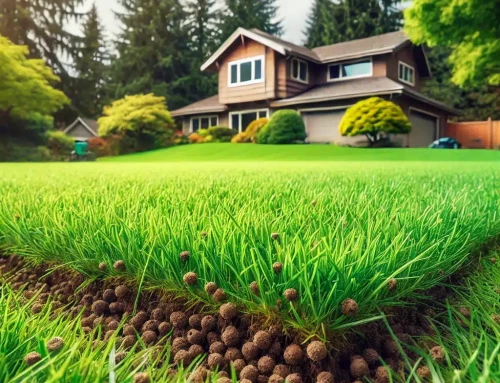
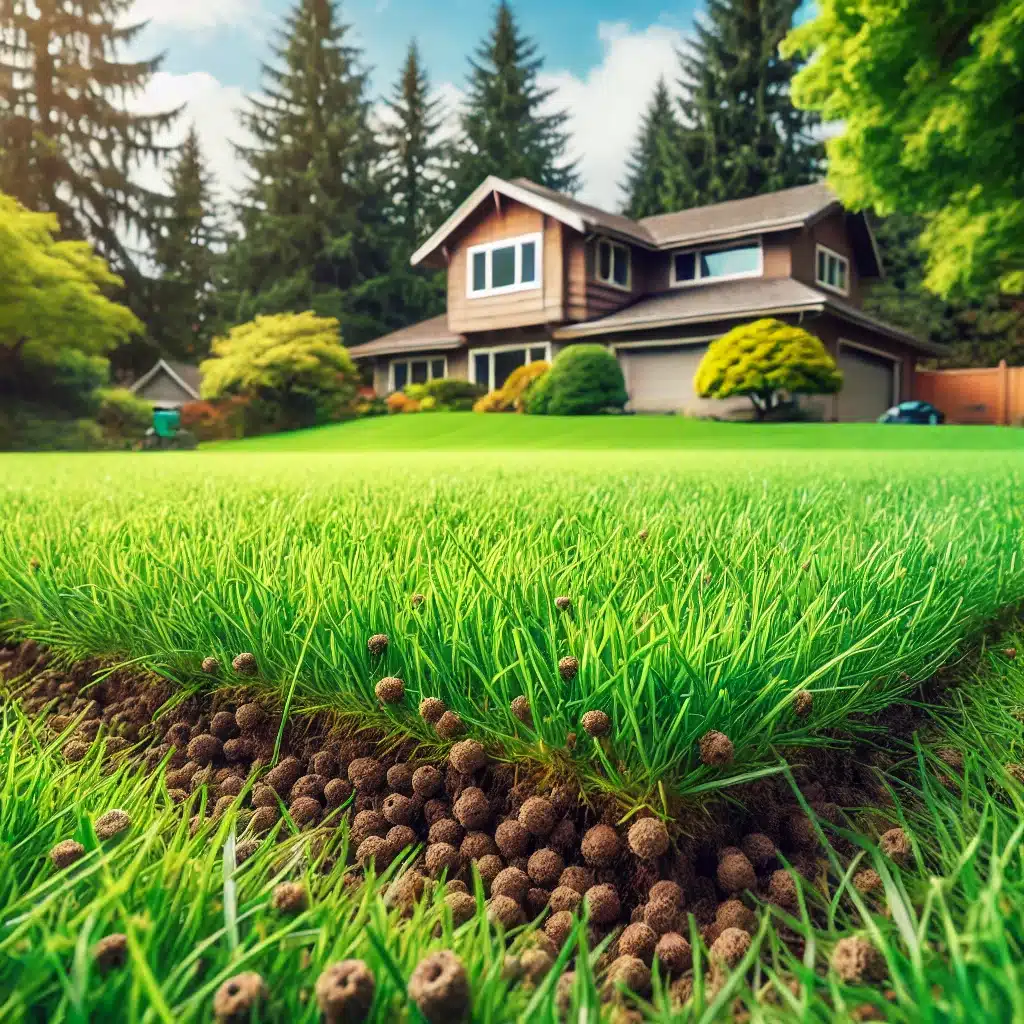
In our region, simple spiking isn’t enough. Spiking often increases compaction by pushing soil deeper into the ground. We perform mechanical Core Aeration to physically remove small plugs of dirt. This creates direct channels for air, water, and organic nutrients to reach the root zone. It also significantly improves drainage during our rainy seasons, which reduces your reliance on heavy watering during the dry months.
Power Raking (Dethatching) for Nutrient Access
Sometimes a yard needs more than just air. If your lawn has a thick, spongy layer of debris, you might need the Full Meal Deal. While the Lawn Tune-Up covers the basics, the Full Meal Deal includes Power Raking (Dethatching), Core Aeration, Overseeding, and Fertilizing. Removing that thatch barrier ensures your organic fertilizing efforts reach the soil immediately rather than getting trapped in the surface mat. It’s the deepest level of restoration we offer for neglected properties.
Implementing Your Mill Creek Organic Lawn Strategy
Transitioning to a natural lawn requires a strategic plan. Most chemical programs simply mask underlying soil issues with synthetic spikes. To start a real organic lawn treatment Mill Creek residents can rely on for the long term, you must reset the soil structure. We recommend beginning with a professional Lawn Tune-Up. This service, consisting of Core Aeration, Overseeding, and Fertilizing, provides the mechanical and biological foundation your turf needs to thrive without harsh pesticides. It’s the most efficient way to kickstart the soil building process we discussed earlier.
Choosing Your Service Level
If your lawn is generally healthy but needs a seasonal boost, the Lawn Tune-Up is your best entry point. However, if you have thick moss or heavy debris buildup that prevents water from reaching the dirt, you need the Full Meal Deal. This comprehensive package includes Power Raking (Dethatching), Core Aeration, Overseeding, and Fertilizing. It’s important to remember that Power Raking (Dethatching) is a standard component of the Full Meal Deal. For those choosing the standard Lawn Tune-Up, it remains an optional add-on that can be included upon request.
Setting Realistic Expectations
Organic restoration is a biological process, not a chemical event. Results are heavily influenced by moisture levels, existing soil conditions, and our unpredictable PNW weather patterns. While we strictly follow the 55°F-75°F (13°C-24°C) soil temperature window to maximize the success of Overseeding, we don’t offer absolute guarantees on germination. We bring over two decades of local, owner-operated expertise to every property. We invite you to Request a Quote today. We’ll help you assess your specific soil needs and provide a pragmatic solution for a healthier, safer lawn.
Build a Resilient Lawn for the Long Term
Achieving a thick, green yard in our region doesn’t happen by accident. It requires a pragmatic approach that combines biological health with mechanical labor. You’ve seen how effective organic lawn treatment Mill Creek depends on opening up compacted clay through Core Aeration and managing thatch layers. By focusing on the 55°F-75°F (13°C-24°C) soil temperature window for Overseeding, you give your grass seeds the best environment to establish.
We specialize in PNW clay soil restoration and bring owner-operated local expertise to every project. Whether your property needs our signature Lawn Tune-Up or the deeper restoration of a Full Meal Deal including Power Raking (Dethatching), we focus on tangible outcomes. We’re here to help you move away from synthetic chemicals toward a sustainable, safe environment for your family.
It’s time to stop fighting the local environment and start working with it to create a yard you’re proud to own.
Frequently Asked Questions
Is organic lawn fertilizer safe for my dogs and kids in Mill Creek?
Yes, organic ingredients are selected specifically for their safety. Unlike synthetic pesticides or high-salt chemical fertilizers, organic options don’t pose a risk to pets or children playing on the grass. This is a key reason why organic lawn treatment Mill Creek families choose is becoming the standard. You can feel confident letting your family enjoy the yard immediately after application without worrying about toxic chemical residues or runoff.
How long does it take for organic lawn treatments to show results?
Organic results take longer than synthetic quick fixes because they rely on biological activity. You’ll typically see a color shift within two weeks as soil microbes break down nutrients. However, the true benefit is the long-term soil health and root depth that develops over a full season. Because we focus on building a foundation rather than just a green spike, the improvements are more resilient and lasting through the year.
What is the best soil temperature for planting grass seed in Mill Creek?
The optimal soil temperature range for cool-season grass seed germination is 55°F-75°F (13°C-24°C). While seeds can sprout outside this window, the establishment will be slower and less consistent. We monitor these temperatures closely to ensure your Overseeding has the best chance for success. Results are always influenced by moisture and weather, so hitting this biological window is the most practical way to maximize your restoration efforts.
Do I really need Core Aeration if I am using organic fertilizer?
Yes, Core Aeration is essential for any organic program in Mill Creek’s heavy clay soil. Organic nutrients must reach the root zone to be effective. If the ground is compacted, the fertilizer just sits on the surface. Mechanical aeration creates the channels needed for air, water, and biology to penetrate the dirt. It’s the most effective way to ensure your organic lawn treatment Mill Creek investment produces tangible results.
What is included in a professional Lawn Tune-Up?
A professional Lawn Tune-Up consists exclusively of Core Aeration, Overseeding, and Fertilizing. We designed this service as a foundational restoration for local yards. It addresses soil compaction, thin turf, and nutrient needs in one methodical process. If your lawn has heavy thatch, you should consider the Full Meal Deal instead. That package adds Power Raking (Dethatching) to the three components already included in the standard Tune-Up service.
Article by
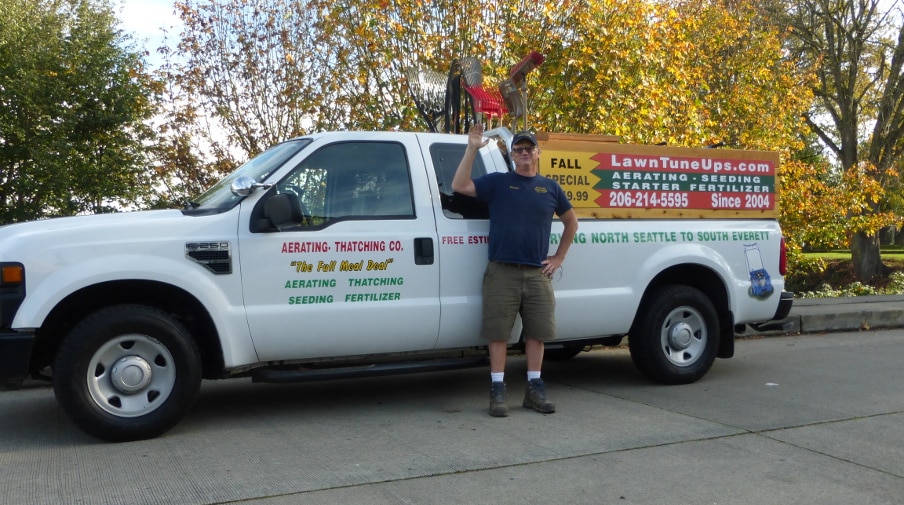
Stewart Armour
Stewart Armour is an independent lawn restoration expert, educator, and owner of Aerating Thatching Co., serving the greater Seattle area since 2004. With more than two decades of professional experience restoring Western Washington lawns, Stewart specializes in diagnosing lawn problems, improving soil health, and developing long-term lawn renovation strategies. His education includes turf management studies, advanced golf course turf training, and continuing education through Wilbur-Ellis University, State Turf Facilities, Soil First Academy, and Golf Course Applied Turf Physiology. Every article published on LawnTuneUps.com is grounded in practical field experience, current turf science, and a commitment to helping homeowners understand the why behind every recommendation—not just what to do.
Stewart has personally evaluated thousands of residential lawns throughout the Seattle area and remains committed to helping homeowners understand the science behind growing healthier, more resilient lawns.