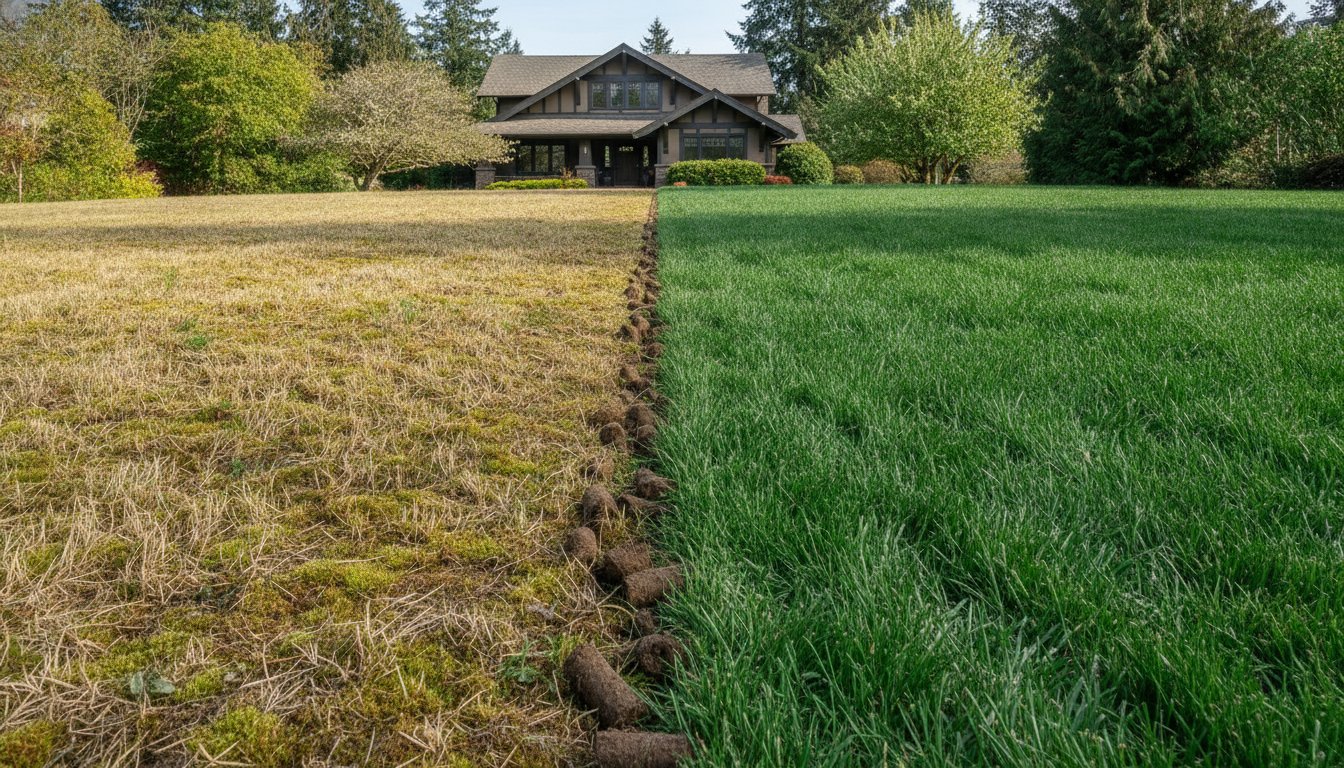
Why Shoreline Lawns Need More Than Just Regular Mowing
For many Shoreline homeowners, lawn care feels like a losing battle. You mow regularly, you water, but the results are disappointing: persistent moss, thin patches, and soil that feels hard as a rock. This is the common Shoreline struggle, rooted in our region’s heavy clay soil, high natural acidity, and damp climate that moss loves.
Simply mowing a struggling lawn is like painting over a crumbling wall—it’s a temporary fix that ignores the underlying structural problems. Mowing manages the length of the grass, but it does nothing to address soil compaction, thick thatch, or poor nutrient absorption. To achieve a truly healthy, dense lawn, you need to fix the foundation.
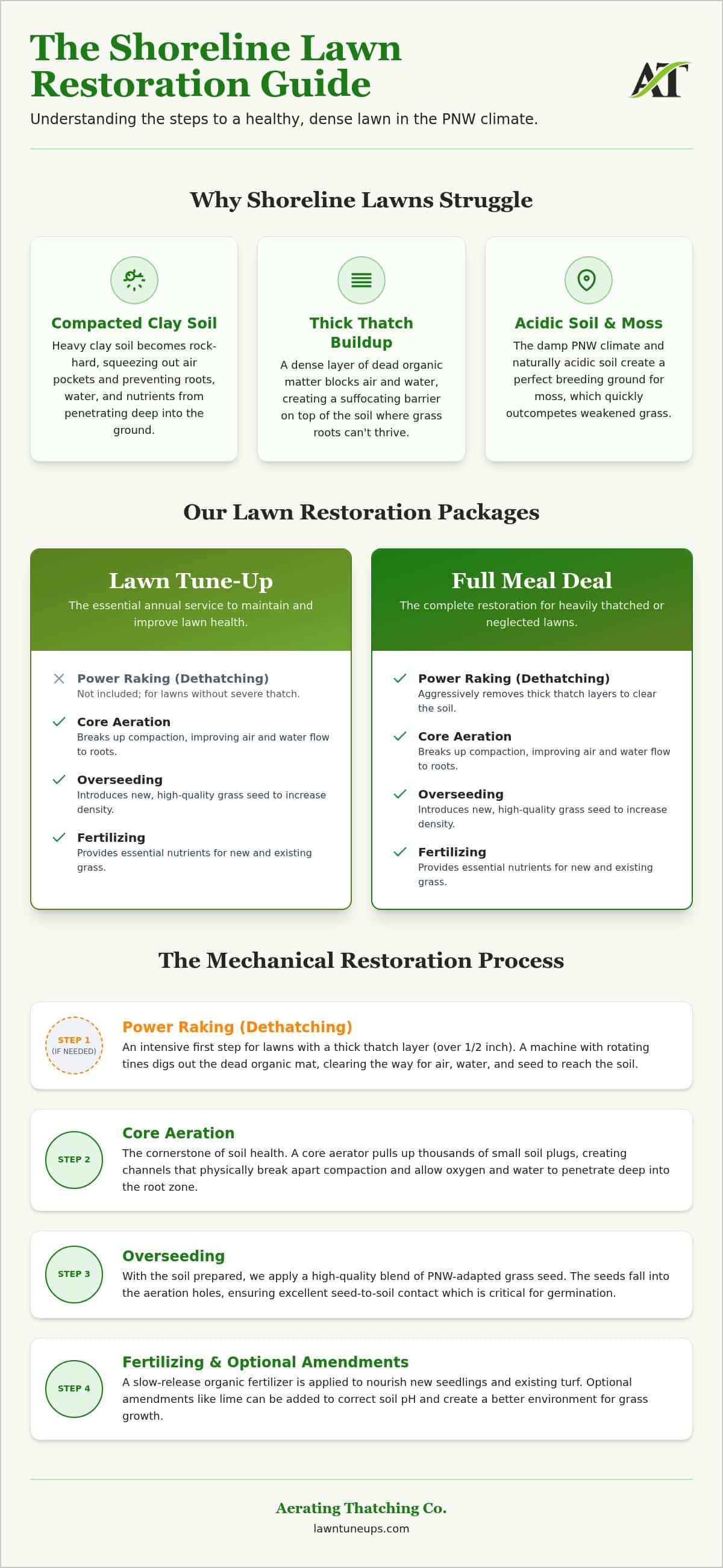
This is where a professional mechanical restoration comes in. A Lawn Tune Up in Shoreline isn’t just a fancy name for mowing; it’s a targeted intervention that addresses the mechanical and biological health of your soil. It focuses on the essential components required to rebuild turf from the ground up: relieving compaction, managing thatch, and introducing new, resilient grass seed.
- Core Aeration: Mechanically pulls plugs from the soil to break up compaction, allowing air, water, and nutrients to reach the root zone.
- Overseeding: Introduces high-quality, PNW-adapted grass seed to fill in thin areas, increase density, and improve the lawn’s genetic diversity.
- Fertilizing: Provides essential nutrients to support new seed germination and fuel robust, healthy growth.
The Thatch and Moss Cycle in the PNW
Shoreline’s cool, damp weather creates the perfect environment for thatch—a layer of dead grass, roots, and other organic debris—to build up quickly between the soil and the green grass blades. A thin layer is normal, but when it becomes too thick, it acts like a sponge, holding moisture at the surface and blocking air and nutrients from the soil. This suffocating layer is an ideal breeding ground for moss, which thrives in compacted, acidic, and poorly drained soil where grass roots struggle to penetrate.
The Limits of General Landscape Maintenance
Most "mow and blow" landscaping crews provide excellent surface-level maintenance. They keep your lawn tidy and trimmed. However, they typically lack the specialized, heavy-duty equipment required for deep mechanical restoration. A power rake or a core aerator is a significant investment and requires specific expertise to use correctly. Without these tools, it’s impossible to correct the foundational issues of compaction and thatch that plague so many lawns in our area. True, long-term turf density depends on this specialized work.
The Core Components of Lawn Restoration
A successful lawn restoration is a systematic process where each step builds on the last. While our signature Lawn Tune Up includes core aeration, overseeding, and fertilizing, a more comprehensive project may require additional steps to address severe issues. Understanding each component helps clarify how we rebuild a lawn’s health from the soil up.
- Step 1: Power Raking (Dethatching). This is an aggressive but necessary first step for lawns with a thick thatch layer. A power rake uses rotating tines to dig into the thatch and pull it to the surface for removal. This process is crucial for clearing the way for air, water, and seed to reach the soil. Note: This is an intensive service for heavily thatched lawns and is not part of a standard Lawn Tune Up.
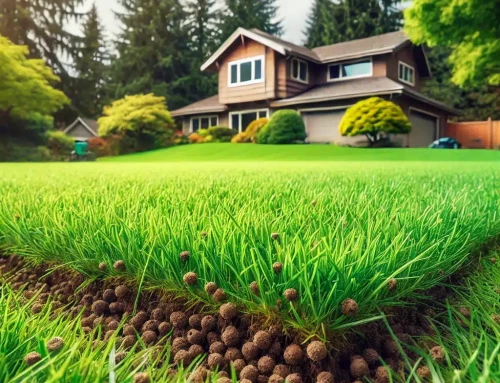
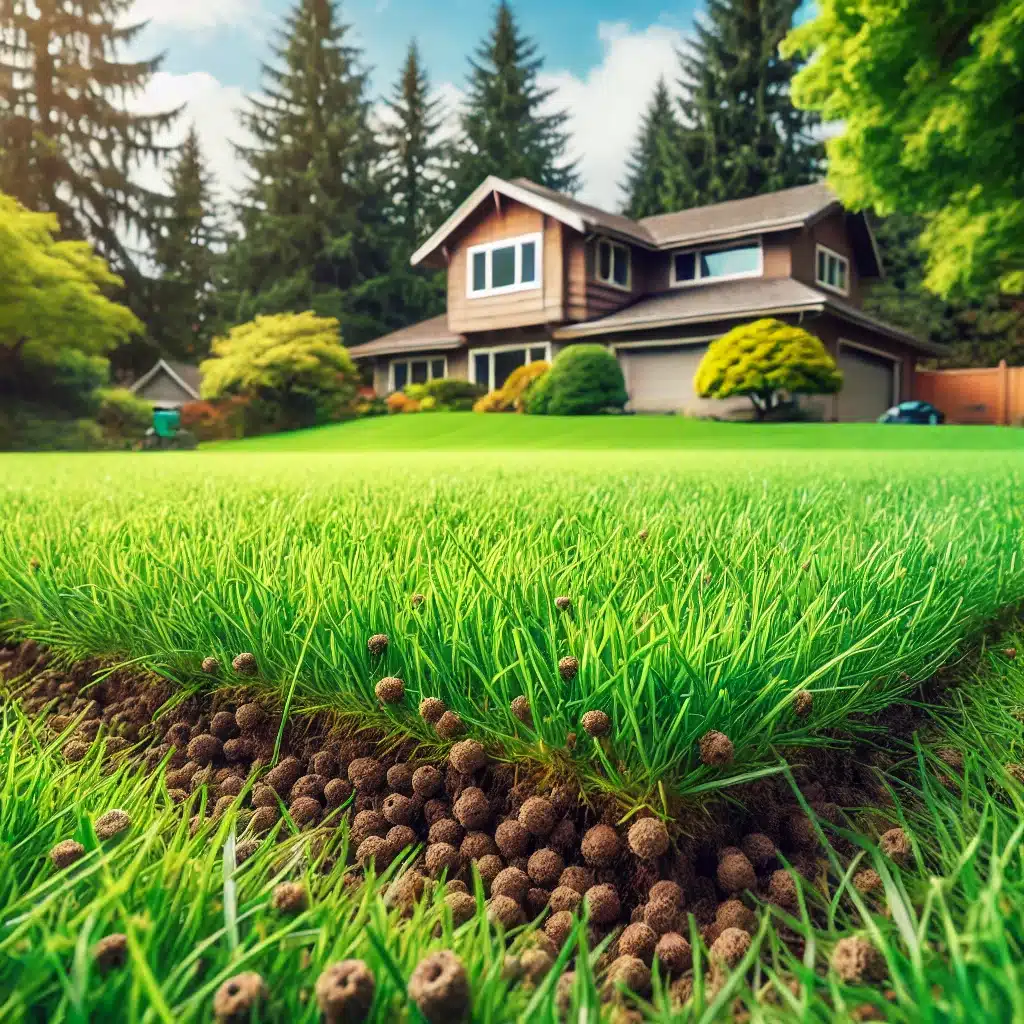
- Step 2: Core Aeration. This is the cornerstone of soil health in our region. A core aerator pulls small plugs of soil out of the lawn, creating channels that break up heavy clay compaction. This allows oxygen, water, and fertilizer to penetrate deep into the root zone, encouraging stronger, more resilient grass growth.
- Step 3: Overseeding. After aeration, the soil is perfectly prepared to receive new seed. We use a blend of grass seed specifically chosen for its performance in the Pacific Northwest. The seed falls into the aeration holes, ensuring excellent seed-to-soil contact, which is critical for successful germination and filling in bare spots.
- Step 4: Fertilizing & Soil Amendments. A new lawn needs proper nutrition. We apply a high-quality organic fertilizer to support the new seedlings and nourish the existing turf. Depending on a lawn’s specific needs, optional amendments may be recommended. For example, a lime application can be added to help raise the soil’s pH, making it less hospitable to moss and more favorable for grass.
Why Core Aeration is Mandatory for Shoreline Clay
Shoreline’s soil is predominantly clay, which becomes heavily compacted over time due to foot traffic, rain, and mowing. This compaction squeezes out the air pockets that grass roots need to thrive. Core aeration is the single most effective solution. The mechanical process of pulling up thousands of soil "plugs" physically breaks apart the compaction. This not only improves immediate drainage but also creates space for roots to grow deeper, helping the lawn become more drought-tolerant and better equipped to survive our dry summer spells.
The Role of Lime and Organic Fertilizers
Our soil in the PNW is naturally acidic, a condition that moss loves and grass dislikes. A lime application is an optional but highly effective treatment that works to neutralize this acidity. By raising the soil pH, we create an environment where grass can absorb nutrients more efficiently and outcompete moss over the long term. We pair this with organic fertilizers that provide a slow, steady release of nitrogen. This encourages healthy, consistent growth without the sudden, weak surges often caused by synthetic products. For more details on our methods, you can explore our restoration services.
Case Study: Restoring a Typical Residential Lawn in Shoreline
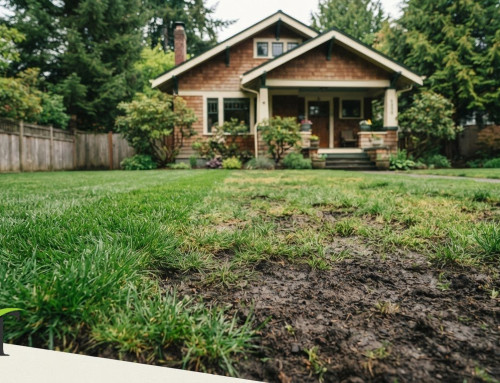
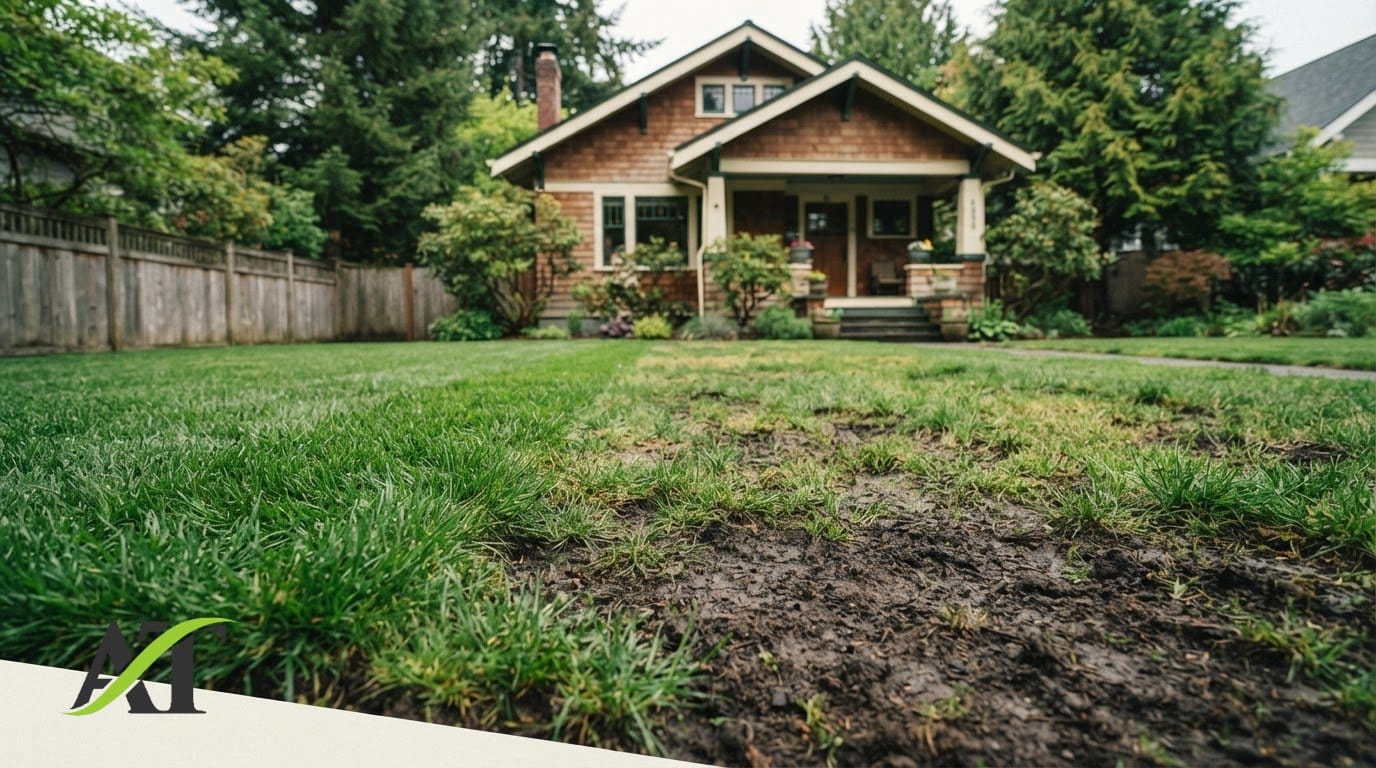
To illustrate the process, consider a recent project on a typical residential property in the Richmond Beach neighborhood of Shoreline. The lawn suffered from classic PNW symptoms: severe soil compaction, standing water after rain, a thatch layer over an inch thick, and widespread moss coverage.
- Initial Assessment: We identified a thatch layer that was suffocating the turf and soil so compacted that a screwdriver could barely penetrate it. The grass was thin, weak, and losing ground to moss.
- The Execution: The project required a comprehensive approach. We started with an intensive power raking to remove the thick mat of thatch. This was followed by a thorough core aeration to fracture the compacted clay soil. We then applied our signature Lawn Tune Up: a generous overseeding with a PNW-specific grass blend and an application of organic starter fertilizer. As an additional corrective measure, we included a lime application to begin adjusting the low soil pH.
- Timeline & Results: The homeowner was briefed on what to expect. Within the first three weeks, new grass seedlings began to emerge. By day 30, with proper watering, the lawn showed a dramatic transformation. Turf density had visibly increased, bare patches were filling in, and the overall color had shifted to a deep, healthy green. The improved drainage from aeration was immediately noticeable after the next rainfall.
Overcoming Common Restoration Obstacles
A key part of our job is managing homeowner expectations. A lawn that has just been power raked looks rough—there’s no way around it. It temporarily looks worse before it gets dramatically better. We communicate this "ugly phase" clearly from the start. We also provide simple, clear instructions for the most critical part of the post-service period: watering. Consistent moisture is essential for the new seed to germinate and establish itself, and we work with clients to ensure they understand this crucial step.
Long-Term Maintenance Savings
A professional restoration is an investment in reducing future effort and expense. A thick, healthy lawn is its own best defense. It naturally crowds out weeds, reducing or eliminating the need for chemical herbicides. Its deep root system makes it more resilient during dry periods, cutting down on water usage. Furthermore, a vibrant, green lawn significantly boosts a property’s curb appeal, a valuable asset in competitive North Seattle neighborhoods like Shoreline. For a deeper look at lawn care in the greater Seattle area, see our Seattle restoration guide .
Is a Professional Lawn Tune Up Right for Your Property?
If you’re tired of a lawn that never seems to improve, a professional restoration is the most effective path forward. The cost-benefit analysis is straightforward: you can spend years and hundreds of dollars on ineffective DIY products, or you can make a one-time investment in a professional service that corrects the foundational problems for long-term results.
This principle of expert, preventative maintenance applies to all aspects of your property; just as UEC Roofing provides specialized roof tune-ups to protect your home from the top down, a professional lawn restoration ensures your landscape remains healthy and resilient from the ground up.
Timing is critical for success in the Pacific Northwest. The optimal windows for a Lawn Tune Up in Shoreline are spring and fall. During these seasons, the combination of mild temperatures and consistent rainfall creates the perfect conditions for seed germination and root development. Before we arrive, we ask homeowners to handle a few simple preparations, such as mowing the lawn a bit shorter than usual and marking any invisible sprinkler heads to prevent damage.
The Specialist Advantage
At Aerating Thatching Co., we focus exclusively on one thing: the mechanical and biological restoration of lawns. We don’t mow, prune, or build patios. This specialization means we have invested in the best equipment and have honed our expertise since 2004. As an owner-operated business, we bring a level of dedication and local knowledge to every Shoreline property we service. We understand the specific challenges of our soil and climate because we work in it every day.
Professional guidance is key for any major home investment; for instance, if you’re researching climate control systems, click here for a detailed homeowner’s guide to choosing an air conditioner.
Next Steps: Getting Your Quote
Our process is designed to be simple and transparent. It starts with a professional assessment of your lawn’s specific needs. We will evaluate your soil compaction, thatch level, and overall turf health to provide a clear recommendation for the services that will deliver the best results. There is no guesswork—just a practical plan to restore the health and beauty of your lawn.
Ready to transform your struggling lawn into a thick, green landscape?
Request your Shoreline Lawn Tune Up quote today.
Frequently Asked Questions
**What is the difference between power raking and regular raking?
**
Regular raking removes surface-level debris like leaves. Power raking (or dethatching) is a mechanical process that uses rotating blades to pull up the thick, matted layer of thatch from beneath the green grass. It’s a much more aggressive and effective treatment for a suffocated lawn.
**How often should a Shoreline lawn receive a full tune-up?
**
For most lawns in our area, a core aeration is beneficial every one to two years to combat soil compaction. A full Lawn Tune Up with overseeding is recommended whenever the lawn starts to look thin or is struggling to recover from stress.
**Is core aeration necessary if I don’t have standing water?
**
Yes. While aeration is excellent for fixing drainage issues, its primary benefit is relieving soil compaction. Even if your lawn drains well, compacted clay soil can still prevent roots from getting the oxygen they need to grow strong. Almost every lawn in Shoreline can benefit from it.
**Will a lawn tune-up kill the moss in my yard?
**
A Lawn Tune Up does not directly kill moss. Instead, it changes the underlying conditions that allow moss to thrive. By reducing compaction, improving drainage, and increasing grass density, we make the environment hostile to moss and favorable for grass. For severe infestations, a separate moss treatment may be recommended as an add-on.
**How soon can I walk on my lawn after overseeding and fertilizing?
**
You can typically walk on the lawn immediately after the service is complete. However, we recommend keeping foot traffic to a minimum for the first 2-3 weeks to protect the delicate new grass seedlings as they germinate and establish themselves.
Article by
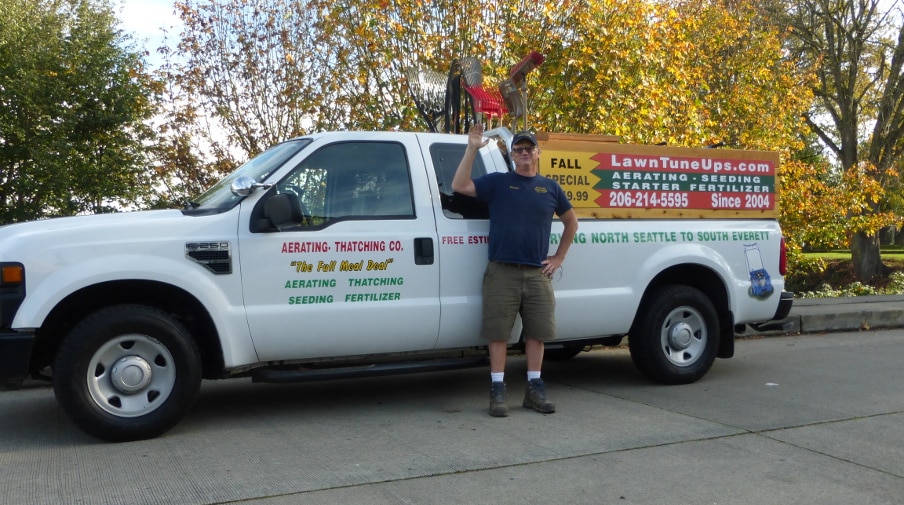
Stewart Armour
Stewart Armour is an independent lawn restoration expert, educator, and owner of Aerating Thatching Co., serving the greater Seattle area since 2004. With more than two decades of professional experience restoring Western Washington lawns, Stewart specializes in diagnosing lawn problems, improving soil health, and developing long-term lawn renovation strategies. His education includes turf management studies, advanced golf course turf training, and continuing education through Wilbur-Ellis University, State Turf Facilities, Soil First Academy, and Golf Course Applied Turf Physiology. Every article published on LawnTuneUps.com is grounded in practical field experience, current turf science, and a commitment to helping homeowners understand the why behind every recommendation—not just what to do.
Stewart has personally evaluated thousands of residential lawns throughout the Seattle area and remains committed to helping homeowners understand the science behind growing healthier, more resilient lawns.