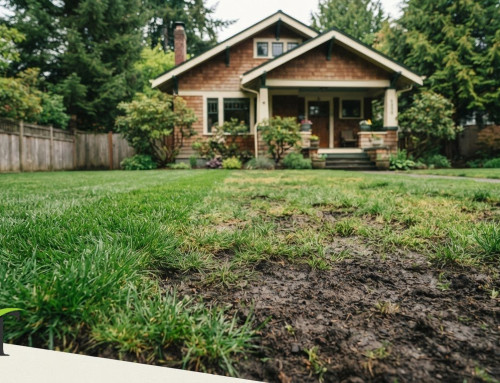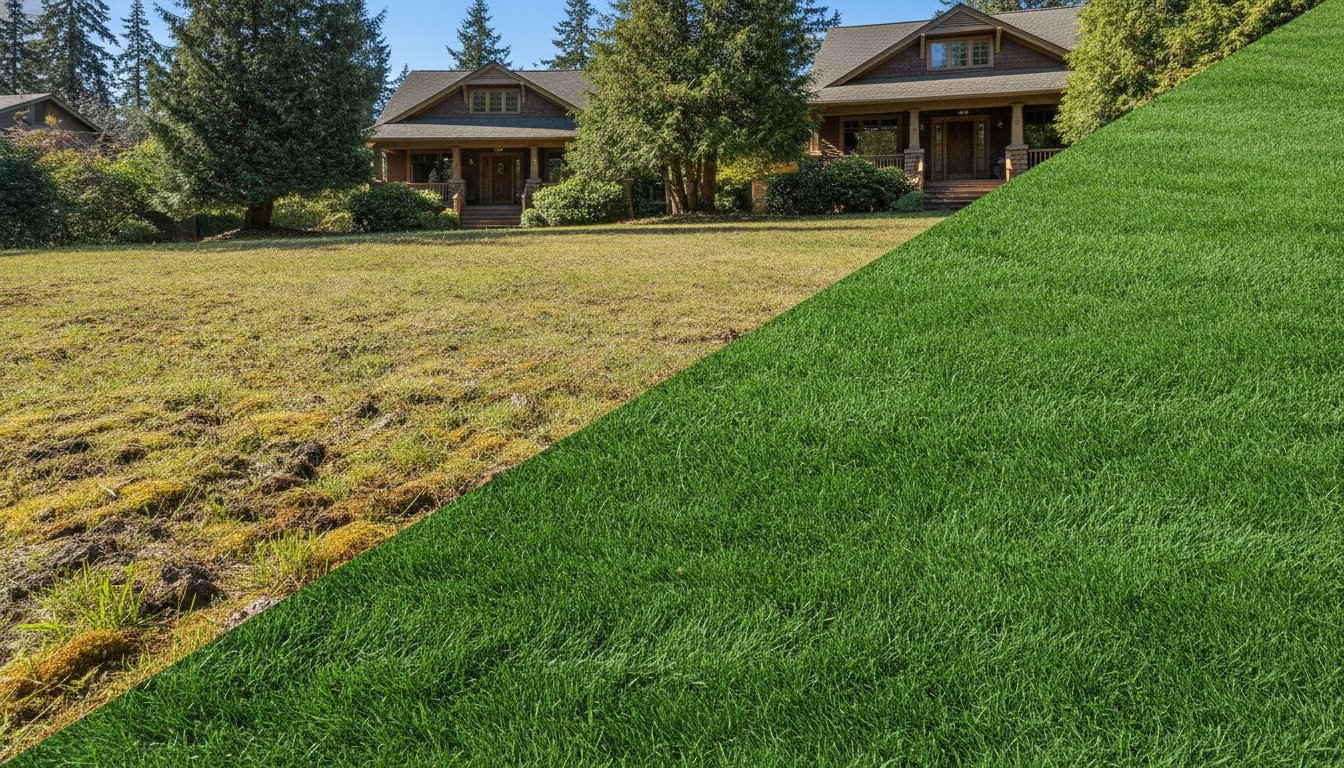
Most Seattle lawns don’t die from neglect; they suffocate. Despite regular watering and fertilizing, many homeowners watch their turf get thinner, spongier, and more moss-choked each year. The issue isn’t a lack of care—it’s that the care isn’t reaching the parts of the lawn that matter most: the soil and the roots.
A professional lawn revitalization service goes beyond surface-level treatments. It’s a mechanical reset for your turf, addressing the core problems that prevent a healthy, dense lawn from thriving in the Pacific Northwest. This is not a simple cleanup. It’s a structural overhaul designed to fix the foundation of your yard.
The Seattle Lawn Struggle: Why Traditional Care Often Fails
In the Puget Sound region, a lawn faces a unique set of challenges. We call it the "Seattle Triple Threat": heavy clay soil that compacts easily, acidic pH levels from our persistent rain, and the relentless pressure of moss. Standard lawn care often fails because it doesn’t solve these underlying issues.
- Deep-Tissue Reset: A lawn revitalization service acts like a deep-tissue massage for your yard. It mechanically breaks up compacted soil and removes suffocating layers of dead material, allowing air, water, and nutrients to finally reach the grassroots.
- The ‘Seattle Triple Threat’: Our region’s combination of heavy clay soil, acidic pH, and constant moisture creates a perfect storm. Clay soil compacts into a concrete-like layer, our rain leaches essential nutrients and lowers pH, and moss thrives in these damp, sour conditions.
- Surface-Level Failure: Spreading fertilizer on top of a compacted, thatch-covered lawn is like trying to water a plant through a plastic sheet. The nutrients sit on the surface, feeding the moss and weeds, while the grass roots below starve.
- Cleanup vs. Revitalization: Mowing and edging are cleanups. A professional revitalization service is a restoration. It’s the difference between tidying a room and rebuilding its foundation. For a more in-depth look at this process, see our practical guide to fixing PNW turf.
Identifying the Signs of a Dying Lawn
A lawn in distress sends clear signals. Recognizing them early can be the key to a successful turnaround. The problems are often hidden just below the surface, choking the life out of your grass from the ground up.
- Visual Cues: Look for thinning grass blades that seem weak or sparse, a spongy or bouncy feeling underfoot caused by a thick thatch layer, and the steady encroachment of moss, especially in shady or damp areas.
- The ‘Screwdriver Test’: A simple way to check for severe soil compaction, a common issue in North King County, is the screwdriver test. Try to push a standard screwdriver into your lawn. If it’s difficult to push it several inches deep, your soil is heavily compacted and blocking root growth.
- The Thatch Barrier: Thatch—a layer of dead grass, roots, and debris—accumulates between the soil and the green grass blades. A layer thicker than half an inch acts like a waterproof barrier, preventing water and fertilizer from ever reaching the soil.
Why Moss is the Symptom, Not the Problem
For many Seattle homeowners, fighting moss feels like a losing battle. But moss itself isn’t the true enemy; it’s an indicator of poor soil health. Moss thrives where grass struggles. Address the underlying conditions, and the grass will naturally outcompete the moss.
- Acidic Soil: The persistent rain in Seattle creates acidic soil (low pH), which moss loves and grass hates. Moss is a sign that your soil’s chemistry is out of balance.
- Poor Drainage & Compaction: Moss flourishes in damp, shady areas with poor airflow. When heavy clay soil becomes compacted, it holds water at the surface, creating the perfect soggy environment for moss to take over.
- The Role of Lime: Applying lime is a critical step in balancing soil chemistry. It raises the pH, making the soil less acidic and creating an environment where grass can absorb nutrients and thrive, effectively squeezing the moss out over time.
The Mechanical Revitalization Framework: A Core Solution
True lawn transformation in Seattle isn’t achieved with more chemicals. It requires a mechanical solution that physically alters the structure of your soil and turf. This framework involves three core processes: core aeration, power raking, and overseeding. When performed together, they create a powerful synergistic effect that resets your lawn’s health.
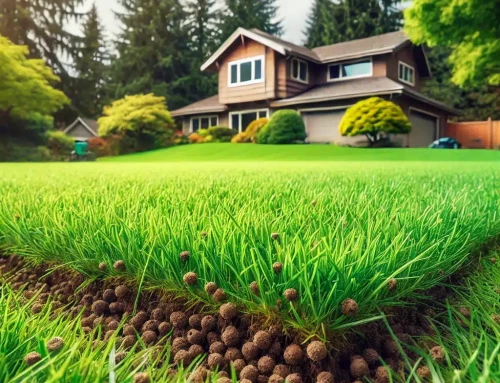
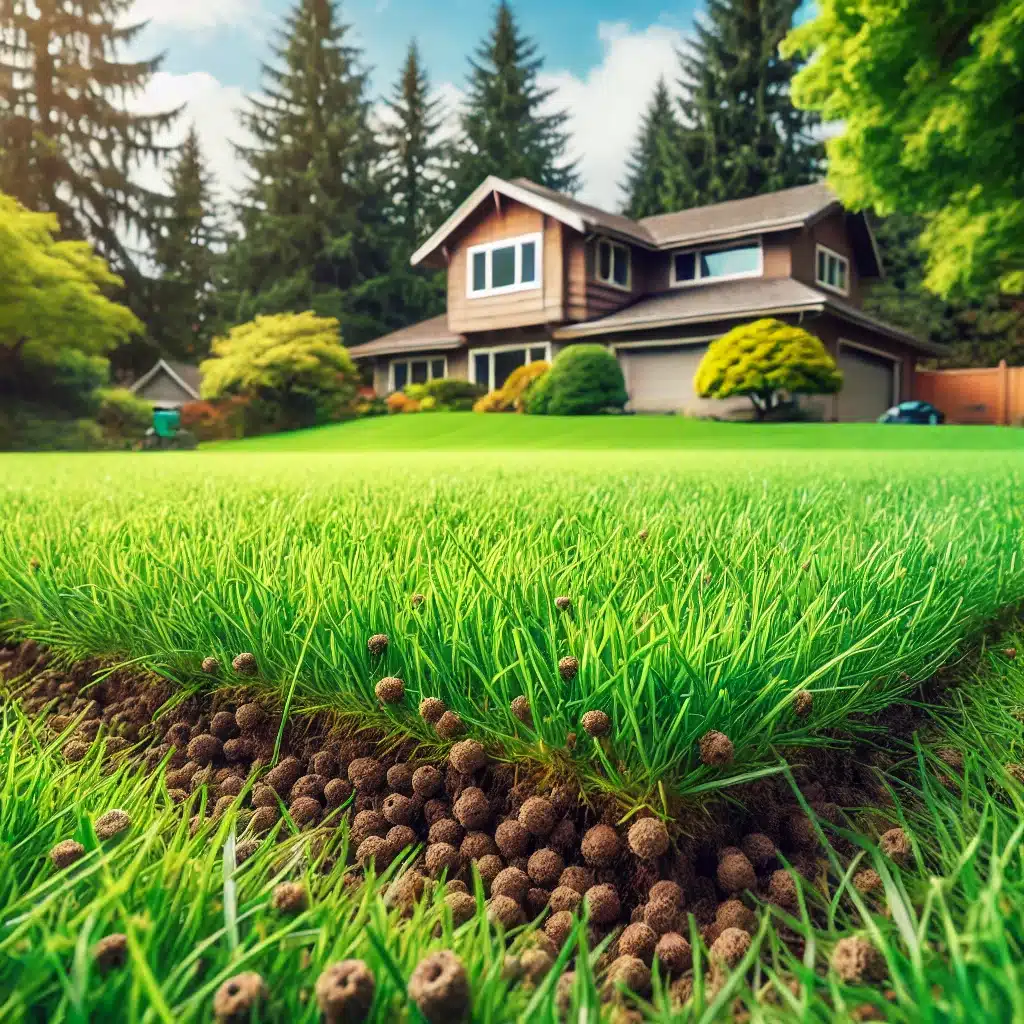
- Core Aeration: This is the process of pulling small plugs of soil from the lawn. These holes allow the compacted ground to "breathe," creating channels for oxygen, water, and nutrients to penetrate deep into the root zone.
- Power Raking: Far more aggressive than a simple garden rake, a power rake uses mechanical flails to dig into the thatch layer, pulling up the dense "thatch blanket" of dead organic matter that is suffocating your lawn.
- Overseeding: After aeration and power raking have exposed the soil, we introduce high-quality, Seattle-hardy grass seed blends. This new seed makes direct contact with the soil, ensuring high germination rates and filling in the thin, patchy areas.
Core Aeration vs. Spike Aeration
Not all aeration is created equal. While spike aerators simply poke holes in the ground, core aeration is the only method that truly relieves compaction in heavy Seattle clay. It physically removes soil, giving the surrounding ground room to expand and decompress.
- The Superiority of Core Aeration: Spiking can actually increase compaction around the hole. Core aeration pulls plugs out, creating space for roots to expand and for beneficial microbes to thrive.
- The Science of Root Expansion: After core aeration, grassroots are no longer fighting against dense, compacted soil. They can grow deeper and stronger, creating a more resilient and drought-tolerant lawn.
- The small soil plugs left on the lawn should remain; they break down quickly, returning valuable nutrients and microbes to the soil.
The Power Raking Advantage
Power raking, also known as dethatching, is the essential step for removing the thick, spongy layer that prevents your lawn from breathing. It’s an aggressive but necessary process for any serious lawn revitalization service.
- Beyond Hand Raking: A hand rake can’t penetrate a thick, matted thatch layer. A power rake uses a powerful engine and rotating tines to methodically lift and remove this suffocating debris.
- Creating the Perfect Seed Bed: By aggressively clearing away thatch, power raking creates thousands of points of direct soil-to-seed contact. This is crucial for successful germination when overseeding.
- Immediate Visual Impact: The amount of dead material removed from a neglected lawn is often shocking. This process immediately improves airflow and exposes the soil to sunlight and water, setting the stage for new growth.
Case Study: From Patchy to Plush in North Seattle
Theories and processes are one thing; real-world results are another. Consider a typical 5,000 sq. ft. residential lawn in a North Seattle neighborhood. Before treatment, it was over 40% moss, with thin, weak grass and several areas of standing water after rain.
- Timeline: The project began with an assessment in early March. The revitalization service was performed a week later. By the first mow in June, the lawn was a completely different entity.
- The Treatment Plan: The lawn received a comprehensive revitalization service. This included aggressive power raking, core aeration, overseeding with a premium sun/shade seed blend, and a lime application to correct the soil pH.
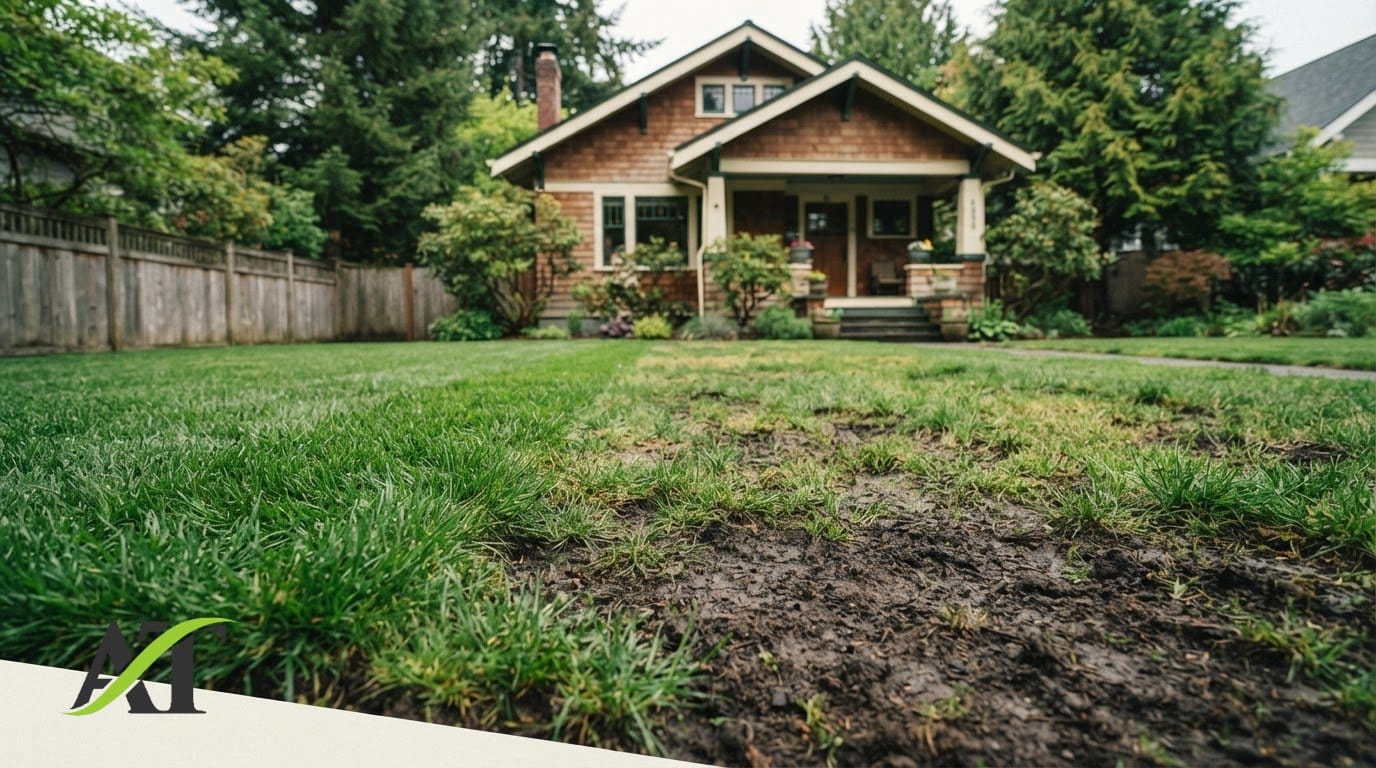
- The Transition: The first week after the service is often called the "ugly phase." The lawn looks torn up and messy. But by week six, new grass was dense and vibrant, and the original patchiness was gone.
The Intervention: Mechanical Restoration
The key to this transformation was a direct, mechanical intervention. We physically removed the barriers to growth and restructured the soil to support healthy turf. This wasn’t a chemical treatment; it was a physical restoration.
- Thatch & Moss Removal: The heavy-duty power raking pulled out nearly three cubic yards of dead thatch and moss, immediately allowing the soil to breathe.
- Addressing Standing Water: We focused core aeration on the low-lying areas in the backyard. This broke up the severely compacted clay pan, allowing water to drain properly into the subsoil.
- Kickstarting Soil Life: After the mechanical work, we applied a slow-release organic fertilizer. This fed the new seeds and stimulated the microbial activity needed for long-term soil health.
The Results: Measurable Turf Density Improvement
The results were not just cosmetic. The lawn’s underlying health and structure were fundamentally improved, creating a sustainable, resilient turf that could naturally resist future problems.
- Increased Blade Count: We measured a significant increase in turf density, with the blade count per square inch more than doubling in the thinnest areas.
- Natural Moss Reduction: By raising the soil pH with lime and improving drainage with aeration, we changed the environment. The new, dense grass simply outcompeted the moss, which had nowhere to grow.
- Client Testimonial: The homeowner’s feedback said it all: "This is the first time in 10 years we haven’t had a muddy mess in the backyard. The kids can actually play on it."

Timing and Preparation: When to Revitalize Your Lawn
In the Pacific Northwest, timing is everything. Performing a lawn revitalization service during the right season gives new seeds the best possible chance to establish before facing the stress of summer heat or winter cold.
- The Golden Windows: Spring (March-June) and Fall (September-October) are the ideal times for revitalization in Seattle. Soil temperatures are warm enough for germination, and the weather is typically mild and rainy.
- Soil vs. Air Temperature: Grass seed germination depends on soil temperature, not air temperature. We target a consistent soil temp of 55-75°F for optimal results.
- Homeowner Prep: Before our arrival, we ask clients to mow their lawn one setting lower than usual and clearly mark any sprinkler heads or other in-ground objects.
- The Critical Watering Window: The 21 days following an overseeding service are crucial. The new seed must be kept consistently moist to germinate and establish strong roots.
The Seattle Watering Schedule
Watering new grass seed is different from watering an established lawn. The goal is to keep the top inch of soil damp without creating puddles or washing the seed away.
- Misting vs. Soaking: New seeds need frequent, light watering. often 2-3 times a day for 10-15 minutes. Deep, infrequent soaking is for established lawns and can dislodge new seed.
- Adjusting for Rain: Keep an eye on Puget Sound’s unpredictable weather. On rainy days, you can likely skip watering, but don’t assume a light drizzle is enough to keep the seedbed moist.
- The Most Common Mistake: The biggest error is letting the seed bed dry out completely, especially in the first 14 days. Even a few hours of dry, sunny conditions can kill fragile new sprouts.
The Role of Lime and Organic Fertilizer
Lime and fertilizer are the essential supplements to the mechanical work. They correct the invisible chemical imbalances in the soil, providing the foundation for sustained, long-term health.
- Why We Apply Lime: We apply lime during the revitalization process to raise the soil’s pH. This "sweetens" the acidic soil common in Seattle, unlocking nutrient availability for the grass.
- The ‘Slow-Release’ Advantage: We use organic, slow-release fertilizers. They feed the soil’s microbial life, which in turn feeds the grass roots over months, promoting steady, strong growth instead of a quick, weak surge.
- Synthetic "quick-green" fertilizers create a burst of top-growth at the expense of root development, leading to a weaker, less resilient lawn.
Why Choose Aerating Thatching Co. for Your Revitalization
We’re not a general-purpose landscaping company. We are specialists. Since 2004, we have focused exclusively on the mechanical restoration of lawns in Seattle and the surrounding communities like Everett and North King County. We don’t mow, prune, or build patios. We fix unhealthy lawns.
- Local Expertise: We understand Seattle’s unique soil and climate challenges because we’ve been working in it for nearly two decades.
- Specialization: Our focus on restoration means we have the right equipment and a proven process. We do one thing, and we do it well.
- The Signature Service: Our approach is built around a proven, all-in-one package designed specifically for local yards. Our signature **Lawn Tune Up service ** provides the essential trio of core aeration, overseeding, and organic fertilizing. For lawns needing a more intensive reset, we often recommend adding power raking to remove excessive thatch.
- Neighborly Service: We are an owner-operated local business. You get pragmatic advice and professional execution without the high-pressure sales tactics of national chains.
The Right Equipment for the Job
The quality of a lawn revitalization service is directly tied to the quality of the equipment used. The commercial-grade machines we use are fundamentally different from the lighter-duty units available at rental shops.
- Commercial-Grade Power: Our aerators are heavier, pulling deeper, cleaner plugs from compacted soil. Our power rakes have more power to remove densely matted thatch without damaging the turf.
- Deeper Plugs, Cleaner Removal: Professional equipment leads to a more effective result. Deeper aeration channels and more thorough thatch removal create a better foundation for new seed.
- Efficiency and Precision: Our experienced crew and specialized equipment allow us to complete the job efficiently and correctly, ensuring the process is as undisruptive as possible for you.
Next Steps: Reclaiming Your Yard
A thick, healthy lawn is within reach. It starts with addressing the foundational issues of soil health and turf density. Our professional lawn revitalization service is the most effective way to achieve that.
- Get a Free Estimate: We provide a no-obligation estimate based on your lawn’s specific size and current condition.
- What to Expect: On service day, our professional crew will arrive ready to perform the work efficiently. We handle the entire process, leaving you with a clear path to a better lawn.
Frequently Asked Questions
**How long does it take for a lawn revitalization service to show results?
**
You’ll see the "ugly phase" immediately after, where the lawn looks torn up. New grass sprouts typically appear in 14-21 days. You should see significant improvement in turf density within 4-6 weeks, with the lawn continuing to thicken over the next few months.
**Is power raking better than dethatching for my Seattle lawn?
**
Power raking and dethatching are terms for the same process: the mechanical removal of the thatch layer. It is a highly effective and necessary step for lawns with more than a half-inch of thatch buildup.
**Do I really need to add lime to my lawn every year?
**
Given the acidic nature of soil in the Puget Sound region, an annual lime application is highly recommended to maintain a balanced pH level that favors healthy grass growth over moss.
**Can I walk on my lawn after it has been aerated and overseeded?
**
You should keep foot traffic to an absolute minimum for the first 2-3 weeks. The new grass seeds and fragile sprouts are easily damaged. After the first mow (around 3-4 weeks), normal foot traffic can resume.
**What happens to the moss after a professional revitalization?
**
The power raking process will physically remove a large volume of existing moss. More importantly, the combination of aeration, liming, and overseeding changes the soil environment to be unfavorable for moss, allowing the new, thick grass to naturally crowd it out.
**How much does a professional lawn revitalization service cost in Seattle?
**
Cost depends on the size of your lawn and the specific services required. A basic package for a small yard may start at a few hundred dollars, while a large property needing extensive work will be more. We provide a free, detailed estimate based on your specific property.
**Will aeration help with the standing water in my backyard?
**
Yes, core aeration is one of the most effective ways to improve surface drainage and reduce standing water. By pulling plugs from compacted soil, it creates channels that allow water to penetrate deeper into the ground instead of pooling on top. For homeowners whose drainage issues have already affected their home’s structure, Coastline Environmental Solutions, Inc. provides expert property restoration and mold remediation services.
**Is the organic fertilizer you use safe for pets and children?
**
Yes. We use high-quality, slow-release organic fertilizers. Once they are watered in, they are safe for pets and children to be on the lawn.

Article by
Stewart Armour
Stewart Armour is an independent lawn restoration expert, educator, and owner of Aerating Thatching Co., serving the greater Seattle area since 2004. With more than two decades of professional experience restoring Western Washington lawns, Stewart specializes in diagnosing lawn problems, improving soil health, and developing long-term lawn renovation strategies. His education includes turf management studies, advanced golf course turf training, and continuing education through Wilbur-Ellis University, State Turf Facilities, Soil First Academy, and Golf Course Applied Turf Physiology. Every article published on LawnTuneUps.com is grounded in practical field experience, current turf science, and a commitment to helping homeowners understand the why behind every recommendation—not just what to do.
Stewart has personally evaluated thousands of residential lawns throughout the Seattle area and remains committed to helping homeowners understand the science behind growing healthier, more resilient lawns.