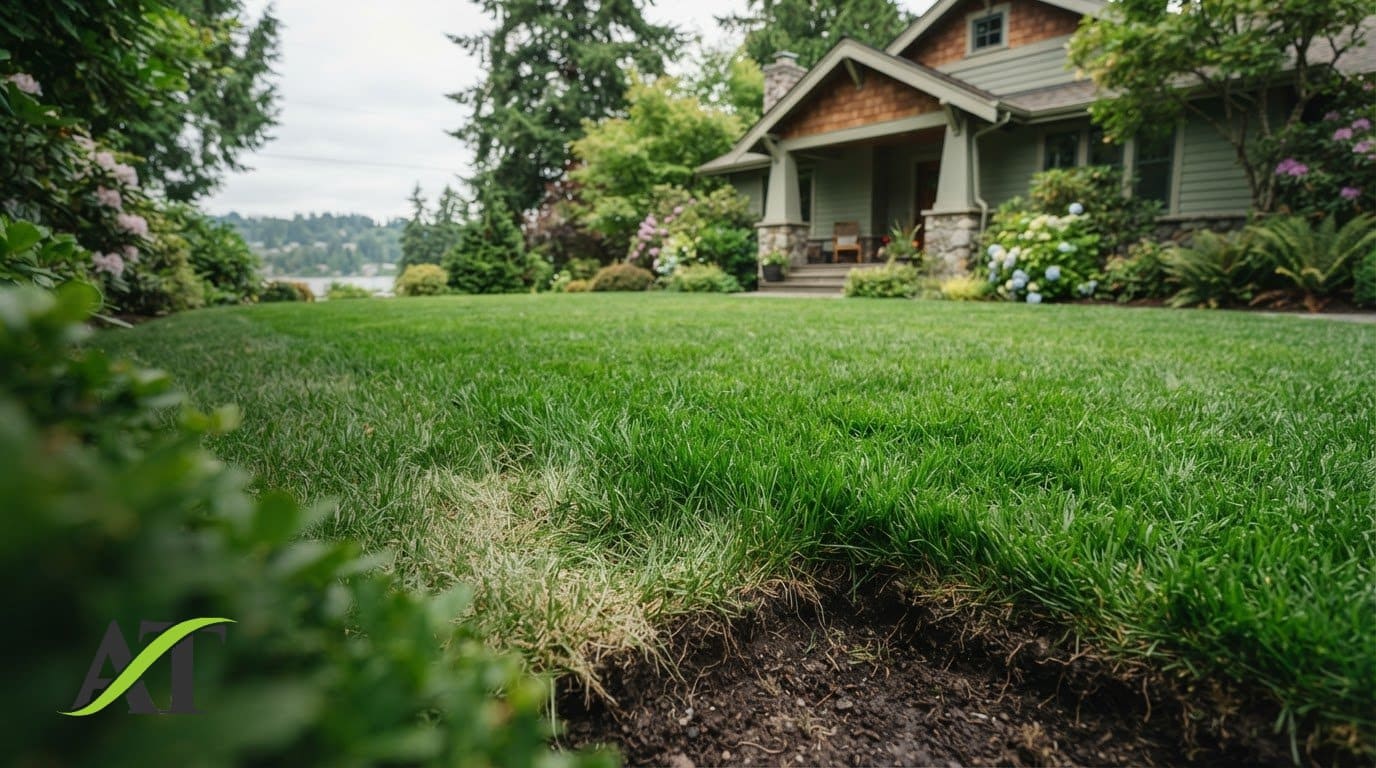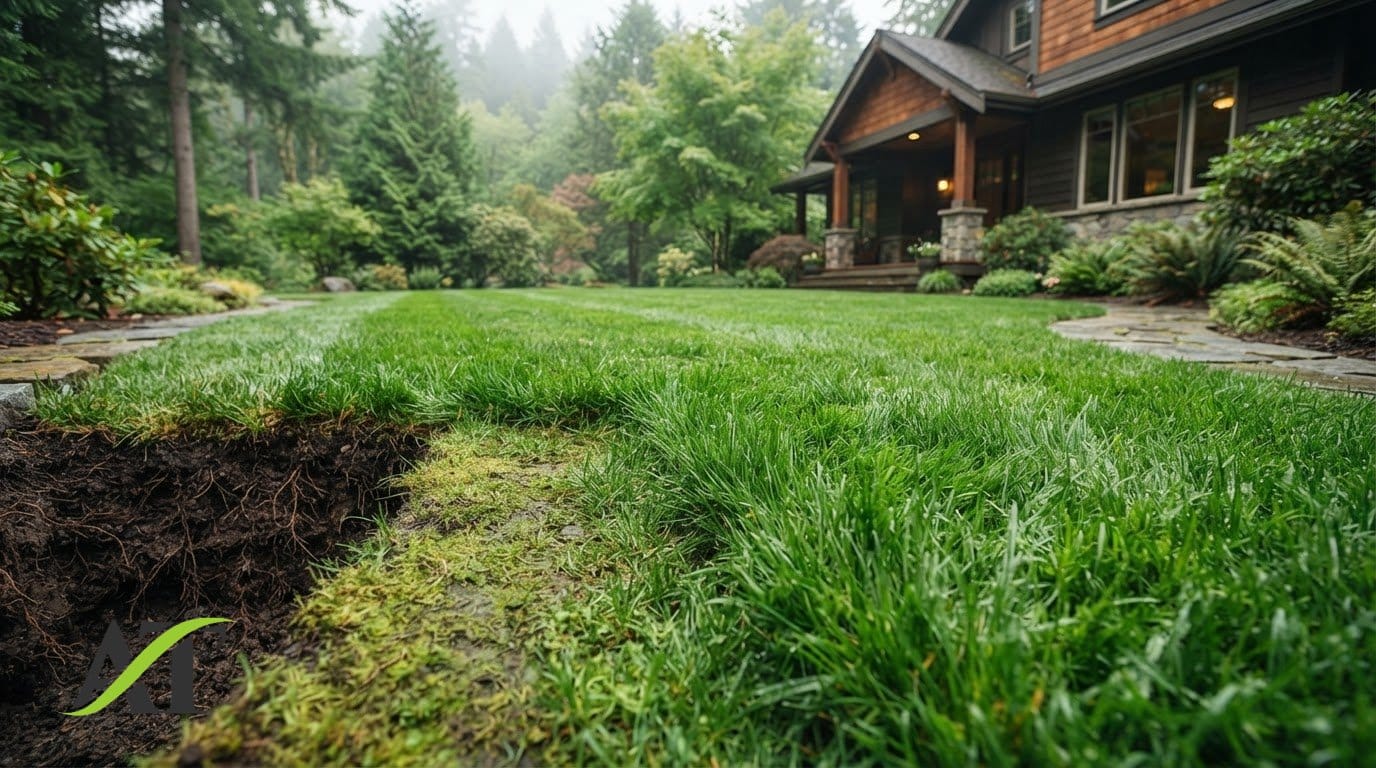
Most Ballard homeowners think moss is their biggest lawn problem, but it’s really just a symptom of thin, compacted soil. If you’re tired of seeing patchy turf every summer or feeling confused about when to plant seed in Seattle, you’re not alone. It takes more than just throwing down seed. You can restore your lawn’s health by mastering the timing of overseeding Ballard properties and using our signature Lawn Tune-Up process.
This article shows you how to get professional results that crowd out moss for good. We’ll explain why we focus on soil temperatures between 55°F and 75°F (13°C to 24°C) rather than just the weather forecast. You’ll also learn the specific differences between a standard Lawn Tune-Up and the more intensive Full Meal Deal. By the end, you’ll understand exactly how mechanical restoration steps like Core Aeration and Overseeding work together to build a thick, resilient lawn without the usual DIY guesswork.
Key Takeaways
- Learn why professional overseeding Ballard lawns is the most effective way to crowd out moss and restore density to thinning turf.
- Discover why we prioritize soil temperatures between 55°F and 75°F (13°C–24°C) to ensure the most consistent and reliable Overseeding results.
- Determine if your property requires a standard Lawn Tune-Up or the Full Meal Deal, which adds Power Raking (Dethatching) to the restoration process.
- Gain a clear understanding of the moisture and maintenance requirements needed to help new seedlings establish without the guesswork.
Restoring Ballard Lawns with Professional Overseeding
Overseeding is the process of sowing new grass seed into existing turf to increase density. In neighborhoods like Ballard, where the damp climate often favors moss over grass, keeping a thick lawn is your best defense. We focus on cool-season grasses because they are specifically suited for the North Seattle environment. By filling in bare spots, you create a natural barrier that chokes out weeds and prevents moss from taking over your yard. Professional overseeding Ballard properties ensures your lawn stays resilient throughout the year.
Why DIY Seeding Often Fails in Ballard
Many homeowners try “throwing seed” on top of their lawn, but this rarely works. Without the right preparation, seed usually gets stuck in a thick layer of thatch or sits on top of hardened soil. Seed-to-soil contact is the most critical factor for success. If the seed can’t reach the dirt, it won’t germinate. We solve this through a methodical approach. Our Lawn Tune Up Service Seattle provides the mechanical preparation needed to make sure your investment actually grows.
The Mechanical Advantage of Core Aeration
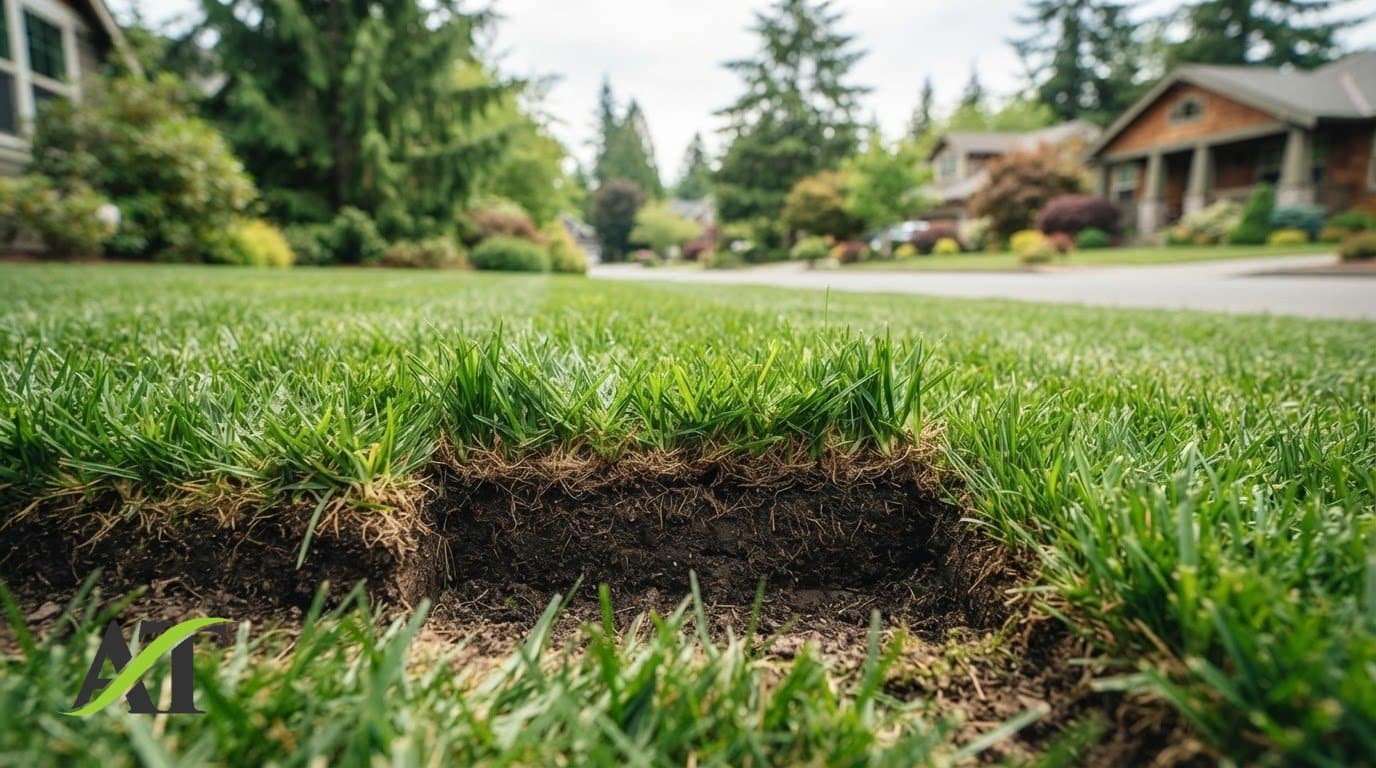
Ballard’s residential lots often consist of heavy, clay-based soil that compacts easily. This compaction starves grass roots of oxygen and prevents new seedlings from taking hold. Core Aeration is the mechanical solution to this problem. By pulling small plugs from the ground, we relieve soil pressure and create “pockets” for new growth. When we perform overseeding Ballard lawns immediately after aerating, the seed falls into these holes. This protects the seed and puts it in direct contact with the soil. This process leads to a much thicker and healthier turf than simple surface spreading ever could.
The Science of Germination: Soil Temperature and Timing
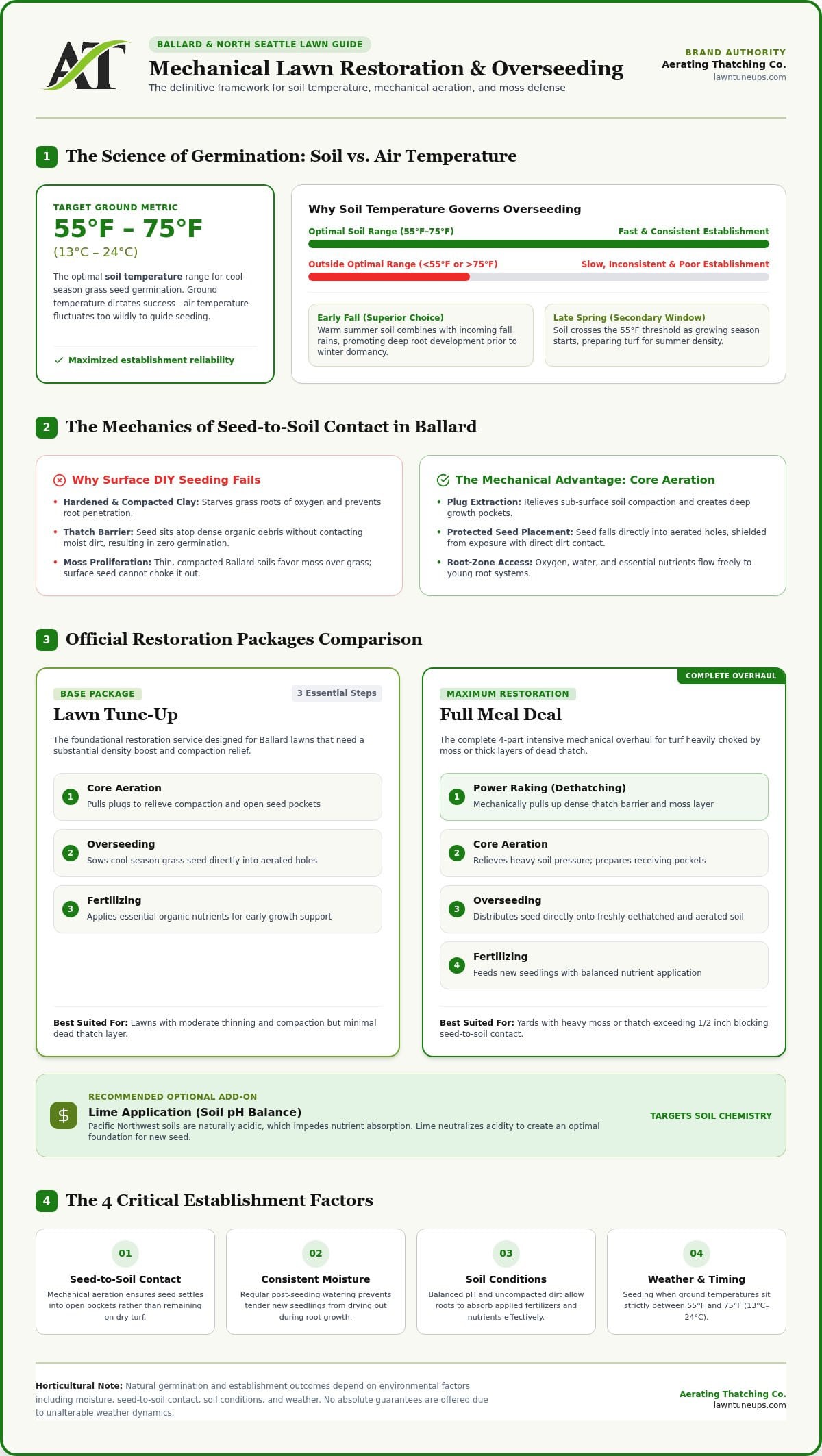
Ground temperature dictates when we start overseeding Ballard lawns. Air temperature fluctuates too much to be a reliable guide for planting. For cool-season grasses, the optimal soil temperature range is 55°F–75°F (13°C–24°C). If you plant when the ground is colder or hotter, germination becomes slower and less consistent. This often leads to poor establishment and wasted seed. While we aim for the best results, remember that weather, moisture, and soil conditions also play a role. We don’t offer absolute guarantees on germination because these natural factors are beyond human control.
Best Months for Overseeding in North Seattle
Finding that 55°F–75°F window usually happens in late spring or early fall. Early fall is often the superior choice for overseeding Ballard yards. The soil is still warm from summer, but the return of fall rains provides the consistent moisture new seeds need. This allows roots to develop deeply before winter dormancy. If you’re planning your restoration, getting on the schedule early ensures we hit the timing perfectly.
Soil Health and pH in Ballard
PNW soils are naturally acidic, which can hinder seed establishment. High acidity prevents grass from absorbing the nutrients it needs to thrive. A Lime Application helps balance the pH, creating a more hospitable environment for new growth. We often recommend this as an add-on to our core services. You can learn more about this process in our guide to Professional Lime Application in Edmonds. Balancing your soil ensures your new seed has the best possible foundation for long-term health.
Choosing Your Restoration: Lawn Tune-Up vs. Full Meal Deal
We believe in physical labor and tangible outcomes. National chains often sell generic plans, but we focus on what Ballard lawns actually need to thrive. Mechanical treatments outperform simple maintenance because they address the root cause of thin turf. Whether you need a standard refresh or a total overhaul, our packages are built to deliver results. You can find all the details on our Services page.
The Signature Lawn Tune-Up
The Lawn Tune-Up is our foundational restoration service. It consists of three essential steps: Core Aeration, Overseeding, and Fertilizing. We start by opening the soil to allow air, water, and nutrients to reach the root zone. We then introduce high-quality grass seed directly into the aerated holes. Finally, we apply organic nutrients to support early growth. This process is the standard for overseeding Ballard properties that just need a boost in density.
The Full Meal Deal for Maximum Restoration
When a lawn is choked by moss or heavy debris, it needs more than just air. The Full Meal Deal includes everything in the Lawn Tune-Up plus Power Raking (Dethatching). We recommend this for any yard with more than 1/2 inch of thatch. Power Raking (Dethatching) mechanically removes the thick layer of organic matter that prevents seed-to-soil contact. By clearing this barrier, we improve drainage and ensure the new seed actually touches the dirt. It’s the most aggressive way to reset your turf and get professional-grade results for overseeding Ballard projects.
Success After Seeding: Moisture and Maintenance
Your part in overseeding Ballard lawns begins once our machines leave the property. Success depends on your follow-through with moisture. We provide the mechanical foundation, but the environment takes over from there. Because germination is influenced by moisture, weather, and soil conditions, we avoid offering absolute guarantees on the final result. However, following a strict schedule significantly improves your odds of a thick, healthy lawn. We recommend staying off the grass entirely during the first few weeks to give the seeds a chance to establish.
The First 21 Days: Critical Care
The seed bed must stay moist but not flooded. During the first three weeks, light daily watering is better than one heavy soaking. We suggest watering two to three times a day for short five-minute bursts. This keeps the surface damp without creating puddles that wash the seed away. If the seed dries out after it starts to sprout, it will die. You should also keep dogs and heavy foot traffic off the area. New seedlings are fragile and can be easily crushed before their roots take hold.
Wait to mow until the new grass reaches about three inches in height. This usually takes three to four weeks. When you do resume, ensure your mower blades are sharp. Dull blades can pull young plants out of the ground instead of cutting them. Set your mower to a high setting to avoid scalping the new turf.
Long-term Vitality in the PNW
Our restoration process includes organic fertilizing to sustain growth without chemical spikes. To keep the lawn thick, we recommend regular Core Aeration. This prevents future compaction and ensures air continues to reach the root zone. For a deeper look at maintaining turf density, see our guide on Lawn Tune Up Woodway. Consistency is the key to keeping your Ballard yard healthy and moss-free year after year.
Transforming Your Ballard Lawn Today
Restoring your yard requires more than just a bag of seed. Successful overseeding Ballard properties depends on professional mechanical preparation and hitting the right soil temperature window between 55°F and 75°F (13°C–24°C). Whether you choose the signature Lawn Tune-Up or the deep-cleaning Full Meal Deal, focusing on seed-to-soil contact is the only way to crowd out moss and build lasting density.
Since 2004, we’ve provided owner-operated mechanical restoration services tailored to the specific needs of North Seattle soil. We use custom seed blends designed for our local climate to ensure your lawn has the best possible foundation. While nature ultimately controls germination through weather and moisture, our professional-grade equipment and methodical process take the guesswork out of the restoration.
You don’t have to settle for a patchy, moss-heavy yard. With the right timing and a professional approach, you can enjoy a thick, resilient lawn that stands up to the PNW seasons.
Frequently Asked Questions
When is the best time for Overseeding in Ballard?
The best time for overseeding Ballard lawns is late spring or early fall. We specifically target windows where the soil temperature stays between 55°F and 75°F (13°C–24°C). Early fall is often the most reliable choice. The ground is still warm from the summer months, and the return of consistent rain provides the moisture necessary for new seedlings to establish their root systems before the winter freeze.
Is soil temperature really more important than air temperature for grass seed?
Soil temperature is the most critical factor for successful germination. While air temperature fluctuates daily, soil temperature remains stable and directly affects the metabolic processes of the seed. For cool-season grass, the optimal range is 55°F–75°F (13°C–24°C). If you plant when the ground is too cold or too hot, germination will be slower and less consistent, leading to a patchy lawn that struggles to survive.
What is the difference between a Lawn Tune-Up and the Full Meal Deal?
A Lawn Tune-Up consists of three core components: Core Aeration, Overseeding, and Fertilizing. It’s designed for lawns that need density and compaction relief. The Full Meal Deal is a more aggressive restoration that includes everything in the Lawn Tune-Up plus Power Raking (Dethatching). We recommend the Full Meal Deal for Ballard yards with a heavy buildup of moss or organic debris that blocks seed-to-soil contact.
How long does it take for new grass seed to germinate in Seattle?
Most cool-season grass seeds in Seattle germinate within 10 to 21 days. However, the exact timing depends on several factors, including soil temperature, moisture levels, and soil conditions. We don’t offer absolute guarantees on germination because these environmental variables are unpredictable. To see the best results, you must keep the seed bed consistently moist during this initial three-week window to prevent the new sprouts from drying out.
Do I need Power Raking (Dethatching) before I overseed my lawn?
You need Power Raking (Dethatching) if your lawn has more than 1/2 inch of thatch or a thick layer of moss. This mechanical process removes the debris that prevents seed-to-soil contact. Without it, your new seed will simply sit on top of the organic matter and fail to grow. If your lawn is relatively clear, a standard Lawn Tune-Up with Core Aeration is usually sufficient for restoration.
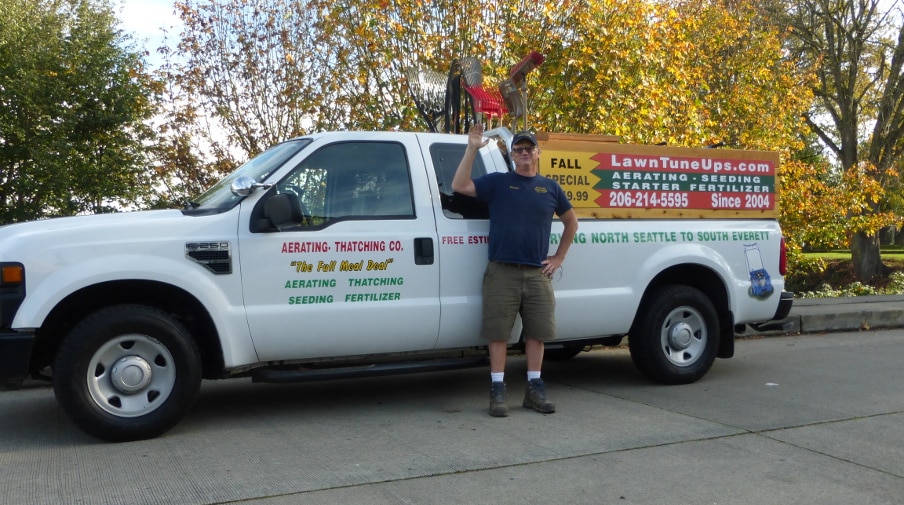
Article by
Stewart Armour
Stewart Armour is an independent lawn restoration expert, educator, and owner of Aerating Thatching Co., serving the greater Seattle area since 2004. With more than two decades of professional experience restoring Western Washington lawns, Stewart specializes in diagnosing lawn problems, improving soil health, and developing long-term lawn renovation strategies. His education includes turf management studies, advanced golf course turf training, and continuing education through Wilbur-Ellis University, State Turf Facilities, Soil First Academy, and Golf Course Applied Turf Physiology. Every article published on LawnTuneUps.com is grounded in practical field experience, current turf science, and a commitment to helping homeowners understand the why behind every recommendation—not just what to do.
Stewart has personally evaluated thousands of residential lawns throughout the Seattle area and remains committed to helping homeowners understand the science behind growing healthier, more resilient lawns.