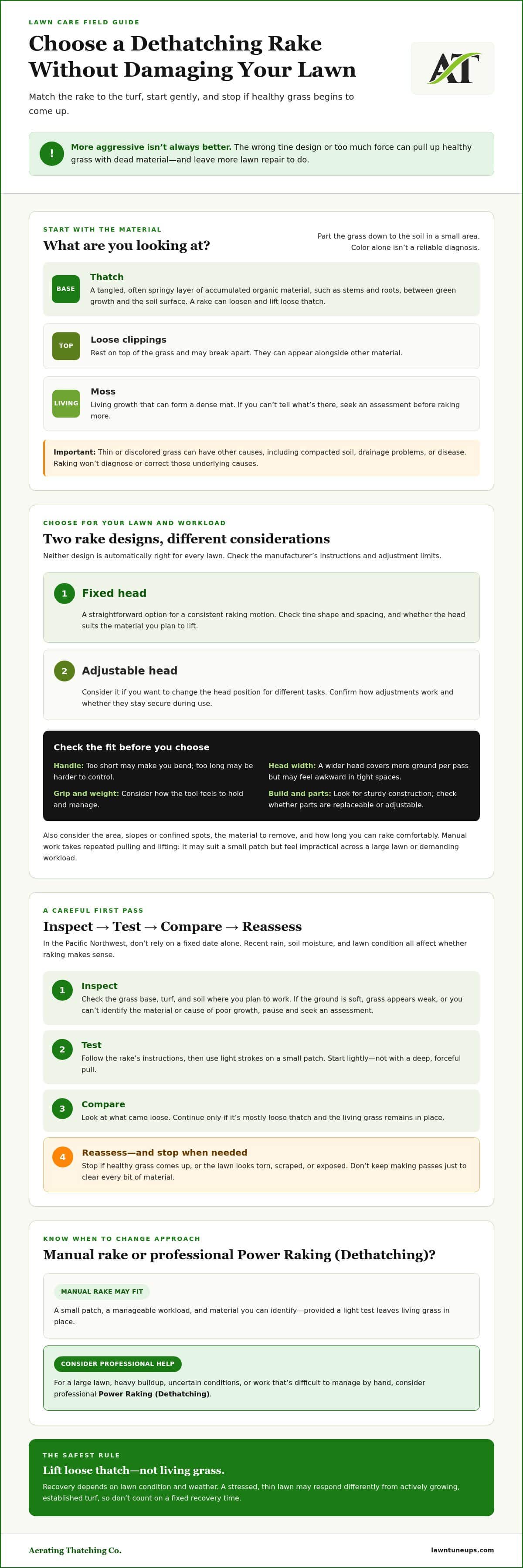
A more aggressive dethatching rake isn’t always the better choice. The wrong tine design or too much force can pull up healthy grass along with dead material, leaving you with more lawn repair to do. If you’re unsure which rake suits your yard, that’s a fair concern.
This guide explains how to choose a dethatching rake based on its tine design, your lawn’s condition, and the effort you can manage. You’ll learn how to check for thatch, rake carefully, and recognize when a manual tool may not be enough. For a large area or heavy buildup, professional Power Raking (Dethatching) may be a better fit. The practical comparisons below can help you choose an approach that gives your lawn room to recover.
Key Takeaways
- Match a dethatching rake’s tine design and size to your lawn’s condition and the effort you can manage.
- Inspect the turf and test a small patch first. Stop if healthy grass starts coming up or the lawn looks disturbed.
- A rake can lift loose thatch, but it won’t identify every cause of thin or discolored grass.
- For a large lawn, uncertain conditions, or work that’s difficult to manage by hand, consider professional Power Raking (Dethatching).
What a Dethatching Rake Removes and What It Cannot Fix
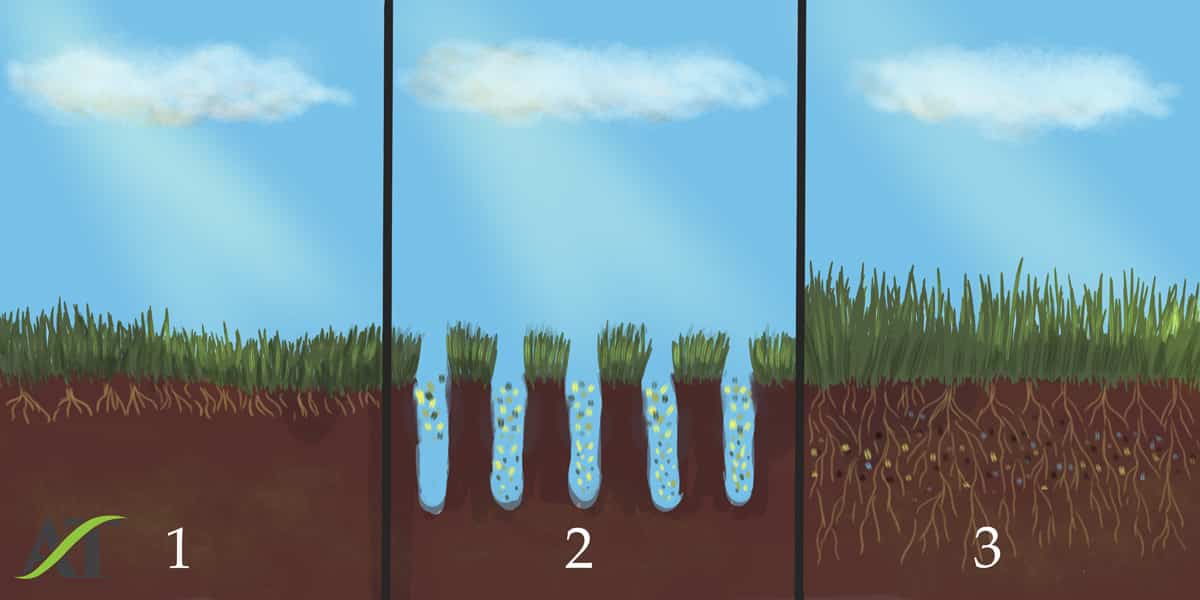
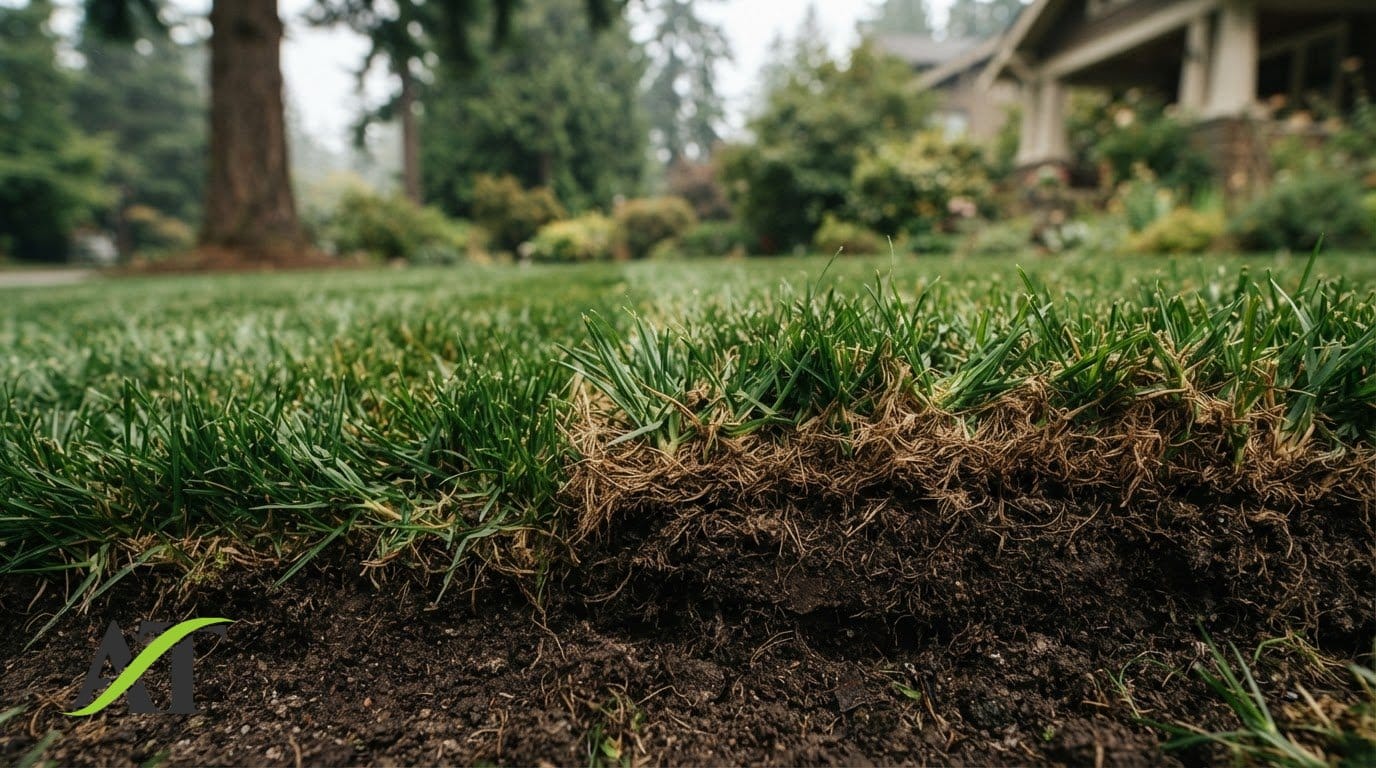
A dethatching rake is a hand tool with teeth designed to comb loose thatch and dead material from the base of grass without removing the soil. Thatch is a layer of accumulated organic material, such as stems and roots, between green growth and the soil surface. A dethatcher or lawn scarifier works through this material to loosen it so it can be lifted from the lawn.
Not every brown layer needs to come out. A rake can gather loose material, but it can’t diagnose why turf is thin or discolored. Compacted soil, drainage problems, disease, and other issues can look similar from above. Raking won’t correct those underlying causes.
How to tell thatch from moss or loose clippings
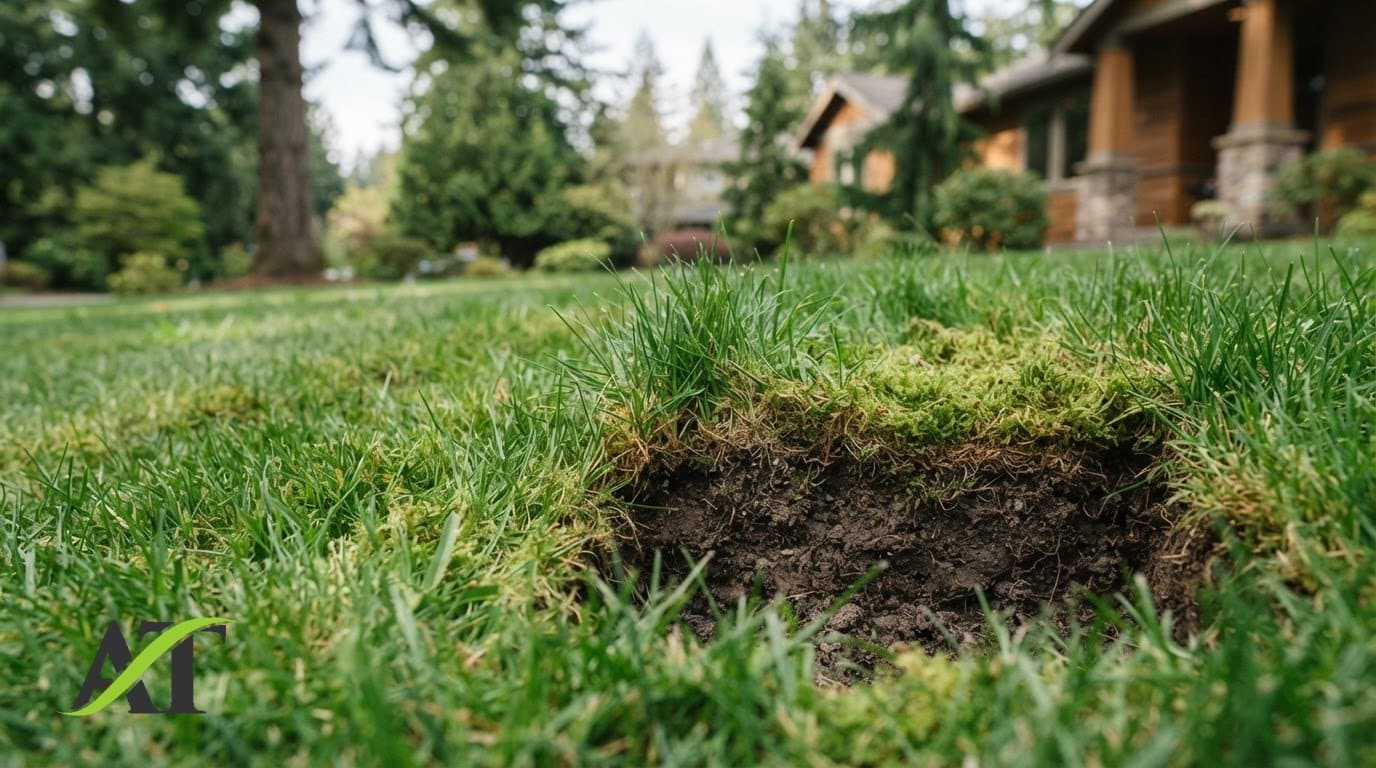
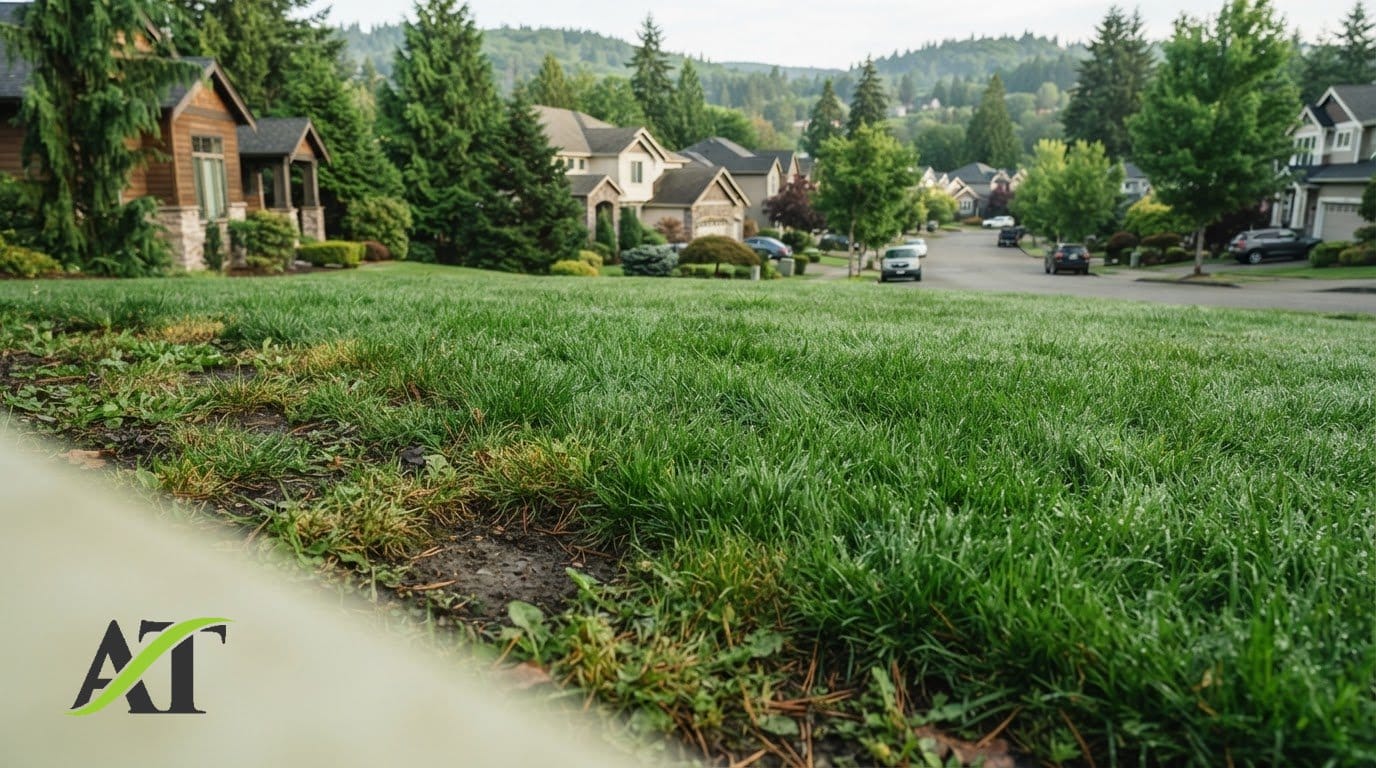
Part the grass down to the soil in a small area. Thatch sits at the base as a tangled, often springy layer. Loose clippings rest on top and may break apart. Moss is living growth that can form a dense mat. These materials may appear together, so color alone isn’t a reliable diagnosis. Check a small patch first. If you can’t tell what’s there, seek an assessment before raking more.
When raking may stress the lawn
Raking too forcefully, or raking when grass is already struggling, can disturb living blades and crowns along with dead material. Start lightly and watch what the teeth bring up. If you’re pulling healthy grass or exposing soil, stop and reassess rather than making repeated passes.
Recovery depends on the lawn’s condition and the weather. A stressed, thin lawn may respond differently from actively growing, established turf, so don’t count on a fixed recovery time. Aim to remove loose thatch without stripping the grass or treating a symptom whose cause remains unclear.
How to Choose a Dethatching Rake for Your Lawn and Workload
Choose by how you’ll use the tool, not by the longest feature list. A fixed head keeps the setup simple. An adjustable head lets you change the tine angle or working position, if the model allows it. Neither design is automatically right for every lawn. Check the manufacturer’s instructions to understand the intended use and adjustment limits.
Use this quick comparison as a starting point:
- Fixed head: A straightforward option for a consistent raking motion. Check the tine shape and spacing, and whether the head suits the material you plan to lift.
- Adjustable head: Consider it if you want to change the head position for different tasks. Confirm how adjustments work and whether they stay secure during use.
Which rake features matter most?
Before buying a dethatching rake, hold it if possible. A handle that feels too short may make you bend, while one that’s too long can be harder to control. Check the grip, overall weight, and head width. A wider head covers more ground per pass but may feel awkward in tight spaces. Look for sturdy construction, and check whether parts are replaceable or adjustable. Follow the maker’s guidance on tine shape, spacing, and use. For another approach, the University of Minnesota Extension explains how to remove thatch with a vertical mower.
Match the tool to the lawn, not just the listing
Consider the area you’ll cover, the material you need to remove, slopes or confined spots, and how long you can rake comfortably. Manual work takes repeated pulling and lifting. It may suit a small patch but feel impractical across a large lawn or a demanding workload. If you’re unsure whether manual raking is appropriate, you can request a lawn assessment before choosing how to proceed.
How to Use a Dethatching Rake Carefully in the Pacific Northwest
In the Pacific Northwest, don’t rely on a fixed date alone. Recent rain, soil moisture, and the lawn’s current condition all affect whether raking makes sense. The UMass Amherst description of thatch as a layer of living and dead stems, leaves, and roots can help you identify what you’re checking at the grass base. Follow your rake’s instructions, too.
What to check before the first pass
Look over the lawn for thin or stressed areas, and check the soil and turf where you plan to work. If the ground is soft or the grass appears weak, pause rather than assuming the calendar makes conditions suitable. Set the rake according to its instructions. Start with a light touch, not a deep, forceful pull.
What to do after a test patch
Work through this cautious sequence, and reassess before moving on.
- Inspect: Check the grass base and the lawn’s condition. If you can’t identify the material or the cause of poor growth, stop and seek an assessment.
- Test: Rake a small patch with light strokes.
- Compare: Look at what came loose. Continue only if it’s mostly loose thatch and the living grass remains in place.
- Reassess: Stop if healthy grass comes up or the lawn looks torn, scraped, or exposed. Don’t keep making passes just to clear every bit of material.
Weather and turf condition influence how the lawn responds, so there’s no fixed recovery period to count on. For related service guidance, look for Aerating Thatching Co.’s Professional Power Raking in Lynnwood: The Complete Guide to Lawn Dethatching. If you’re unsure which treatment fits your lawn, request an assessment before proceeding.
When a Dethatching Rake Is Not Enough: Consider Professional Power Raking
A manual dethatching rake can be practical for a small area you can inspect and work carefully. But a large lawn, heavy buildup, or uncertainty about what’s causing thinning may call for another step. If raking by hand isn’t manageable, don’t force the job. An assessment can help determine whether visible material is thatch and whether Power Raking (Dethatching) is appropriate.
What professional help can clarify
Professional Power Raking (Dethatching) is a service offered by Aerating Thatching Co., not a hand rake the company sells. An assessment can help distinguish buildup that may warrant removal from other lawn conditions that a rake won’t fix. It can also help clarify which service fits your lawn. The lawn restoration services overview explains the available options.
Check what each package includes. The Full Meal Deal includes Power Raking (Dethatching), Core Aeration, Overseeding, and Fertilizing. The Lawn Tune-Up includes Core Aeration, Overseeding, and Fertilizing. Power Raking (Dethatching) is not included in the Lawn Tune-Up.
Choose a next step that fits your lawn
If the lawn is extensive, the cause of poor growth is unclear, or you can’t rake without disturbing healthy turf, pause and get advice before doing more. A quote request gives you a way to describe the lawn’s condition and ask about local service. You don’t need to decide on a treatment before explaining what you’re seeing.
Choose a Careful Next Step for Your Lawn
Choose a dethatching rake based on the work your lawn needs and the effort you can manage. Check the grass base first, test a small patch, and rake lightly. If healthy grass comes up or the turf looks disturbed, stop and reassess. A rake can lift loose material, but it won’t explain every cause of thin or discolored grass.
For a large lawn, uncertain conditions, or work that’s difficult to handle by hand, an assessment can help you decide whether professional Power Raking (Dethatching) is appropriate. Aerating Thatching Co. is an owner-operated local business founded in 2004 that specializes in lawn restoration, including Power Raking (Dethatching). It serves North Seattle and surrounding communities. Describe what you’re seeing and ask about a suitable next step.
With a careful approach and the right guidance, you can give your lawn a better chance to recover without doing more than it needs.
Frequently Asked Questions
What is the difference between a dethatching rake and a regular leaf rake?
A dethatching rake has firm tines shaped to reach into the grass base and loosen thatch. A leaf rake usually has more flexible, spread-out tines for gathering leaves and loose clippings from the surface. Designs vary, so check the manufacturer’s instructions. A leaf rake can clear surface debris, but it isn’t designed to comb embedded material from the base of the turf.
Can a dethatching rake damage healthy grass?
Yes. Pulling too hard or repeatedly can disturb living grass along with dead material, especially if the lawn is already stressed. Test a small patch with light strokes first. Check what comes loose and how the turf looks. Stop if healthy grass is being pulled up or the surface becomes visibly disturbed. Weather and lawn condition affect recovery, so there’s no fixed recovery time.
How do I know if my lawn needs dethatching?
Part the grass and inspect the layer between green growth and soil. Thatch is tangled organic material at the grass base; clippings sit on top, while moss is living growth. Don’t diagnose by color alone. Washington State University Extension advises removing thatch when it exceeds half an inch, while a thinner layer can be beneficial. If you’re unsure what you’re seeing, seek an assessment before raking.
Is a manual dethatching rake enough for a large lawn?
It may not be practical. Manual raking takes repeated physical effort, and covering a large area can be demanding. Aerating Thatching Co. offers professional Power Raking (Dethatching) in North Seattle, Shoreline, Edmonds, Lynnwood, Mill Creek, Bothell, Kenmore, Lake Forest Park, Mountlake Terrace, Snohomish, Everett, Brier, Woodway, Green Lake, Ballard, and Greenwood. If the work feels unmanageable, consider an assessment.
When should I use a dethatching rake in the Pacific Northwest?
Choose a period when the grass is actively growing, but judge the lawn’s actual condition rather than relying on a calendar. Early spring or early fall may suit cool-season lawns, but local weather and soil conditions vary. Avoid raking turf that appears stressed or is easily disturbed. Check the grass base first, follow your rake’s instructions, and test a small patch before continuing.
Article by
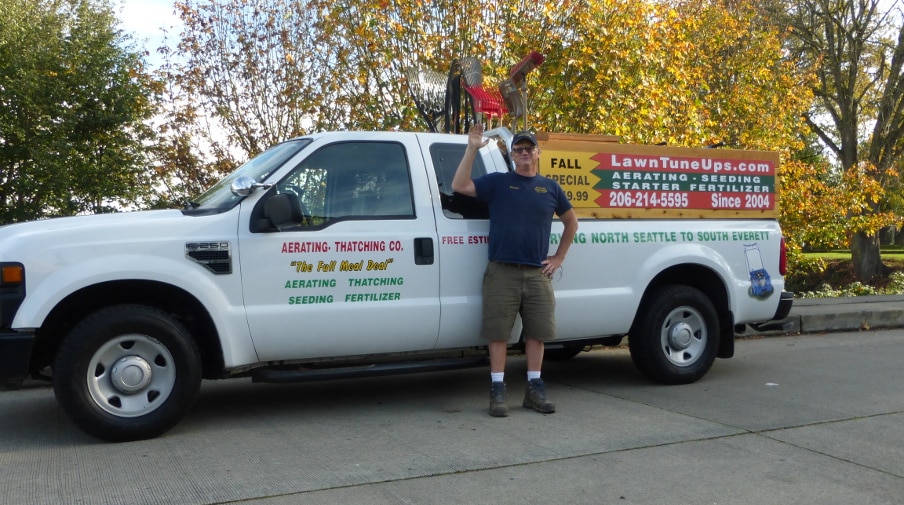
Stewart Armour
Stewart Armour is an independent lawn restoration expert, educator, and owner of Aerating Thatching Co., serving the greater Seattle area since 2004. With more than two decades of professional experience restoring Western Washington lawns, Stewart specializes in diagnosing lawn problems, improving soil health, and developing long-term lawn renovation strategies. His education includes turf management studies, advanced golf course turf training, and continuing education through Wilbur-Ellis University, State Turf Facilities, Soil First Academy, and Golf Course Applied Turf Physiology. Every article published on LawnTuneUps.com is grounded in practical field experience, current turf science, and a commitment to helping homeowners understand the why behind every recommendation—not just what to do.
Stewart has personally evaluated thousands of residential lawns throughout the Seattle area and remains committed to helping homeowners understand the science behind growing healthier, more resilient lawns.