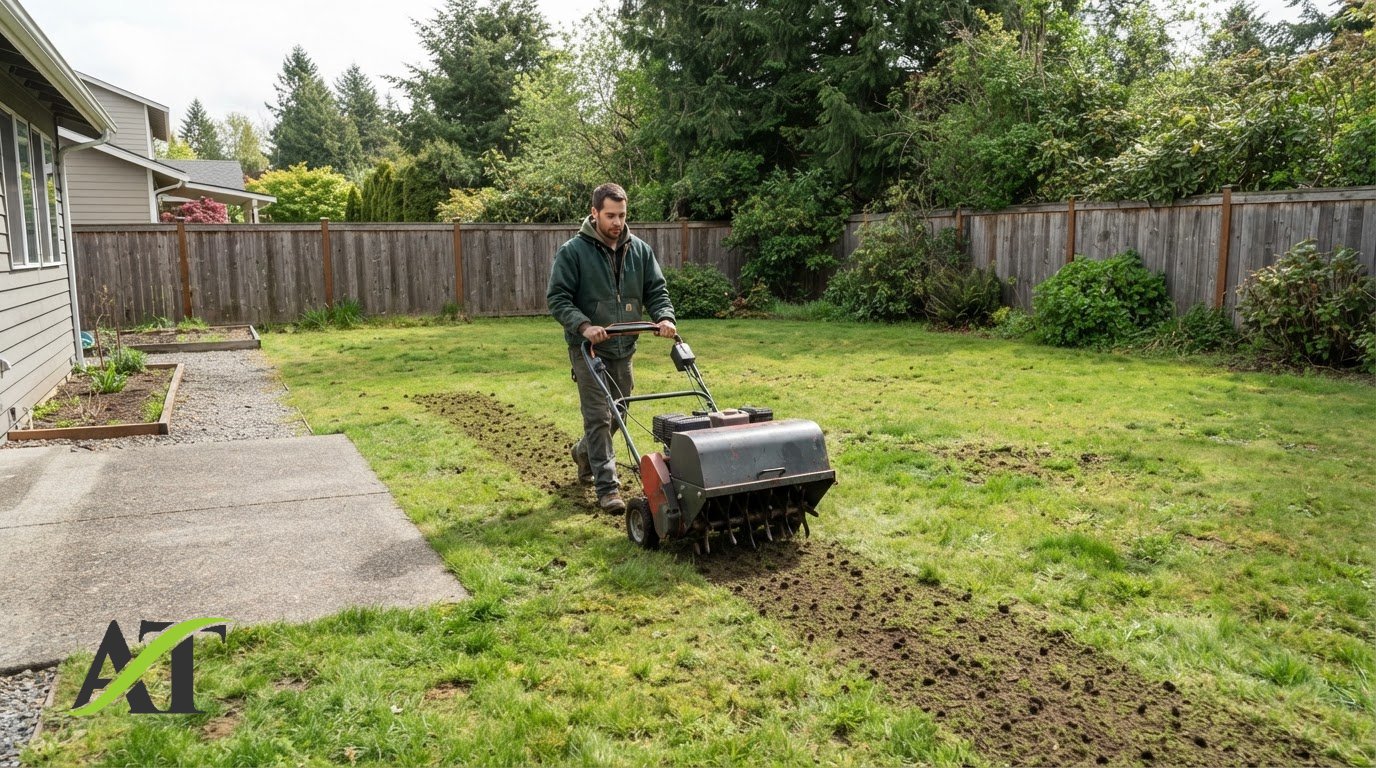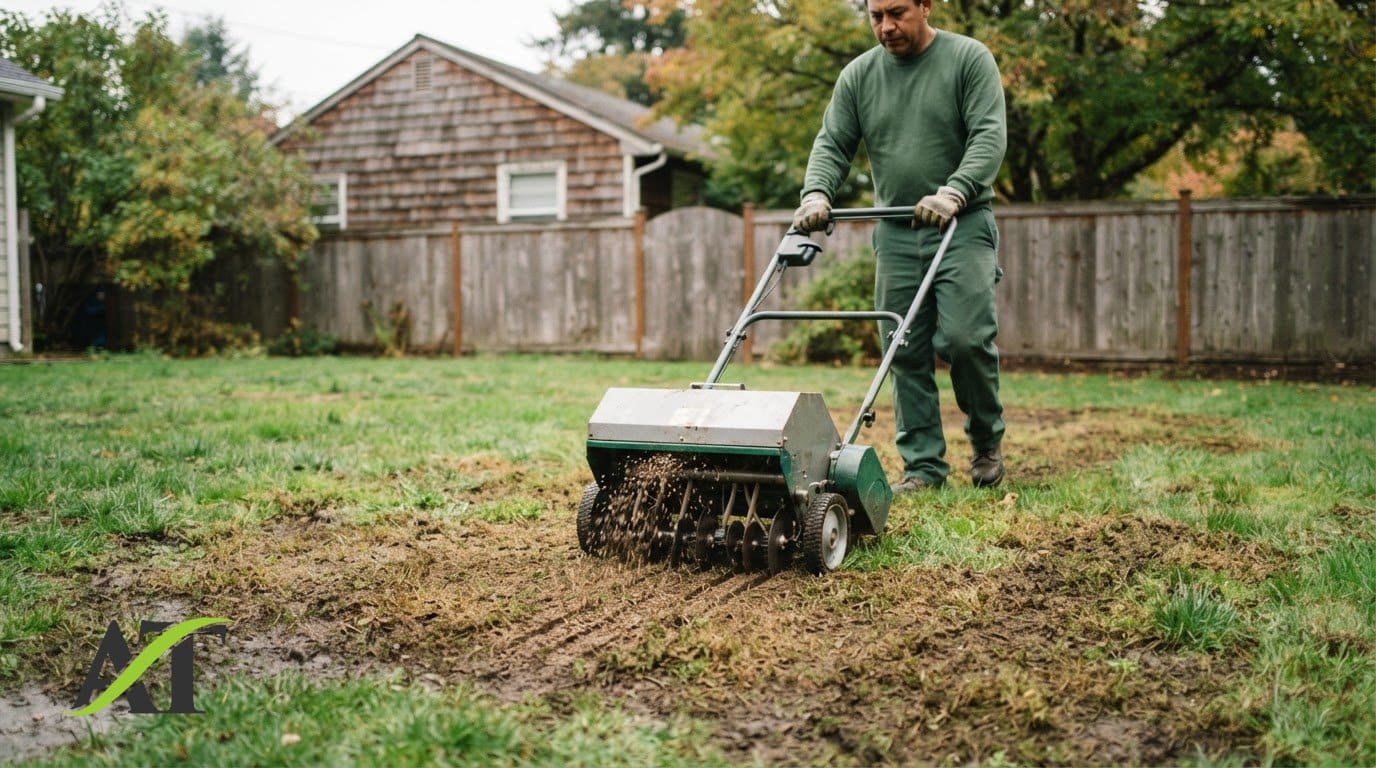
A damaged lawn may point to a problem beneath the grass. European chafer grubs feed on grass roots, leaving dead patches and weakened turf. Effective repair starts with checking the roots and judging how much turf needs attention.
Thinning or bare spots are easy to mistake for ordinary lawn stress. When grubs have damaged the roots, reseeding alone may not address the cause.
This guide explains what chafer beetles are, how to recognize European chafer damage, and what to consider when repairing affected areas. It also covers practical ways to support thicker turf and reduce the risk of future damage.
Key Takeaways
- European chafer grubs feed on grass roots, and damage may become most noticeable from autumn into spring.
- Certain signs in the turf can help distinguish grub damage from other causes of thinning or bare patches.
- The condition of the damaged area decides how to repair it.
- Prevention starts with matching the response to the actual cause.
1. What are chafer beetles and why should I care?
European chafer beetles damage lawns during their grub stage, not by chewing visible grass blades. The grubs feed underground on roots. Turf weakens until patches thin, brown, or lift easily. Damage often becomes clearest from autumn through spring, when root loss leaves grass poorly anchored. The European chafer beetle life cycle explains the stages in more detail.
Grubs begin feeding in August and continue into fall. They may keep feeding through winter and into spring, until late May. Adult beetles emerge in late spring. After mating, females lay eggs beneath the grass. The eggs hatch, and young grubs start feeding on roots. That is why visible damage can appear well after egg-laying.
How do you check for grubs before repairing? Lift a small section of turf along a damaged edge. Examine the soil and roots. Look for pale, curled larvae and weakened roots. Loose turf alone doesn’t confirm chafer damage. Compare the area with healthy turf, since shade, irrigation problems, compaction, and drainage can also thin grass.
Are there pesticide rules? Rules depend on the product and how it is used. Read the label and don’t assume one rule fits every control method.
Which grass seed blend fits Lynnwood? No single blend suits every lawn. Choose based on sun exposure, existing turf, and soil conditions. A shaded area and a sunny, worn patch may need different mixes.
Who repairs the damage? Chafer control and lawn repair are separate needs. Reseeding restores bare ground, while pest treatment addresses grubs. Aerating Thatching Co., covered below, handles the turf restoration side. Keep the two needs distinct when planning your next step.
2. Identifying European chafer beetle lawn damage
Look for irregular thinning or dead grass rather than a clean-edged pattern. Grubs damage roots below the surface, so affected turf may feel loose and lift more easily than healthy grass. As roots are lost, damage can spread, leaving bare soil among surviving blades. A brown patch alone doesn’t identify the cause.
Timing offers another clue. Beetles flying over a lawn in summer can signal activity. Adults alone don’t prove grubs are damaging the turf. Compare seasonal signs with what is happening below the grass.
Inspect the boundary between damaged and healthy turf, where roots and soil are easier to compare. European chafer grubs are pale, curved larvae. Straightened, they can reach 18 mm. Check whether damaged turf has weakened roots and whether similar larvae appear in nearby soil. A single grub is a clue, not a measure of how much lawn needs repair.
Rule out similar-looking problems before settling on a diagnosis. Compaction can make soil difficult for roots to penetrate. Thick thatch sits above the soil and restricts air and water movement. Shade may leave grass sparse in predictable areas, and poor irrigation can cause uneven growth. Persistent wetness or runoff may point to drainage issues. These problems can overlap with grub damage, so one patch may have more than one cause. The guide to finding the causes of thinning grass walks through these clues.
Note where patches occur, how they change, and whether the turf lifts easily. This pattern helps separate root loss from surface thatch or a watering problem before repair begins.
3. Preventing future chafer beetle damage
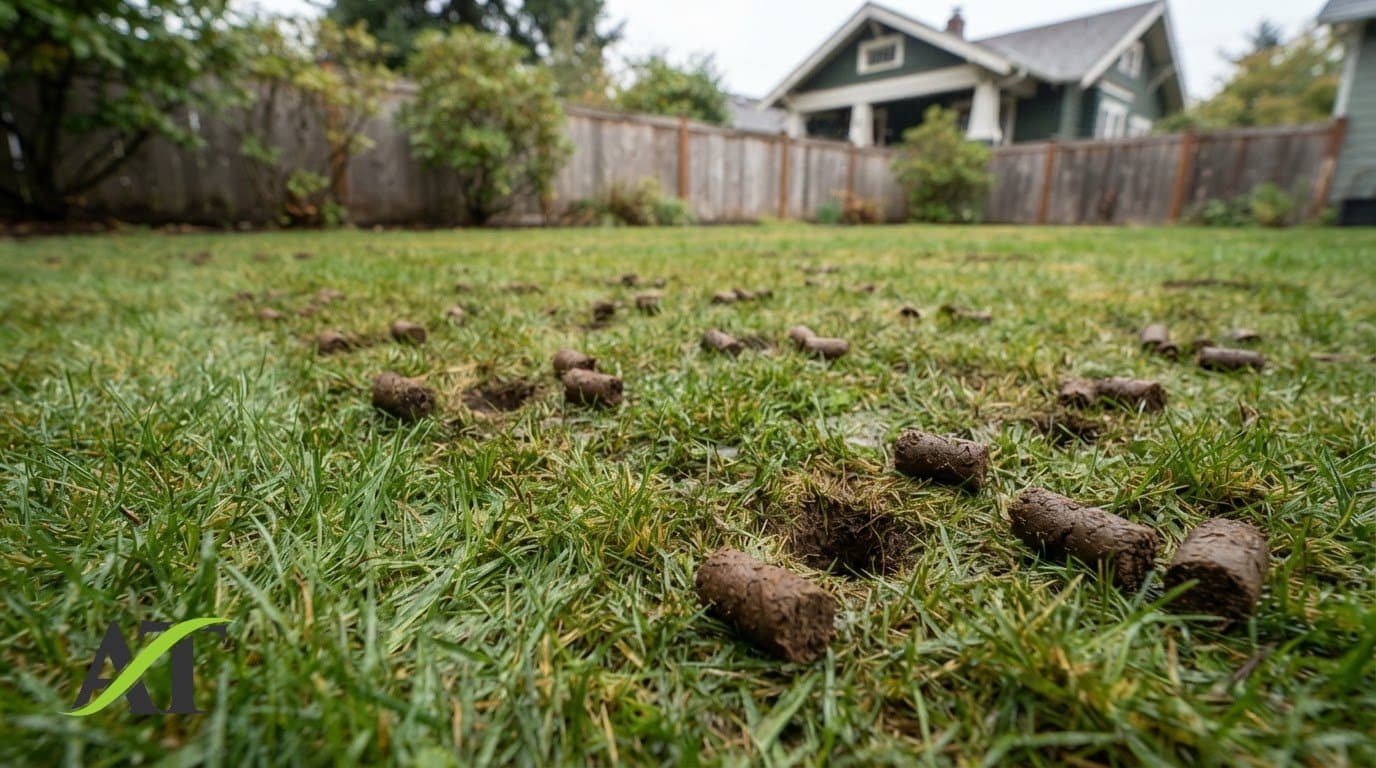
Routine care doesn’t guarantee chafer prevention. Focus on conditions you can improve, such as compacted soil, excessive thatch, uneven watering, and weak turf. Each needs a different response. Core Aeration addresses compaction in the shallow turf root zone. It won’t correct deep hardpan or a subsurface drainage defect, and it is not a grub-control method.
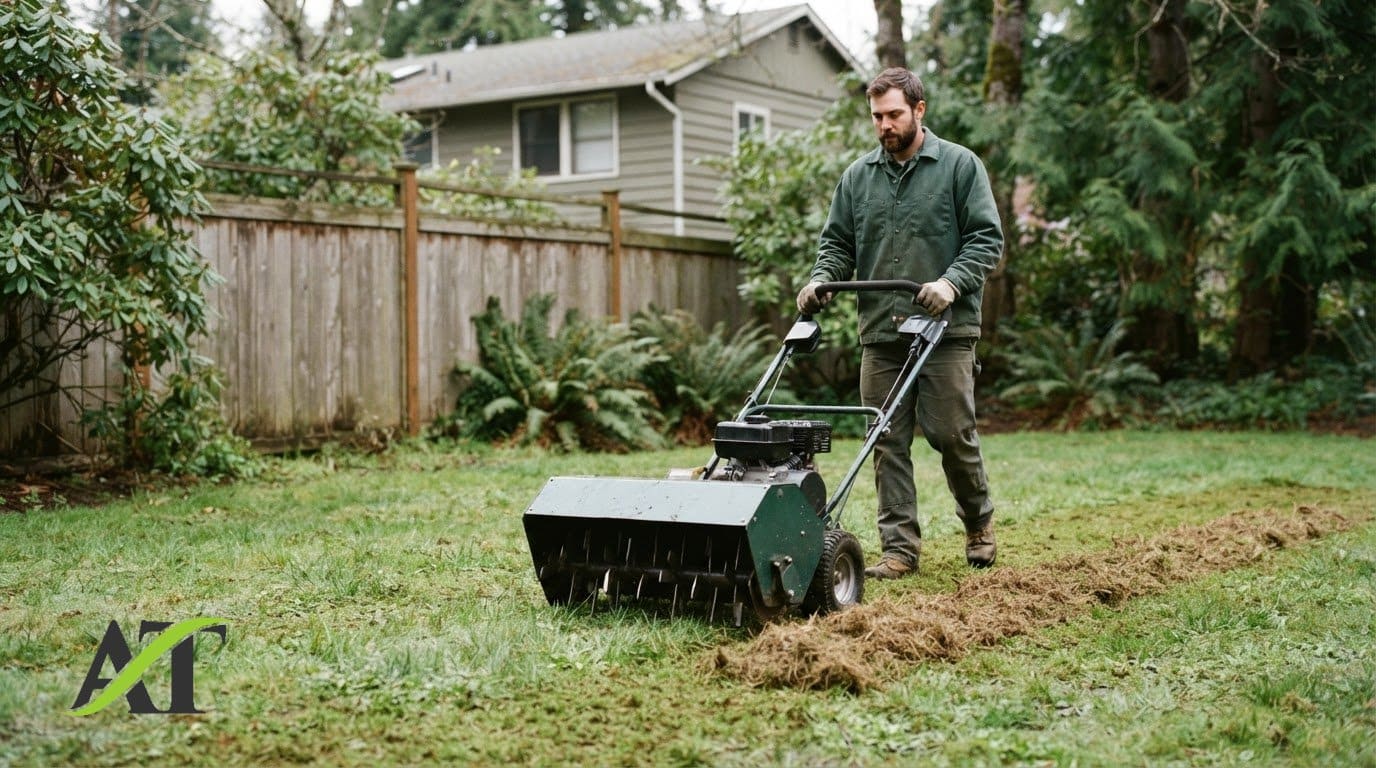
Thick thatch is a separate issue. When dead stems and roots form a dense layer above the soil, Power Raking (Dethatching) can remove the buildup. Inspect the thatch first. Neither service replaces diagnosis when water pools or turf stays wet.
Timing matters for biological control. Beneficial nematodes are used against chafer grubs from July to early September. Follow the product directions for application and watering, and keep the lawn consistently watered for at least two weeks afterward. Dry soil after treatment can undermine the conditions nematodes need.
Preventive grub treatments are commonly timed from mid-June to mid-July, before young grubs cause later root damage. Product choice, timing, and watering instructions matter, so read the label carefully. Don’t assume a treatment for one grub species works equally well against European chafer grubs. Avoid combining products unless their directions allow it. The WSU Extension’s chafer beetle management guide covers identification and management for western Washington.
In June, maintain even moisture rather than letting turf become stressed. Watering deeply and less often encourages roots to grow down, while frequent light watering keeps moisture near the surface. Match watering to rainfall and soil conditions. Don’t leave saturated areas standing. A seasonal lawn-care calendar can help organize care through the year.
Reassess the lawn before repeating any treatment. If bare patches persist despite healthy roots, investigate shade, irrigation, thatch, compaction, or drainage. Prevention works best when the response matches the actual cause.
4. How to identify chafer beetle grub damage in a Lynnwood lawn?
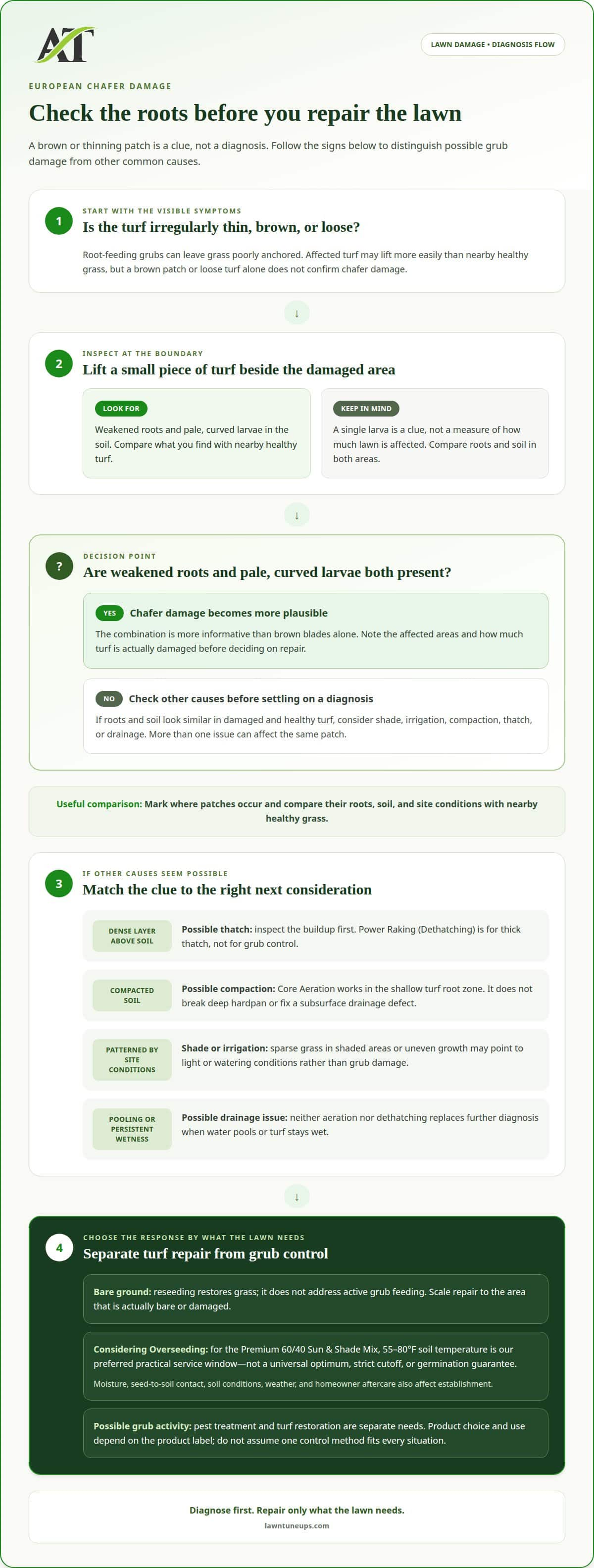
Start with a simple lawn map. Mark each bare or thinning patch and note whether it is in sun, shade, or a low spot. A pattern limited to shaded turf may point to insufficient light. Damage across different exposures calls for a closer look below the surface.
At the edge of a damaged patch, gently lift a small piece of turf. Check whether roots remain attached and whether the grass comes away unusually easily. Then inspect the soil beneath it for pale, curved grubs. Root loss together with larvae makes chafer damage more plausible than brown blades alone.
Compare your findings with nearby healthy grass. If larvae and weakened roots occur only in affected areas, that contrast helps connect the symptoms to grub feeding. If both areas look alike belowground, consider other causes before treating the whole lawn. Grub presence alone doesn’t show how much turf has been harmed.
Look at the surface, too. A thick, springy layer between grass blades and soil suggests thatch, not root-feeding damage. Hard, compacted ground can restrict root growth. Persistent puddles or runoff suggest a drainage concern. Sparse grass under a tree may reflect shade. These issues can coexist, so don’t rely on one clue.
Raccoons may dig up sections of lawn at night while searching for grubs, and crows may eat grubs during the day. Birds or animals pulling at turf can draw attention to a damaged area, but torn grass isn’t proof of chafer grubs. Confirm by inspecting roots and soil. Note where you checked and what you found, especially if damage appears in separate parts of the lawn.
The repair depends on the diagnosis. Thin turf with intact roots differs from loose turf with missing roots, and neither pattern alone explains standing water. If the signs conflict or the lawn keeps declining, get further diagnosis before choosing a repair.
Aerating Thatching
Aerating Thatching Co. can help restore thin turf after chafer grub damage has been addressed. The right next step depends on what remains: bare soil, weakened grass, compaction, or another unresolved problem. If grubs are still active, turf restoration alone won’t stop further root feeding.
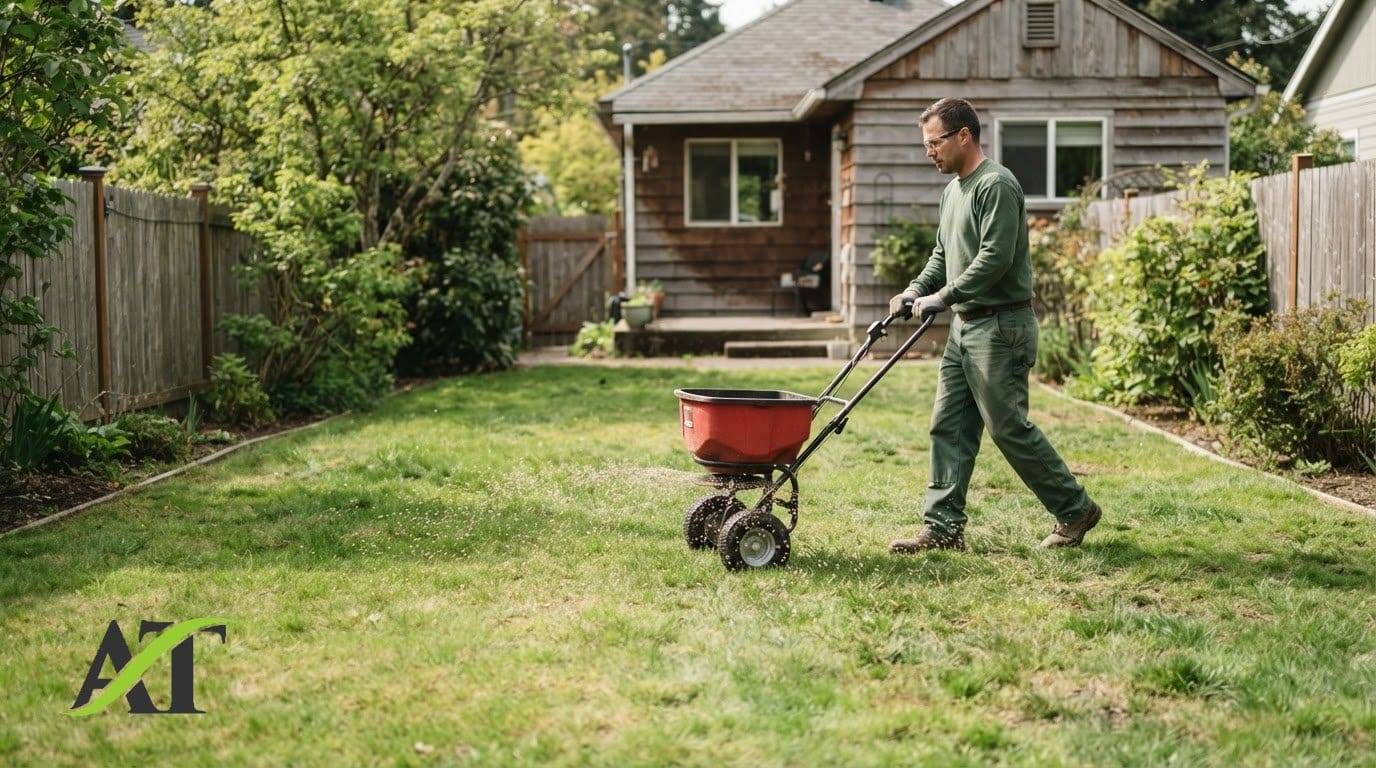
For areas ready for recovery, the Lawn Tune-Up combines Core Aeration, Premium Overseeding, and Starter Fertilizer. Core Aeration relieves compaction in the shallow turf root zone, while overseeding adds grass where coverage has thinned. These steps address turf condition, not pest control or drainage defects. Results depend on watering, weather, and soil, and aftercare matters. The aftercare guide explains what to do next.
If the cause of poor growth is unclear, identify it before choosing a repair. A smaller service, or no service, may be the better fit.
Choose a Repair Plan That Fits Your Lawn
Your next decision is how to track recovery, not simply how much seed to add. Before work begins, note where bare ground ends, which areas still have living grass, and whether thinning continues. These notes show whether the repair is filling in or the underlying problem remains.
Keep the goal specific: restore damaged turf without treating every part of the yard alike. A patch that stays thin may need a different response from an area with stable coverage. If symptoms continue, revisit the cause before repeating the same repair.
Use your observations to discuss the repair scope and priorities, such as filling bare spots or improving thin coverage.
Frequently Asked Questions
What are chafer beetles and why should I care?
European chafer beetles harm lawns during their larval stage, when grubs feed on roots below the grass. Seeing adult beetles doesn’t show how much root damage a lawn has. Treat adult activity as a reason to watch for turf changes, then base repair decisions on the lawn’s condition.
What are chafer grubs?
Chafer grubs are the larval stage of chafer beetles. They live in soil and feed on grass roots, which can leave turf weakly attached. Finding grubs can help explain damaged turf, but the extent of root loss also matters when choosing a repair.
How do I repair a lawn after chafer beetle damage?
First determine whether the area is thin or completely bare. Remove loose dead grass, prepare exposed soil for seed contact, and overseed where coverage is missing or weak. Keep seeded soil consistently moist as seedlings establish. If grubs are still feeding, turf repair alone won’t address ongoing root damage.
When is the best time to reseed a damaged lawn in Lynnwood, Washington?
Mid to late spring and early fall are practical times for repair, depending on weather, soil conditions, and active growth. Choose based on the damaged area and remaining turf. Successful overseeding also depends on seed-to-soil contact, moisture, and aftercare.
What treatments control chafer beetle grubs in Washington, and when should they be applied?
Beneficial nematodes are a biological control used against chafer grubs, applied from July to early September. Keep the lawn consistently watered for at least two weeks after application and follow the product directions. Check that the label names chafer grubs as a target. Repairing turf doesn’t control grubs.
Should I reseed, lay sod, or replace the soil after grub damage?
Reseeding may suit thin turf or smaller bare patches, while large areas of destroyed grass may be better candidates for new sod. Soil replacement isn’t automatically necessary because grubs damage grass roots. Consider the soil only if a separate soil problem is affecting growth. See how to choose between overseeding and sod.
Article by
Stewart Armour
Stewart Armour is the owner of Aerating Thatching Co., an owner-operated Seattle-area lawn restoration business established in 2004. He helps homeowners understand Core Aeration, Power Raking (Dethatching), Overseeding, soil conditions, and the aftercare needed for stronger lawns. His background includes turf management study, advanced golf course turf training, and continuing education through Wilbur-Ellis University, State Turf Facilities, Soil First Academy, and Golf Course Applied Turf Physiology. Stewart has personally evaluated thousands of residential lawns throughout the Seattle area and focuses on recommending the work that fits each lawn’s condition.