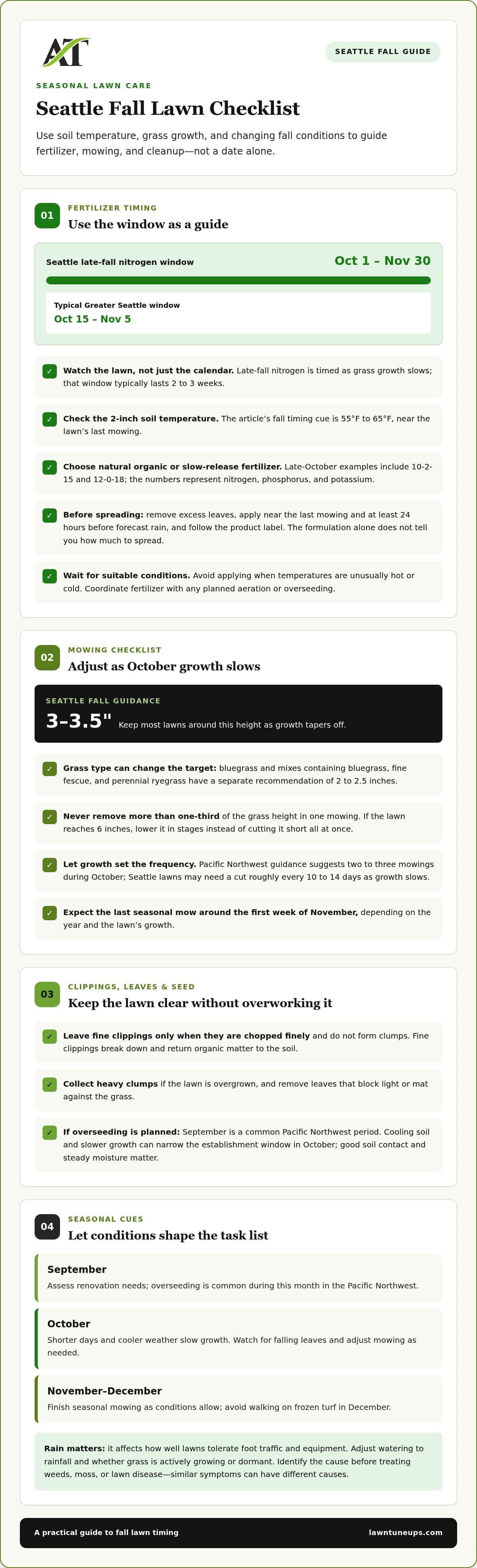
A lawn care calendar for Seattle weather puts late-fall nitrogen between October 1 and November 30, timed near the last mow when 2-inch soil temperatures are 55°F to 65°F. Choose a natural organic or slow-release fertilizer, and let soil temperature and grass growth guide the timing, not a date alone.
Seattle’s fall schedule can feel hard to pin down: growth slows, rain returns, and October mowing needs to adjust. The useful part is knowing what to watch. This guide explains when to fertilize and what type to use, how to change mowing as growth tapers off, and how soil temperature helps you time fall lawn care. You’ll also see how the calendar shifts as the season moves toward winter, so you can make practical decisions for your lawn without treating every fall day the same.
Key Takeaways
- Time late-fall fertilizer around soil temperature and your lawn’s last mow; late-October formulas may use an NPK ratio such as 10-2-15 or 12-0-18.
- As October growth slows, reduce mowing frequency and keep the lawn near 3 to 3.5 inches rather than cutting it short.
- Use soil temperature, shorter days, and changing grass growth to guide fall work instead of relying on a fixed date alone.
- When a thin or compacted lawn needs more than routine seasonal care, learn how Core Aeration, Overseeding, and Fertilizing fit into a Lawn Tune-Up.
When should fall fertilizer go down – and what kind?
A lawn care calendar for Seattle weather uses soil conditions and grass growth to guide fall fertilizer timing. Cool-season grass is turf that grows during cooler parts of the year. In Seattle, its late-fall nitrogen window runs from October 1 through November 30, while the typical Greater Seattle window is October 15 through November 5. Late October can fit, but check the lawn before applying.
Late-fall nitrogen is fertilizer nitrogen applied as grass growth slows. Apply late-fall nitrogen when soil and grass conditions indicate the lawn is entering its slower-growth period. That window typically stays open for 2 to 3 weeks. Plan around the lawn’s growth and last mowing, rather than treating a calendar date as a guarantee that conditions are right.
Fertilizer formulation describes the proportions of nutrients in a product. Late-October examples include 10-2-15 or 12-0-18, where the numbers represent nitrogen, phosphorus, and potassium. Seattle-area lawns should receive natural organic or slow-release fertilizer. Follow the product label for application directions; the formulation alone doesn’t tell you how much to spread.
Organic fertilizer is made from organic materials, while slow-release fertilizer supplies nutrients over time. Either type can suit fall lawn care in the Pacific Northwest. Apply near the last mowing and at least 24 hours before forecast rain. Apply fertilizer only when conditions are suitable for the lawn, and wait if temperatures are unusually hot or cold.
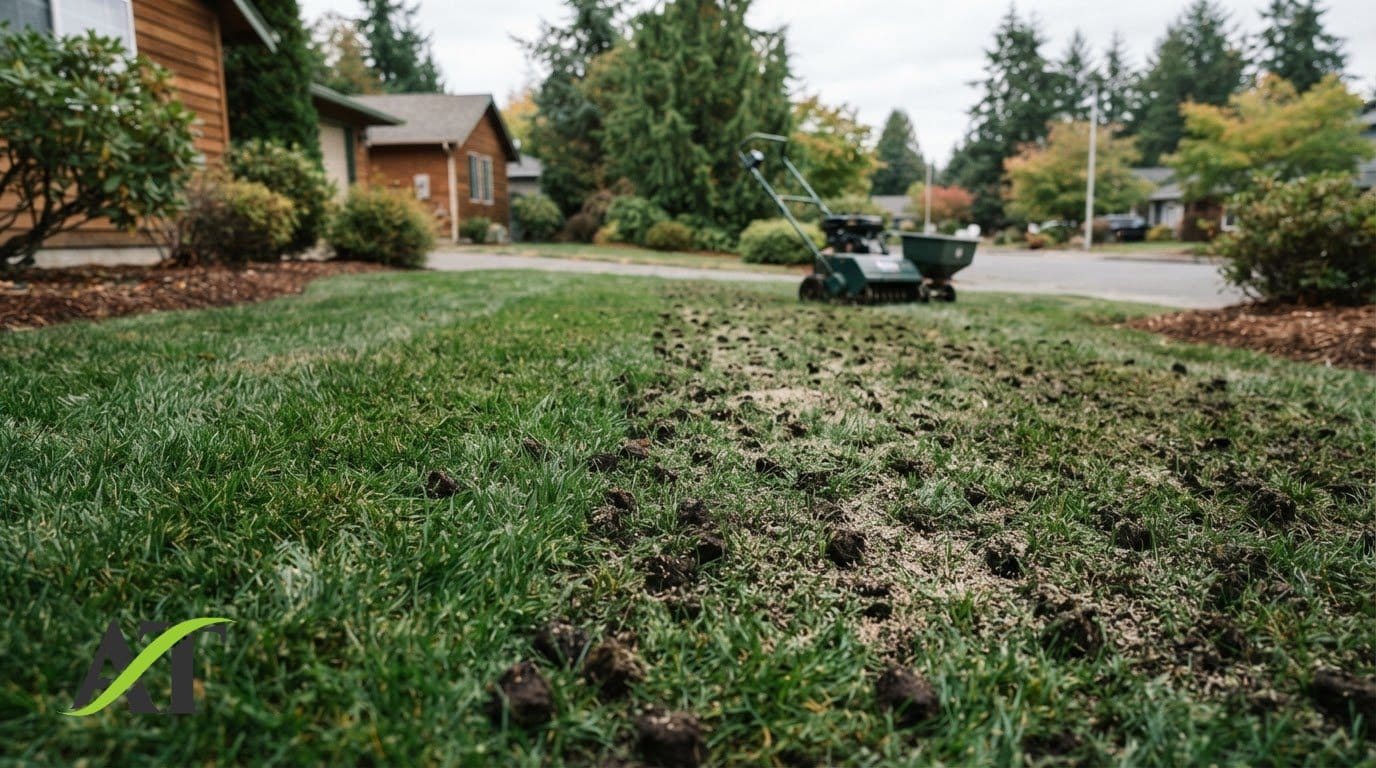
Before spreading fertilizer, remove excess leaves so it reaches the ground. If aeration or overseeding is also planned, coordinate those tasks rather than treating each as a separate calendar appointment. A lawn care calendar for Seattle weather can help organize that sequence. The Seattle lawn care calendar puts fall work in seasonal context.
What changes about mowing height in October?
October mowing height is the length of grass left after each cut. Seattle fall guidance recommends keeping lawns at 3 to 3.5 inches as growth slows. That’s taller than a close summer cut, and it helps avoid removing too much leaf blade at once. Never remove more than one-third of the grass height in a single mowing. If a lawn has grown to six inches, lower it in stages instead of cutting it short all at once.
Cool-season grasses are turf types that grow well through cooler seasons. Fine fescue, perennial ryegrass, and some mixed lawns have a separate recommendation: mow them to 2 to 2.5 inches. Grass type matters, so don’t apply one height to every lawn. In October, let the lawn’s growth rate guide mowing frequency; Pacific Northwest guidance suggests two to three mowings during the month. Seattle lawns may need cuts roughly every 10 to 14 days as growth slows.
Grasscycling means leaving fine clippings on the lawn after mowing. They break down and return organic matter to the soil. Leave them only when the mower chops them finely and they don’t form clumps over the grass. If the lawn is overgrown, mow in stages and collect heavy clumps to avoid smothering turf. In fall, also remove leaves that block light or mat against the grass.
Fall grass seed selection means choosing seed suited to the lawn’s grass type and growing conditions. September is a common overseeding period in the Pacific Northwest, while cooling soil and slower growth can narrow the establishment window in October. Seed choice alone isn’t enough: good soil contact and steady moisture matter. Keep the seedbed from drying out without leaving it saturated.
Seattle’s last seasonal mow often falls in the first week of November, depending on the year. Use the Seattle lawn care calendar to place mowing alongside other seasonal tasks. If you’re unsure how your lawn’s grass type affects its fall cut, ask about your lawn.
How does the Pacific Northwest fall lawn calendar actually work?
A lawn care calendar for Seattle weather should follow seasonal growth, soil moisture, and changing conditions. Use the calendar as a guide, then adjust tasks to your lawn’s needs.
Seattle Fall Weather Cues
Seasonal cues help you decide when to shift lawn tasks. Shorter days and cooler October weather slow grass growth around Seattle. Rain also affects how well lawns tolerate foot traffic and equipment. Before treating weeds, moss, or lawn disease, identify the problem: similar symptoms can have different causes, and pesticide labels specify how products may be used.
Western Washington Seasonal Lawn Care
Seasonal lawn care means adjusting your routine as western Washington conditions change. Watering needs depend on rainfall and whether the grass is actively growing or dormant. In May, lawns may need an inch of water weekly from rain or irrigation. Established lawns should receive no more than two to three waterings a week in hot conditions. These are scheduling cues, not universal rules for fertilizer, pesticides, or watering.
Cool-Season Fall Nitrogen
Cool-season fall nitrogen is a late-season feeding for grasses that grow in cooler weather. For Washington cool-season lawns, apply spring fertilizer after two to three mowings, once the grass is actively growing. Avoid fertilizing during hot, dry weather. In fall, plan around soil and growth conditions rather than assuming one calendar date works for every lawn.
Month-by-Month Seattle Lawn Tasks
A month-by-month calendar connects lawn tasks with seasonal conditions. January: stay off frozen grass. February: avoid muddy areas and rake debris when dry. March: resume mowing as growth returns. April: mow as growth requires. May: manage watering and spring growth. June: adjust watering to heat. July: avoid fertilizer in hot, dry weather. August: prepare for fall tasks. September: assess renovation needs. October: watch for slower growth and falling leaves. November: finish seasonal mowing. December: avoid frozen turf.
Soil temperature and growing degree days
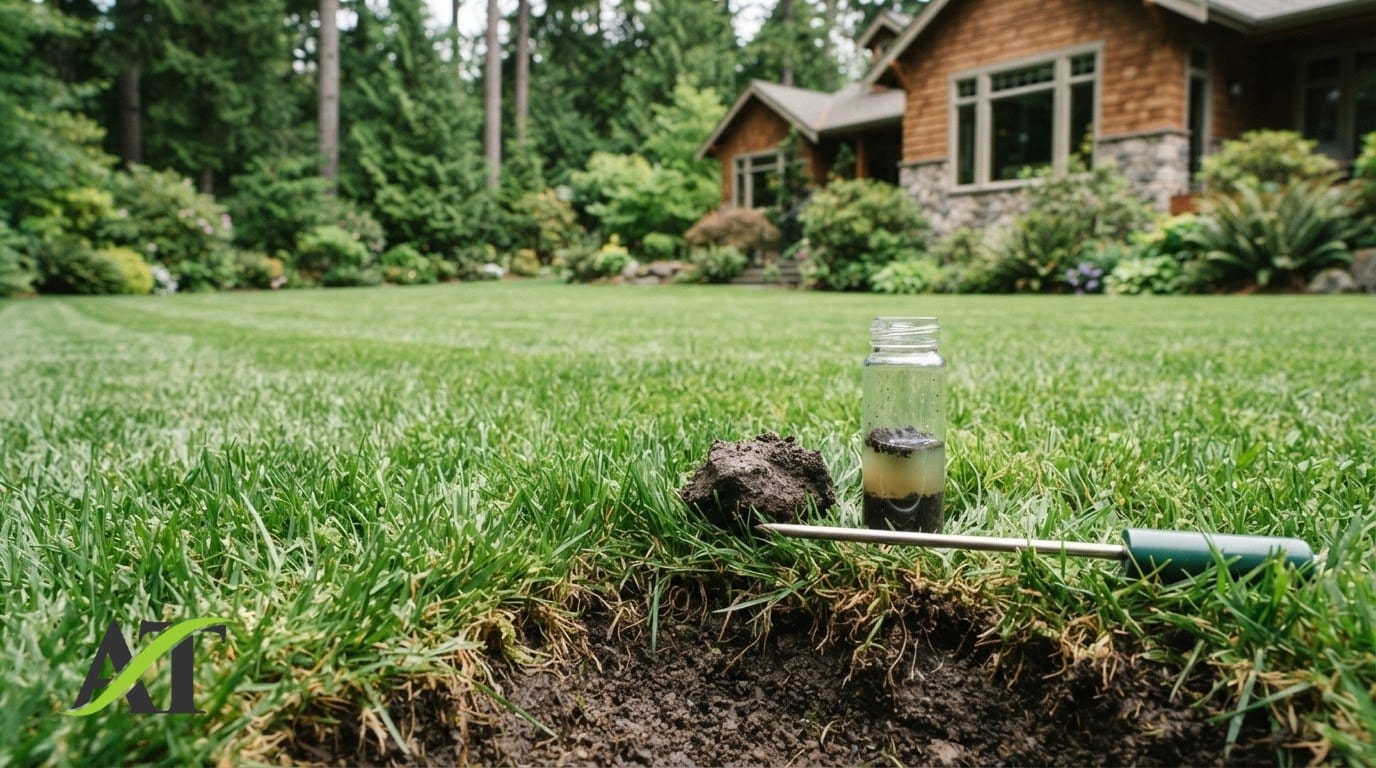
Soil temperature is the warmth measured below the lawn surface, where roots and seeds respond. Check the 2-inch reading when deciding whether conditions suit fall work; afternoon air temperature alone can mislead. Soil temperature can help guide fall core-aeration timing.
Growing degree days estimate accumulated warmth that supports plant growth. In the Seattle area, grass growth usually starts in late March or April when average maximum daily temperatures rise above 50 degrees. Growth is fastest around 70 to 75 degrees, typically in May and early June. These air-temperature patterns help explain seasonal growth, but they do not replace soil readings for fall timing.
A modeled soil-temperature reading estimates conditions from a monitoring location rather than measuring every lawn. On October 26, 2026, Seattle’s reported 2-inch soil temperature was 52°F, 3°F above normal for that date. The reading came from the Quinault 4 NE sensor, 69 miles west of Seattle. Use it as regional context, not an exact measurement for your yard.
Thatch is a layer of old roots and stems between green grass and soil. In western Washington, dethatch when it exceeds one-half inch; March is the recommended period, usually before mid-April. Fall is a good time to assess the layer and plan work, not to assume every lawn needs dethatching. Compaction, shade, and drainage can also weaken turf, and each calls for a different response.
Soil testing identifies pH and nutrient conditions that guide amendments. Seattle’s fall soil-testing window runs September 1 through November 30. Apply lime only when a soil test shows pH below the target range; the fall lime window is October 1 through November 30. Soil amendments should address a diagnosed need, not serve as a default seasonal step. Persistent bare patches or disease symptoms also call for diagnosis before treatment.
Aerating Thatching: Lawn Tune Up
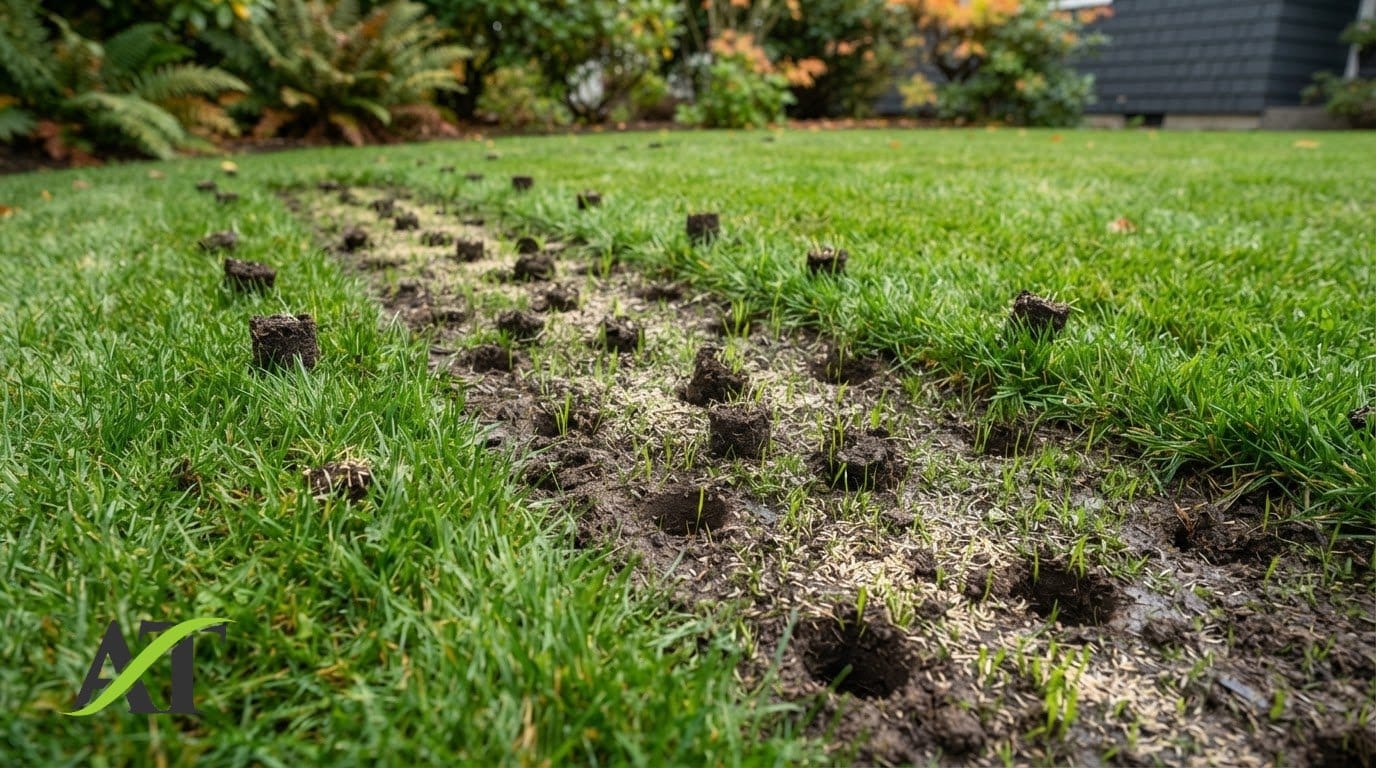
Aerating Thatching Co.’s Lawn Tune-Up can help when a Seattle lawn is thin or struggling to fill in. It combines Core Aeration, Overseeding, and Fertilizing to support seed establishment and turf growth. Core Aeration loosens soil in the shallow turf root zone; it won’t break deep glacial hardpan or correct a subsurface drainage problem.
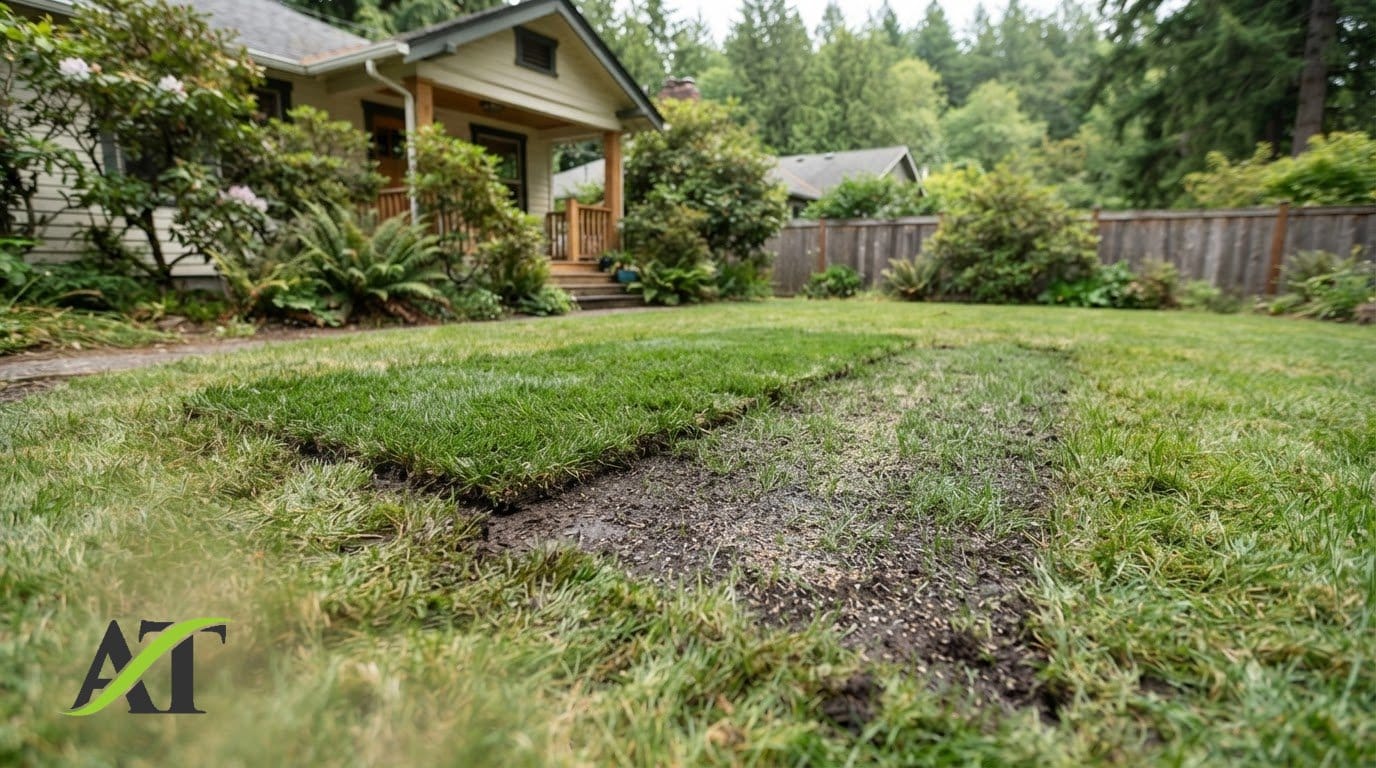
Consider renovation when the lawn needs seeding and soil compaction may be limiting growth. Core Aeration addresses compaction, while overseeding adds grass seed to thin areas. Pooling water or persistent bare patches may instead involve drainage, shade, or irrigation. Identifying the cause helps you choose a useful next step rather than adding treatments the lawn may not need.
Learn what the Lawn Tune-Up includes, then Ask Stewart About Your Lawn.
Make Your Next Lawn-Care Step Deliberate
A lawn care calendar for Seattle weather gives you a framework, but your own notes make it useful year after year. Record when growth changes, where the lawn stays wet, and which areas thin out. Comparing those observations across seasons can help you spot patterns and choose a focused next step.
Before changing your routine, walk the lawn and note which areas need attention. A clear picture of the problem can help you decide whether seasonal care or a targeted renovation service suits your goals.
A practical plan and steady attention help you care for your lawn as the season changes.
Frequently Asked Questions
How do you keep leaves from killing your lawn through winter?
Keep leaves from sealing the turf beneath a damp, compacted layer. Rake or mulch them before they mat, and spread piles from corners or fence lines where wind gathers them. If your mower leaves visible clumps, collect them rather than mowing over them repeatedly. Clear leaves from lawn edges and beneath shrubs, where trapped debris can stay wet longer.
What’s included in a complete Pacific Northwest lawn maintenance program?
A complete lawn care plan combines homeowner upkeep with renovation when the lawn needs it. Aerating Thatching Co.’s Lawn Tune-Up supports turf health and thickness with Core Aeration, Premium Overseeding, and Starter Fertilizer. After service, proper watering, mowing, and traffic management are essential as the grass establishes. Note recurring issues, such as thin patches or pooling water, and address their likely causes instead of applying the same treatment everywhere.
When is the last time to mow in Washington?
Make the final cut when continued growth calls for mowing, rather than treating a date as an automatic signal. If the lawn has stopped growing, another pass may not be necessary. Before mowing, make sure the ground isn’t soggy or frozen and the grass isn’t overgrown. If it is, reduce its height gradually instead of scalping it in one pass.
When should Seattle homeowners seed or overseed cool-season lawns?
Seed while conditions can still support establishment, and use soil and weather conditions to guide your timing. Before spreading seed, expose bare ground and remove debris that could interfere with seed-to-soil contact. Keep the seeded area appropriately moist and limit foot traffic while seedlings establish. Seed type matters too: a preferred soil-temperature window for one mix isn’t a universal rule for every cool-season grass.
When is the best time to aerate and dethatch a Seattle lawn?
Choose the task based on the problem: Core Aeration relieves soil compaction, while Dethatching (Power Raking) removes a buildup of old stems and roots. For Core Aeration, soil should be moist but not saturated. If water pools or grass stays weak after compaction or thatch is addressed, investigate drainage, shade, or irrigation. Those conditions require a different diagnosis.
How often and how much should Seattle lawns be watered during the year?
Let rainfall, soil moisture, and active grass growth guide watering frequency. During dry stretches, water enough to moisten the root zone without creating runoff or saturating the lawn. A simple rain gauge helps you account for rainfall instead of irrigating on a fixed schedule. Check sunny and shaded areas separately: they can dry at different rates, even within the same yard.
Article by
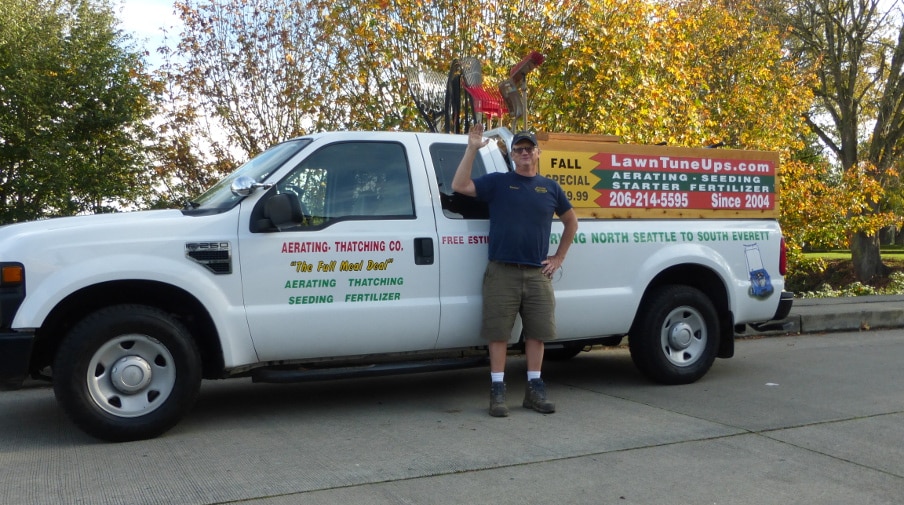
Stewart Armour
Stewart Armour is the owner of Aerating Thatching Co., an owner-operated Seattle-area lawn restoration business established in 2004. He helps homeowners understand Core Aeration, Power Raking (Dethatching), Overseeding, soil conditions, and the aftercare needed for stronger lawns. His background includes turf management study, advanced golf course turf training, and continuing education through Wilbur-Ellis University, State Turf Facilities, Soil First Academy, and Golf Course Applied Turf Physiology. Stewart has personally evaluated thousands of residential lawns throughout the Seattle area and focuses on recommending the work that fits each lawn’s condition.