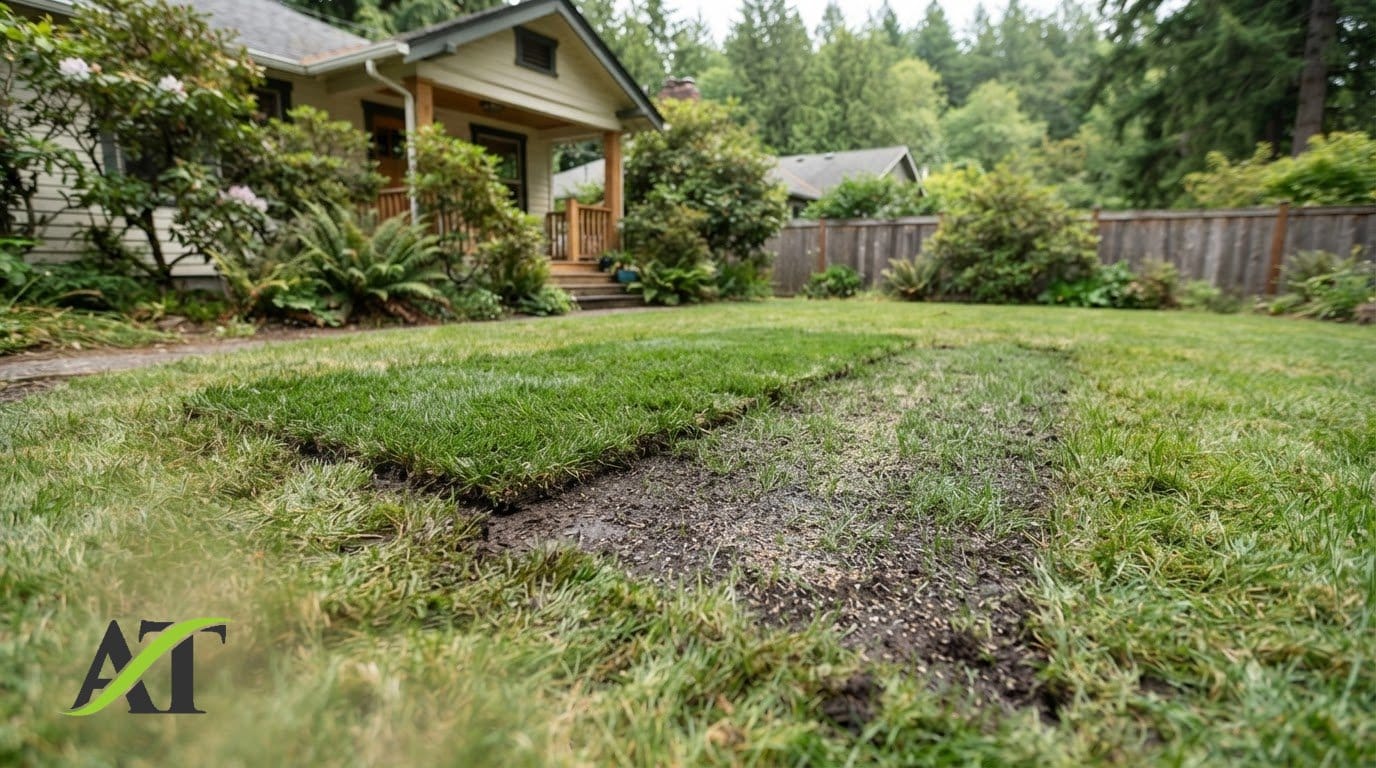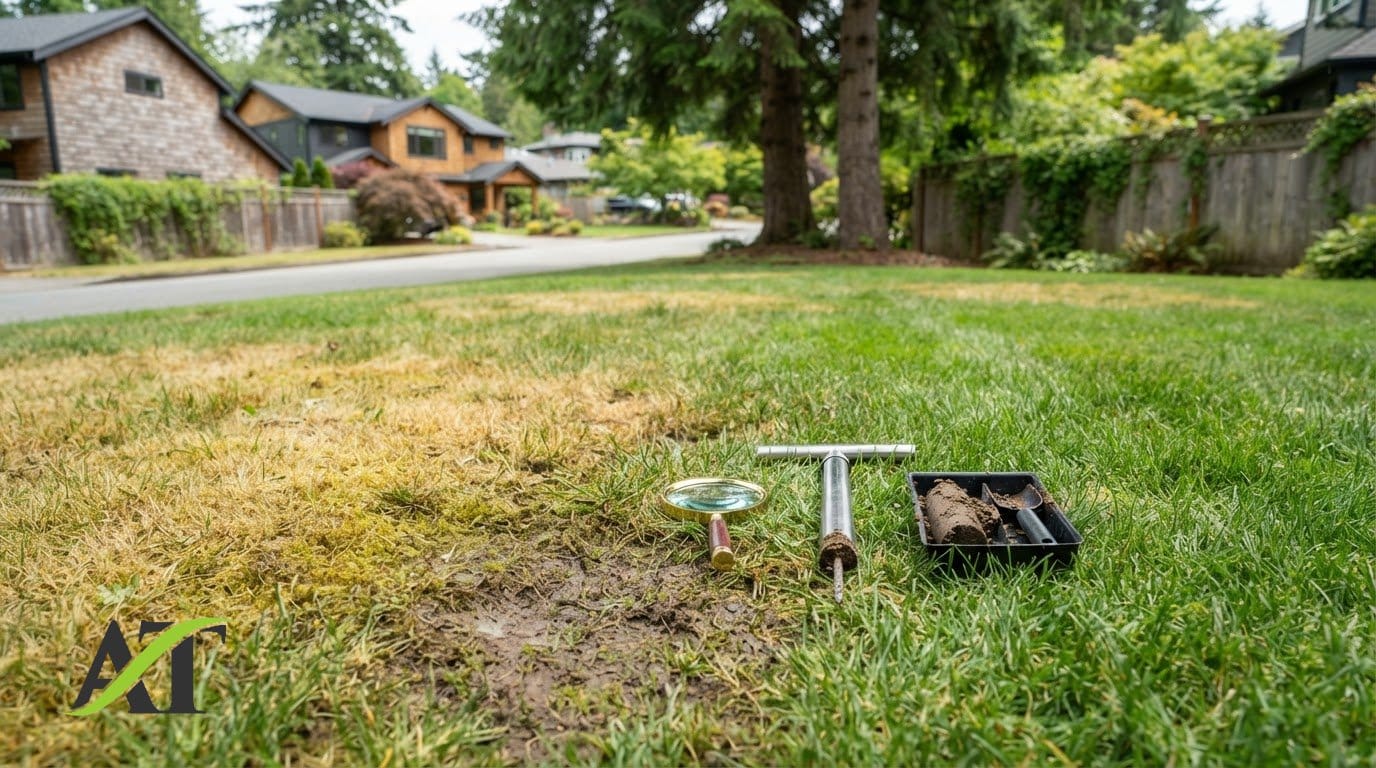
The best yellow grass treatment Shoreline homeowners choose may be no treatment at all, at least until the cause is clear. Yellow patches can point to different problems, and fertilizer, aeration, or new seed won’t address every one.
It’s frustrating to see a lawn fade and not know whether it’s stressed, dormant, or declining. The pattern and condition of the grass can offer useful clues: note whether yellowing forms rings or scattered patches, whether the turf pulls up easily, and whether the soil feels compacted or stays wet. These signs help narrow the possibilities, but they don’t confirm a diagnosis on their own.
This guide explains what to look for before choosing a fix, which lawn conditions a Lawn Tune-Up may help address, and when yellowing calls for further diagnosis instead of a guessed treatment. You’ll also see how a Lawn Tune-Up differs from a Full Meal Deal, so the next step fits the lawn’s actual condition, not just its color.
Key Takeaways
- Before choosing yellow grass treatment Shoreline homeowners should map affected areas and consider recent lawn conditions to narrow down likely causes.
- Use clues such as shade, compacted soil, or excess thatch to guide the next step, but treat them as evidence to investigate, not a certain diagnosis.
- Soil testing can help assess suspected nutrient or pH problems before you decide whether fertilizing or another response makes sense.
- A Lawn Tune-Up and Full Meal Deal address different lawn conditions; match the service to the diagnosis, and seek further assessment when the cause remains unclear.
Yellow Grass in Shoreline: What the Pattern Can Tell You
Yellow areas can make a healthy-looking lawn seem like it needs an immediate fix. But choosing a sensible response for your Shoreline lawn starts with checking what changed and where. Shade, watering, compaction, thatch, nutrient stress, and other problems can affect grass in different ways, so one remedy won’t fit every yellow patch.
Yellow color is a symptom, not a diagnosis or an automatic reason to fertilize. Grass responds to stress through changes in growth and color, but the visible sign alone rarely identifies the cause. The Turfgrass overview provides background on the plants that make up a lawn and the conditions that influence their growth.
How yellowing patterns help narrow the possibilities
Start with the shape and reach of the discoloration. An isolated spot may point you toward a localized stressor, while broad, fairly even fading suggests looking at conditions that affect more of the lawn. Ring-shaped areas are another clue worth recording, but they don’t confirm a particular disease. Patterns narrow the possibilities; they don’t settle the diagnosis.
Note where the yellowing begins, whether its edges are sharp or gradual, and whether it’s spreading or changing. A simple sketch or dated photo can help you compare areas over time rather than rely on memory.
What a quick lawn check should look for
Walk the lawn and look for connections between yellow areas and their surroundings. Check whether they sit beneath shade, near spots that receive different amounts of water, or where people regularly walk or play. Look for a layer of dead grass stems and other material at the soil surface, which may be thatch. Consider recent watering patterns, too.
These are observations, not proof. Shade can limit growth, heavy use can compact soil, and too little or too much water can stress grass. Thatch and nutrient issues call for different responses. If the clues conflict or the yellowing keeps spreading, pause before applying fertilizer or choosing a treatment. A cause-first check makes the next step more sensible.
Why Shoreline Lawns Turn Yellow: Match the Cause to the Right Response
Different stresses can produce similar yellowing, so look for supporting signs before settling on a fix. Compacted soil may feel firm underfoot, especially in areas with frequent foot traffic. Water may soak in slowly or run off. A noticeable spongy layer of dead stems at the soil surface can suggest excess thatch. Shade can leave grass thin where sunlight is limited, while inconsistent watering may stress areas unevenly. Nutrient stress is another possibility, but pale color alone doesn’t prove the lawn needs fertilizer.
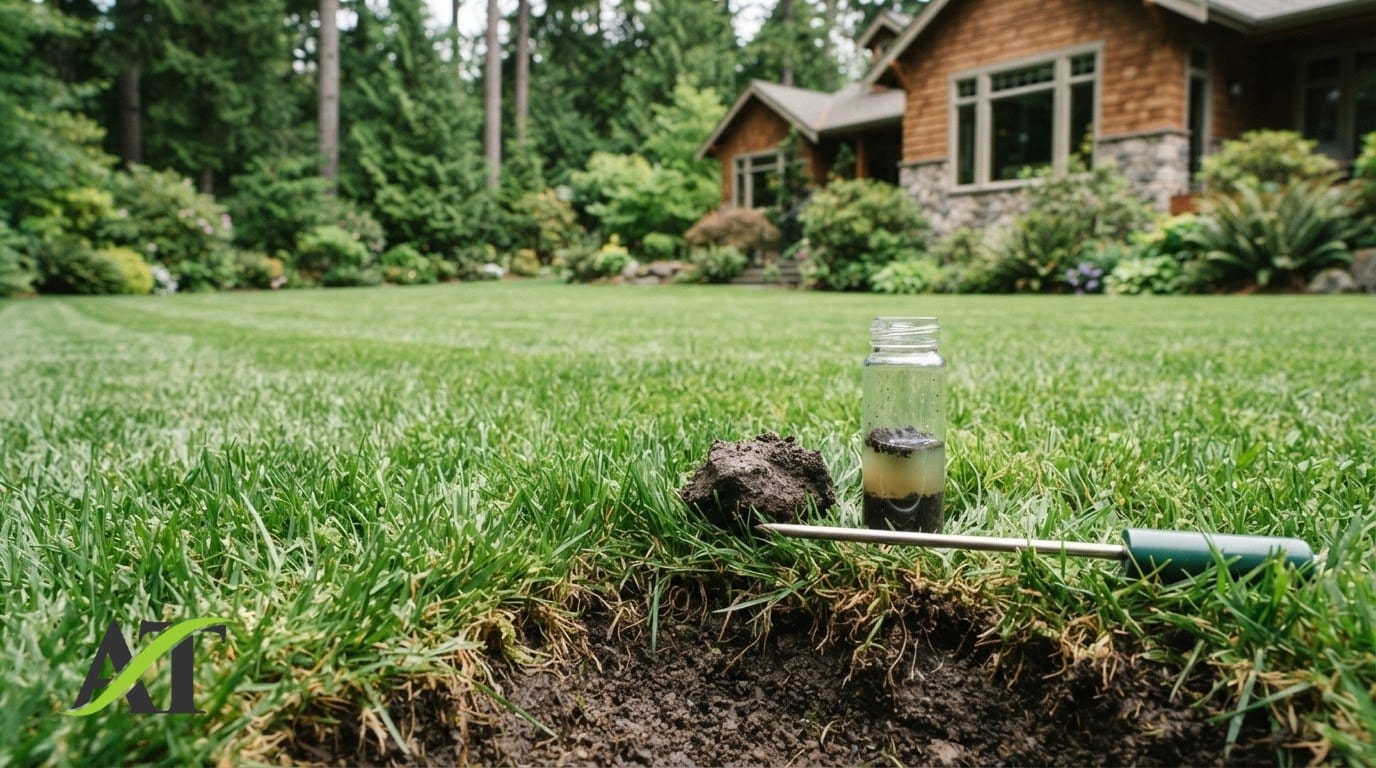
Soil testing can help evaluate suspected nutrient or pH problems before applying fertilizer or lime. That matters because neither product is a safe guess based only on color. Match a treatment to the diagnosed lawn condition, not color alone.
When lawn restoration may fit the visible problem
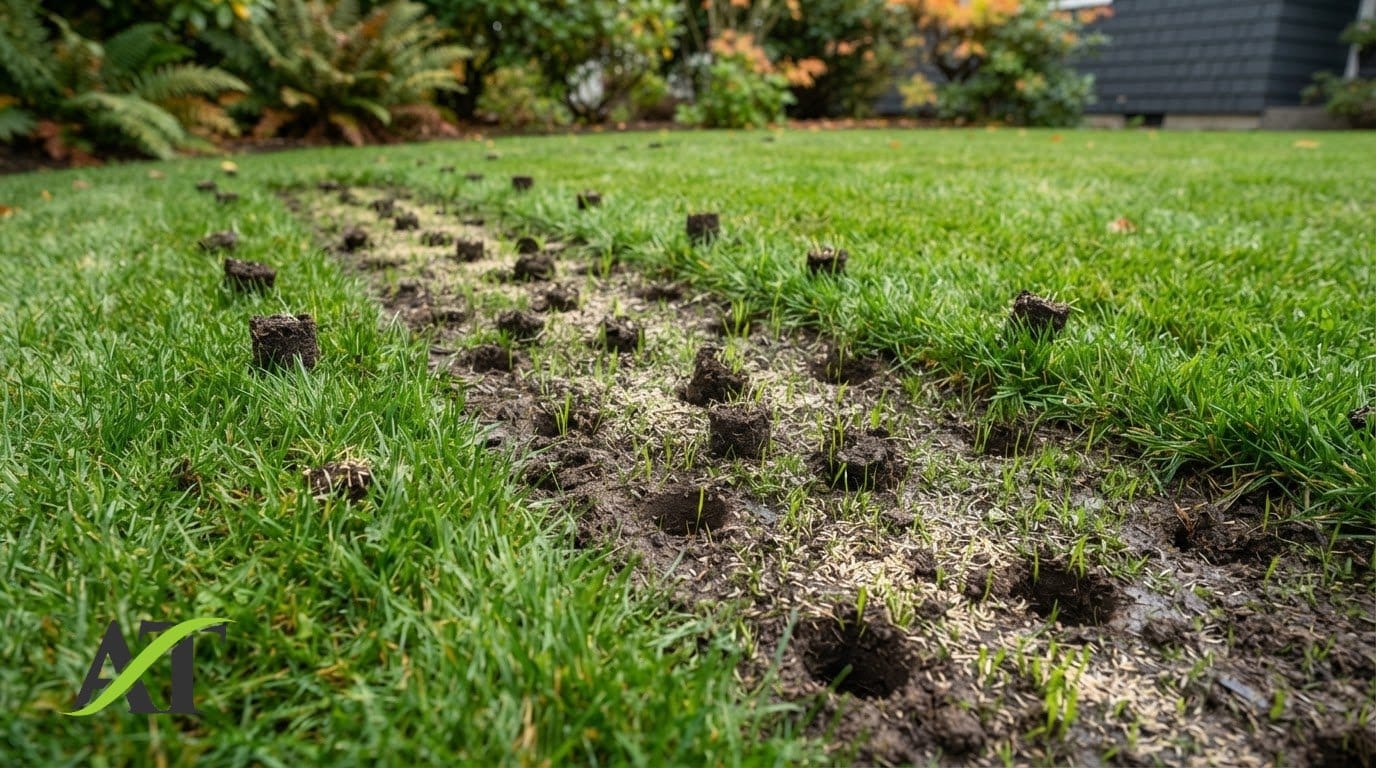
If the main issue is thin turf and the lawn otherwise appears suitable for restoration, Overseeding may help increase grass density. Core Aeration can address compaction in the shallow turf root zone. It doesn’t correct a subsurface drainage defect or break through deep glacial hardpan, so persistent soggy areas may need further diagnosis rather than more aeration.
When yellowing points beyond a restoration treatment
Suspected disease or insect damage calls for a closer diagnosis before reseeding or fertilizing. Grass that lifts easily, unusual spreading patches, or visible digging may signal a problem that restoration alone won’t resolve. Have these causes assessed and addressed before deciding whether lawn restoration is an appropriate next step.
The City of Shoreline Grounds Maintenance page describes the city’s work on public landscapes; it isn’t a diagnosis for private lawns. For a cause-first discussion of a residential lawn, Ask Stewart About Your Lawn before choosing a treatment.
How to Choose a Yellow Grass Treatment in Shoreline Without Guessing
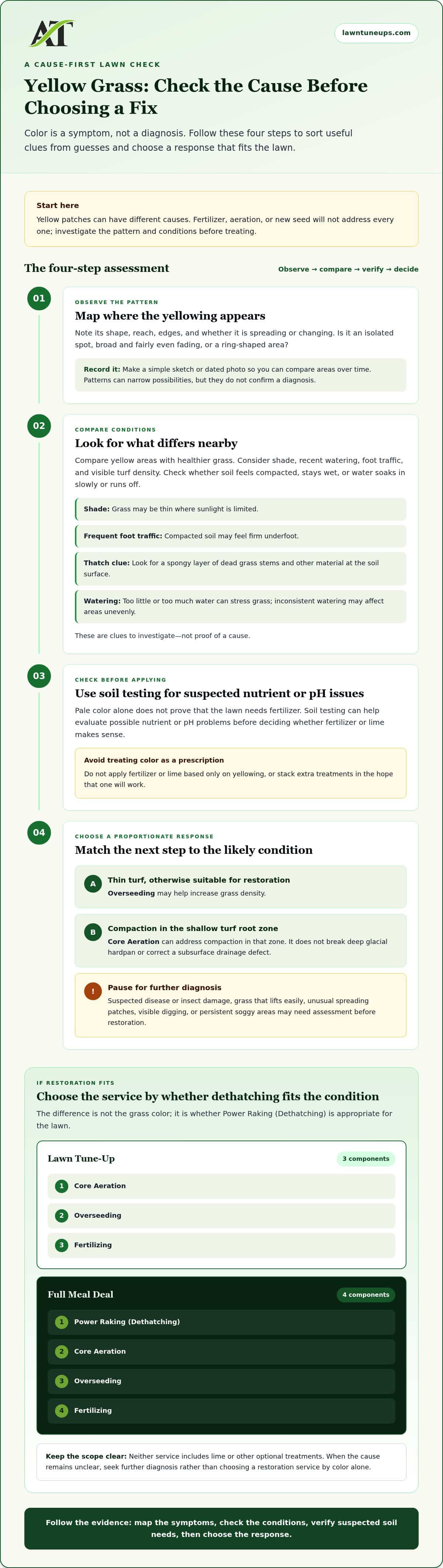
For a sensible treatment plan, follow the evidence before choosing a service. A short review can help separate a lawn-restoration need from a problem that calls for further diagnosis.
A practical cause-first checklist for homeowners
- Map the affected areas. Note where yellowing appears, its shape, whether it’s changing, and how much of the lawn is affected.
- Review recent conditions. Consider changes in watering, shade, foot traffic, and visible turf density. Record what’s different in yellow areas compared with healthier grass nearby.
- Check suspected soil needs. Soil testing can help evaluate possible nutrient or pH issues. Use the results to guide decisions rather than applying fertilizer or lime based on color alone.
- Choose a proportionate response. If the likely cause remains unclear, or signs point to disease, pests, or a drainage problem, seek further diagnosis before treating the lawn as a restoration project.
Avoid adding extra fertilizer or stacking treatments in the hope that one will work. The Seattle lawn-care calendar can help with seasonal planning, but it isn’t a diagnosis or a fixed treatment date. Match timing and work to the lawn’s condition.
Choose between Lawn Tune-Up and Full Meal Deal
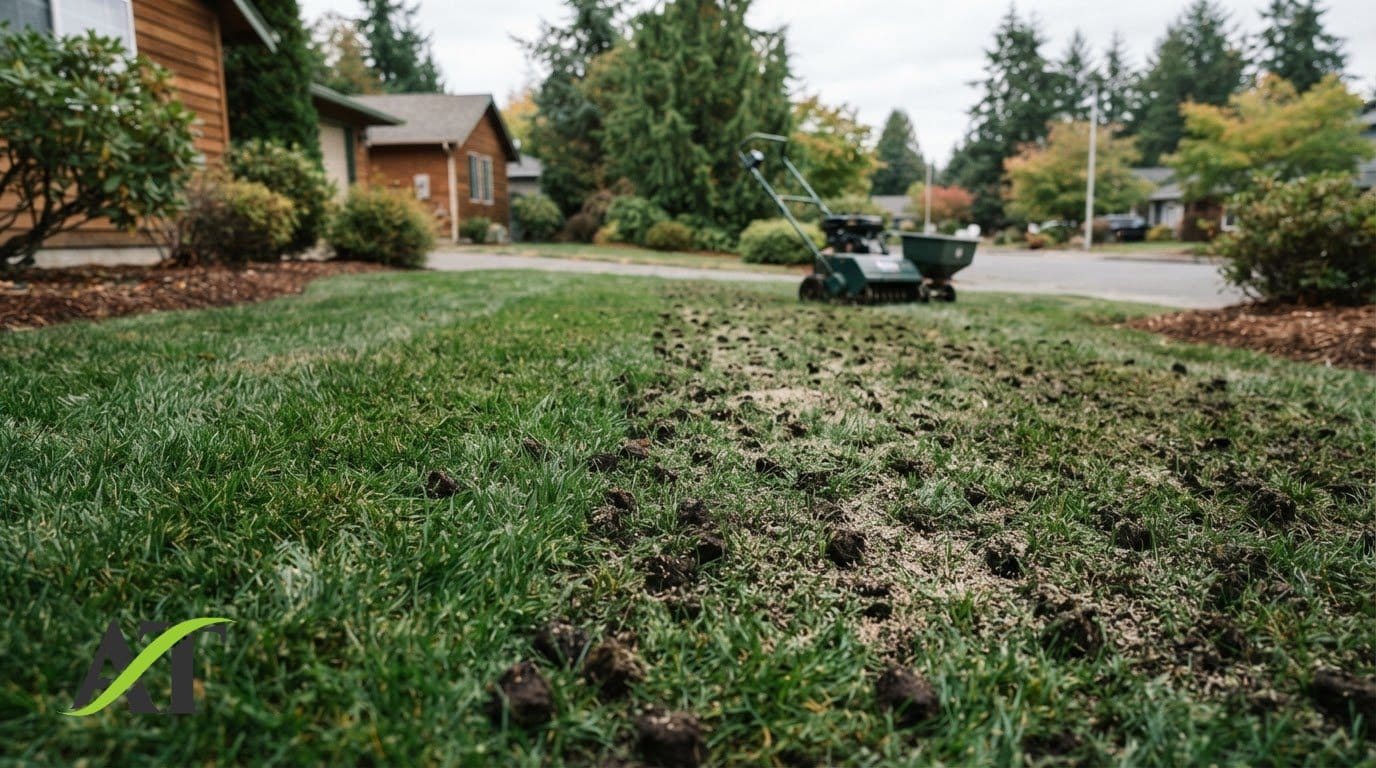
A Lawn Tune-Up combines Core Aeration, Overseeding, and Fertilizing. A Full Meal Deal includes those same components plus Power Raking (Dethatching). Neither includes lime or other optional treatments. The distinction is whether the lawn’s condition supports dethatching as part of the work, not simply whether the grass is yellow.
Once you’ve noted the symptoms and likely cause, you’ll have a clearer basis for choosing restoration or pausing for more diagnosis.
A Shoreline Lawn Restoration Next Step That Fits the Diagnosis
Choose restoration based on the likely cause and the lawn’s condition, not the yellow color by itself. If the turf is thin and needs more density, Overseeding may be a useful part of the plan. If compaction in the shallow turf root zone is a concern, Core Aeration may fit. Persistent wet areas, suspected disease, or pest damage call for further diagnosis before restoration is chosen.
A Lawn Tune-Up combines Core Aeration, Overseeding, and Fertilizing. A Full Meal Deal includes those same components plus Power Raking (Dethatching). The added work is relevant when thatch is part of the diagnosed need, not simply because the lawn looks yellow. Review the Lawn Tune-Up service details to see what that option includes.
What to include when asking about your yellow lawn
Useful details make it easier to discuss a sensible next step. Describe whether the discoloration is patchy, widespread, or ring-shaped, and note whether it’s changing. Mention areas of shade, recent watering patterns, any visible thatch, and whether the turf looks thin. If you’ve had soil tested, share the results rather than guessing at a nutrient or pH issue.
Set realistic expectations for restoration
Treatment choice and turf response depend on the actual cause and site conditions. Restoration isn’t a guaranteed color correction, especially if the underlying stress continues. After Core Aeration or Overseeding, follow the relevant lawn after-care guidance to support the work. If you’re weighing yellow grass treatment in Shoreline, share what you’ve observed before settling on a service.
Ask Stewart About Your Lawn
Take the Next Step With a Clearer Picture
A practical yellow grass treatment Shoreline plan begins with useful observations, not a rushed application. Before deciding what to do, keep a brief record of what you see and what has changed. That gives you a stronger starting point for choosing whether restoration fits or whether the lawn needs more diagnosis first.
Aerating Thatching Co. is an owner-operated local business founded in 2004. If you’re unsure how your lawn’s condition lines up with restoration work, share the pattern of yellowing and the site details you’ve noticed. A measured next step is better than adding treatments without a clear reason.
Ask Stewart About Your Lawn
With the right information in hand, you can move toward a lawn-care decision that makes sense for your yard.
Frequently Asked Questions
Can yellow grass turn green again?
Yes, grass can regain color if it’s still alive and the stress behind the yellowing is corrected. Temporary stress may leave blades discolored even when the plant can recover. If the grass has died or large areas are bare, color won’t return without new growth, which may require Overseeding. Look for whether the turf is producing healthy new blades, and avoid assuming that added fertilizer will speed recovery.
Should I fertilize yellow grass in Shoreline?
Only fertilize when there’s a sound reason to believe the lawn needs nutrients. Yellowing alone doesn’t show which nutrients may be lacking, or whether nutrition is the problem at all. If you’re considering yellow grass treatment in Shoreline, use a soil test when nutrient or pH concerns are suspected, and follow its findings when planning fertilizing. Also consider whether shade, water stress, or another issue may be limiting the turf.
Does Core Aeration fix yellow grass?
Core Aeration isn’t a direct color treatment. It may help when compaction in the shallow turf root zone is contributing to poor lawn growth, but it won’t correct unrelated causes such as nutrient imbalance or disease. Don’t judge the choice by whether the grass is yellow; consider what’s affecting the lawn and whether compaction is part of it. Aeration also won’t solve a deep drainage problem.
Is yellow grass always dead grass?
No. Grass can turn yellow while still living, including when it’s under stress or dormant. A yellow blade doesn’t tell you whether the plant’s growing point is alive. Check whether the area has any healthy new growth and whether the turf remains rooted, but don’t rely on one quick tug or color check as a definite diagnosis. If the area stays bare or continues to decline, investigate the cause before reseeding.
What should I do if yellow patches keep spreading?
Pause additional treatments and document how the affected area changes. Take clear photos from the same viewpoint, mark the patch edges on a simple sketch, and note recent lawn-care or site changes. If the grass is declining quickly, the turf separates from the soil, or the pattern remains unexplained, get the cause assessed before choosing restoration. That helps prevent seed or fertilizer from masking a problem that needs a different response.
Article by
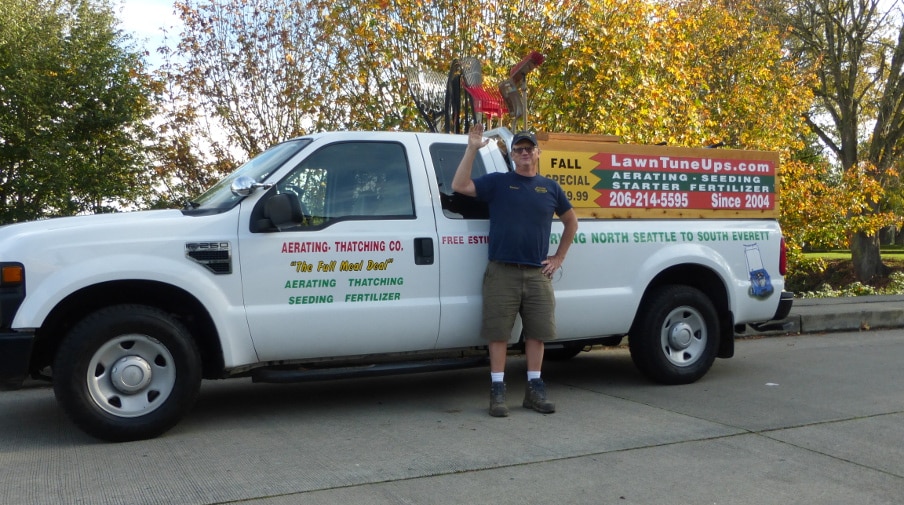
Stewart Armour
Stewart Armour is the owner of Aerating Thatching Co., an owner-operated Seattle-area lawn restoration business established in 2004. He helps homeowners understand Core Aeration, Power Raking (Dethatching), Overseeding, soil conditions, and the aftercare needed for stronger lawns. His background includes turf management study, advanced golf course turf training, and continuing education through Wilbur-Ellis University, State Turf Facilities, Soil First Academy, and Golf Course Applied Turf Physiology. Stewart has personally evaluated thousands of residential lawns throughout the Seattle area and focuses on recommending the work that fits each lawn’s condition.