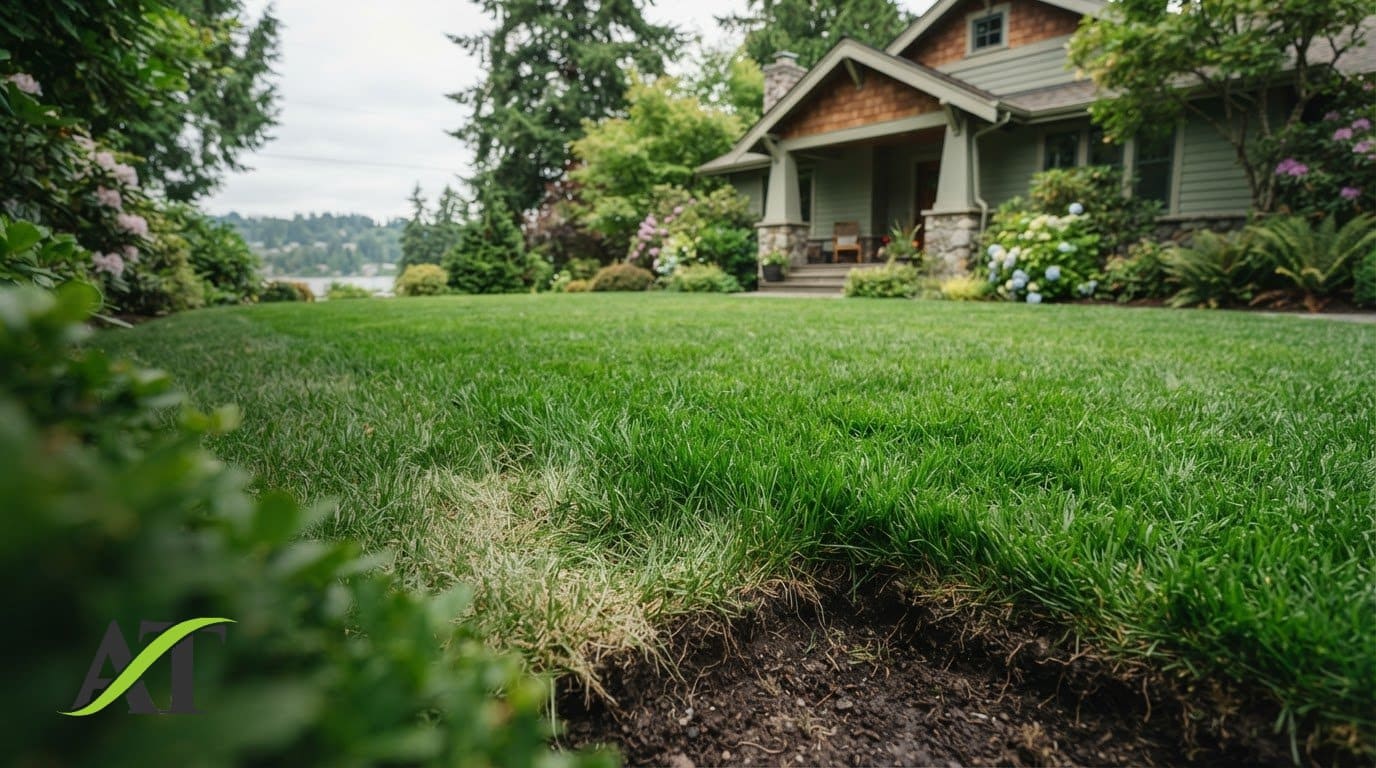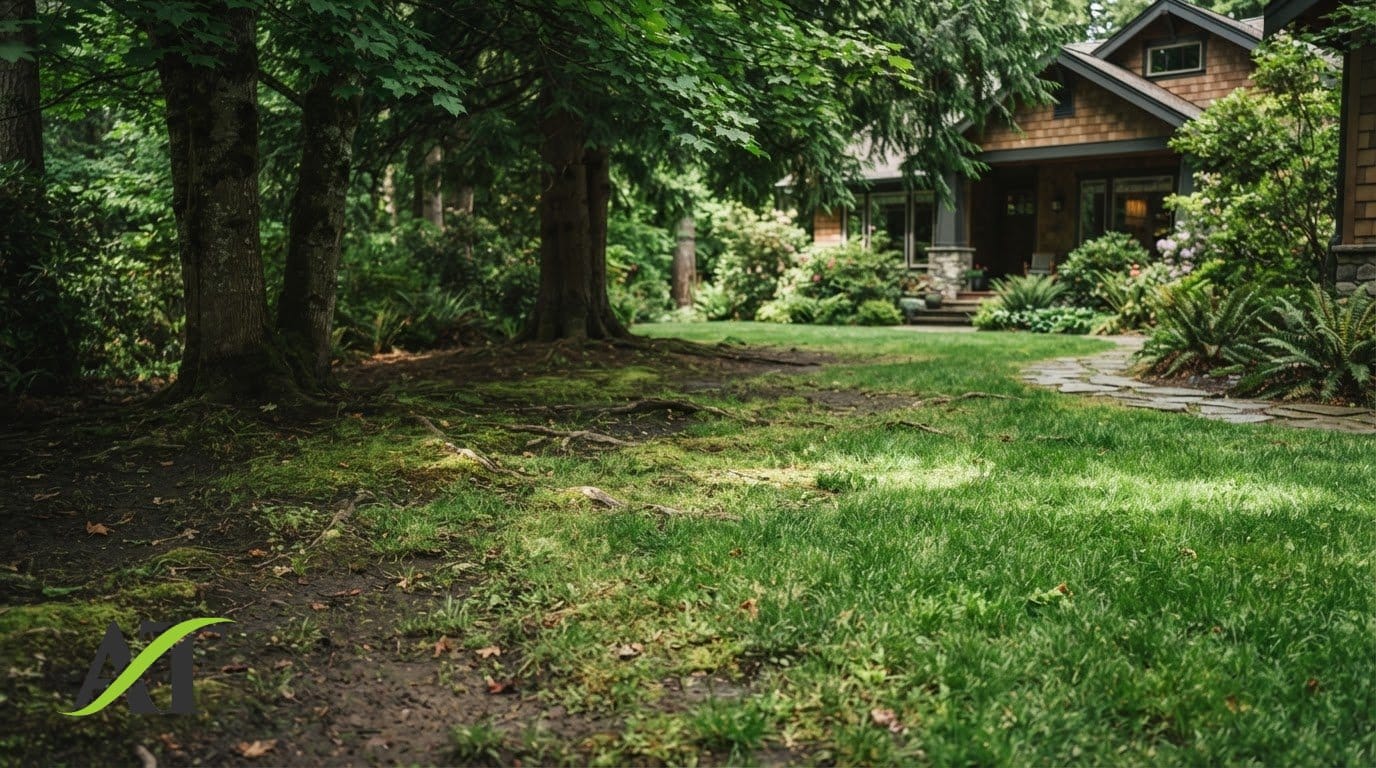
What if the problem isn’t your grass, but the amount of usable light it gets? When turf thins beneath trees or beside a building, and moss or bare patches keep returning, shade is an obvious suspect. But compacted or acidic soil, excess moisture, and tree-root competition can also make it hard for grass to take hold. Good lawn care for shady areas Snohomish yards starts with identifying what’s limiting growth, not simply adding more seed.
This guide explains how to assess shade, spot signs of soil or moisture problems, and decide which steps are worth trying. Some deeply shaded spots may not support healthy turf, even with shade-tolerant grass. Where conditions are suitable, Core Aeration, Overseeding, and Fertilizing can support recovery through a Lawn Tune-Up. We’ll cover how to assess the site and choose restoration work that fits the problem.
Aerating Thatching Co. provides lawn restoration in Snohomish and nearby communities, including North Seattle, Shoreline, Edmonds, Lynnwood, Mill Creek, Bothell, Kenmore, Lake Forest Park, Mountlake Terrace, Everett, Brier, Woodway, Green Lake, Ballard, and Greenwood.
Key Takeaways
- For lawn care for shady areas Snohomish yards, note when sunlight reaches thin patches and how that changes by season.
- Look beyond shade: tree roots, compacted soil, moisture, and poor seed-to-soil contact can also hold turf back.
- Assess the site before choosing a treatment. Core Aeration may help where compaction is a concern, but it won’t create more light.
- A Lawn Tune-Up includes Core Aeration, Overseeding, and Fertilizing. These treatments can support turf where conditions are adequate, but they can’t replace missing sunlight.
Lawn Care for Shady Areas in Snohomish: First Find the Cause
Shade stress occurs when turf gets too little usable light to grow vigorously. But thin grass alone doesn’t identify the cause. Compacted soil, excess moisture, tree-root competition, and regular foot traffic can all contribute. For practical lawn care for shady areas Snohomish homeowners should start with a site check before deciding what to change.
How to assess sunlight across your Snohomish yard
Choose several spots, including a healthy area for comparison, and record when each receives direct sunlight. Check at different times of day, then repeat in different seasons. Winter shade can differ from growing-season light because the sun’s path changes and trees may have different foliage. There’s no single number of sunlight hours that diagnoses every lawn. A simple map of sunny and shaded areas can show where conditions vary. Mark the tree canopy and nearby buildings, too.
What thinning grass and moss can, and cannot, tell you
On your map, mark thin or bare patches, moss, damp ground, and routes where people regularly walk. These patterns can help explain what’s happening. Moss can indicate conditions that favor its growth, but it isn’t proof that shade is the only problem. The Lawn entry describes lawns as managed areas of grass; whether turf thrives depends on the conditions at the specific site.
Shade-related thinning follows limited light, while soil or moisture problems can weaken turf even where sunlight is available. Compare affected spots with healthier ones. Does the ground feel hard underfoot? Does water linger after rain? Are bare patches concentrated along a path or beneath tree roots? Record what you observe rather than guessing. This diagnosis gives you a sound basis for deciding which growing conditions need attention first.
Why Shady Snohomish Lawns Struggle: Light, Soil, and Moisture
Limited light can weaken turf, but shade rarely acts alone. Tree roots compete with grass for water and nutrients, while compacted ground restricts root growth. Seed that rests on the surface instead of making good contact with soil may struggle to establish. Damp conditions can add another challenge. A useful framework for lawn care for shady areas Snohomish properties is to assess light, soil, and moisture together.
Separate shade stress from soil and drainage problems
Compare a struggling patch with a healthier part of the yard. Check whether the ground feels harder, stays wet longer, or gets more foot traffic. Look for tree roots near the surface. These differences can point to problems that need attention alongside limited light. Portland Nursery’s guide to plants for dry and wet shade distinguishes between shade conditions, a useful reminder that shaded sites can vary in moisture.
Don’t use extra fertilizer as a fix for missing sunlight or every soil problem. If you’re considering a Lime Application, test the soil first. Lime isn’t a universal solution for moss or shade, and applying it without understanding the soil can miss the real issue.
Set realistic expectations for seed in shaded ground
Cool-season grass seed germinates best when soil temperature is 55°F-75°F (13°C-24°C). Outside that range, germination may be slower, less consistent, and less reliable. Even in the optimal range, establishment depends on moisture, seed-to-soil contact, soil conditions, and weather. Results aren’t guaranteed, especially where light remains limited.
Once you’ve assessed the conditions, restoration may be worth considering for areas that can support turf. Explore lawn restoration options.
How to Improve a Shady Lawn in Snohomish: A Practical Sequence
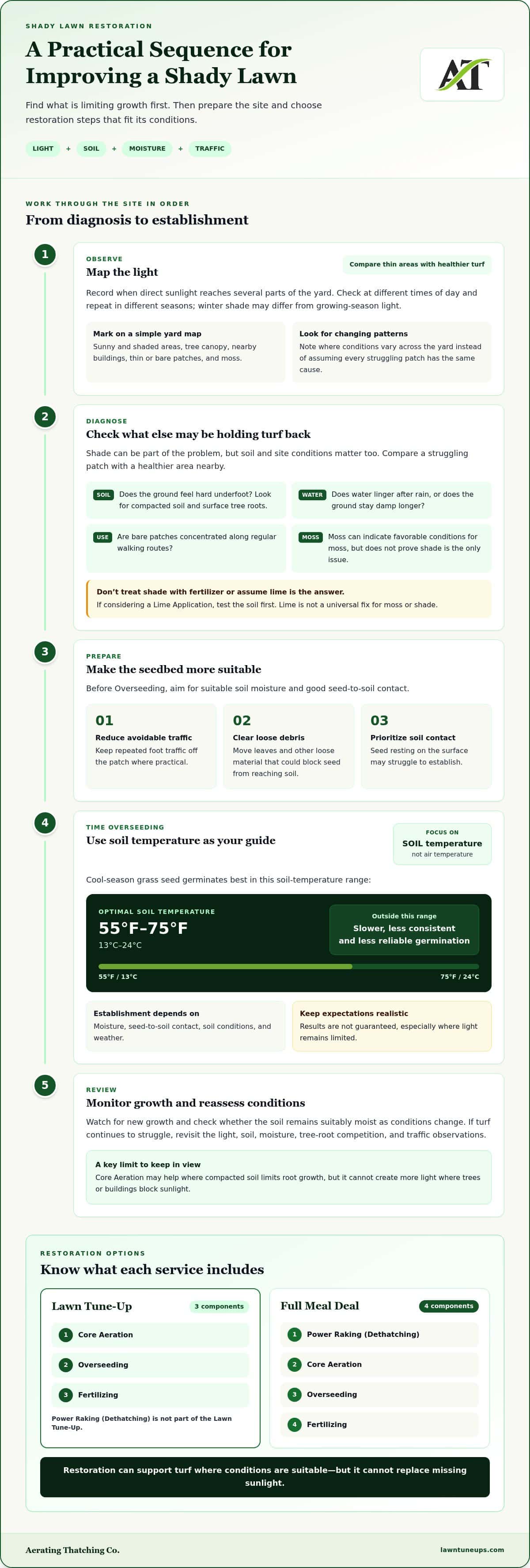
Good lawn care for shady areas Snohomish yards starts with the cause, not a treatment. Work through the site in order:
- Assess the light. Note where and when direct sun reaches the lawn across the growing season.
- Identify site issues. Look for compacted soil, standing moisture, tree-root competition, and regular foot traffic.
- Prepare the seedbed. Reduce avoidable traffic and clear leaves or other loose debris from the area. Aim for suitable soil moisture and good seed-to-soil contact before Overseeding.
- Monitor establishment. Watch for new growth and check whether the soil remains suitably moist as conditions change.
Core Aeration may help where compacted soil is limiting root growth. It loosens the soil, but it can’t provide sunlight where tree cover or buildings block it. Learn more about Core Aeration services. NC State University Extension also offers research-based guidance on managing lawn grasses in the shade, including the challenges of tree competition and limited light.
Prepare the site before Overseeding
Keep repeated foot traffic off a newly seeded patch where practical, and move loose debris that would block seed from reaching the soil. Focus on soil temperature, not air temperature: cool-season grass seed germinates best at 55°F-75°F (13°C-24°C). Outside that range, germination may be slower, less consistent, and less reliable. Moisture, seed-to-soil contact, soil conditions, and weather also affect establishment, so results aren’t guaranteed.
Choose restoration work based on the diagnosed need
A Lawn Tune-Up consists of Core Aeration, Overseeding, and Fertilizing. Power Raking (Dethatching) isn’t part of the Lawn Tune-Up. It is included in the Full Meal Deal, along with Core Aeration, Overseeding, and Fertilizing. Restoration can support turf when the site can sustain grass, but it won’t solve insufficient light.
When a Lawn Tune-Up Can Help a Shady Snohomish Yard
A Lawn Tune-Up may help thin turf recover when the site still has enough usable light and the main barriers to growth can be addressed. For example, if grass is sparse and the soil is compacted, Core Aeration can help improve conditions for roots. Overseeding adds grass seed where existing turf has thinned, while Fertilizing supports growth. These treatments can support a lawn, but they can’t replace sunlight blocked by dense tree cover or a building.
Signs restoration may be a reasonable next step
Look for areas that receive some direct light, have manageable moisture, and can be protected from repeated foot traffic while seed establishes. Thin turf in those spots may be a candidate for restoration, particularly if compaction is also present. Deep shade or persistently wet ground can limit results, so consider the site’s conditions before expecting new grass to fill in.
Understand the service components before taking action
The Lawn Tune-Up consists of Core Aeration, Overseeding, and Fertilizing. It doesn’t include Power Raking (Dethatching). The Full Meal Deal includes Power Raking (Dethatching), Core Aeration, Overseeding, and Fertilizing. Aerating Thatching Co. provides these lawn restoration treatments. The services page outlines the available options and how they differ.
For Overseeding, cool-season grass seed germinates best when soil temperature is 55°F-75°F (13°C-24°C). Moisture, seed-to-soil contact, soil conditions, and weather also affect establishment, so results can’t be guaranteed. A realistic plan starts with the growing conditions, not just the service selected.
Take the Next Step Toward a Healthier Shady Lawn
Successful lawn care for shady areas Snohomish starts with understanding what’s limiting growth. Track how much usable light reaches each patch, then consider soil compaction, moisture, tree-root competition, and traffic. Restoration can support turf where conditions are suitable, but it can’t replace sunlight that never reaches the ground.
A Lawn Tune-Up combines Core Aeration, Overseeding, and Fertilizing to support recovery in appropriate areas. Establishment still depends on moisture, seed-to-soil contact, soil conditions, and weather, so set realistic expectations and focus on the parts of the yard that can sustain grass.
Aerating Thatching Co. is an owner-operated local business founded in 2004. It provides lawn restoration through Core Aeration, Overseeding, and Fertilizing, with treatments such as Power Raking (Dethatching) also available. A clear assessment is a practical first step toward choosing work that fits your yard.
With a better understanding of your site, you can make a sound plan and focus on the lawn areas that have the light and growing conditions to support turf.
Frequently Asked Questions
Can grass grow in a shady yard in Snohomish?
Yes, grass can grow in some shady Snohomish yards, but success depends on usable light, soil condition, moisture, and the turf’s ability to establish. Shade-tolerant grass still needs enough light to remain vigorous. Check whether thin areas also have compacted soil, tree-root competition, or persistent dampness. Lawn care for shady areas Snohomish homeowners choose should match those site conditions, and no treatment can guarantee recovery.
How much sunlight does a lawn need in a shady area?
There isn’t one universal sunlight-hour threshold for every lawn. Light needs vary by grass type, tree canopy, building shade, and season, so record when direct sun reaches several areas rather than relying on a single yard-wide estimate. Conditions can differ across Snohomish, Everett, Mill Creek, Bothell, and nearby North Seattle communities, including Shoreline, Edmonds, Lynnwood, Kenmore, Lake Forest Park, Mountlake Terrace, Brier, Woodway, Green Lake, Ballard, and Greenwood.
Does Overseeding help a lawn under trees?
Overseeding can help thin turf under trees if the site receives enough usable light and seed reaches the soil. Cool-season grass seed germinates best at a soil temperature of 55°F-75°F (13°C-24°C); air temperature alone isn’t a reliable guide. Maintain suitable moisture. Poor seed-to-soil contact, unsuitable soil conditions, weather, or deep shade can limit establishment, so results aren’t guaranteed.
Will Core Aeration fix a thin lawn in the shade?
Core Aeration may help a thin shaded lawn when compaction is restricting roots or making establishment difficult. It creates openings in compacted soil, but it doesn’t increase available sunlight or resolve every cause of thinning. If a patch is deeply shaded, persistently wet, or affected by tree-root competition, aeration alone may not be enough. Diagnose the site first, then match restoration work to the problem.
When should I seed a shady lawn in Snohomish?
Seed when the soil, not just the air, is in the optimal range for cool-season grass germination: 55°F-75°F (13°C-24°C). Outside this range, germination may be slower, less consistent, and less reliable. Before seeding, prepare the surface for good seed-to-soil contact and maintain suitable moisture. Weather, soil conditions, and available light also affect establishment, so timing can’t guarantee a successful stand.
Article by
Stewart Armour
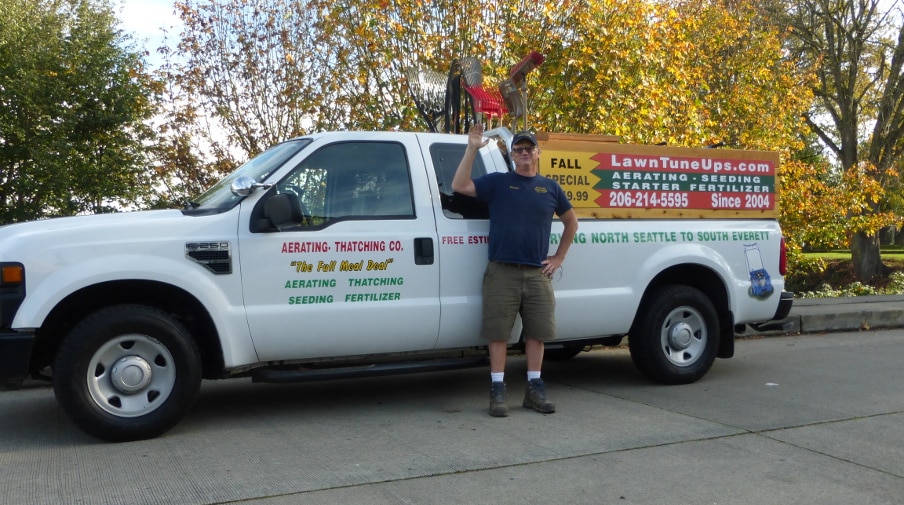
Stewart Armour is an independent lawn restoration expert, educator, and owner of Aerating Thatching Co., serving the greater Seattle area since 2004. With more than two decades of professional experience restoring Western Washington lawns, Stewart specializes in diagnosing lawn problems, improving soil health, and developing long-term lawn renovation strategies. His education includes turf management studies, advanced golf course turf training, and continuing education through Wilbur-Ellis University, State Turf Facilities, Soil First Academy, and Golf Course Applied Turf Physiology. Every article published on LawnTuneUps.com is grounded in practical field experience, current turf science, and a commitment to helping homeowners understand the why behind every recommendation—not just what to do.
Stewart has personally evaluated thousands of residential lawns throughout the Seattle area and remains committed to helping homeowners understand the science behind growing healthier, more resilient lawns.