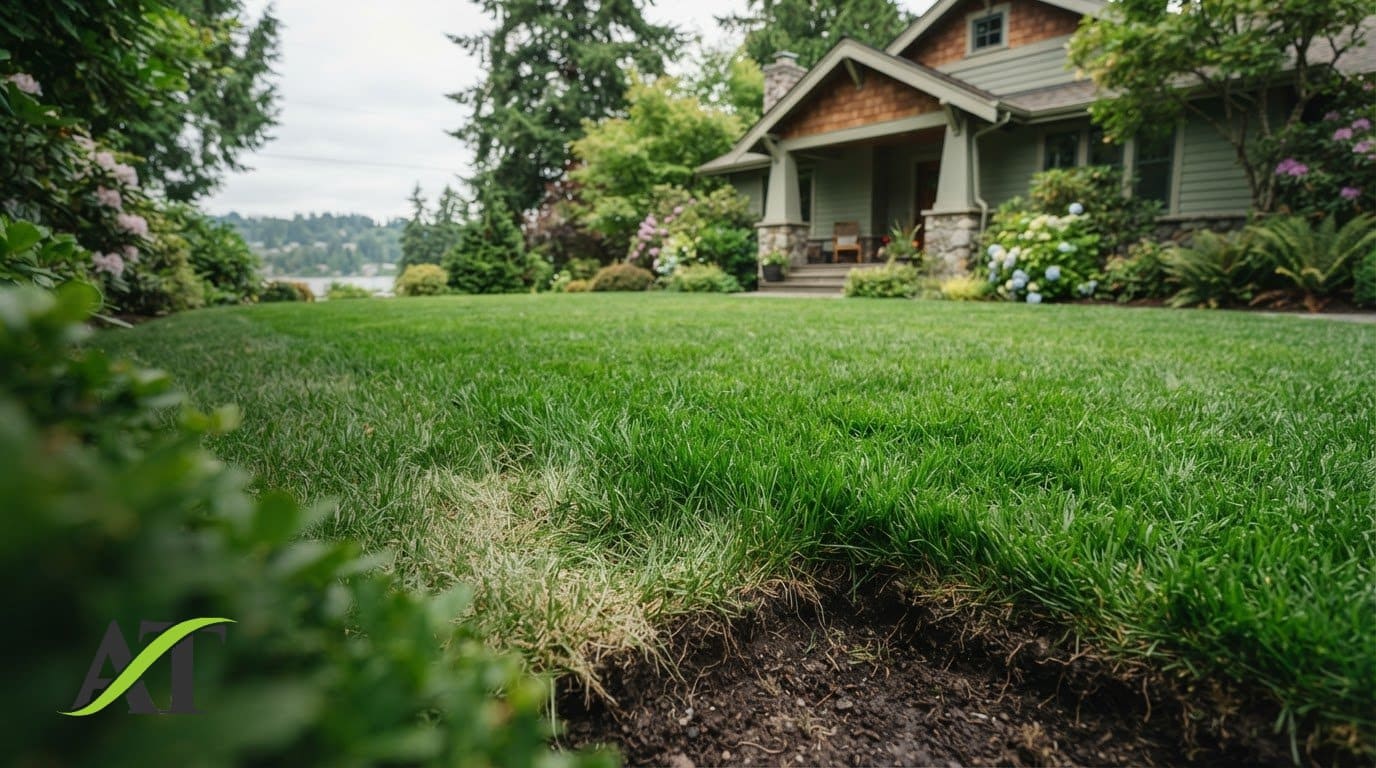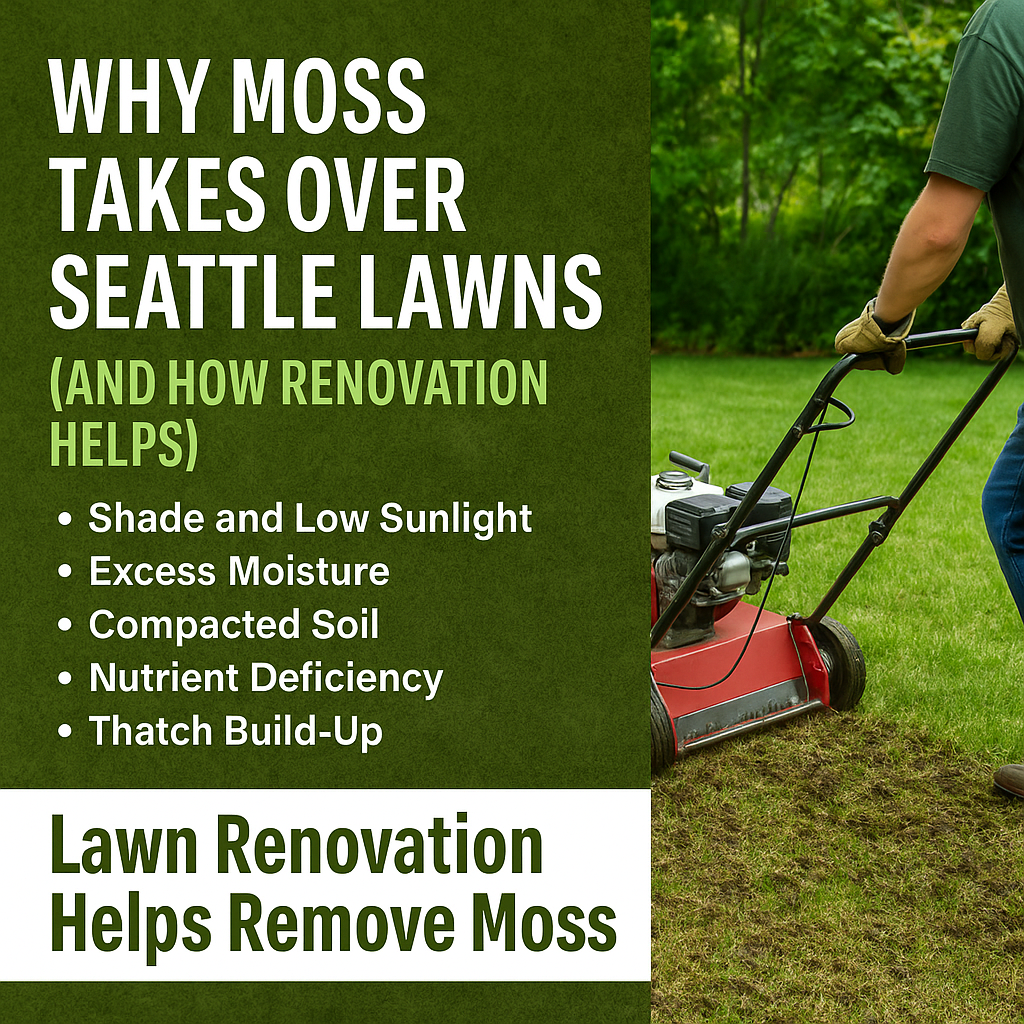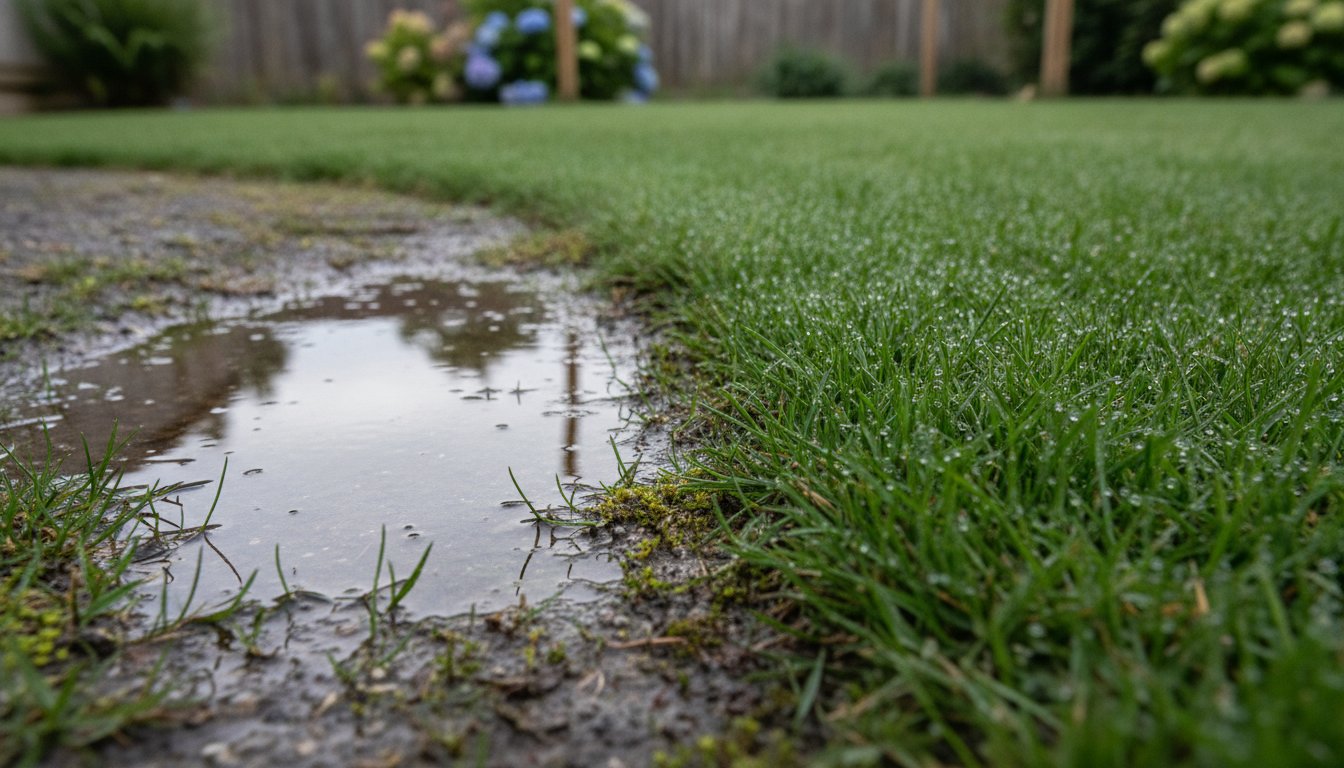
If your backyard looks more like a shallow pond than a healthy lawn, the problem isn’t just the rain. It’s the ground itself. Seattle’s heavy clay soil often packs down so tight that air, water, and nutrients can’t reach the roots. You’ve likely noticed standing water on the lawn or moss taking over the thin, patchy areas where grass used to thrive. Finding the right compacted soil solutions Seattle homeowners need is the first step toward fixing these drainage issues and stopping the moss in its tracks.
We understand how frustrating it is to invest in your yard only to see the turf stay stunted while the weeds win. You can fix this by using mechanical intervention to break through that hardpan layer. This guide explains how to identify the signs of compaction and why treatments like Core Aeration are essential for proper drainage. We’ll also explore how a professional Lawn Tune-Up or our Full Meal Deal can transform your soil, allowing for deeper roots and a thicker, more resilient lawn that finally absorbs the rain.
Key Takeaways
- Identify drainage issues by watching for surface runoff or using a screwdriver to test for hard, impenetrable ground.
- Explore the most effective compacted soil solutions Seattle homeowners can use, specifically mechanical Core Aeration to pull plugs and relieve pressure in heavy clay.
- Learn how Power Raking (Dethatching) clears away the thick layer of surface thatch that prevents water from soaking into your lawn.
- Discover why soil temperatures between 55°F-75°F (13°C-24°C) are critical for successful Overseeding and how a professional Lawn Tune-Up or Full Meal Deal provides a complete restoration path.
Identifying Soil Compaction and Drainage Issues in Seattle
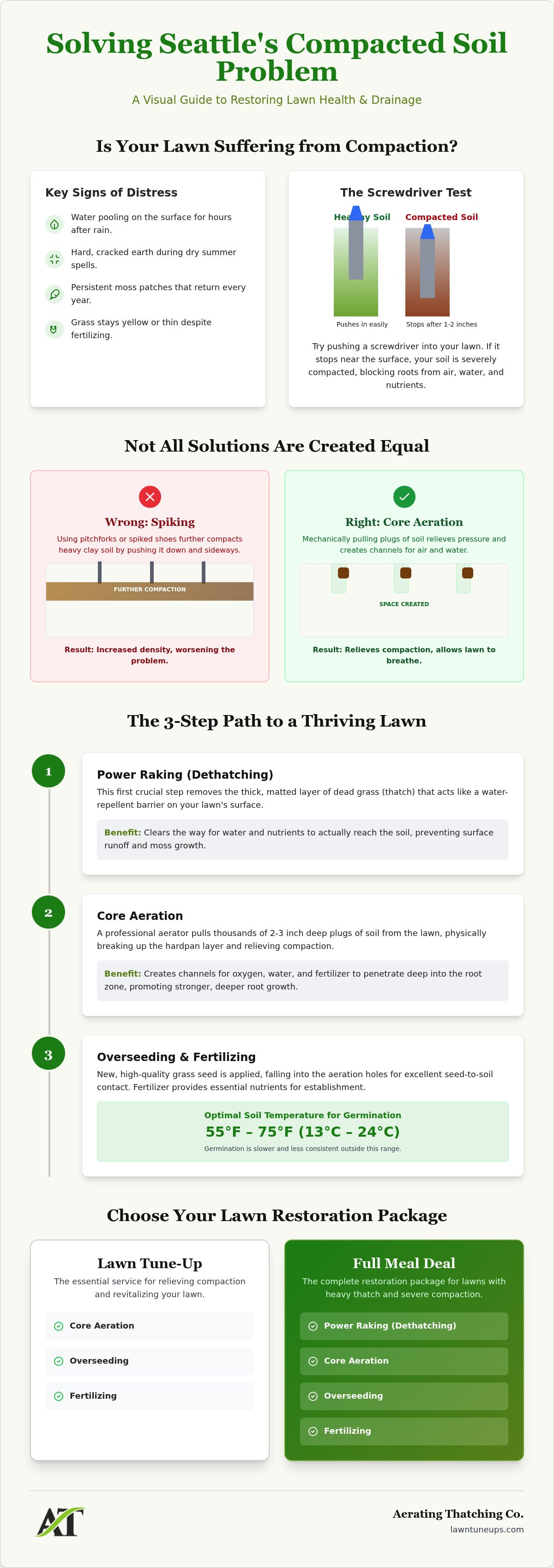
Seattle yards face a unique challenge. Our heavy clay soil acts like a heavy sponge for months, then dries into a substance resembling concrete during the summer. When the ground is this hard, water can’t penetrate the surface. You’ll see standing water or runoff during typical North Seattle rain cycles. This is often where homeowners start looking for compacted soil solutions Seattle neighbors trust to save their turf.
You can test your lawn’s health with a simple screwdriver. Try pushing a standard tool into the ground. If it stops after an inch or two, your soil is severely compacted. This physical barrier stops oxygen and nutrients from reaching the root zone. Over time, you’ll notice grass thinning out while moss begins to thrive in the airless, damp environment. Using a professional Lawn aerator is the only way to physically open these channels and restore the natural flow of air and moisture.
Look for these specific signs of distress in your yard:
- Water pooling in low spots for hours after a storm.
- Hard, cracked earth during dry spells.
- Moss patches that return every year despite treatment.
- Grass that stays yellow or thin even after you fertilize.
The Impact of Compaction on Lawn Health
When soil is tightly packed, grass roots cannot grow deep. They stay trapped near the surface, which makes the turf vulnerable to summer heat and winter die-off. Compacted ground essentially suffocates the lawn. This leads to a cycle of weak growth and moss invasion that no amount of extra watering will fix. Without restoring the soil’s structure, even the best fertilizer won’t produce results. Deep, healthy roots require loose soil that allows for gas exchange and water drainage. Restoring this balance is the goal of a professional Lawn Tune-Up.
Mechanical Core Aeration: The Primary Solution for Hard Soil
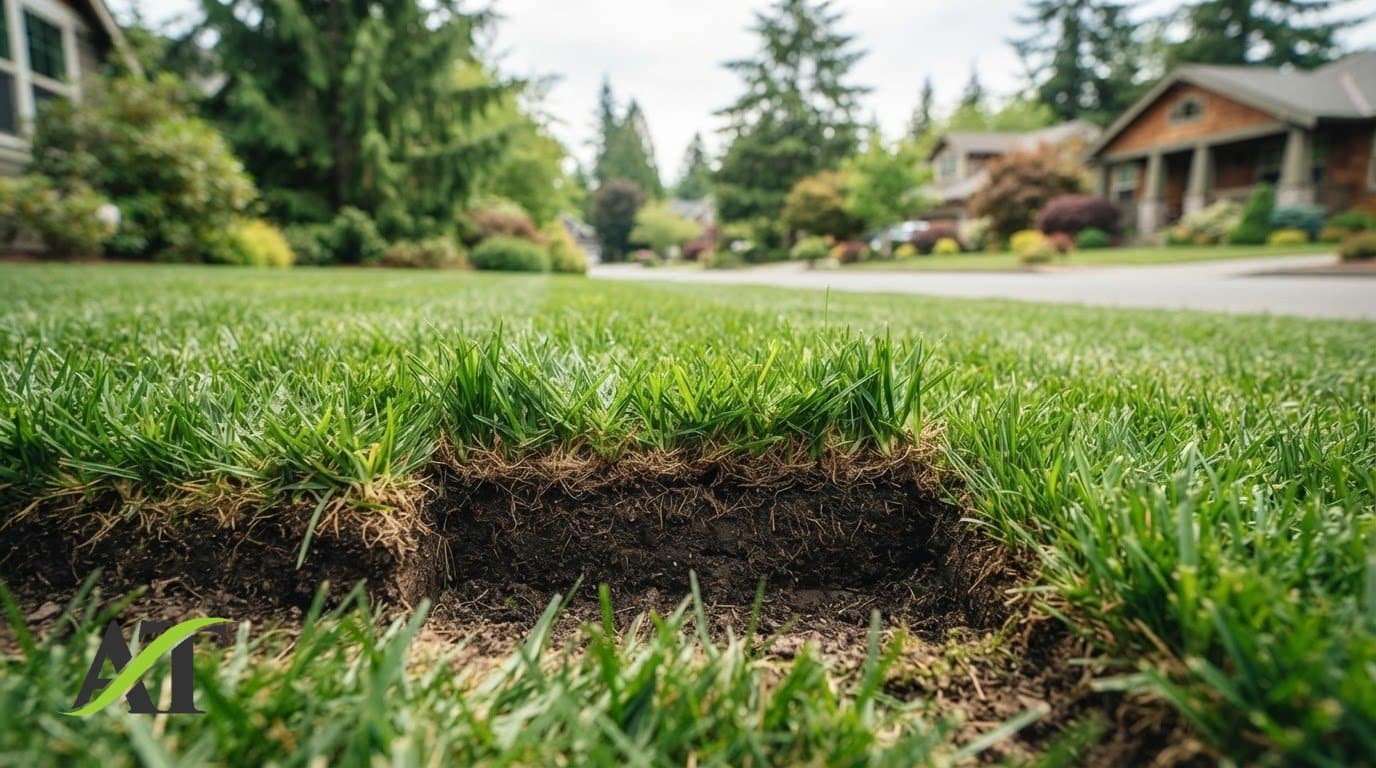
When you’re looking for compacted soil solutions Seattle yards actually respond to, mechanical intervention is the only real answer. Core Aeration is the process of using a professional machine to pull thousands of small plugs of soil and thatch from your lawn. These plugs are usually about two to three inches deep. By physically removing these cores, we create immediate space for the surrounding soil to expand. This process relieves the crushing pressure on grass roots and allows the ground to breathe again.
The benefits of this mechanical treatment are immediate. Once the cores are removed, water can finally move past the surface and into the root zone. This prevents the pooling issues common in our rainy climate. It also allows oxygen and organic fertilizers to reach the soil where they’re needed most. For a complete look at how this fits into a total yard recovery, check out our Seattle Lawn Tune-Up Guide.
Core Aeration vs. Spiking
Many homeowners try to solve compaction by “spiking” the lawn with pitchforks or spiked shoes. This is a mistake in Seattle’s heavy clay. Spiking doesn’t remove any material. Instead, it just pushes the soil aside and down, which actually increases the density and compaction around the holes. It makes the “hardpan” layer even tougher for roots to penetrate.
True Core Aeration is different because it creates a void. This void is essential for breaking up that concrete-like hardpan layer common in our region. It’s the baseline for any successful restoration. If you’re ready to fix your drainage and help your grass grow, you can request a quote for service today. We handle the heavy equipment so you can enjoy a healthier, thicker lawn.
Improving Drainage with Power Raking (Dethatching)
Thatch is a layer of dead grass and organic matter that builds up between the green blades and the soil surface. In our wet climate, this layer often becomes a dense, water-repellent mat. It acts like a dry sponge. When it rains, the thatch absorbs the water before it ever touches the dirt. This prevents deep moisture from reaching the roots and causes surface pooling. Mechanical Power Raking (Dethatching) is the most effective way to strip away this barrier and restore surface drainage. Without this step, water just sits on top, creating a perfect environment for moss to flourish.
While hand raking might remove surface leaves, it can’t touch the deep, embedded thatch that blocks water flow. We use specialized equipment to pull this material up and out. This process clears the way for air and water to move freely again. By clearing the surface, we ensure that your next treatment actually reaches the ground. This is one of the most critical compacted soil solutions Seattle homeowners use to stop runoff and prevent moss from taking over the damp surface layer. If you’re wondering whether dethatching is right for your yard, learn about the power raking benefits and common myths about lawn dethatching before your next treatment. For more details on the process, read our Lynnwood Power Raking Guide.
When to Choose the Full Meal Deal
If you have more than 1/2 inch of thatch buildup, a standard treatment isn’t enough. We recommend the Full Meal Deal for these situations. This comprehensive restoration package includes Power Raking (Dethatching), Core Aeration, Overseeding, and Fertilizing. It addresses both surface blockages and subsurface compaction in one visit. By combining these mechanical treatments, you create the best possible environment for new seed to establish and grow. The result is a lawn that doesn’t just look better, but actually functions better during our heavy rain cycles. It’s the most thorough way to handle years of neglect or heavy use.
Implementing Solutions: Timing and Expected Results
Timing is everything when applying the compacted soil solutions Seattle homeowners need for long-term success. While many national guides suggest looking at the air temperature, local experts focus on the ground. The optimal soil temperature range for cool-season grass seed germination is 55°F-75°F (13°C-24°C). If you attempt Overseeding outside of this window, the process will be slower, less consistent, and produce less reliable establishment. We typically see the best results during the spring and fall when the PNW weather aligns with these soil requirements.
For lawns with moderate compaction, a Lawn Tune-Up provides the essential baseline for recovery. This specific service consists of Core Aeration, Overseeding, and Fertilizing. It’s a pragmatic, targeted approach designed to get oxygen into the dirt and new life into the turf. To manage expectations, it’s important to remember that we don’t offer absolute guarantees on germination. Results are influenced by multiple factors, including consistent moisture, seed-to-soil contact, and unpredictable weather patterns. You can learn more about our complete range of Lawn Restoration and Soil Health Treatments to see which path fits your yard.
Post-Treatment Care for Best Results
Watering is the most critical factor once the mechanical work is done. You must keep the seedbed consistently moist for the first few weeks. If the new seeds dry out, they won’t survive. Short, frequent watering cycles are usually better than one heavy soaking. Additionally, Seattle soil is naturally acidic, which can inhibit nutrient uptake. We often recommend a Lime Application or other Lawn Soil Amendments as optional add-ons to balance the pH. This ensures the grass can actually use the nutrients provided during the Fertilizing step, leading to a thicker, greener lawn that naturally resists moss.
Restore Your Lawn’s Natural Drainage and Growth
Seattle yards don’t have to stay soggy and thin. By addressing surface thatch and deep clay compaction, you can transform your property into a healthy environment. Remember that mechanical Core Aeration is the most effective of the compacted soil solutions Seattle homeowners can use to break through hardpan. Combining this with Power Raking (Dethatching) ensures water actually reaches the root zone instead of pooling on the surface.
Since 2004, our owner-operated team has used specialized mechanical restoration equipment and an organic soil health focus to help local lawns recover. We focus on physical results rather than just surface-level maintenance. Whether you need a standard Lawn Tune-Up or the comprehensive Full Meal Deal, we have the expertise to get the job done right.
Your yard is an investment. With the right mechanical treatments and proper timing, you’ll see a thicker, more resilient lawn that handles our wet climate with ease.
Frequently Asked Questions
How often should I aerate my lawn in Seattle?
Most Seattle lawns benefit from Core Aeration once per year, typically in the fall. Heavy clay soil and high foot traffic pack the ground down quickly. If your yard experiences puddling or has very hard soil, you might need a second treatment in the spring. Consistent annual care prevents the hardpan layer from returning and keeps your drainage functioning properly throughout our long, wet rainy season.
Can I fix compacted soil without a machine?
No, manual tools like pitchforks or spiked shoes aren’t effective compacted soil solutions Seattle homeowners should rely on. These methods actually increase compaction by pushing soil aside rather than removing it. Professional Core Aeration uses mechanical equipment to pull physical plugs from the earth. This is the only way to create the necessary space for the soil to expand and breathe. Manual spiking just makes the problem worse.
Does Power Raking (Dethatching) help with lawn drainage?
Yes, Power Raking (Dethatching) is essential for improving surface drainage when a thick layer of organic debris blocks water. Thatch acts like a sponge that prevents rain from reaching the soil. By mechanically removing this barrier, you allow water to flow directly into the ground. For lawns with both heavy thatch and hard soil, our Full Meal Deal combines this process with aeration for a complete drainage solution.
What is the best time of year to fix compacted soil in North Seattle?
Fall is the ideal time for lawn restoration in North Seattle. This season offers the best balance of natural moisture and warm ground. For successful Overseeding, soil temperatures must be between 55°F-75°F (13°C-24°C). While you can fix compaction in the spring, fall treatments allow the grass to establish a stronger root system before the summer heat. This timing ensures the best results for your yard.
Will Core Aeration help my lawn grow thicker?
Core Aeration helps your lawn grow thicker by allowing roots to expand into the newly created space. When the soil is loose, oxygen and nutrients reach the root zone more effectively. While results depend on factors like weather, our Lawn Tune-Up, which includes Core Aeration, Overseeding, and Fertilizing, provides the foundation for a dense turf. This mechanical process is essential for a resilient lawn that naturally resists moss.
Article by
Stewart Armour
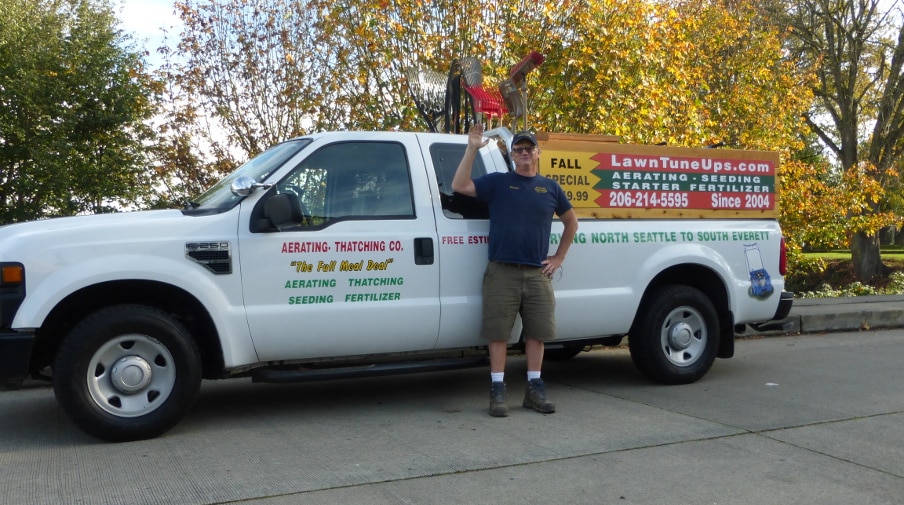
Stewart Armour is an independent lawn restoration expert, educator, and owner of Aerating Thatching Co., serving the greater Seattle area since 2004. With more than two decades of professional experience restoring Western Washington lawns, Stewart specializes in diagnosing lawn problems, improving soil health, and developing long-term lawn renovation strategies. His education includes turf management studies, advanced golf course turf training, and continuing education through Wilbur-Ellis University, State Turf Facilities, Soil First Academy, and Golf Course Applied Turf Physiology. Every article published on LawnTuneUps.com is grounded in practical field experience, current turf science, and a commitment to helping homeowners understand the why behind every recommendation—not just what to do.
Stewart has personally evaluated thousands of residential lawns throughout the Seattle area and remains committed to helping homeowners understand the science behind growing healthier, more resilient lawns.