Moss Taking Over Your Seattle Lawn? Why It Happens and What Actually Fixes It
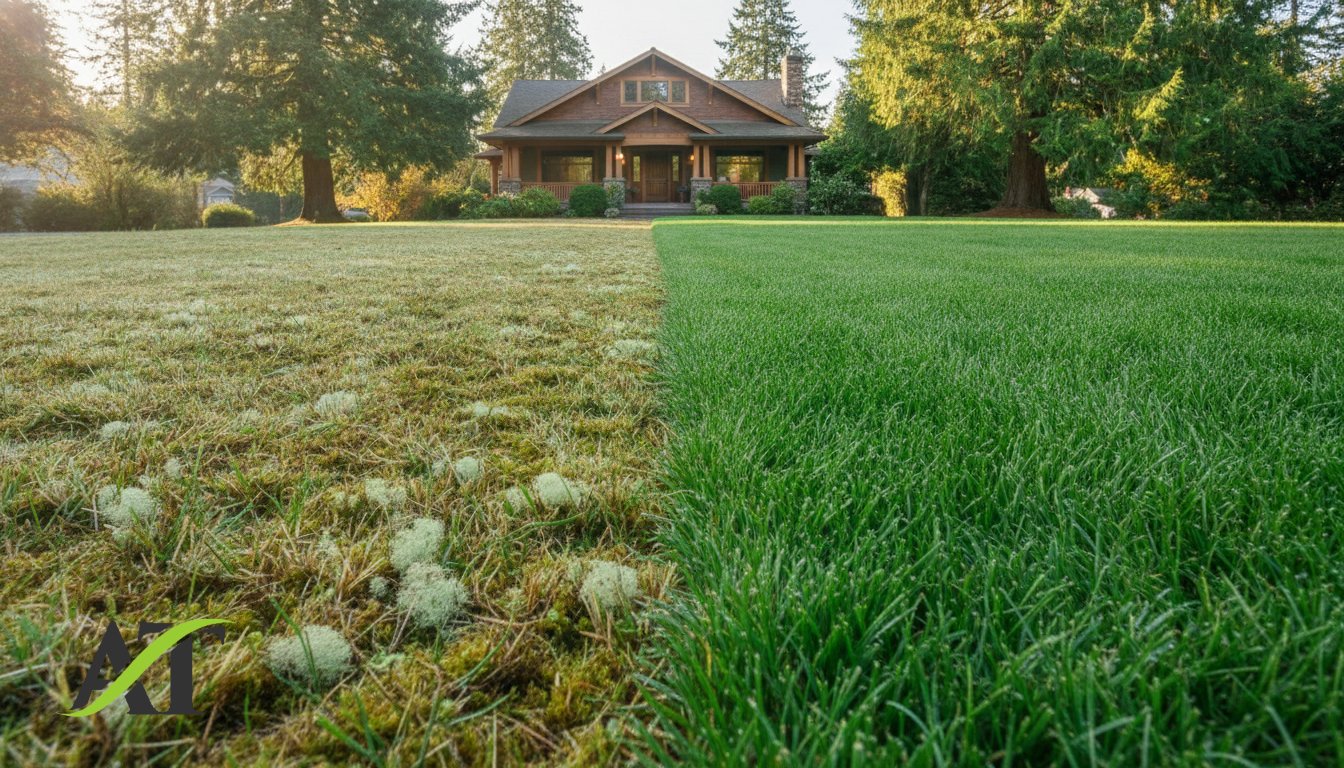
Moss is common in Seattle-area lawns, especially where grass is dealing with shade, persistent moisture, compacted soil or poor growing conditions. Removing the moss can improve the surface, but lasting improvement depends on understanding why the grass lost ground in the first place.
The better approach is to identify the conditions favoring moss, remove substantial buildup when necessary, correct what can realistically be corrected, and rebuild grass density only where the site can support it.
How Do You Get Rid of Moss in a Seattle Lawn?
Start by asking why moss is thriving where grass is struggling. Common contributors include shade, excessive moisture, poor drainage, compacted soil, weak grass density and unfavorable lawn conditions.
Light moss may be removable by hand. Heavier buildup can sometimes justify Dethatching (Power Raking). If the lawn underneath is thin or compacted, additional restoration may make sense.
But if deep shade or a significant drainage problem remains unchanged, repeatedly removing moss and adding seed may not create a sustainable grass lawn.
What Does Your Mossy Lawn Actually Need?
Moss does not automatically mean you need a large lawn-renovation package. Match the response to what is actually happening.
Light, Isolated Moss
Hand raking may be enough for a small patch. Then look at shade, moisture, mowing and grass density before doing anything more aggressive.
Heavy Moss or Surface Buildup
Mechanical removal with Dethatching (Power Raking) may make sense when significant moss or matted surface material needs to be lifted out.
Moss + Thin + Compacted
Removing moss may expose a lawn that also needs Core Aeration, Premium Overseeding and Starter Fertilizer to rebuild density.
Deep Shade or Chronic Wetness
Correct the underlying limitation first when possible. Some areas simply do not provide conditions where grass can remain competitive.
Not sure which category fits your lawn? You do not need to guess which service to purchase. Tell Stewart what the lawn is doing and start with the problem rather than the package.
Why Moss Is So Common in Seattle-Area Lawns
Western Washington's long cool, wet periods can favor moss while grass struggles in shaded, wet or otherwise difficult growing conditions. Moss is often better viewed as a clue that the lawn environment favors moss more than healthy grass.
Shade
Grass needs adequate light. Tree canopy, buildings, fences and north-facing areas can reduce both sunlight and drying.
Persistent Moisture
Areas that stay damp for long periods are favorable to moss and can also weaken grass roots.
Compacted Soil
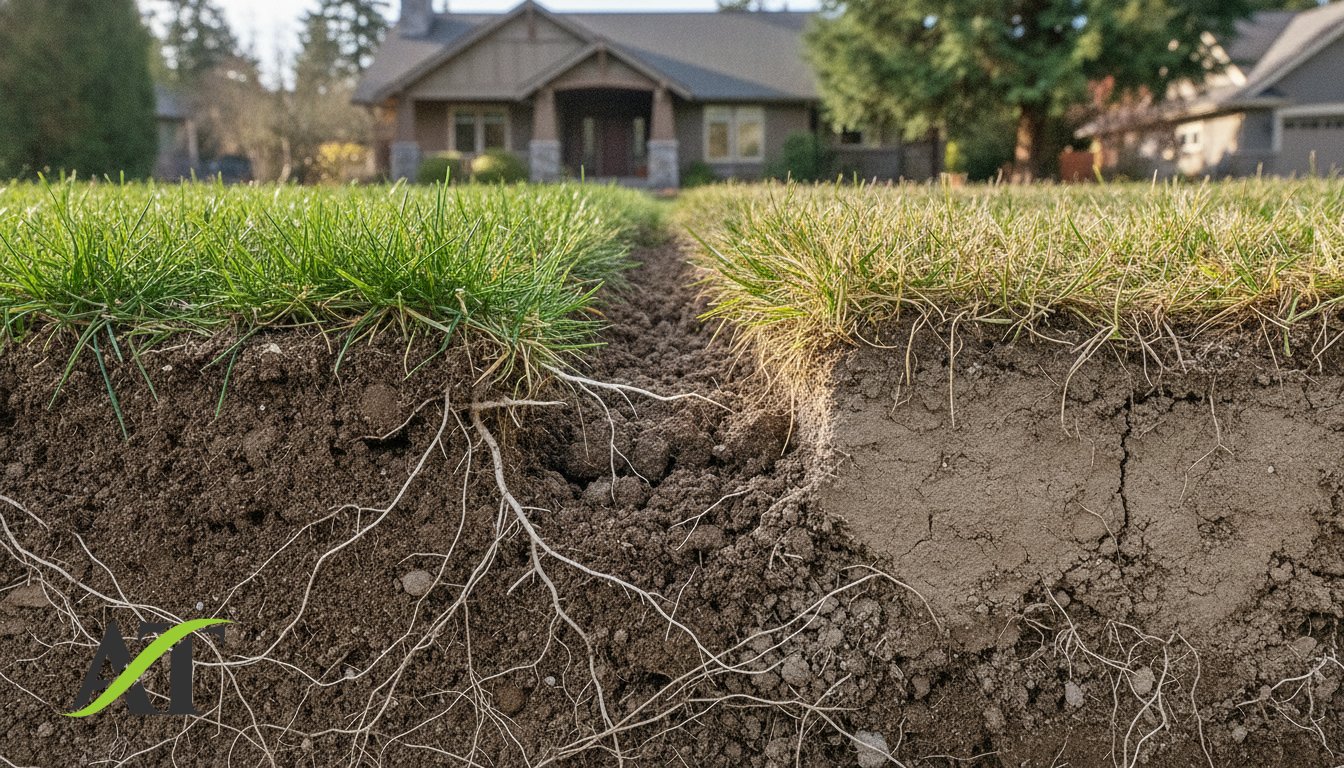
Compaction can restrict the root zone and reduce how readily moisture moves into compacted soil.
Thin Grass
When grass density declines, more open surface is available for moss to establish.
Poor Drainage
Grading, drainage infrastructure, runoff or site-water problems can keep areas wetter than grass prefers.
Soil & Fertility Conditions
Soil conditions can influence grass performance, but visible moss alone does not tell you that the lawn automatically needs lime or fertilizer.
Killing Moss and Fixing a Mossy Lawn Are Two Different Jobs
Moss Control
A moss-control product may kill or suppress actively growing moss when used according to its label.
That addresses the moss that is present today.
Lawn Recovery
Lawn recovery addresses what happens after the moss is controlled or removed, including surface preparation, compaction, grass density, light, moisture and other site conditions.
That is what determines whether the area has a realistic chance to support stronger grass.
Key point: A product can affect moss without changing shade, drainage, compaction or the amount of healthy grass occupying the area.
How to Fix a Mossy Lawn Step by Step
Identify Why Grass Is Losing Ground
Look at sunlight, how long the area stays wet, soil compaction, drainage, grass density and whether moss is isolated or widespread.
Control Active Moss if Appropriate
Moss-control products can be one tool, but they are not required in every situation and they do not correct the underlying lawn conditions.
Physically Remove Significant Moss
Small patches may be handled with a hand rake. Larger areas may justify mechanical Dethatching (Power Raking).
Address Compaction Where It Exists
If compacted soil is part of the problem, Core Aeration may help relieve that compaction.
Rebuild Thin Grass Where Conditions Allow
After substantial moss removal, thin areas may benefit from overseeding and starter fertilizer. The goal is to increase grass density, not simply scatter seed into moss or an unsuitable growing environment.
Correct the Site Limitation When Possible
Improve light, watering or drainage conditions where practical. If the area remains deeply shaded or chronically wet, be realistic about whether grass is the right long-term groundcover.
Can I Fix Lawn Moss Myself?
Sometimes, yes. A homeowner with a small moss problem may not need professional equipment at all.
DIY May Be Enough When
- Moss is limited to a small area.
- You can remove it effectively with a hand rake.
- The grass underneath is still reasonably dense.
- The cause is obvious and realistically correctable.
- You are dealing with a repair patch rather than an entire lawn.
Professional Equipment May Make Sense When
- Moss or matted material covers a large part of the lawn.
- Hand removal would be excessively labor-intensive.
- The lawn also has significant compaction.
- Large thin areas will need to be rebuilt afterward.
- You need help determining whether removal alone is enough.
Hiring someone is not automatically the right answer. For light moss in a small area, a rake and some attention to the growing conditions may be all you need.
Moss vs. Thatch: They Are Not the Same Thing
Moss
Moss is a living plant growing at or near the lawn surface. It often becomes noticeable where environmental conditions are less favorable for grass.
Thatch
Thatch is an organic layer associated with grass stems, roots and other plant material that accumulates between actively growing grass and the soil surface.
A lawn can have moss without having an excessive thatch problem. It can also have thatch without much moss, or both at the same time. Seeing moss does not automatically prove that excessive thatch is the underlying problem.
What Will Not Fix Lawn Moss by Itself?
Lime
Lime is not a moss killer. It may be useful when soil conditions justify adjusting pH, but visible moss by itself is not proof that lime is needed.
Fertilizer
Fertilizer can support grass when nutrients are needed, but it cannot physically remove moss or fix severe shade, grading or drainage problems.
Core Aeration
Core Aeration relieves compaction. It does not physically remove moss and it is not a repair for major drainage or grading problems.
Overseeding
New seed can help rebuild thin grass, but seed still needs suitable growing conditions and adequate access to the soil.
There is no single product or service that fixes every mossy lawn. The right response depends on why grass is struggling in that particular location.
Does a Mossy Lawn Need Dethatching (Power Raking)?
Dethatching (Power Raking) can mechanically lift substantial moss, thatch and matted surface material. It can be very useful when the lawn surface genuinely needs that level of removal.
Dethatching May Make Sense When
- Heavy moss covers substantial areas.
- The surface is matted with accumulated material.
- Seed would otherwise struggle to reach exposed soil.
- The lawn needs surface preparation before broader renovation.
Dethatching Alone May Not Be the Answer When
- Compacted soil is the main problem.
- Grass is thin but surface buildup is minimal.
- Standing water is caused by grading or drainage infrastructure.
- Deep shade is preventing sustainable grass growth.
What Should Happen After the Moss Is Removed?
Dethatching (Power Raking)
A possible fit when substantial moss or surface material needs removal but the remaining grass is reasonably viable.
Explore DethatchingLawn Tune-Up
A possible fit for thin or compacted lawns that need greater density but do not require significant Dethatching (Power Raking) first.
- Core Aeration
- Premium Overseeding
- Starter Fertilizer
Full Meal Deal Lawn Renovation
A stronger restoration option when moss or surface buildup needs removal and the resulting lawn also needs compaction relief and greater grass density.
- Dethatching (Power Raking)
- Core Aeration
- Premium Overseeding
- Starter Fertilizer
The goal is not to sell you the biggest lawn package. It is to determine what the lawn will need after the moss is gone.
Core Aeration Is Not a Drainage Repair
Compacted soil can make it harder for water to move into the root zone. In that situation, Core Aeration may help by physically relieving compaction.
That is different from a major drainage problem. Standing water caused by grading, failed drainage infrastructure, runoff, persistent site water or another larger issue may require corrective work outside the scope of lawn aeration.
If drainage is the real problem, removing moss will not fix the drainage.
What If the Area Is Simply Too Shady or Wet for Grass?
Some lawn areas remain heavily shaded or chronically wet even after reasonable improvements are made. In those locations, repeatedly removing moss, reseeding and fertilizing can become an expensive cycle without solving the site limitation.
If adequate light or suitable drainage cannot realistically be provided, another landscape treatment or groundcover may make more sense than continually trying to force grass into conditions where it cannot stay competitive.
A good recommendation sometimes means recommending less lawn work, not more.
Does Moss Mean My Lawn Needs Lime?
No. Moss does not automatically mean the soil is too acidic, and lime is not a direct moss killer.
Lime is used to change soil pH when the soil conditions justify doing so. If pH is not the limiting factor, applying lime simply because moss is present does not address shade, excessive moisture, drainage, compaction or thin grass.
Learn more about when lime may be appropriate on the Seattle Lawn Lime Treatment page.
When Should You Remove Moss and Rebuild a Seattle Lawn?
The time when moss is most noticeable is not automatically the best time for aggressive lawn renovation. Moss removal can expose thin or bare areas, so timing should also consider whether the grass is positioned to recover and whether new seed can establish successfully.
Moss Activity
Moss often becomes particularly noticeable during Seattle's cool, moist part of the year.
Lawn Recovery
Substantial mechanical removal and overseeding are better planned around conditions that support grass recovery and seed establishment.
Do not choose when to aggressively remove moss based only on when the moss looks worst. Consider what the grass will need immediately afterward.
A Documented Mill Creek Moss Lawn Transformation
LawnTuneUps.com already documents a Mill Creek lawn-repair example specifically focused on recurring moss. That case is useful here because it shows the difference between simply removing what is visible and addressing what the lawn needs afterward.
Ask Stewart About Your Lawn
You do not have to decide whether you need Dethatching (Power Raking), Core Aeration, a Lawn Tune-Up or a Full Meal Deal before contacting Aerating Thatching Co.
Describe what you are seeing and Stewart can help determine which level of work makes sense. If a smaller service is enough, there is no reason to automatically turn the job into a larger renovation.
What Does Professional Moss Lawn Restoration Cost?
The cost depends on the problem being solved. A lawn that only needs Dethatching (Power Raking) is a different project from a thin, compacted lawn that needs a broader Full Meal Deal Lawn Renovation.
Rather than duplicating prices here and risking outdated information, use the current LawnTuneUps.com price list to compare services before requesting a quote.
Seattle Lawn Moss FAQ
Why does moss grow so well in Seattle lawns?
Seattle's long cool, wet periods can favor moss, especially in lawns with shade, persistent moisture, poor drainage, compaction or thin grass. Moss often becomes established where conditions are less favorable for dense grass.
How do I get rid of moss in my lawn?
Start by identifying why grass is struggling. Light moss may be hand-raked. Heavier buildup may justify Dethatching (Power Raking). After removal, address compaction, grass density, shade, moisture or other conditions where appropriate.
Does moss killer permanently solve a moss problem?
No. A moss-control product can kill or suppress existing moss, but moss can return if the environmental conditions that favor it remain unchanged.
Can I rake moss out myself?
Yes. Hand raking can be practical for light or isolated moss. Mechanical Dethatching (Power Raking) becomes more useful when the amount of moss or surface material makes hand removal impractical.
When does Dethatching (Power Raking) make sense for moss?
It may make sense when substantial moss, thatch or matted surface material needs to be mechanically removed. Visible moss alone does not automatically mean the lawn needs Dethatching.
Does Core Aeration remove moss?
No. Core Aeration works below the surface by removing soil plugs to relieve compaction. It does not physically remove moss from the lawn surface.
Will lime kill moss?
No. Lime is not a moss killer. Lime may be useful when soil conditions justify adjusting pH, but the presence of moss alone is not proof that lime is needed.
Does moss mean my soil is acidic?
Not necessarily. Moss can grow under a range of conditions. Shade, excessive moisture, drainage, compaction and weak grass can all be important factors, so moss should not be treated as a soil-pH test.
Should I fertilize a mossy lawn?
Fertility can matter to grass health, but fertilizer does not physically remove moss and cannot correct severe shade, major drainage problems or other site limitations. Fertilizer should be used as part of an appropriate lawn-care plan, not as an automatic moss treatment.
Should I overseed after removing moss?
Often, but not automatically. If removal leaves thin areas and the location has suitable growing conditions, overseeding can help rebuild density. If severe shade or chronic drainage remains unresolved, adding more seed may not solve the problem.
Why does moss keep returning to the same shady area?
Repeated moss in the same location often means the underlying environment has not changed. If grass continues to receive insufficient light or the site remains persistently wet, moss may continue to have the competitive advantage.
Will Core Aeration fix standing water in my lawn?
Core Aeration may help where compaction is restricting infiltration, but it is not a repair for major drainage, grading, runoff, irrigation or other site-water problems.
When is the best time to remove moss and rebuild a Seattle lawn?
Timing should consider both the moss and the grass recovery that follows. Significant removal is best planned when the lawn is positioned to recover, particularly if Core Aeration or overseeding will also be part of the work.
Regional Lawn Moss References
For additional Pacific Northwest lawn-moss guidance, see:
Not Sure Why Moss Is Winning in Your Lawn?
Start with the condition of the lawn, not a predetermined package. Tell Stewart what you are seeing and determine whether the right next step is DIY removal, Dethatching (Power Raking), Core Aeration, a Lawn Tune-Up, a Full Meal Deal Lawn Renovation, or addressing the underlying site condition first.