When to Apply Lime to Your Lawn in Seattle
For North Seattle-area lawns, fall and early spring are practical times to apply lime when lime is appropriate for the lawn. Fall is especially convenient because cooler weather and returning seasonal moisture often line up well with other lawn-improvement work.
Use a Laboratory Soil Test to Decide Whether Lime Is Needed
Ask a soil laboratory for lawn-specific pH and lime recommendations. A low pH reading alone does not tell you the amount or type of lime to apply; soil properties and the product's neutralizing value affect the recommendation.
Follow the lab's sampling depth and quantity instructions. Collect several subsamples across a representative area using clean tools, and keep distinctly different lawn areas separate when advised. Read our soil-testing guide before collecting your sample.
Oregon State University's soil testing guidance explains why home devices do not replace laboratory analysis for detailed nutrient decisions.
As an Amazon Associate, I earn from qualifying purchases.

Soil Sampler With Footstep
A footstep sampler can help collect consistent soil cores across a lawn. Keep it clean, follow the laboratory directions and avoid buried utilities or irrigation components.
View on AmazonA sampler is optional
A suitable clean hand tool may be enough when used according to the lab's instructions. The important part is a representative sample, not buying a particular tool.
Save your report and recent application history so follow-up recommendations have useful context.
Best Time to Apply Lime to a Seattle Lawn
Timing matters, but it is only part of the decision. The first question is whether lime actually belongs in the lawn-care plan. Once that is established, Seattle's cooler fall and early-spring conditions usually make application easier to coordinate.
Fall
Fall is one of the most practical Seattle lime windows. Cooler temperatures and returning seasonal moisture make it easier to coordinate lime with Core Aeration, overseeding, and other lawn work when those services are also appropriate.
Early Spring
Early spring is another useful opportunity. It works especially well when lime is part of a broader spring lawn-improvement plan and lawn conditions are suitable for application.
Summer
Summer is usually less convenient because Seattle lawns may already be dealing with heat, dry soil, or seasonal water stress. If lime is applied during a dry period, watering becomes more important.
Winter
Winter application may be possible under suitable conditions, but saturated, frozen, or excessively wet lawns are poor working conditions and usually make another window more practical.
Lime Has One Primary Job
Lawn lime is used to raise soil pH when conditions are too acidic. The change happens gradually. Lime is not fertilizer, grass seed, moss killer, or a direct lawn-repair treatment.
Acidic
When soil is too acidic, lime may be useful because it gradually raises pH.
Near Neutral
A lawn already in a suitable pH range does not benefit from adding lime simply because it is a Seattle lawn.
Alkaline
Unnecessary repeated lime applications can move pH higher than desired.
Clues Lime May Be Worth Considering
A struggling lawn can raise questions about soil pH, but lawn appearance alone does not prove lime is the answer. Many common Seattle lawn symptoms overlap with other problems.
Weak or Persistently Thin Grass
Grass that remains weak can have several underlying causes. Lime may be relevant in some lawns, but compaction, shade, moisture, poor drainage, thatch, and limited grass density can produce similar symptoms.
Recurring Moss Pressure
Moss sometimes appears where grass is struggling, but moss does not prove that lime is needed. Shade, damp conditions, thin turf, compaction, and drainage are often part of the picture.
Poor Lawn Response
A lawn that seems “stuck” despite normal care may need a broader evaluation rather than another product automatically added to the surface.
More Than One Problem
Seattle lawns commonly have overlapping issues. Lime can address pH when appropriate, but another lawn problem may deserve attention first.
Why Apply Lime Immediately After Core Aeration?
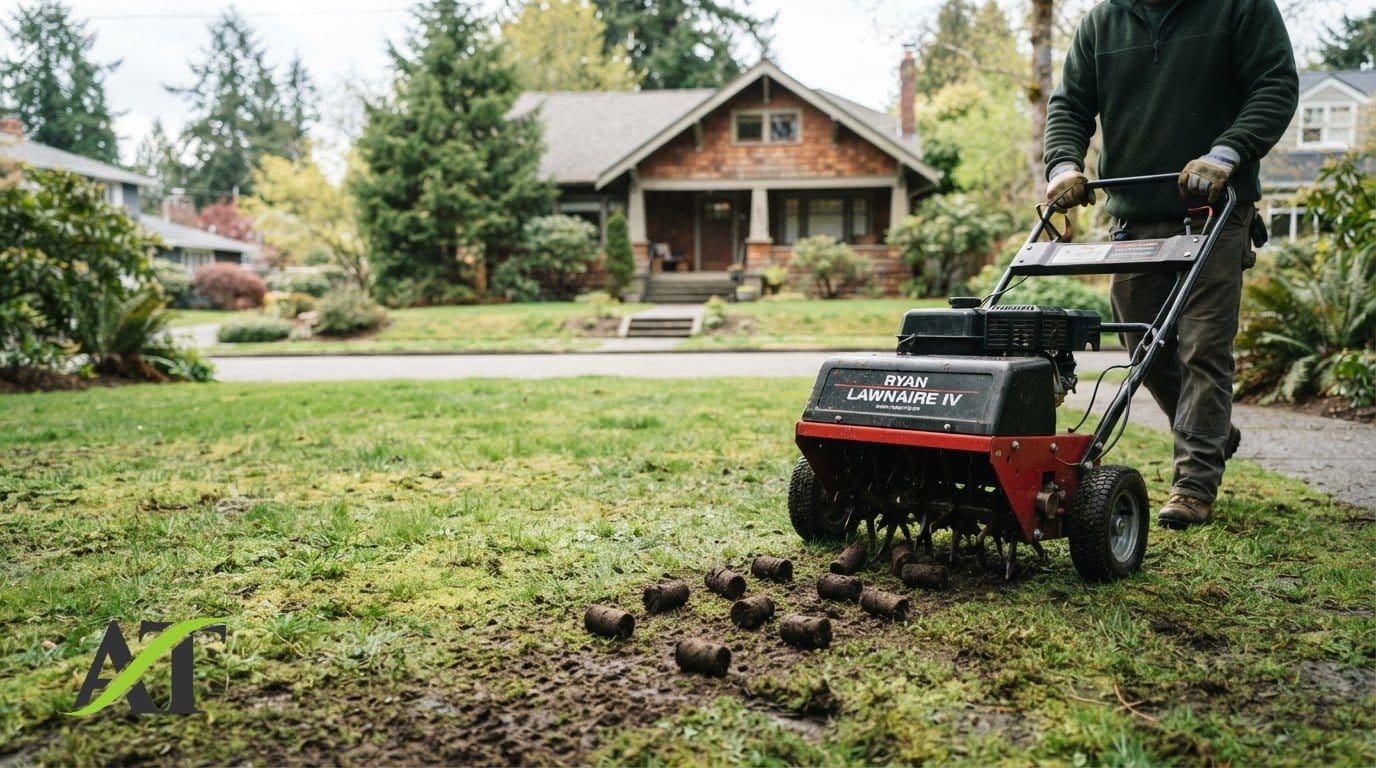
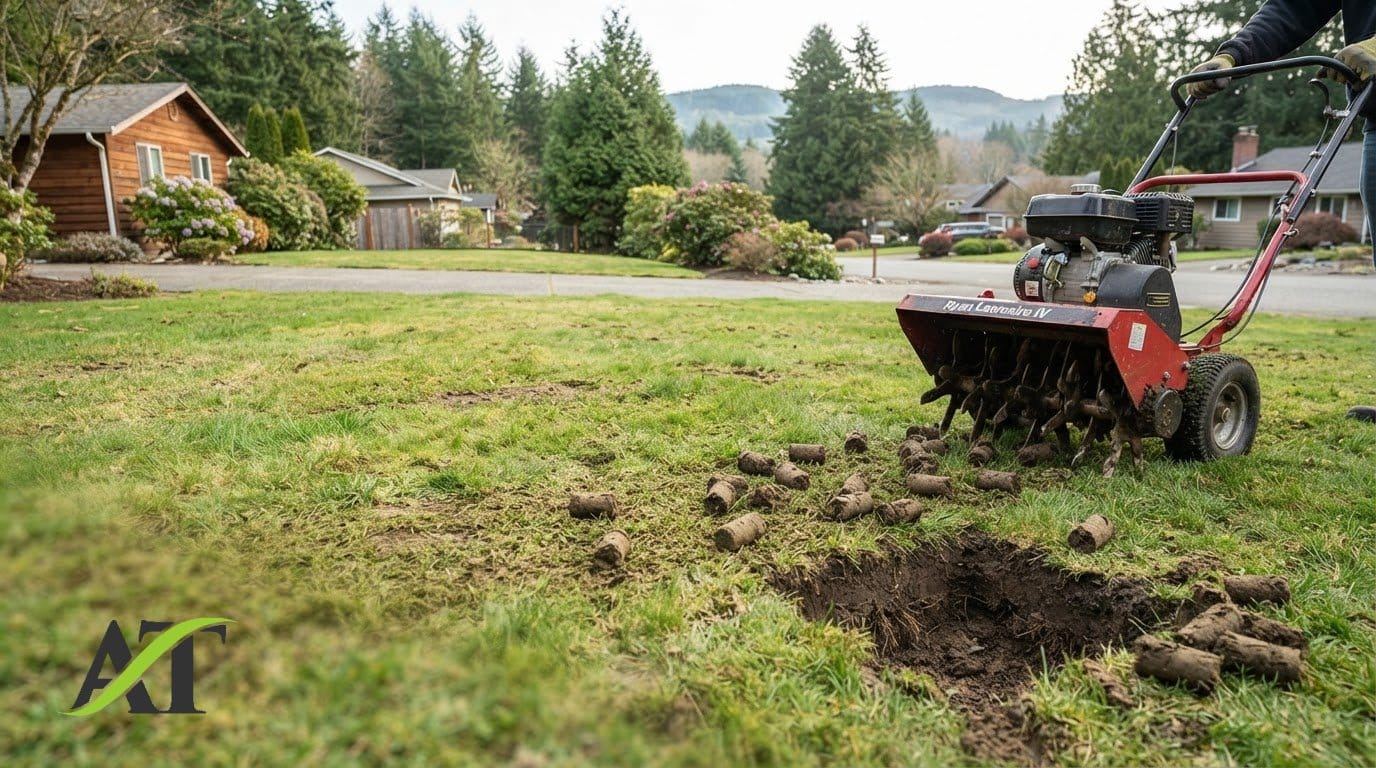
When a lawn needs both services, applying lime after Core Aeration can be a practical way to coordinate the work. Fresh aeration holes create additional openings through the lawn surface and provide an opportunity for better contact with the soil.
Fresh Openings
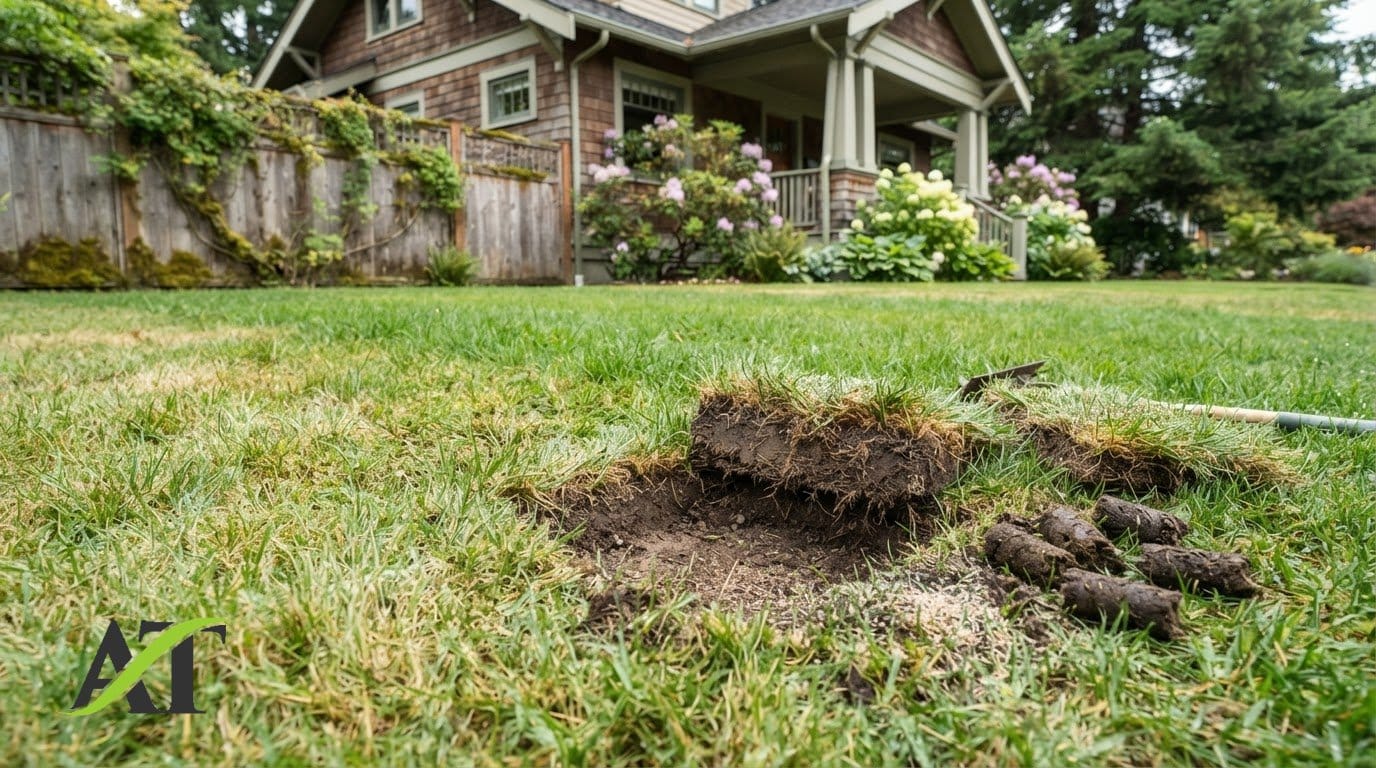
Core Aeration removes plugs from the lawn, leaving open holes throughout the turf.
Better Soil Contact
Applying lime immediately afterward allows some material to reach those fresh openings rather than remaining entirely at the lawn surface.
Convenient Pairing
If both services belong in the plan, coordinating them during one lawn-care period is practical and efficient.
Learn about Core Aeration →
Does Lime Kill Moss?
No. Lime does not directly kill moss. Lime can be useful when overly acidic conditions are one factor affecting the lawn, but moss commonly persists because of conditions that lime does not correct.
Conditions Often Associated With Moss
- Heavy shade
- Persistent moisture
- Poor drainage
- Compacted soil
- Thin grass density
- Surface thatch or matted material
What Lime Does Not Replace
- Dethatching (Power Raking)
- Core Aeration
- Drainage correction
- Better watering practices
- Overseeding thin turf
- Correcting excessive shade
If moss or heavy surface buildup needs to be physically removed, see Seattle Dethatching (Power Raking).
When Lime Is NOT the Answer
Lime should not become the automatic recommendation for every weak Seattle lawn. If the main problem is something else, fixing pH alone will not correct it.
Compacted Soil
Lime does not physically relieve compaction. That is the job of Core Aeration.
Heavy Thatch
Lime does not remove a dense thatch or moss layer. Dethatching (Power Raking) addresses surface buildup.
Drainage Problems
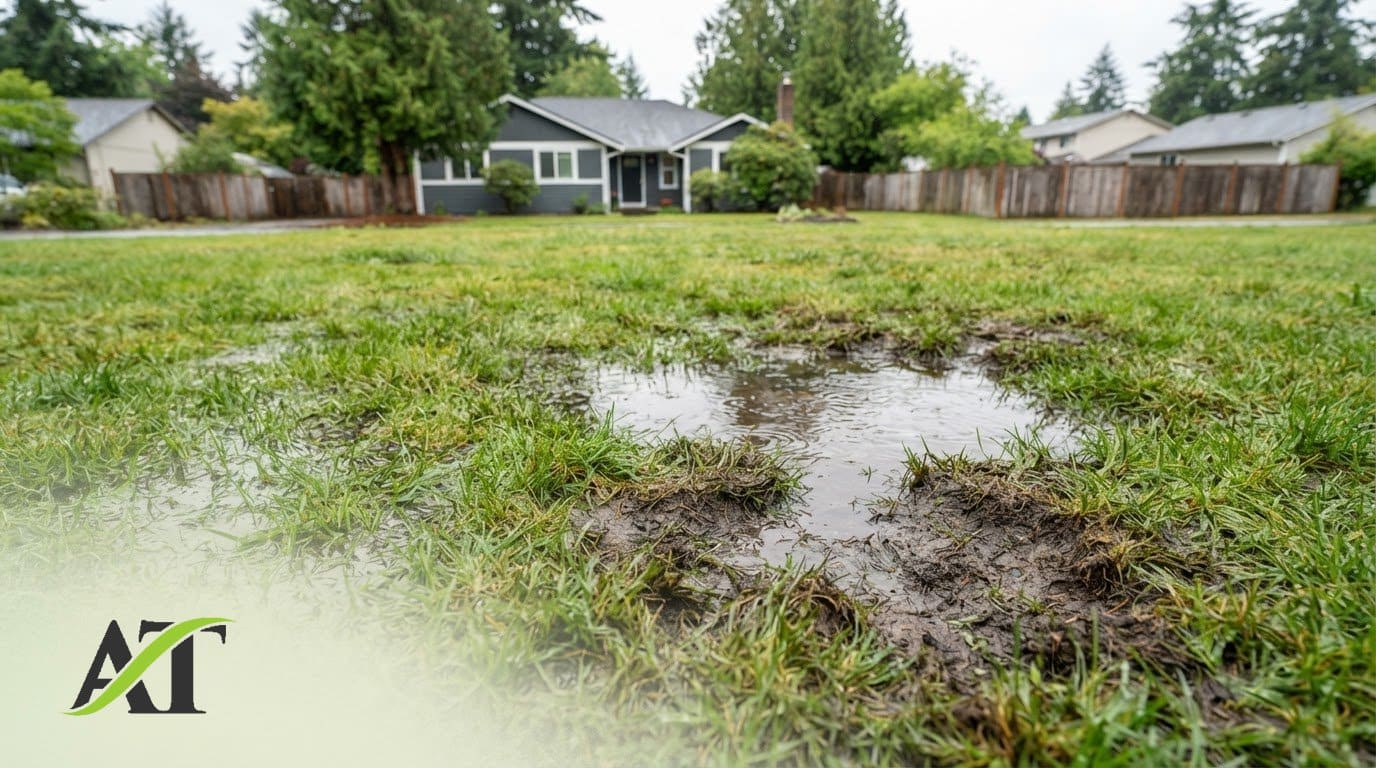
Lime does not correct grading, standing water, or underlying drainage problems.
Excessive Shade
Lime will not create sunlight. Dense shade can remain a major limitation regardless of pH.
Thin or Damaged Turf
Lime is not grass seed. A thin lawn may need overseeding or a broader Lawn Tune-Up.
Watering Problems
Incorrect watering can stress turf even when the soil pH is otherwise suitable.
Lime Works Gradually
Lime changes soil pH gradually. It is not an overnight lawn treatment, and homeowners should not expect an immediate change in lawn color or density after application.
Moisture, existing soil conditions, product characteristics, application conditions, and the overall health of the lawn can all affect how the process unfolds.
How to Apply Lime to Your Lawn
-
1
Confirm the Need with a Soil Test
Use a laboratory recommendation for your lawn. Do not apply lime simply because it is a certain season or because the lawn has moss.
-
2
Choose the Product
For typical homeowner use, pelletized lime is often easier to spread evenly and produces less dust than finely powdered material.
-
3
Follow the Product's Application Directions
There is no single universal Seattle-lawn application rate. Use the laboratory recommendation together with the specific product label. Ask the lab to clarify conversions or split applications rather than assuming more lime is better.
-
4
Spread It Evenly
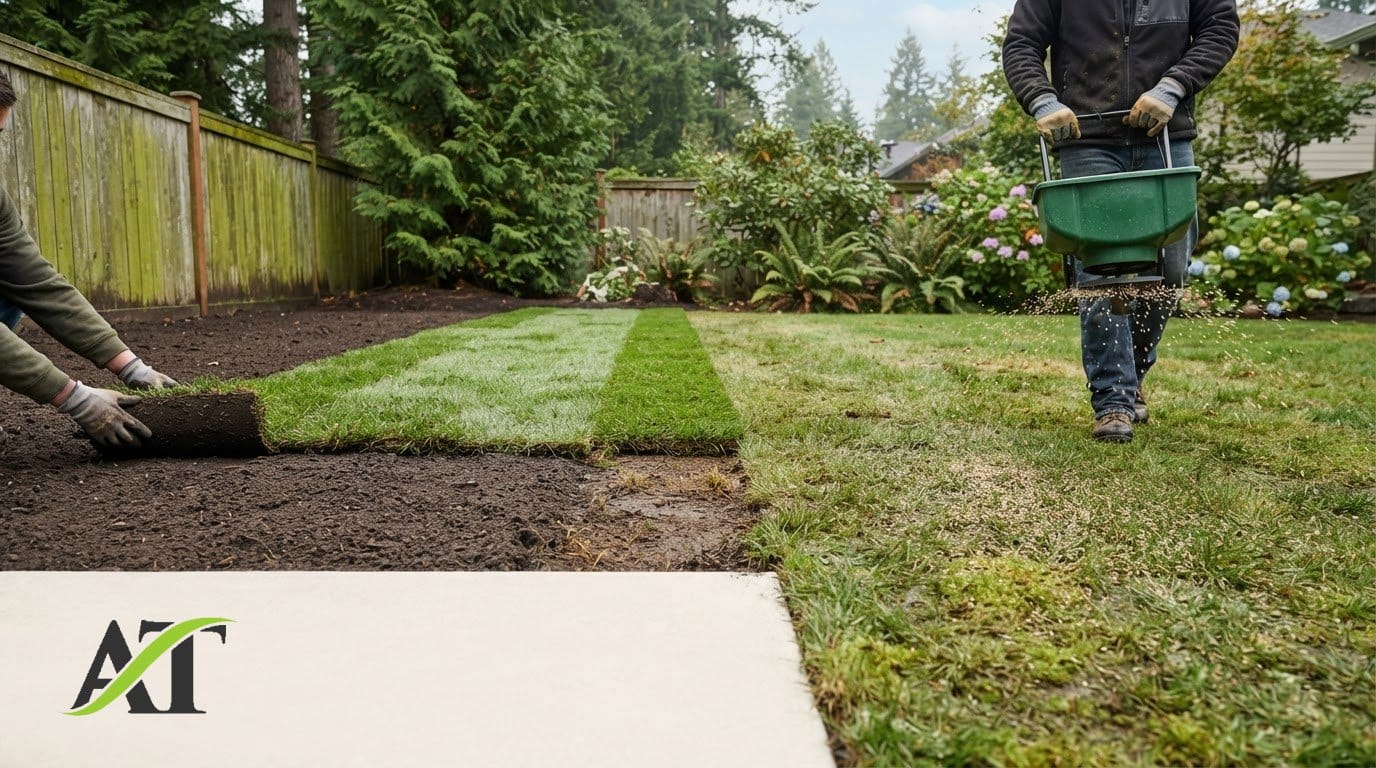
Use an appropriate lawn spreader and aim for consistent coverage rather than heavy concentrations in isolated areas.
-
5
Water Appropriately
Watering can help move pelletized lime from the grass blades toward the soil. Normal Seattle rainfall may sometimes do this naturally, but avoid relying on a forecast for an extreme downpour.
-
6
Give It Time
Soil pH changes gradually. Do not expect immediate visible results or assume another application is needed simply because the lawn does not change overnight.
A Spreader for Even Application
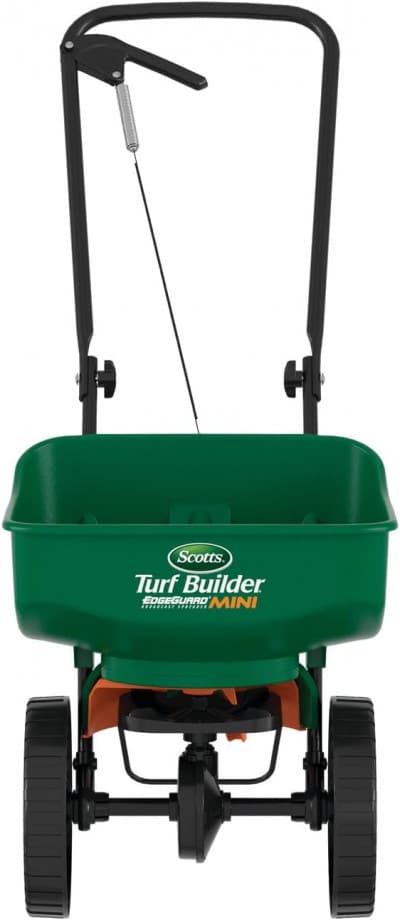
Scotts Turf Builder EdgeGuard Mini Broadcast Spreader
A compact broadcast spreader for compatible pelletized lawn products on smaller residential lawns. Use the lime product and spreader instructions together, confirm the setting and coverage, and avoid overlapping heavy applications.
View on AmazonSet the rate for the actual product
Do not assume one spreader setting fits every lime formulation. Use the amount recommended by your soil test and follow the directions on the lime bag. If you're unsure how much to spread, ask the soil lab or product manufacturer before applying it.
A Reference for Your Wider Lawn-Care Plan

The Lawn Bible
A general lawn-care reference for homeowners exploring maintenance beyond lime application. Use your laboratory report, current regional guidance and the product label for site-specific lime decisions.
View on AmazonKeep the laboratory report as your guide
A general lawn book can help you ask better questions, but it does not replace your sample-specific recommendations.
Can Lime and Grass Seed Be Used Around the Same Time?
Yes. Lime can be used during the same general lawn-improvement period as overseeding when lime is appropriate. However, seeding itself is not a reason to apply lime, and lime is not required simply because a lawn is being overseeded.
The same principle applies to a Seattle Lawn Tune-Up: Core Aeration, Premium Overseeding, and Starter Fertilizer each have their own purpose. Lime is an optional add-on when it belongs in the lawn's overall plan.
Look at the Whole Lawn First
Aerating Thatching Co. can apply professional lawn lime as an optional add-on when appropriate. It is not automatically included with every Core Aeration, Lawn Tune-Up, overseeding visit, or lawn renovation.
DIY Path
If you want to apply lime yourself, choose an appropriate lawn product, follow its coverage directions, spread it evenly, and allow the pH change to happen gradually.
See DIY tools →Professional Path
If you are unsure whether lime is the right next step, Stewart can look at the lawn as a whole and recommend the service or add-on that makes sense rather than automatically adding lime.
Ask Stewart About Your LawnShould You Apply Lime Every Year?
No—not automatically. Applying lime in a previous year is not, by itself, a reason to apply it again the following year.
Some lawns may appropriately receive lime again at another point, but lime should not become an automatic annual lawn treatment. Repeated unnecessary applications can move soil pH higher than desired.
Frequently Asked Questions
What is the best time to apply lime to a Seattle lawn?
Does every Seattle lawn need lime?
Can I apply lime immediately after Core Aeration?
Can lime and grass seed be applied around the same time?
Does lime kill moss?
Should I water after applying lime?
How quickly does lime work?
Is pelletized lime easier for homeowners to use?
Can too much lime cause problems?
Does Lime Belong in Your Lawn-Care Plan?
Lime may make sense when raising soil pH is appropriate. It probably is not the whole answer when the main problem is compaction, heavy thatch, shade, drainage, watering, moss, or thin and damaged turf.
The best plan starts by looking at what the entire lawn is doing rather than automatically adding another treatment.