Protect Your North Seattle Area Lawn: Effective Strategies to Prevent Raccoon Damage
Raccoons are common throughout North Seattle and the surrounding area, and their nighttime search for food can leave sections of lawn flipped, torn or full of shallow holes. The key is to determine what is attracting them, remove other food sources and use practical deterrents before repeatedly repairing the same damage.
Recognizing Raccoon Damage
Raccoon activity on a North Seattle-area lawn is often fairly easy to recognize once you know what to look for.
Patches of Torn-Up Grass
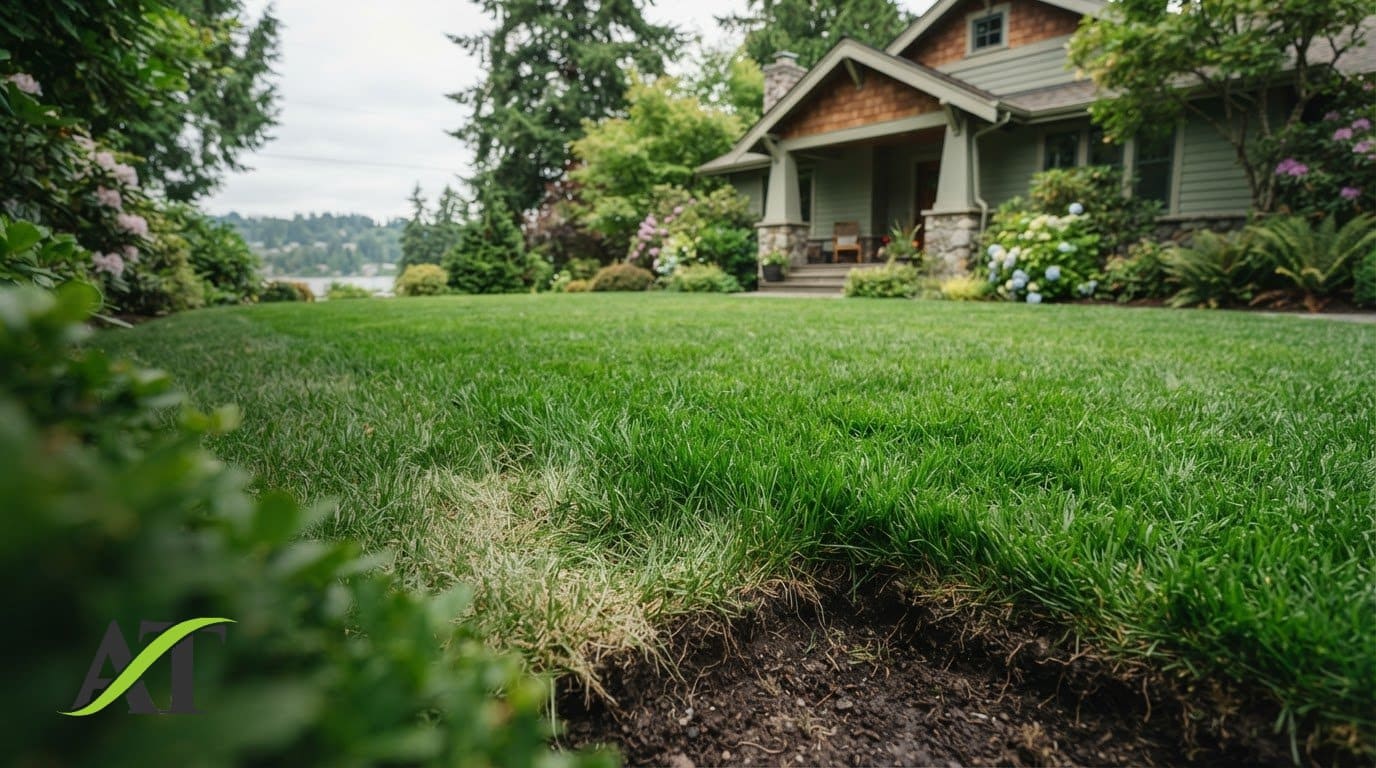
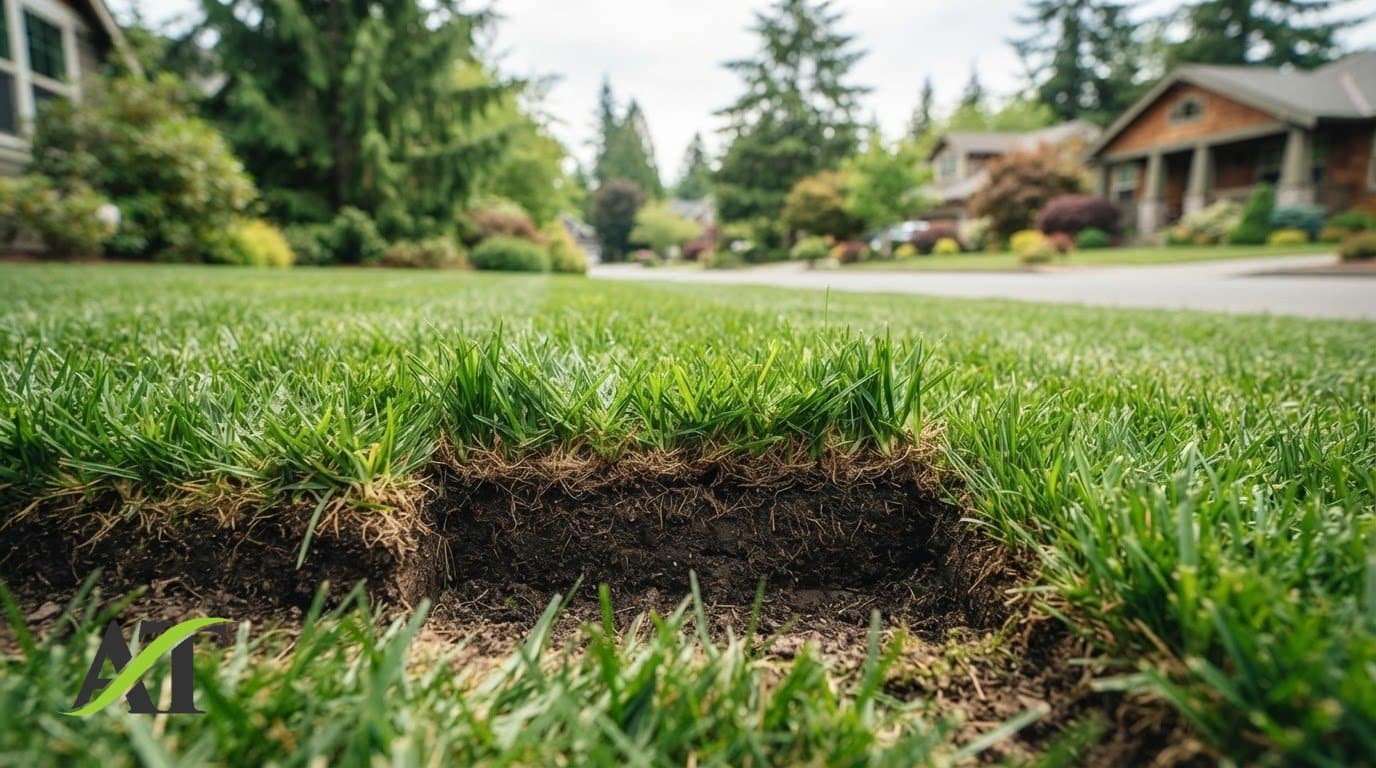
Raccoons may flip, peel or disturb sections of turf while searching for food below the surface.
Shallow Holes
Small, scattered holes can appear where raccoons have investigated the soil for insects, worms or other food.
Disturbed Beds or Compost
Raccoons are opportunistic feeders, so overturned compost, disturbed garden soil or nearby food debris may accompany lawn damage.
Tracks and Droppings
Raccoon tracks have a distinctive hand-like appearance. Tracks near disturbed turf can help identify which animal has been visiting.
One important clue: repeated digging in the same weak areas of turf can sometimes indicate that raccoons have found a food source below the lawn. That may include grubs, but wildlife activity by itself does not confirm a grub infestation.
Why Raccoons Target Lawns in the North Seattle Area
North Seattle’s long wet season and mild climate support earthworms, insects and other soil-dwelling organisms that raccoons may investigate for food. In some lawns, European chafer grubs or other larvae can also become an attractive food source.
That does not mean every lawn visited by a raccoon has a grub problem. Garbage, compost, bird feeding, pet food, fallen fruit and other easily available food can also encourage repeated visits.
Seeing torn turf? If raccoons, crows or skunks repeatedly work the same areas of lawn, inspect below the damaged turf before buying a grub-control product.
For more detail, see our North Seattle European Chafer Beetle Guide and guide to raccoons, crows, skunks and grub-related lawn damage.
Preventing Raccoon Damage
Prevention works best when you reduce the reasons raccoons are visiting instead of relying on a single deterrent.
Check for an Underlying Grub Problem
If turf is being repeatedly peeled or torn, inspect below the surface for grubs. Visible animal damage alone is not enough to confirm European chafer or another grub problem.
Eliminate Other Food Sources
Secure garbage and compost containers, bring pet food indoors, clean up spilled birdseed and remove fallen fruit or garden produce that could encourage nighttime visits.
Maintain the Lawn Appropriately
Follow appropriate mowing and watering practices for your grass. Avoid unnecessary overwatering and address lawn conditions based on the problem actually present.
Add Practical Deterrents
Motion-activated water, temporary physical protection and appropriately labeled animal-repellent products can be used as part of a broader prevention strategy.
A layered approach is usually more practical: remove attractants first, reduce access where possible, protect vulnerable lawn areas and then add an appropriate deterrent. Raccoons can become accustomed to conditions around a property, so relying on only one technique may not be enough.
Stopping Active Raccoon Damage
If raccoons are already disturbing the lawn, take steps to limit additional damage while also figuring out why they are returning.
1. Protect Vulnerable Lawn Areas
- Temporarily protect badly disturbed sections where practical so the same turf is not repeatedly flipped or dug.
- Secure any temporary barrier so it does not create a hazard for people or animals.
- Wait to invest heavily in lawn repair until the underlying attraction or pest issue has been addressed.
2. Remove Attractants and Change the Environment
- Secure garbage, compost, birdseed and pet food.
- Pick up fallen fruit and other food around the property.
- Consider motion-activated water or another suitable deterrent around frequently visited areas.
3. Do Not Relocate Trapped Raccoons Yourself
Washington wildlife rules do not allow a homeowner to simply capture a raccoon and transport it somewhere else for release without the required authorization.
If removal becomes necessary, review current Washington Department of Fish & Wildlife nuisance-wildlife guidance or contact an appropriately qualified wildlife-control professional.
4. Confirm Grubs Before Treating for Grubs
If raccoons repeatedly peel back weak turf, look below the surface. If European chafer or another lawn grub is confirmed, address that underlying pest problem before rebuilding heavily damaged turf.
Core Aeration, Dethatching (Power Raking), overseeding and fertilizer do not kill European chafer grubs. They are lawn-improvement or lawn-restoration tools.
Products That May Help as Part of a Raccoon-Damage Strategy
These products address different parts of the problem. They are best viewed as tools within a broader prevention plan rather than guaranteed solutions.

Scotts Grub Ex recommended by Aerating Thatching Co
This is relevant when lawn-damaging grubs have actually been identified and the product is appropriate for the pest and treatment timing. It is not a raccoon repellent.
For suspected European chafer, confirm the grubs first and follow the current product label for use, timing, application and precautions.
View Scotts Grub Ex
2025 Upgraded Solar Animal Repellent, Cat Repellent Outdoor, Squirrel Repellent, Deer Repellent recommended by Aerating Thatching Co
A solar-powered animal-deterrent device can be considered as an additional layer around frequently visited areas. Results with wildlife deterrents can vary, so it should not replace basic attractant removal or physical protection.
View Solar Animal Repellent
Repels-All Animal Repellent Granules, 3 lbs. Ready-to-Use Deer & Rabbit Repellent recommended by Aerating Thatching Co
A granular animal repellent may be useful around appropriate landscape areas as another deterrent layer. Confirm the current label covers the intended location and use, and follow all label directions.
View Repels-All GranulesProduct formulations, labels and availability can change. Always use the current product label as the controlling source for application, placement and precautions.
Is Something Under the Lawn Attracting the Raccoons?
Raccoons digging in turf are sometimes showing you a second problem rather than creating the only problem. European chafer grubs can weaken grass roots, and raccoons, crows, skunks and other animals may create extensive additional damage while searching for the larvae.
However, torn turf does not automatically mean European chafer. North Seattle lawns can also be affected by summer drought stress, shade, drainage problems, compaction and other conditions.
When Raccoon Damage Leaves the Lawn Needing Repair
Once the reason for repeated wildlife activity has been addressed, look at how much healthy, well-rooted grass remains before deciding how much lawn repair is actually necessary.
Lightly disturbed turf may need only time and normal lawn care. If the lawn has become thin, badly loosened or extensively damaged, lawn restoration may become appropriate after the underlying pest or wildlife issue is under control.
Aerating Thatching Co. specializes in the lawn-repair side of the problem. Core Aeration, Dethatching (Power Raking), overseeding and other lawn-improvement services can help rebuild damaged turf when those services match the lawn’s remaining condition, but they are not raccoon- or grub-control treatments.
Not sure how much repair the lawn needs? Start with the condition that remains after the underlying problem has been addressed. You can review the European chafer lawn-repair guidance or explore the Lawn Tune-Up service when rebuilding lawn density is appropriate.
Protecting Your North Seattle Area Lawn From Raccoon Damage
Raccoon damage can be frustrating, but the most useful response is to determine why the animals are returning rather than repeatedly repairing the surface. Remove accessible food sources, protect vulnerable areas, use appropriate deterrents and check below repeatedly damaged turf if grubs are suspected.
If a grub problem is confirmed, deal with the pest first. Once the underlying problem is under control, determine whether the grass actually needs repair and choose the lawn-restoration approach based on the condition that remains.