Sod Lawn Maintenance in Seattle: How to Keep an Established Lawn Healthy Year-Round
Maintaining a healthy sod lawn in the Seattle area means adjusting your care to our long wet season, relatively mild temperatures and typically drier summers. Once sod is established, the goal is no longer to treat it like newly installed turf—it should be maintained as an established cool-season lawn.
An established Seattle sod lawn generally does best with sensible mowing, watering based on actual weather and soil conditions, appropriate seasonal fertility, good drainage and attention to thinning or compaction before those problems become severe. Avoid rigid schedules that tell you to water, fertilize or aerate simply because a certain number of days or weeks have passed.
Why Proper Sod Lawn Maintenance Matters
Once sod has rooted, it becomes your established lawn. Its long-term condition depends on the same fundamentals that affect any lawn: sunlight, moisture, mowing, soil conditions, drainage, traffic, fertility and the type of grass growing there.
Proper maintenance helps keep turf dense enough to compete with many weeds, protects the leaf area grass needs for continued growth and helps prevent avoidable stress. But maintenance cannot overcome every site limitation. Heavy shade, chronically wet soil, major drainage problems, severe compaction or pest damage may require something more than another round of watering or fertilizer.
Key Sod Lawn Maintenance Tips
Water According to Conditions
Newly installed sod needs frequent moisture while it is rooting. Once established, however, the lawn should not remain on an establishment-style watering schedule.
Seattle's rainy periods may require little or no supplemental irrigation. During dry summer weather, established turf may need irrigation if you want it to stay actively growing and green. Water based on weather, soil moisture, exposure and the lawn's response rather than a fixed year-round calendar.
Early-day watering is generally preferable when irrigation is needed. Avoid repeatedly keeping established turf unnecessarily wet.
Mow Without Scalping the Lawn
Regular mowing helps maintain turf density, but the best cutting height depends on the grasses in the sod blend and the conditions in the lawn.
A useful rule is to avoid removing more than about one-third of the leaf blade in a single mowing. Letting grass get very tall and then cutting it extremely short can stress the lawn.
Keep mower blades sharp so they cut cleanly rather than shredding the grass. During summer stress, avoid unnecessarily close mowing.
Fertilize for the Lawn You Have
Established sod does not need fertilizer simply because a certain number of weeks have passed. Fertility needs vary with grass type, season, lawn condition, mowing practices and the level of lawn quality you want to maintain.
Use lawn fertilizer when it is appropriate for active growth and follow the product label. The goal is healthy turf—not forcing excessive growth through a rigid fertilizer schedule.
Use Core Aeration When Compaction Is the Problem
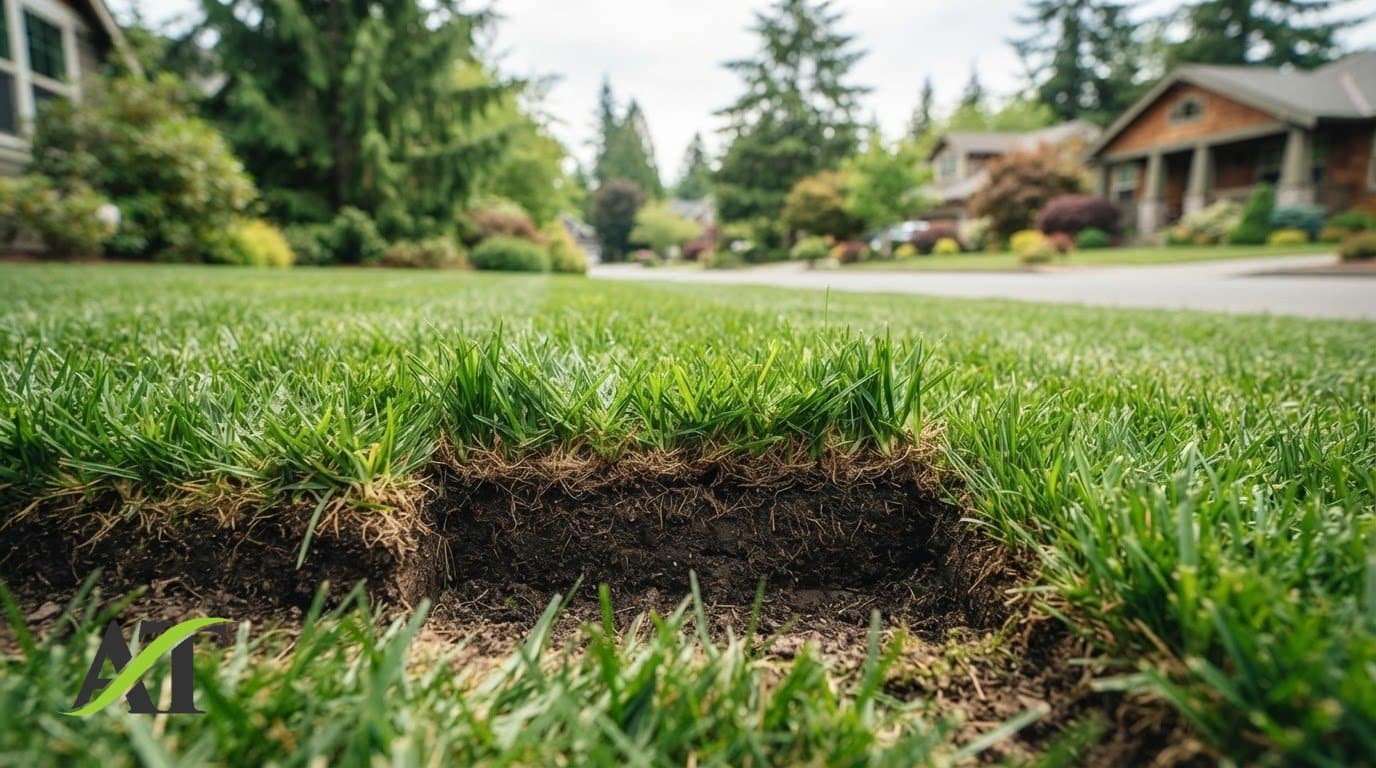
Foot traffic, mowing equipment and regular use can gradually compact the soil beneath an established sod lawn. When the soil is actually compacted, Core Aeration can help physically open the root zone.
Aeration does not need to be performed automatically twice every year simply because the lawn began as sod. Soil condition matters more than a calendar alone.
Weeds, Moss, Pests and Thin Areas
Weed Prevention Starts With Turf Density
A reasonably dense lawn leaves less open space for weeds to establish. Appropriate mowing, watering, fertility and repairing thin areas are therefore important parts of weed prevention. Individual weeds can be removed or managed as appropriate without turning routine sod maintenance into an automatic herbicide program.
Moss Is Often Telling You Something About the Site
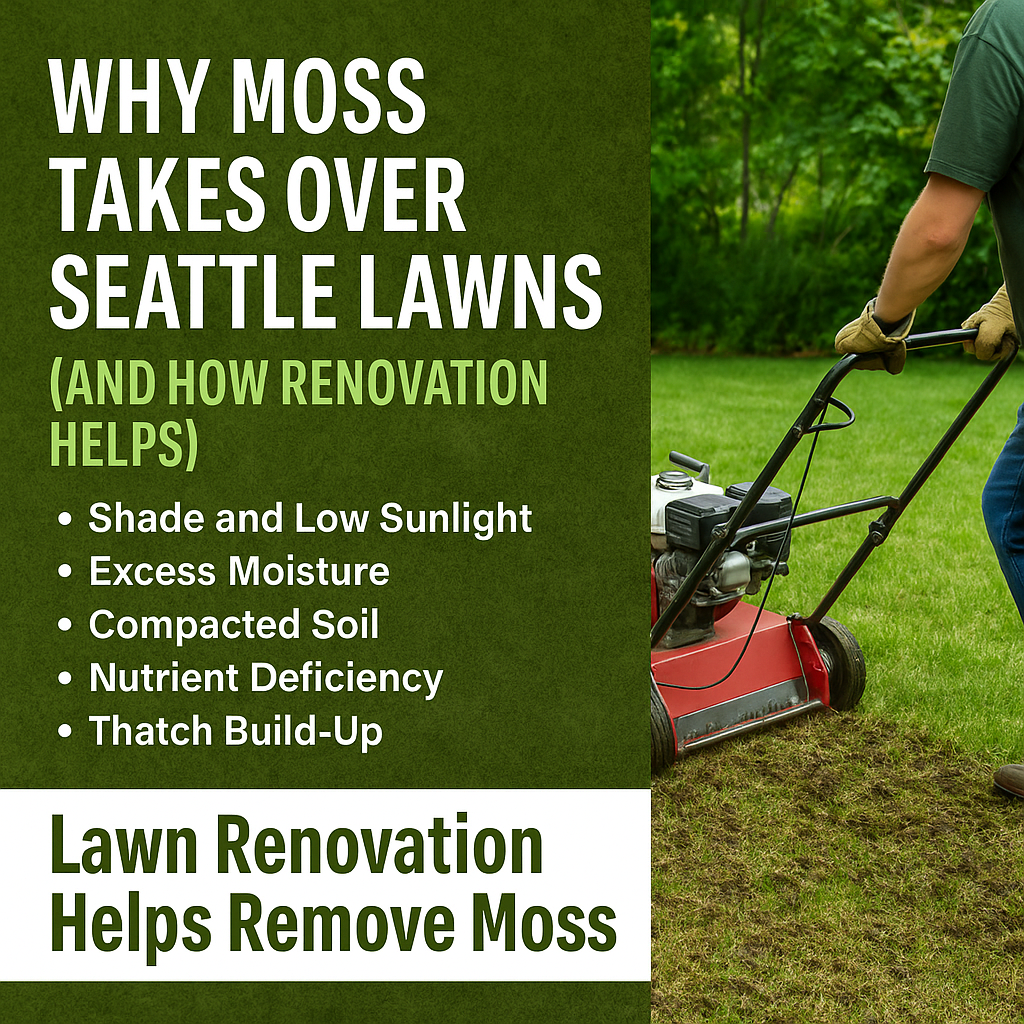
Moss is common in Seattle-area lawns because our cool, wet conditions often favor it. Shade, persistent moisture, thin turf, compacted soil and other site conditions can all contribute. Killing visible moss may address the moss that is present, but it does not automatically correct the conditions that helped it establish.
Thin or Bare Spots Need a Cause-First Approach
Before adding seed to a bare or thinning area, consider why the grass declined. Common contributors include summer stress, shade, compaction, drainage, heavy traffic, pest damage or other unfavorable growing conditions.
Once the cause has been addressed and conditions support grass growth, overseeding may help rebuild density. For lawns that need both compaction relief and more grass, the Seattle Lawn Tune-Up combines Core Aeration with Premium Overseeding and Starter Fertilizer.
Watch for Damage That Is Not a Maintenance Problem
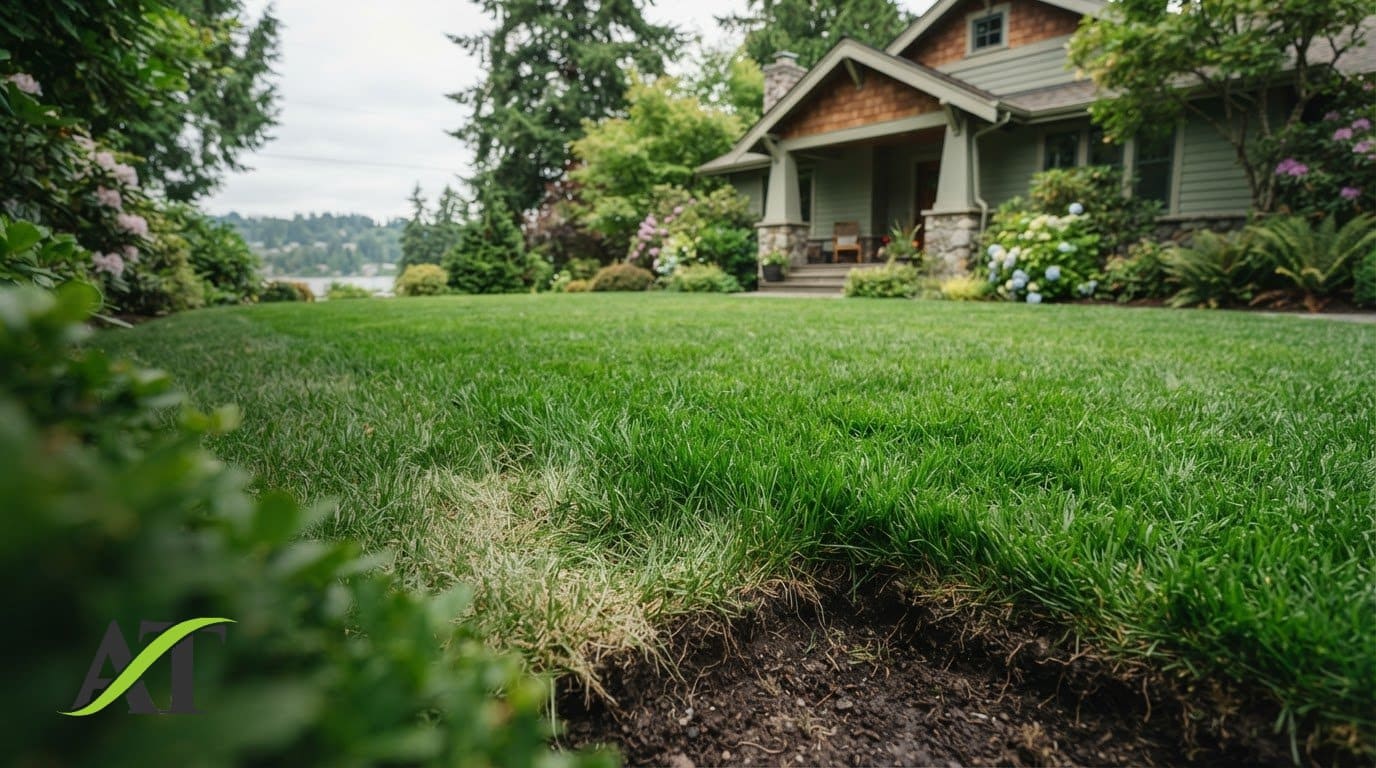
Unusual dead patches, turf that pulls up easily, digging by animals or sudden localized damage can point to causes beyond routine mowing and watering. Seattle-area lawns can experience issues such as chafer beetle grubs and other problems that should be identified before choosing a treatment.
Traffic, Pets and Compaction
Concentrated foot traffic, repeated equipment traffic and heavily used pet areas can contribute to localized thinning or compaction. Address the cause first, then repair damaged turf when growing conditions are appropriate.
Drainage and Shade Have Limits
Chronically soggy areas need the underlying water or drainage issue addressed. Fertilizer, seed, aeration or moss control alone cannot correct a genuine drainage problem.
Likewise, shade-tolerant grasses can help in suitable locations, but very deep shade may simply be difficult to maintain as dense lawn. Continually adding seed or fertilizer will not create adequate sunlight.
Seasonal Sod Lawn Care in Seattle
Seattle's lawn-care needs change significantly through the year. Rather than following one maintenance schedule in every season, adjust to active growth, rainfall, summer dryness and the actual condition of the turf.
Spring
Resume regular mowing as growth increases. Evaluate winter thinning, compaction and moss rather than automatically treating every lawn the same way. Fertilization or aeration can be useful where lawn conditions justify them.
Summer
Seattle's drier months are when irrigation decisions matter most. Established turf can be irrigated to maintain active growth, or suitable lawns may be allowed to slow down and lose some color during dry periods. Avoid scalping drought-stressed turf.
Fall
Cooler temperatures and returning moisture make fall an important period for lawn recovery. Remove accumulated leaves and debris, continue mowing while grass is actively growing and address thin turf or compaction where appropriate.
Winter
Growth slows and rainfall generally reduces irrigation needs dramatically. Avoid unnecessary traffic on saturated soil, remove heavy leaf buildup and mow only when growth and conditions make mowing appropriate.
Simple Established-Sod Checklist
- Water: According to rainfall, soil moisture and summer stress—not a fixed 2–3-times-per-week rule.
- Mow: As growth requires, while avoiding removal of too much leaf blade at once.
- Fertilize: According to season and actual lawn needs rather than automatically every 6–8 weeks.
- Core Aerate: When soil compaction warrants it, not automatically twice every year.
- Overseed: When turf density has declined and the reason for thinning has been considered.
- Dethatching (Power Raking): When actual surface thatch, moss or matted material warrants removal—not as automatic annual maintenance.
A Declining Sod Lawn May Need More Than Water or Fertilizer
If your established sod keeps getting thinner, feels hard and compacted, has significant moss or surface buildup, or simply is not recovering despite reasonable maintenance, the next step is to identify what is actually limiting the lawn.
Core Aeration may be enough when compaction is the main issue. A thin lawn may benefit from a Lawn Tune-Up. Where heavy moss, thatch or matted material also needs to be removed, Dethatching (Power Raking) may be part of a broader renovation approach.
Helpful Products for Maintaining a Sod Lawn
These products support specific parts of ordinary lawn maintenance. They are useful tools and references—not substitutes for correcting drainage, shade, compaction, pest problems or other underlying causes of declining turf.

Stanley Fatmax Professional Grade Water Hose 50′
A durable hose can make hand-watering dry areas and newly repaired lawn sections easier. For an established sod lawn, use irrigation according to actual soil and weather conditions rather than watering automatically on a fixed calendar.
View Stanley Fatmax Hose
Greenworks 60V 21” Cordless Self-Propelled Lawn Mower
Regular mowing is one of the most important parts of established lawn care. Whatever mower you use, maintain a sharp blade, avoid scalping and follow the one-third rule instead of cutting a heavily overgrown lawn extremely short.
View Greenworks Mower
Scotts GrubEx
Grub products are relevant when grubs are actually part of the lawn problem—they are not routine maintenance for every sod lawn. If you suspect chafer beetle damage, identify the problem and follow the product label carefully before choosing a control approach.
View Scotts GrubEx
The Lawn Bible
A useful reference for homeowners who want to better understand the fundamentals behind mowing, watering and general lawn maintenance. Local Seattle conditions should still guide how general lawn-care recommendations are applied.
View The Lawn BibleFrequently Asked Questions About Sod Lawn Maintenance
How long does sod take to establish?
Newly installed sod begins rooting relatively quickly when conditions are favorable, but establishment is a gradual process. Avoid relying on one exact number of days for every lawn. Weather, soil, watering and grass type all affect rooting. Once the sod is securely rooted and growing normally, transition from new-sod care to established-lawn maintenance.
Should I keep watering established sod every day?
No. Daily watering is associated with the establishment stage, not normal long-term care. Established sod should be watered according to rainfall, soil moisture, summer dryness and the lawn's actual needs.
How can I tell if an established sod lawn needs water?
Look at the lawn and the soil rather than the calendar. Dry soil, loss of normal leaf firmness, footprints that remain visible and changes in turf color can all indicate water stress. Seattle's wet season may require little or no supplemental watering.
Does a Seattle sod lawn have to stay bright green all summer?
Not necessarily. Established cool-season turf can slow its growth and lose color during prolonged dry weather. Homeowners who want active summer growth generally need supplemental irrigation, while suitable established lawns can be managed with lower summer inputs and allowed to slow down.
How often should I aerate my sod lawn?
Aeration should be tied to compaction and lawn condition rather than an automatic twice-a-year schedule. If the soil is hard or compacted, Core Aeration may make sense. A lawn without a compaction problem does not need aeration simply because the calendar says so.
Should I Dethatch (Power Rake) sod every year?
No. Dethatching (Power Raking) is appropriate when actual surface buildup, thatch, moss or matted material needs to be removed. It should not be treated as mandatory annual maintenance for every established sod lawn.
Can I overseed a lawn that originally started as sod?
Yes. Once sod has become established, it is simply your lawn. If turf density later declines, overseeding can be useful after considering why the lawn became thin and whether the site can support healthy new grass.
Why is moss growing in my sod lawn?
Moss can be favored by Seattle's cool, wet conditions as well as shade, persistent moisture, compaction and weak or thin turf. Moss control may remove existing moss, but long-term improvement usually requires attention to the conditions that are allowing moss to compete successfully.
Keep Your Seattle Sod Lawn Healthy and Resilient
Maintaining an established sod lawn in Seattle is less about following a rigid calendar and more about responding to the lawn in front of you. Mow in a way that protects the turf, irrigate according to weather and soil moisture, fertilize appropriately, and use practices such as Core Aeration, overseeding or Dethatching (Power Raking) when the lawn's actual condition calls for them.
Seasonal color changes do not automatically mean the lawn is failing, and more fertilizer or more water is not always the answer. Shade, drainage, compaction, traffic, pest damage and other growing conditions can all affect how an established sod lawn performs over time.
If your lawn is thinning, compacted, mossy or simply not responding to ordinary maintenance, Aerating Thatching Co. can help you determine whether it needs a focused maintenance service or a broader lawn-restoration approach.
Sources & Further Reading
These resources were used for information in this article about Pacific Northwest lawn care, watering, mowing, seasonal maintenance and turf health.
- Oregon State University Extension — Practical Lawn Care for Western Oregon
- Oregon State University Extension — Practical Lawn Establishment and Renovation
- Oregon State University Extension — Lawn and Turfgrass Resources
Local conditions vary by lawn. Product labels and current local requirements should always be followed when applying lawn-care products.