What if the stubborn moss creeping across your lawn isn’t a shade issue, but a suffocating soil problem? If you are battling winter puddles and brick-hard summer ground, you are not imagining things. Kirkland sits directly over dense Alderwood glacial hardpan that chokes out root systems and blocks natural drainage. When grass cannot breathe, opportunistic moss takes over, leaving local property owners searching for lawn aeration Kirkland solutions that actually fix the underlying dirt.
You already know that surface spiking and store-bought moss treatments only mask the symptoms without solving hardpan compaction. In this guide, you will discover how mechanical Core Aeration relieves Kirkland’s heavy glacial clay to break soil compaction and revive thin, mossy turf. We will explore the mechanics of soil decompression, optimal seasonal windows for the Pacific Northwest, and how a targeted restoration plan builds a durable lawn that lasts.
Key Takeaways
- Heavy Pacific Northwest rain compresses Kirkland’s native glacial hardpan, creating standing water and moss growth that suffocate root systems.
- Effective lawn aeration Kirkland properties need requires mechanical hollow tines that extract physical soil plugs rather than solid spikes that worsen compaction.
- Reliable turf recovery depends strictly on tracking soil temperature rather than air temperature, with 55°F–75°F (13°C–24°C) providing the ideal window for seed establishment.
- Combining Core Aeration with Overseeding and Fertilizing through a complete Lawn Tune-Up places fresh seed directly into protected soil pockets for durable turf density.
Why Kirkland Lawns Suffer from Severe Soil Compaction and Thatch
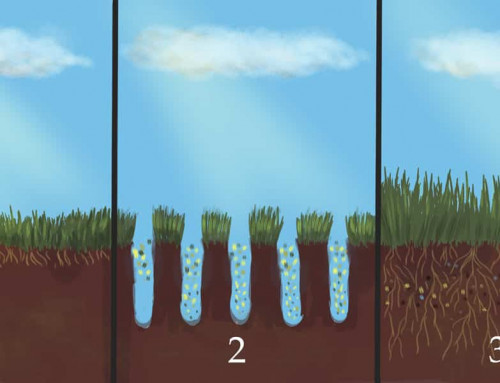
Most struggling Eastside yards do not suffer from neglect; they suffer from suffocation. Core Aeration is the mechanical process of pulling cylindrical soil cores out of the turf to relieve deep root zone compaction. In Western Washington, heavy winter rains pound the dirt for months. That constant downward hydraulic pressure collapses delicate soil pore spaces, driving out oxygen and locking roots in place. Without air exchange, desirable grass starves while surface water pools on the hard crust.
The Problem with Kirkland’s Glacial Till Soil
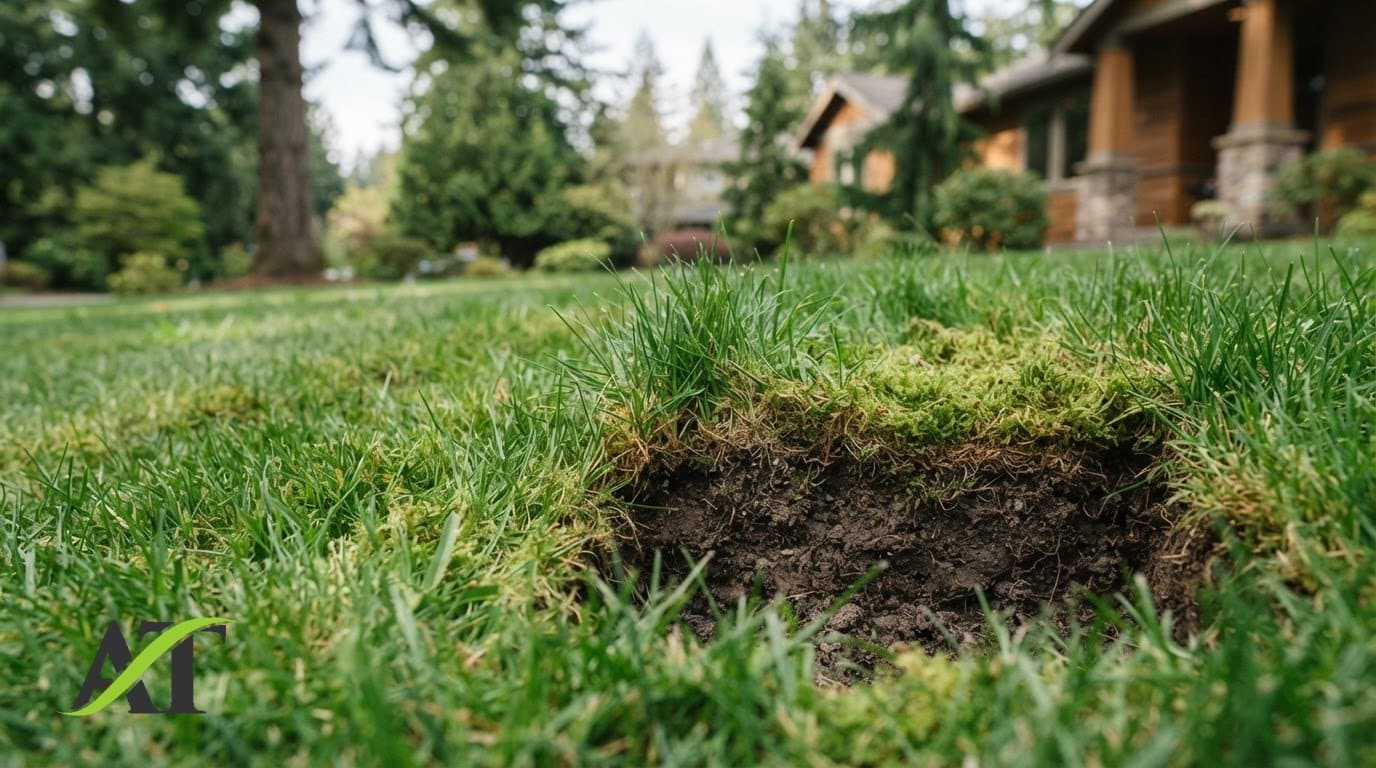
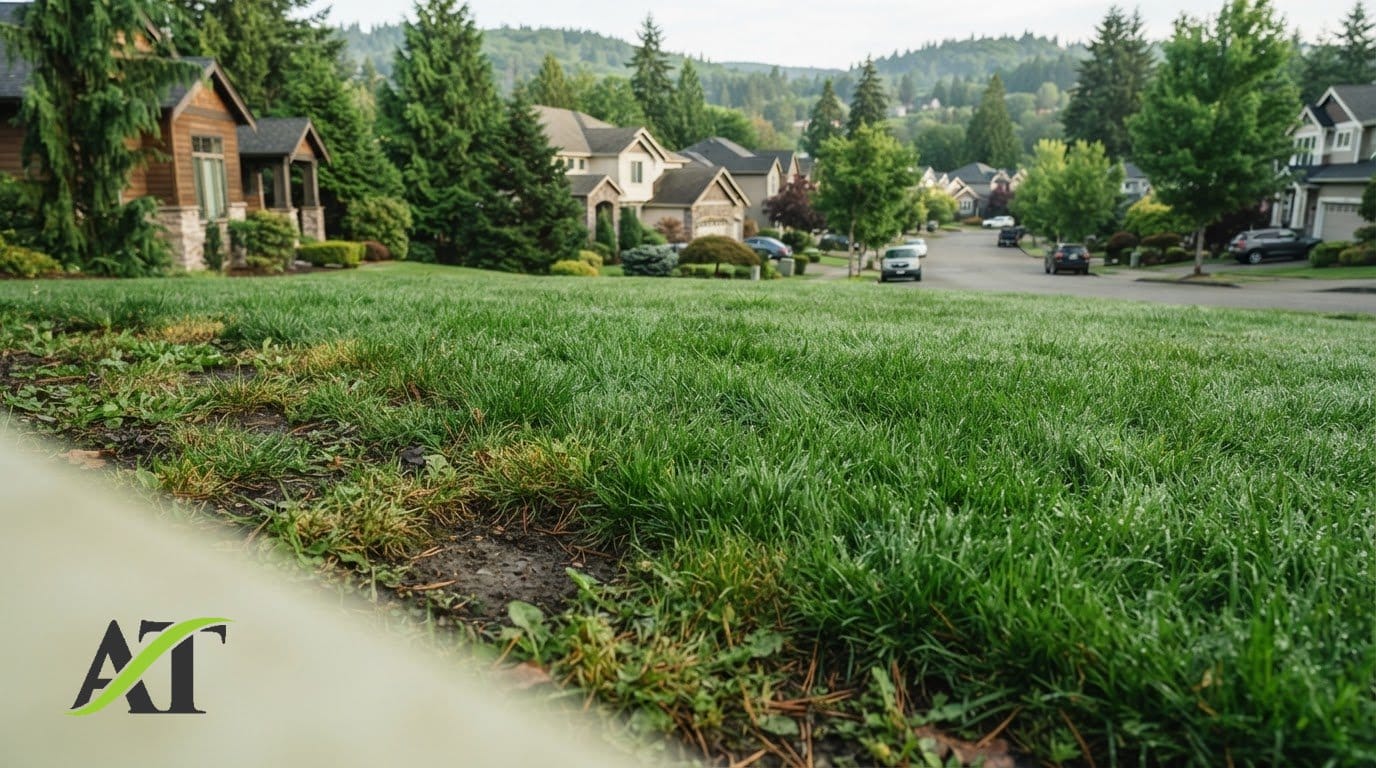
Kirkland neighborhoods sit squarely on unforgiving subsoils. During residential construction, developers routinely scrape away original topsoil layers, leaving turf to struggle over dense, cement-like basal till. Poor drainage locks the surface in persistent moisture, creating an anaerobic environment where opportunistic moss thrives while grass roots decay. Unrelieved compaction traps turf roots in the top inch of dirt, making the grass weak, thin, and defenseless against summer drought stress.
Visible Signs Your Kirkland Yard Needs Mechanical Help
General yard care will not fix subsoil structure. You need targeted restoration when your property displays these clear symptoms:
- Persistent surface puddles: Water stands on flat lawn areas hours after typical Puget Sound rain stops.
- Refusal of penetration: You cannot push a standard screwdriver more than two inches into damp turf without using body weight.
- Moss colonization: Spongy moss beds and opportunistic weeds crowd out desirable cool-season grass blades.
When you see these warning signs, scheduled lawn aeration Kirkland treatments are necessary to break the dense barrier and open pathways for air, moisture, and essential nutrition.
Core Aeration vs. Spiking: What Kirkland Turf Actually Requires
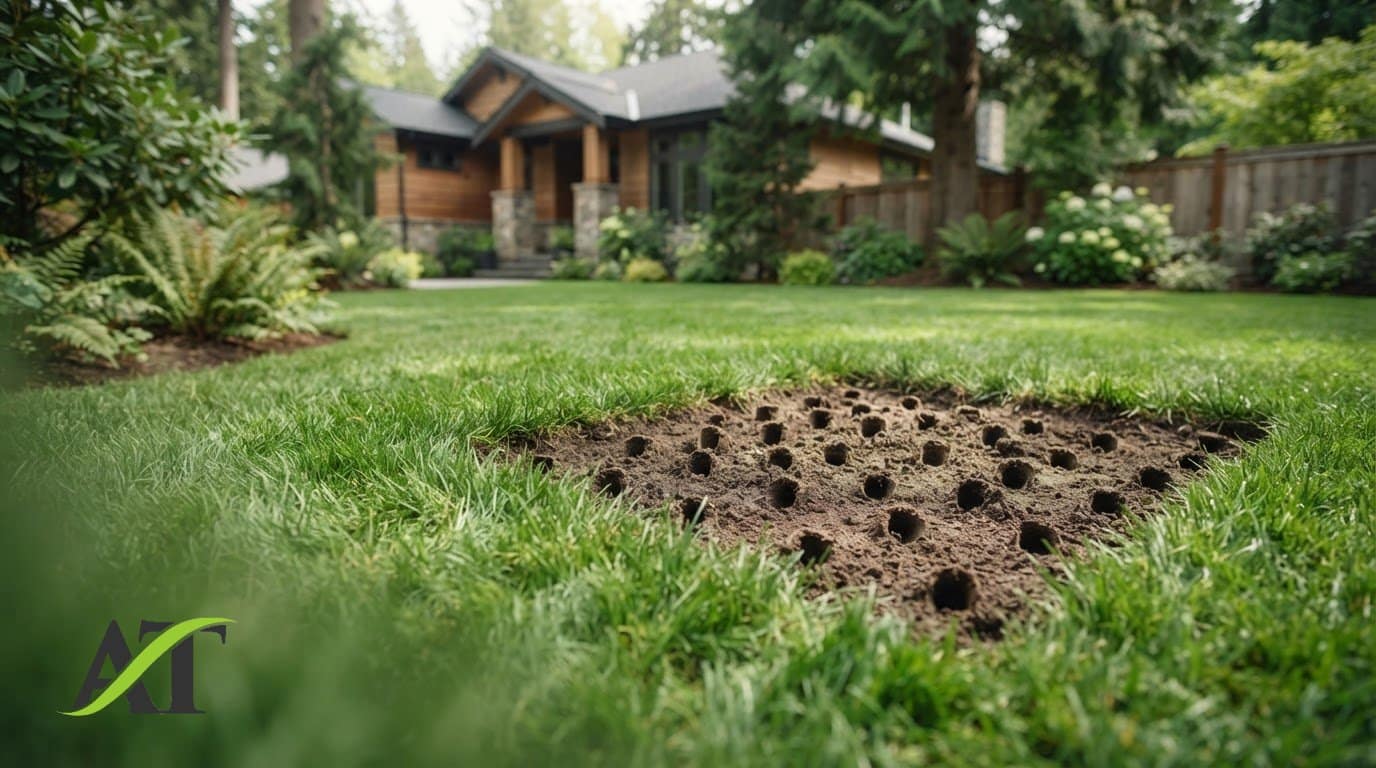
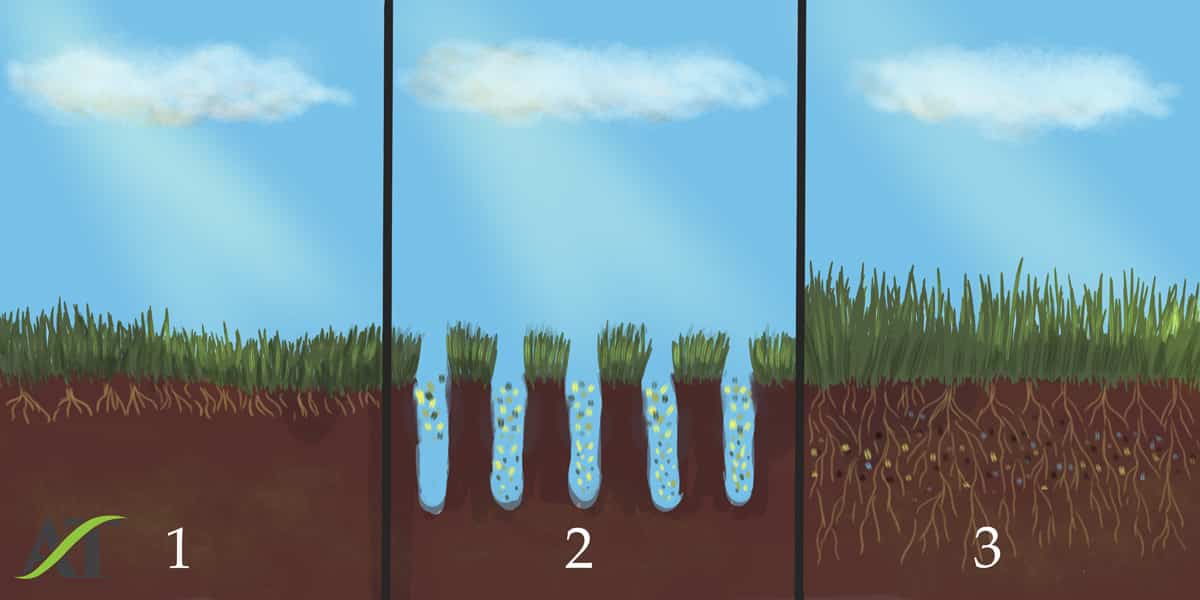
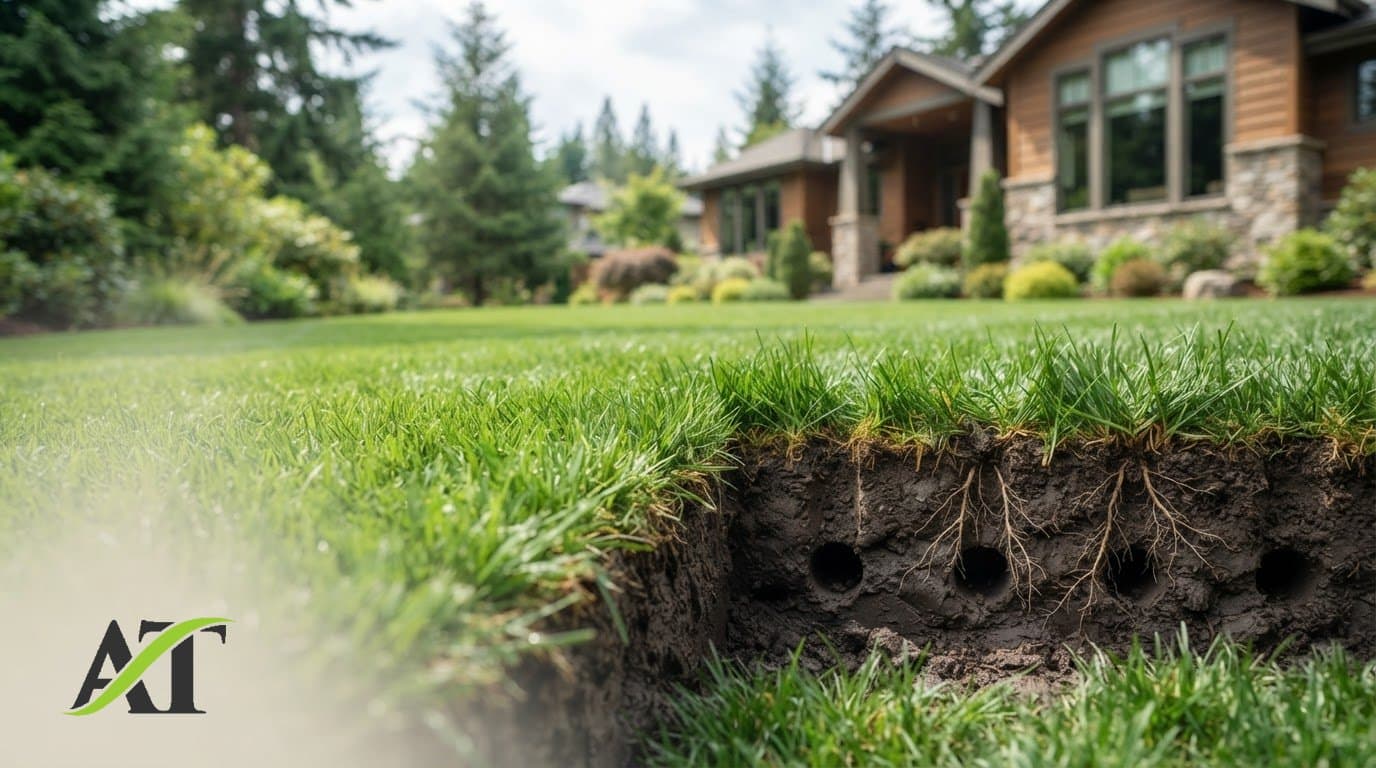
Many homeowners assume punching holes with solid spikes relieves compacted ground. In reality, solid metal tines press dirt sideways as they penetrate, packing soil particles tighter along the sidewalls of each hole. Effective lawn aeration Kirkland yards rely on requires hollow-tine Core Aeration. This process physically pulls soil plugs measuring 2 to 3 inches deep out of the turf. Over the next two weeks, these extracted cores break down naturally in the rain, distributing beneficial microbes back across the surface while leaving open avenues for air, water, and fertilizer.
The Mechanics of Hollow-Tine Extraction
Hollow tines pull clean cores from the earth to fracture dense subsoil rather than squeezing it. Removing these plugs creates immediate void spaces that reduce surface water runoff by acting as small collection basins during heavy downpours. Rather than washing away, rainfall filters straight into the subsoil. Grass roots rapidly expand into these new cavities, building the structural depth required to survive warm summer dry spells.
Why Liquid Aeration Products Fall Short on Compacted Clay
Liquid aeration formulas promise quick fixes through garden-hose sprayers, but chemical wetting agents cannot alter physical soil structure. Surfactants may help water penetrate dry crust, yet they cannot rearrange dense clay platelets or loosen packed glacial gravel. They do not create open voids for oxygen exchange or deep root growth. Mechanical extraction remains the industry standard for reviving dense Pacific Northwest lawns. You can request an estimate for lawn aeration in Kirkland to see how mechanical hollow tines properly decompact your turf.
The Optimal Timing and Soil Temperature for Core Aeration
Timing mechanical work requires looking below the surface rather than at the calendar. Scheduling effective lawn aeration Kirkland properties need depends entirely on active turf growth cycles. Mid-to-late spring and early autumn provide the ideal conditions for soil recovery and root expansion across the Eastside.
Why Soil Temperature Governs Turf Recovery
Air temperature can be deceptive. A sunny 65°F spring afternoon often conceals subsoil resting below 48°F. Cool-season grass varieties demand soil temperatures between 55°F–75°F (13°C–24°C) for dependable seed germination and root development. While seed can germinate outside this window, establishment will be slower, less consistent, and significantly less reliable. Autumn offers the best setup: warm soil balances out cooler air and predictable rainfall.
Pre-Aeration Yard Preparation Steps
Proper yard preparation allows commercial hollow tines to pull deep, consistent plugs across your entire property:
- Mow short: Cut the grass to standard mowing height two days before work to clear tine paths.
- Moisten dry ground: Water the lawn lightly 24 hours in advance to soften hardpan clay without making mud.
- Mark buried hazards: Flag sprinkler heads, shallow lighting wires, and buried utility boxes.

Maximizing Results: Combining Core Aeration with Restoration Treatments
Pulling cores relieves subsoil pressure, but standalone mechanical extraction leaves open ground vulnerable to opportunistic weed seeds. Pairing core removal with fresh seed and nutrition transforms basic maintenance into long-term restoration. When scheduling lawn aeration Kirkland homeowners achieve far better turf density by bundling complementary treatments. Balanced Fertilizing feeds established root systems while supporting emerging tender shoots. You can explore complete restoration options on our dedicated services page.
The Signature Lawn Tune-Up Framework
Our signature Lawn Tune-Up provides a proven three-part system consisting exclusively of Core Aeration, Overseeding, and Fertilizing. Perforating the turf creates thousands of micro-incubators. Dropping premium cool-season seed directly into these open apertures ensures superior seed-to-soil contact while shielding fragile seedlings from drying surface winds. While germination varies based on consistent moisture, soil conditions, and weather, targeting soil temperatures between 55°F–75°F (13°C–24°C) ensures dependable establishment. Property owners can also include optional treatments like Lime Application to neutralize acidic Eastside soils.
When to Upgrade to the Full Meal Deal
Thick layers of thatch and moss act like a sponge, choking the root zone and preventing hollow tines from reaching hardpan subsoil. For heavily choked properties, the Full Meal Deal provides a four-step overhaul: Power Raking (Dethatching), Core Aeration, Overseeding, and Fertilizing. Mechanically slicing out moss and dead stems exposes bare ground prior to aeration, allowing the hollow tines to pull clean, full-depth plugs. Ready to transform your property? Request a quote online for dependable Kirkland service.
Give Your Kirkland Lawn the Foundation It Deserves
Surviving long rainy winters and dry summer stretches requires healthy subsoil structure. Kirkland lawns cannot thrive on compacted glacial till without regular mechanical relief. Extracting physical soil plugs shatters hardpan clay, drains trapped surface moisture, and gives roots room to breathe. As an owner-operated local business serving Lake Washington and King County properties since 2004, we use dedicated mechanical restoration equipment designed specifically for Western Washington clay. Choosing a signature Lawn Tune-Up pairs deep soil decompaction with Overseeding and Fertilizing, giving cool-season grass the exact start needed to outcompete aggressive moss.
Take the first step toward lasting turf health today. Scheduling professional lawn aeration Kirkland yards depend on breaks through tough hardpan, improves natural drainage, and builds a durable, vibrant green lawn your family can enjoy across every season.
Frequently Asked Questions
How often should a Kirkland residential lawn undergo Core Aeration?
Most Kirkland lawns benefit from annual Core Aeration due to dense regional subsoil and heavy winter rainfall. If your yard suffers from severe standing water, heavy foot traffic, or aggressive moss, scheduling service twice per year in spring and fall delivers faster recovery. Annual lawn aeration Kirkland services keep soil pores open, preventing dense Alderwood till from re-cementing into an impenetrable layer over time.
Do I need to rake up the dirt plugs left behind on my lawn?
No, you should always leave the extracted soil plugs on your lawn. As rainfall, foot traffic, and routine mowing break them down over one to two weeks, they filter valuable soil microbes and organic matter back into the thatch layer. Raking up cores removes native soil, reduces the natural leveling benefit of the process, and deprives your turf of nutrients already present in your yard.
What is the exact difference between a Lawn Tune-Up and the Full Meal Deal?
A Lawn Tune-Up consists exclusively of Core Aeration, Overseeding, and Fertilizing to decompact soil and boost grass density. The Full Meal Deal includes four complete steps: Power Raking (Dethatching), Core Aeration, Overseeding, and Fertilizing. If thick moss or dense thatch mats your turf, choose the Full Meal Deal so our commercial equipment can extract that debris before hollow tines decompact the hard subsoil below.
Can Core Aeration damage my underground sprinkler system?
Commercial hollow tines penetrate two to three inches into the earth, which can damage shallow lines or sprinkler heads if they are not marked. We ask homeowners to flag all pop-up heads, shallow drip tubing, and hidden utility boxes before service. Our operators guide the heavy equipment around every marked obstacle, ensuring your turf receives thorough decompaction without risking any irrigation damage.
Why is soil temperature more important than air temperature when overseeding after aeration?
Air warms quickly on sunny days, but cool ground stalls seed growth. Cool-season grass seed germinates reliably only when soil temperatures consistently reach 55°F to 75°F (13°C to 24°C). Outside this window, establishment is slower, less consistent, and less dependable. Germination cannot be guaranteed because success also relies on moisture, weather, and proper seed-to-soil contact. Scheduling lawn aeration Kirkland visits when soil holds warmth maximizes your results.
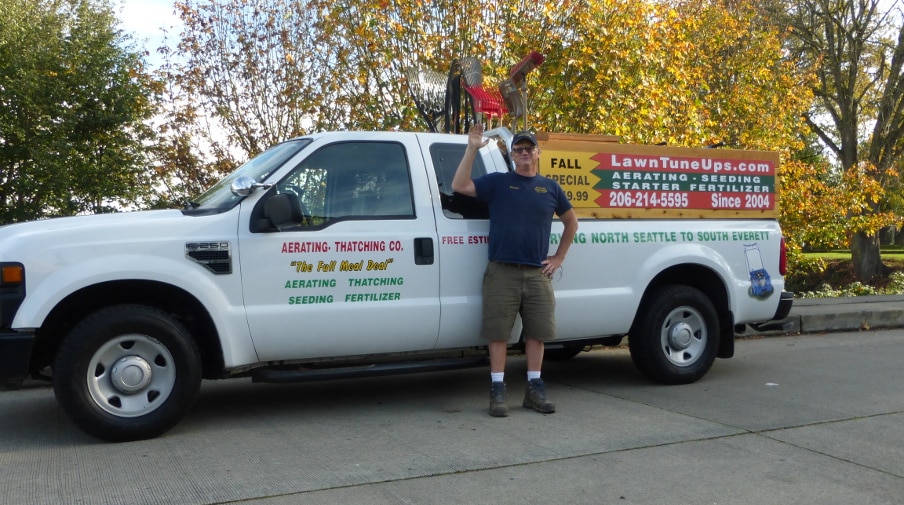
Article by
Stewart Armour
Stewart Armour is an independent lawn restoration expert, educator, and owner of Aerating Thatching Co., serving the greater Seattle area since 2004. With more than two decades of professional experience restoring Western Washington lawns, Stewart specializes in diagnosing lawn problems, improving soil health, and developing long-term lawn renovation strategies. His education includes turf management studies, advanced golf course turf training, and continuing education through Wilbur-Ellis University, State Turf Facilities, Soil First Academy, and Golf Course Applied Turf Physiology. Every article published on LawnTuneUps.com is grounded in practical field experience, current turf science, and a commitment to helping homeowners understand the why behind every recommendation—not just what to do.
Stewart has personally evaluated thousands of residential lawns throughout the Seattle area and remains committed to helping homeowners understand the science behind growing healthier, more resilient lawns.