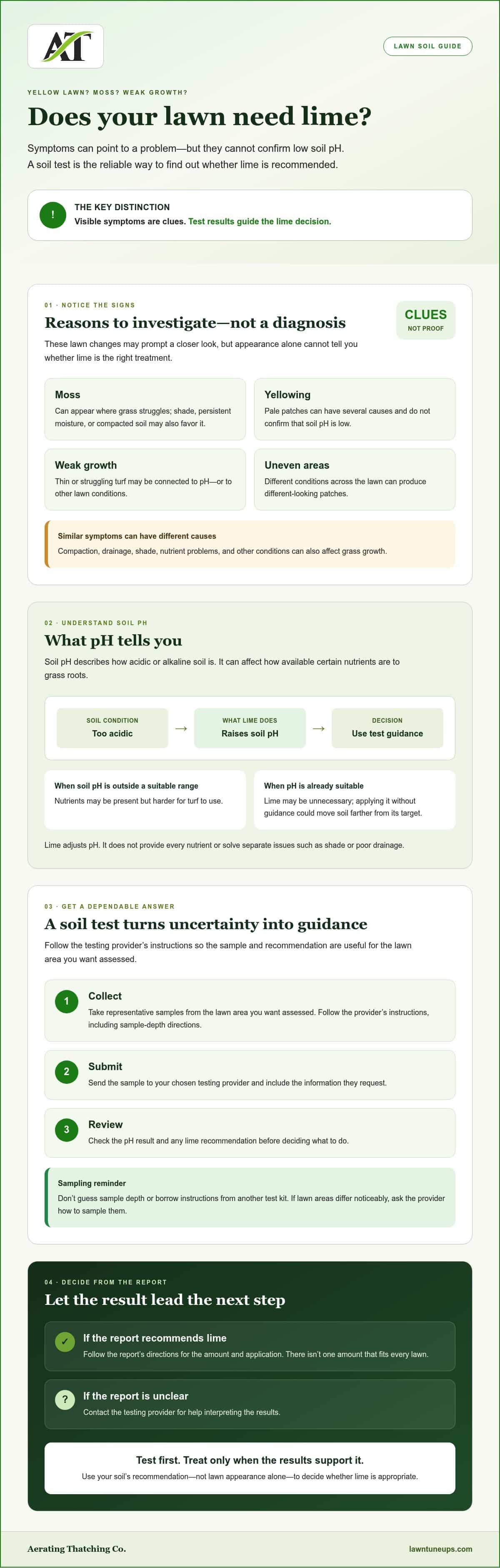
A yellow, thinning lawn doesn’t automatically need lime. If you’re searching “how tell if your lawn needs lime,” start with the symptoms, but don’t treat them as proof. Pale grass and poor growth can have several causes, so applying lime based on appearance alone may miss the real problem.
A soil test is the reliable way to check pH and find out whether lime is recommended, and how much to apply. This guide explains which symptoms call for a closer look, how to collect and interpret a soil test, and what to do with the results. For North Puget Sound homeowners, the practical approach is to test first and consider Lime Application only if the results support it. That way, you can respond to your soil’s needs instead of guessing.
Key Takeaways
- Moss, yellowing, and weak growth are reasons to investigate, not proof that your lawn needs lime.
- Soil pH indicates how acidic or alkaline soil is. Lime is appropriate only when test results support raising pH.
- Follow your testing provider’s instructions to collect a representative sample and receive a useful recommendation.
- Use the soil-test report to decide whether lime is needed and what to do next.
How to Tell If Your Lawn Needs Lime: Symptoms to Notice
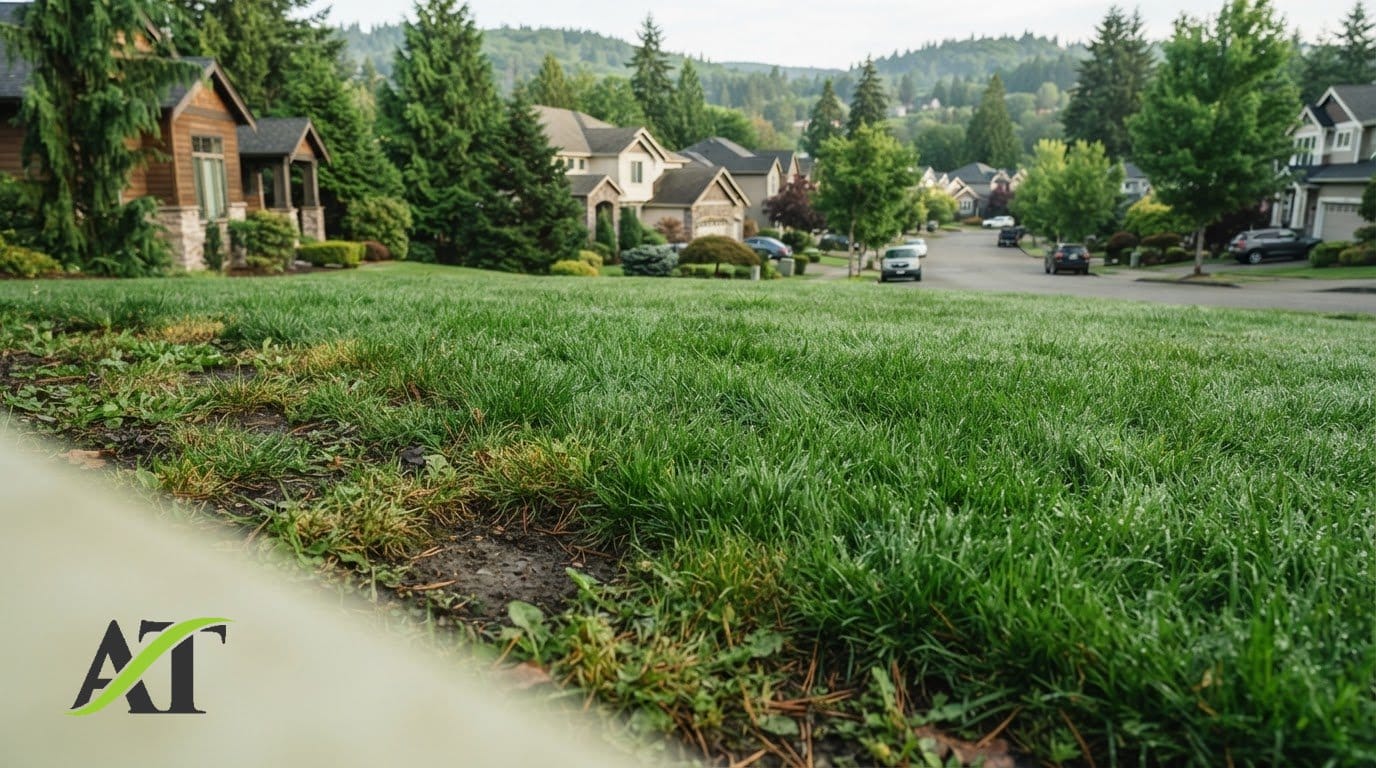
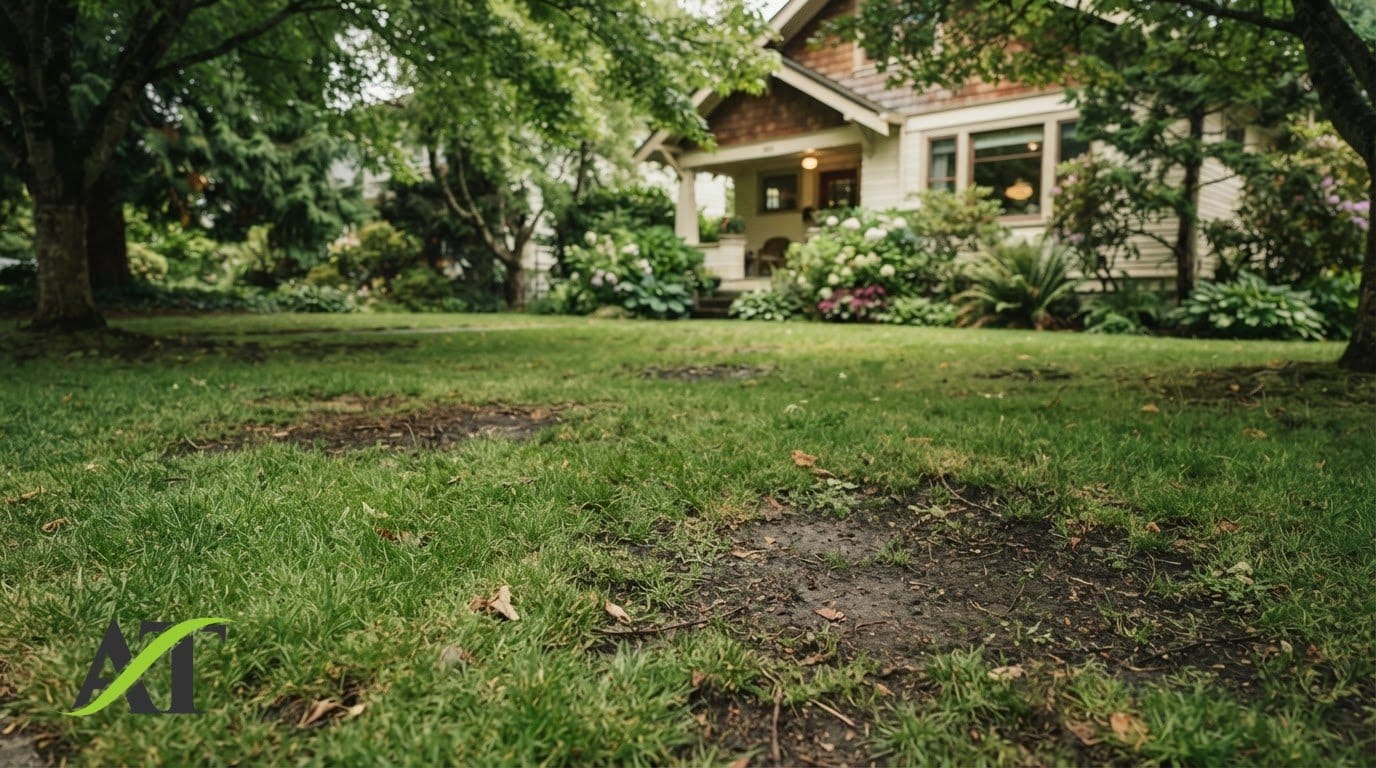
Moss in a shady corner, yellow patches, weak growth, or turf that looks different from one area to another can raise questions. These signs may prompt you to ask how tell if your lawn needs lime, but they don’t identify the cause. Compaction, drainage, shade, nutrient problems, and other conditions can produce similar symptoms.
Lime raises soil pH when soil is too acidic. It won’t correct every cause of poor grass growth. As the Soil pH reference explains, pH relates to soil acidity and can affect nutrient availability. It’s useful to investigate, but appearance alone can’t show whether lime is the right treatment.
Can moss or yellow grass mean low soil pH?
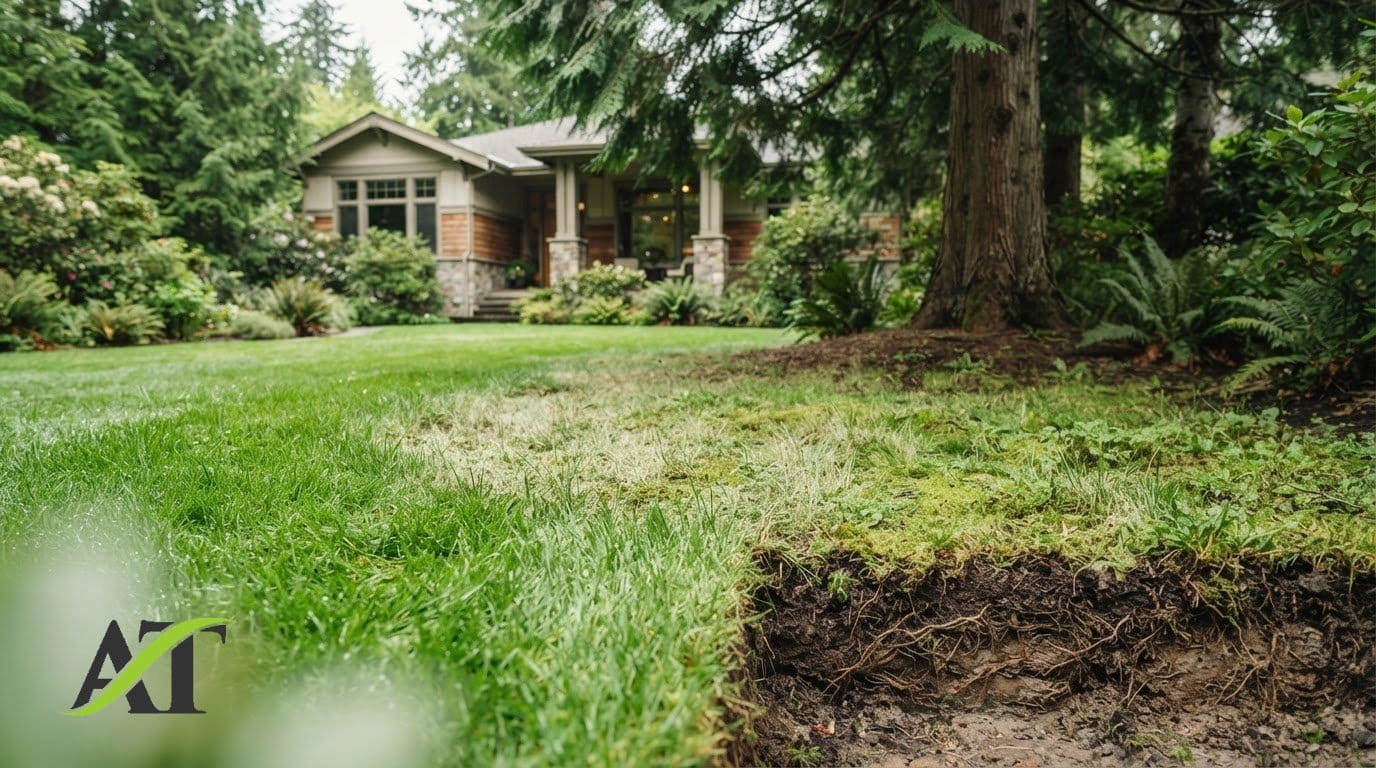
Moss can grow where grass struggles, but shade, persistent moisture, compacted soil, or other site conditions may also favor it. Yellowing and weak growth are similarly nonspecific. Note which areas are affected and whether the symptoms follow a pattern, such as appearing mainly in shade or where the ground stays damp. Use those observations to guide further investigation, not as a lime diagnosis.
Visible symptoms can suggest a pH issue, but they cannot confirm it. A soil test is the step that can establish whether pH is low enough to warrant Lime Application.
Why North Puget Sound lawns need a measured diagnosis
Lawns in Seattle and Snohomish County can vary from yard to yard. Don’t assume regional conditions mean your soil is acidic, or that a particular symptom has one local cause. Homeowners in North Seattle, Shoreline, Edmonds, and Lynnwood can use a soil test to guide the decision before considering Lime Application. Aerating Thatching Co. offers Lime Application in nearby communities; your test result should determine whether it fits your lawn.
What Soil pH Reveals About Whether Your Lawn Needs Lime
Soil pH measures how acidic or alkaline soil is. It matters because pH affects how available certain nutrients are to grass roots. When pH is outside a suitable range, nutrients may be present but harder for turf to use. Lime raises pH in acidic soil, but it doesn’t supply every nutrient or solve separate problems such as shade or poor drainage.
A pH measurement tells you about the soil; a lawn symptom only shows that something may be wrong. To tell whether your lawn needs lime, use the test result and the report’s guidance. Together, they can help determine whether lime is appropriate, what pH target to aim for, and how much to apply.
How soil pH can affect grass
Grass depends on nutrients for steady growth. Soil that’s too acidic or alkaline can limit nutrient availability, even when some nutrients are present. A soil test gives you a pH reading and context for deciding what to do next. Lime adjusts pH; it isn’t a general-purpose lawn treatment and shouldn’t be expected to correct every cause of thin or discolored turf.
Why adding lime without a test can miss the problem
Your soil may already be within a suitable pH range. In that case, lime may be unnecessary, and applying it without guidance could move the soil farther from its target. Kenmore homeowners can use the same test-first approach before considering Lime Application. If a soil report supports treatment and you’d like help with the next step, you can request a quote for Lime Application.
How to Confirm Whether Your Lawn Needs Lime with a Soil Test
A soil test gives a more dependable answer to how tell if your lawn needs lime than appearance alone. It provides a reading of your soil and, when appropriate, guidance on Lime Application.
- Collect: Take representative samples from the lawn area you want assessed.
- Submit: Send the sample to your chosen testing provider and include the information they request.
- Review: Check the pH result and any lime recommendation before deciding what to do.
Follow the provider’s sampling instructions, including directions for sample depth. Don’t estimate the depth or borrow instructions from another test kit, since the right method depends on the provider’s process. If different parts of your lawn have noticeably different conditions, check with the provider about how to sample those areas.
What a lawn soil test should help you learn
Results may include soil pH and whether lime is recommended. If the report recommends lime, follow its directions for the amount and application. There isn’t one amount that fits every lawn. Soil conditions affect how much may be needed, so don’t substitute a general rule for the report’s recommendation.
Use the soil-test recommendation, not symptoms alone, to decide whether to apply lime. If any part of the report is unclear, contact the testing provider for help interpreting it.
When to ask a local lawn professional
Consider asking for help if the recommendation is difficult to interpret or symptoms continue despite appropriate care. Homeowners in North Seattle, Shoreline, Edmonds, Lynnwood, and nearby communities can explore relevant lawn soil-health services. Local experience can help put the test in context, but it doesn’t replace results for your specific lawn.
What to Do When a Soil Test Shows Your Lawn Needs Lime
If your soil test recommends lime, use its instructions to decide whether to apply it, how much to use, and when. Don’t substitute a general rate or schedule. The report reflects your sample and soil conditions, so it’s the best guide for your lawn. If the recommendation is unclear, check with the testing provider before treating.
Should you apply lime yourself or get help?
Consider whether you can follow the report and spread the recommended amount evenly over the intended area. Uneven application may leave parts of the lawn treated differently. If you’re unsure how to interpret the results or plan the work, local help can clarify the next step. Base any Lime Application on the test and your lawn’s specific needs, not symptoms alone.
How Lime Application fits with other lawn treatments
Lime Application is a distinct treatment. It isn’t part of the base Lawn Tune-Up, which consists of Core Aeration, Overseeding, and Fertilizing. Lawn soil amendments, including Lime Application, are separate treatments that may be offered as optional add-ons. Confirm what is included rather than assuming lime comes with a Lawn Tune-Up. The Seattle lawn restoration guide explains the Lawn Tune-Up without making lime an automatic component.
For homeowners in North Seattle, Shoreline, Edmonds, Lynnwood, and nearby communities, Aerating Thatching Co. offers Lime Application when it fits the lawn’s needs. If your soil test supports liming and you’d like help with the next step, request a quote for Lime Application.
Let Your Soil Test Guide the Next Step
Moss, yellowing, or weak growth can point to a lawn problem, but they can’t tell you on their own whether lime is the answer. The practical way to learn how tell if your lawn needs lime is to test the soil, then use the results to decide whether Lime Application is appropriate and follow the report’s guidance.
Aerating Thatching Co. is an owner-operated local business serving North Seattle and nearby communities. Lime Application is one of its services. If your test supports liming, the company’s lawn soil-health services can help you plan a treatment for your lawn’s specific needs.
Start with a soil test, then choose your next step based on what it shows. For a local quote on Lime Application or other lawn soil-health treatments, contact Aerating Thatching Co.
Frequently Asked Questions
Is moss a sign that my lawn needs lime?
Moss can be associated with acidic soil, but it doesn’t prove your lawn needs lime. Shade, damp conditions, compaction, and other site factors can also give moss an advantage. The practical answer to how tell if your lawn needs lime is to test the soil, then check whether the pH result and recommendation support Lime Application. Treat moss as a reason to investigate, not a diagnosis.
How can I test whether my lawn needs lime?
Collect a representative sample by following the testing provider’s instructions, submit it, then review the pH result and any lime recommendation. Don’t guess sample depth or infer pH from grass color. If the report is unclear, ask the provider or a local professional before treatment. Aerating Thatching Co. serves North Seattle, Shoreline, Edmonds, Lynnwood, Mill Creek, Bothell, Kenmore, Lake Forest Park, Mountlake Terrace, Snohomish, Everett, Brier, Woodway, Green Lake, Ballard, and Greenwood.
Can I put lime on my lawn without a soil test?
It’s better to test before applying lime. Weak growth or moss doesn’t confirm acidic soil, and lime may be unnecessary when pH is already suitable. A test helps establish whether treatment is warranted and provides guidance for your soil. Don’t guess the application amount or use a general rate in place of the report. If the recommendation isn’t clear, check with the testing provider before spreading lime.
How long does lime take to change lawn soil pH?
There isn’t a dependable timeline that applies to every lawn. How quickly pH changes depends on soil conditions, the lime product, and how it’s applied. Follow the soil-test recommendation and product directions rather than expecting a guaranteed result by a set date. If you need to know whether pH has shifted, arrange follow-up testing. Grass color or moss alone can’t confirm that soil pH has changed.
Does lime get rid of moss in a lawn?
No. Lime isn’t a direct moss killer. It may be appropriate if a soil test shows low pH and recommends raising it, but moss can also be linked to shade, dampness, or compaction. Identify the likely causes before choosing a treatment. Use the test result to guide Lime Application, and consider other site conditions separately rather than expecting lime to resolve every mossy patch.
Article by
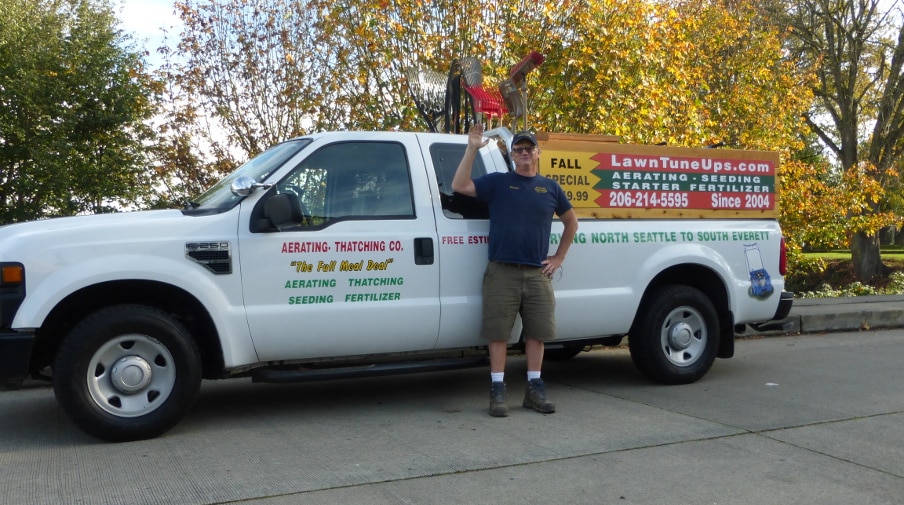
Stewart Armour
Stewart Armour is an independent lawn restoration expert, educator, and owner of Aerating Thatching Co., serving the greater Seattle area since 2004. With more than two decades of professional experience restoring Western Washington lawns, Stewart specializes in diagnosing lawn problems, improving soil health, and developing long-term lawn renovation strategies. His education includes turf management studies, advanced golf course turf training, and continuing education through Wilbur-Ellis University, State Turf Facilities, Soil First Academy, and Golf Course Applied Turf Physiology. Every article published on LawnTuneUps.com is grounded in practical field experience, current turf science, and a commitment to helping homeowners understand the why behind every recommendation—not just what to do.
Stewart has personally evaluated thousands of residential lawns throughout the Seattle area and remains committed to helping homeowners understand the science behind growing healthier, more resilient lawns.