Professional aeration isn’t automatically the better choice. DIY vs. professional lawn aeration comes down to your lawn’s size, the time you can spend, your comfort using equipment, and whether compaction is mild or widespread. A small lawn with little compaction may suit a capable homeowner; a large or heavily compacted lawn can make professional equipment and service more practical.
It’s reasonable to weigh convenience against doing the work yourself. But aeration is one part of lawn care, not a fix for every thin or struggling patch. Shade, thatch, irrigation, and drainage can all affect lawn health, and each calls for a different response.
This guide will help you choose by looking at lawn size, time, equipment comfort, soil conditions, and what your lawn needs beyond aeration. You’ll also learn when professional Core Aeration makes sense, when DIY may be enough, and how to think about aeration alongside other steps that support thicker, healthier turf.
Key Takeaways
- Match DIY or professional aeration to your lawn’s size, compaction, available time, and comfort with equipment.
- Choose a time when the grass is actively growing and the soil is moist but not muddy.
- Use pooling water, thinning turf, and hard soil as clues, but distinguish compaction from drainage, shade, or thatch problems.
- Plan aeration alongside other lawn-care needs so you address the cause of poor growth, not just the symptoms.
Choosing based on lawn size, time, and equipment comfort
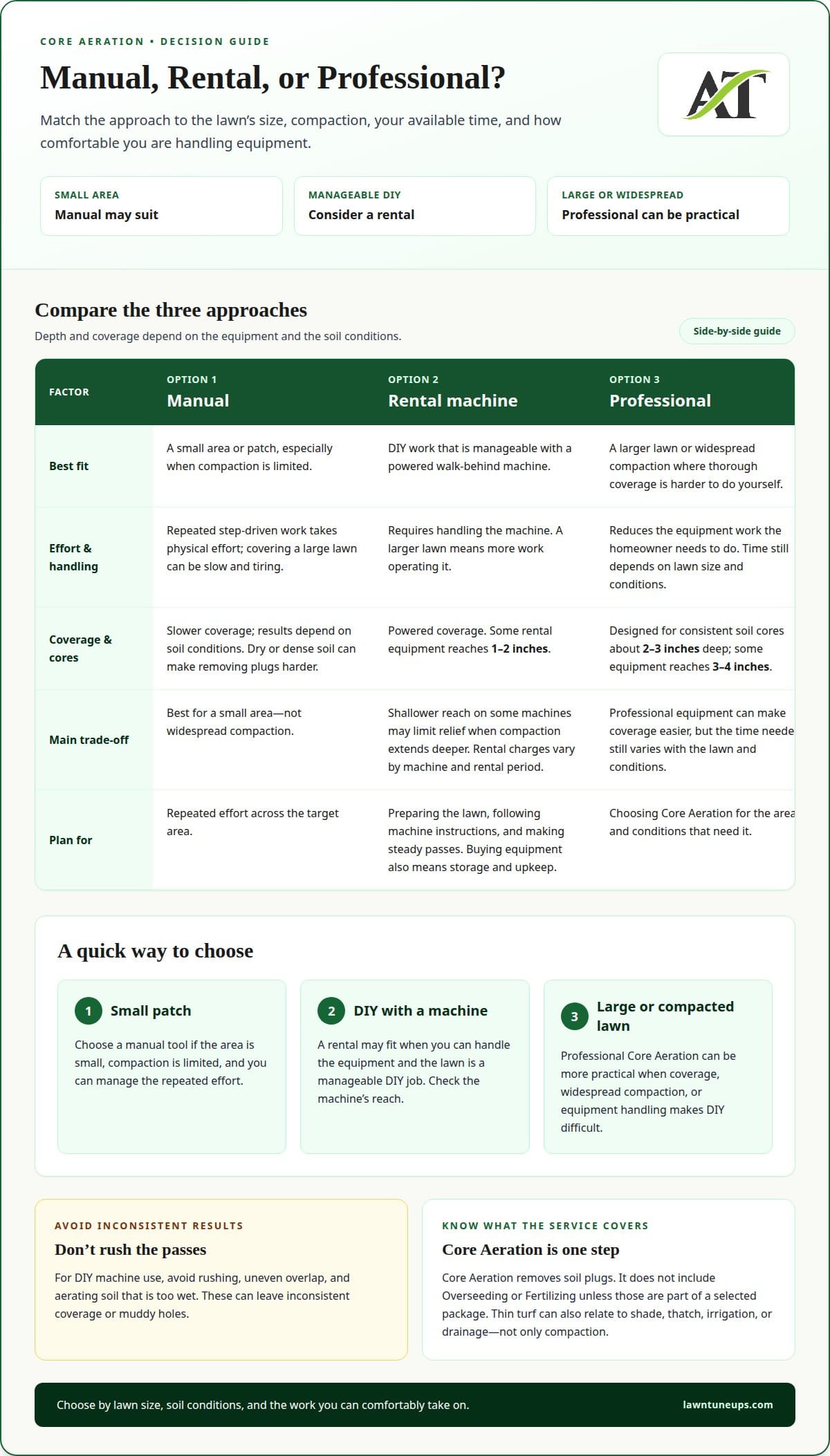
DIY can suit a small lawn when you can handle the equipment and the soil isn’t heavily compacted. Professional service can make thorough coverage easier across larger areas.
Manual Aeration Equipment
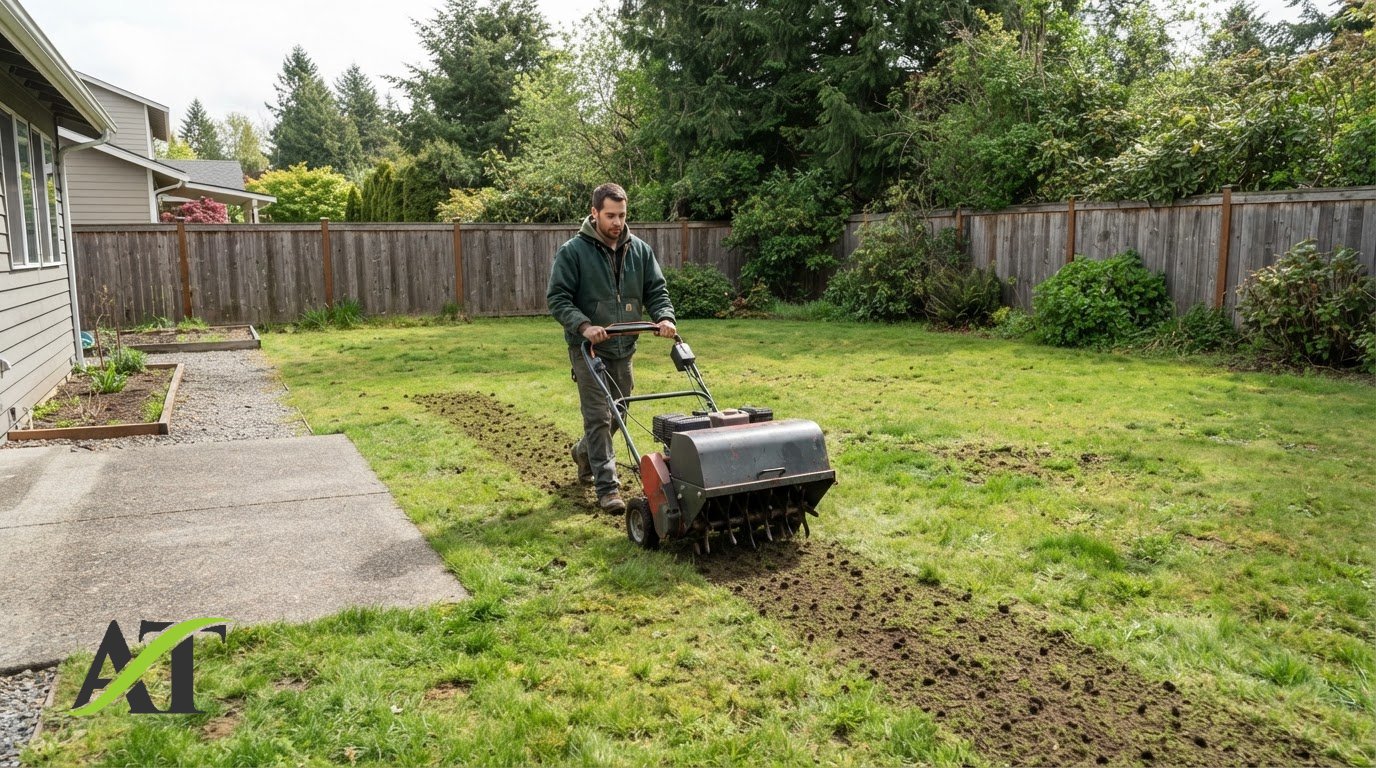
Manual tools, such as a step-driven core aerator, let you work small sections without operating a powered machine. They require repeated effort, so covering a large lawn can be tiring and slow. Dry or dense soil can also make it harder to remove each plug. Manual equipment is best for a small area, not widespread compaction.
Rental Aeration Equipment
Rental walk-behind machines offer a powered DIY option; equipment-rental businesses commonly rent them by the day or half-day. Rental charges depend on the machine and rental period, while buying a walk-behind or tow-behind aerator means taking on storage and upkeep. Some rental equipment reaches only 1 to 2 inches, which may limit relief when compaction extends deeper.
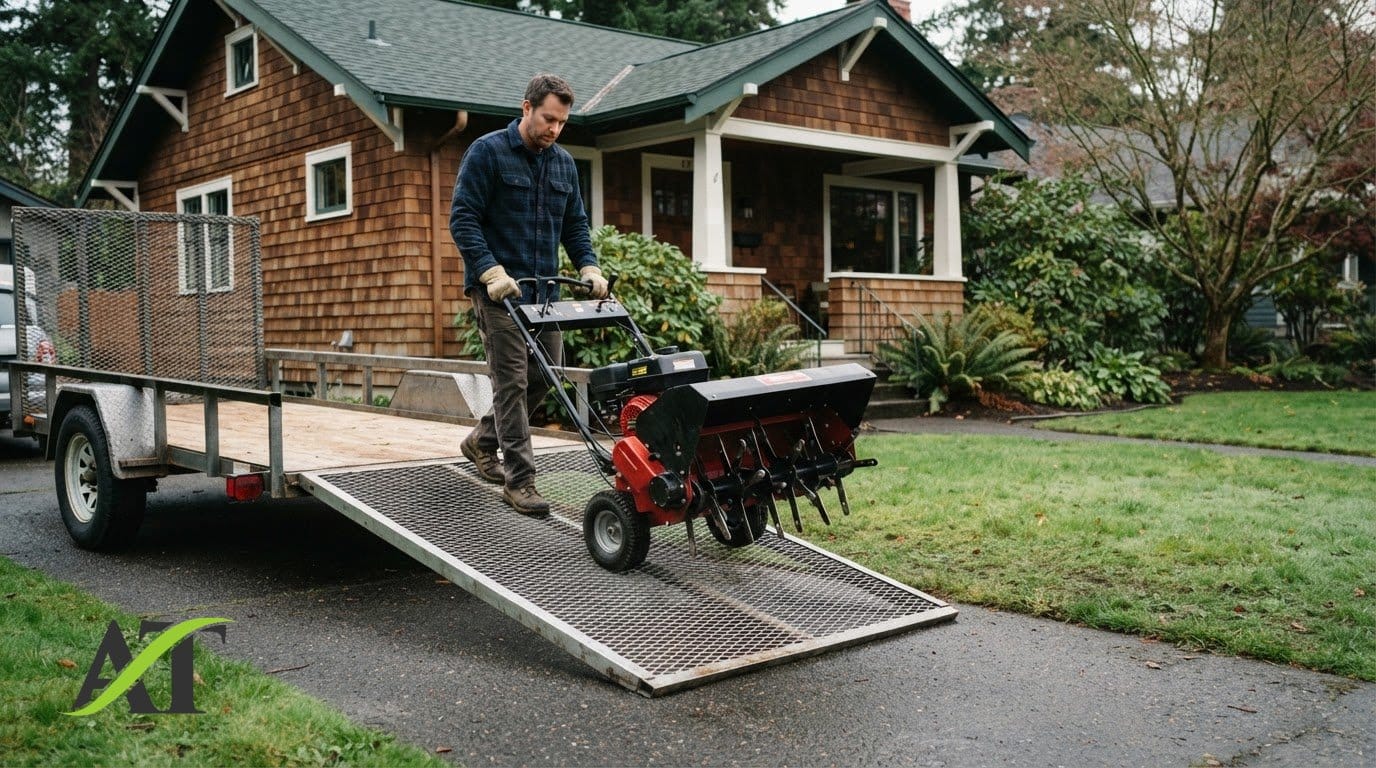
If the aerator will not fit safely in your vehicle, include a rental truck and loading ramp in the equipment plan. Confirm that the truck can accommodate the machine, use the ramp to load and unload it, and secure the aerator during transport. Follow the rental provider’s instructions for moving the machine and choose a level unloading area near the lawn.
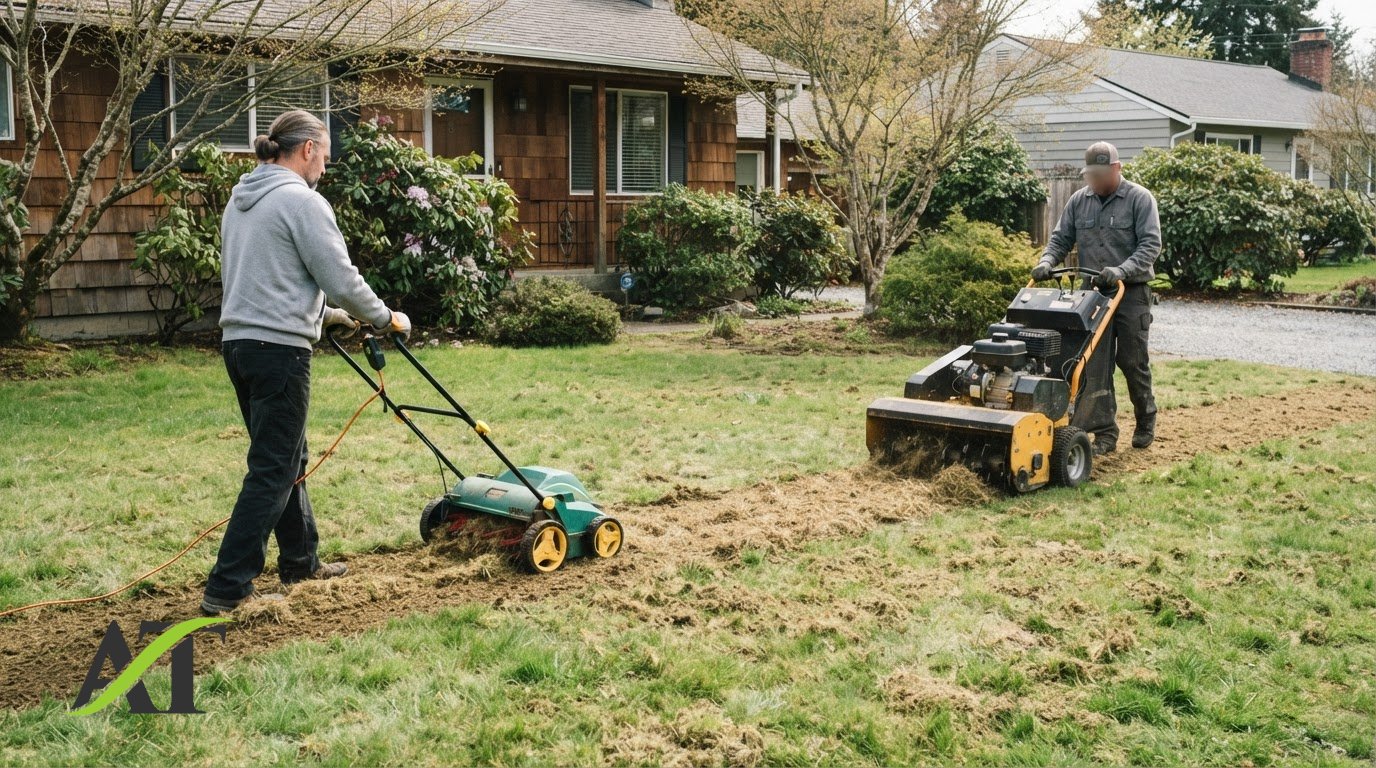
For DIY, prepare the lawn, follow the machine’s operating instructions, and make steady passes over the target area. Unfamiliar, heavy rental machinery has a learning curve, and operating or maneuvering it can cause physical strain or injury if you are not accustomed to the equipment. Avoid rushing, uneven overlap, and operating on soil that is too wet. These mistakes can leave inconsistent coverage or muddy holes. A larger lawn also means more work handling the machine.
Professional Commercial-Grade Equipment
Professional aerators are designed to remove consistent soil cores across a lawn. They can produce plugs about 2-3 inches deep, while some professional equipment removes cores about 3 to 4 inches deep. Deeper plugs may address compaction farther into the turf root zone than shallower rental or manual equipment. A professional service is often a practical fit for a large lawn or widespread compaction.
DIY gives you control and flexibility, but requires effort and may limit coverage or working depth. Professional aeration reduces the equipment work you do, though the time required depends on lawn size and conditions. Core Aeration removes soil plugs; it does not include overseeding or fertilizer unless you choose a package that adds them.
Rental costs and equipment needs vary by region, lawn size, and soil conditions, so there’s no single answer for every yard. Compare the area to be treated, the tool’s ability to remove cores, and your comfort handling the equipment.
| Option | Lawn size and effort | Coverage and plug depth |
|---|---|---|
| Manual | Small areas; high physical effort | Slower, dependent on soil conditions |
| Rental | Small to larger areas; machine handling required | Some equipment reaches 1 to 2 inches |
| Professional | Useful for larger lawns; less homeowner effort | Consistent cores about 2-3 inches deep, with some equipment reaching 3 to 4 inches |
Use a manual tool for a small patch, rent equipment for manageable DIY work, or choose professional service when lawn size, compaction, or equipment handling makes the job difficult.
Timing aeration around weather and soil conditions
Choose timing by grass type, active growth, and soil moisture, not the calendar alone. The optimal temperature range for lawn aeration is between 50°F and 85°F. Cool-season grass roots grow strongly when soil temperatures are around 50°F to 65°F, making late summer or fall a suitable window. Spring can also work while cool-season grass is actively growing. Check soil temperature rather than relying only on a warm afternoon.
For cool-season grass, late summer to early fall is a suitable window while the grass is actively growing. Identify the grass type before choosing a date; the right timing gives turf a chance to recover as roots grow.
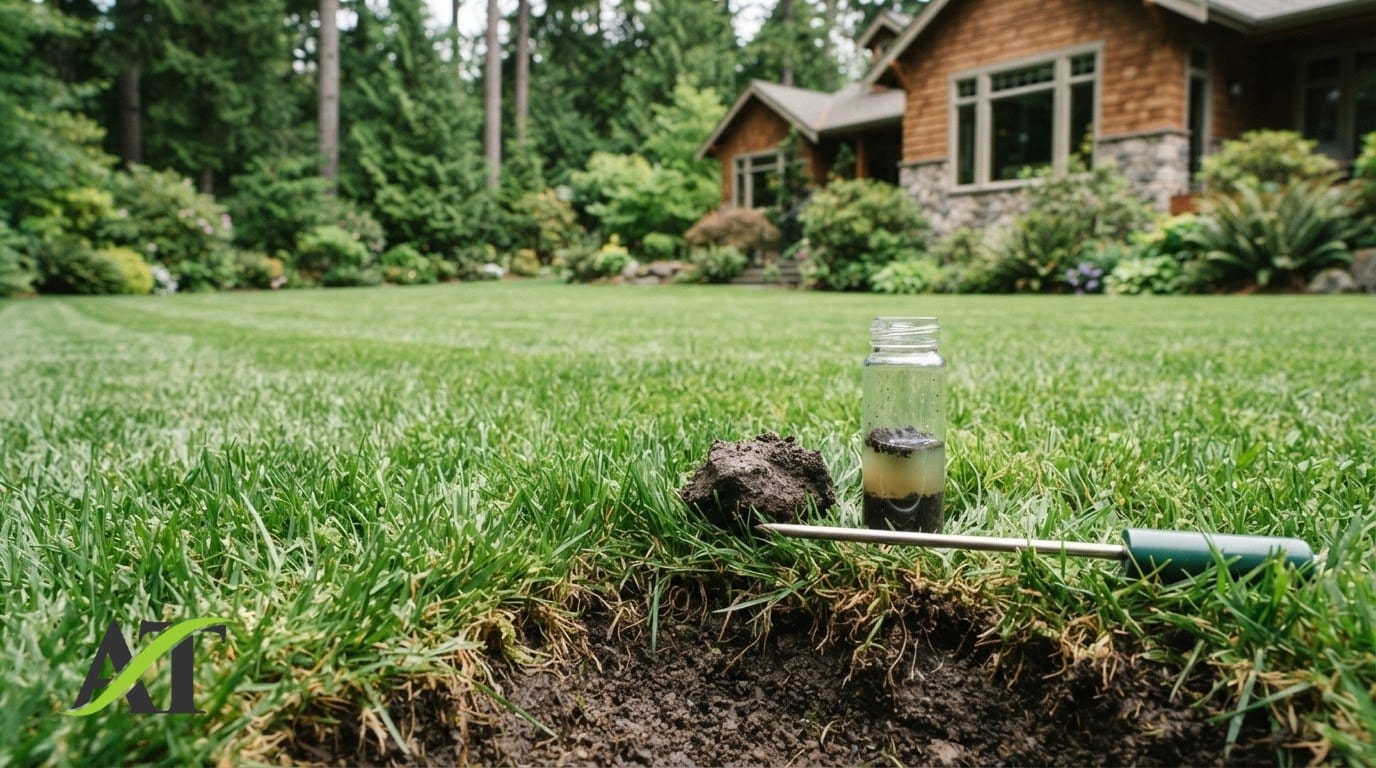
Check the soil on the day you plan to aerate. It should be moist enough for tines to pull soil plugs, but not saturated. If the ground is too wet, mud can fill the holes instead of leaving open channels. After dry weather, water the lawn well a couple of days beforehand, then test a small area. If soil smears or sticks heavily to the tool, wait for it to dry.
Aeration during active growth lets grass roots grow into loosened soil and use available water and nutrients. The plugs can break down on the surface and return soil to the lawn. Aeration won’t create an instant green-up; visible improvement depends on grass growth and the lawn’s other needs. Its physical benefits can diminish within weeks, so treat timing as one part of a broader lawn-care plan, not a substitute for diagnosing persistent problems.
For Seattle-area lawns, base timing on grass type and current soil conditions. Don’t aerate muddy ground, and don’t choose a date solely because it’s spring or fall. A practical method is to confirm active growth, check soil moisture, then aerate when the ground holds together without becoming muddy. For help weighing those conditions, Ask Stewart About Your Lawn.
Signs of soil compaction and need for aeration
Compacted soil restricts the open spaces that air, water, and roots need. Look for several clues together rather than treating one bare patch as proof. Pooling water or runoff, thinning grass, and hard ground can point to compaction. Heavy foot traffic, such as a worn route between a patio and gate, also raises the likelihood. Grass that grows poorly despite consistent watering and fertilizing deserves closer inspection.
- Pooling or runoff: Water sits on the surface or runs off instead of soaking in.
- Hard soil: A screwdriver or hand tool meets resistance in the affected area.
- Thinning turf: Grass struggles or bare patches persist in high-traffic spots.
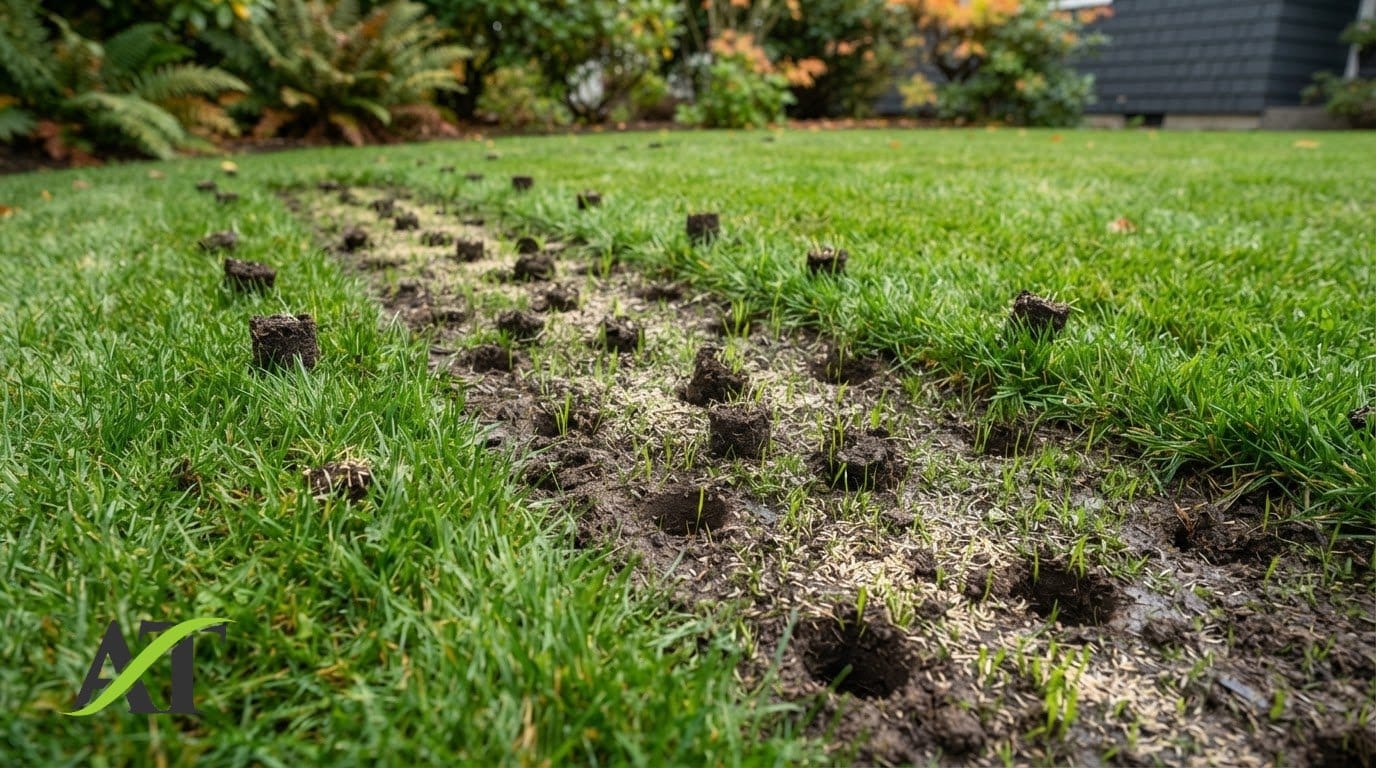
Core Aeration removes small soil plugs from the shallow turf root zone. The openings create space for roots and let water and nutrients move into the soil more readily. The plugs can remain on the lawn to break down. Aeration relieves compaction near the surface; it doesn’t break deep glacial hardpan or repair a subsurface drainage defect.
Spike aeration works differently. Its solid tines push into the ground without removing plugs, displacing soil around each hole. That pressure can increase compaction beside the openings, especially in dense soil. Core Aeration extracts material instead, relieving pressure more directly. When comparing tools, check whether they remove soil cores: a tool that punctures turf isn’t necessarily aerating the soil effectively.
Not every wet or thin area needs aeration. Persistent pooling can indicate drainage trouble, while shade or irrigation patterns can explain weak grass. Thatch is a separate layer of organic material, not the same as compacted soil. Check whether symptoms follow foot traffic, appear across the lawn, or remain limited to one spot. If the cause is compaction, schedule aeration during active growth; if turf is thin, overseeding may complement the work during a suitable season. If symptoms persist, diagnose the underlying cause before repeating treatment.
Aeration as part of an overall lawn-care program
Core aeration works best when it addresses a lawn-care need, not as an automatic annual task. Heavy traffic can compact soil and restrict root growth, while a lightly used lawn with loose soil may need less frequent treatment. Most lawns that need aeration benefit from it once a year; lightly trafficked lawns may need it only every couple of years. Let the lawn’s condition guide the schedule.
Build the plan around the problem. If compacted soil is limiting water movement and grass growth, aeration can relieve compaction. If the lawn is thin, overseeding may help fill bare areas. If shade limits growth or pooling points to a drainage defect, aeration alone won’t address the cause. Match each step to what you see rather than adding treatments by default.
A practical sequence is to aerate first, then overseed and fertilize. The openings from aeration give seed access to the soil, while fertilizer supports the lawn as it grows. Use seed suited to the grass type and growing conditions. Establishment still depends on moisture, seed-to-soil contact, weather, soil conditions, and aftercare, so plan those steps alongside the work.
Think of lawn care as a series of connected decisions. Check traffic patterns, turf thickness, soil firmness, and water movement before choosing a treatment. A compacted path from a gate may need attention even when the rest of the lawn doesn’t. A lawn with persistent standing water needs the drainage cause assessed, because Core Aeration won’t fix a subsurface defect. If symptoms continue after suitable treatment, reassess the cause instead of repeating the same work.
Choose DIY or professional aeration based on the same plan: the affected area, compaction, and your ability to cover it evenly. That keeps the choice focused on stronger root growth and a clear lawn-care need, not equipment alone.
Aerating Thatching: Lawn Tune-Up
Aerating Thatching’s Lawn Tune-Up combines Core Aeration, Overseeding, and Fertilizing for lawns that need both compaction relief and thicker turf. It may fit when you want to address thin grass alongside compacted soil. If the lawn is sparse but compaction isn’t the issue, identify the cause before choosing treatments.
Core Aeration works in the shallow turf root zone. It won’t resolve deep hardpan or a subsurface drainage problem, which needs further diagnosis. The Lawn Tune-Up is an option when both aeration and overseeding suit the lawn’s needs.
Ask Stewart About Your Lawn
Choose the Next Step That Fits Your Lawn
Make your decision around the result you want and the work you can take on. The DIY vs. professional lawn aeration choice isn’t a test of how much equipment you can handle. It’s a practical way to decide whether you can do the job thoroughly or would rather have help.
Before scheduling, note where the lawn struggles and what you want to improve. That gives you a clearer starting point and keeps the plan focused on your yard, without adding work it doesn’t need. If the cause of poor growth remains unclear, begin with a lawn-specific conversation.
With a clear goal, you can choose a practical next step and give your lawn a more thoughtful path to healthier growth.
Ask Stewart About Your Lawn
A clear next step can make lawn care feel manageable. Choose the approach that suits your yard and the time you can spend.
Frequently Asked Questions
When Is Professional Aeration Worth It?
Professional aeration is worth considering when a large lawn, widespread compaction, or limited time makes thorough DIY work difficult. For example, hard ground and thinning turf across a frequently used play area can be demanding to cover evenly with a small manual tool. If water pools in one isolated spot, first distinguish compaction from a drainage problem; aeration won’t correct a subsurface defect.
DIY Lawn Aeration Tools: Do They Actually Work?
Yes, the right tool can aerate a lawn if it removes soil cores and suits the area. A manual core tool can handle a small section, while a powered machine covers more ground with less hand labor. Check what the tines do: solid spikes make holes but don’t remove plugs. Test a small area first to see whether the tool extracts cores from your soil.
Decision Time: DIY or Professional?
Choose DIY if the lawn is manageable, compaction is limited, and you’re comfortable handling the equipment. Choose professional help when the area is large, the ground is heavily compacted, or machinery feels like too much work. The DIY vs. professional lawn aeration decision should also account for what comes next: a thin lawn may need separate overseeding, while dense turf may not.
Which Approach Actually Delivers Better Results?
Neither approach wins by label alone; the method needs to suit the lawn, and the work needs to be done evenly. A careful homeowner can handle a small, accessible area, while professional equipment can make consistent coverage more practical across larger turf. Set a clear goal, such as relieving compaction or preparing thin areas for overseeding, then judge the result against that need.
When is the best time to aerate cool-season grass?
Aerate cool-season grass in late summer or fall, when soil temperatures around 50°F to 65°F support strong root growth. Before choosing a day, identify the grass type and check soil moisture. Soil should be workable, not saturated, so plugs come out cleanly rather than filling with mud.
How often should a lawn be aerated, and which lawns need it?
Most lawns that need aeration benefit from it once a year, while heavily compacted or high-traffic lawns may need it twice a year. Lightly trafficked lawns with loose, well-draining soil may need aeration only every couple of years. Use foot traffic, persistent thinning, and hard ground to decide whether the lawn needs attention; don’t schedule repeat treatments automatically when those signs aren’t present.
Article by
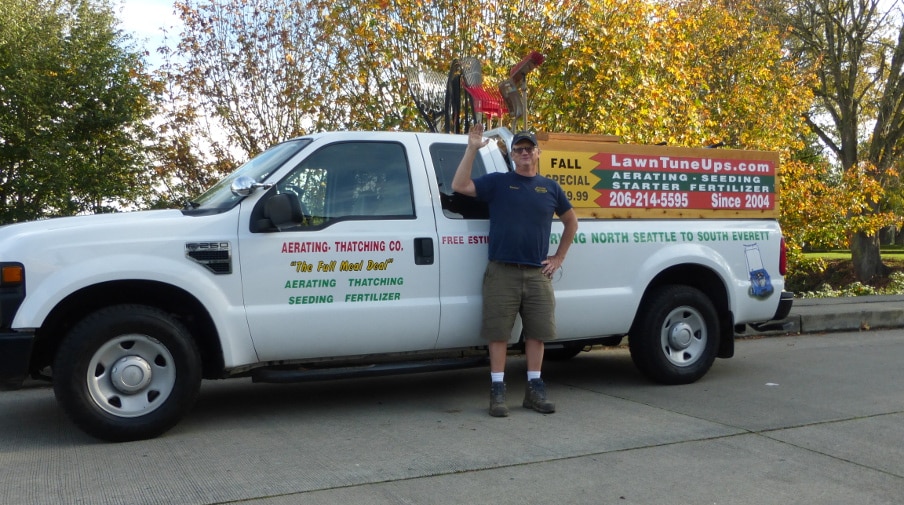
Stewart Armour
Stewart Armour is the owner of Aerating Thatching Co., an owner-operated Seattle-area lawn restoration business established in 2004. He helps homeowners understand Core Aeration, Power Raking (Dethatching), Overseeding, soil conditions, and the aftercare needed for stronger lawns. His background includes turf management study, advanced golf course turf training, and continuing education through Wilbur-Ellis University, State Turf Facilities, Soil First Academy, and Golf Course Applied Turf Physiology. Stewart has personally evaluated thousands of residential lawns throughout the Seattle area and focuses on recommending the work that fits each lawn’s condition.