What if fertilizer can support your lawn but cannot solve the whole problem? Thin or tired turf may need more than nutrients to fill in and grow stronger. A practical organic fertilizing Edmonds plan starts with the lawn itself, including its soil and the condition of the grass. Fertilizing can support growth, but it is not a guaranteed standalone fix.
Organic fertilizing can be useful on its own, but it can also work alongside Core Aeration and Overseeding when a lawn needs broader restoration. The right mix depends on what you can observe: turf density, bare areas, soil condition, and the lawn’s recent history. Aerating Thatching Co. serves Edmonds with organic fertilizing and lawn-restoration treatments. The Lawn Tune-Up consists of Core Aeration, Overseeding, and Fertilizing. The Full Meal Deal includes Power Raking (Dethatching), Core Aeration, Overseeding, and Fertilizing. This guide explains what each treatment does and how to choose a practical next step for your turf.
Key Takeaways
- Organic fertilizing Edmonds lawns can support turf health, but thin or tired grass may need more than nutrients alone.
- Core Aeration and Overseeding complement Fertilizing in the Lawn Tune-Up, with each treatment addressing a different need.
- Review turf density, bare areas, soil condition, and recent lawn history to help identify what your lawn may need.
- Aerating Thatching Co. provides lawn-restoration treatments for Edmonds properties and communities across the North Seattle area.
What Organic Fertilizing Can, and Cannot, Do for an Edmonds Lawn
Organic fertilizing supplies nutrients to the lawn using materials from organic sources. The term covers a range of materials and products, as outlined in this overview of organic fertilizer. For turf, fertilizing can support growth, but the lawn’s condition and soil affect what it can accomplish.
Fertilizing supports turf growth; restoration addresses the broader conditions that affect how grass grows. Fertilizer alone may not correct thin coverage, compacted soil, or poor seed establishment. Organic fertilizing Edmonds homeowners choose can be part of a practical plan, but it is not a guaranteed fix for every lawn problem.
Why homeowners consider organic lawn fertilizing
Homeowners may choose organic options as part of their approach to caring for soil and turf. The practical goal is to support healthier, denser grass. Fertilizing can contribute nutrients, but it will not fill bare patches by itself or resolve every cause of weak growth. Results depend on the lawn’s existing condition and soil circumstances.
When fertilizing is not the whole answer
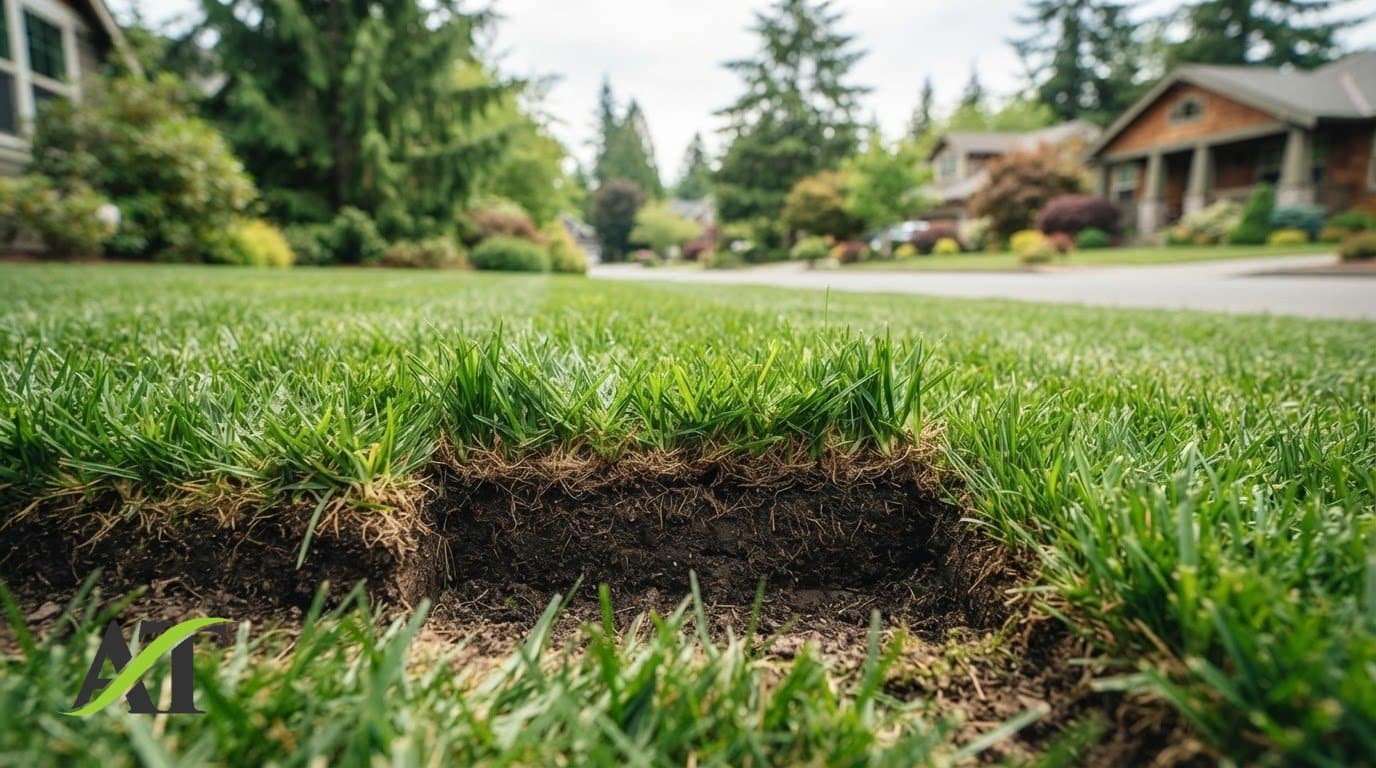
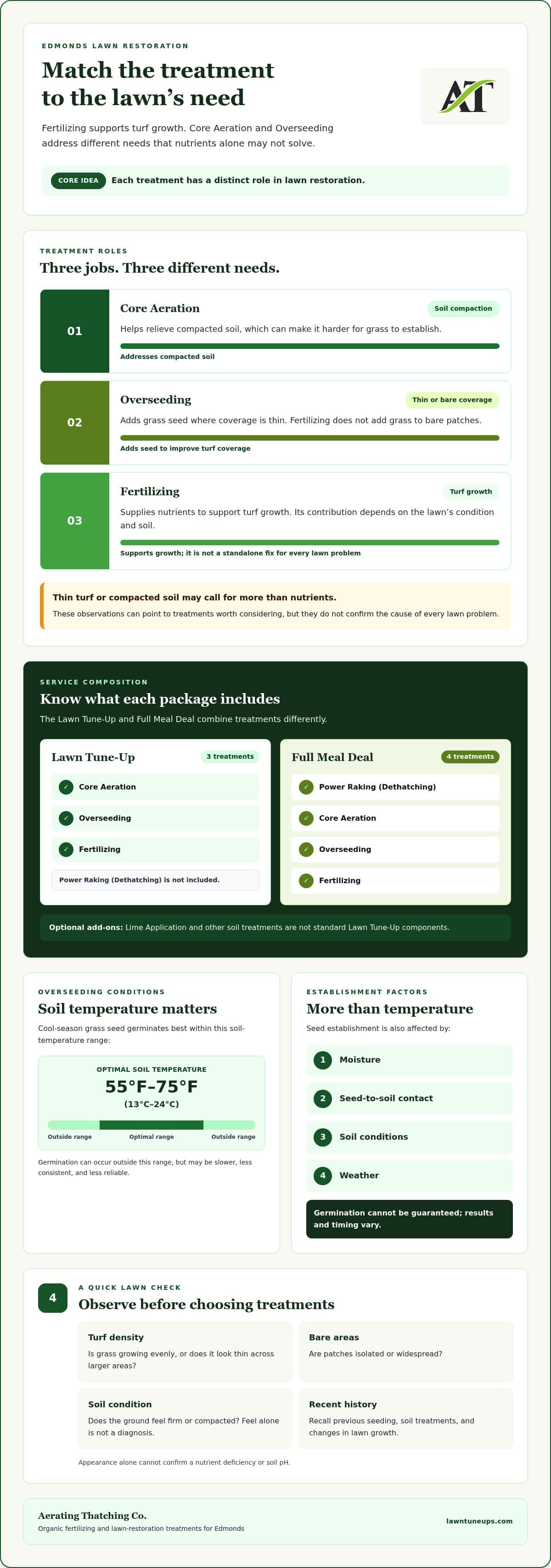
A sparse lawn may need help beyond nutrients. Compacted soil can make it harder for grass to establish. Where coverage is thin or bare areas remain, adding seed may be part of the solution. Core Aeration and Overseeding address different needs: Core Aeration helps relieve compaction, while Overseeding adds seed to improve turf coverage. Fertilizing supports the plan but does not replace either treatment.
The Lawn Tune-Up brings these treatments together through Core Aeration, Overseeding, and Fertilizing. To decide whether that combination fits, consider what you see in the lawn rather than relying on fertilizer alone. The next section explains how these treatments work together.
How Organic Fertilizing Fits Edmonds Lawn Restoration
Restoration treatments address different parts of a lawn’s needs. Core Aeration helps relieve compacted soil, Overseeding adds grass seed where coverage is thin, and Fertilizing supplies nutrients to support turf growth. Together, they can address several concerns, though the lawn’s soil, turf density, and history shape which treatments make sense. For homeowners considering organic fertilizing Edmonds, the key is to treat it as one part of restoration, not a substitute for every other treatment.
Core Aeration addresses compaction, Overseeding adds seed, and Fertilizing supports turf growth. Together, they target different parts of lawn restoration. These steps also fit into broader principles of soil health, which consider the growing environment alongside plant needs.
What is included in a Lawn Tune-Up?
A Lawn Tune-Up consists of Core Aeration, Overseeding, and Fertilizing. It does not include Power Raking (Dethatching). The Full Meal Deal includes Power Raking (Dethatching), Core Aeration, Overseeding, and Fertilizing. Lime Application and other soil treatments are optional add-ons, not standard Lawn Tune-Up components.
How Overseeding establishment depends on conditions
For cool-season grass seed, the optimal soil temperature for germination is 55°F-75°F (13°C-24°C). Germination can occur outside that range, but it may be slower, less consistent, and less reliable. Soil temperature is only one factor. Moisture, seed-to-soil contact, soil conditions, and weather also affect establishment, so germination cannot be guaranteed.
Aerating Thatching Co. provides lawn-restoration services for Edmonds lawns, bringing these distinct treatments together. Request a lawn-restoration quote to take the next step.
How to Tell What Your Edmonds Lawn May Need
Start with what you can observe, then consider the lawn’s history. These clues help frame the problem, but appearance alone cannot confirm a nutrient deficiency or soil pH.
- Turf density: Notice whether grass is growing evenly or looks thin across larger areas.
- Bare areas: Note where grass is missing and whether the patches are isolated or widespread.
- Soil condition: Observe whether the ground feels firm or compacted. This can help you decide whether Core Aeration is worth considering, though feel alone is not a diagnosis.
- Recent history: Recall previous seeding, soil treatments, and changes in how the lawn has grown.
Soil and site conditions affect whether Fertilizing makes sense on its own or alongside other restoration work. Do not rely on turf color or density alone to judge soil pH or decide whether lime is needed. Read this professional lime application guide to learn more about Lime Application.
Signs that fertilizer may need support from restoration work
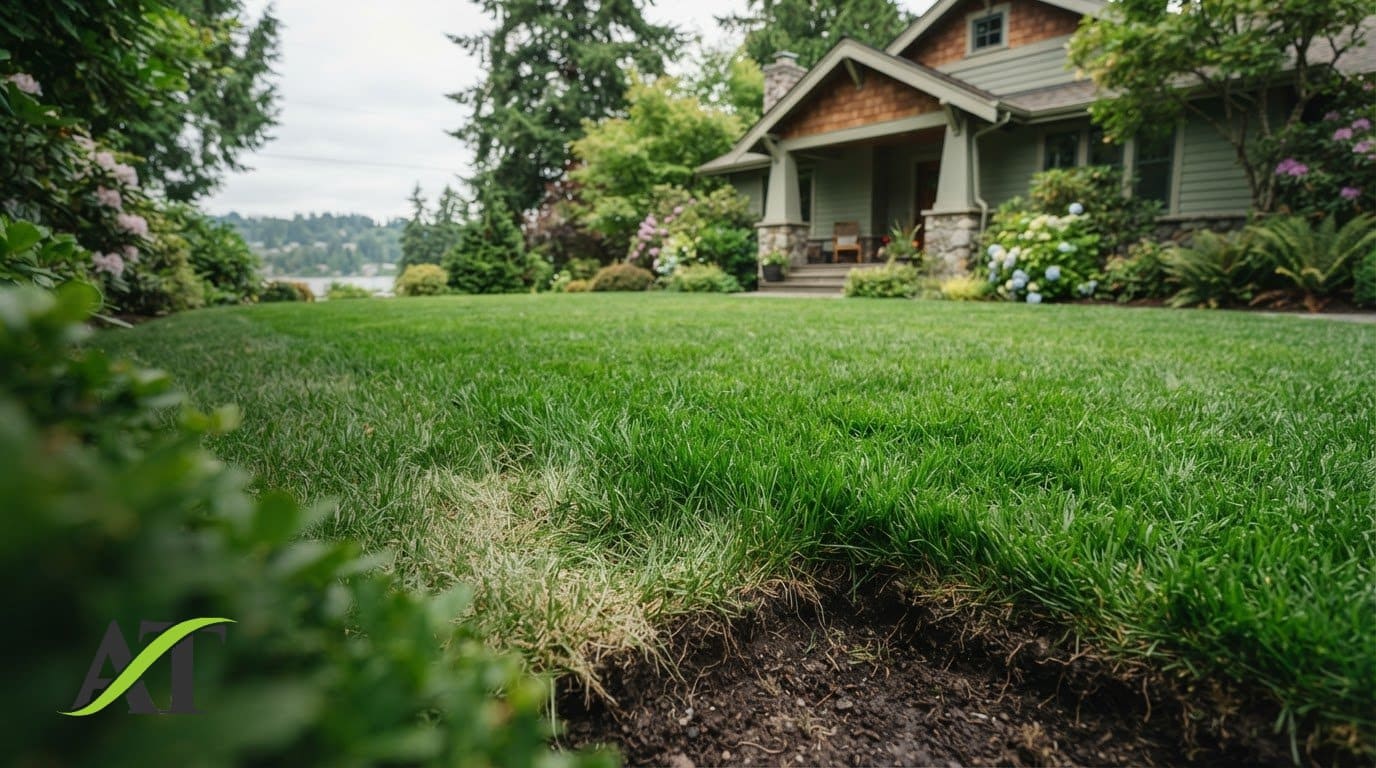
Thin turf or bare patches may make Overseeding relevant, since Fertilizing does not add grass where coverage is missing. If the soil seems compacted, Core Aeration is a separate treatment to consider. These observations help identify possible options, but they do not establish the cause of every lawn problem. Organic fertilizing Edmonds homeowners choose works best as part of a plan suited to the lawn’s conditions.
What affects Overseeding results?
Cool-season grass seed germinates best when soil temperature is 55°F-75°F (13°C-24°C). Outside that range, germination may be slower, less consistent, and less reliable. Moisture, seed-to-soil contact, soil conditions, and weather also affect establishment. Results and timing vary, so no particular outcome can be promised.
Organic Fertilizing Service in Edmonds: What to Expect Next
Aerating Thatching Co. serves Edmonds with organic fertilizing and lawn-restoration treatments focused on turf and soil health. The right fit depends on what the lawn needs: Fertilizing alone may not address thin coverage or compaction, while a combination of treatments can address different concerns together.
Choose a service that matches the lawn’s condition
The Lawn Tune-Up consists of Core Aeration, Overseeding, and Fertilizing. Each treatment has a distinct role: Core Aeration addresses compacted soil, Overseeding adds seed where turf is thin, and Fertilizing supports grass growth. For lawns that also need Power Raking (Dethatching), the Full Meal Deal includes all four treatments: Power Raking (Dethatching), Core Aeration, Overseeding, and Fertilizing. Lime Application and other soil treatments are optional add-ons, not Lawn Tune-Up components.
Aerating Thatching Co. focuses on lawn restoration, with treatments that include Core Aeration, Power Raking, Overseeding, organic Fertilizing, and Lime Application. The company is owner-operated and has served local lawns since 2004.
Take the next step for an Edmonds lawn
As you consider organic fertilizing Edmonds, note where turf is thin, whether bare patches are present, and whether the soil seems compacted. Include your restoration goals and relevant lawn history when requesting a quote. These details connect what you observe with the treatments that may suit your lawn.
Build a Practical Plan for a Healthier Lawn
Organic fertilizing Edmonds lawns can support turf health, but a practical plan also accounts for thin coverage, compaction, and soil conditions. Fertilizing provides nutrients; Core Aeration and Overseeding address other restoration needs. The Lawn Tune-Up combines Core Aeration, Overseeding, and Fertilizing, providing a defined starting point for a lawn that may need several treatments.
Aerating Thatching Co. is an owner-operated local business founded in 2004. It serves Edmonds and communities across the North Seattle area with lawn-restoration services. Share what you have noticed, such as sparse areas, bare patches, or firm soil, along with your goals for the lawn. That context can help guide a practical next step.
With a plan matched to your turf’s needs, you can move forward with a clear understanding of which restoration treatments address the concerns you have observed.
Frequently Asked Questions
Is organic fertilizer good for lawns in Edmonds?
Organic fertilizer can be part of a practical lawn-restoration plan in Edmonds. It supplies nutrients to support turf growth, though results depend on soil and lawn conditions. Aerating Thatching Co. provides organic fertilizing Edmonds homeowners can use as part of lawn restoration. The company serves North Seattle, Shoreline, Edmonds, Lynnwood, Mill Creek, Bothell, Kenmore, Lake Forest Park, Mountlake Terrace, Snohomish, Everett, Brier, Woodway, Green Lake, Ballard, and Greenwood.
Can organic fertilizer fix a thin or patchy lawn by itself?
No. Fertilizer supplies nutrients, but it does not add grass to bare patches or address every cause of thin turf. Overseeding may help improve sparse coverage, while Core Aeration is a separate treatment to consider if compaction is a concern. The right treatments depend on the lawn’s condition, soil, and history, so fertilizing alone should not be treated as a complete restoration plan.
What soil temperature is best for cool-season grass seed germination?
The optimal soil temperature range for cool-season grass seed germination is 55°F-75°F (13°C-24°C). Use soil temperature as your guide, not air temperature. Germination may occur outside this range, but it can be slower, less consistent, and less reliable. Moisture, seed-to-soil contact, soil conditions, and weather also affect establishment, so the temperature range alone cannot predict the result.
Does organic fertilizing guarantee a greener lawn?
No. Organic fertilizing can support turf growth, but it cannot guarantee a greener lawn or solve every underlying problem. Results vary with the lawn’s condition and soil. Thin turf, compaction, or poor seed establishment may call for additional restoration work. Core Aeration and Overseeding address different needs than Fertilizing, so a practical plan considers the visible lawn concerns rather than relying on nutrients alone.
Article by
Stewart Armour
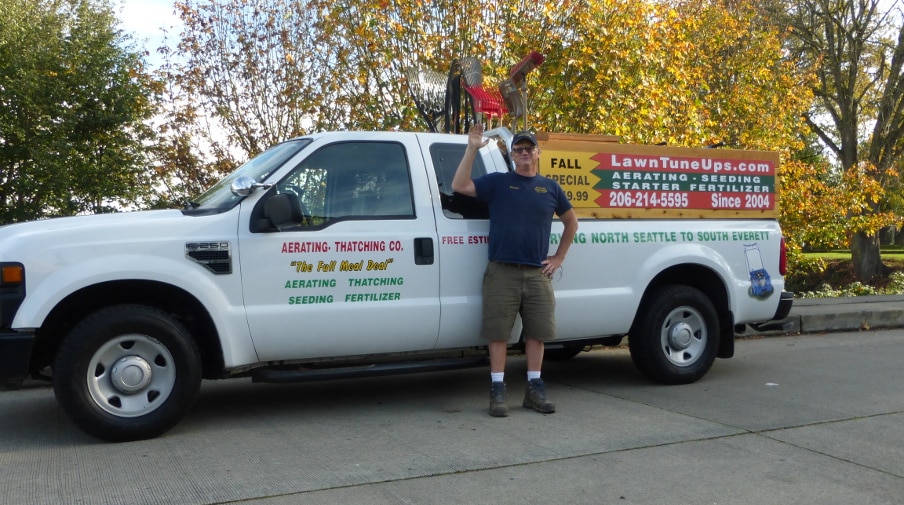
Stewart Armour is an independent lawn restoration expert, educator, and owner of Aerating Thatching Co., serving the greater Seattle area since 2004. With more than two decades of professional experience restoring Western Washington lawns, Stewart specializes in diagnosing lawn problems, improving soil health, and developing long-term lawn renovation strategies. His education includes turf management studies, advanced golf course turf training, and continuing education through Wilbur-Ellis University, State Turf Facilities, Soil First Academy, and Golf Course Applied Turf Physiology. Every article published on LawnTuneUps.com is grounded in practical field experience, current turf science, and a commitment to helping homeowners understand the why behind every recommendation—not just what to do.
Stewart has personally evaluated thousands of residential lawns throughout the Seattle area and remains committed to helping homeowners understand the science behind growing healthier, more resilient lawns.